

Ancient Pompeii Private Tour: Skip the Line & Kid-Friendly Option
Active
2h
For a full refund, cancel at least 24 hours before the scheduled departure time.
Instant confirmation
Mobile or paper ticket accepted
About this experience
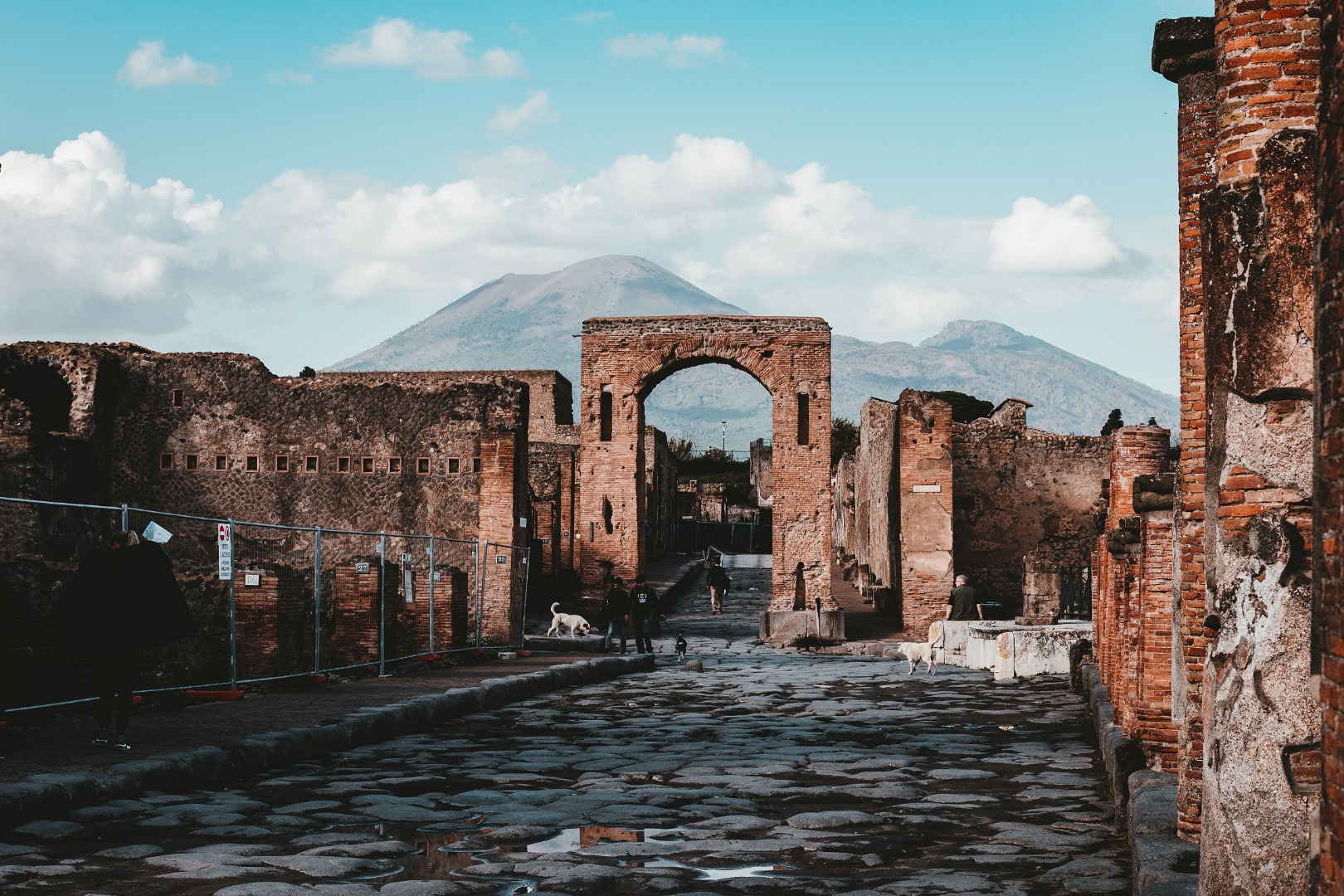
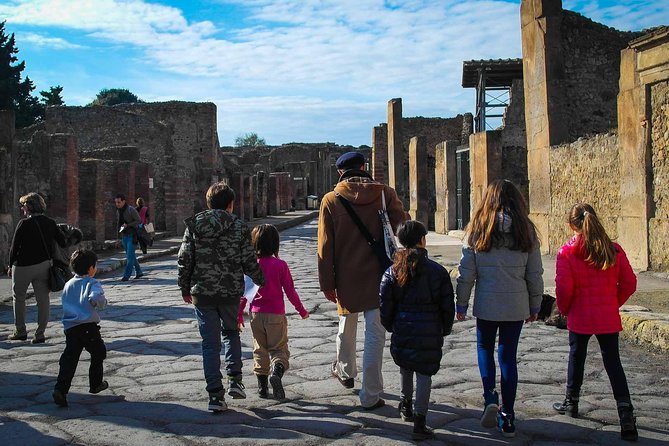
Step into a world frozen in time and see history come alive before your eyes. Our expert, licensed guides don't just list facts; they use captivating storytelling to bring the sights, sounds, and daily life of ancient Pompeii back to reality. Walk the very same ancient streets as Romans, see the bakeries, and stand where gladiators once trained.
This private experience means you skip the queues and focus purely on discovery, with the flexibility to tailor the pace to your group's interests. For families, this is the perfect educational adventure. Our specialized guides know how to keep children engaged with interactive commentary, puzzles, and a special activity book, ensuring a memorable and fun learning experience for all ages. Avoid large, overwhelming crowds and instead connect with the past on a personal level. Book now to secure your seamless, hassle-free journey to a lost world.
Available options
Private Tour for Families
Family friendly tour: Additional activities and tools created for children from 6 to 11 yrs
Private Tour (no kids)
What's included
Admission fee
Blue Badge private guide
If the family option is selected: Pompeii4kids kit with map, stickers, activites and activity-book
Detailed itinerary
1
Stop 1
Your personal knowledgeable guide will show the highlights of Pompeii: the Forum, the Bath-House, the shops and the streets, the fantastic private homes, and more! You are going to be introduced to the history of the eruption of Mount Vesuvius that buried Pompeii 2000 years ago. You will take great pictures of colorful wall-paintings and floor-mosaics. You will enter daily life in ancient Pompeii and discover how advanced Romans were!
If you have children from 6 to 11 years old, we recommend the additional family option. The Pompeii for kids tour will make it both an entertaining and learning experience for all the family. You will still visit all the highlights of Pompeii, but this option includes activities, games, a special map with stickers, and a specifically trained tour guide.
Please be aware that admission fees are not included, however our certified guides have access to a fast-track line. In other words, we can buy tickets for you quickly on the spot.
2
The Pompeii Forum was the vibrant heart of the ancient city, serving as its primary political, religious, and commercial center. It is a large, rectangular pedestrian plaza—measuring roughly 157 by 38 meters—that was entirely off-limits to chariot traffic.
3
Stop 3
ia dell’Abbondanza is the longest and most important street in Pompeii, serving as the city's main commercial and social artery (the Decumanus Inferior). Stretching from the Forum to the Sarno Gate, it offers the most vivid glimpse into daily Roman life.
4
The Forum Baths (Terme del Foro) are a remarkably well-preserved public bath complex in Pompeii, located just behind the Temple of Jupiter. Built around 80 BC, they were the only public baths still operational at the time of the eruption in 79 AD.
You can walk through the original sequence of Roman bathing: the Apodyterium (changing room), the Frigidarium (cold bath), the Tepidarium (warm room), and the Calidarium (hot room).
The rooms feature high barrel-vaulted ceilings with intricate stucco reliefs and terracotta figures known as telamones.
5
The Temple of Apollo is one of the oldest and most important religious sites in Pompeii, with its origins dating back to the 6th century BC. Located in the Forum area, it serves as a central landmark for any walking tour.
The temple is a unique blend of Greek and Italic styles, featuring an elevated podium reached by an imposing set of stairs and a portico with 48 columns.
Visitors can see bronze replicas of Apollo as an archer and his twin sister Diana. The original Hellenistic bronze masterpieces are preserved in the National Archaeological Museum in Naples.
6
The Basilica is the most imposing and important public building in Pompeii, located in the southwestern corner of the Forum. Dating back to the 2nd century BC, it is one of the oldest examples of its kind in the Roman world.
7
Stop 7
The House of the Vettii (Casa dei Vettii) is widely considered the "Sistine Chapel" of Pompeii. Reopened in 2023 after a meticulous 20-year restoration, it is one of the most opulent and perfectly preserved residences in the city.
The house belonged to Aulus Vettius Conviva and Aulus Vettius Restitutus, two former slaves (freedmen) who became immensely wealthy wine merchants. The home was designed specifically to flaunt their new status and luxury.
8
Stop 8
The Teatro Grande (Large Theatre) of Pompeii is one of the world's oldest surviving masonry theaters, originally built in the 2nd century BC. Carved into a natural lava hillside, it beautifully illustrates the transition from Greek to Roman architectural styles.
9
The Antiquarium of Pompeii is the site's primary museum, providing a modern, climate-controlled space to view the most fragile and precious artifacts discovered across the ruins.
We are going to see here the famous Casts: While some casts remain in situ at the ruins, the Antiquarium displays several poignant plaster casts of victims, including small children, preserved in their final moments.
What's not included
Pick up and Drop off not included
Available languages
Guide guide
EN
FR
Written guide
EN
Reviews breakdown
Viator
4.9
118 reviews
5★
112
4★
3
3★
1
2★
1
1★
1
Tripadvisor
5.0
49 reviews
5★
47
4★
2
3★
0
2★
0
1★
0
Important information
Infants and small children can ride in a pram or stroller
Public transportation options are available nearby
Not recommended for travelers with spinal injuries
Not recommended for pregnant travelers
Not recommended for travelers with poor cardiovascular health
Travelers should have at least a moderate level of physical fitness
Good walking shoes recommended
A current valid passport is required on the day of travel for children under 18 years
Meeting point
In front of Cafè Hortus Pompeii, Piazza Porta Marina Superiore 1, Pompei. Your guide will hold a sign with your name written on it. Please be aware there are different entrances away from each other. Our gate is called "Porta Marina Superiore"
Important notes
ENTRANCE FEE IS NOT INCLUDED - we recommend you book on line your entry from "Porta Marina Superiore". Please be aware there are 3 different gates.
Bring valid ID or passport for minors to get the free admission
About Pompeii
Pompeii is an ancient Roman city near modern-day Naples, famously preserved by volcanic ash from the eruption of Mount Vesuvius in 79 AD. It offers a unique glimpse into Roman life, with remarkably well-preserved ruins and artifacts. The site is a UNESCO World Heritage Site and one of the most visited archaeological sites in the world.
Top Attractions
Pompeii Archaeological Park
The main attraction in Pompeii, this vast archaeological site preserves the ruins of the ancient Roman city buried by the eruption of Mount Vesuvius in 79 AD. It offers a unique glimpse into Roman life and architecture.
Historical
3-5 hours
€18 (full price ticket)
Mount Vesuvius
The volcano that famously destroyed Pompeii offers a scenic hike with panoramic views of the Bay of Naples. The crater is accessible via a short walk from the summit.
Nature
2-3 hours
€10 (entry fee)
Villa of the Mysteries
One of the most famous villas in Pompeii, known for its well-preserved frescoes depicting mysterious rituals. The villa offers insight into the daily life and beliefs of the ancient Romans.
Historical
30-45 minutes
Included in the general admission ticket
Must-Try Local Dishes
Pizza Margherita
A classic Neapolitan pizza topped with tomato sauce, mozzarella cheese, and fresh basil. It is a must-try in the region.
Lunch/Dinner
Contains dairy and gluten
Spaghetti alle Vongole
A traditional Italian dish made with spaghetti, clams, garlic, white wine, and parsley. It is a popular seafood dish in the region.
Lunch/Dinner
Contains seafood and gluten
Sfogliatella
A traditional Neapolitan pastry filled with sweet ricotta cheese and candied fruit. It is a popular dessert in the region.
Dessert
Contains dairy and gluten
Popular Activities
Hiking Mount Vesuvius
Biking in the surrounding countryside
Beach visits in nearby coastal towns
Wine tasting in local vineyards
Visiting museums and historic sites
Attending local festivals and events
Boat tours in the Bay of Naples
Visiting nearby ski resorts
Best Time to Visit
April to June, September to October
The peak season offers comfortable temperatures and fewer crowds compared to the summer months. The weather is ideal for exploring the ruins.
15°C to 28°C
59°F to 82°F
Practical Information
Language
- Official: Italian
- Widely spoken: English, Neapolitan
- English: Moderately spoken
Currency
Euro (EUR)
Time Zone
GMT+1 (Central European Time)
Electricity
230VV, 50HzHz
Safety Information
Overall Safety Rating: Generally safe
Pompeii is generally safe for tourists, but pickpocketing and petty theft can occur in crowded areas. It is important to be aware of your surroundings and take precautions to protect your belongings.
Important Precautions:
- • Keep valuables secure and out of sight
- • Use licensed taxis or ride-sharing services
- • Be cautious of strangers approaching you with petitions or requests for money
Getting there
By air
- Naples International Airport • 20 km (12 miles)
By train
Pompeii Scavi - Villa dei Misteri Station
By bus
Naples, Sorrento, Salerno
Getting around
Public transport
Buses are available in the modern town of Pompeii, but the archaeological site is best explored on foot.
Taxis
Available • Apps: Uber, FreeNow
Rentals
Car, Bike, Scooter
Neighborhoods
Pompeii Town
Ancient Pompeii
Day trips
Naples
25 km (15 miles) • Full day
Naples is a vibrant city known for its rich history, art, and culture. It offers a variety of attractions, including museums, churches, and historic sites.
Sorrento
20 km (12 miles) • Full day
Sorrento is a charming coastal town known for its beautiful views, lemon groves, and traditional crafts. It offers a variety of attractions, including beaches, shops, and restaurants.
Herculaneum
15 km (9 miles) • Half day
Herculaneum is an ancient Roman town that was also buried by the eruption of Mount Vesuvius in 79 AD. It offers a unique glimpse into Roman life and architecture.
Festivals
Festa di San Gennaro • September 19
Pompeii Wine Festival • May
Napoli Teatro Festival • June to July
Pro tips
- Arrive early to the archaeological site to beat the crowds and the heat
- Wear comfortable shoes and bring water and sun protection
- Consider hiring a guide or using an audio guide for a deeper understanding of the site
- Try traditional Neapolitan pizza and other local dishes in Pompeii and the surrounding region
- Visit nearby attractions, such as Naples, Sorrento, and Herculaneum, for a more comprehensive experience
From $25
per person
Price varies by option
Secure booking
Free cancellation available
Instant confirmation