Private Pompeii & Ravello Day Trip via Amalfi Coast (Tickets)
Active
8h - 9h
For a full refund, cancel at least 24 hours before the scheduled departure time.
Instant confirmation
Mobile or paper ticket accepted
About this experience
Experience ancient history and breathtaking coastal scenery on this private 9-hour excursion to Pompeii and Ravello via the Amalfi Coast.
Enjoy skip-the-line Pompeii tickets and travel in comfort with your own private driver, allowing you to set the pace and focus on what matters: the views, the stories, and the experience.
At Pompeii, explore independently or upgrade for a licensed guide—or choose the family-friendly option that brings the ruins to life for younger travelers with interactive activities.
Afterward, follow the legendary Amalfi Coast Drive, stopping at panoramic viewpoints before arriving in Ravello, a refined hilltop town known for its villas, gardens, and spectacular terraces high above the sea. This private tour is flexible and can be tailored to your interests throughout the day.
Set the pace and customize the day—enjoy scenic stops, longer time in the places you love, and a relaxed experience designed around your interests and travel style.
Available options
Family Tour: Guide+Driver+Tkts
Pompeii Family-Friendly Tour: Fun and entertaining Pompeii Walking Tour (2 hrs).
Recommended for families with kids from 6 to 11 yrs<br/>Mercedes Minivan: Clean, comfortable, A/C<br/>Skip-the-Line Tickets: Pompeii admission fee included<br/>Pickup included
Standard - Driver + Tickets
Mercedes Minivan: Clean, comfortable, A/C<br/>Skip-the-Line tickets<br/>Pickup included
Premium: Driver+Guide+Tickets
Private Guided Tour in Pompeii: 2 hrs private walking tour with experienced certified guide to make the best of your visit in Pompeii.<br/>Mercedes Minivan: Clean, Comfrotable, A/C<br/>Skip-the-line tickets<br/>Pickup included
What's included
Private Blue Badge Guide - only if you select the Guide in Pompeii option
Private Transportation with English speaking driver
Pompeii Express skip-the-line tickets - only if you select the Guide in Pompeii option
Live commentary on board
Detailed itinerary
1
Stop 1
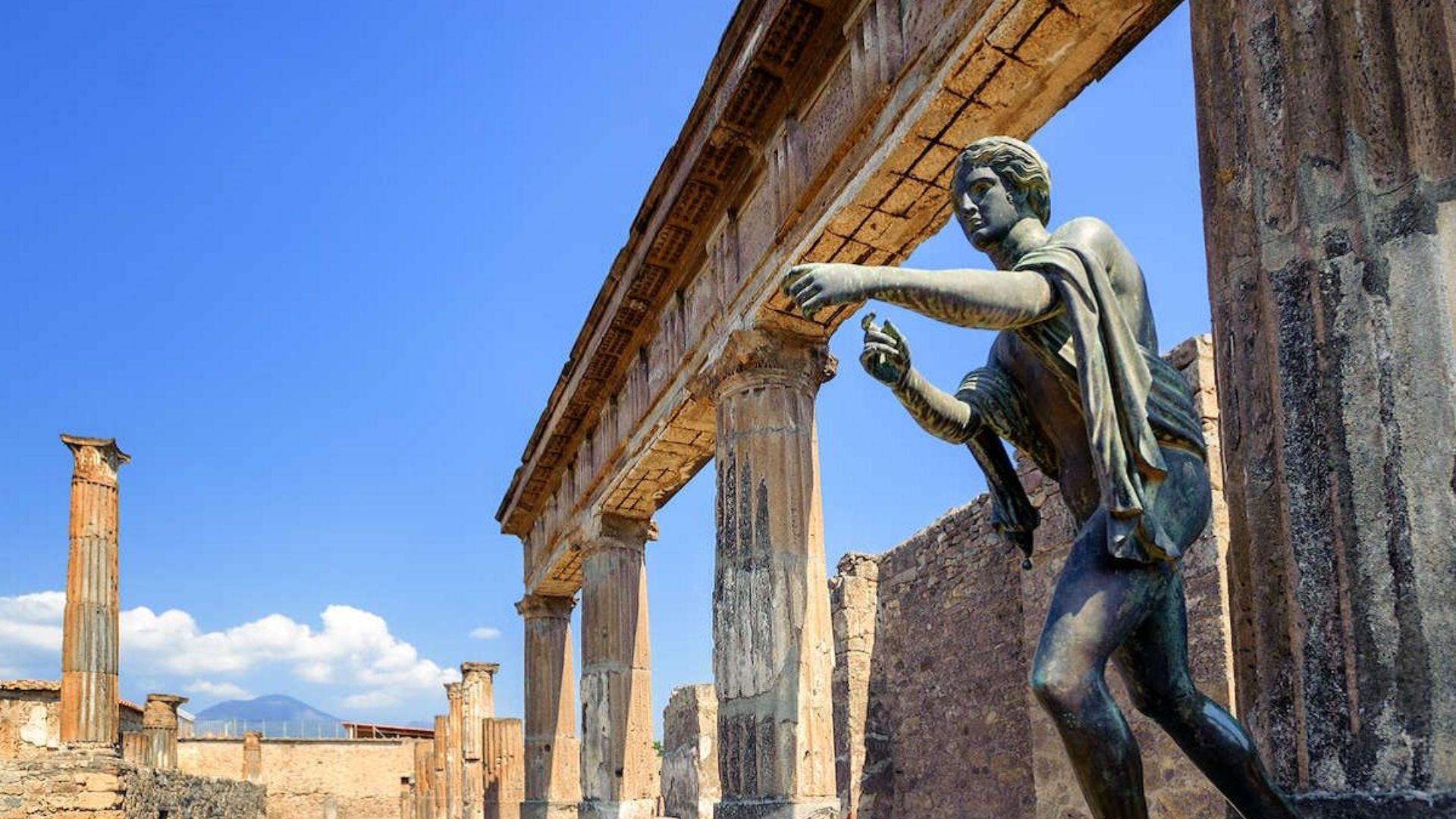
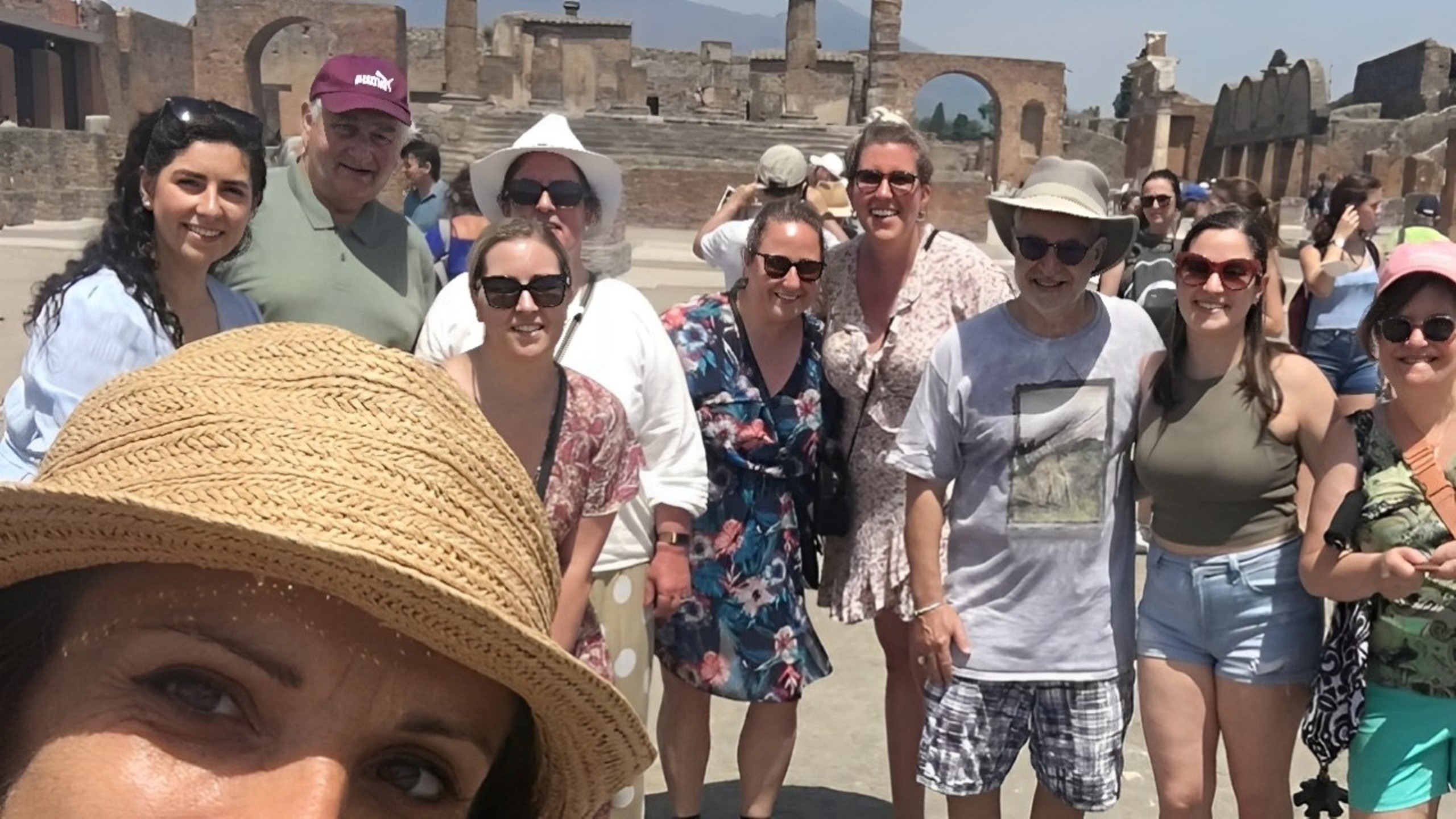
Pompeii is one of the most extraordinary archaeological sites in the world—a Roman city frozen in time by the eruption of Mount Vesuvius in AD 79. Walking its ancient streets, you’ll pass homes, shops, taverns, and bathhouses that still preserve frescoes, mosaics, and everyday details of life two thousand years ago. The scale surprises many visitors: Pompeii is vast, immersive, and richer in detail than most expect, with entire neighborhoods revealing how Romans lived, worked, and entertained themselves. You’ll see the outlines of elegant villas, modest dwellings, bakeries with intact ovens, and even ancient street crossings still marked by stepping stones. Visitors may explore independently or choose to tour with a licensed guide for added context, stories, and interpretation, making the ancient city feel remarkably alive.
2
Your visit begins at Porta Marina, one of Pompeii’s ancient city gates and the main entrance in Roman times. Passing through this gateway gives you a sense of arrival that would have been familiar to merchants, travelers, and citizens almost 2,000 years ago. From here, you can observe sections of the defensive walls that once enclosed the city, still standing with surprising solidity despite the eruption and centuries of weather. The gate and walls immediately set the tone for the rest of the site, offering a first glimpse of how carefully planned and fortified Pompeii was during the Roman era.
3
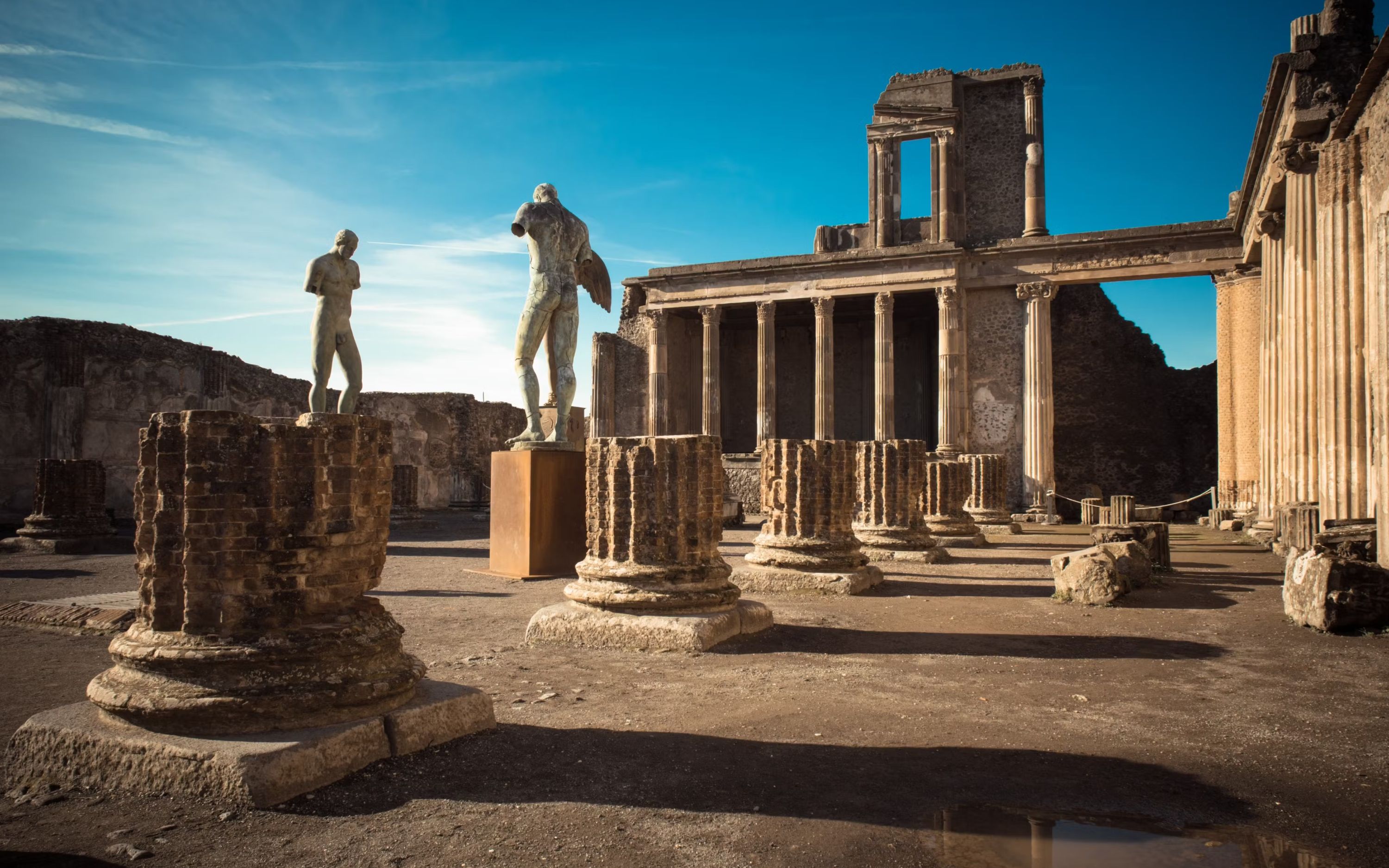
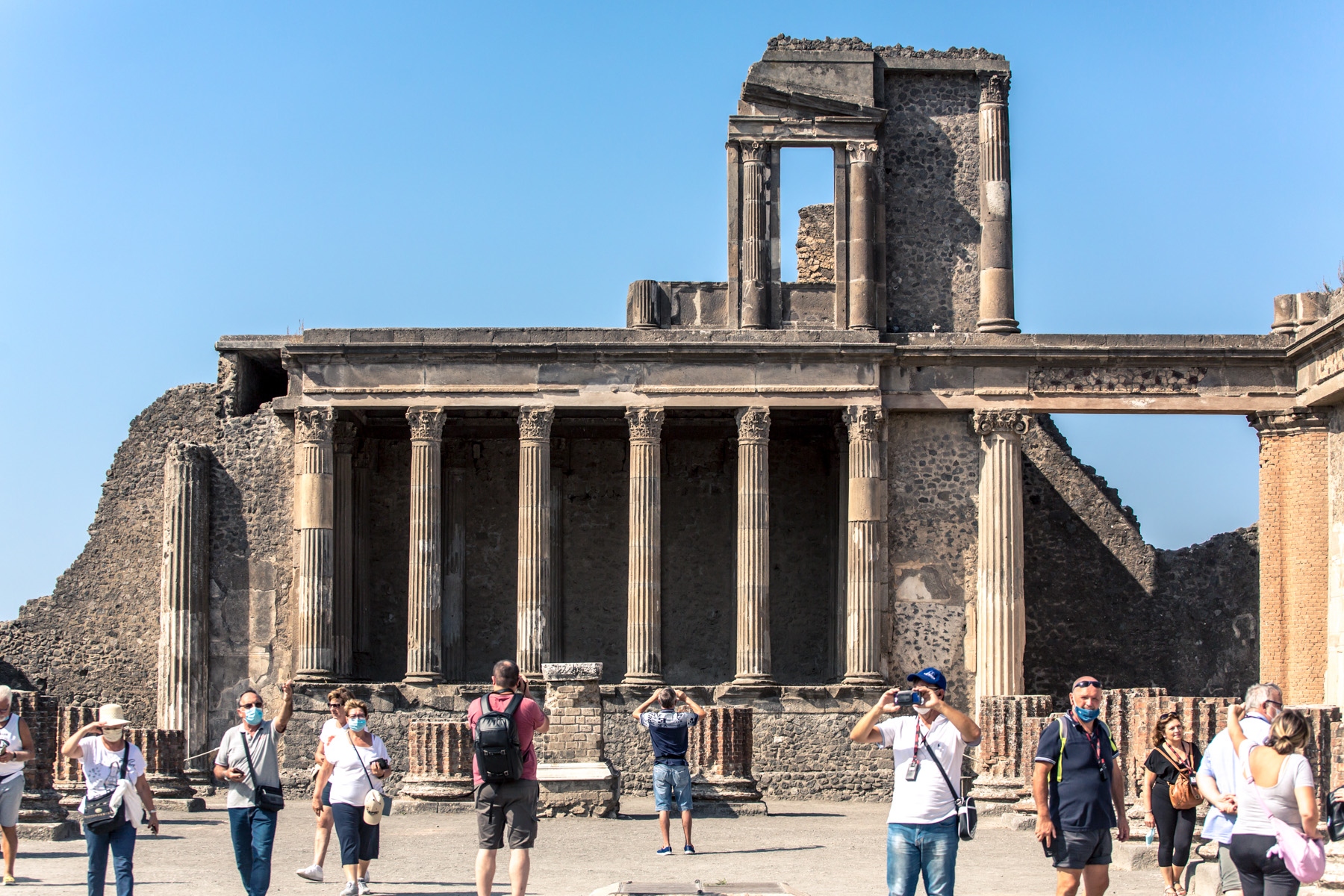
Stepping inside the Basilica, you enter one of Pompeii’s most impressive public buildings, once used for law courts and civic business. Its tall columns, open hall, and side aisles reveal how Romans organized civic life long before our modern institutions. Though roofless today, the layout is still easy to imagine, and visitors can picture magistrates, citizens, and merchants gathering here to settle disputes or negotiate deals. The scale and architecture immediately convey the importance of public life in ancient Pompeii and set the stage for the city’s sophisticated urban culture.
4
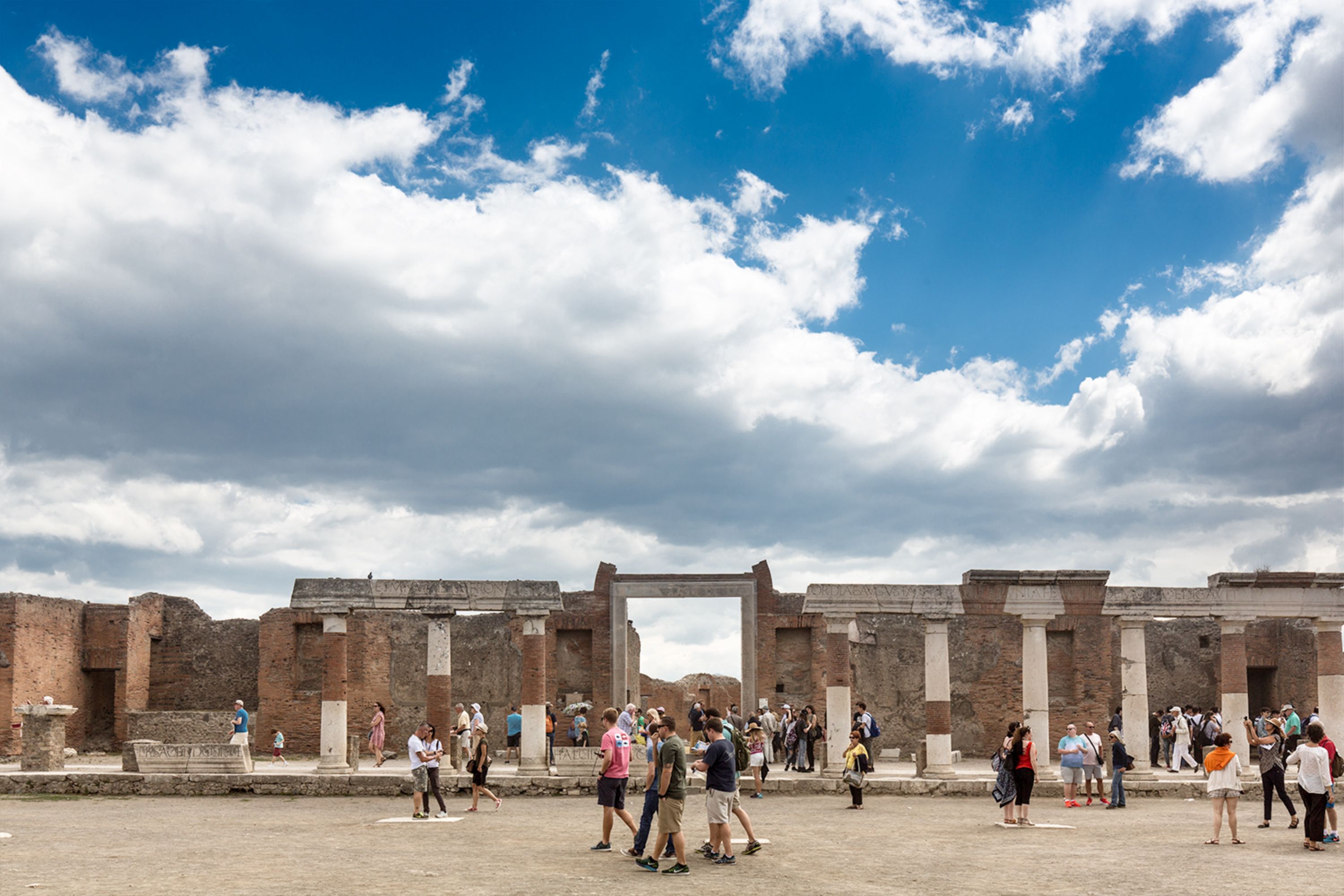
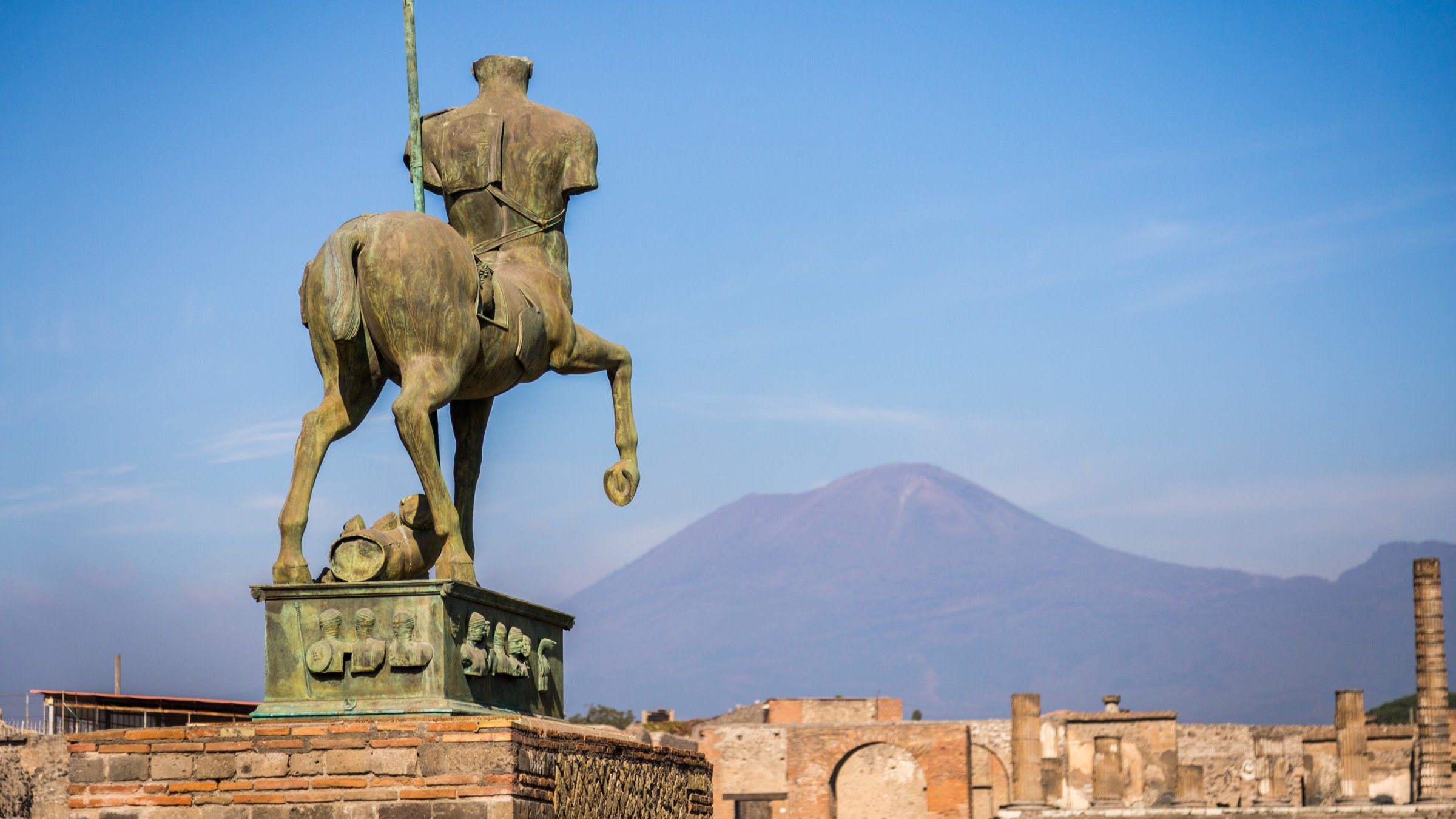
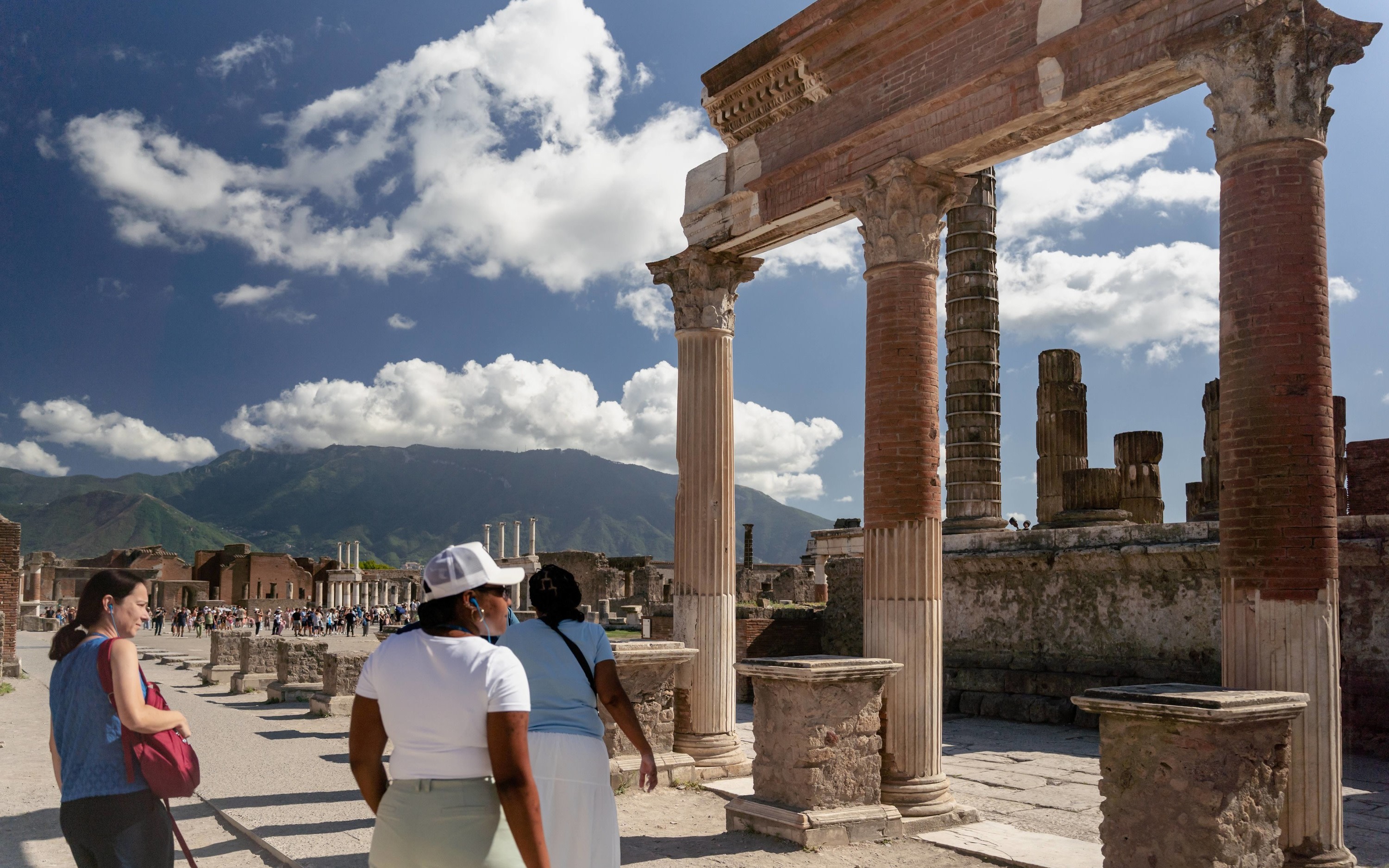
The Forum was the civic heart of Pompeii—the open plaza where politics, religion, markets, and public life came together. Standing in the middle of the square today, you can easily imagine the bustle of ancient citizens moving between temples, administrative buildings, and statues that once honored local elites and Roman emperors. The surrounding colonnades frame a dramatic view of Mount Vesuvius, making it clear how central the volcano was to Pompeii’s landscape long before its eruption changed everything. Even without roofs or frescoes, the Forum gives visitors one of the most powerful impressions of daily life and community in the ancient city.
5
Just off the Forum lies the Macellum, Pompeii’s principal food market and one of the best-preserved examples of a Roman commercial space. Walking through its porticoes and stalls, visitors can picture merchants selling fish, meat, fruit, and imported delicacies to the city’s residents. Marble counters, storage rooms, and basins still hint at how organized food distribution was in ancient Pompeii. At the rear of the complex, a small shrine once honored the imperial family—showing how commerce and politics intertwined in Roman society. The Macellum offers a vivid sense of everyday life, where shopping and social interaction went hand in hand two thousand years ago.
6
Among the most elegant bath complexes in Pompeii, the Forum Baths give visitors a close look at how Romans relaxed, socialized, and kept clean. The sequence of changing rooms, warm rooms, and hot plunge pools is still easy to follow, and the vaulted ceilings and stucco decorations have survived remarkably well. Heated floors and clever ventilation systems reveal the advanced engineering behind Roman bathing culture. Step inside and it becomes surprisingly easy to imagine the daily rhythm of Pompeian life—meeting friends, catching up on gossip, or unwinding after work in a ritual shared by all social classes.
7
One of the grandest private residences in Pompeii, the House of the Faun feels more like a palace than a home. Covering an entire city block, it dazzles visitors with spacious courtyards, columned gardens, and refined details that spoke to immense wealth. The famous bronze “Dancing Faun” once greeted guests at the entrance, while rooms throughout were decorated with high-quality mosaics—including the celebrated “Alexander Mosaic.” Walking through its vast layout offers a glimpse into the luxury and cultural sophistication enjoyed by Pompeii’s elite families.
8
Stop 8
Pass by
Beautifully restored and recently reopened to visitors, the House of the Vettii offers one of the most vivid windows into everyday life for wealthy Pompeians. Owned by two prosperous merchants, the residence is filled with colorful frescoes—some playful, some mythological—that decorated nearly every wall. Its elegant layout includes a central garden with statues and fountains, framed by columned walkways and private rooms. As you stroll through the house, you can imagine elegant banquets, business dealings, and family life unfolding beneath these still-brilliant paintings preserved by the eruption of 79 AD.
9
This large residential and commercial block reveals a lively slice of Pompeian daily life. Named after a tender fresco of a couple dining together, the insula combined elegant homes with bakeries, shops, and workshops. Excavations have uncovered vibrant wall paintings, ovens, counters, and building materials left mid-renovation—evidence that life here was busy and bustling right up until the eruption. Today, visitors explore the site from elevated walkways and ramps that hover above the ruins, offering a privileged, uninterrupted view into rooms, courtyards, and workspaces without disturbing the archaeological layers. From up here, you really see Pompeii not just as a city of grand villas but as a thriving, working community of artisans, merchants, and families.
10
Stop 10
Pass by
Walking along Via dell’Abbondanza is one of the most vivid ways to imagine Pompeii as a living city. This long central street once hosted shops, bakeries, bars, and workshops, all serving the crowds moving between the Forum and the amphitheater. You’ll notice stepping stones, water fountains, and wide sidewalks that reveal how well-organized and pedestrian-friendly Pompeii was nearly 2,000 years ago. Many building facades still show faded commercial signs and election posters—tiny snapshots of the city’s social and political life. Elevated walkways and ramps along the route allow visitors to observe the architecture, storefronts, and street layout from above, making it easier to understand how dense and dynamic this urban corridor once was. Walking here, you are truly in the heart of ancient Pompeii.
11
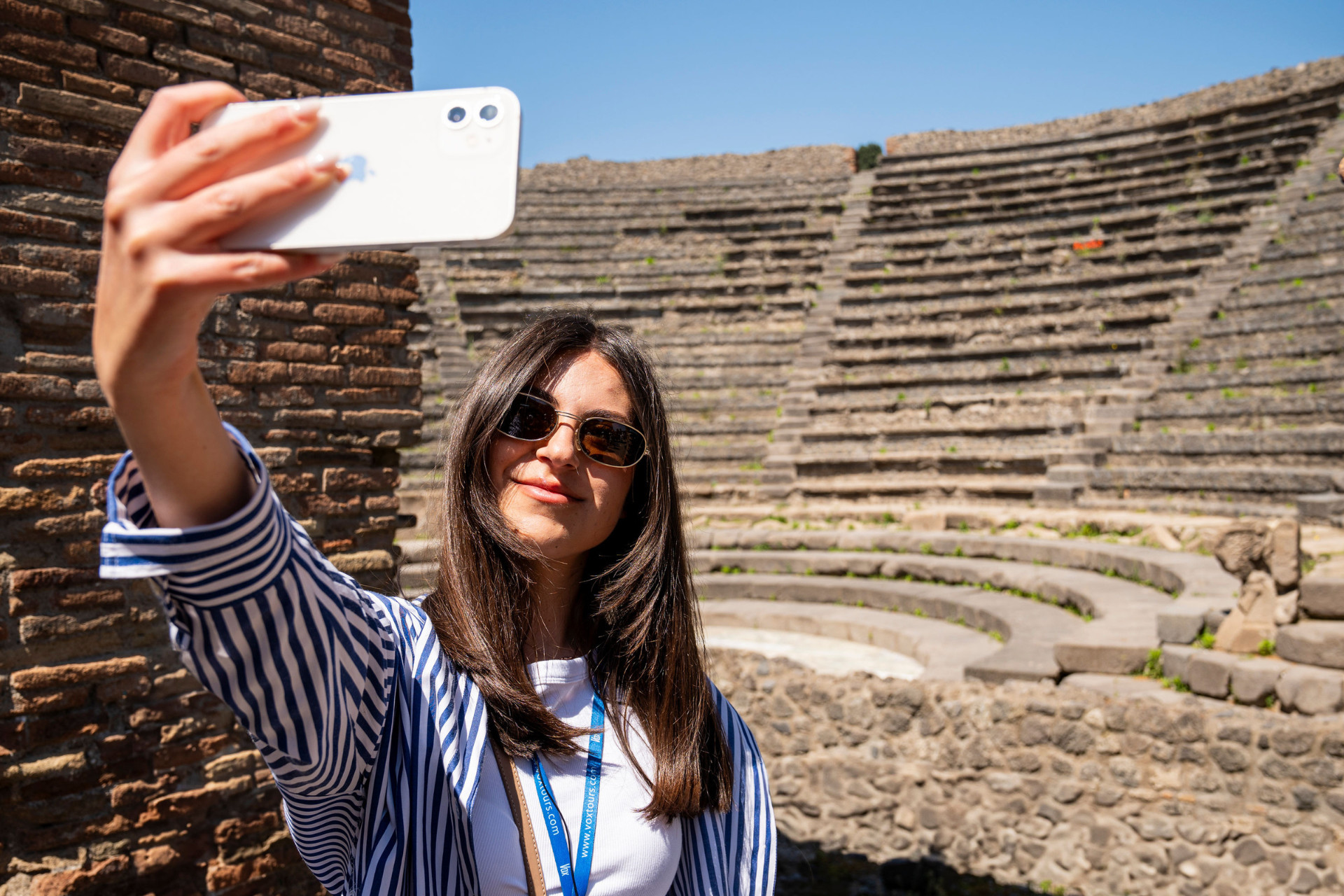
The Teatro Grande is one of Pompeii’s most impressive public buildings, an open-air theatre carved directly into the natural slope of the hill. Here, thousands of spectators once gathered for comedies, dramas, and musical performances in a remarkably well-designed acoustic space that still works today. As you take your seat on the stone cavea, you can easily picture the bustling atmosphere of Roman entertainment, from elite patrons in the best rows to everyday citizens filling the upper tiers. Modern elevated walkways allow visitors to access panoramic viewpoints above the stage, offering a clear sense of scale and allowing you to appreciate the elegant semicircular layout. Moments like this make Pompeii feel suddenly alive, as if the curtain might rise again at any moment.
12
The Antiquarium serves as Pompeii’s main museum space, offering valuable context for what you see throughout the archaeological park. Inside, thoughtfully curated exhibits display everyday objects, fresco fragments, luxury items, and the dramatic plaster casts that capture the final moments of the eruption. These artifacts tell the story of a sophisticated Roman city—its commerce, religion, cuisine, and social life—before it was abruptly frozen in time by Vesuvius. Clear signage and multimedia elements guide visitors through the city’s rise, destruction, and rediscovery, making it an ideal starting or ending point for your visit. Elevated viewing areas and wide pathways offer comfortable circulation, allowing you to examine pieces up close without feeling rushed.
13
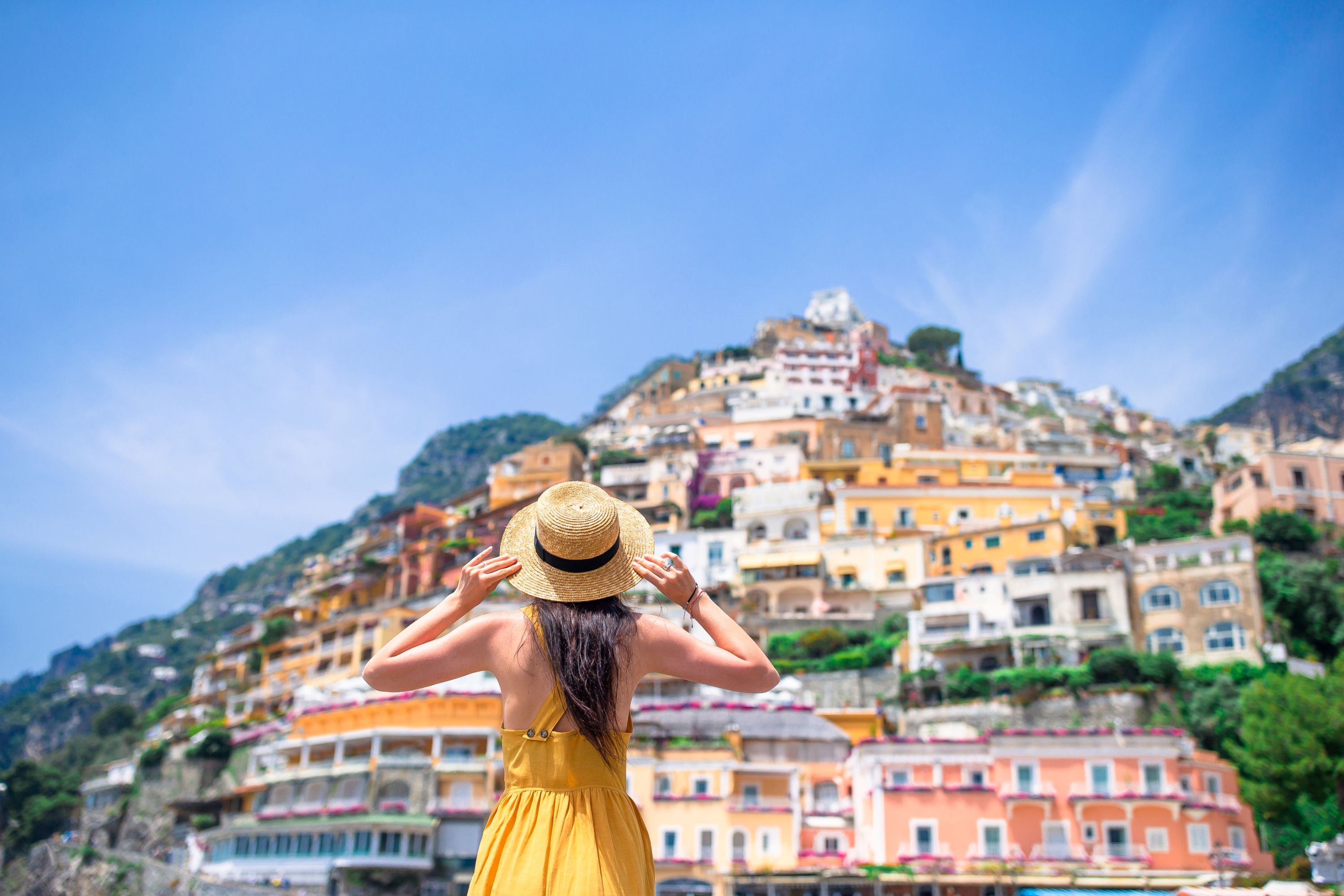
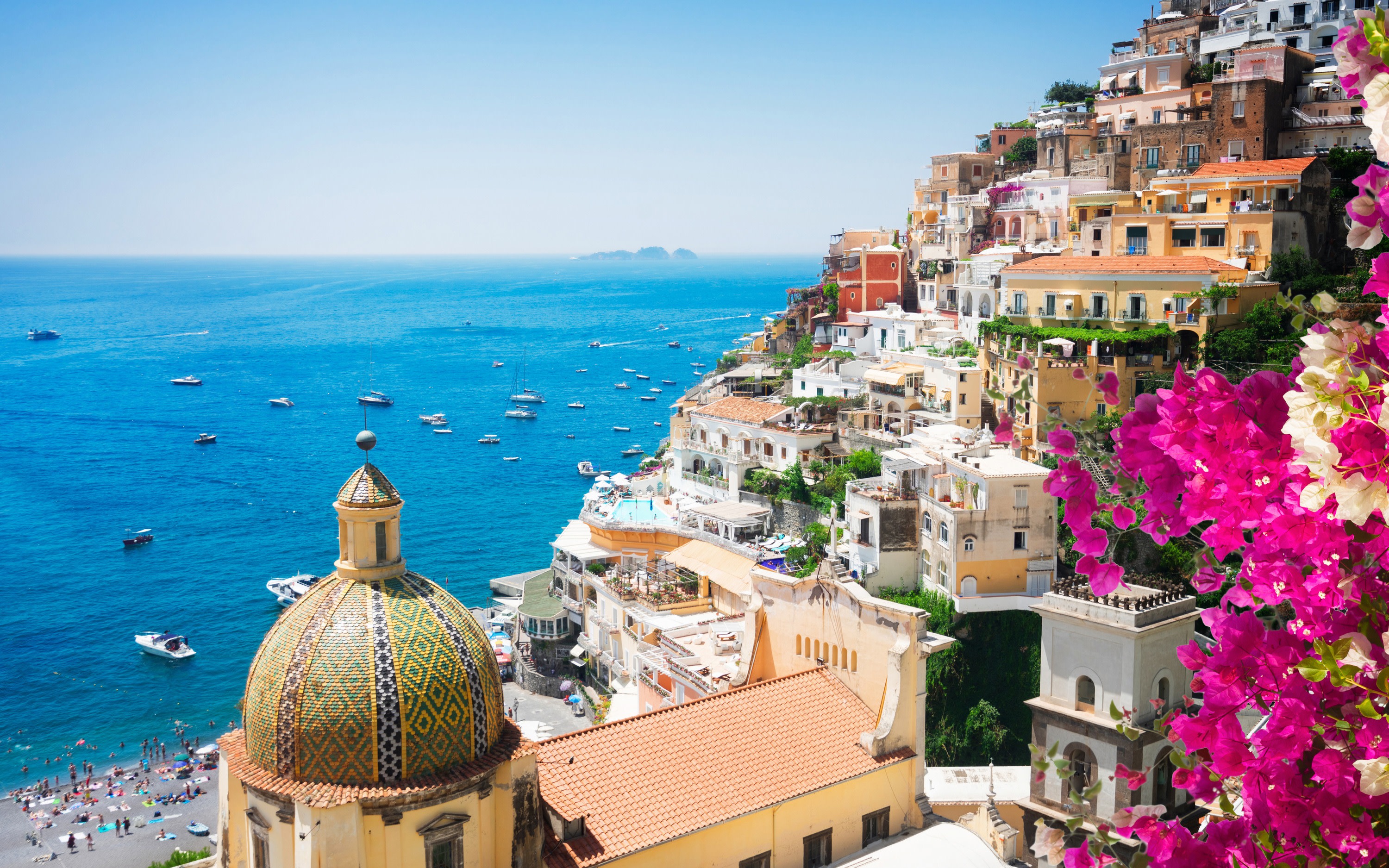
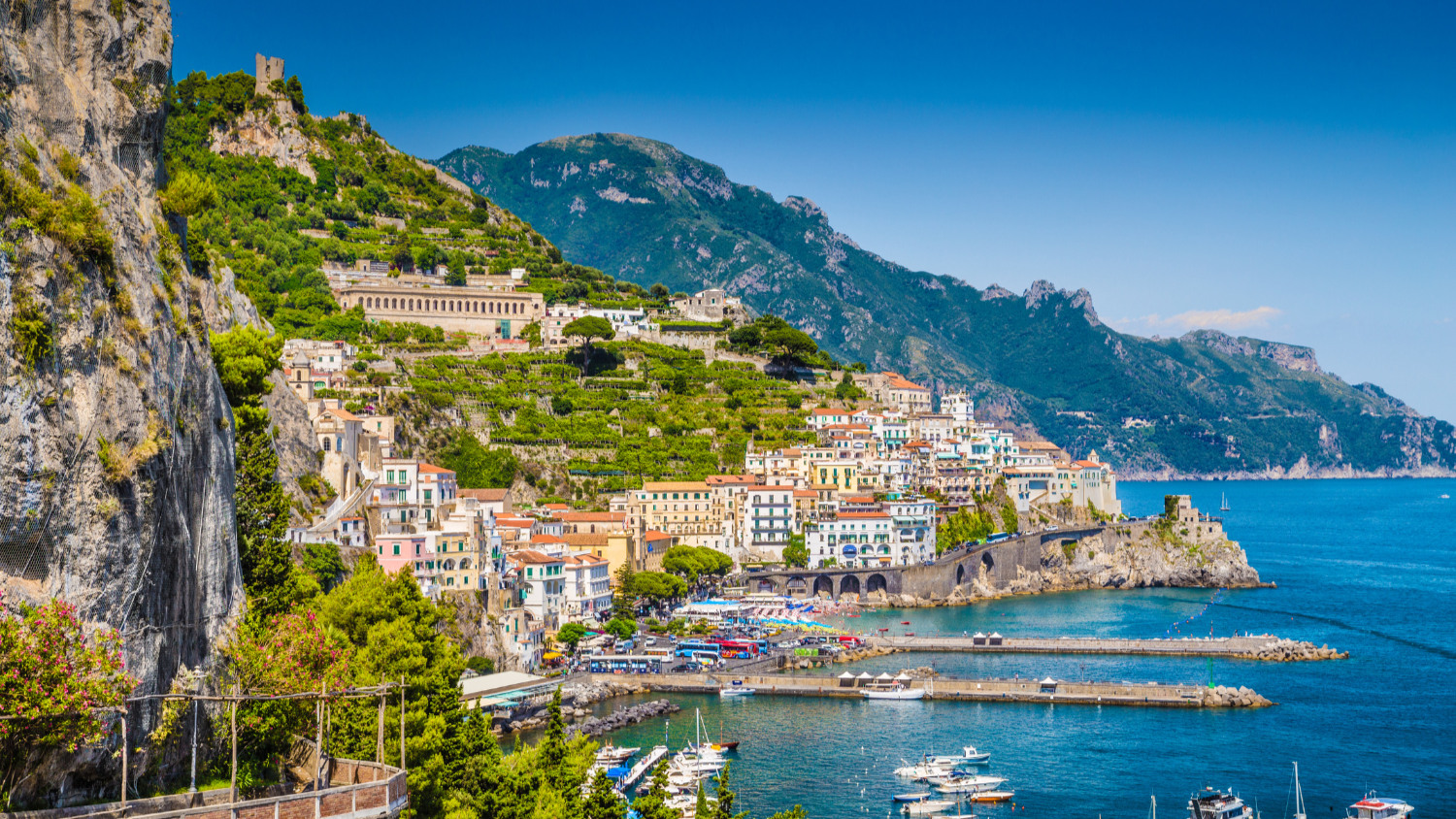
Considered one of the world’s most scenic coastal routes, the Amalfi Coast Drive winds along a dramatic cliff line between mountains and sea. As the road curves through tunnels and perched villages, the landscape shifts constantly—terraced lemon groves, pastel houses clinging to slopes, tiny harbors far below, and the blue expanse of the Mediterranean unfolding around each bend. The route is full of photo stops and viewpoints that reveal just how rugged and improbable this coastline is. Traveling with a private driver allows you to relax, enjoy the panorama, and fully experience the beauty that has drawn travelers here for centuries.
14
Ravello
Perched high above the Amalfi Coast on a natural terrace, Ravello offers a quieter, more refined atmosphere than the seaside towns below. Long admired by artists, writers, and musicians, the town blends medieval architecture with sweeping sea views that seem to float above the coastline. With about an hour of free time, visitors can explore Ravello’s charming piazzas, artisan boutiques, and photogenic lanes at their own pace, or simply relax at a café while enjoying a panorama that has inspired travelers for generations.
Highlights:
• Piazza Duomo
Ravello’s elegant main square, anchored by the 11th-century Cathedral. The Duomo features bronze doors and a bright interior that reflects the town’s historic ties to the maritime Republic of Amalfi.
• Scenic Terraces & Artisan Shops
Ceramic workshops, linen boutiques, and lemon-based products line Ravello’s narrow streets, offering distinctive souvenirs in a relaxed, uncrowded setting.
15
Stop 15
Located just off Ravello’s main square, Villa Rufolo was once the lavish residence of a powerful medieval family and later a stopping point for European artists on the Grand Tour. Its cloistered courtyards, Neo-Moorish arches, and tiered gardens reveal centuries of layered history, while the terraces open onto a soaring panorama of the Amalfi Coast far below. The villa famously inspired composer Richard Wagner, who found in its gardens the setting for scenes of Parsifal. Today visitors come to stroll the pathways, enjoy the botanical displays, or simply take in a view that has made Ravello synonymous with elegance and tranquility.
16
Stop 16
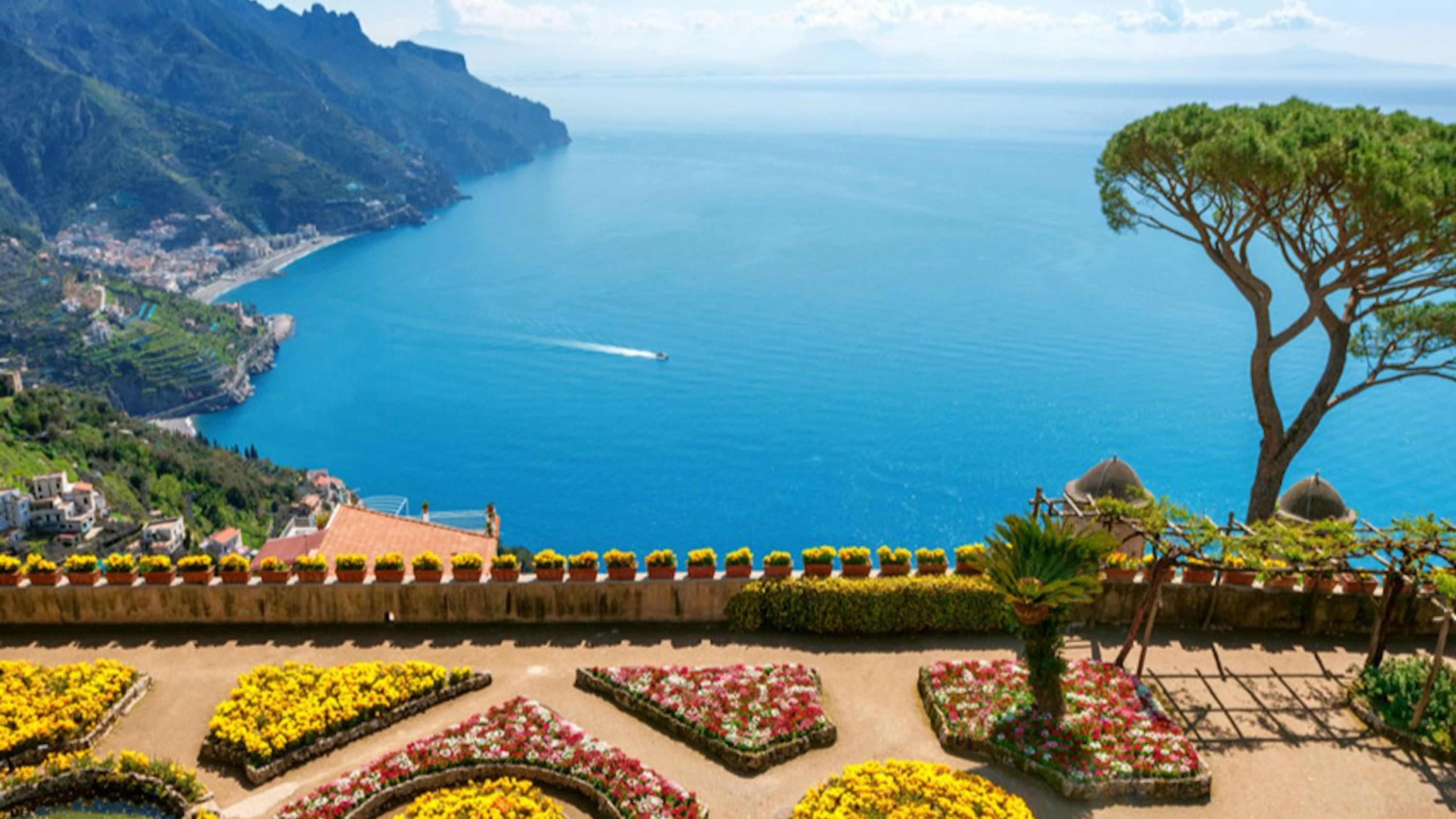
Set on the eastern edge of Ravello, the gardens of Villa Cimbrone offer one of the most dramatic panoramas on the Amalfi Coast. Designed in the early 20th century by an English patron with a passion for classical art and landscape design, the gardens blend shaded walkways, rose terraces, statues, and decorative follies that open onto sweeping views. The highlight is the celebrated Terrace of Infinity, where a balustrade lined with marble busts seems to float between sky and sea. Whether you wander slowly or simply come for the outlook, Villa Cimbrone captures Ravello’s quiet elegance and its enduring appeal to artists and travelers.
17
Known as the “City of Taste,” Minori is a charming seaside town where everyday life still feels authentically local. Its small beach, gentle waterfront, and inviting pastry shops make it a refreshing pause along the Amalfi Coast. Minori has ancient roots—once a Roman maritime village—and you can still visit the remains of a 1st-century villa tucked into the town. Today it’s especially loved for its handmade pastas and lemon-based specialties, which fill the narrow lanes with sweet, bright aromas. Whether you stop for a stroll, a snack, or a view of the sea, Minori offers a quieter slice of coastal life.
18
Maiori stretches along one of the longest beaches on the Amalfi Coast, giving the town a more open and breezy feel compared to its cliffside neighbors. Once favored by the coastal princes of Amalfi, it has long been a hub for seaside trade and maritime culture. Today visitors enjoy its wide promenade, relaxed cafés, and easy access to the sea, making it a pleasant stop for a walk or a refreshment. Behind the waterfront, pastel houses climb toward the mountains, where old pathways and lemon terraces begin. Maiori offers a gentler and less crowded coastal experience while still showcasing the beauty that defines this iconic coastline.
19
As the road curves along the coast, you’ll catch views of Cetara, a small and remarkably authentic fishing village tucked between steep mountains and the sea. Its tiny harbor, colorful boats, and medieval watchtower reveal a place still centered around the daily catch. Known for its prized anchovy tradition, Cetara offers a snapshot of the Amalfi Coast before tourism—quiet, working, and deeply tied to the water.
20
Visible from the coastal road as you approach Salerno, Vietri sul Mare stands out for its bright ceramic tiles and domed church glittering above the houses. Considered the artistic gateway to the Amalfi Coast, Vietri has produced distinctive hand-painted ceramics for centuries, a tradition still recognizable in shop signs, façades, and decorative details throughout town. Even from the road, the colors and patterns give Vietri a lively, creative character that contrasts with the rugged cliffs surrounding it.
What's not included
Admission fees at Pompeii - unless you select the Guide in Pompeii Option
Private Guide for Pompeii - unless you select the Guide in Pompeii option
Lunch
Available languages
Guide guide
EN
IT
Reviews breakdown
Viator
4.8
30 reviews
5★
27
4★
1
3★
2
2★
0
1★
0
Tripadvisor
5.0
41 reviews
5★
40
4★
0
3★
1
2★
0
1★
0
Important information
Service animals allowed
Public transportation options are available nearby
Specialized infant seats are available
Not recommended for travelers with spinal injuries
Not recommended for pregnant travelers
Not recommended for travelers with poor cardiovascular health
Travelers should have at least a moderate level of physical fitness
If any group member does not will to walk in Pompeii there are some cafés and gift shops right in front of the ticket office
We recommend comfortable shoes for Pompeii. And sun gears during summertime.
Important notes
Please let us know where would you like us to meet you
About Pompeii
Pompeii is an ancient Roman city near modern-day Naples, famously preserved by volcanic ash from the eruption of Mount Vesuvius in 79 AD. It offers a unique glimpse into Roman life, with remarkably well-preserved ruins and artifacts. The site is a UNESCO World Heritage Site and one of the most visited archaeological sites in the world.
Top Attractions
Pompeii Archaeological Park
The main attraction in Pompeii, this vast archaeological site preserves the ruins of the ancient Roman city buried by the eruption of Mount Vesuvius in 79 AD. It offers a unique glimpse into Roman life and architecture.
Historical
3-5 hours
€18 (full price ticket)
Mount Vesuvius
The volcano that famously destroyed Pompeii offers a scenic hike with panoramic views of the Bay of Naples. The crater is accessible via a short walk from the summit.
Nature
2-3 hours
€10 (entry fee)
Villa of the Mysteries
One of the most famous villas in Pompeii, known for its well-preserved frescoes depicting mysterious rituals. The villa offers insight into the daily life and beliefs of the ancient Romans.
Historical
30-45 minutes
Included in the general admission ticket
Must-Try Local Dishes
Pizza Margherita
A classic Neapolitan pizza topped with tomato sauce, mozzarella cheese, and fresh basil. It is a must-try in the region.
Lunch/Dinner
Contains dairy and gluten
Spaghetti alle Vongole
A traditional Italian dish made with spaghetti, clams, garlic, white wine, and parsley. It is a popular seafood dish in the region.
Lunch/Dinner
Contains seafood and gluten
Sfogliatella
A traditional Neapolitan pastry filled with sweet ricotta cheese and candied fruit. It is a popular dessert in the region.
Dessert
Contains dairy and gluten
Popular Activities
Hiking Mount Vesuvius
Biking in the surrounding countryside
Beach visits in nearby coastal towns
Wine tasting in local vineyards
Visiting museums and historic sites
Attending local festivals and events
Boat tours in the Bay of Naples
Visiting nearby ski resorts
Best Time to Visit
April to June, September to October
The peak season offers comfortable temperatures and fewer crowds compared to the summer months. The weather is ideal for exploring the ruins.
15°C to 28°C
59°F to 82°F
Practical Information
Language
- Official: Italian
- Widely spoken: English, Neapolitan
- English: Moderately spoken
Currency
Euro (EUR)
Time Zone
GMT+1 (Central European Time)
Electricity
230VV, 50HzHz
Safety Information
Overall Safety Rating: Generally safe
Pompeii is generally safe for tourists, but pickpocketing and petty theft can occur in crowded areas. It is important to be aware of your surroundings and take precautions to protect your belongings.
Important Precautions:
- • Keep valuables secure and out of sight
- • Use licensed taxis or ride-sharing services
- • Be cautious of strangers approaching you with petitions or requests for money
Getting there
By air
- Naples International Airport • 20 km (12 miles)
By train
Pompeii Scavi - Villa dei Misteri Station
By bus
Naples, Sorrento, Salerno
Getting around
Public transport
Buses are available in the modern town of Pompeii, but the archaeological site is best explored on foot.
Taxis
Available • Apps: Uber, FreeNow
Rentals
Car, Bike, Scooter
Neighborhoods
Pompeii Town
Ancient Pompeii
Day trips
Naples
25 km (15 miles) • Full day
Naples is a vibrant city known for its rich history, art, and culture. It offers a variety of attractions, including museums, churches, and historic sites.
Sorrento
20 km (12 miles) • Full day
Sorrento is a charming coastal town known for its beautiful views, lemon groves, and traditional crafts. It offers a variety of attractions, including beaches, shops, and restaurants.
Herculaneum
15 km (9 miles) • Half day
Herculaneum is an ancient Roman town that was also buried by the eruption of Mount Vesuvius in 79 AD. It offers a unique glimpse into Roman life and architecture.
Festivals
Festa di San Gennaro • September 19
Pompeii Wine Festival • May
Napoli Teatro Festival • June to July
Pro tips
- Arrive early to the archaeological site to beat the crowds and the heat
- Wear comfortable shoes and bring water and sun protection
- Consider hiring a guide or using an audio guide for a deeper understanding of the site
- Try traditional Neapolitan pizza and other local dishes in Pompeii and the surrounding region
- Visit nearby attractions, such as Naples, Sorrento, and Herculaneum, for a more comprehensive experience
From $25
per person
Price varies by option
Secure booking
Free cancellation available
Instant confirmation