Guided Tours of Pompeii Excavations Historical and Cultural Itineraries
Active
4h
For a full refund, cancel at least 24 hours before the scheduled departure time.
Manual confirmation
Mobile or paper ticket accepted
About this experience
The guided tour lasts four hours. The splendid Villa dei Misteri, with the famous Dionysian fresco, is included in the itinerary.
The itinerary is presented through a historiographical and cultural interpretation. You can admire the Domus Pompeiana, the large state house, notable for the richness of its frescoes and splendid mosaics. The Dionysian and Isiac Mystery cults. The daily life of the ancient Hellenistic city, the "Most Living Among the Dead Cities".
Pompeii certainly represents a cultural complex that affects the consistency of the entire Mediterranean, when the "Mare Nostro" was a sea that united and did not divide.
Pompeii is not a Greek city, nor even a Roman one, but a Hellenistic one. That is to say a large commercial and industrial center that had relations with Asia Minor, with India and with Persia, the whole world preserves Pompeii, it is because the eruption was experienced as a divine punishment with the latest writings " SODOM AND GOMORRA"
Available options
Guided Tours of Pompeii Excavations Historical and Cultural Itineraries
What's included
Guide and assistance for the entire duration of the tour
Small group (maximum 15 people per guide)
Guide specialized in archaeology, history and philosophy
Detailed itinerary
1
Stop 1
Suburban spas: the splendid frigidarium, with a nymphaeum in glass paste, of polychrome and glazed tiles, and the swimming pool frescoed with Nilotic subjects.
2
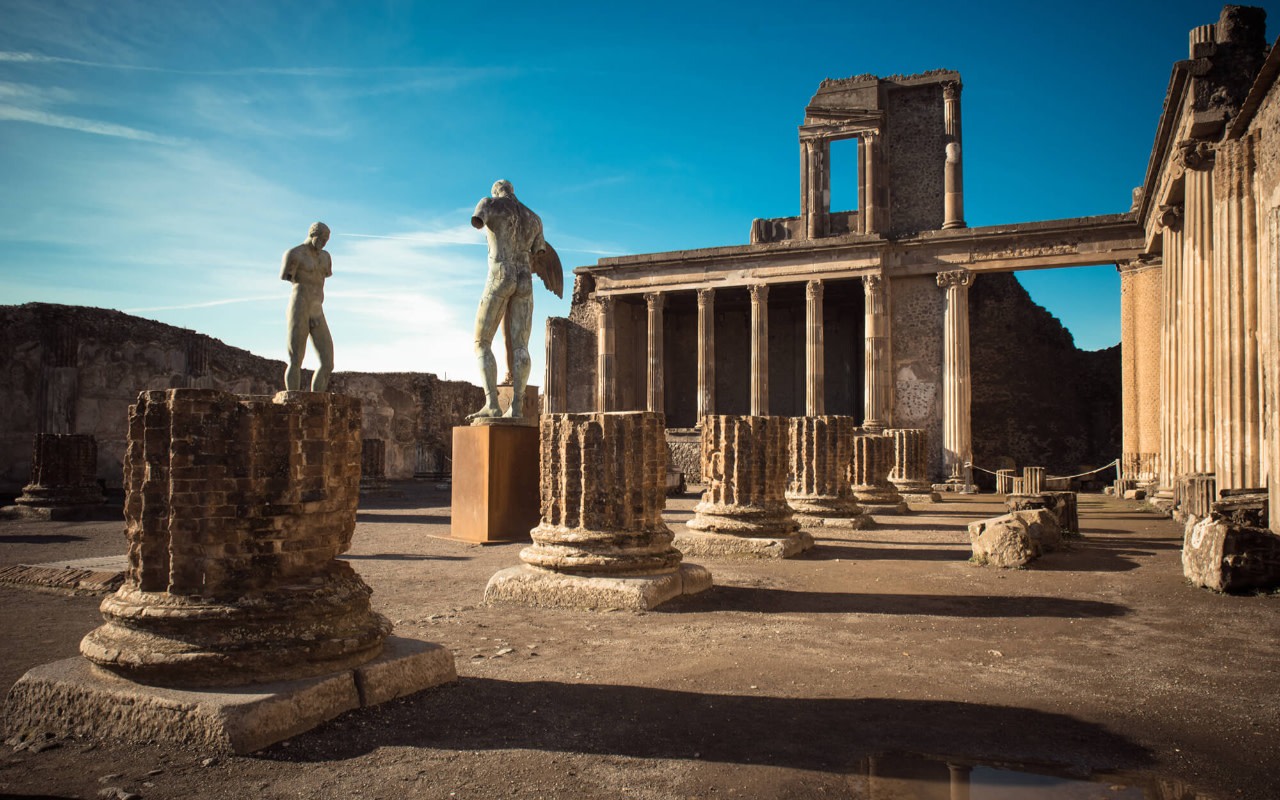
The place of the Imperial cult and Goddess of sailors. The temple of Venus occupies a terrace that dominates the entire surrounding landscape. An impressive bronze statue depicting Daedalus by the great Polish artist Igor Mitoraj.
3
The great Tribunal of Pompeii. The Basilica of Pompeii has three naves and anticipates the typology of the Christian basilica. It is the largest public building in Pompeii. A monument of extraordinary architectural grandeur.
4
Stop 4
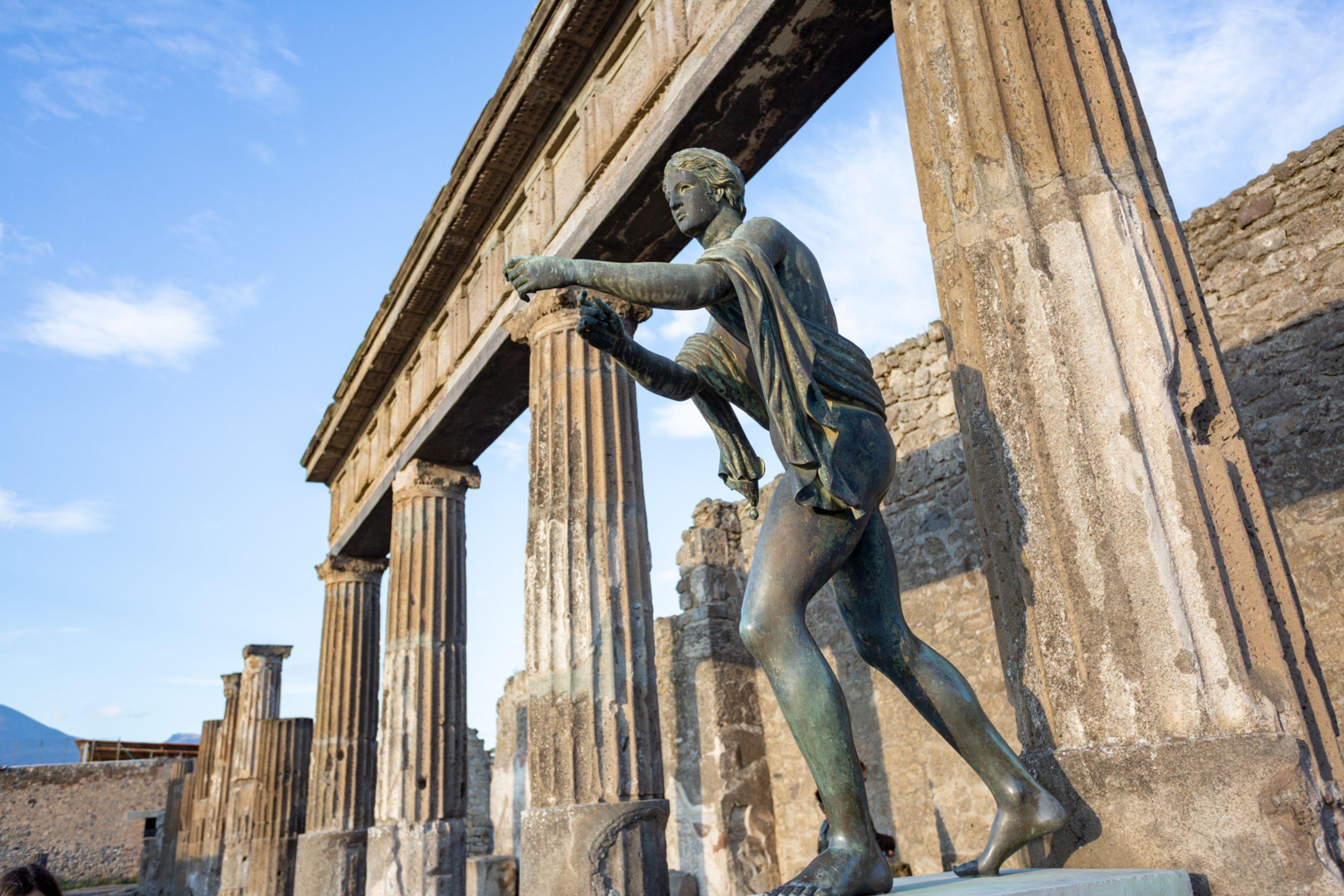
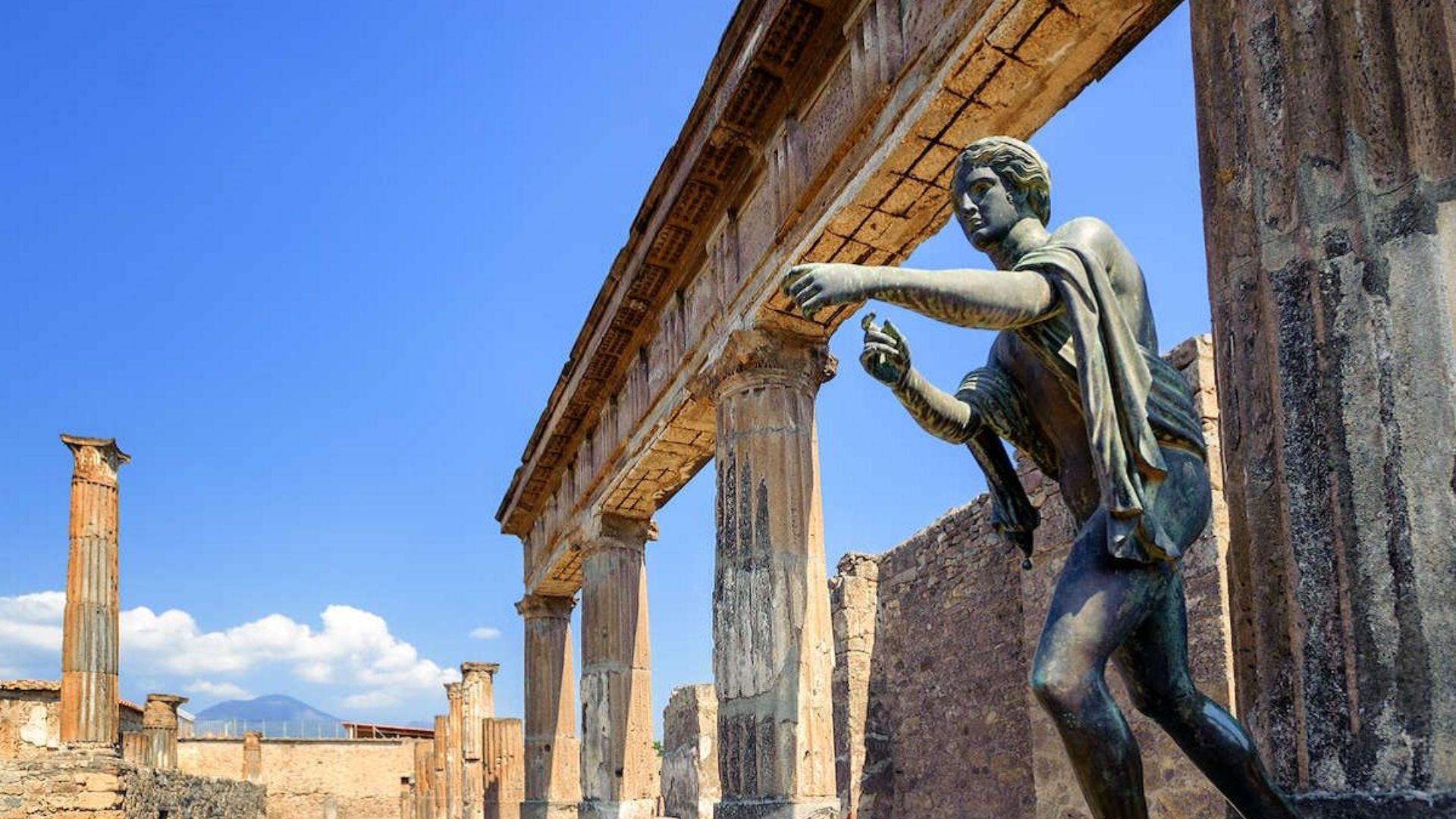
Ethical and prophetic worship. The Temple of Apollo is a magnificent building of Greek design. Its architectural and plastic configuration is stupendous. The two bronze statues representing Apollo and Diana dominate.
5
Commercial, administrative and religious center of the city. The Forum of Pompeii is an urban complex of majestic grandeur. It is dominated by the grandiose Temple of Jupiter, Juno and Minerva.
6
Wellness center and SPA of the ancient community of Pompeii.
In this perfectly preserved thermal complex, the tepidarium stands out, with its splendid stuccoes from the Neronian school, and the grandiose alabaster labrum in the calidarium, of Egyptian origin.
7
The largest in all of Pompeii, a palace house from the Hellenistic era. In this house you can admire an excellent copy of one of the most famous mosaics of the Roman world, the Battle of Issus in 333 BC, between Alexander the Great against Darius III of Persia.
8
Stop 8
Splendid frescoes of the fourth Pompeian style. In this house you can admire the famous Priapus, of the Neronian school. The majestic Hall is splendid, with a rich production of Cupids intent on working activities. The grandest pictorial cycle of the Neronian school in all of Pompeii. The mythological paintings are grandiose, including Daedalus and the Minotaur.
9
Perfectly preserved Pompeian domus with its Rhodian peristyle. In this Domus, the obsidian mirrors are splendid. Of notable interest and beauty are the Shrine, dedicated to the cult of Isis, and the Lararium, the protector gods of the House. The frescoes dedicated to the Trojan War are magnificent.
10
Famous Dionysian fresco, from the first century BC, unique in the world for its state of conservation.
What's not included
Snacks
Entrance Ticket to the Pompeii Ruins
Available languages
Guide guide
IT
Reviews breakdown
Viator
4.9
13 reviews
5★
12
4★
1
3★
0
2★
0
1★
0
Tripadvisor
5.0
69 reviews
5★
69
4★
0
3★
0
2★
0
1★
0
Important information
Service animals allowed
Public transportation options are available nearby
Suitable for all physical fitness levels
Meeting point
Entrance to the Porta Marina Superiore excavations
About Pompeii
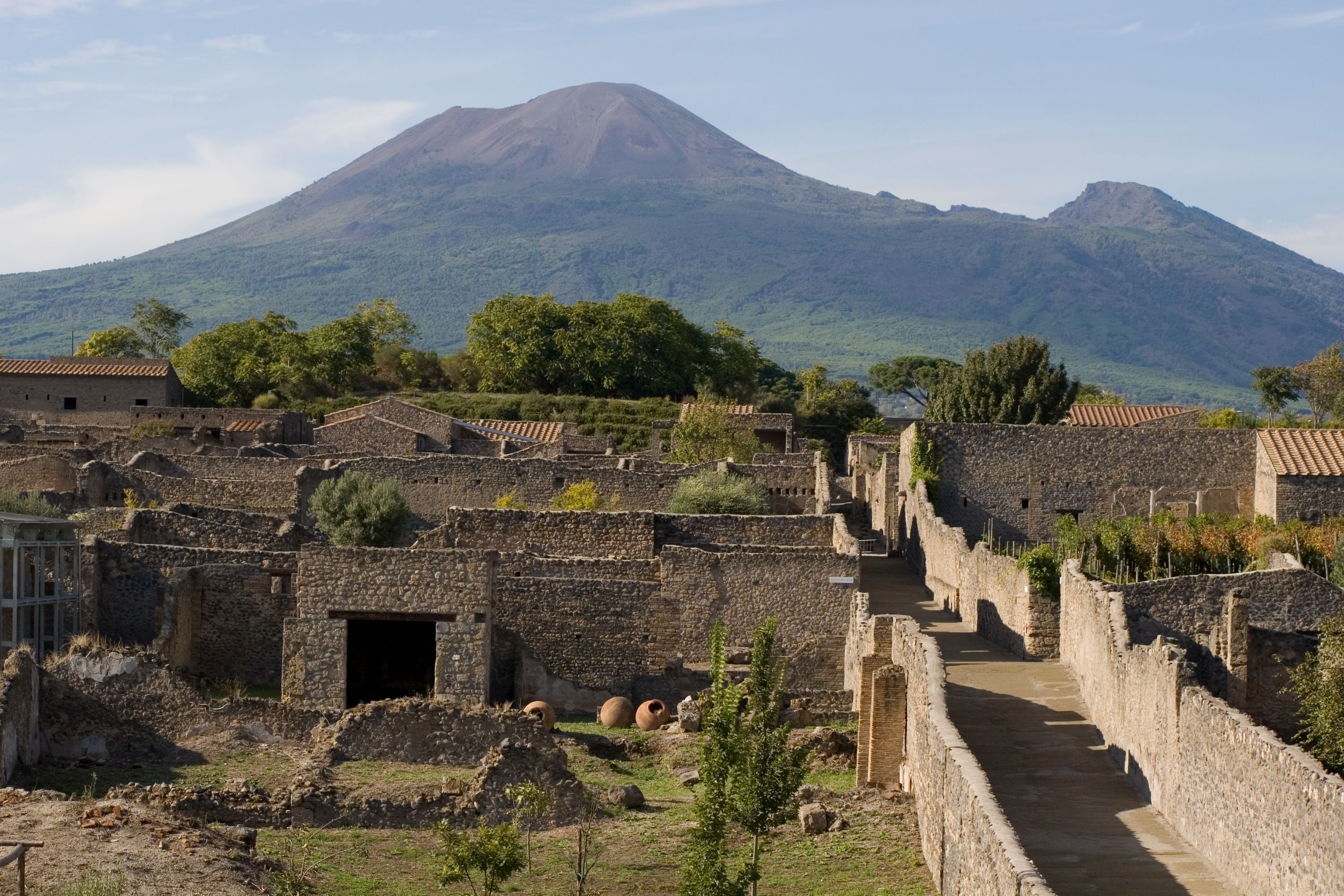
Pompeii is an ancient Roman city near modern-day Naples, famously preserved by volcanic ash from the eruption of Mount Vesuvius in 79 AD. It offers a unique glimpse into Roman life, with remarkably well-preserved ruins and artifacts. The site is a UNESCO World Heritage Site and one of the most visited archaeological sites in the world.
Top Attractions
Pompeii Archaeological Park
The main attraction in Pompeii, this vast archaeological site preserves the ruins of the ancient Roman city buried by the eruption of Mount Vesuvius in 79 AD. It offers a unique glimpse into Roman life and architecture.
Historical
3-5 hours
€18 (full price ticket)
Mount Vesuvius
The volcano that famously destroyed Pompeii offers a scenic hike with panoramic views of the Bay of Naples. The crater is accessible via a short walk from the summit.
Nature
2-3 hours
€10 (entry fee)
Villa of the Mysteries
One of the most famous villas in Pompeii, known for its well-preserved frescoes depicting mysterious rituals. The villa offers insight into the daily life and beliefs of the ancient Romans.
Historical
30-45 minutes
Included in the general admission ticket
Must-Try Local Dishes
Pizza Margherita
A classic Neapolitan pizza topped with tomato sauce, mozzarella cheese, and fresh basil. It is a must-try in the region.
Lunch/Dinner
Contains dairy and gluten
Spaghetti alle Vongole
A traditional Italian dish made with spaghetti, clams, garlic, white wine, and parsley. It is a popular seafood dish in the region.
Lunch/Dinner
Contains seafood and gluten
Sfogliatella
A traditional Neapolitan pastry filled with sweet ricotta cheese and candied fruit. It is a popular dessert in the region.
Dessert
Contains dairy and gluten
Popular Activities
Hiking Mount Vesuvius
Biking in the surrounding countryside
Beach visits in nearby coastal towns
Wine tasting in local vineyards
Visiting museums and historic sites
Attending local festivals and events
Boat tours in the Bay of Naples
Visiting nearby ski resorts
Best Time to Visit
April to June, September to October
The peak season offers comfortable temperatures and fewer crowds compared to the summer months. The weather is ideal for exploring the ruins.
15°C to 28°C
59°F to 82°F
Practical Information
Language
- Official: Italian
- Widely spoken: English, Neapolitan
- English: Moderately spoken
Currency
Euro (EUR)
Time Zone
GMT+1 (Central European Time)
Electricity
230VV, 50HzHz
Safety Information
Overall Safety Rating: Generally safe
Pompeii is generally safe for tourists, but pickpocketing and petty theft can occur in crowded areas. It is important to be aware of your surroundings and take precautions to protect your belongings.
Important Precautions:
- • Keep valuables secure and out of sight
- • Use licensed taxis or ride-sharing services
- • Be cautious of strangers approaching you with petitions or requests for money
Getting there
By air
- Naples International Airport • 20 km (12 miles)
By train
Pompeii Scavi - Villa dei Misteri Station
By bus
Naples, Sorrento, Salerno
Getting around
Public transport
Buses are available in the modern town of Pompeii, but the archaeological site is best explored on foot.
Taxis
Available • Apps: Uber, FreeNow
Rentals
Car, Bike, Scooter
Neighborhoods
Pompeii Town
Ancient Pompeii
Day trips
Naples
25 km (15 miles) • Full day
Naples is a vibrant city known for its rich history, art, and culture. It offers a variety of attractions, including museums, churches, and historic sites.
Sorrento
20 km (12 miles) • Full day
Sorrento is a charming coastal town known for its beautiful views, lemon groves, and traditional crafts. It offers a variety of attractions, including beaches, shops, and restaurants.
Herculaneum
15 km (9 miles) • Half day
Herculaneum is an ancient Roman town that was also buried by the eruption of Mount Vesuvius in 79 AD. It offers a unique glimpse into Roman life and architecture.
Festivals
Festa di San Gennaro • September 19
Pompeii Wine Festival • May
Napoli Teatro Festival • June to July
Pro tips
- Arrive early to the archaeological site to beat the crowds and the heat
- Wear comfortable shoes and bring water and sun protection
- Consider hiring a guide or using an audio guide for a deeper understanding of the site
- Try traditional Neapolitan pizza and other local dishes in Pompeii and the surrounding region
- Visit nearby attractions, such as Naples, Sorrento, and Herculaneum, for a more comprehensive experience
From $25
per person
Price varies by option
Secure booking
Free cancellation available