The Grand Tour of Communist Ages at Timisoara
Active
3h - 4h
For a full refund, cancel at least 24 hours before the scheduled departure time.
Manual confirmation
Mobile or paper ticket accepted
About this experience
In December 1989 the communist Romania could be considered as a mental-hospital where the lunatics were running the asylum and the “internees” were punished for their sanity. How did we get to have one of the most symbolic dictatorship regimes in the modern history? What and who are to be blamed for this tragic condition? And not the last, how did courageous people stood-up and repudiated the evil leaders? The Grand Tour of Communist Ages is trying to provide answers to these complex questions, and not only.
Available options
The Grand Tour of Communist Ages at Timisoara
What's included
Professional guide
Detailed itinerary
1
We'll be spending time in one of the neighborhoods of Timisoara where we will see how life was back during communism times.
2
Here we'll talk about the beginnings of the Communist regime in Romania. We'll learn how it was installed and we'll see how it developed. We'll see also a unique private collection of objects made in Romania during the Communist era.
3
This is the place where everything started. We'll talk about 15th and 16th December 1989. In the afternoon of the 16th of December, one young man stopped a tram and his friend climbed the tram and shouted "Down with Ceausescu!"
4
Few young people died while protesting on the stairs of the cathedral because the Army opened fire without warning.
We'll see some of the bullet holes.
5
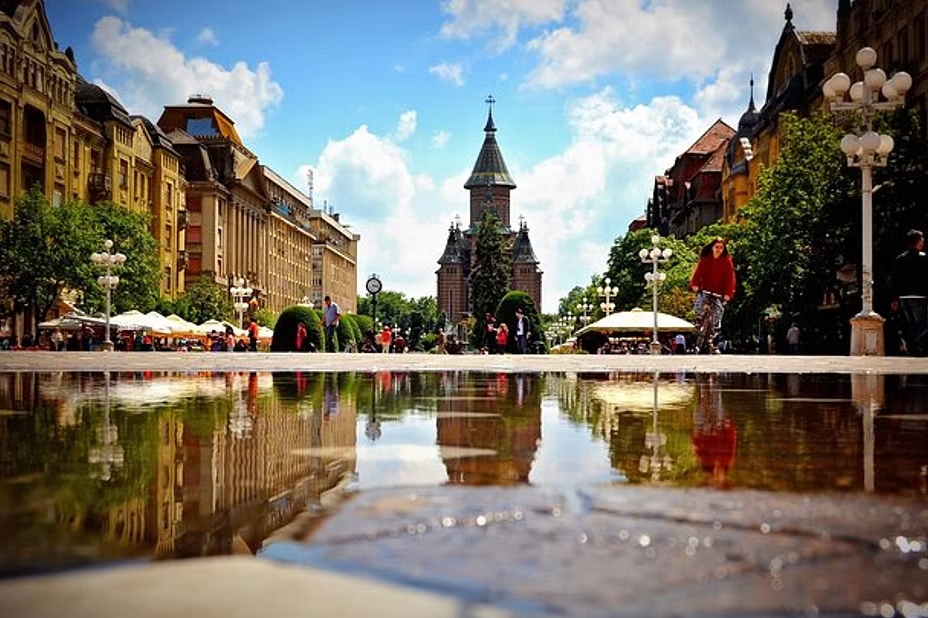
150.000 people shouted "VICTORY" on the 20th of December when Timisoara was proclaimed the first city in Romania free of Communism. Remembering that moment the square was named Victory Square. Before that, the square was called Opera Square.
We'll see bullet holes on the buildings around.
Available languages
Guide guide
DE
EN
IT
HU
Reviews breakdown
Viator
5.0
4 reviews
5★
4
4★
0
3★
0
2★
0
1★
0
Tripadvisor
5.0
13 reviews
5★
13
4★
0
3★
0
2★
0
1★
0
Important information
Wheelchair accessible
Infants and small children can ride in a pram or stroller
Service animals allowed
Public transportation options are available nearby
Not recommended for travelers with spinal injuries
Not recommended for pregnant travelers
Not recommended for travelers with poor cardiovascular health
Suitable for all physical fitness levels
Meeting point
In front of the Orthodox Cathedral
About Timișoara
Timișoara, known as the birthplace of the Romanian Revolution, is a vibrant city with a rich history, beautiful architecture, and a lively cultural scene. Often referred to as 'The Little Vienna,' it offers a unique blend of Austro-Hungarian and Romanian influences.
Top Attractions
Victory Square (Piața Victoriei)
This iconic square is where the Romanian Revolution began in 1989. It is surrounded by beautiful buildings and is a central point for city life.
Historical
1-2 hours
Free
Union Square (Piața Unirii)
One of the oldest squares in Timișoara, Union Square is known for its stunning architecture and lively atmosphere.
Historical
1 hour
Free
Fabric District (Cartierul Fabric)
This former industrial area has been transformed into a trendy district with art galleries, cafes, and cultural events.
Cultural
2-3 hours
Free to explore, costs vary for shops and cafes
Bastion Theresia
A historic fortification built in the 18th century to defend the city, now a museum and cultural center.
Historical
1-2 hours
Free entry to the grounds, fees for exhibits
Rosenstein Palace
A beautiful palace with a mix of architectural styles, now home to the Timișoara Art Museum.
Architectural
1-2 hours
5 RON
Must-Try Local Dishes
Ciorbă de burtă
A traditional Romanian tripe soup, tangy and flavorful.
Soup
Contains beef
Mici
Grilled minced meat rolls, a popular street food in Romania.
Snack
Contains pork, beef, or a mix
Sarmale
Cabbage rolls stuffed with minced meat and rice, a classic Romanian dish.
Main Course
Contains pork or beef
Papanasi
Fried doughnuts topped with sour cream and jam, a sweet treat.
Dessert
Vegetarian
Popular Activities
Hiking in the nearby mountains
Cycling through the countryside
Visiting parks and gardens
Enjoying a spa day
Exploring museums and galleries
Attending cultural events and festivals
Boating on the Bega River
Skiing in the nearby mountains
Best Time to Visit
May to September
This is the best time to visit Timișoara as the weather is pleasant, and the city hosts numerous festivals and outdoor events. The temperatures are ideal for exploring the city's attractions and enjoying its parks and gardens.
20°C to 30°C
68°F to 86°F
Practical Information
Language
- Official: Romanian
- Widely spoken: English, Hungarian, German
- English: Moderately spoken
Currency
Romanian Leu (RON)
Time Zone
GMT+2
Electricity
230VV, 50HzHz
Safety Information
Overall Safety Rating: Generally safe
Timișoara is generally safe for tourists, but common sense precautions should be taken to avoid petty crime and scams.
Important Precautions:
- • Keep valuables secure
- • Use licensed taxis
- • Be cautious of strangers offering help or services
Getting there
By air
- Timișoara Traian Vuia International Airport • 10 km from city center
By train
Timișoara Nord
By bus
Autogara Timișoara
Getting around
Public transport
The tram system is the most popular and efficient way to get around Timișoara. It covers most of the city and is affordable.
Taxis
Available • Apps: Bolt, Uber
Rentals
Car, Bike, Scooter
Neighborhoods
City Center
Fabric District
Iosefin District
Day trips
Deva
60 km • Full day
A charming town with a medieval fortress and beautiful architecture.
Arad
45 km • Full day
A historic city with beautiful architecture and cultural attractions.
Banat Village Museum
20 km • Half day
An open-air museum showcasing traditional Banat village life.
Festivals
Timișoara International Film Festival • October
Christmas Market • December
Timișoara Jazz Festival • July
Pro tips
- Visit the Revolution Memorial in Victory Square to learn about the city's significant role in the Romanian Revolution
- Explore the Fabric District for its unique street art, art galleries, and trendy cafes
- Try traditional Romanian dishes at local restaurants and markets
- Use the tram system to get around the city, as it's efficient and affordable
- Visit the Banat Village Museum for a glimpse into traditional Banat village life
From $25
per person
Price varies by option
Secure booking
Free cancellation available