Pompeii Walking Tour: The Real History of the Ruins
Active
2h
For a full refund, cancel at least 24 hours before the scheduled departure time.
Instant confirmation
Mobile or paper ticket accepted
About this experience
Welcome to our Walking Tour of Pompeii. This two-hour experience will take you through the fascinating ruins of Pompeii.
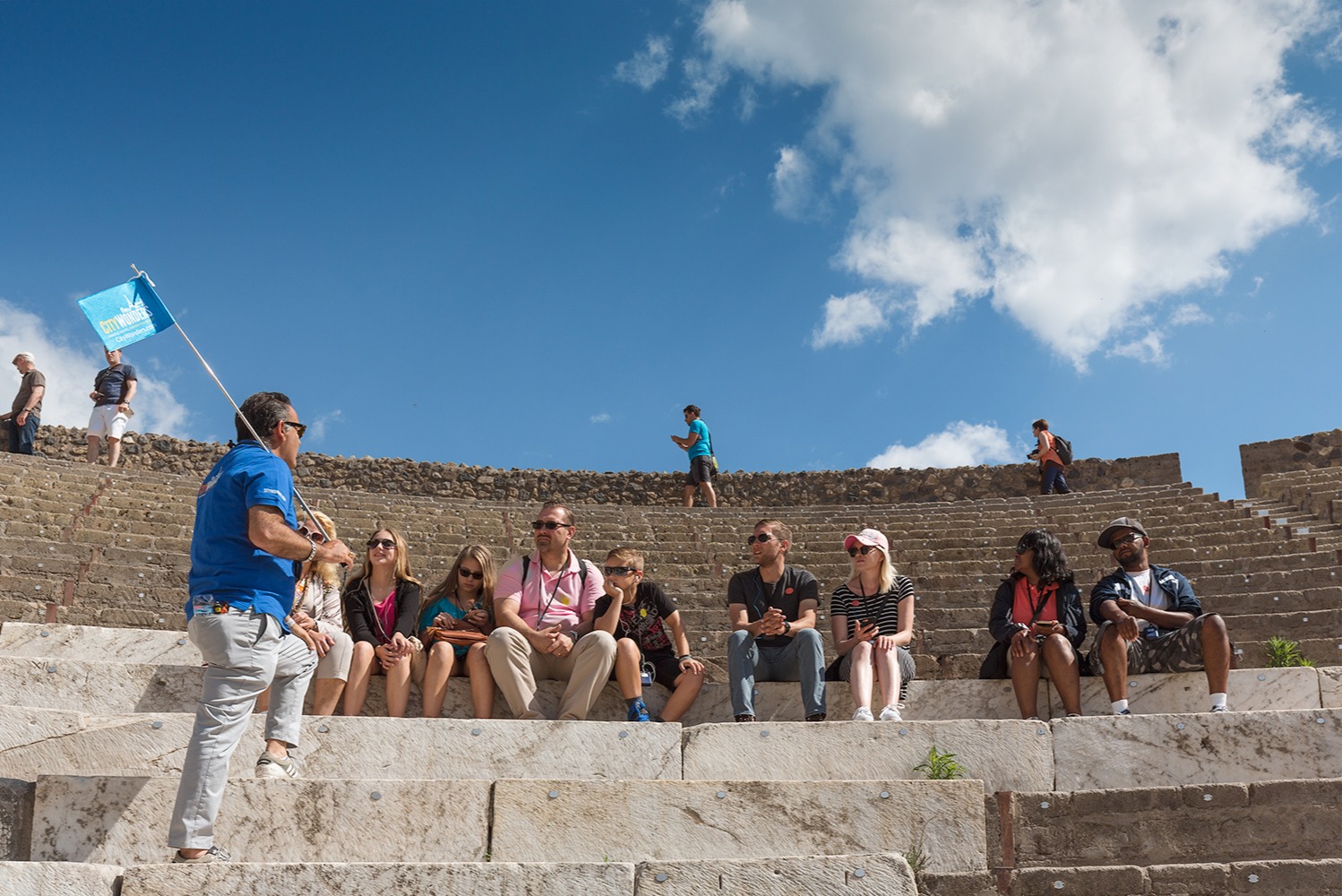
Your adventure begins with a warm welcome from our highly qualified, experienced and licensed local guide, who knows every stone of this historic site. She will be your companion on the journey through time, immersing you in the authenticity of Pompeii.
Your guide will share fascinating stories about the people who lived here, their daily rituals, culinary habits and the incredible works of art that have withstood the eruptions and the passage of time.
You will discover how the eruption captured moments of life, freezing Pompeii in a fascinating state of preservation. It will be like walking through the streets of an ancient Roman city, reliving its greatness and tragic end.
Join us for an unforgettable experience that goes beyond ordinary tour guides, leaving you with a complete immersion in the history and culture of Pompeii.
Available options
Italian Walking Tour
The tour is conducted in Italian
Spanish Walking Tour
The tour is conducted in Spanish.
French Walking Tour
The tour is conducted in French.
Pompeii Walking Tour : The Real History of the Ruins
English Walking Tour: The tour is conducted in French.
What's included
Entrance ticket and guided tour
Detailed itinerary
1
Stop 1
The Pompeii Tour departs every day at 10.30 am from the InStazione help desk.
After registering and registering your details, you will reach the entrance of Porta Anfiteatro together with the Guide.
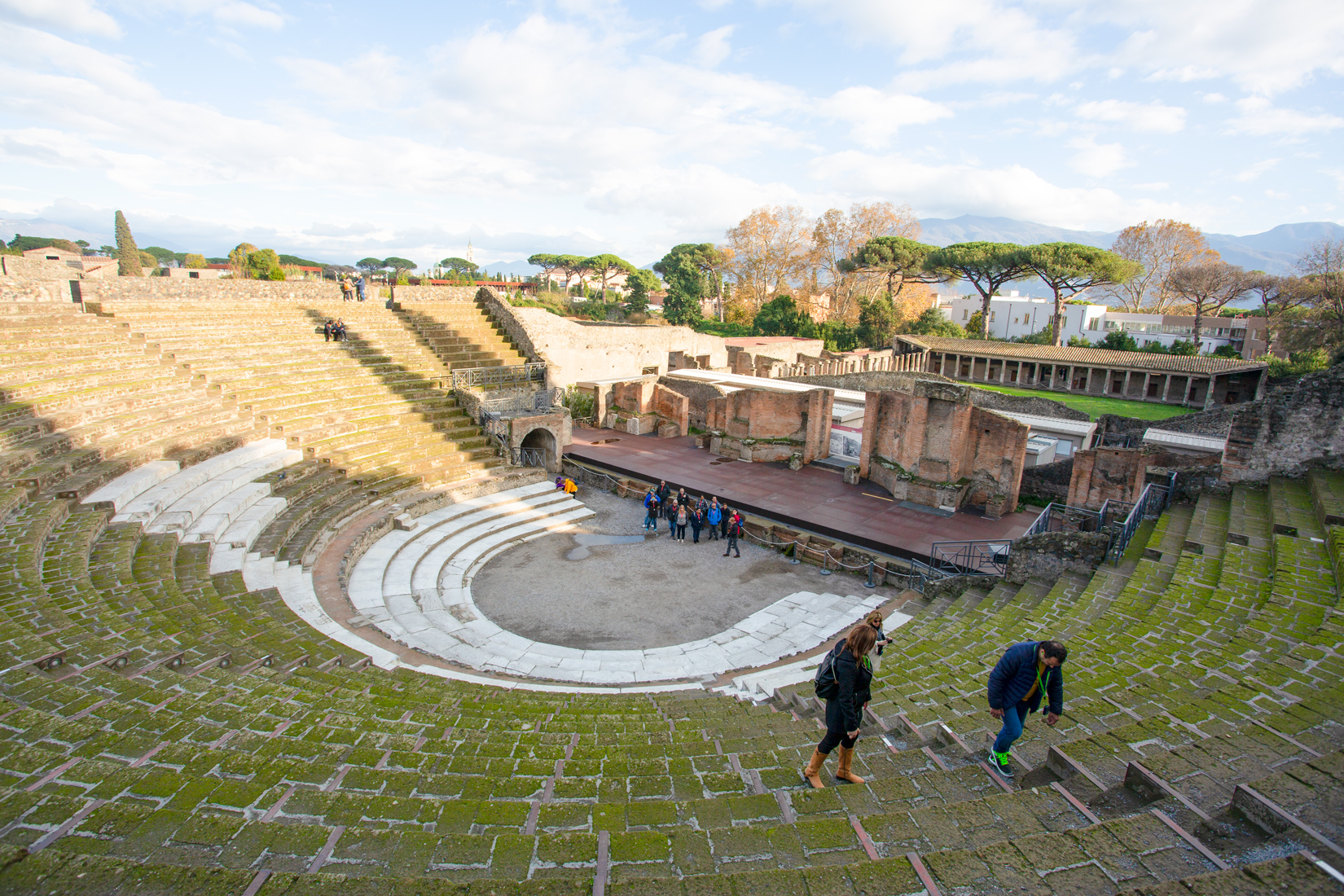
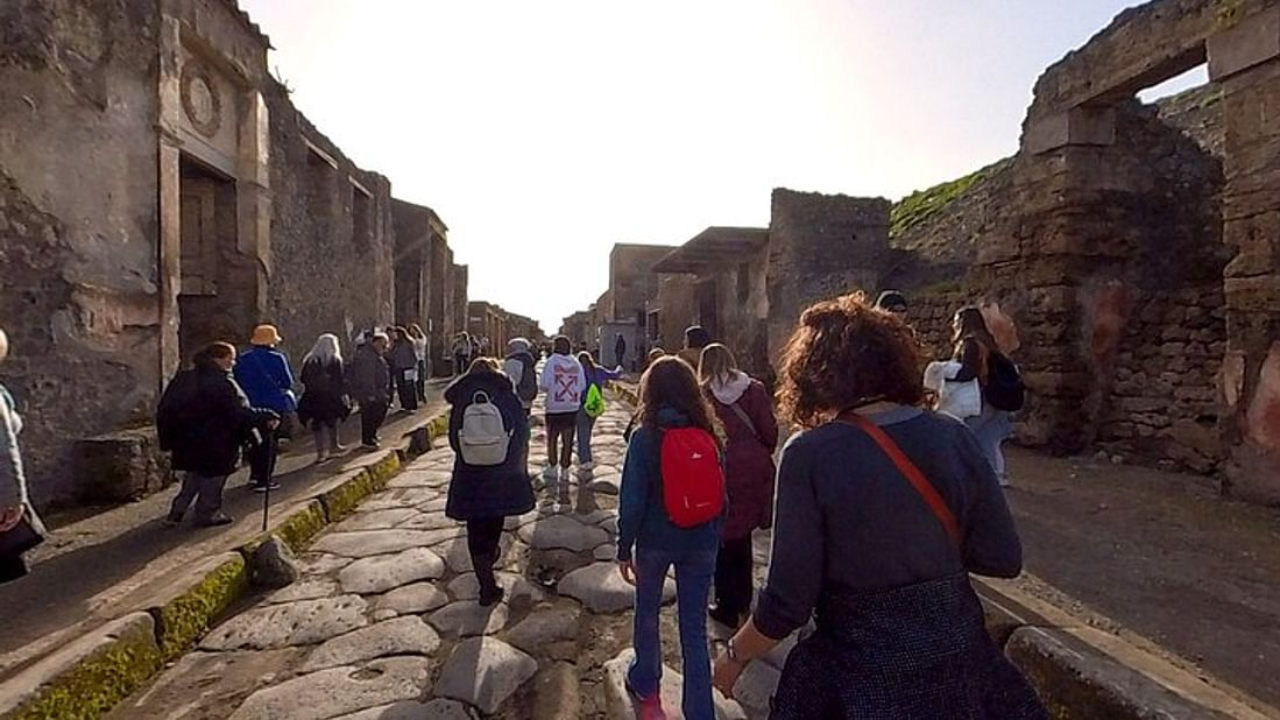
The guided tour includes a visit to the Teatro Grande and the Odeon, the latter dating back to the time of the deduction of the Samnite city in the colony of Rome, after which we will reach via Stabiana, a perfectly preserved cobbled street with sidewalks and pedestrian walkways, dotted with shops. and houses. The visit continues towards the Casa del Menandro, a richly decorated Hellenistic domus and then continues on the way of abundance. Here we will be able to visit one of the oldest thermal buildings in the city, with the male and female sectors perfectly preserved. From here the tour will continue towards the brothel on whose walls we can admire the famous erotic scenes and then reach the Civil Forum with the Temple of Jupiter, the Basilica and the granaries in which the casts are exposed.
2
Stop 2
Pass by
The Teatro Grande is a Roman theater, buried by the eruption of Vesuvius in 79 and found following the archaeological excavations of ancient Pompeii: inside it were represented comedies, mimes and pantomimes, as well as the atellane
3
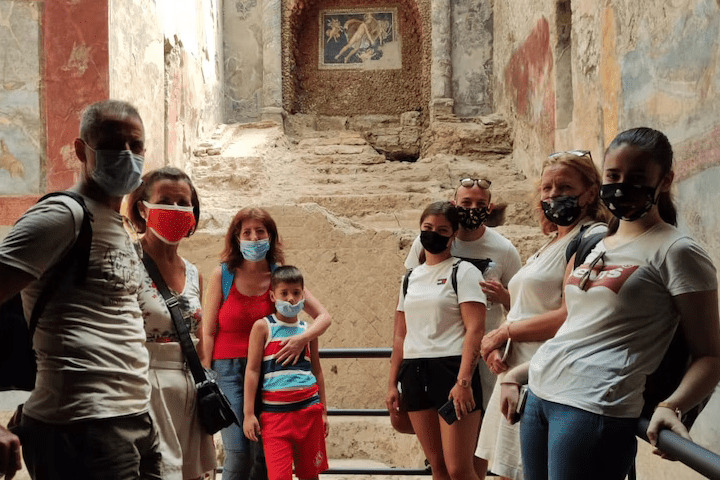
The Casa del Menandro is a large urban domus of ancient Pompeii of almost 1800 m². It was excavated in the years 1926-1932 and is a good example of a wealthy family house from ancient Pompeii. It takes its name not from the owner of the house, but from the image of the Greek poet Menander, found there.
4
Stop 4
Pass by
The name derives from a bas-relief that adorns a fountain located in the initial section, near the Forum, and is one of the most famous in Pompeii for the succession of public facilities, shops and residences, which allow you to relive the ancient fervor of activity. In the street the paintings of some shops have been restored, including the thermopolium of Asellina, a well-known inn, and some artisan workshops (“officinae”).
5
Stop 5
The Stabian Baths are a Roman bath complex, buried by the eruption of Vesuvius in 79 and found following the archaeological excavations of ancient Pompeii: of its kind, it is the oldest building in the city.
6
Stop 6
The lupanari were, throughout the Roman era, the places dedicated to mercenary sexual pleasure, that is, real houses of tolerance. Some are still visible in the ruins of ancient Pompeii.
7
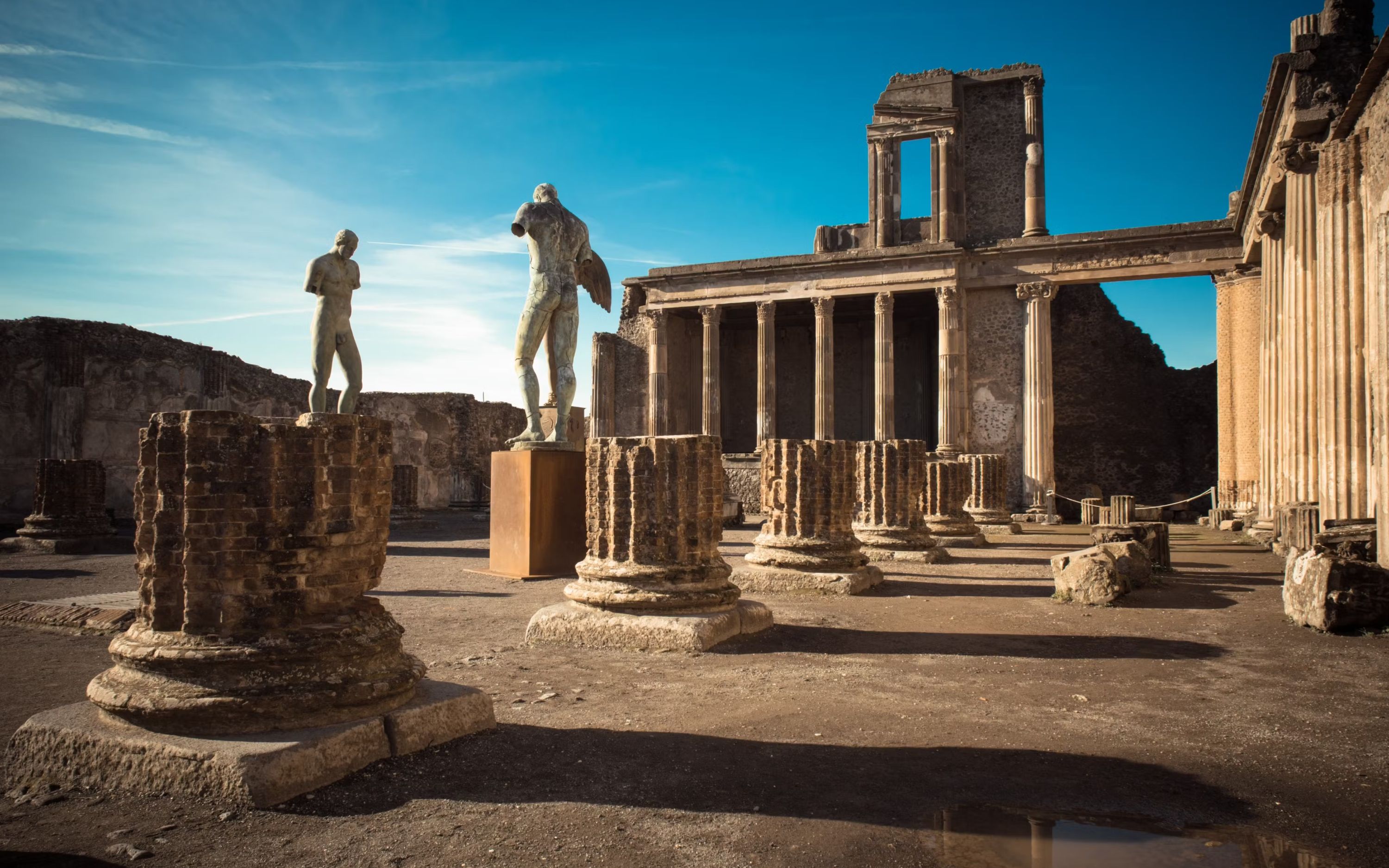
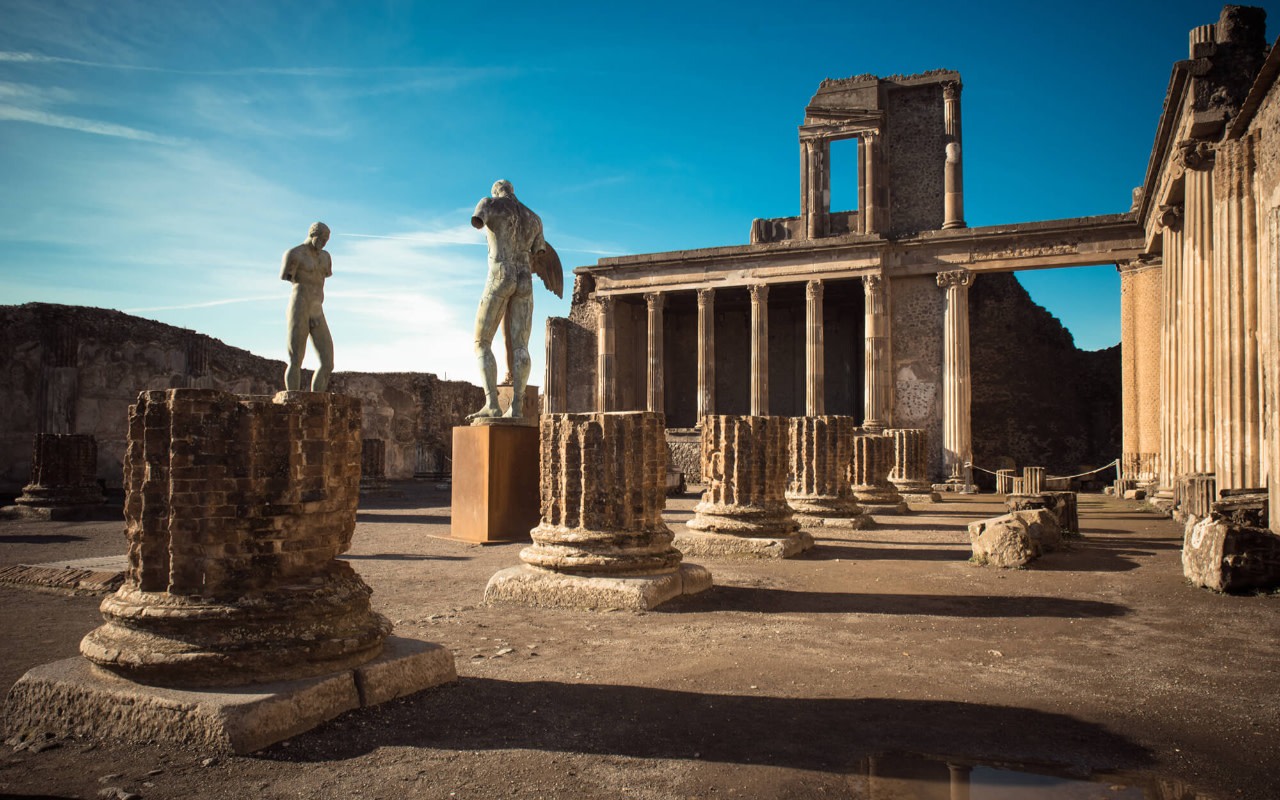
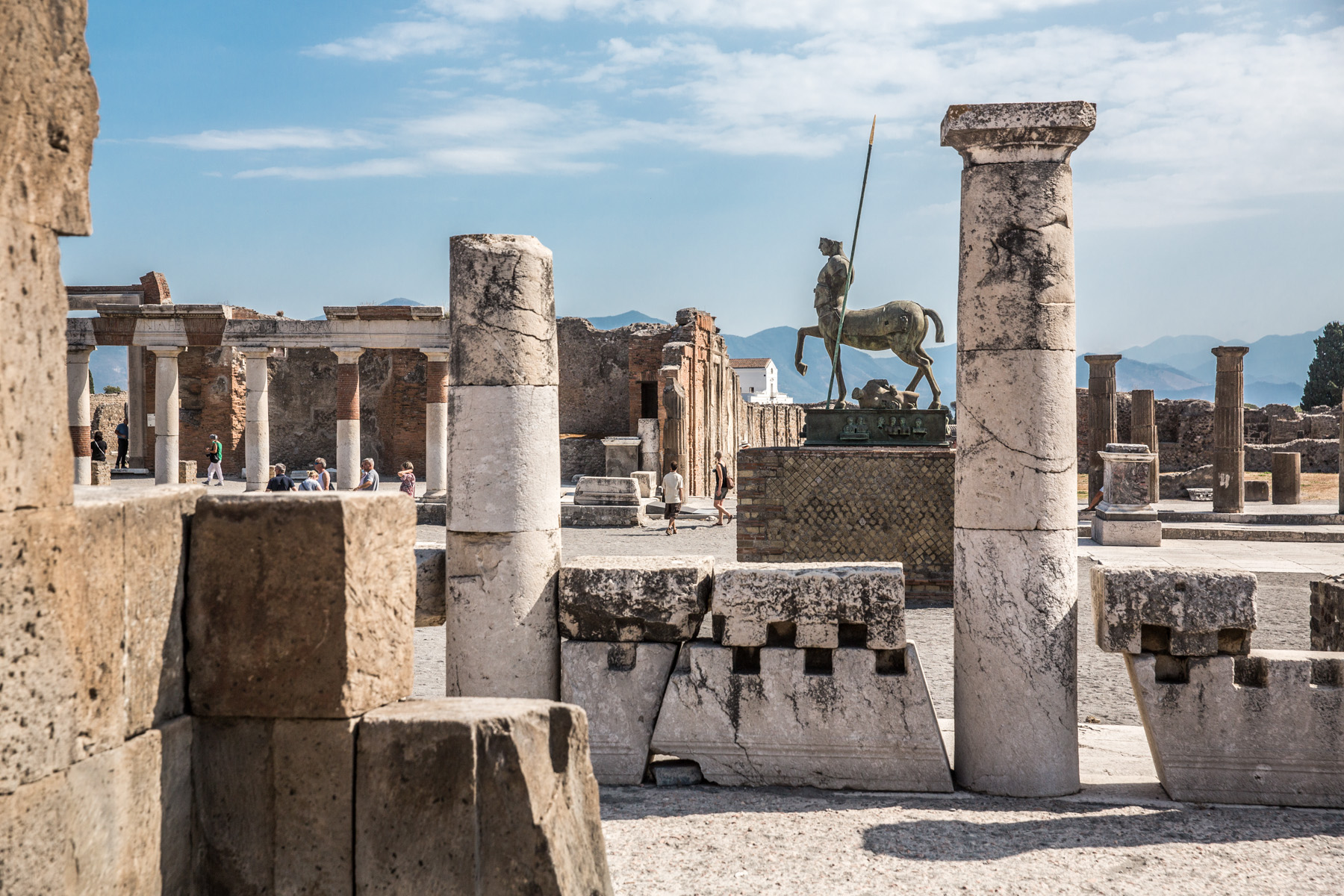
The Forum of Pompeii was built around the 4th century BC, in the Samnite era, near an important road junction, with roads that went towards Neapolis, Nola and Stabiae: it was a small open area around which numerous shops opened, built mostly in lava and tuff and cemented with clay. Following the conquest of Pompeii by the Romans, the Forum was completely rebuilt and enlarged, especially in the 2nd century BC: both the shops and a perimeter wall with the nearby temple of Apollo were demolished and, taking advantage of the low density housing in the area, political and religious buildings were built around the perimeter of the square
8
The temple of Jupiter overlooked the forum which later became the Capitolium and therefore dedicated to the three main divinities of the Eternal City: Jupiter, Juno and Minerva.
In the basement of the temple, in addition to the sacred furnishings and the votive gifts of the faithful, the public treasure called erarium was also kept.
9
The imposing public building dating back to the second century. B.C. called basilica, it was basically a kind of indoor forum where most of the activities normally held in the forum took place when the weather conditions recommended the use of indoor places.
On one side was the tribunal where the judge resided in an elevated position with respect to the parties. It should be noted that the place reserved for the judges was only reachable via a mobile wooden staircase to prevent the condemned from attacking the judges.
10
Stop 10
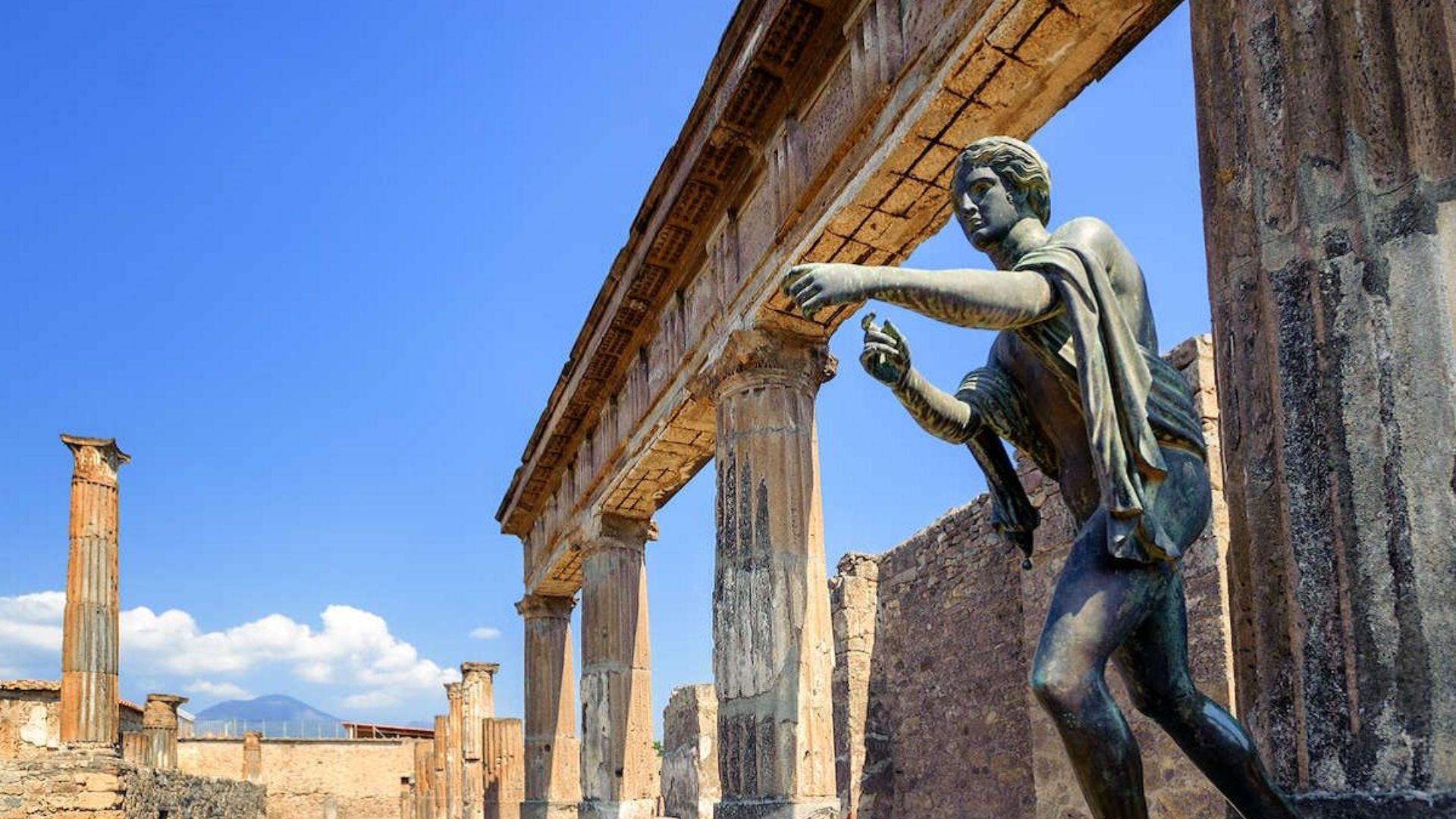
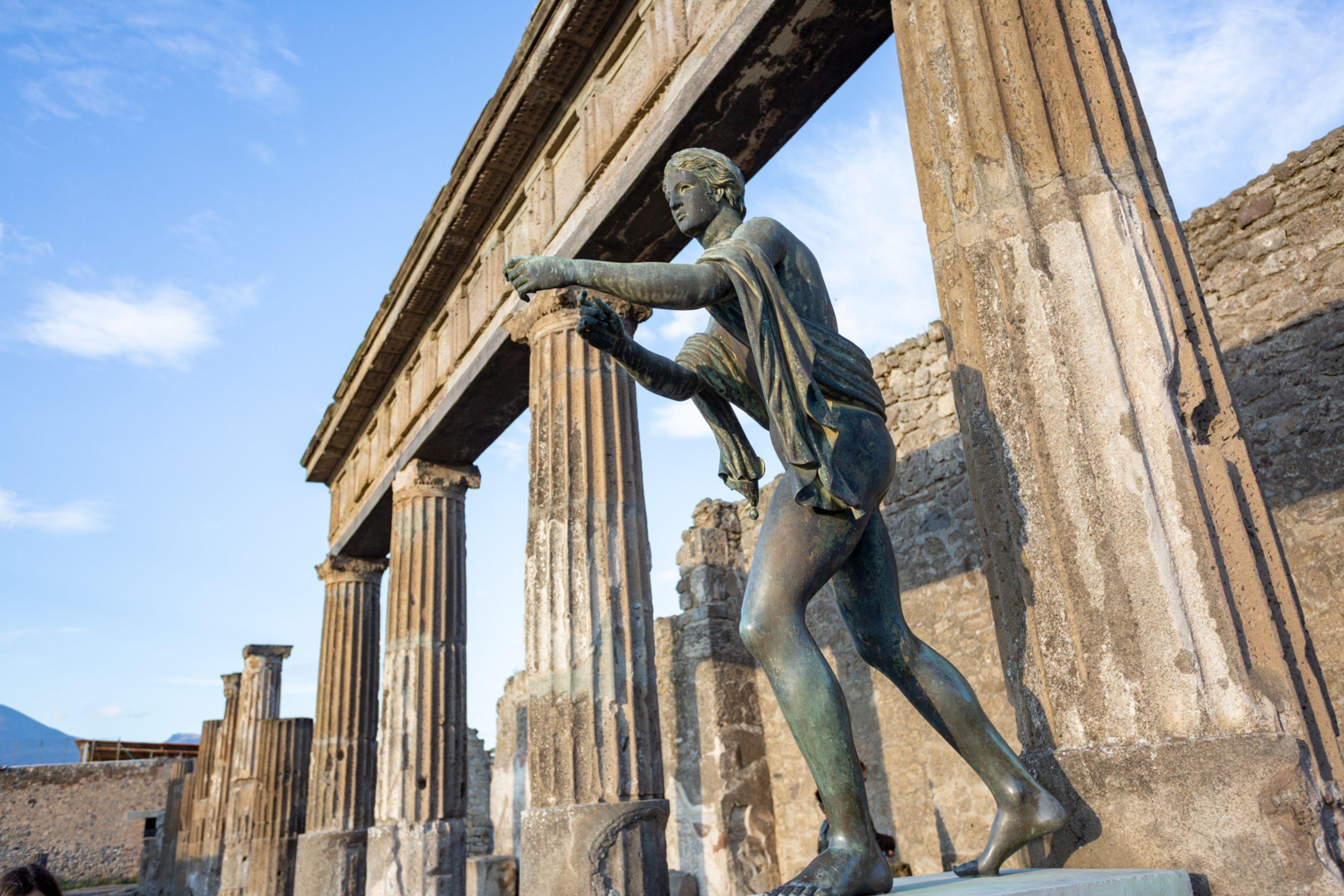
The cult of the god Apollo reached the Italic populations through the Greek world. In the period shortly before the eruption of 79 AD. this cult had lost followers as the importance of the time of Jupiter became capitolium grew.
Currently the bronze statue of the god represented as an archer is clearly visible and in front of it it is possible to observe the statue of the goddess Diana
11
Currently the granaries area is a deposit of materials found during excavations but in the past it was the market for cereals and legumes. The fact that no traces of plaster were found there led to the belief that the structure was not yet finished at the time of the eruption.
Very important is the ponderary table where the necessary tools were kept to guarantee the correctness of exchanges and above all to convert the different units of measurement of traders from different corners of the empire into the units of measurement valid in Pompeii.
What's not included
Lunch
Available languages
Guide guide
EN
IT
FR
ES
Reviews breakdown
Tripadvisor
4.7
16 reviews
5★
12
4★
3
3★
1
2★
0
1★
0
Important information
Service animals allowed
Public transportation options are available nearby
Not recommended for travelers with spinal injuries
Suitable for all physical fitness levels
Meeting point
Hotel Vittoria, Piazza Esedra, 80045 Pompeii NA, Italy
Important notes
Inside the Trenitalia station of Pompeii look for the red InStazione sign.
About Pompeii
Pompeii is an ancient Roman city near modern-day Naples, famously preserved by volcanic ash from the eruption of Mount Vesuvius in 79 AD. It offers a unique glimpse into Roman life, with remarkably well-preserved ruins and artifacts. The site is a UNESCO World Heritage Site and one of the most visited archaeological sites in the world.
Top Attractions
Pompeii Archaeological Park
The main attraction in Pompeii, this vast archaeological site preserves the ruins of the ancient Roman city buried by the eruption of Mount Vesuvius in 79 AD. It offers a unique glimpse into Roman life and architecture.
Historical
3-5 hours
€18 (full price ticket)
Mount Vesuvius
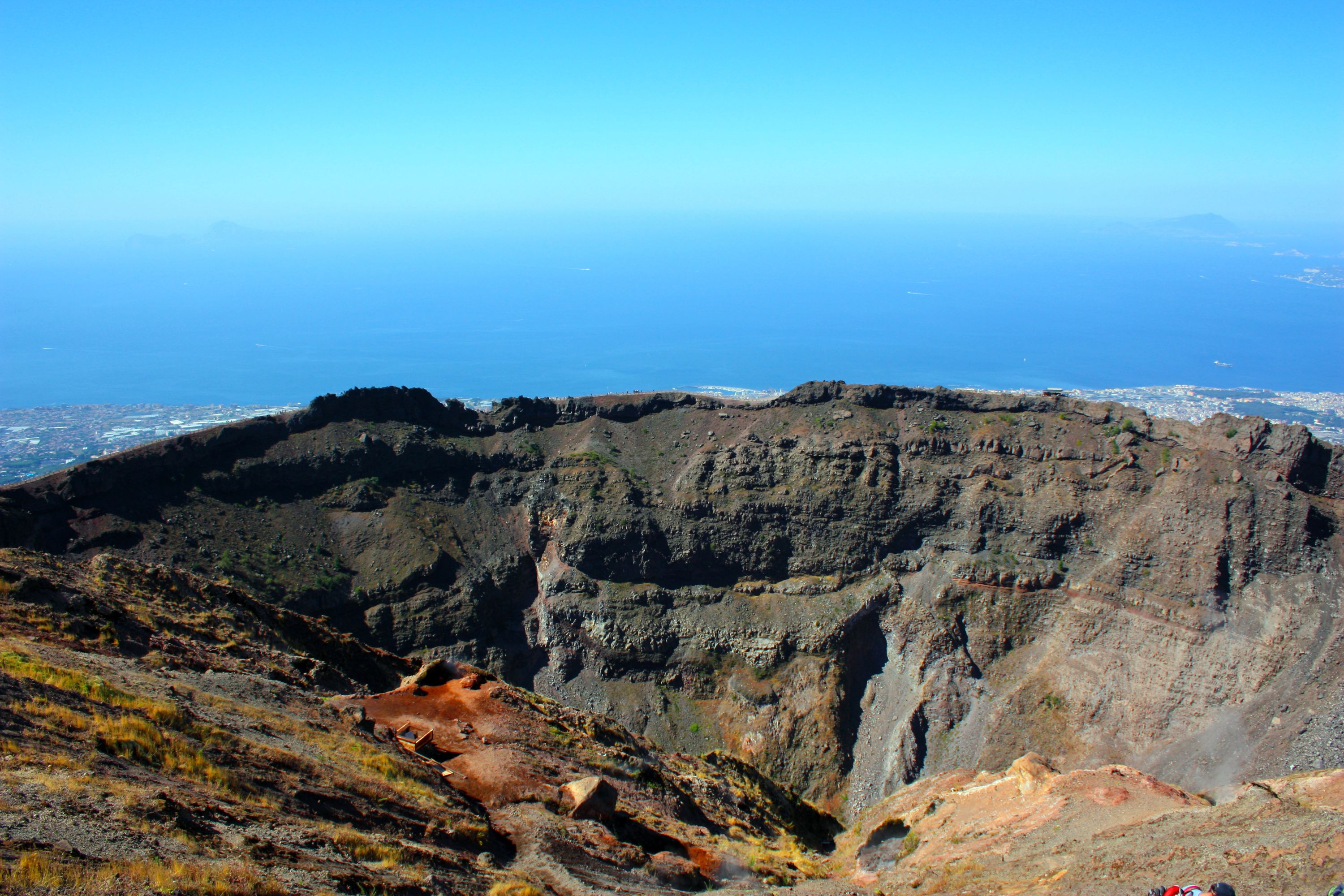
The volcano that famously destroyed Pompeii offers a scenic hike with panoramic views of the Bay of Naples. The crater is accessible via a short walk from the summit.
Nature
2-3 hours
€10 (entry fee)
Villa of the Mysteries
One of the most famous villas in Pompeii, known for its well-preserved frescoes depicting mysterious rituals. The villa offers insight into the daily life and beliefs of the ancient Romans.
Historical
30-45 minutes
Included in the general admission ticket
Must-Try Local Dishes
Pizza Margherita
A classic Neapolitan pizza topped with tomato sauce, mozzarella cheese, and fresh basil. It is a must-try in the region.
Lunch/Dinner
Contains dairy and gluten
Spaghetti alle Vongole
A traditional Italian dish made with spaghetti, clams, garlic, white wine, and parsley. It is a popular seafood dish in the region.
Lunch/Dinner
Contains seafood and gluten
Sfogliatella
A traditional Neapolitan pastry filled with sweet ricotta cheese and candied fruit. It is a popular dessert in the region.
Dessert
Contains dairy and gluten
Popular Activities
Hiking Mount Vesuvius
Biking in the surrounding countryside
Beach visits in nearby coastal towns
Wine tasting in local vineyards
Visiting museums and historic sites
Attending local festivals and events
Boat tours in the Bay of Naples
Visiting nearby ski resorts
Best Time to Visit
April to June, September to October
The peak season offers comfortable temperatures and fewer crowds compared to the summer months. The weather is ideal for exploring the ruins.
15°C to 28°C
59°F to 82°F
Practical Information
Language
- Official: Italian
- Widely spoken: English, Neapolitan
- English: Moderately spoken
Currency
Euro (EUR)
Time Zone
GMT+1 (Central European Time)
Electricity
230VV, 50HzHz
Safety Information
Overall Safety Rating: Generally safe
Pompeii is generally safe for tourists, but pickpocketing and petty theft can occur in crowded areas. It is important to be aware of your surroundings and take precautions to protect your belongings.
Important Precautions:
- • Keep valuables secure and out of sight
- • Use licensed taxis or ride-sharing services
- • Be cautious of strangers approaching you with petitions or requests for money
Getting there
By air
- Naples International Airport • 20 km (12 miles)
By train
Pompeii Scavi - Villa dei Misteri Station
By bus
Naples, Sorrento, Salerno
Getting around
Public transport
Buses are available in the modern town of Pompeii, but the archaeological site is best explored on foot.
Taxis
Available • Apps: Uber, FreeNow
Rentals
Car, Bike, Scooter
Neighborhoods
Pompeii Town
Ancient Pompeii
Day trips
Naples
25 km (15 miles) • Full day
Naples is a vibrant city known for its rich history, art, and culture. It offers a variety of attractions, including museums, churches, and historic sites.
Sorrento
20 km (12 miles) • Full day
Sorrento is a charming coastal town known for its beautiful views, lemon groves, and traditional crafts. It offers a variety of attractions, including beaches, shops, and restaurants.
Herculaneum
15 km (9 miles) • Half day
Herculaneum is an ancient Roman town that was also buried by the eruption of Mount Vesuvius in 79 AD. It offers a unique glimpse into Roman life and architecture.
Festivals
Festa di San Gennaro • September 19
Pompeii Wine Festival • May
Napoli Teatro Festival • June to July
Pro tips
- Arrive early to the archaeological site to beat the crowds and the heat
- Wear comfortable shoes and bring water and sun protection
- Consider hiring a guide or using an audio guide for a deeper understanding of the site
- Try traditional Neapolitan pizza and other local dishes in Pompeii and the surrounding region
- Visit nearby attractions, such as Naples, Sorrento, and Herculaneum, for a more comprehensive experience
From $25
per person
Price varies by option
Secure booking
Free cancellation available
Instant confirmation