Private Tour Porto With Departure From Lisbon
Active
9h - 10h
For a full refund, cancel at least 24 hours before the scheduled departure time.
Instant confirmation
Mobile or paper ticket accepted
About this experience
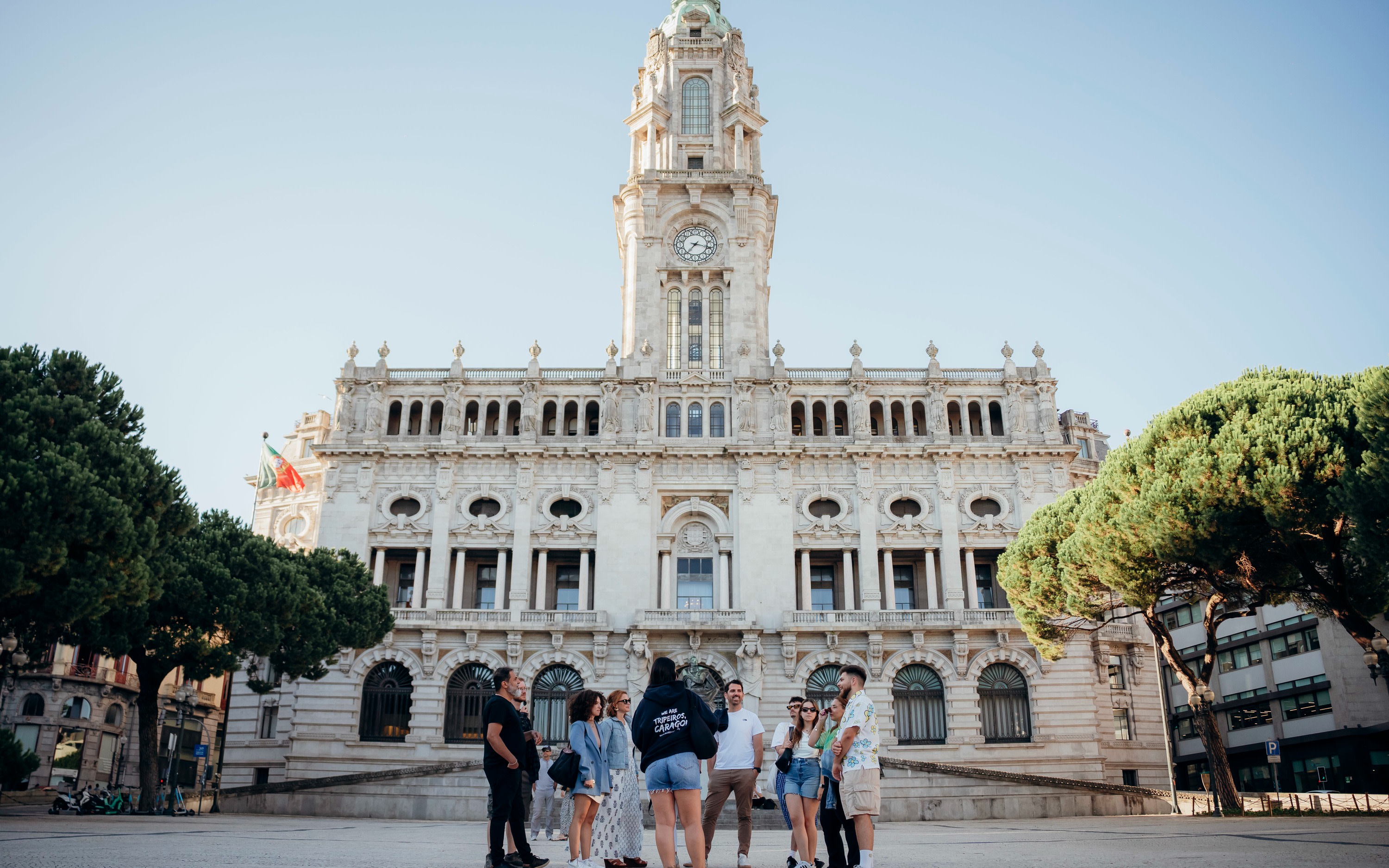
Explore Porto on a full day tour of Lisbon. Known for its delicious signature drink, the center of Porto is also a UNESCO World Heritage Site with beautiful architecture. Visit the vibrant downtown district of Baixa and stroll along the banks of the River Douro and try some local wines and local foods (own expenses). Situated on the river Douro, the city offers a seductive blend of old and new that you can check during this tour.
Available options
Private Tour Porto With Departure From Lisbon
Pickup included
What's included
Private transportation
All taxes, fees and handling charges
Bottled water
WiFi on board
Air-conditioned vehicle
All insurance included
Detailed itinerary
1
Stop 1
The Franciscan friars began building the Church of St. Francis in 1245. It later had to be renovated after the fire that destroyed the old cloister and part of the church.
Although the origin of this church was Romanesque, it was later transformed into the Gothic style and later acquired a Baroque decoration.
2
Stop 2
Although the origin of this church was Romanesque, it was later transformed into the Gothic style and later acquired a Baroque decoration.
São Bento Train Station was built at the beginning of the 9th century on the remains of the old convent of São Bento de Ave Maria and still retains that melancholic and ancient air that characterizes the city of Porto.
Although its façade is stately and eye-catching, the real jewel is inside: a hall decorated with over 20,000 tiles depicting the history of Portugal.
3
The Clerigos Church was built between 1735 and 1748 in Baroque style. It is crowned by the Clérigos Tower, which is one of the most emblematic monuments of the city.
This monumental 18th century ensemble was built by the Brotherhood of the Poor Clerics in the old center of Porto, in what is known as the “Hanged Hill”, as it is the place where the executed were buried.
4
Stop 4
Located in the center of Porto, near the Clérigos Tower, is what is considered the most beautiful bookstore in Europe.
A neo-gothic building built in 1906 houses the Lello e Irmão Bookstore.
Inside, many ancient details manage to create an environment that could transport us a century ago.
Its huge wooden bookshelves lurk up to the ceiling and a beautiful carved wooden staircase reigns in the center of the store, while the stained glass of the ceiling projects natural light, giving life to this unique setting.
5
Stop 5
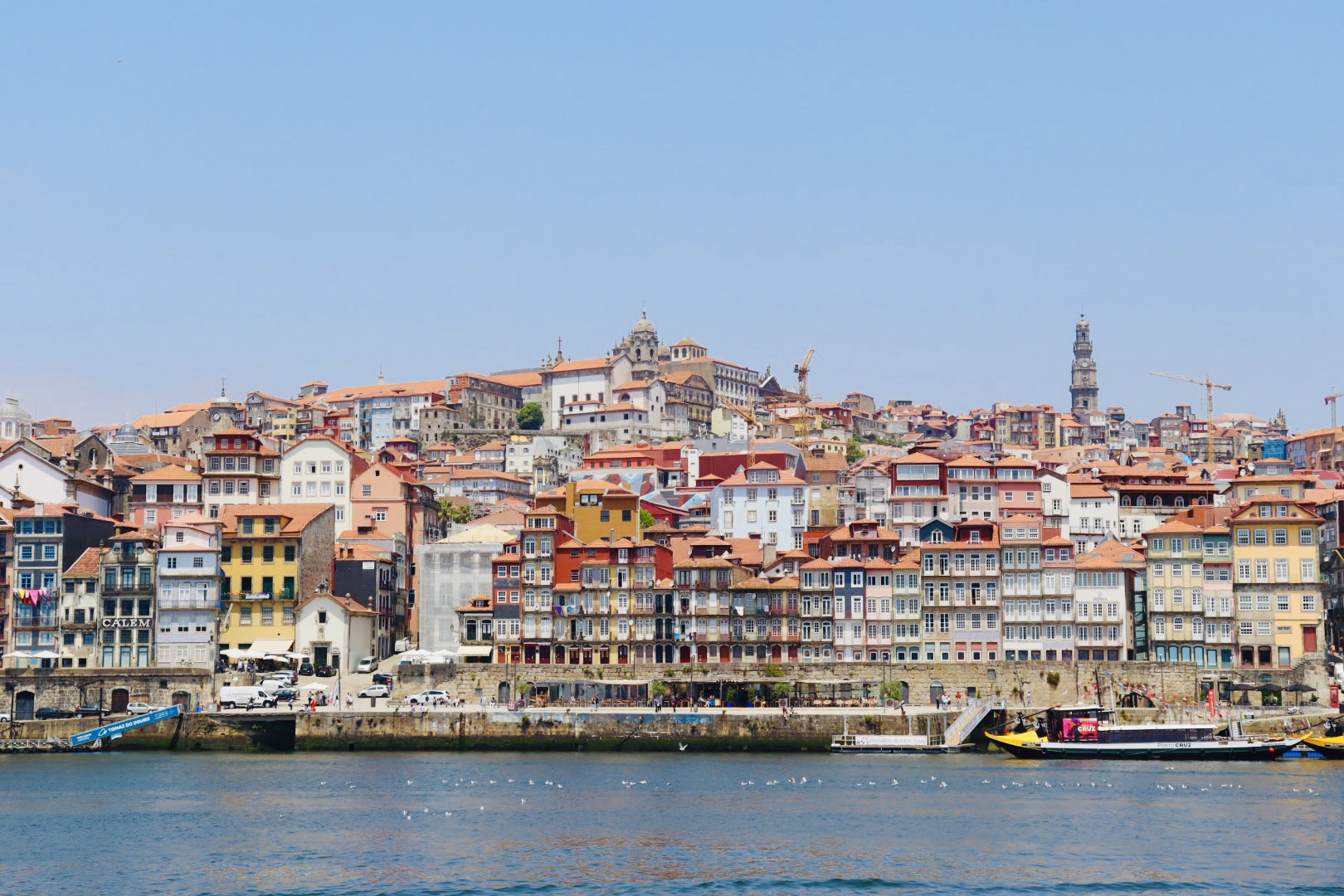
The Ribeira neighborhood is one of the most important places when visiting Porto's historic center. As its name implies, it is the area situated on the river bank.
The colorful and decorated façades attract the attention of all visitors, both those that give to and reflect on the Douro (better views of Vila Nova de Gaia, on the opposite bank) and those that are part of the maze of streets that form the neighborhood of. Ribeira
6
Although it may seem at first glance that Vila Nova de Gaia is part of Porto, it is actually another Portuguese city. It is on the left bank of the Douro river, just in front of Porto.
In Vila Nova de Gaia, you can go for a stroll along the river bank, take a boat trip along the Douro or visit some of the famous cellars where the Port wine denomination of origin is made.
One of the most typical images of this tour are the so-called “rabelos”, wooden boats that were initially built for the transport of wine casks and are now used to make small cruises around the Douro.
7
Just in front of the city of Porto, in the Vila Nova de Gaia region, is most of the cellars where, for hundreds of years, the world's most famous fortified wine has been aged: Porto.
8
Stop 8
The Stock Exchange Palace was built on the ruins of the Franciscan convent that was destroyed in a fire. Its construction began in 1842 and passed almost half a century until its inauguration in 1891.
9
Stop 9
Pass by
The Luis I or Luiz I Bridge, popularly also called D. Luís Bridge, is a bridge with two trays, built between 1881 and 1888, connecting the cities of Porto and Vila Nova de Gaia (north and south bank, respectively) separated by the Douro river in Portugal.
What's not included
Food and drinks
Tickets
Available languages
Guide guide
PT
EN
FR
ES
Reviews breakdown
Tripadvisor
5.0
1 reviews
5★
1
4★
0
3★
0
2★
0
1★
0
Important information
Infants and small children can ride in a pram or stroller
Public transportation options are available nearby
Infants are required to sit on an adult’s lap
Specialized infant seats are available
Not recommended for travelers with poor cardiovascular health
Suitable for all physical fitness levels
About Sintra
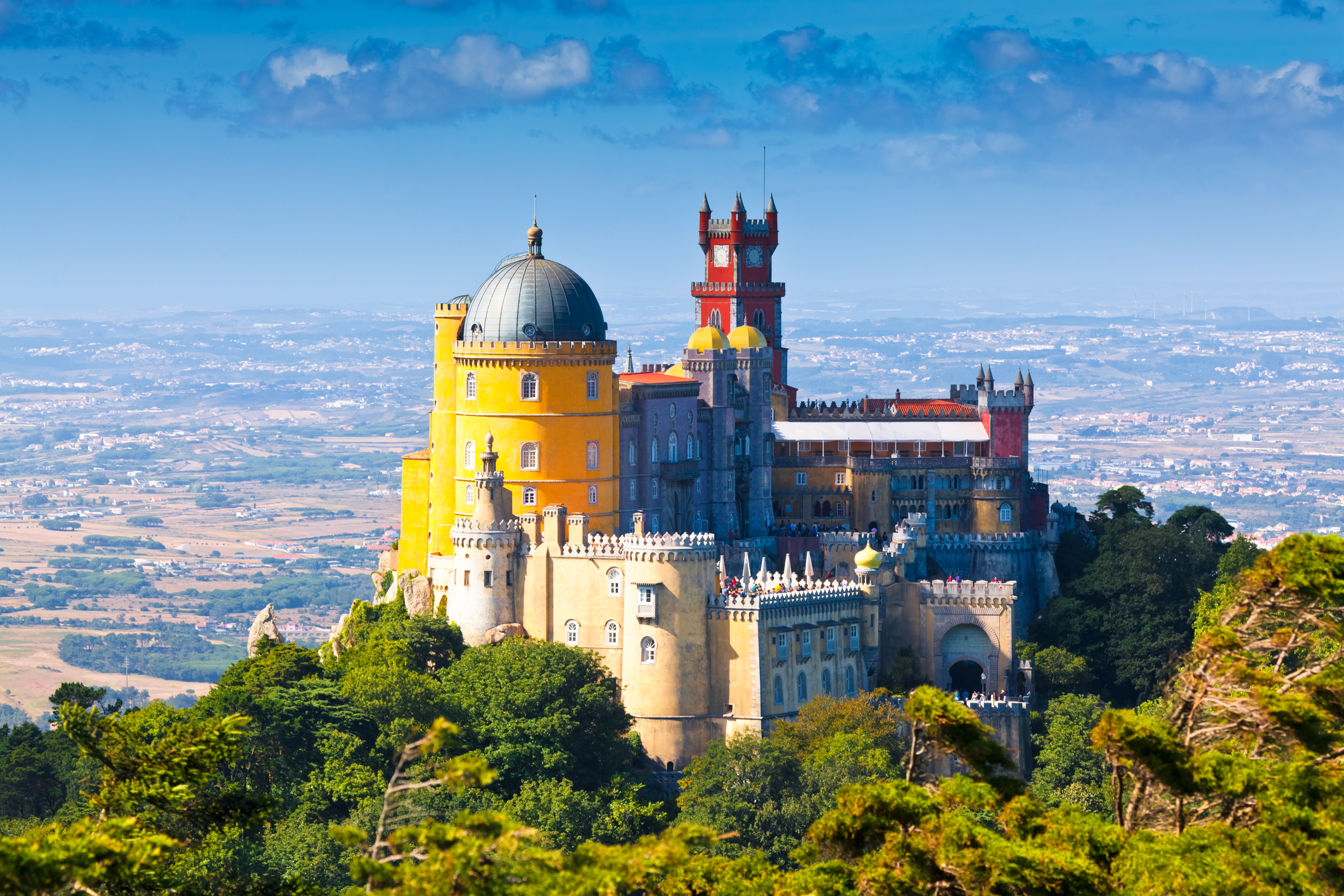
Sintra is a picturesque town on the Portuguese Riviera, known for its 19th-century Romanticist castles, palaces, and lush gardens. This UNESCO World Heritage site offers a fairytale-like atmosphere with its unique blend of history, architecture, and natural beauty.
Top Attractions
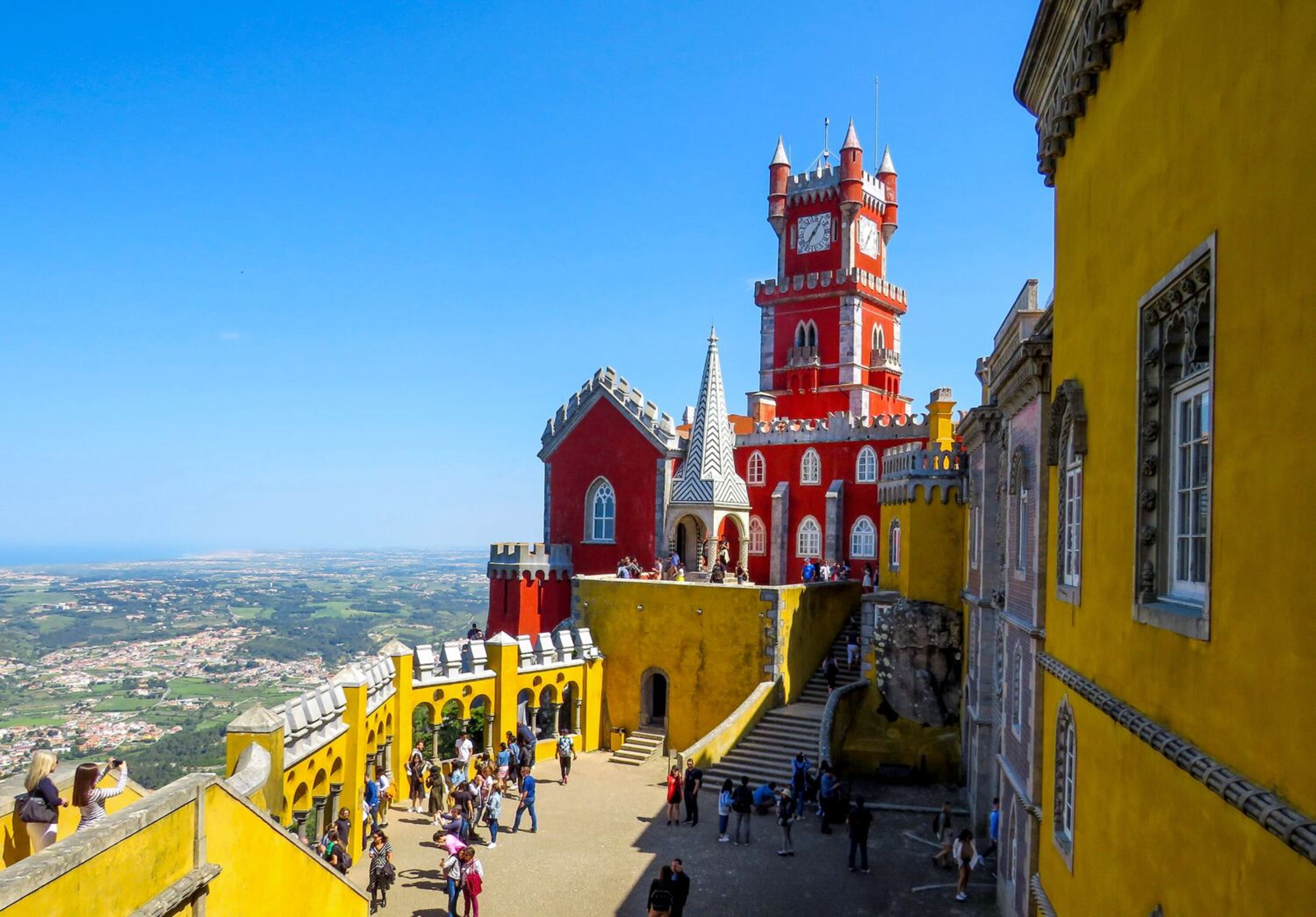
Pena Palace
A 19th-century Romanticist palace perched on a hilltop, known for its vibrant colors and eclectic architectural styles.
Historical/Architecture
2-3 hours
€14 (adult ticket)
Quinta da Regaleira
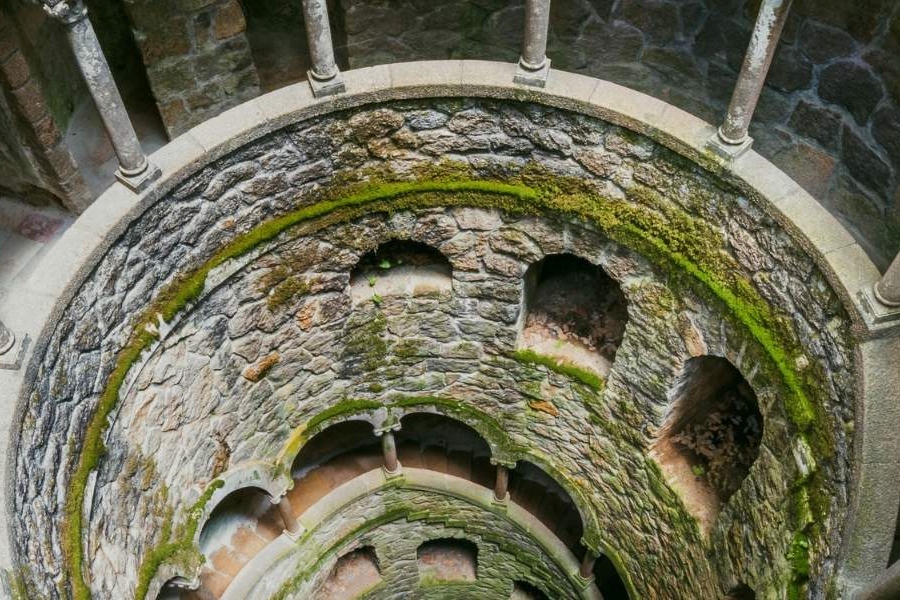
A mystical estate with lush gardens, hidden tunnels, and the famous Initiation Well.
Historical/Architecture
1-2 hours
€10 (adult ticket)
Moorish Castle
A medieval castle with origins dating back to the 8th century, offering stunning views and a glimpse into Sintra's past.
Historical
1-2 hours
€8 (adult ticket)
Praia da Adraga
A beautiful beach with golden sand and dramatic cliffs, perfect for a relaxing day by the sea.
Beach
Half-day
Free
Monserrate Palace
A stunning 19th-century palace set in a lush, romantic garden, showcasing a blend of Gothic, Moorish, and Indian architectural styles.
Historical/Architecture
1-2 hours
€8 (adult ticket)
Must-Try Local Dishes
Trajana
A traditional pastry filled with various ingredients like meat, cheese, or sweets.
Snack
Can be vegetarian or vegan depending on filling.
Bacalhau à Brás
A classic Portuguese dish made with shredded cod, eggs, and thinly fried potatoes.
Main course
Contains fish and eggs.
Pastel de Nata
A famous Portuguese custard tart with a flaky pastry crust.
Dessert
Contains dairy and eggs.
Sardinhas Assadas
Grilled sardines, a popular dish in coastal regions.
Main course
Contains fish.
Popular Activities
Hiking in the Sintra-Cascais Natural Park
Surfing at Praia da Adraga
Beach relaxation
Wine tasting
Visiting historic palaces and castles
Exploring local markets
Swimming and sunbathing at local beaches
Visiting museums and indoor attractions
Best Time to Visit
April to June, September to October
These months offer the best weather with pleasant temperatures and fewer tourists compared to the summer peak.
15°C to 25°C
59°F to 77°F
Practical Information
Language
- Official: Portuguese
- Widely spoken: English, Spanish, French
- English: Moderately spoken in tourist areas, limited elsewhere
Currency
Euro (EUR)
Time Zone
GMT+1 (WET), GMT+2 (WEST during daylight saving time)
Electricity
230VV, 50HzHz
Safety Information
Overall Safety Rating: Generally safe
Sintra is a safe destination for travelers, with low crime rates and a welcoming atmosphere.
Important Precautions:
- • Keep valuables secure in crowded areas
- • Use licensed taxis or ride-sharing apps
- • Be cautious when using ATMs at night
Getting there
By air
- Lisbon Portela Airport • 28 km
By train
Sintra Station
By bus
Lisbon Sete Rios Bus Station
Getting around
Public transport
Trains are the most efficient way to get around Sintra and its attractions.
Taxis
Available • Apps: Uber, Bolt
Rentals
Car, Bike, Scooter
Neighborhoods
Town Center
Park of Pena
Colares
Day trips
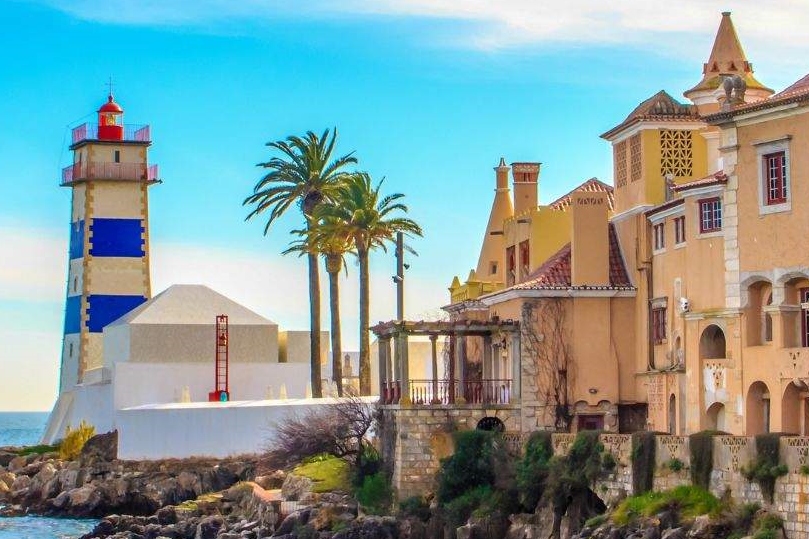
Cascais
20 km • Half day
A charming coastal town known for its beaches, historic center, and vibrant atmosphere.
Lisbon
30 km • Full day
Portugal's capital city offers a rich history, vibrant culture, and diverse attractions.
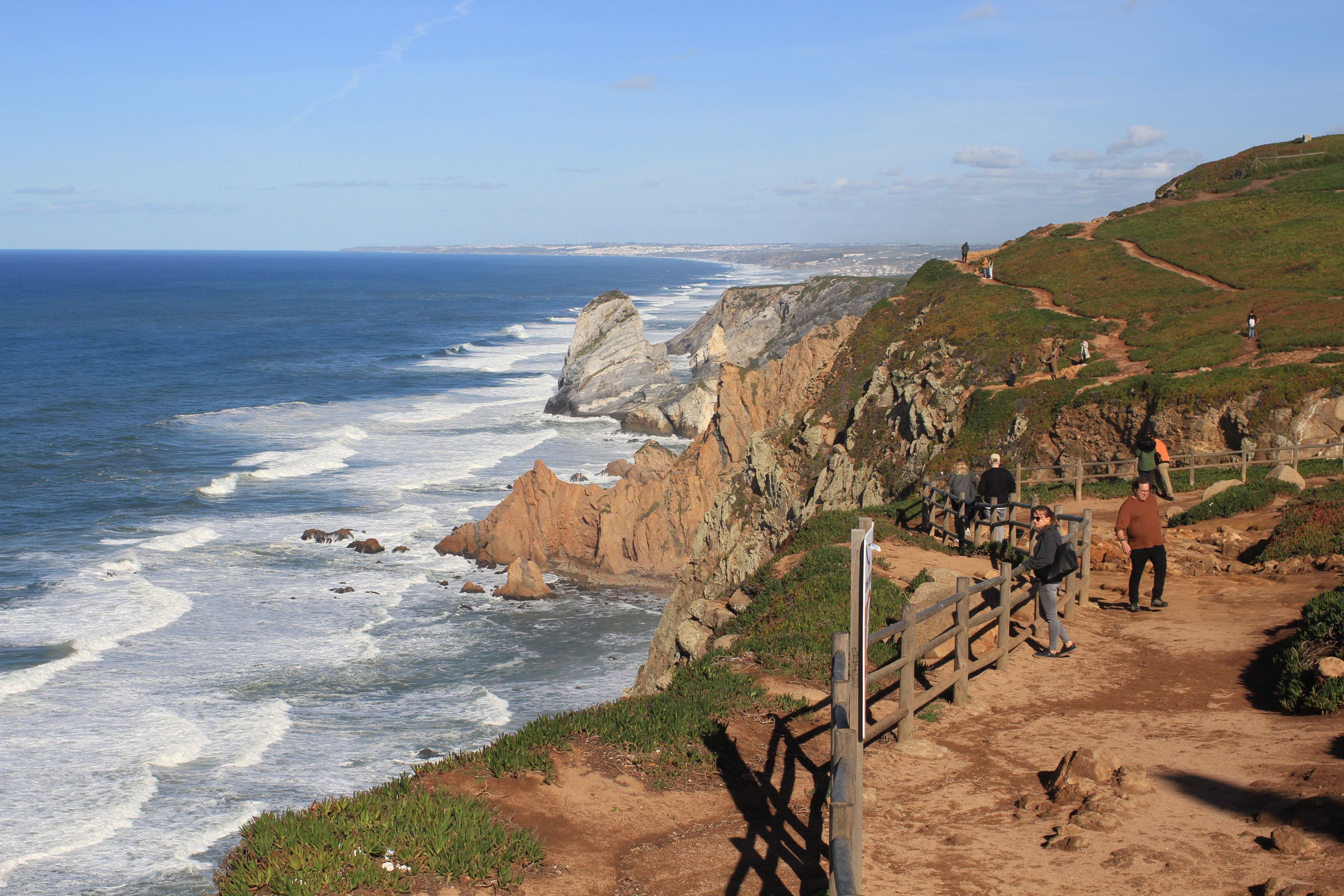
Cabo da Roca
25 km • Half day
The westernmost point of mainland Europe, offering stunning coastal views and dramatic cliffs.
Festivals
Sintra Music Festival • June to September
Sintra Halloween • October
Sintra Christmas Market • December
Pro tips
- Visit Pena Palace early in the morning to avoid crowds.
- Explore the town on foot to discover hidden gems and charming streets.
- Try local pastries like Pastel de Nata and Trajана for an authentic taste of Sintra.
- Use the Viva Viagem card for convenient and discounted public transportation.
- Book tickets for popular attractions in advance to avoid long queues.
From $25
per person
Price varies by option
Secure booking
Free cancellation available
Instant confirmation