Sendai / Matsushima Full-Day Private Tour with Government-Licensed Guide
Active
6h
For a full refund, cancel at least 24 hours before the scheduled departure time.
Instant confirmation
Mobile or paper ticket accepted
About this experience
This value-packed trip with a government-licensed and experienced multilingual tour guide is a fantastic and efficient way to explore Sendai and Matsushima!
Sendai is a city that sits at the doorstep of the nation’s more wild side. It’s a day trip from secluded mountain retreats, rugged coastlines, and remote islands. At the same time, it’s one of Japan’s most modern and sophisticated cities with a culinary scene that will challenge and surprise.
Let us know what you would like to experience and we will customize a six-hours tour that's best for you!
Note*1: Please select your must-see spots from a list in the tour information to create your customized itinerary.
Note*2: The National Government Licensed Guide Interpreter certification is issued by the Japanese government requires a good knowledge and understanding of Japanese culture and history.
Available options
Sendai / Matsushima Full-Day Private Tour with Government-Licensed Guide
Pickup included
What's included
Meet up with guide on foot within designated area of Sendai
Licensed Local English Speaking Guide
Customizable Tour of your choice of 3-4 sites from 'What to expect' list
Detailed itinerary
1
Stop 1
Zuihoden is also known as the Mausoleum of Date Masamune who was the first lord of the Sendai Domain.
He was also known for being a great architect and is known for having designed this building during the Momoyama Period.
Zuihoden is a riot of gorgeous wood carvings and panels as well as some pretty art work and you can also go for a walk around the grounds.
The paths are shaded by beautiful cedar trees which are also mean to be a symbol of the longevity of the Date family.
2
The Sendai Castle Ruins were the inspiration for a famous Japanese poem called ‘The moon over the desolate castle’ and this tells you all you need to know about their condition now.
The ruins also do include a model of the original gate to give you a feel of how Sendai Castle would have looked in the days of old.
There is also a small museum here that takes you through the history of the castle although don’t expect anything too grand as Sendai is not one of the cities in Japan that is best known for a complete or particularly impressive castle.
If that is what you are looking for then there are plenty of other options in other cities.
3
If you want to get the best views in Sendai then you need to head to SS 30 Observation Lounge.
This building is actually an office block so there is not much to check out here except for two observation decks on the 29th and 30th floors.
These are free to visit and give you panoramic vistas across all of Sendai so try to come in the morning or the late afternoon when you will get the best photo opportunities from the decks.
4
The Museum of the Forest of Depths of the Earth is dedicated to telling you the story of the stone age in Japan.
On a visit here you can find out all how the Saki Stone Age would have looked in the days of old and learn more about the excavation of the Tomizawa Ruins.
The museum has a huge number of galleries and if you want to know more about the 20,000 year Saki Stone Age then this is the best place to come.
5
The free tour walked a group of us through different stages and buildings of production. Even though it was only about 45 minutes long, it gave a good overview as to how and where they produce their product. My favorite part (besides the sampling at the end of course) was the barrel room where you could see rows and rows or whiskey being aged to perfection.
6
Stop 6
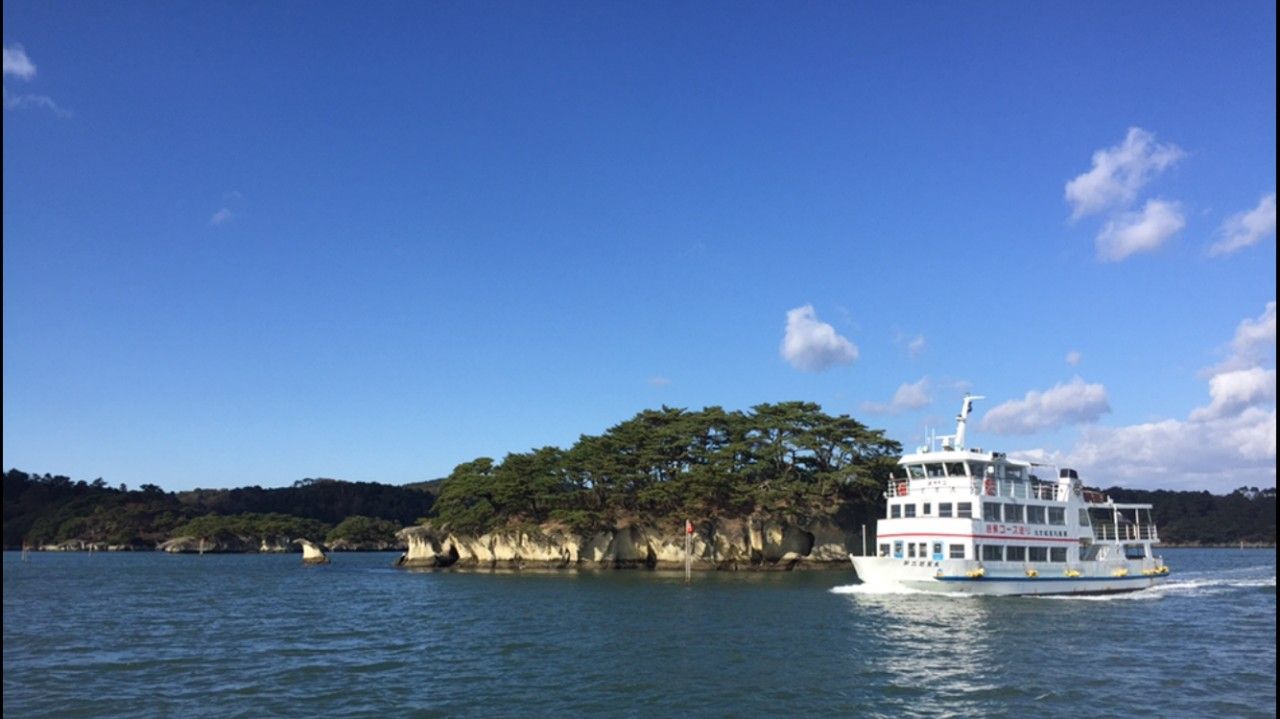
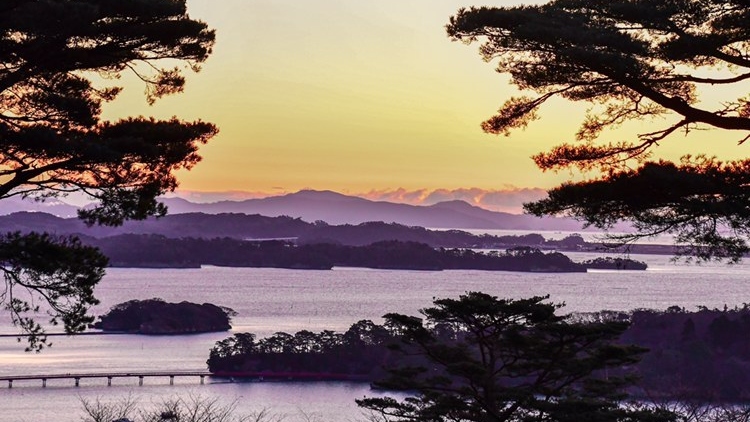
Located half an hour outside of Sendai, Matsushima (松島) is famous for its bay, which is dotted by many pine clad islets and has been ranked one of Japan's three most scenic views for centuries. The small town is also known for Zuiganji, one of the Tohoku Region's most important Zen temples.
Matsushima was hit by the earthquake and tsunami of March 11, 2011, but escaped major damage thanks to its protected location inside the island dotted bay. Most tourist attractions, shops and hotels reopened within a few weeks or months of the earthquake.
7
Zuiganji (瑞巌寺) is one of the Tohoku Region's most famous and prominent Zen temples, and is well known for its beautifully gilded and painted sliding doors (fusuma). Zuiganji was originally founded in 828 as a temple of the Tendai sect, and was converted into a Zen temple during the Kamakura Period (1192-1333). After years of decline, Zuiganji was restored to prominence by the feudal lord Date Masamune who rebuilt it as his family temple in 1609.
8
Oshima
Oshima (雄島) is a small, pine tree-covered island close to the pier of Matsushima. The island can be accessed over a short bridge free of charge and offers some pleasant, short walks. There are multiple small shrines and viewpoints dotted about the island.
Oshima used to be a retreat for monks, and decorated meditation caves can still be found on the island. The bridge to Oshima was destroyed in the 2011 tsunami, but was rebuilt and reopened two years later.
9
Stop 9
Entsuin Temple (円通院, Entsūin) was built in 1647 next to Matsushima's most important temple, Zuiganji Temple, to house the mausoleum of Date Mitsumune, the son of the ruling local feudal lord Date Terumune. The temple was built in mourning and is devoted to Kannon, the Buddhist goddess of mercy, as Mitsumune died an untimely death at the age of 19.
10
Kanrantei (観瀾亭) is a Momoyama-style tea house originally built in Kyoto by Toyotomi Hideyoshi, who gave it to Date Masamune for his service. Date's son eventually moved it to its current location overlooking Matsushima Bay. Kanrantei means "place to view ripples on water", due to its beautiful view over the water and surrounding islands.
11
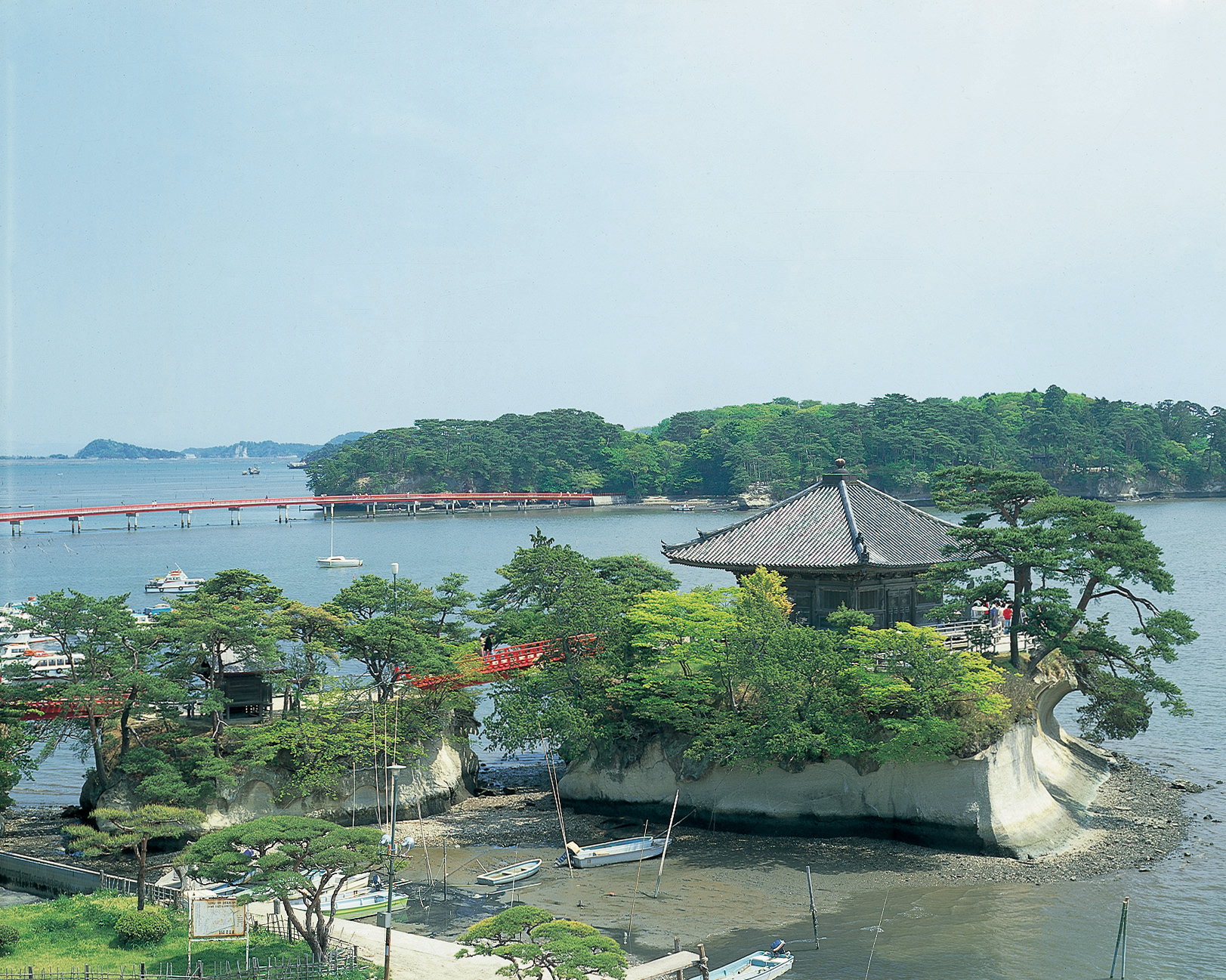
Godaido (五大堂, Godaidō) is a small temple hall on an islet just next to the pier. Due to its prominent location, it has become a symbol of Matsushima. Godaido was built in 807 and contains five statues which were enshrined by the same priest who founded nearby Zuiganji. The statues are displayed to the public only once every 33 years, and were last displayed in 2006.
12
Fukuura Island (福浦島, Fukuurajima) is one of the few pine covered islands in Matsushima Bay that is accessible to the public. The island is reached via a 252 meter long, red painted bridge that costs 200 yen (round trip) to cross. The bridge was damaged by the tsunami of March 11, 2011 and had to undergo repair works.
13
Sendai City Museum was built in the Sannomaru enclosure on the site of the remains of Sendai castle for the purpose of preserving, exhibiting, and studying a set of materials (cultural assets) donated by the Date family of Sendai (One of the samurai families that has continued since the Kamakura Era.) .
The museum houses a collection of documents from the Keicho mission to Europe—a national treasure that includes a portrait of Hasekura Tsunenaga that is also a national treasure as well as a registered UNESCO Memory of the World—and historical and artistic collections, mostly from the Edo period, that concern Sendai.
14
Shiogama Jinja (鹽竈神社) is a Shinto shrine in the city of Shiogama, Miyagi Prefecture.
Known from the ninth century, fifteen of its buildings have been designated Important Cultural Properties. It is the head shrine of several hundred Shiogama shrines located throughout Japan.
15
Shiogama Fish Wholesale Market
This large-scale market was established in its current location in 1965 and boasts a history of 50 years. The box-shaped, generously proportioned building is home to over 100 seafood stalls dealing in fresh fish, processed marine products, and salted and dried seafood. With Shiogama Port located right next door, the wholesale market sees large hauls of fresh fish unloaded daily.(Closed on Wednesday)
16
Shiogama is located in Miyagi Prefecture and lies close to the center of the Tohoku region, approximately 16 km from Sendai. The city embraces Chiganoura (Shiogama Bay), a portion of the beautiful scenic bay of Matsushima.
Urakasumi brewery is the most famous sake Browery located in Motomachi area.If you are interested in architecture, Former Kamei Residence is worth to visit the building with modern methods would be extremely difficult making this structure one of high historical value.
17
Osaki Hachimangū, a National Treasure in Sendai, features stunning Momoyama-style architecture with intricate wood carvings and vivid lacquer. Built by warlord Date Masamune in 1607, it attracts visitors with its historical value and is designated a National Treasure of Japan.
18
Mitakisan Fudoin is a Buddhist temple in Sendai, Japan, founded in 1865 by nun Kato Tane to pray for healing eye diseases. It enshrines Fudo Myo-o, a deity believed to protect eyesight and offer spiritual support. Located in a busy shopping area, it draws visitors seeking good fortune, safety, and success.
19
Tohoku History Museum, located in Tagajō City, Miyagi Prefecture, offers a comprehensive overview of the Tohoku region's history from the Paleolithic era to modern times. Its main exhibition hall is divided into nine chronological sections, showcasing artifacts and cultural materials that highlight the region's unique heritage.
What's not included
Transportation fees, Entrance fees, Lunch, and Other personal expenses
Private transportation
You cannot combine multiple tour groups.
Guide Entry fees are only covered for sights listed under What to Expect.
Available languages
Guide guide
JA
EN
Reviews breakdown
Viator
4.9
10 reviews
5★
9
4★
1
3★
0
2★
0
1★
0
Tripadvisor
5.0
8 reviews
5★
8
4★
0
3★
0
2★
0
1★
0
Important information
Service animals allowed
Public transportation options are available nearby
Infants and small children can ride in a pram or stroller
All areas and surfaces are wheelchair accessible
Transportation options are wheelchair accessible
Wheelchair accessible
Suitable for all physical fitness levels
This is a walking tour. Pick up is on foot.
About Sendai
Sendai, the largest city in the Tohoku region of Japan, is known for its lush greenery, rich history, and vibrant culture. As the capital of Miyagi Prefecture, it offers a blend of modern urban life and traditional charm, with numerous temples, shrines, and natural attractions.
Top Attractions
Osaki Hachimangu Shrine
One of the most important Shinto shrines in the Tohoku region, Osaki Hachimangu is known for its beautiful architecture and rich history. It's a popular spot for traditional festivals and ceremonies.
Historical/Religious
1-2 hours
Free (donations welcome)
Miyagi Museum of Art
This museum showcases a diverse collection of art, including traditional Japanese art, modern works, and international exhibits. It's a great place to immerse yourself in the local art scene.
Museum
1-3 hours
¥300-¥1,000
Zuihoden Mausoleum
This mausoleum is the final resting place of Date Masamune, the famous samurai lord who founded the city of Sendai. The site features beautiful gardens and intricate architecture.
Historical
1-2 hours
¥500
Jozenji-dori Avenue
Known as one of the most beautiful tree-lined streets in Japan, Jozenji-dori Avenue is famous for its double row of zelkova trees that create a stunning canopy. It's a great spot for a leisurely stroll.
Architecture/Cultural
30 minutes to 1 hour
Free
Sendai Castle Ruins
Also known as Aobajo Castle, these ruins offer a glimpse into Sendai's samurai history. The site includes a museum and a reconstructed tower with panoramic views of the city.
Historical
1-2 hours
¥200
Must-Try Local Dishes
Gyutan (Grilled Beef Tongue)
A specialty of Sendai, gyutan is grilled beef tongue often served with rice and various toppings. It's known for its tender texture and rich flavor.
Main Dish
Contains beef, not suitable for vegetarians or vegans
Zundamochi (Mugwort Rice Cake)
A traditional Japanese sweet made from rice flour and filled with zunda, a paste made from mashed edamame beans. It has a unique, slightly bitter taste.
Dessert
Vegetarian, contains gluten
Sendai Tanmen (Noodle Soup)
A local noodle soup dish featuring a rich, miso-based broth with various toppings such as seafood, vegetables, and meat. It's a hearty and comforting meal.
Main Dish
Can be made vegetarian or vegan with modifications
Ishigaki (Grilled Fish)
A traditional Sendai dish featuring fish grilled over an open flame, often served with rice and vegetables. The fish is typically a local variety such as mackerel or salmon.
Main Dish
Contains fish, not suitable for vegetarians or vegans
Popular Activities
Hiking in the nearby mountains
Snow sports in Zao Onsen (winter)
Boat tours in Matsushima Bay
Onsen (hot spring) baths in Zao Onsen
Strolling through Jozenji-dori Avenue
Visiting local cafes and tea houses
Visiting temples and shrines
Exploring museums and art galleries
Best Time to Visit
Spring (March to May) and Autumn (September to November)
These seasons offer comfortable weather for outdoor activities and sightseeing. Spring is particularly famous for cherry blossoms, while autumn brings beautiful fall foliage.
10°C to 25°C
50°F to 77°F
Practical Information
Language
- Official: Japanese
- Widely spoken: English (limited)
- English: Limited
Currency
Japanese Yen (JPY)
Time Zone
JST (GMT+9)
Electricity
100VV, 50/60HzHz
Safety Information
Overall Safety Rating: Generally safe
Sendai is generally a safe city with low crime rates. However, as with any destination, it's important to be aware of your surroundings and take precautions to protect yourself and your belongings.
Important Precautions:
- • Keep valuables secure and out of sight
- • Be cautious when using ATMs, especially at night
- • Use licensed taxis and tour services
Getting there
By air
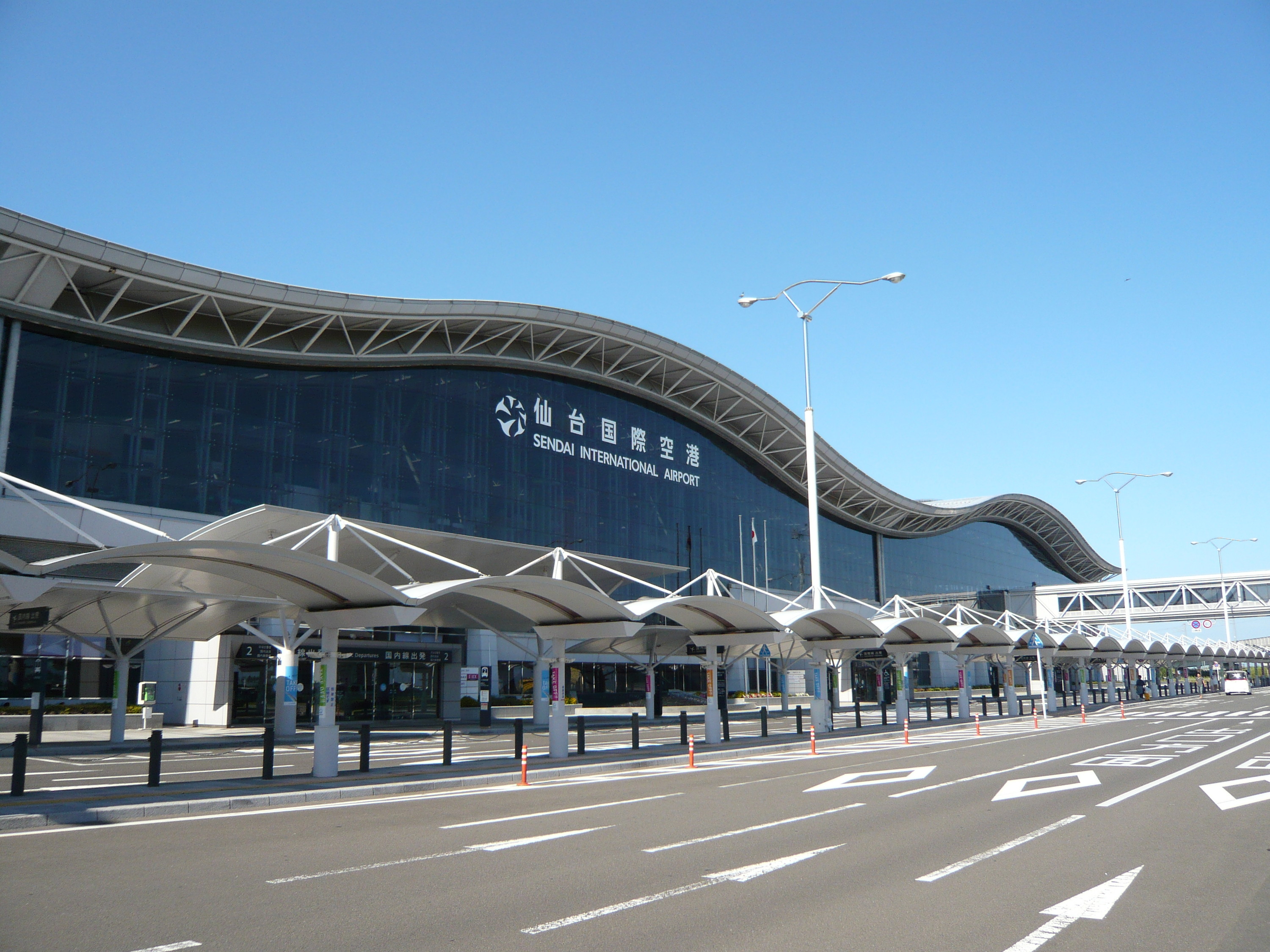
- Sendai Airport • 13 km from city center
By train
Sendai Station
By bus
Sendai Station Bus Terminal, Other regional terminals
Getting around
Public transport
The Sendai Subway system is efficient and easy to use, with two lines: the Nanboku Line and the Tozai Line.
Taxis
Available • Apps: JapanTaxi, DiDi
Rentals
Car, Bike, Scooter
Neighborhoods
Aoba Ward
Nakano Ward
Izumi Ward
Day trips
Matsushima
40 km from Sendai • Full day
Matsushima is a picturesque bay known for its beautiful islands, temples, and shrines. It's one of the Three Most Scenic Views of Japan.
Yamadera
30 km from Sendai • Half day to full day
Yamadera is a mountain temple complex known for its beautiful gardens, historic buildings, and panoramic views. It's a great spot for hiking and enjoying nature.
Zao Onsen
50 km from Sendai • Full day or overnight
Zao Onsen is a famous hot spring resort nestled in the mountains. It's known for its relaxing onsen (hot spring) baths and beautiful natural surroundings.
Festivals
Sendai Tanabata Festival • August 6-8 (main days), with related events throughout the month
Sendai Pageant of Starlight • Late November to early December
Sendai Sansa Odori • August 3-6 (main days), with related events throughout the month
Pro tips
- Purchase a Suica or Pasmo IC card for convenient and discounted public transportation
- Learn a few basic Japanese phrases to enhance your experience and show respect for the local culture
- Try local specialties, such as gyutan (grilled beef tongue) and zundamochi (mugwort rice cake)
- Visit during the spring or autumn for pleasant weather and beautiful foliage, but be prepared for crowds during peak travel seasons and festivals
- Explore the city's green spaces, such as Jozenji-dori Avenue and nearby parks, for a relaxing and scenic experience
From $25
per person
Price varies by option
Secure booking
Free cancellation available
Instant confirmation


![[Sendai Day Trip] Tagajo, a Peaceful Ancient Capital & Shiogama Shrine & Overlooking the Sea View of Matsushima (Miyagi Prefecture, Tohoku)](https://res.klook.com/image/upload/activities/vcvghzscor3ngp6fzg0t.jpg)