Best of Brussels : Private Luxury Tour
Active
4h
For a full refund, cancel at least 24 hours before the scheduled departure time.
Instant confirmation
Mobile or paper ticket accepted
About this experience
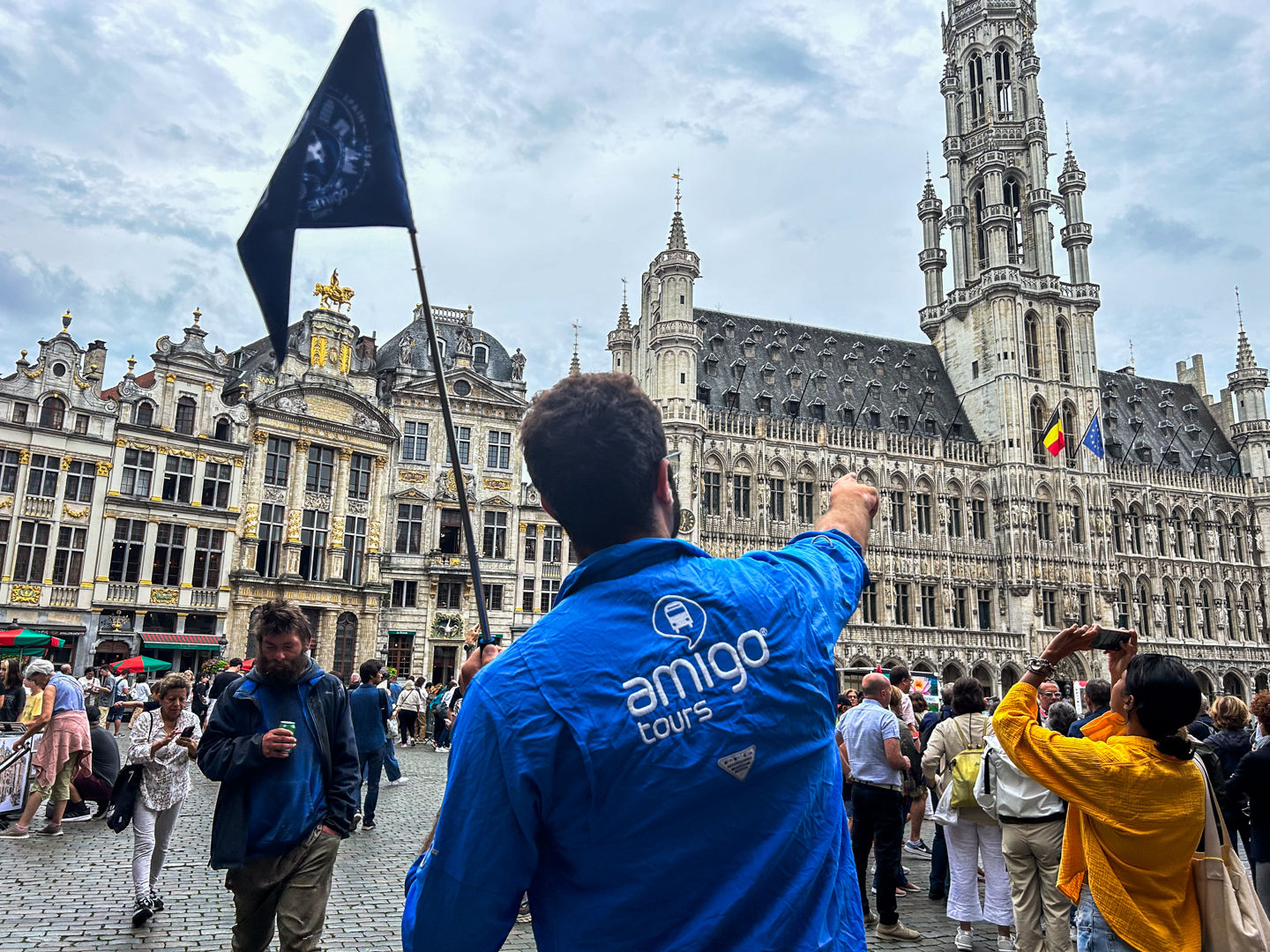
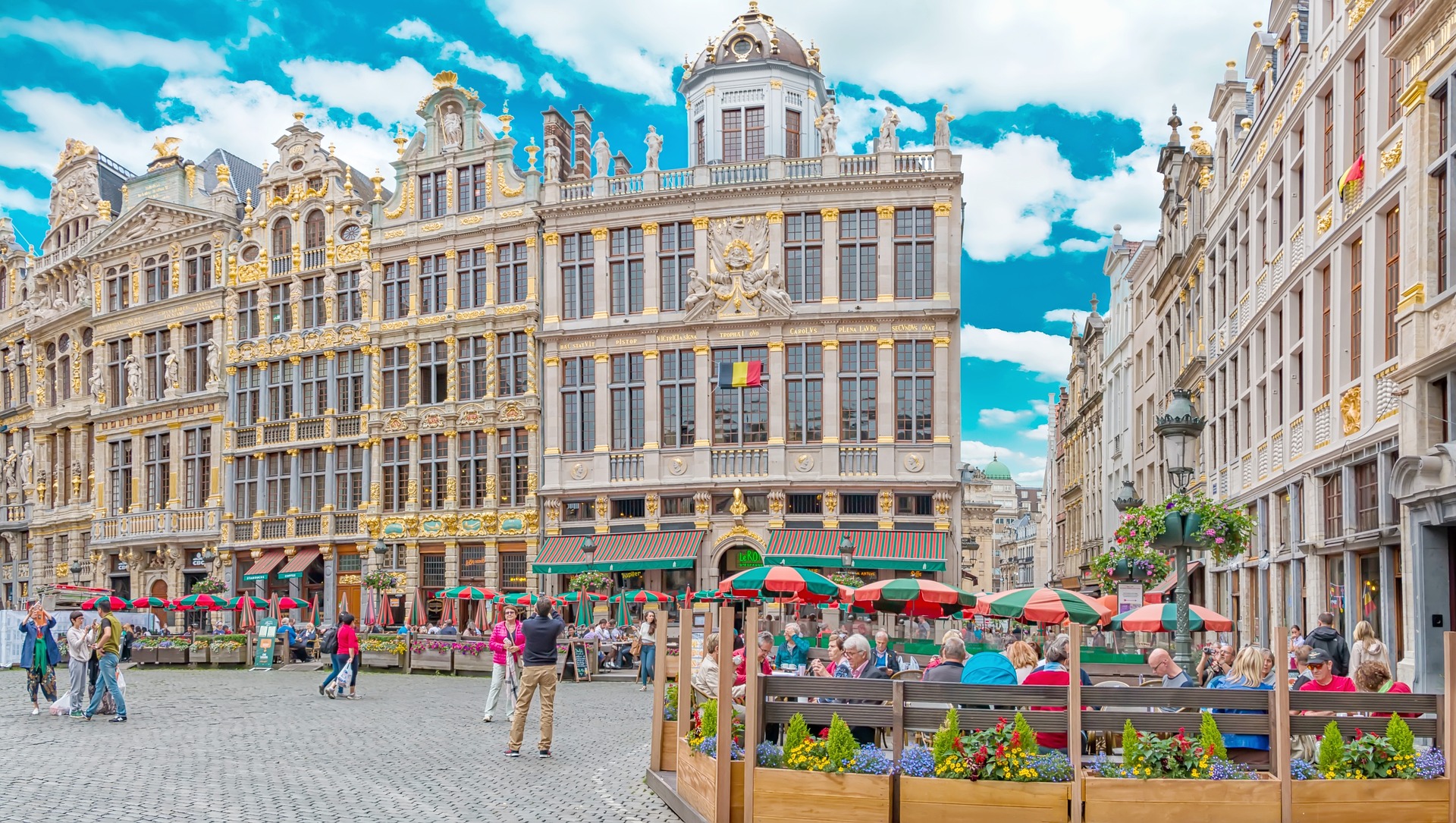
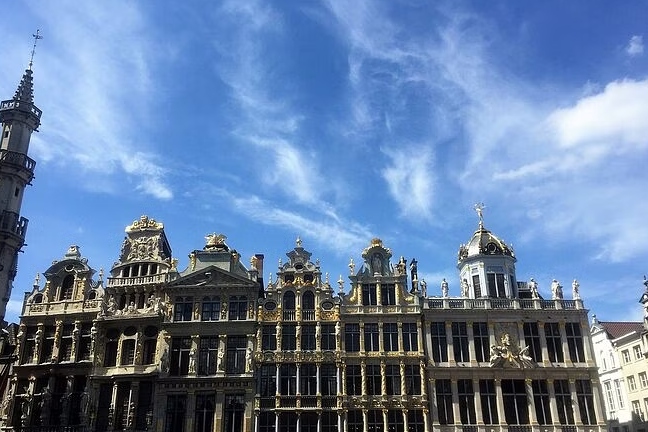
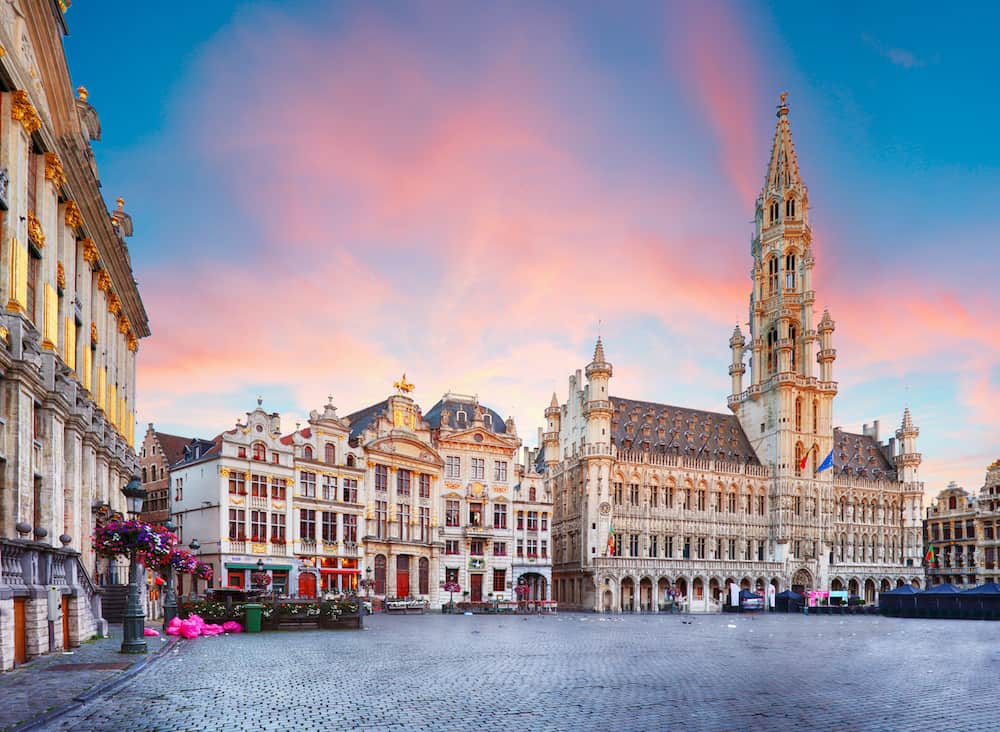
Our visit leaves from the majestic Grand Place which was the cradle of medieval Brussels. Then you board our luxury car and our multilingual guide takes you to all the must-see highlights in the city center, but he also shows you the Atomium, the royal residence palace and the EU district. In short: this is a comprehensive tour of Brussels . Your guide is your host. He offers you countless suggestions and ideas of things to do while in Brussels and answers all your queries.
If you are looking for a quality service, you should offer yourself this unforgettable and personal welcome to Brussels.
Available options
Best of Brussels : Private Luxury Tour
Pickup included
What's included
In-person guide
Detailed itinerary
1
Stop 1
Mannekin PisAlong the Rue de l'Etuve is Brussels' best-known landmark, the Manneken Pis, usually besieged by a throng of tourists. Although he can be traced back to at least 1388, nothing much is known about the origin of the figure of a little boy urinating, popularly referred to as "the oldest citizen of Brussels." The Manneken is, however, surrounded by various legends. According to one, the fountain is a memorial to a courageous infant who averted a conflagration, according to another, it commemorates the son of a count who succumbed to a pressing urge while taking part in a procession. The present statue was made in 1619 by Jérôme Duquesnoy the Elder and has been stolen on several occasions though always recovered. During major celebrations, events, and festivals in Brussels, the statue is famed for being dressed in costume
2
Stop 2
Dedicated to St. Michael and St. Gudula (the patron saints of Brussels) this Gothic church was first founded in 1225 but only completed in the 15th century. The facade is impressive, rising majestically above a broad flight of steps and crowned with twin 69-meter-high towers designed by Jan van Ruysbroeck. The beautifully proportioned interior (108 meters by 50 meters) is lavishly furnished and is home to some outstanding stained glass windows created by Bernard van Orley. Head to the transepts to see the finest examples depicting Charles V and Isabella of Portugal (south transept) and the Hungarian royal pair Louis II and Mary (north transept), and then into the Chapel of the Holy Sacrament, to the left of the choir, where the window illustrates the story of the Miracle of the Host.
3
Stop 3
A favorite attraction for photo-ops, the most important building on this square is the Royal Palace (Palais Royal), which is used by the Belgian royal family as an official residence. The Belgian flag, flown from the roof, signals the sovereign's presence, and a ceremonial Changing of the Guard takes place every day at about 2:30pm. Surrounding the palace are an ensemble of cultural buildings boasting Neoclassical facades. The Palais des Académies, home of the Royal Academy of Sciences and once the residence of the Crown Prince of Orange, and the Palais des Beaux-Arts (Paleis voor Schone Kunste) on the west side of the plaza, designed and built in the 1920s by Victor Horta, are two of the finest examples.
4
Stop 4
Along with Manneken Pis, the Atomium is Brussels' best-known landmark attraction, and although it's a bit of a journey by tram to get out here, the bizarre 102-meter-high steel and aluminum structure, designed by the architect André Waterkeyn for the 1958 Brussels World Exhibition, is the city's most surreal sight. The building represents a molecule of iron magnified 165 million times, and visitors may enter the interior where four of the nine spheres are now used for the presentation of a show about human life called Biogenium.
5
Stop 5
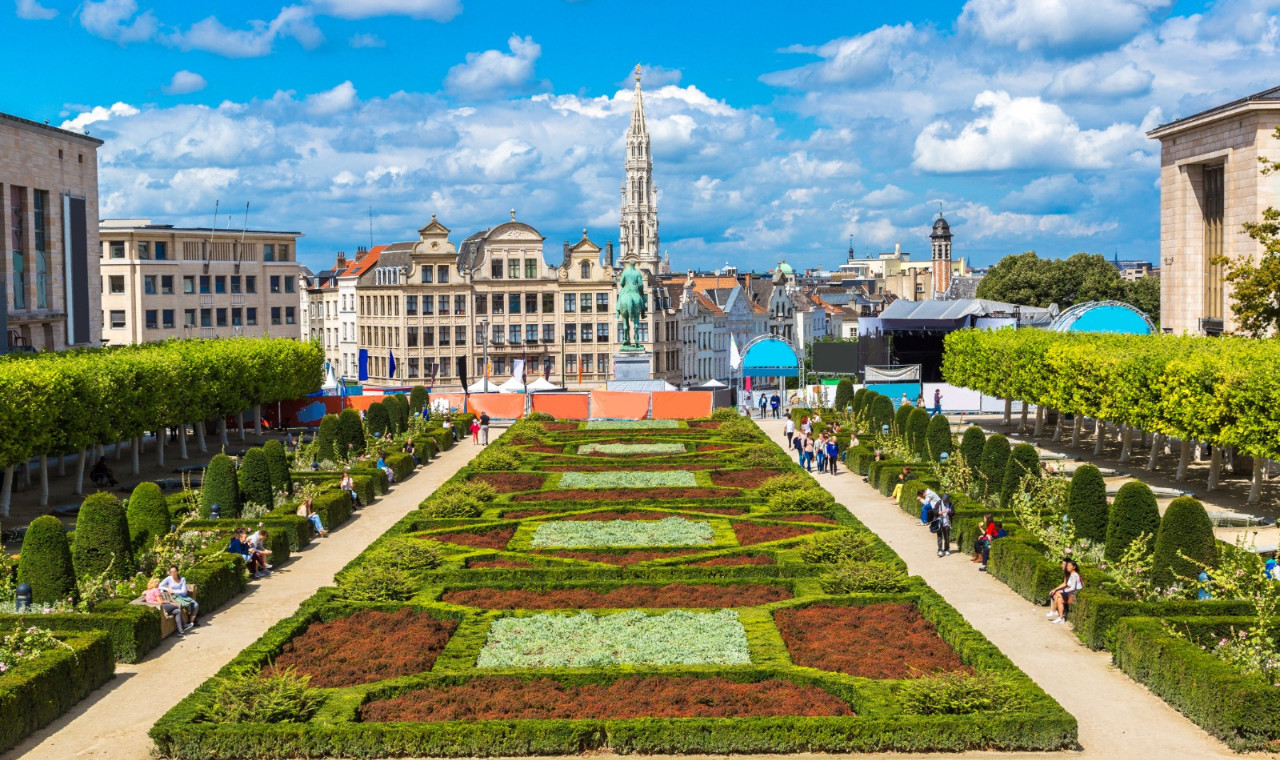
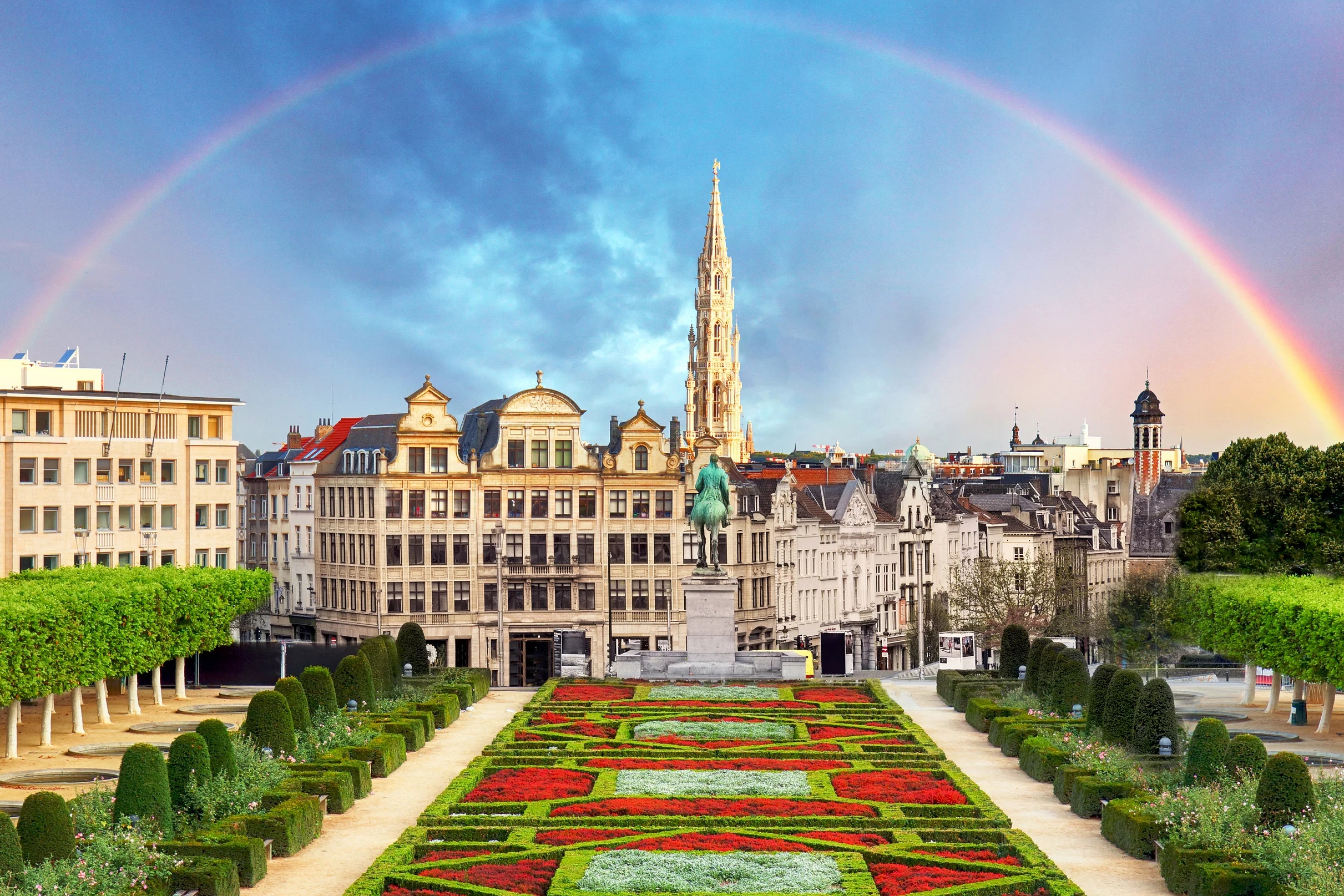
The Mont des Arts was created between 1956 and 1958, occupying the elevated site between the Place Royale and the Place de l'Albertine. The architecturally imposing complex of large buildings includes the Bibliothèque Albert I and the strikingly modern Palais de la Dynastie and Palais de Congrès. From the square between them is a fine view of the lower central city. The Bibliothèque Albert I was founded during the period of Burgundian rule and comprises more than three million volumes together with a valuable collection of manuscripts and several interesting museums.
6
Stop 6
The 15th- to 16th-century church of Notre-Dame du Sablon (Onze Lieve Vrouw op de Zavel), generally considered one of the loveliest Late Gothic churches in Belgium, was built as a replacement for a small chapel first erected on the sandy expanse of the Sablon by the Crossbowmen's Guild in 1304. The interior of the church is breathtaking, in particular because of its marvelous stained glass. Also of interest is the burial chapel of the Thurn und Taxis family, partly the work of Luc Fayd'herbe. Kept in the sacrarium is a figure of the Virgin, a copy, so legend has it, of a Madonna brought to the chapel in 1348 by a woman from Antwerp, Baet Soetens, to whom the Virgin had appeared.
7
Stop 7
The Parc du Cinquantenaire was established in 1880 to commemorate the country's 50th anniversary. Its centerpiece is the monumental Palais du Cinquantenaire, the two wings of which, linked in 1905 by a massive triumphal arch designed by the French architect Charles Girault, house two of Brussels' most interesting museums. The Royal Art and History Museum is home to one of the most extensive tapestry collections in the world, and the Belgian Army Museum and Museum of Military History (Koninklijk Museum van het Leger en van de Militaire Geschiedenis) provides an overview of the development of military technology and of the major campaigns fought on Belgian soil.
8
Stop 8
The Koekelberg district is dominated by the massive Basilique Nationale du Sacré Coeur (Nationale Basiliek van het Heilig Hart), the fifth largest church in the world and brainchild of Leopold II, begun in 1905 to mark the country's 75th anniversary. The building was only completed in 1970. Not surprisingly, it displays something of a mixture of styles, impressing nevertheless by its sheer size (141 meters by 107 meters). Inside is an excellent collection of art and an ongoing exhibition on the history of the basilica. The picture of Christ giving his blessing, which hangs above the altar, is by Georges Minne.
9
European Quarter
Available languages
Guide guide
EN
IT
FR
ES
Reviews breakdown
Viator
4.1
13 reviews
5★
8
4★
2
3★
1
2★
0
1★
2
Tripadvisor
4.7
3 reviews
5★
2
4★
1
3★
0
2★
0
1★
0
Important information
Public transportation options are available nearby
Infants are required to sit on an adult’s lap
Specialized infant seats are available
Suitable for all physical fitness levels
About Brussels
Brussels, the heart of Europe, is a vibrant city known for its rich history, stunning architecture, and world-renowned cuisine. As the de facto capital of the European Union, it's a melting pot of cultures and languages, offering a unique blend of medieval charm and modern sophistication.
Top Attractions
Grand Place
The Grand Place is the central square of Brussels and a UNESCO World Heritage site. It's famous for its ornate guildhalls and the impressive Town Hall.
Historical
1-2 hours
Free
Atomium
The Atomium is a unique structure built for the 1958 World's Fair. It's a symbol of Brussels and offers panoramic views of the city.
Architecture
2-3 hours
€16 (adults), €10 (children)
Manneken Pis
The Manneken Pis is a small bronze statue of a boy peeing, which has become one of Brussels' most famous landmarks. It's often dressed in costumes for special occasions.
Cultural
15-30 minutes
Free
Royal Palace of Brussels
The Royal Palace is the official palace of the King and Queen of the Belgians. While the royal family does not reside here, it's used for official events and ceremonies.
Historical
1-2 hours
€12.50 (for the Royal Greenhouses, open only in spring and autumn)
Parc du Cinquantenaire
Parc du Cinquantenaire is a large urban park with a triumphal arch, museums, and green spaces. It's a great place for a leisurely walk or picnic.
Nature
1-2 hours
Free (museums have separate fees)
Must-Try Local Dishes
Moules-frites
Mussels cooked in white wine, cream, or other sauces, served with a side of fries.
Main course
Can be made vegetarian by omitting the mussels and using a vegetable-based sauce.
Waffles
Belgian waffles are a must-try, with various toppings like whipped cream, chocolate, and fruit.
Dessert/Snack
Can be made vegetarian or vegan by choosing appropriate toppings.
Fries
Belgian fries are crispy on the outside and soft on the inside, often served with various sauces.
Snack/Side
Can be made vegetarian by choosing vegetable-based sauces.
Carbonade flamande
A traditional Flemish beef and beer stew, often served with fries or bread.
Main course
Not suitable for vegetarians or vegans.
Popular Activities
Cycling tours
Kayaking on the Senne River
Escape rooms
Spa days
Picnics in parks
Café hopping
Museum visits
Art gallery tours
Best Time to Visit
June to August
Summer is the peak tourist season with warm weather and numerous festivals. The city is lively, but also more crowded and expensive.
15°C to 25°C
59°F to 77°F
Practical Information
Language
- Official: Dutch, French, German
- Widely spoken: English
- English: Widely spoken
Currency
Euro (EUR)
Time Zone
GMT+1 (Central European Time, CET)
Electricity
230VV, 50HzHz
Safety Information
Overall Safety Rating: Generally safe
Brussels is generally safe for travelers, but petty crime like pickpocketing can occur in tourist areas. Be cautious with your belongings and stay aware of your surroundings.
Important Precautions:
- • Keep your belongings secure and out of sight
- • Be cautious with ATMs and avoid using them at night
- • Use licensed taxis or ride-sharing apps
Getting there
By air
- Brussels Airport • 11 km (7 miles) from city center
By train
Brussels-South Station, Brussels-Central Station
By bus
Brussels-North Station, Brussels-South Station
Getting around
Public transport
The metro is efficient and covers most of the city. It's a great way to get around, especially during peak hours.
Taxis
Available • Apps: Uber, Heetch
Rentals
Car, Bike, Scooter
Neighborhoods
City Center
Sablon
Saint-Géry
European Quarter
Day trips
Bruges
100 km (62 miles) • Full day
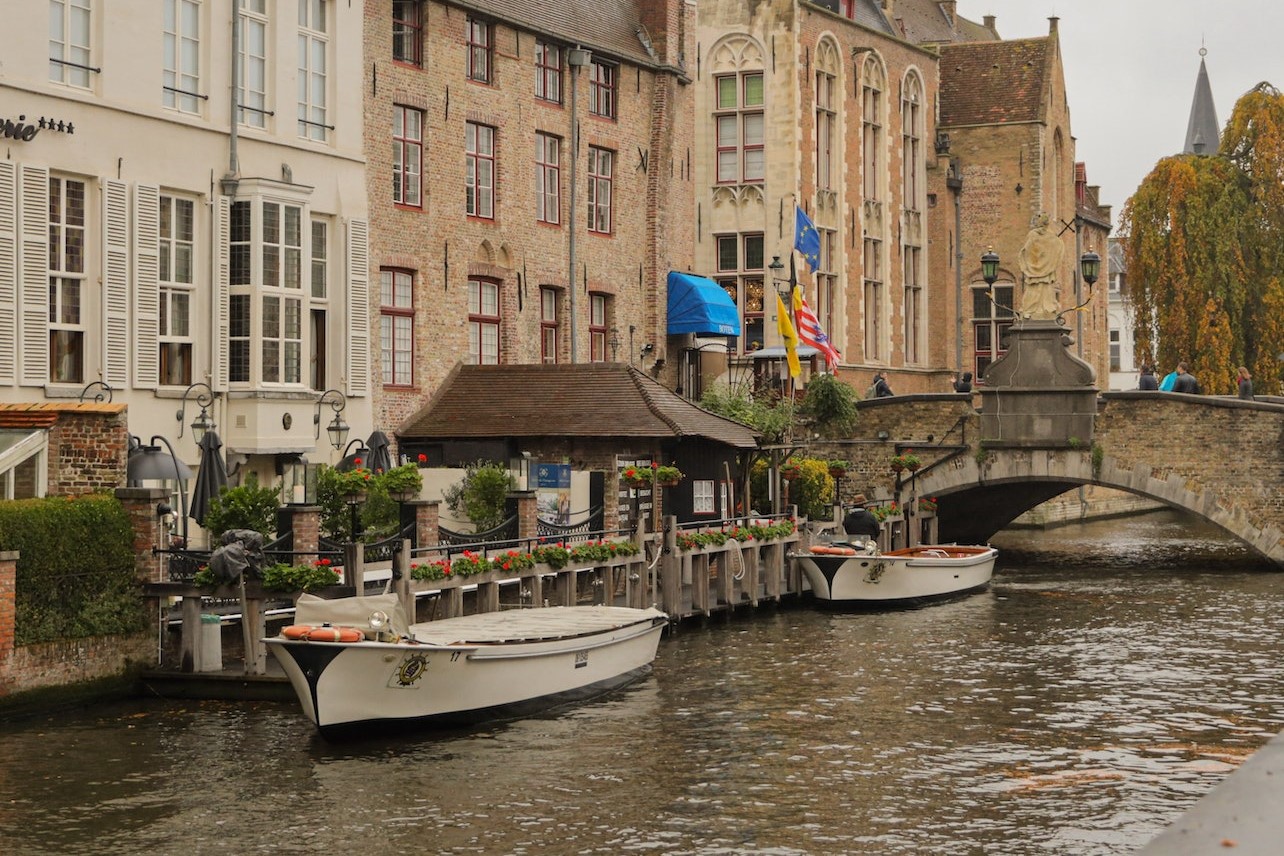
Bruges is a medieval city with a well-preserved historic center, canals, and cobblestone streets. It's often referred to as the 'Venice of the North'.
Ghent
60 km (37 miles) • Full day
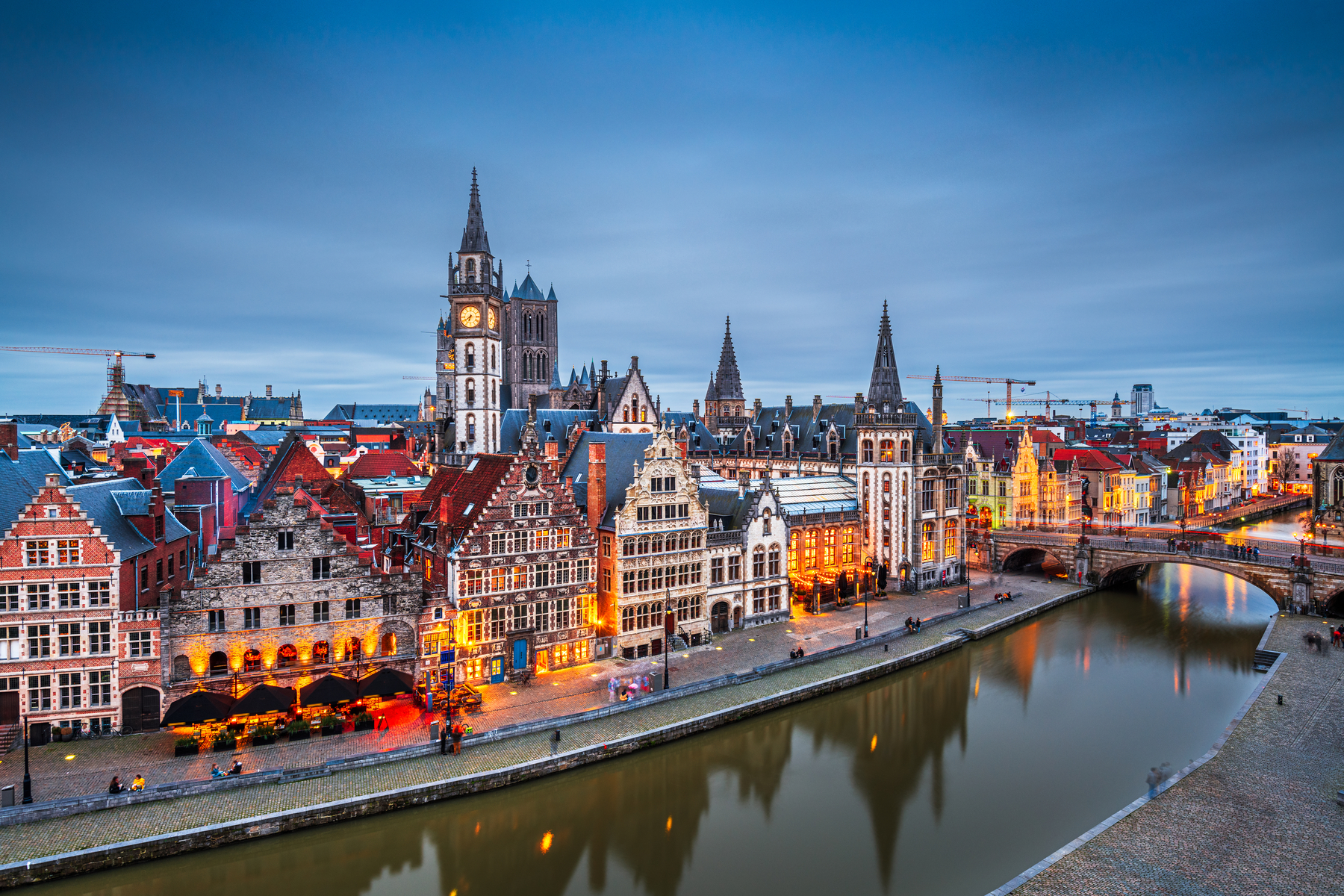
Ghent is a vibrant city with a rich history, beautiful architecture, and a lively student population. It's known for its medieval buildings, castles, and museums.
Antwerp
45 km (28 miles) • Full day
Antwerp is a dynamic city known for its fashion, diamond district, and vibrant cultural scene. It's home to numerous museums, galleries, and historic sites.
Festivals
Ommegang • Early July
Flower Carpet • Every two years in August
Christmas Market • Late November to early January
Pro tips
- Visit the Grand Place early in the morning or late in the afternoon to avoid crowds and enjoy the square's beauty in peace.
- Try a Belgian waffle from a street vendor, but be cautious with toppings that may not be suitable for dietary restrictions.
- Explore the city's neighborhoods on foot or by bike to discover hidden gems and local culture.
- Learn a few basic phrases in French or Dutch to connect with locals and show respect for the language and culture.
- Consider purchasing a Brussels Card for unlimited public transport and discounts on attractions.
From $25
per person
Price varies by option
Secure booking
Free cancellation available
Instant confirmation