Historic Private Walking Tour in Sagunto
Active
2h
All sales are final. No refund is available for cancellations.
Instant confirmation
Mobile or paper ticket accepted
About this experience
Travel through the eventful history of Sagunto, the multicultural city inhabited by many civilizations, who coexisted harmoniously or took turns controlling this beautiful coastal settlement in the province of Valencia, leaving behind a wealth of significant monuments of great historical and testimonial value as well as precious archaeological sites, including the ruins of Sagunto Diana Temple witnessing the siege of Saguntum leading the Second Punic War, one of the most crucial wars of antiquity, Valencia’s largest and Spain’s oldest Jewish Quarter dating back to 2ndcentury, the 1st-century Roman Theatre which is still in use up to date, and most notably the colossal ruins of Sagunto Castle constructed and repurposed by Iberian, Romans, Visigoths, Arabs, and Christians through the long course of the rich history.
Available options
Historic Private Walking Tour in Sagunto
What's included
Official Tour Guide
Detailed itinerary
1
Set off at the 14th-century Santa Maria Church in the heart of Sagunto. The looming church, a National Monument itself, heralds an important archaeological site nestling on its side: the ruins of Sagunto Diana Temple. The remaining ashlar wall of the Roman religious hub has a tremendous testimonial value as the only surviving witness of the historic Siege Of Saguntum in 219 BC, triggered one of the most important wars of the ancient world, the Second Punic War.
2
Then, stop by Portalet de la Juderia, the only remaining entrance of the 14th-century ramparts surrounding Spain’s oldest Jewish neighborhood in. The remnants which suffered the 15th-century brutal attacks against the Hebrew community gives you flashbacks of the turbulent history of the multicultural city.
3
Move on to explore the enchanting Jewish Quarter, whose layout has been the same since the 16th century. Its narrow, cobblestone streets are lined by whitewashed houses, the foundation of a medieval market, the ruins of a fountain, and most notably a well-maintained Jewish ritual bath (“Mikvé”), providing visitors with a precious glimpse into Sagunto’s Jewish tradition.
4
Then, walk up the zig-zag steps carved out of the bedrock leading to the 16th-century Hermitage of the Virgin of Soledad, located on the top of Calvary between the Old Town and Castle of Sagunto. Flooded with tranquility, the medieval temple offers picture-postcard sweeping vistas across the historic town, the weathered castle, beautiful ranges, and valleys.
5
Continue to pass by the Roman Theatre at the foot of the castle mountain. Dating to the first century, the renovated construction which was an important part of Emperor Augustus’s urban planning offers not only insights into the social life of the Sagunto Romans but also a diverse range of performances all year round.
6
On the way up to the castle, stop by the tranquil Jewish Cemetery. The archaeological site nestling at the foot of the castle walls is home to 70 tombs of three types from the 14th and 15th centuries and some curious inscriptions in Hebrew, offering a chance to learn about the social structure of the largest Jewish community in Valencia.
7
Finally, once setting foot on the emblematic Sagunto Castle, marvel at the reliefs representing Roman mythology on the 3rd-century Almenara Portal, the best-preserved part of the ruins. The main entrance of the castle opens up to Almenara Square, the most famous of the seven sections of the castle, where you can take your time examining remains of a Roman forum, public buildings, cisterns, and other illegible marks across the rock hills by Romans, Visigoths, Arabs, and Christians.
What's not included
Private or Public Transportation
Available languages
Guide guide
EN
ES
Important information
Service animals allowed
Public transportation options are available nearby
Suitable for all physical fitness levels
Meeting point
At the monument of Joaquín Rodrigo, your tour guide shall be waiting with a Signboard.
About Valencia
Valencia is a vibrant city on Spain's eastern coast, known for its City of Arts and Sciences, beautiful beaches, and rich culinary traditions. The city blends modern architecture with historic charm, offering a unique Mediterranean experience.
Top Attractions
City of Arts and Sciences
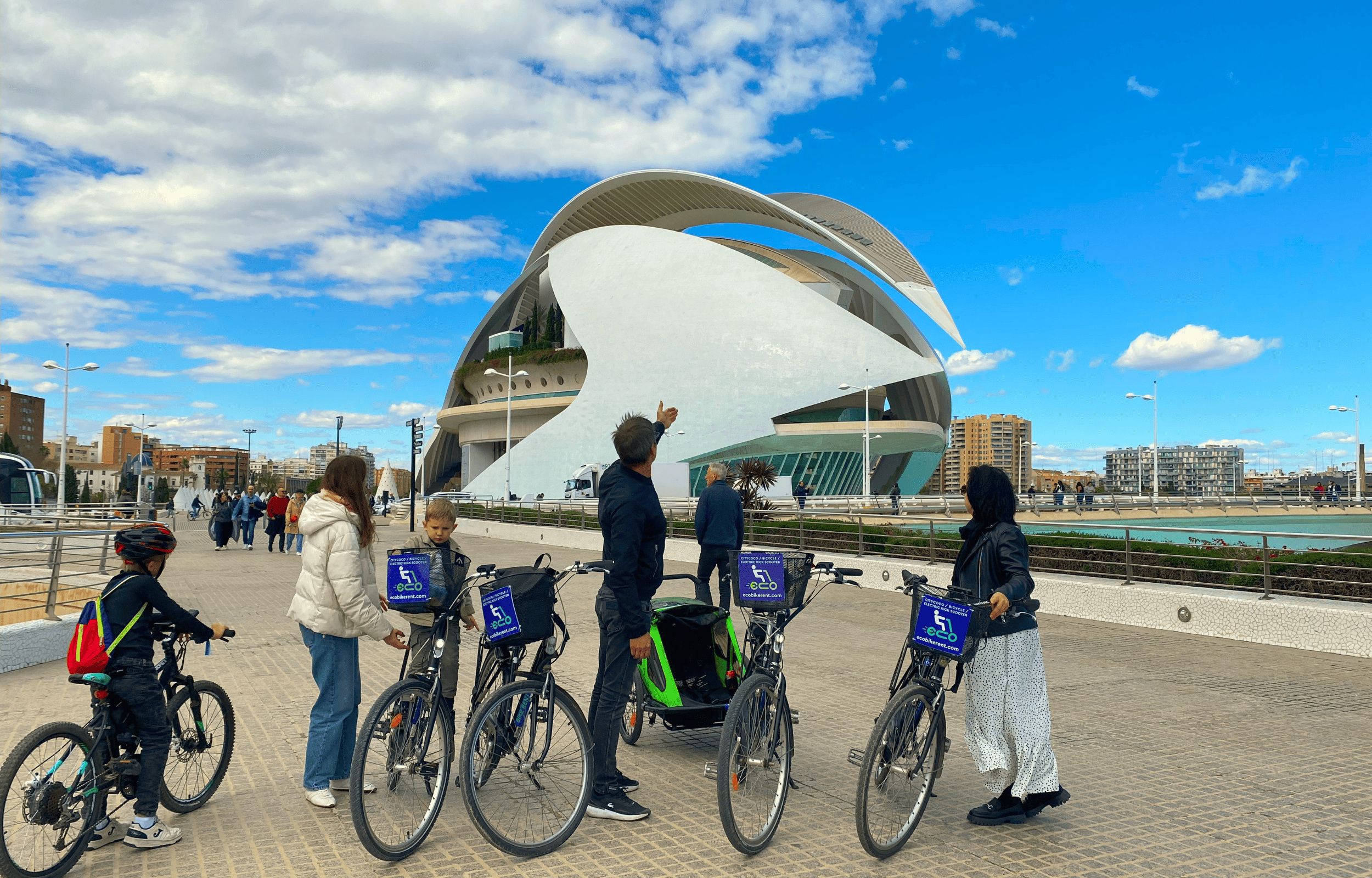
A futuristic complex featuring an opera house, science museum, and oceanographic park.
Architecture
Half day to full day
€30-€50 (depending on the attractions visited)
Valencia Cathedral
A stunning Gothic cathedral with a mix of architectural styles, home to the Holy Grail.
Historical
1-2 hours
€3-€5 (additional cost for tower access)
La Lonja de la Seda
A late Valencian Gothic-style civil building and a UNESCO World Heritage Site.
Historical
1 hour
€2-€4
Malvarrosa Beach
A popular urban beach with a long promenade, perfect for relaxation and water sports.
Beach
Half day to full day
Free
Central Market
One of the largest fresh produce markets in Europe, offering a variety of local and international products.
Market
1-2 hours
Free to enter, prices vary for purchases
Must-Try Local Dishes
Paella Valenciana
A traditional rice dish cooked with rabbit, chicken, and vegetables.
Main Course
Contains meat and vegetables
Fideuà
A noodle-based dish similar to paella, made with seafood.
Main Course
Contains seafood
Horchata
A sweet, milky drink made from tiger nuts, typically served with fartons (sweet pastries).
Drink
Vegan and gluten-free
All i Pebre
A traditional dish made with eel, garlic, and peppers.
Main Course
Contains fish and seafood
Popular Activities
Hiking in Albufera Natural Park
Water sports at Malvarrosa Beach
Beach lounging
Spa treatments
Visiting museums and historic sites
Attending local festivals
Boat tours in Albufera
Swimming and water sports
Best Time to Visit
March to May, September to November
These months offer pleasant weather and fewer tourists compared to the summer peak.
15-28°C
59-82°F
Practical Information
Language
- Official: Spanish
- Widely spoken: Valencian, English
- English: Moderately spoken
Currency
Euro (EUR)
Time Zone
GMT+1 (CET), GMT+2 (CEST during daylight saving time)
Electricity
230VV, 50HzHz
Safety Information
Overall Safety Rating: Generally safe
Valencia is generally safe for tourists, but it's important to be aware of pickpockets and scams in crowded areas.
Important Precautions:
- • Keep valuables secure and out of sight
- • Use licensed taxis or ride-sharing apps
- • Be cautious of strangers approaching you with offers or requests
Getting there
By air
- Valencia Airport • 8 km from city center
By train
Valencia Joaquín Sorolla Station
By bus
Valencia Bus Station
Getting around
Public transport
Efficient and affordable, with multiple lines connecting major attractions.
Taxis
Available • Apps: Cabify, Uber
Rentals
Car, Bike, Scooter
Neighborhoods
Ciutat Vella (Old Town)
El Carmen
Ruzafa
Malvarrosa
Day trips
Albufera Natural Park
10 km from Valencia • Half day to full day
A beautiful wetland area with a variety of birdlife and traditional fishing villages.
Sagunto
30 km from Valencia • Half day
A historic town with a Roman theater, castle, and medieval center.
Requena
100 km from Valencia • Full day
A picturesque town known for its wine production and historic center.
Festivals
Fallas Festival • March 15-19
Tomatina Festival • Last Wednesday of August
Las Fallas de Valencia • March 15-19
Pro tips
- Visit the City of Arts and Sciences early in the morning or late in the afternoon to avoid the midday sun and crowds
- Try local specialties like paella, fideuà, and horchata at traditional restaurants and markets
- Explore the city's neighborhoods, each with its unique character and attractions
- Use the Valencia Tourist Card for unlimited public transportation and discounts at major attractions
- Be cautious of pickpockets and scams in crowded areas, especially during festivals and peak tourist seasons
From $25
per person
Price varies by option
Secure booking
Free cancellation available
Instant confirmation