

Waterloo Private Battlegrounds Tour with Lion Hill
Active
4h - 5h
For a full refund, cancel at least 24 hours before the scheduled departure time.
Instant confirmation
Mobile or paper ticket accepted
About this experience
A private guided tour of the Waterloo Battlefield provides a unique and immersive experience, unlike standard tours. With an expert guide dedicated to your group, you'll have the opportunity to dive deep into the history of the Battle of Waterloo, visiting key sites such as the Wellington Museum, Napoleon's former headquarters, and the famous Lion's Mound. The tour is fully customizable to your interests, allowing for a flexible itinerary that suits your preferences. Private tours also include comfortable transportation and hotel pick-up and drop-off, adding convenience to the experience. Direct interaction with a knowledgeable guide brings the history to life with fascinating stories, ensuring an engaging and educational journey.
Available options
Waterloo Private Battlegrounds Tour with Lion Hill
Pickup included
What's included
Hotel pickup and drop-off
Bottled water
Professional guide
Local taxes
Transport by air-conditioned minivan
Detailed itinerary
1
Stop 1
Stop At: Ferme d’Hougoumont, Chemin du Goumont 1, Braine-l'Alleud 1420, Belgium
Discover the strategic importance of Hougoumont in Wellington’s defensive lines and gain insight into the fierce battle that took place there on June 18, 1815. Learn about the troops defending and attacking the fortified farmhouse, as well as the dramatic events that unfolded throughout the day.
2
Stop 2
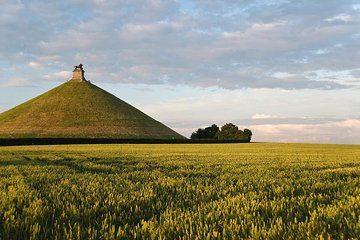
The Lion's Mound, standing tall over the former battlefield, serves as a tribute to the Allies' victory over Napoleon's imperial forces. Perched atop the 40-meter hill, the majestic lion appears to roar defiantly toward France to this day.
The farm was heavily fortified and became the focal point of intense fighting throughout the battle. Napoleon saw it as a weak point in Wellington’s defenses and launched repeated attacks, but British and allied troops, including the Coldstream Guards and Nassau troops, successfully defended it. The fierce combat at Hougoumont was key to Wellington’s victory, as it tied up significant French forces and weakened their overall assault.
Today, Hougoumont Farm is preserved as part of the Waterloo Battlefield Memorial, offering visitors a glimpse into one of the most decisive moments in European history.
3
La Bachée B&B, honored with a 2-épis rating for its quality, is nestled in the charming village of Plancenoît, just moments from the historic Waterloo battlefield. This beautiful 1721 farmhouse, a fine example of Brabant architecture, offers the perfect blend of ecotourism and cultural exploration
4
The Emperor made a stop at Ferme du Caillou, which would later be known as Napoleon’s Last Headquarters. Surrounded by his General Staff, he spent the night of June 17 to 18, 1815, under the watchful guard of the Imperial Guard. It was within these walls that the final battle plans were devised.
What's not included
Lunch
Entrance fees ( memling, Groeningen, Boat trip)
Tips
Available languages
Guide guide
EN
FR
ES
Reviews breakdown
Viator
5.0
3 reviews
5★
3
4★
0
3★
0
2★
0
1★
0
Tripadvisor
4.0
6 reviews
5★
3
4★
1
3★
1
2★
1
1★
0
Important information
Infants are required to sit on an adult’s lap
Specialized infant seats are available
Suitable for all physical fitness levels
Wheelchair accessible
About Brussels
Brussels, the heart of Europe, is a vibrant city known for its rich history, stunning architecture, and world-renowned cuisine. As the de facto capital of the European Union, it's a melting pot of cultures and languages, offering a unique blend of medieval charm and modern sophistication.
Top Attractions
Grand Place
The Grand Place is the central square of Brussels and a UNESCO World Heritage site. It's famous for its ornate guildhalls and the impressive Town Hall.
Historical
1-2 hours
Free
Atomium
The Atomium is a unique structure built for the 1958 World's Fair. It's a symbol of Brussels and offers panoramic views of the city.
Architecture
2-3 hours
€16 (adults), €10 (children)
Manneken Pis
The Manneken Pis is a small bronze statue of a boy peeing, which has become one of Brussels' most famous landmarks. It's often dressed in costumes for special occasions.
Cultural
15-30 minutes
Free
Royal Palace of Brussels
The Royal Palace is the official palace of the King and Queen of the Belgians. While the royal family does not reside here, it's used for official events and ceremonies.
Historical
1-2 hours
€12.50 (for the Royal Greenhouses, open only in spring and autumn)
Parc du Cinquantenaire
Parc du Cinquantenaire is a large urban park with a triumphal arch, museums, and green spaces. It's a great place for a leisurely walk or picnic.
Nature
1-2 hours
Free (museums have separate fees)
Must-Try Local Dishes
Moules-frites
Mussels cooked in white wine, cream, or other sauces, served with a side of fries.
Main course
Can be made vegetarian by omitting the mussels and using a vegetable-based sauce.
Waffles
Belgian waffles are a must-try, with various toppings like whipped cream, chocolate, and fruit.
Dessert/Snack
Can be made vegetarian or vegan by choosing appropriate toppings.
Fries
Belgian fries are crispy on the outside and soft on the inside, often served with various sauces.
Snack/Side
Can be made vegetarian by choosing vegetable-based sauces.
Carbonade flamande
A traditional Flemish beef and beer stew, often served with fries or bread.
Main course
Not suitable for vegetarians or vegans.
Popular Activities
Cycling tours
Kayaking on the Senne River
Escape rooms
Spa days
Picnics in parks
Café hopping
Museum visits
Art gallery tours
Best Time to Visit
June to August
Summer is the peak tourist season with warm weather and numerous festivals. The city is lively, but also more crowded and expensive.
15°C to 25°C
59°F to 77°F
Practical Information
Language
- Official: Dutch, French, German
- Widely spoken: English
- English: Widely spoken
Currency
Euro (EUR)
Time Zone
GMT+1 (Central European Time, CET)
Electricity
230VV, 50HzHz
Safety Information
Overall Safety Rating: Generally safe
Brussels is generally safe for travelers, but petty crime like pickpocketing can occur in tourist areas. Be cautious with your belongings and stay aware of your surroundings.
Important Precautions:
- • Keep your belongings secure and out of sight
- • Be cautious with ATMs and avoid using them at night
- • Use licensed taxis or ride-sharing apps
Getting there
By air
- Brussels Airport • 11 km (7 miles) from city center
By train
Brussels-South Station, Brussels-Central Station
By bus
Brussels-North Station, Brussels-South Station
Getting around
Public transport
The metro is efficient and covers most of the city. It's a great way to get around, especially during peak hours.
Taxis
Available • Apps: Uber, Heetch
Rentals
Car, Bike, Scooter
Neighborhoods
City Center
Sablon
Saint-Géry
European Quarter
Day trips
Bruges
100 km (62 miles) • Full day
Bruges is a medieval city with a well-preserved historic center, canals, and cobblestone streets. It's often referred to as the 'Venice of the North'.
Ghent
60 km (37 miles) • Full day
Ghent is a vibrant city with a rich history, beautiful architecture, and a lively student population. It's known for its medieval buildings, castles, and museums.
Antwerp
45 km (28 miles) • Full day
Antwerp is a dynamic city known for its fashion, diamond district, and vibrant cultural scene. It's home to numerous museums, galleries, and historic sites.
Festivals
Ommegang • Early July
Flower Carpet • Every two years in August
Christmas Market • Late November to early January
Pro tips
- Visit the Grand Place early in the morning or late in the afternoon to avoid crowds and enjoy the square's beauty in peace.
- Try a Belgian waffle from a street vendor, but be cautious with toppings that may not be suitable for dietary restrictions.
- Explore the city's neighborhoods on foot or by bike to discover hidden gems and local culture.
- Learn a few basic phrases in French or Dutch to connect with locals and show respect for the language and culture.
- Consider purchasing a Brussels Card for unlimited public transport and discounts on attractions.
From $25
per person
Price varies by option
Secure booking
Free cancellation available
Instant confirmation