Private 6 hours guided Tour to Bergamo from Milan
Active
6h
For a full refund, cancel at least 24 hours before the scheduled departure time.
Instant confirmation
Mobile or paper ticket accepted
About this experience
About 60 km northeast of Milan, lies the attractive Bergamo, a city that has preserved all its medieval and Renaissance charm over the centuries.
The private tour to Bergamo from Milan starts by picking you up in a central point of Milan to transfer you in a comfortable luxury car. Your private guide will take you to visit the Città Alta on the emblematic Bergamo funicular. From this area you will have an incredible view of the city walls and the modern Città bassa or lower town of Bergamo.
You will also visit the most important places of the city, such as the Colleoni Chapel, the Santa Maria Maggiore Church, Palazzo della Ragione, Piazza Vecchia and many other sites of great historical and cultural value. You will have a magical and entertaining experience.
Available options
Private-tour
Pickup included
Private tour
Pickup included
What's included
Private expert guide 6h
Private vehicle with driver for the whole tour 6hours
Local taxes
Detailed itinerary
1
Stop 1
Pass by
This is the heart of the Città Alta and one of the most attractive parts of the city. It is also a medieval square that is surrounded by some of the historic buildings of the city, such as the Palazzo Nuovo and the Civic Tower.
2
Another stop of the private tour of Bergamo will be to admire one of the masterpieces of the Renaissance: the Colleoni Chapel.
This monument is located in Piazza del Duomo and its facade is a visual spectacle, since it is built in marble of different colors.
Also, inside are the tombs of Bartolomeo Colleoni, who ordered the construction of the building in 1472.
3
The guided tour will take you to another of the most representative symbols of the city, as is the Cathedral of Bergamo, also known as the Cathedral of St. Alexander.
It is a historic building built in the 5th century A.D. and houses several treasures of Christianity, such as the tiara of the Italian Pope John XXIII.
4
The ruins of a majestic castle, with turrets, gun ports, loopholes and star-shaped, built on a dense subway network of galleries and secret passages to defend Bergamo and its territory.
Residence of the various lords of Bergamo for centuries and situated on a hill 500 meters high, it dominates the Upper Town. From its summit you can see Mount Bastia, the villages of the Breno valley, and the plain of Almenno.
5
The cloister of the Arche, the cloister of the Well and the Chapter House keep the long history of this building with its fourteenth and seventeenth century frescoes.
From the panoramic terrace you can admire the union of the Seriana and Brembana valleys.
The convent houses the offices, archives and library of the Bergamo History Museum and hosts temporary exhibitions.
6
Built in 1137 on ancient temples as thanksgiving of the inhabitants of Bergamo to the Virgin for the end of the Plague, the church immediately manifested its splendor, and was later enriched with frescoes, stuccoes, tapestries and wooden inlays following Lorenzo Lotto's designs.
The peculiarity of the Basilica is the lack of a central entrance: the four entrances to the church are all lateral.
The door of the red Lions opens onto Piazza Duomo; the south side faces Piazza Rosate with the door of the "white Lions". The different coloration is due to the type of marble used.
7
The majestic Torre del Gombito was built in 1200 as a symbol of power and military hegemony during the time of the struggles between different factions of the city: it controlled access to Piazza Vecchia, the vital center of Bergamo, from the streets coming from the Bergamo valleys.
8
The Palazzo della Ragione was born as one of the first "communal" palaces in Italy, built almost a thousand years ago to host the city's public assemblies. It was later used as a court.
This 800-year-old palace exhibits the history and culture of the city, both with its architecture and its artistic exhibits. In one of its galleries is a 1798 sundial that accurately marks the noon and date on the marble floor.
What's not included
Food and drinks
Available languages
Guide guide
EN
IT
ES
Reviews breakdown
Viator
5.0
1 reviews
5★
1
4★
0
3★
0
2★
0
1★
0
Important information
Wheelchair accessible
Infants and small children can ride in a pram or stroller
Public transportation options are available nearby
Specialized infant seats are available
Suitable for all physical fitness levels
About Milan
Milan, the vibrant capital of Lombardy, is a city where ancient history meets modern luxury. Known for its fashion, art, and design, Milan is a dynamic metropolis that offers a rich cultural experience and a thriving culinary scene.
Top Attractions
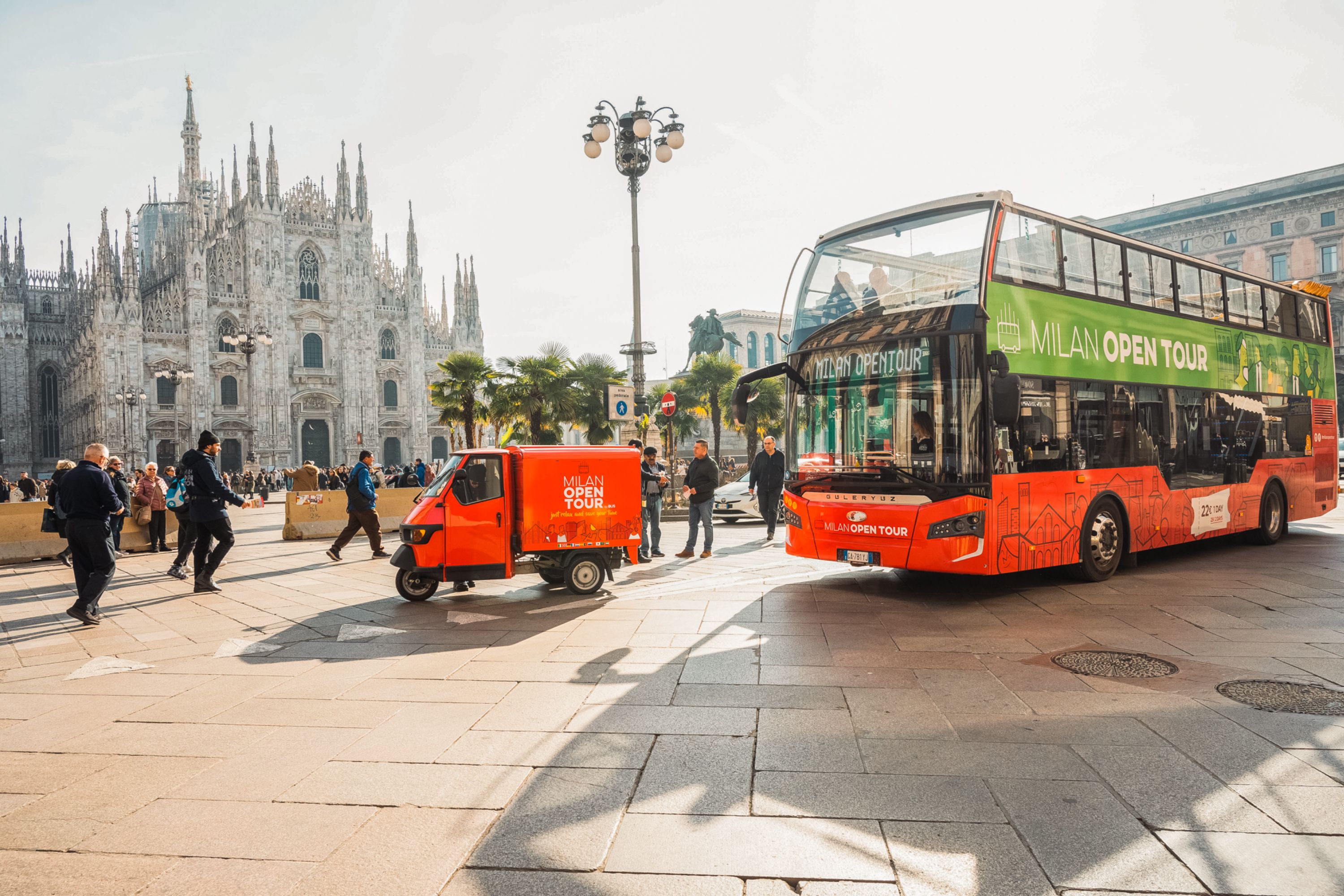
Duomo di Milano
The Milan Cathedral is a stunning example of Gothic architecture and the third-largest church in the world. It took nearly six centuries to complete and is a symbol of the city.
Architecture/Religious
1-2 hours
€10-€15
Galleria Vittorio Emanuele II
This historic shopping gallery is one of the world's oldest and most beautiful. It features luxury boutiques, cafes, and the famous mosaic floor of the bull.
Architecture/Shopping
1 hour
Free to enter, shopping varies
Santa Maria delle Grazie
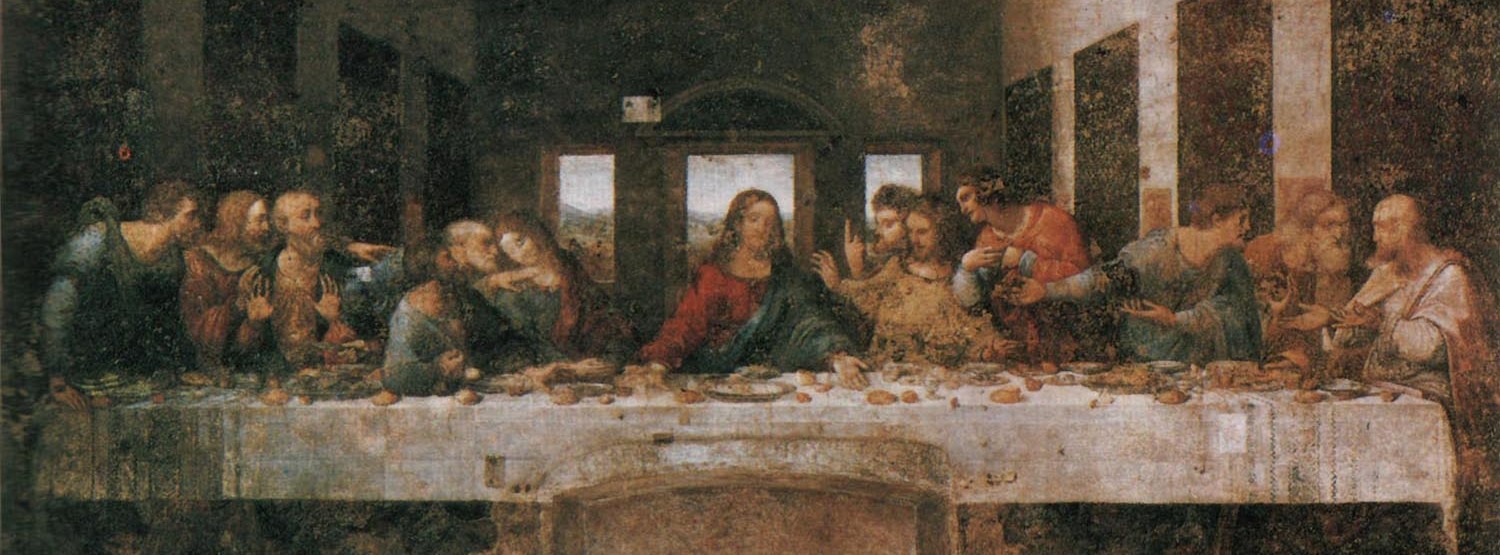
This church and convent house Leonardo da Vinci's famous mural, The Last Supper. The painting is a masterpiece of Renaissance art and a must-see for art lovers.
Historical/Religious
1-2 hours
€10-€15 (advance booking required)
Castello Sforzesco
This medieval castle was built by the Duke of Milan and later renovated by Ludovico Sforza. It houses several museums and art collections, including works by Michelangelo and Leonardo da Vinci.
Historical/Architecture
2-3 hours
€5-€10
Teatro alla Scala
One of the world's most famous opera houses, Teatro alla Scala is a symbol of Milan's rich musical heritage. Guided tours are available to explore the historic theater and museum.
Cultural/Entertainment
1 hour
€10-€15
Must-Try Local Dishes
Risotto alla Milanese
A creamy saffron risotto, a staple of Milanese cuisine.
Main Course
Contains dairy, can be made vegetarian.
Ossobuco
Braised veal shanks, traditionally served with gremolata.
Main Course
Contains meat, can be made gluten-free.
Panzerotti
Fried dough pockets filled with tomato sauce, mozzarella, and other ingredients.
Snack
Contains dairy, can be made vegetarian or vegan.
Cotoletta alla Milanese
A breaded and fried veal cutlet, similar to schnitzel.
Main Course
Contains meat, can be made gluten-free.
Popular Activities
Hiking in the nearby Alps
Cycling along the Navigli canals
Aperitivo in Navigli
Shopping in Galleria Vittorio Emanuele II
Visiting museums and historic sites
Attending opera or ballet performances
Boat tours on Lake Como
Swimming in Lake Como
Best Time to Visit
April to June, September to October
The best time to visit Milan is during the spring and fall when the weather is pleasant, and the city is less crowded. These months offer ideal conditions for exploring the city's attractions.
15-28°C
59-82°F
Practical Information
Language
- Official: Italian
- Widely spoken: English, French, Spanish
- English: Moderately spoken
Currency
Euro (EUR)
Time Zone
GMT+1 (Central European Time, CET), GMT+2 (Central European Summer Time, CEST)
Electricity
230VV, 50HzHz
Safety Information
Overall Safety Rating: Generally safe
Milan is generally safe for tourists, but pickpocketing and petty theft can occur, especially in crowded areas and on public transportation. Be cautious with your belongings and stay alert.
Important Precautions:
- • Keep valuables secure and out of sight
- • Use official taxis or ride-sharing services
- • Be cautious of distractions and common scams
Getting there
By air
- Milano Malpensa Airport • 50 km from city center
- Milano Linate Airport • 7 km from city center
By train
Milano Centrale, Milano Rogoredo
By bus
Lampugnano Bus Station, San Donato Milanese
Getting around
Public transport
The Milano Metro system consists of four lines (M1, M2, M3, M5) and is efficient and easy to use. It is the quickest way to get around the city.
Taxis
Available • Apps: Uber, FreeNow
Rentals
Car, Bike, Scooter
Neighborhoods
Brera
Navigli
Quartiere della Moda
Isola
Day trips
Lake Como
50 km • Full day
Lake Como is a stunning alpine lake known for its beautiful villas, gardens, and scenic views. It is a popular destination for relaxation and outdoor activities.
Bergamo
50 km • Half day
Bergamo is a charming medieval city with a well-preserved old town and a rich history. It offers a mix of historic sites, museums, and local cuisine.
Verona
150 km • Full day
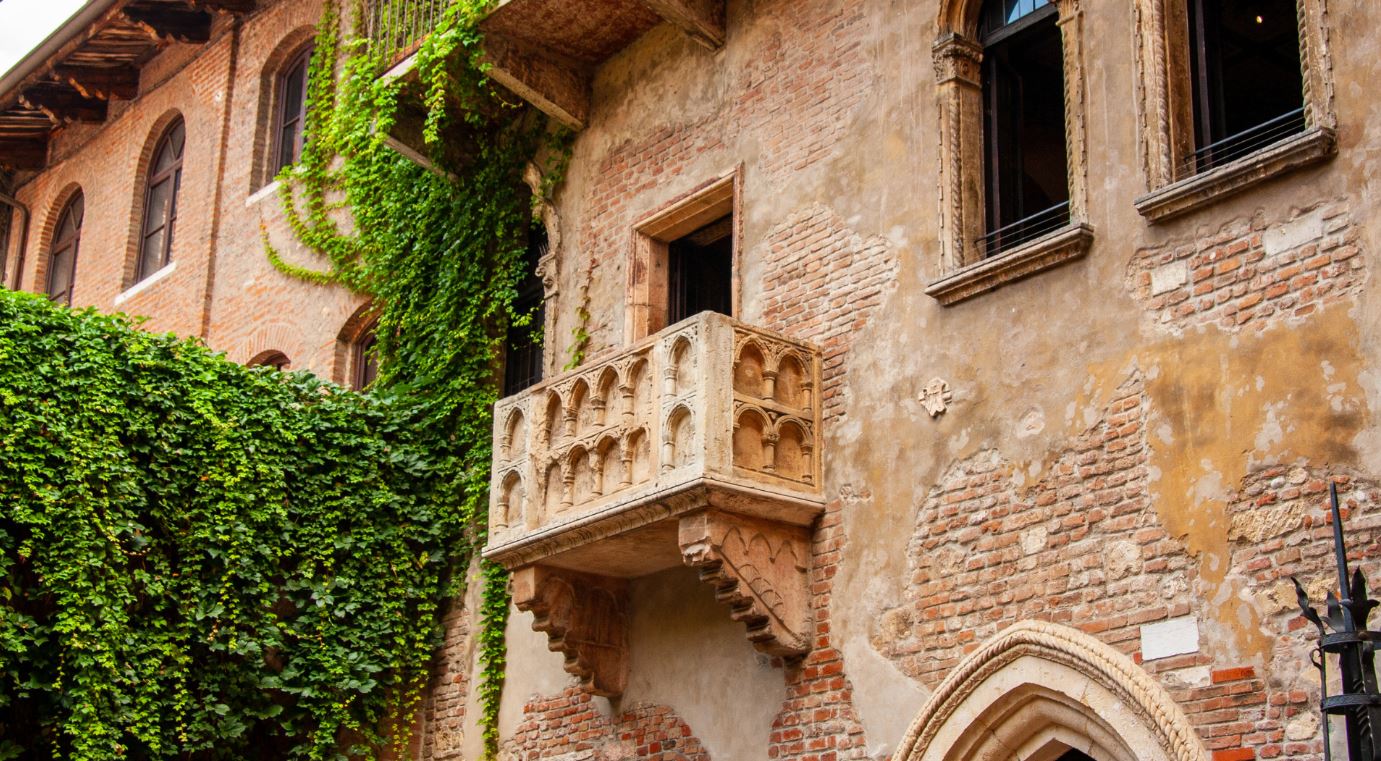
Verona is a romantic city known for its association with Shakespeare's Romeo and Juliet. It offers a mix of historic sites, romantic landmarks, and cultural attractions.
Festivals
Milan Fashion Week • February and September
Milan Design Week • April
Milan Film Festival • September
Pro tips
- Visit the Duomo early in the morning to avoid crowds and long queues
- Explore the Navigli district in the evening for a vibrant aperitivo experience
- Use the ATM Milano app for real-time public transportation schedules and maps
- Consider purchasing a Milan Card for discounts on attractions, transportation, and dining
- Try local specialties like risotto alla Milanese and panzerotti
From $25
per person
Price varies by option
Secure booking
Free cancellation available
Instant confirmation