Annapurna Circuit with Tilicho Lake
Active
19d
For a full refund, cancel at least 24 hours before the scheduled departure time.
Instant confirmation
Mobile or paper ticket accepted
About this experience
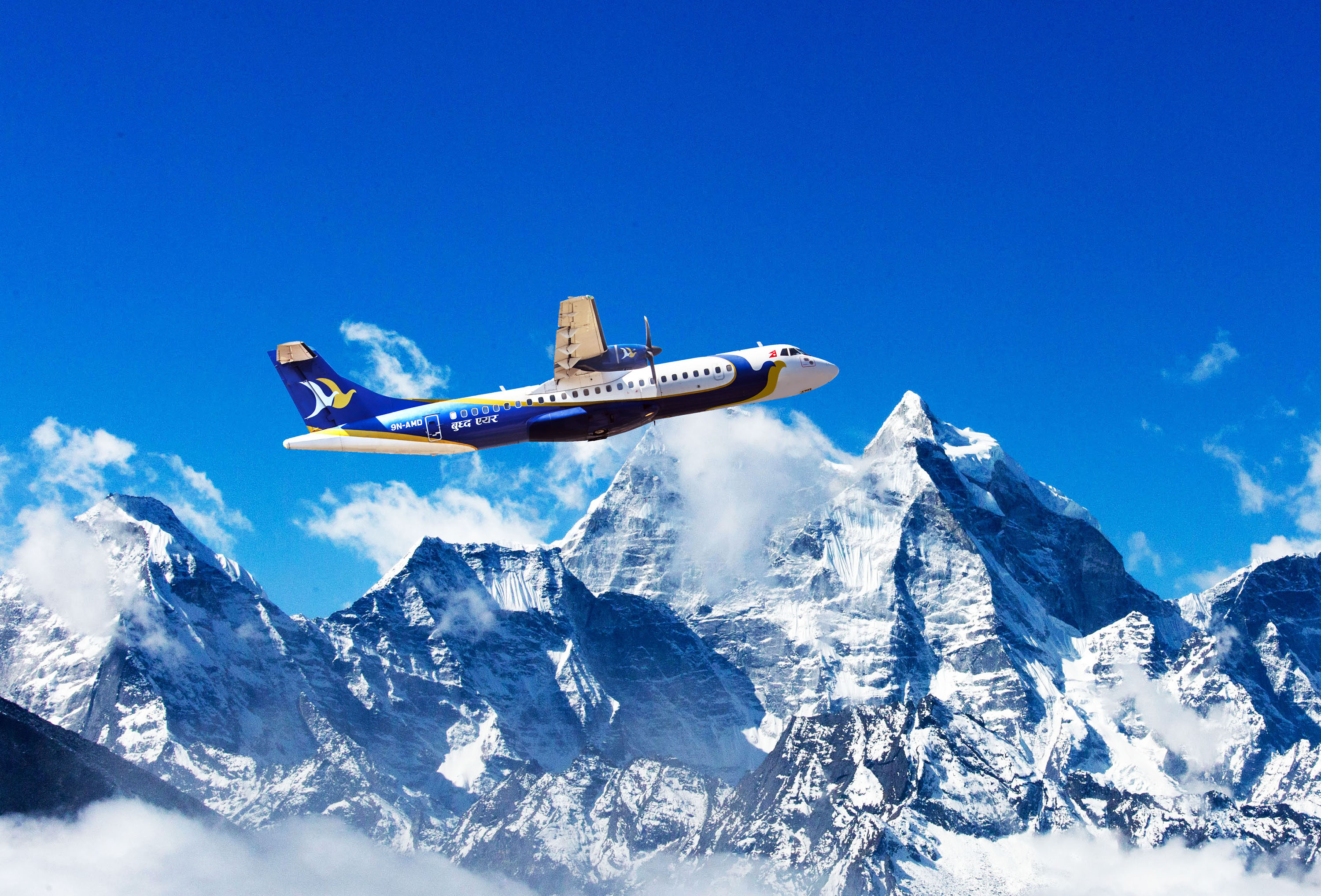
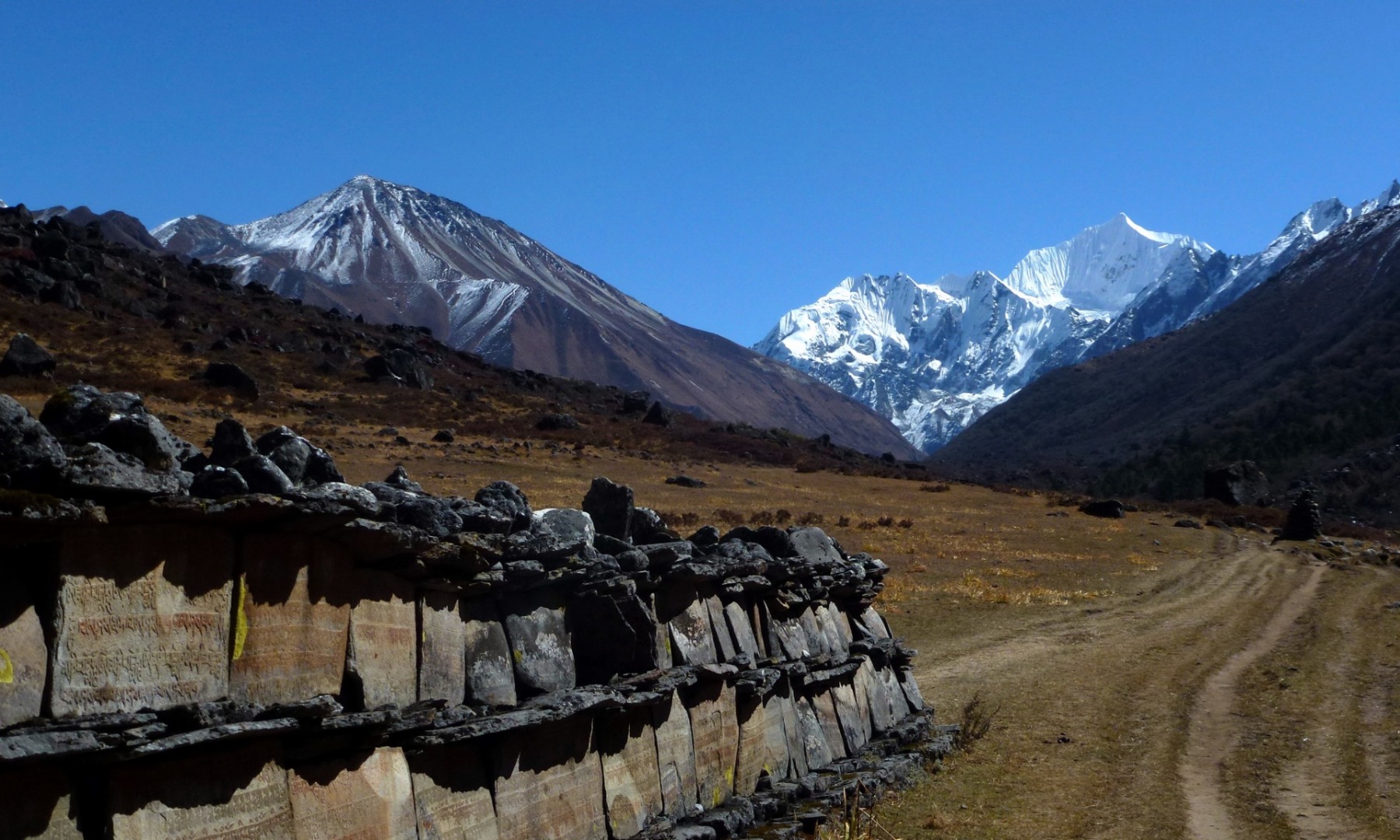
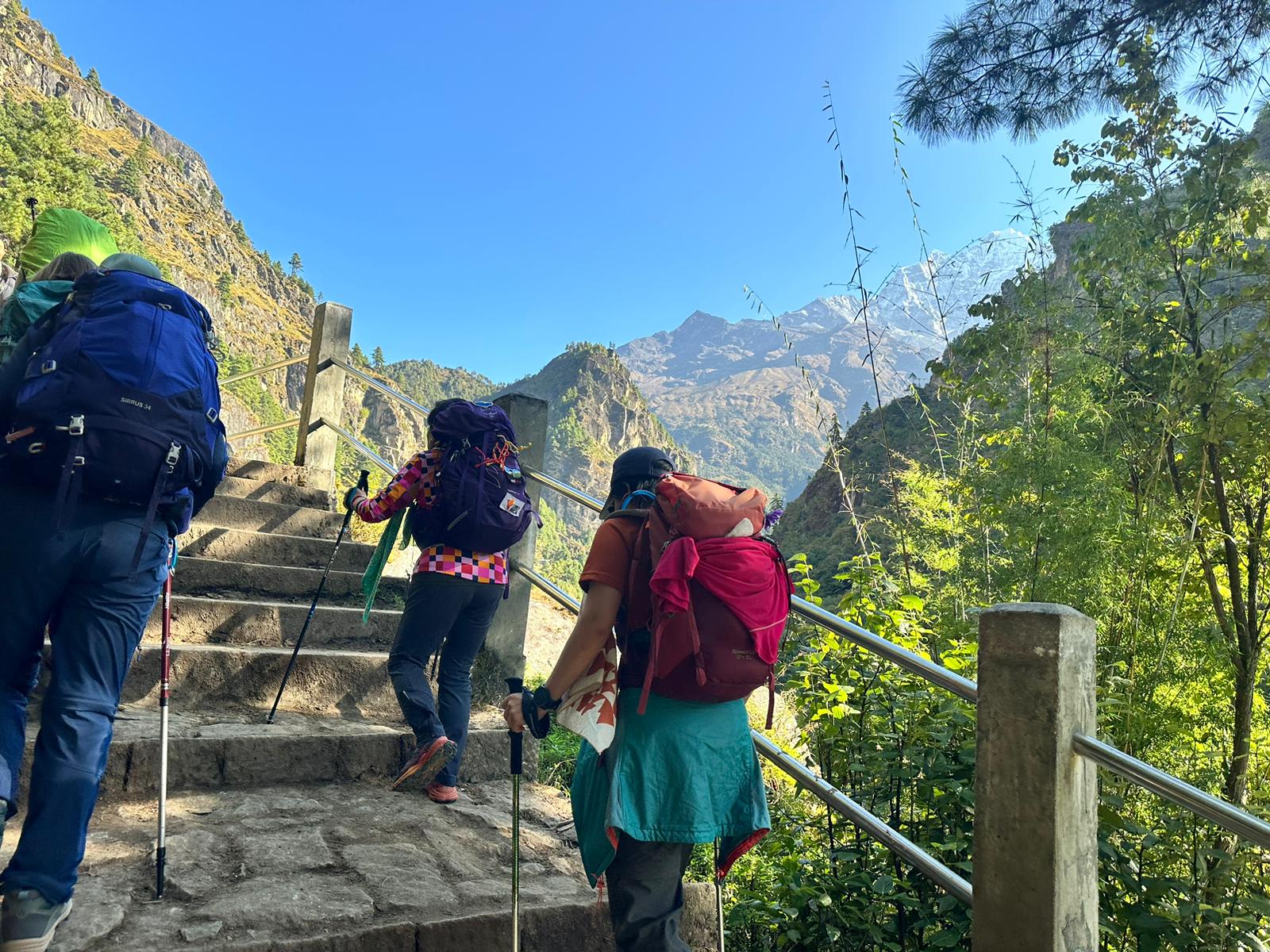
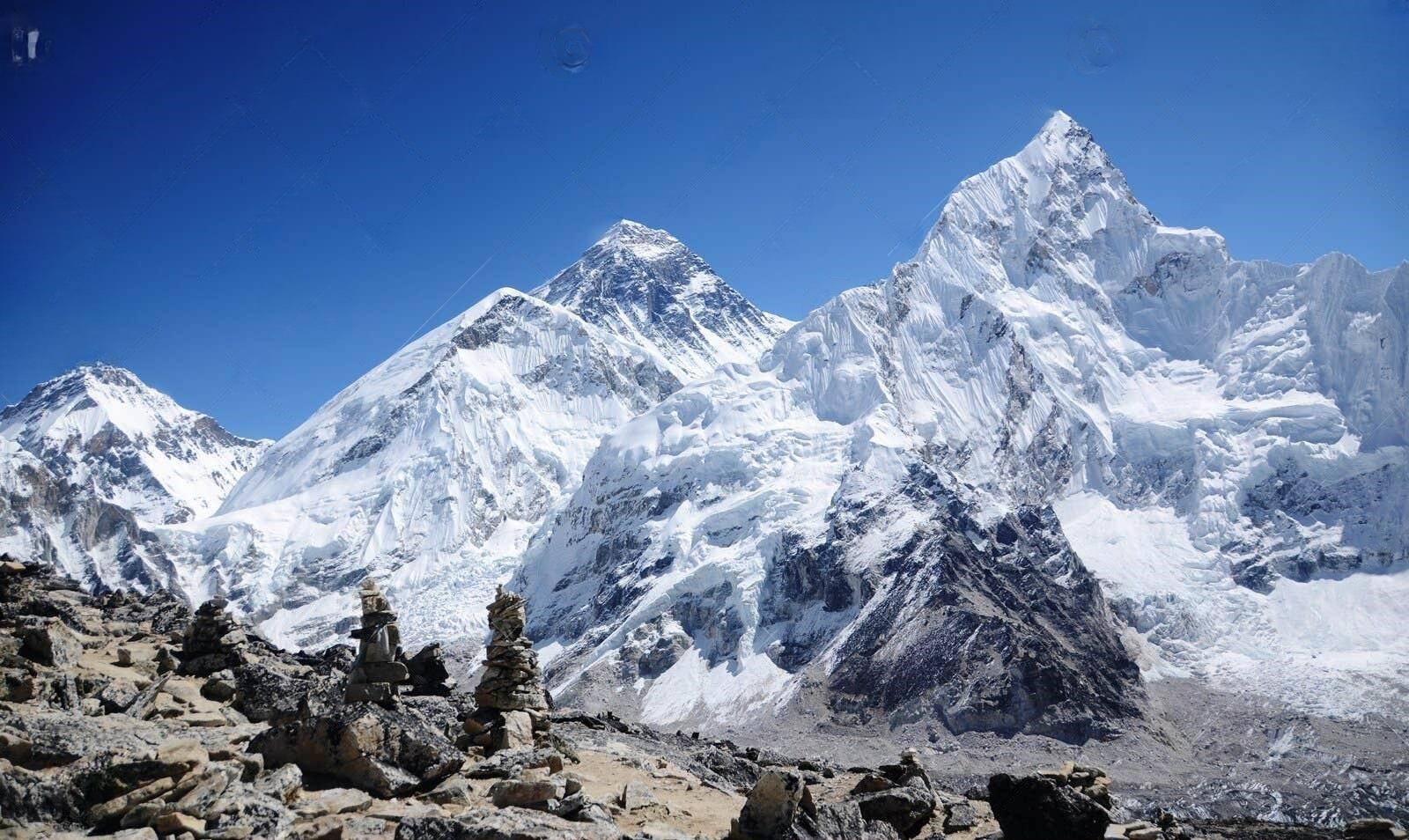
Annapurna Circuit trek with Tilicho Lake and Poon Hill takes us to the world’s highest lake in the Manang District of Nepal. The first part of the trail is that of the Annapurna circuit. However, from Manang we go to the mail valley to the west and trek up to the Tilicho Lake. Our trail again joins the Annapurna circuit route and crosses the Thorong La pass, one of the highest passes in the world. We also climb up to Poon Hill famous for its spectacular views of the Annapurna and Dhaulagiri ranges. On our 20-day journey we pass through forests, cross pristine meadows, experience the change in vegetation, all the while being in the company of the glorious Himalayas.
Available options
Annapurna Circuit with Tilicho Lake
Pickup included
What's included
Porter service (2 trekkers: 1 porter)
An experienced, English-speaking and government-licensed trek leader and assistant trek leader (4 trekkers: 1 assistant guide)
All necessary paperwork and trekking permits (ACAP, TIMS)
Public transportation from Muktinath to Tatopani
3-star hotel accommodation in Kathmandu and Pokhara with breakfast
All government and local taxes
Breakfast
Medical kit (carried by your trek leader)
Airport pickups and drops in a private vehicle
sightseeing/monument visits as per the itinerary
Teahouse accommodation during the trek
Staff costs including their salary, insurance, equipment, food and accommodation
Most ground transportation as per the itinerary
Guided city tour in Kathmandu by private vehicle
All meals (breakfast, lunch and dinner) during the trek
What's not included
Nepalese visa fee
International airfare to and from Kathmandu
Excess baggage charges
Lunch and dinner in Kathmandu and/or Pokhara
Extra night accommodation in Kathmandu and Pokhara in case of early arrival, late departure, and early return from the mountain(due to any reason) than the scheduled itinerary
Travel and rescue insurance
Personal expenses (phone calls, laundry, bar bills, battery recharge, extra porters, bottle or boiled water, shower, etc.
Tips for guide(s), porter(s) and driver(s
Available languages
Guide guide
EN
Reviews breakdown
Tripadvisor
5.0
9 reviews
5★
9
4★
0
3★
0
2★
0
1★
0
Important information
Public transportation options are available nearby
Infants are required to sit on an adult’s lap
Not recommended for travelers with spinal injuries
Not recommended for pregnant travelers
Not recommended for travelers with poor cardiovascular health
Travelers should have at least a moderate level of physical fitness
Day 01: Arrival in Kathmandu (1,300m/4,264ft)
Upon our arrival in the Tribhuwan International Airport (TIA) in Kathmandu, we will be greeted by a representative from Himalayan Sanctuary Adventure Represent who will drop us off at our hotel.
Day 02: Kathmandu: Sightseeing and Trek Preparation
Today after breakfast we start a guided tour to several of the most historical and spiritual attractions in Kathmandu. Some of these landmarks are considered World Heritage Sites including the historic Durbar Square, the sacred Hindu temple of Pashupatinath, the famous 'Monkey Temple' (Swayambhunath) and Buddhist shrine (Bouddhanath) which is one of the largest stupas in the world. At noon, there will be a pre-trip discussion where we can meet our trek leader and other team members. Himalayan Glacier briefs us regarding our trek as well as provides us an opportunity to ask any questions we may have regarding our upcoming adventure. Overnight in Kathmandu.
Day 03: Drive from Kathmandu to Syange (1100m/3608 ft): 8 - 10 hours
We begin our long drive to Syange early in the morning. En route we get to enjoy the countryside of Nepal with its green hills, winding rivers, terraced farms and of course the mighty Himalayas. Overnight in Syange.
Day 04: Trek from Syange to Dharapani (1,960m/6,430ft): 7 - 8 hours
We enter Manang district after crossing a large bridge near Tal. The trail passes through barley, rice and potato fields; and the waterfalls continue to accompany us even today. We also pass through the village of Kodo before reaching Dharapani which is one of the biggest villages in the Manang valley. Overnight in Dharapani.
Day 05: Dharapani to Chame (2,710m/8,891ft): 5 - 6 hours
Today we negotiate a few steep forested ridges along with several landslides on route to Chame. We should not forget to look up though, as we will be greeted with remarkable views of Lamjung Himal, Annapurna II, and Annapurna IV (7,525m). We also come across small hot springs which should help us relax for a while. Overnight in Chame.
Day 06: Chame to Pisang (3,300m/10824ft): 5 - 6 hours
We walk through a steep and narrow valley to have our first view of Paungda Danda rock face, a dramatic curved rock face rising 1500m from the river. From here, we also gain excellent views of Annapurna 2 to the south and Pisang Peak to the north east. Next, we descend to the Manang Valley floor enjoying the captivating landscape. Overnight in Pisang.
Day 07: Pisang to Manang (3,500m/11,482ft): 6 - 7 hours
From Pisang there are two routes to Manang. We choose the one which passes through Upper Pisang via Geru as it guarantees outstanding views of Mt. Annapurna, Pisang Peak, and others. As we walk near Manang the climate becomes more cold and dry. However, a short visit to Barge Monastery, the biggest monastery in the Manang District should cheer us up. Overnight in Manang.
Day 08: Manang: Acclimatization day
In order to keep fit on the trails that follow, we keep ourselves busy today with a short hike to either Bhojo Gumba or Gangapurna Lake. If we have the energy, we can even hike to Vraga Village where we can visit the Himalayan Rescue Association which will give us some idea about Acute Mountain Sickness (AMS). Overnight in Manang.
Day 09: Manang to Siri Kharka (4060m/13,320ft): 4-5 hours
From Manang we head out through the western gates and follow the path down to the river. We cross the river and continue walking on its southern side through coniferous forest. After reaching Kangsar Village we walk further up towards Siri Kharka and pass a monastery on the way. The uphill walk could be tiring but we will have Gungang Himal and Mt. Chulu in the backdrop to keep us company. Overnight in Siri Kharka.
Day 10: Siri Kharka to Tilicho Base Camp (4140m/13,583ft): 5-6 hours
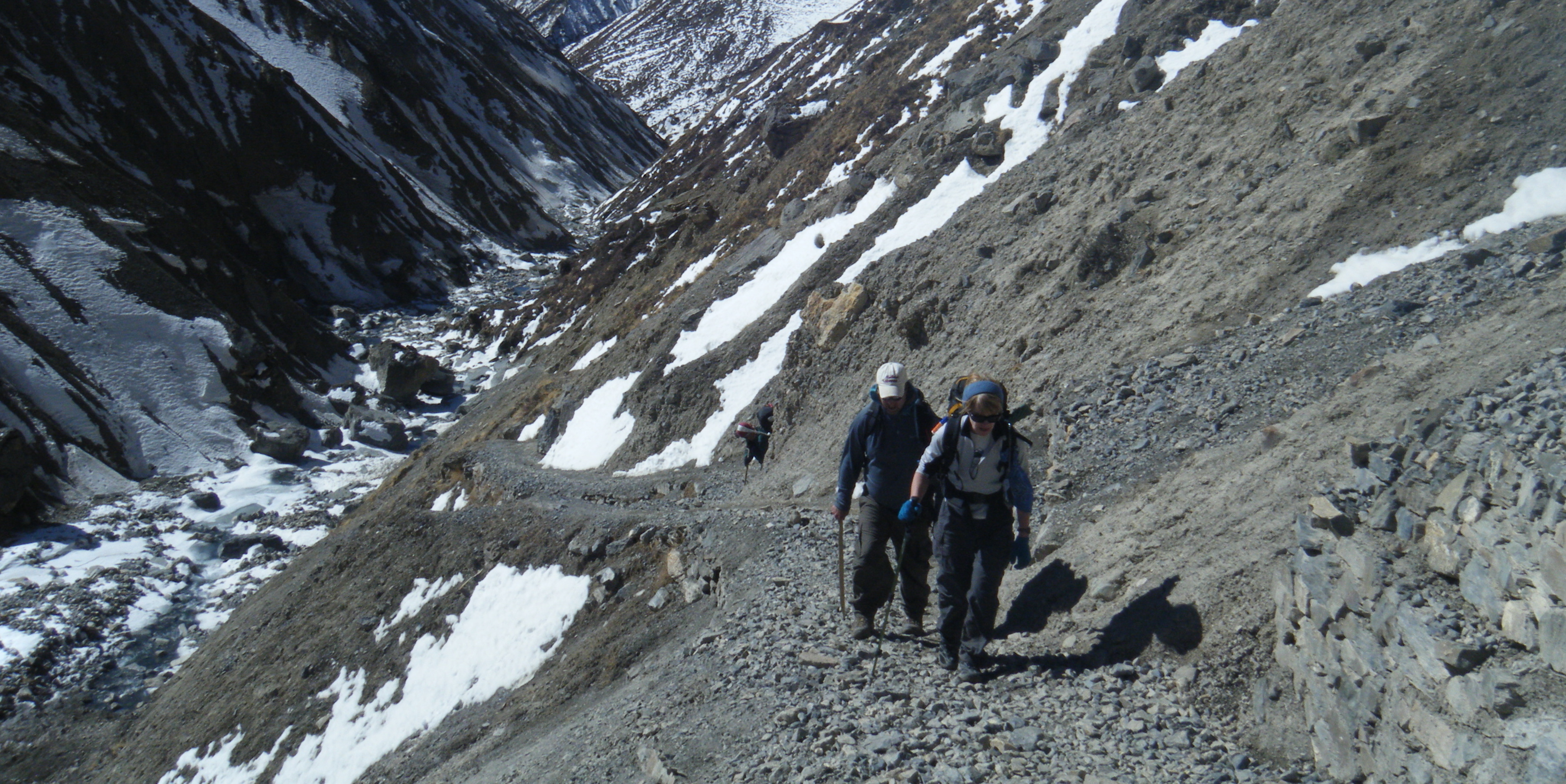
While the path from Siri Kharka to Tilicho Base Camp isn’t very steep or physically strenuous, it could be exhausting as we have to walk on narrow paths in loose scree and landslide area. Our trail goes through the middle of the landslide area whereby we can see impressive rock formations along the trail. Overnight in Tilicho Base Camp.
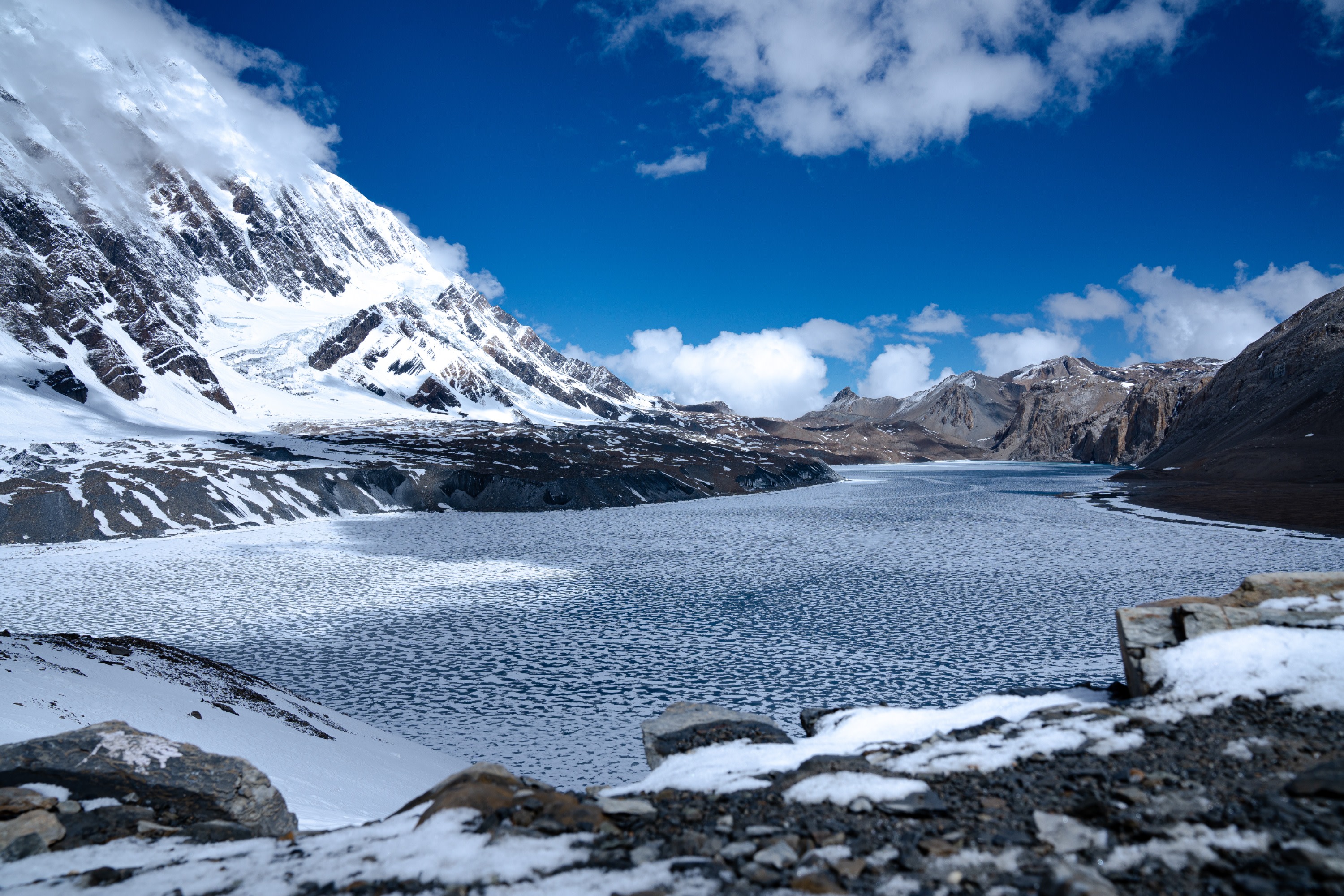
Day 11: Visit Tilicho Lake (4,949m/16,138 ft) then back to Siri Kharka: 5-6 hours
After the initial tough, steep, switch backed ascent, our trail continues to hug the side of the mountain in a gradual to steep incline before reaching the watershed. On the way we enjoy yaks and deer grazing above and below our trail. On the other side is Tilicho Lake, a large spectacularly set lake nestled at the foot of the north face of Tilicho Peak. The lake was reffered to by the leader of the French expedition team as ‘The Great Ice Lake’. The Lake also holds an important place for the Hindus as this sacred lake features in one of the holiest texts of the Hindus, The Ramayan. We retrace our step and return to Siri Kharka. Overnight in Siri Kharka.
Day 12: Siri kharka to Yak kharka (4040m/13,020ft):4-5 hours
We leave Siri Kharka and descend towards Khangsar Village. On the way, we pass Tare Gumba, a thousand year old monastery which is very important to the local people. Upon reaching Khangsar Village we realize that it is un-inhabitated except for occasional herders during festival times. We follow a rock wall out of Khangsar. We walk further more until we reach a seasonal bridge in the Thorang Khola valley. After crossing the river, we ascend for a while to a plateau. Next, walk furthermore until reaching Yak Kharka. Overnight in Yak Kharka.
Day 13: Yak kharka to Thorang Phedi: (4420m/14501ft): 3-4 hours
It is an uphill walk to Thorang Phedi. After walking for some time we cross a suspension bridge and reach Ledar village. We ascend furthermore and pass through towering cliffs before reaching Thorang Phedi, the last village before Thorong La. On this trip we are rewarded with one of the best views of Mt. Gundang, Mt. Syagang, Thorung Peak and Mt. Khatungkan. Overnight in Thorang Phedi.
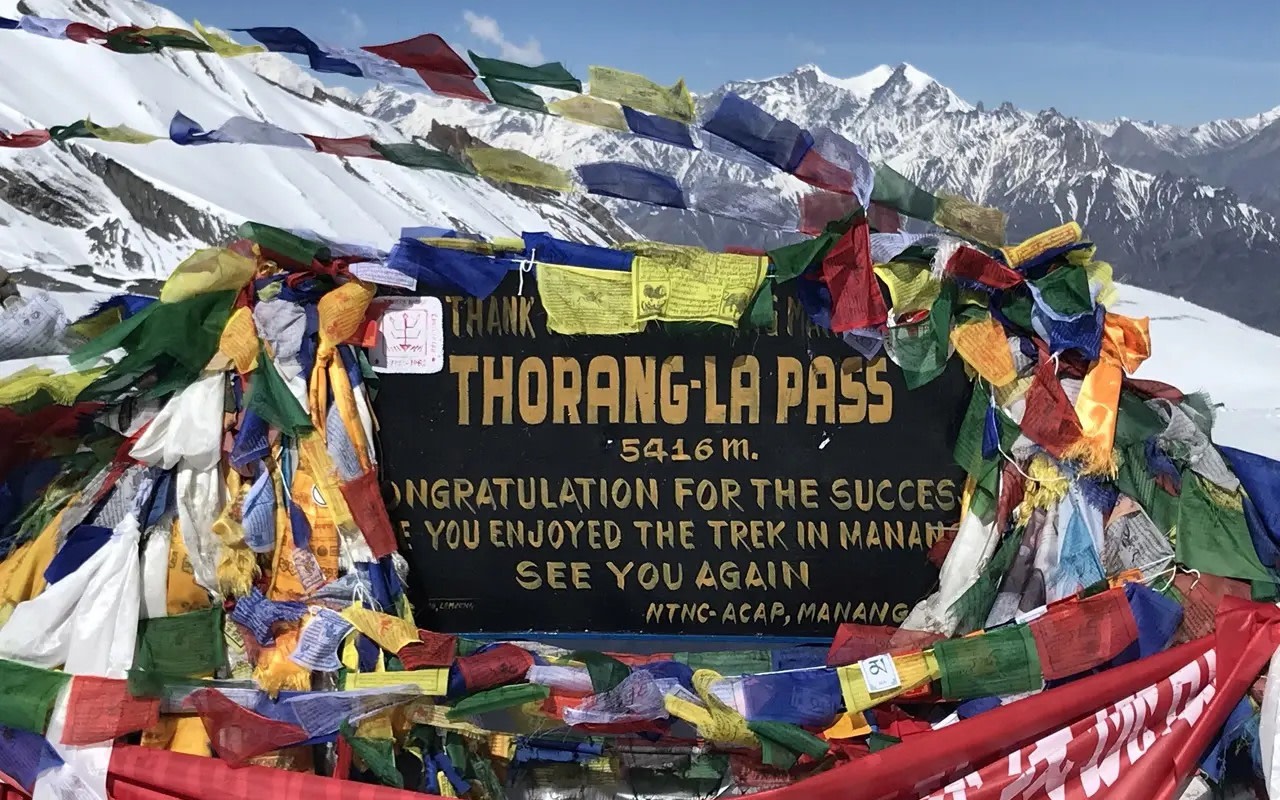
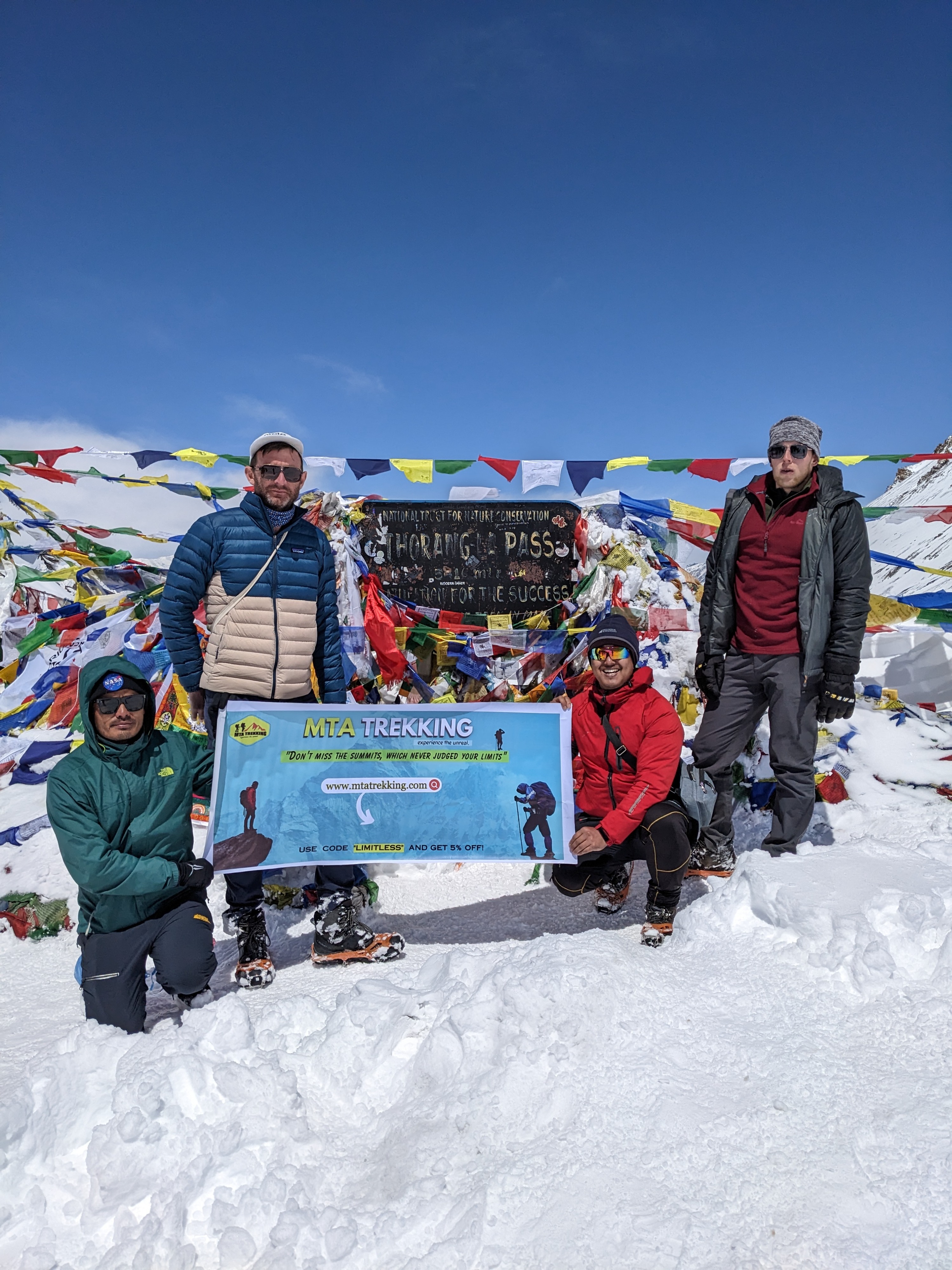
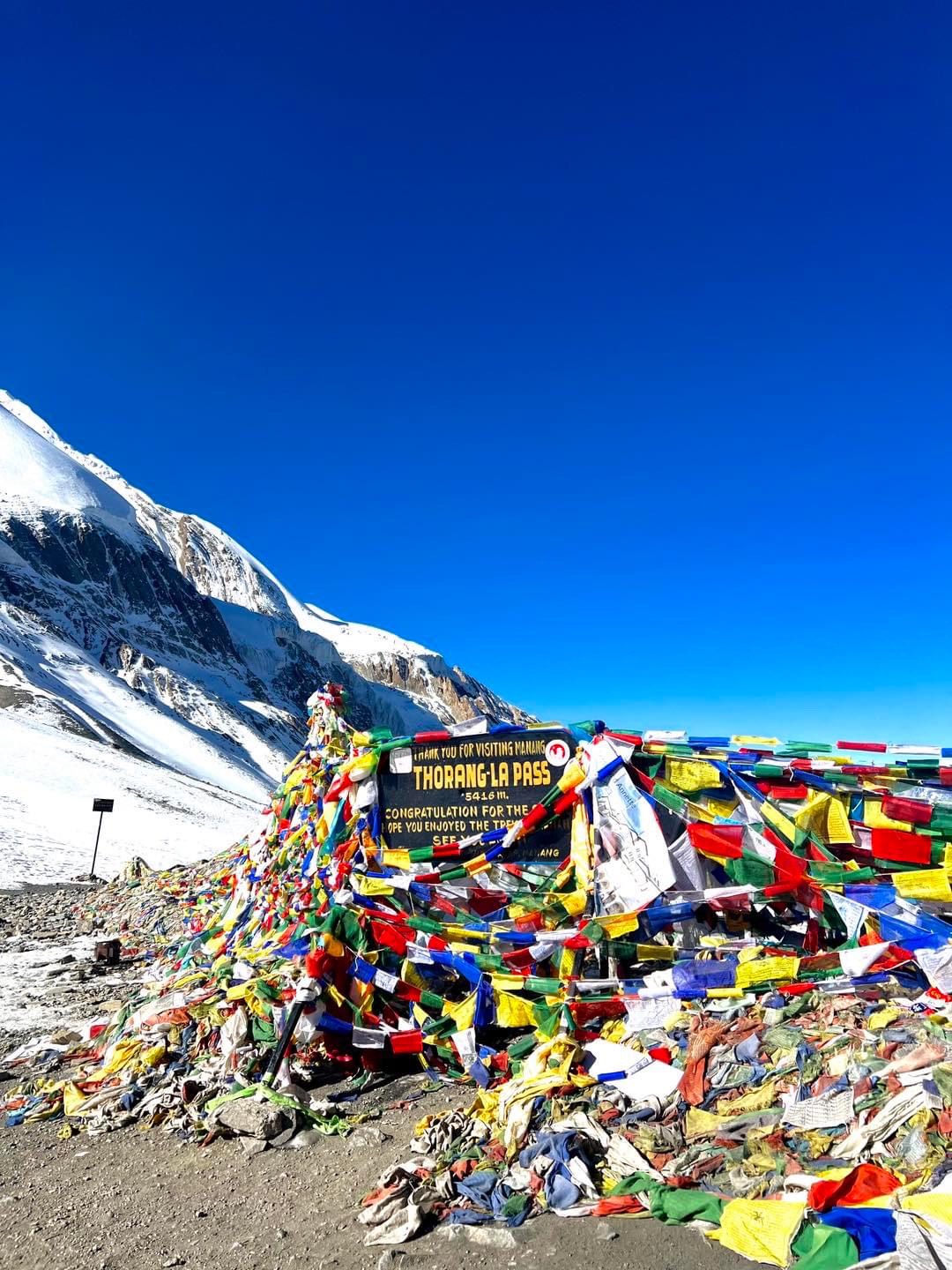
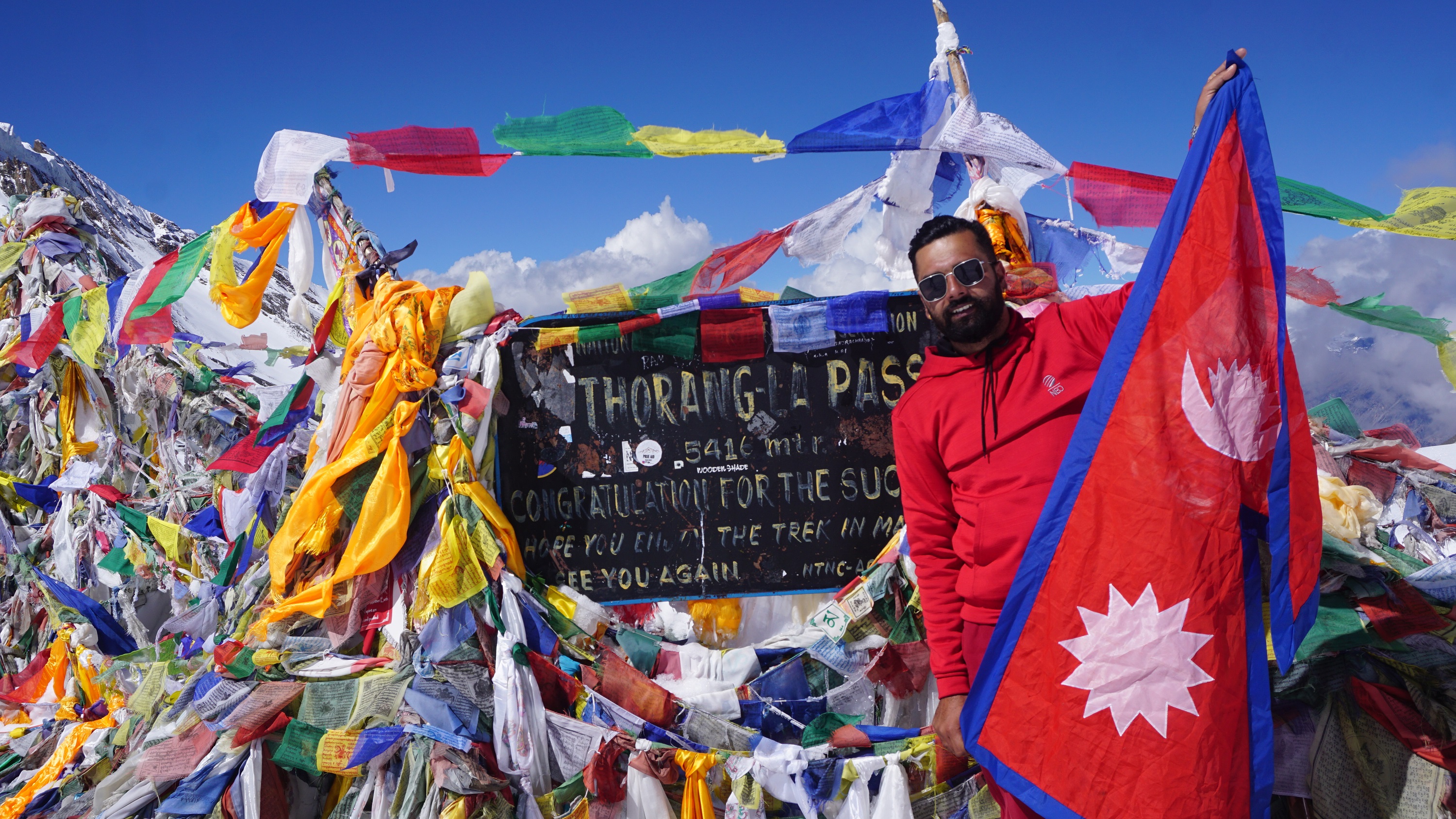
Day 14: Thorong Phedi to Thorong La pass (5416m/17764ft) to Muktinath (3,800/12,467ft): 7 - 8 hours
Crossing Thorong La pass, one of the highest passes in the world will be our ultimate objective today. We will be crossing the pass from east to west (Manang to Muktinath) which is the easiest and safest direction. We get up around three in the morning and walk up the mountain. When we finally make it to the top, we realize that our journey was worth it. We can take a few photos before heading to Muktinath Valley at the foot of the Thorong La pass. Overnight in Muktinath.
Day 15: Drive from Muktinath to Tatopani (1,200m/3937ft): 6 - 8 hours
In the morning we visit the Muktinath Temple which a sacred place for both Hindus and Buddhists. In Hinduism, the temple is believed to be a sacred place called Mukti Kshetra, which literally means the "place of liberation or moksha". After a visit to the sacred place, we drive to Tatopani and spend the night.
Day 16: Tatopani to Ghorepani (2,850m/9,350ft): 7 - 8 hours
We leave the Kali Gandaki and headed up the Ghar Khola valley. The trail leads us through a terraced farmland with mountains all around. We pass through the villages of Shikha and Chitre before reaching a beautiful rhododendron forest. When in bloom the rhododendron trees with its average height of up to 100" will be covered with pink or red flowers. Walking furthermore we reach Ghorepani, a beautiful village located at a ridge top. Overnight in Ghorepani.
Day 17: Ghorepani to Poon Hill and Trek to Nayapul then drive to Pokhara: 5-6 hours trek and 1 hour drive
The trek from Ghorepani will be all the way down to birethanti through a thick forest of rhododendron trees. From here, we enjoy the towering views of the Fishtail, Annapurna South, and Hiunchuli mountains. Overnight in Pokhara.and we will drive to pokhara nearly 2 hour.
Day 18: Drive from Pokhara to Kathmandu: 5-6 hours
After breakfast, we say goodbye to the beautiful lake city of Pokhara and drive towards Kathmandu. After reaching Kathmandu we have the rest of the day off to rest or do some souvenir shopping. To celebrate the successful completion of our journey, we will have a farewell dinner in the evening.
Day 19: Departure Day
Our adventure in Nepal comes to an end today! A HimalayanSanctuary adventure representative will escort us to the airport approximately 3 hours before our scheduled flight. On our way home, we have plenty of time to plan our next adventure in the wonderful country of Nepal.
Important notes
• 2 pairs of thin, lightweight inner socks
• 2 pairs of heavy poly or wool socks
• 1 pair of Hiking boots with spare laces (sturdy soles, water resistant, ankle support, “broken in”)
• 1 pair of trainers or running shoes and/or sandals
• Cotton socks (optional)
• Gaiters (winter only), optional, “low” ankle high version
Sleeping
• 1 sleeping bag (good to -10 degrees C or 14 degrees F)*
• Fleece sleeping bag liner (optional)
Rucksack and Travel Bags
• 1 medium rucksack (50-70 liters/3000-4500 cubic inches, can be used for an airplane carryon)
• 1 large duffel bag *
• A small daypack/backpack for carrying your valuables, should have good shoulder padding
• Small padlocks for duffel-kit bags
• 2 large waterproof rucksack covers (optional)
Medical
• Small, personal first-aid kit. (simple and light)
• Aspirin, first-aid tape, and plasters (Band-Aids)
• 1 skin-blister repair kit
• Anti-diarrhea pills
• Anti-headache pills
• Cough and/or cold medicine
• Anti-altitude sickness pills: Diamox or Acetylzolamide
• Stomach antibiotic: Ciprofloxacin, etc. Do not bring sleeping pills as they are a respiratory depressant.
• Water purification tablets or water filter
• 1 set of earplugs
• Extra pair of prescription glasses, contact lens supplies
About Kathmandu
Kathmandu, the capital of Nepal, is a vibrant blend of ancient history, rich culture, and stunning Himalayan scenery. Known as the 'City of Temples,' it's home to seven UNESCO World Heritage Sites, including the iconic Swayambhunath Stupa and Pashupatinath Temple. The city offers a unique mix of traditional Newari architecture, bustling markets, and modern urban life.
Top Attractions
Swayambhunath Stupa (Monkey Temple)
One of the most iconic landmarks in Kathmandu, this UNESCO World Heritage Site is a Buddhist stupa perched on a hilltop, offering panoramic views of the city and surrounding mountains. It's also home to many monkeys, hence the nickname.
Religious/Historical
1-2 hours
Free (donations welcome)
Pashupatinath Temple
One of the most sacred Hindu temples in the world, dedicated to Lord Shiva. Located on the banks of the Bagmati River, it's a major pilgrimage site with a lively atmosphere, especially during festivals.
Religious
2-3 hours
Free for Hindus, NPR 1000 (USD 8) for non-Hindus
Boudhanath Stupa
One of the largest stupas in the world and a UNESCO World Heritage Site, Boudhanath is a major center for Tibetan Buddhism. The surrounding area is filled with monasteries, shops, and cafes, creating a vibrant cultural hub.
Religious/Historical
2-3 hours
Free (donations welcome)
Kathmandu Durbar Square
A UNESCO World Heritage Site, this historic square is the heart of the old city and features ancient palaces, temples, and courtyards. It's a living museum showcasing the city's rich history and Newari architecture.
Historical/Architectural
1-2 hours
NPR 1000 (USD 8) for foreigners
Bhaktapur Durbar Square
Located in the ancient city of Bhaktapur, this UNESCO World Heritage Site is a well-preserved example of Newari architecture. It features beautiful temples, palaces, and courtyards, offering a glimpse into Nepal's royal history.
Historical/Architectural
Half-day trip
NPR 1500 (USD 12) for foreigners
Must-Try Local Dishes
Dal Bhat
A staple meal consisting of lentil soup (dal), rice (bhat), and vegetable curry (tarkari). Often served with pickles, salad, and sometimes meat.
Lunch/Dinner
Vegetarian (can be made vegan by omitting ghee)
Momo
Steamed or fried dumplings filled with meat (buffalo, chicken, or pork) or vegetables, served with a spicy tomato-based sauce.
Snack/Appetizer
Vegetarian options available, can be made vegan
Sel Roti
A sweet, ring-shaped fried bread made from rice flour, sugar, and water, often served during festivals and celebrations.
Snack/Dessert
Vegetarian (may contain eggs in some recipes)
Gundruk
A fermented leafy green vegetable, often cooked with spices and served as a side dish or added to soups and stews.
Side Dish
Vegetarian, vegan, and gluten-free
Popular Activities
Trekking
Mountain biking
Paragliding
Rafting
Yoga and meditation retreats
Spa treatments
Café hopping
Gardening
Best Time to Visit
October to November and March to April
These months offer pleasant weather, clear skies, and excellent visibility for trekking and sightseeing. The city is lively with festivals and cultural events.
20-30°C (68-86°F)
68-86°F
Practical Information
Language
- Official: Nepali
- Widely spoken: English, Hindi, Newari, Maithili, Bhojpuri
- English: Moderately spoken in tourist areas, limited in rural areas
Currency
Nepalese Rupee (NPR)
Time Zone
Nepal Standard Time (NPT, UTC+5:45)
Electricity
230VV, 50HzHz
Safety Information
Overall Safety Rating: Exercise caution
Kathmandu is generally safe for travelers, but petty crime, scams, and pickpocketing can occur, especially in tourist areas and crowded markets. Be cautious of your surroundings, keep valuables secure, and avoid walking alone at night in poorly lit areas.
Important Precautions:
- • Use reputable tour operators and trekking agencies
- • Insist on using the meter when taking taxis
- • Keep valuables secure and out of sight
Getting there
By air
- Tribhuvan International Airport • 5 km (3 miles) from city center
By bus
Galkopul, Kalanki
Getting around
Public transport
Buses are the most common form of public transport, but they can be crowded and slow. Microbuses are smaller and more frequent.
Taxis
Available • Apps: Pathao, InDriver
Rentals
Car, Bike, Scooter
Neighborhoods
Thamel
Boudha
Patan (Lalitpur)
Bhaktapur
Day trips
Nagarkot
32 km (20 miles) from Kathmandu • Half-day to full-day trip
A picturesque hill station known for its stunning views of the Himalayas, including Mount Everest on clear days. Nagarkot is also famous for its sunrise and sunset views.
Dhulikhel
30 km (19 miles) from Kathmandu • Half-day to full-day trip
A charming Newari town offering beautiful views of the Himalayas and historic temples. Dhulikhel is less touristy than Nagarkot but equally scenic.
Changunarayan
18 km (11 miles) from Kathmandu • Half-day trip
A UNESCO World Heritage Site featuring an ancient temple dedicated to Lord Vishnu. Changunarayan is one of the oldest Hindu temples in the Kathmandu Valley and is known for its intricate stone and wood carvings.
Festivals
Dashain • September/October (dates vary each year)
Tihar • October/November (dates vary each year)
Indra Jatra • September (dates vary each year)
Pro tips
- Learn a few basic Nepali phrases to enhance your experience and connect with locals
- Hire a local guide or join a group tour for a more immersive and informative experience, especially when visiting temples and historical sites
- Carry small denominations of Nepalese Rupees for small purchases and tips, as change may be limited
- Be prepared for power outages and slow internet, especially during peak hours and in rural areas
- Stay hydrated and protect yourself from the sun, as the high altitude and intense sunlight can cause dehydration and sunburn
From $25
per person
Price varies by option
Secure booking
Free cancellation available
Instant confirmation