Private Reykjanes Peninsula Tour | Pick up from Keflavik International Airport
Active
4h - 5h
For a full refund, cancel at least 24 hours before the scheduled departure time.
Instant confirmation
Mobile or paper ticket accepted
About this experience
Early Arrival Exploration: Make the Most of Your Morning
Ideal for early arrivals at Keflavik Int. Airport, this tour is tailored for those who wish to optimize their time before hotel check-in becomes available in the late afternoon. Here's what makes this tour perfect for you:
Tour Departure from Keflavik International Airport:
Commencing directly from Keflavik International Airport, our tour begins with a convenient pick-up at the airport's arrival hall.
Personalized Greeting by Your Driver:
Look forward to a personalized and friendly welcome as our driver meets you at the airport with a visible sign.
Sightseeing Adventure:
Embark on a captivating half-day tour, exploring the beauty of Iceland's landscapes and attractions.
Flexible Drop-off Options:
Concluding the tour, you will be conveniently dropped off at your accommodation in Reykjavik. Alternatively, if you have an afternoon flight, we offer the flexibility to return you to Keflavik International Airport.
Available options
Private Reykjanes Peninsula Tour | Pick up from Keflavik International Airport
Pickup included
What's included
Drop-off (to hotel or back to the airport)
Meet and greet airport pick-up
Sightseeing and guidance
Detailed itinerary
1
Bridge between Europe and North America on Reykjanes Peninsula.
The lava-scarred Reykjanes peninsula lies on one of the world's major plate boundaries, the Mid Atlantic Ridge. According to the continental drift theory the Eurasian and North American tectonic plates are continuously drifting apart with great forces under the gaping rifts. As the plates diverge, linear fractures, known as fissures form due to stresses created by the tension that builds up as the plates move away from each other.
The Bridge between two continents at Sandvík is a small footbridge over a major fissure which provides clear evidence of the presence of a diverging plate margin. The bridge was built as a symbol for the connection between Europe and North America.
One can cross the continental divide on Leif the Lucky's Bridge and take home a personalized certificate at the Reykjanes information center and Reykjanes Geopark visitor center at Duus Cultural house.
2
The first lighthouse in Iceland was built on Valahnúkur in Reykjanes in
the year 1878. By 1905 earthquakes and surf had damaged Valahnúkur
so much that there was the risk of the lighthouse falling into the sea.
A new lighthouse was therefore built in 1907-1908 on Bæjarfell hill in Reykjanes and the old one was demolished with an explosion on april 16th 1908. A survey which Rögnvaldur Guðmundsson supervised in 2007 for the Icelandic Maritime Administration led to the conclusion that Reykjanes lighthouse was the most popular lighthouse among Icelanders.
The lightsignal height is 69 meters above sealevel but the actual height of the lighthouse is 26 metres. Reykjanes lighthouse also has a radio beacon with a correction signal. There is carved rock and concrete in the lighthouse. Architect Frederik Kjørboe and engineer Thorvald Krabbe designed the lighthouse. The operation
of Reykjanes Lighthouse is under the supervision of the Icelandic Maritime Administration.
3
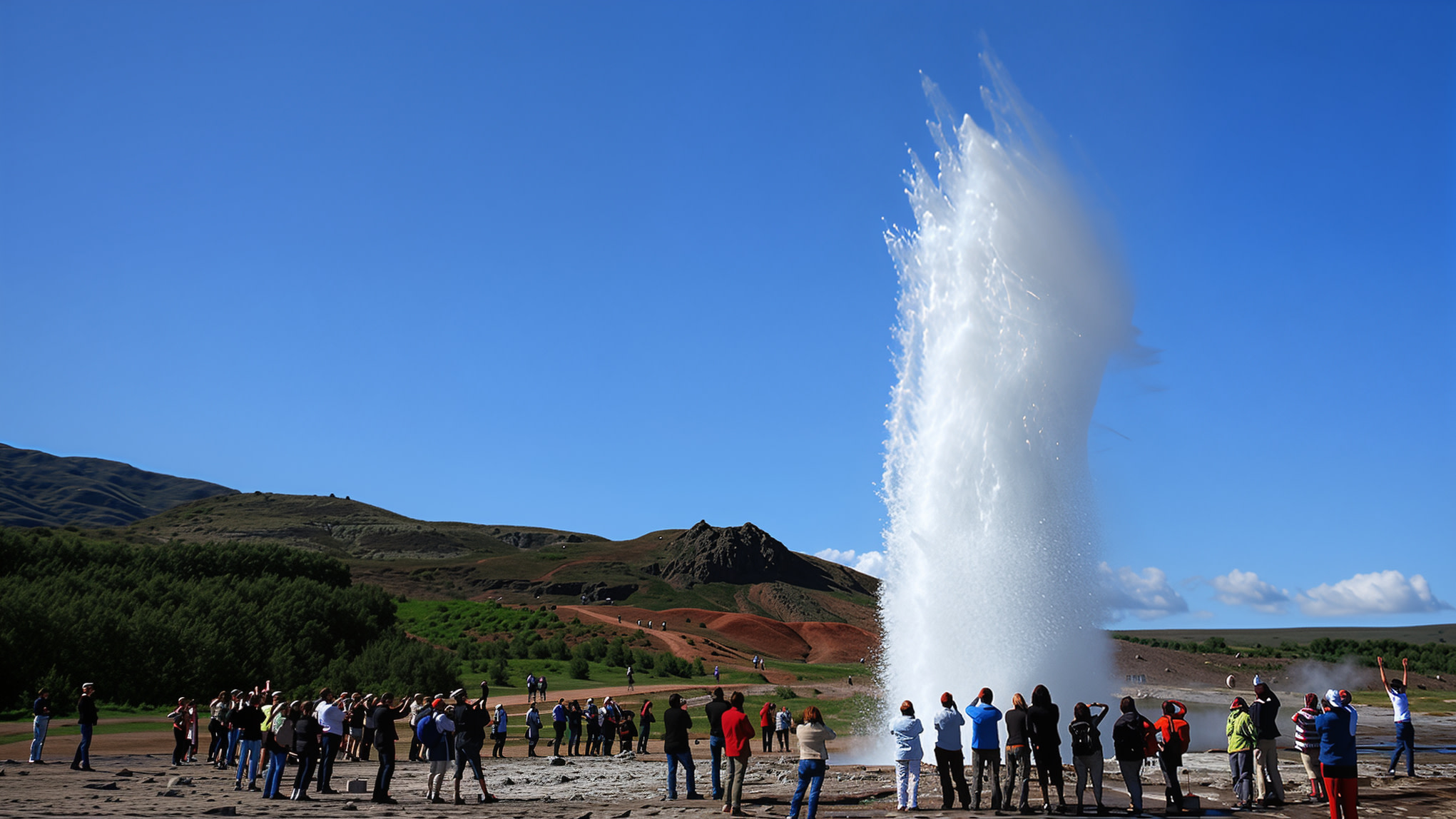
The area is close to Reykjanes lighthouse and is collectively named Gunnuhver after a female ghost that was laid there.
The mud pools take form where steam from boiling geothermal reservoir water emanates and condenses and mixes with surface water. Accompanying gases such as carbon dioxide and hydrogen sulfide make the water acid. This causes alteration of the fresh lava rock to clay.
Steaming of the ground at Reykjanes increased markedly as a consequence of a pressure drawdown in the geothermal reservoir upon the start of production from the reservoir in 2006. Iceland´s largest mud pool at present is prominent, highest up in the Gunnuhver group. It is 20 meters wide across a rim of mud, boiling vigorously. Gunnuhver stands in the heart of the Reykjanes UNESCO Global Geopark where the North Atlantic ridge rises from the ocean.
4
Stop 4
An important high temperature geothermal area.
Many study opportunities due to the great variety of features. A boardwalk leads through the area. Seltún has many mudpots and fumaroles, and minerals deposited from geothermal solutions provide colorful sediments. Good walking paths are around the area and parking.
Setún is a part of Reykjanes nature reserve.
Location: Road 42, parking, near Kleifarvatn.
5
Lake between Sveifluháls and Vatnshlíð.
The lake Kleifarvatn is about 10 km². It is the largest of Reykjanes peninsula and the third largest of southern Iceland. It is about 97 m deep and one of the deepest lakes in Iceland. Its catchment area is small and it has a very limited discharge on the surface. The lake has diminished since the year 2000 because of two major earthquakes, which probably opened up fissures at its bottom. In the sixties, char fries from Lake Hlidarvatn were released into the lake and have thrived quite well.
In the southernmost part, hot water from some hot springs runs into the lake but elsewhere the lake is very cold. A small fishing lodge is located by the lake. Great place for photographers because the volcanic surroundings of the lake are unique and beautiful. The story says that a monster in the shape of a worm and the size of a medium-sized whale lives in the lake.
What's not included
Food and drinks, unless specified
Available languages
Guide guide
EN
Reviews breakdown
Viator
5.0
4 reviews
5★
4
4★
0
3★
0
2★
0
1★
0
Tripadvisor
4.0
1 reviews
5★
0
4★
1
3★
0
2★
0
1★
0
Important information
Public transportation options are available nearby
Suitable for all physical fitness levels
Have a rain coat in case of rain.
Please provide us your Flight Number so we can monitor your arrival time
About Reykjanes
Reykjanes is a volcanic peninsula in southwest Iceland, known for its dramatic landscapes, geothermal activity, and the famous Blue Lagoon. This unique destination offers a mix of natural wonders and modern relaxation, making it a must-visit for travelers seeking both adventure and tranquility.
Top Attractions
Blue Lagoon
The Blue Lagoon is a world-famous geothermal spa known for its milky blue waters rich in minerals like silica and sulfur. It's a perfect place to relax and rejuvenate.
Geothermal/Relaxation
2-4 hours
Moderate to Expensive (varies by package)
Gunnuhver
Gunnuhver is a hot spring area with bubbling mud pools and steam vents. It's named after a ghost in Icelandic folklore.
Nature/Geothermal
1-2 hours
Free
Bridge Between Continents
This pedestrian bridge connects the North American and Eurasian tectonic plates, symbolizing the continental drift.
Historical/Geological
30 minutes to 1 hour
Free
Vala Hellir Cave
Vala Hellir is a lava cave that offers a unique underground exploration experience. Guided tours are available.
Adventure/Geological
1-2 hours
Moderate (tour prices vary)
Must-Try Local Dishes
Langoustine (Langostínus)
A type of lobster that is a delicacy in Iceland, often served grilled or in soups.
Main Course
Gluten-free, can be prepared without dairy
Skyr
A traditional Icelandic dairy product similar to yogurt, often served with berries and honey.
Dessert
Dairy, can be found in non-fat versions
Hot Dog (Pylsur)
A popular Icelandic street food made with lamb, pork, and beef, topped with onions, ketchup, and mustard.
Snack
Contains meat, can be made gluten-free
Popular Activities
Hiking
ATV tours
Cave exploration
Blue Lagoon
Geothermal spas
Beach walks
Museum visits
Local crafts
Best Time to Visit
June to August
Summer is the best time to visit Reykjanes for pleasant weather, long daylight hours, and the best conditions for exploring the outdoors. This is also the peak tourist season.
8°C to 15°C
46°F to 59°F
Practical Information
Language
- Official: Icelandic
- Widely spoken: English, Danish, German
- English: Widely spoken
Currency
Icelandic Króna (ISK)
Time Zone
GMT+0
Electricity
220VV, 50HzHz
Safety Information
Overall Safety Rating: Generally safe
Reykjanes is generally safe with low crime rates. The main safety concerns are related to the natural environment, such as sudden weather changes and volcanic activity.
Important Precautions:
- • Be cautious of sudden weather changes.
- • Stay on marked paths when hiking.
- • Use reputable tour operators.
Getting there
By air
- Keflavík International Airport • 50 km from Reykjanes
By bus
Reykjanesbær Bus Terminal
Getting around
Public transport
The bus service is reliable but limited in scope. It connects major towns and attractions within the peninsula.
Taxis
Available • Apps: BHRS, Uber (limited availability)
Rentals
Car, Bike
Neighborhoods
Grindavík
Reykjanesbær
Sandgerði
Day trips
Reykjavik
50 km • 1 day
Iceland's capital city offers a mix of modern and historical attractions, including museums, galleries, and vibrant nightlife.
Keflavík
10 km • Half day
Keflavík is a town with a rich history, including Viking heritage and military significance. It's also home to the Keflavík International Airport.
Krýsuvík
30 km • Half day to Full day
Krýsuvík is a geothermal area with colorful volcanic landscapes, hot springs, and hiking trails.
Festivals
Reykjanesbær Cultural Festival • June
Pro tips
- Visit the Blue Lagoon in the evening for a more relaxed experience with fewer crowds.
- Bring warm and waterproof clothing, as weather conditions can change rapidly.
- Explore the lesser-known geothermal areas like Gunnuhver and Krýsuvík for a unique experience.
- Try local seafood specialties like langoustine and geothermal bread.
- Book tours and accommodations in advance, especially during peak season.
From $25
per person
Price varies by option
Secure booking
Free cancellation available
Instant confirmation