Historical Malacca Tour from Kuala Lumpur
Active
9h
For a full refund, cancel at least 24 hours before the scheduled departure time.
Instant confirmation
Mobile or paper ticket accepted
About this experience
Malacca is one of the oldest state in Peninsular Malaysia which located towards to south from capital city Kuala Lumpur.
Approximately 130KM drive from Kuala Lumpur and will take about 1.5hrs.
Malacca rich with many history.
You will enjoy visit beautiful site of rule by Portuguese / rule by Dutch as well as rule by British.
Available options
Historical Malacca Tour from Kuala Lumpur
Pickup included
What's included
Hotel pickup and drop-off
GST (Goods and Services Tax)
All taxes, fees and handling charges
Lunch
Detailed itinerary
1
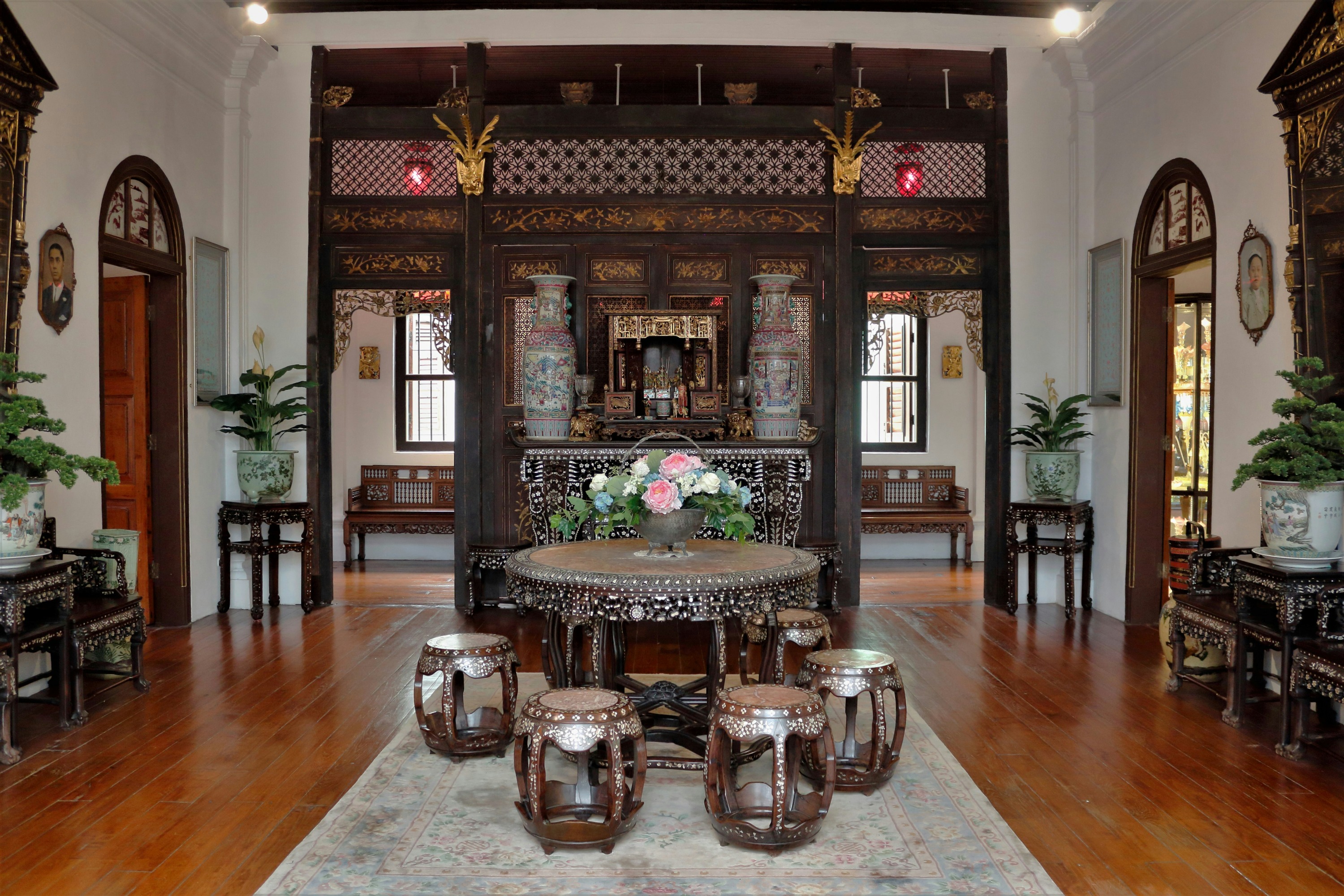
House of museum located beside the Malacca River with just 8 minutes of walking distance from Jonker Walk. A house full of antiques that will sure bring back memories from the past if you are born in the 50s to 70s.
From the olden days cinema, medicine shop to the rubber estate and more! Kids are also welcomed to experience how life is in the past. If you are interested, do check out this museum! Feel free to contact us if you want to make a booking for school trips or even wedding photography!
2
Stop 2
The Portuguese occupation of Melaka ended when Melaka fell to the Dutch in 1641.[1] This was followed by period of persecutions of the Catholics in Melaka by the Dutch. Churches were destroyed and Catholics were not permitted to have their own cemeteries or even pray in their homes. Priests were also forbidden from administering their flocks. The war of the Spanish Succession resulted in an alliance formed between the Portuguese and the Dutch in 1703. This resulted in the Dutch adopting a softer stance towards the Portuguese Catholics. After years of persecutions, a piece of land was donated by a Dutch convert and the St. Peter's Church was built in 1710
3
The Stadthuys (an old Dutch spelling, meaning city hall) is a historical structure situated in the heart of Malacca City, the administrative capital of the state of Malacca, Malaysia in a place known as the Red Square.The Stadhuys is known for its red exterior and nearby red clocktower. It was built by the Dutch in 1650 as the office of the Dutch Governor and Deputy Governor.
4
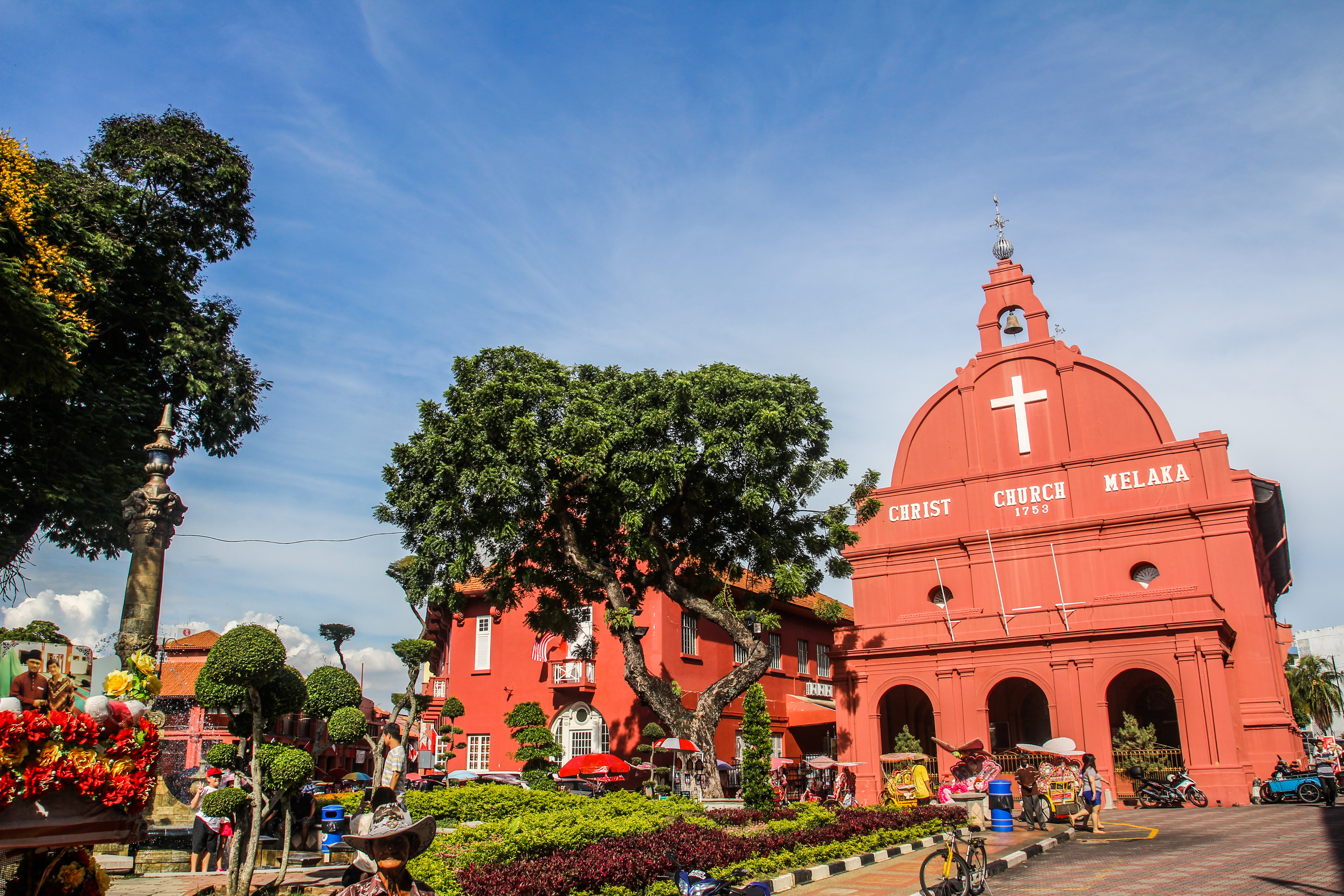
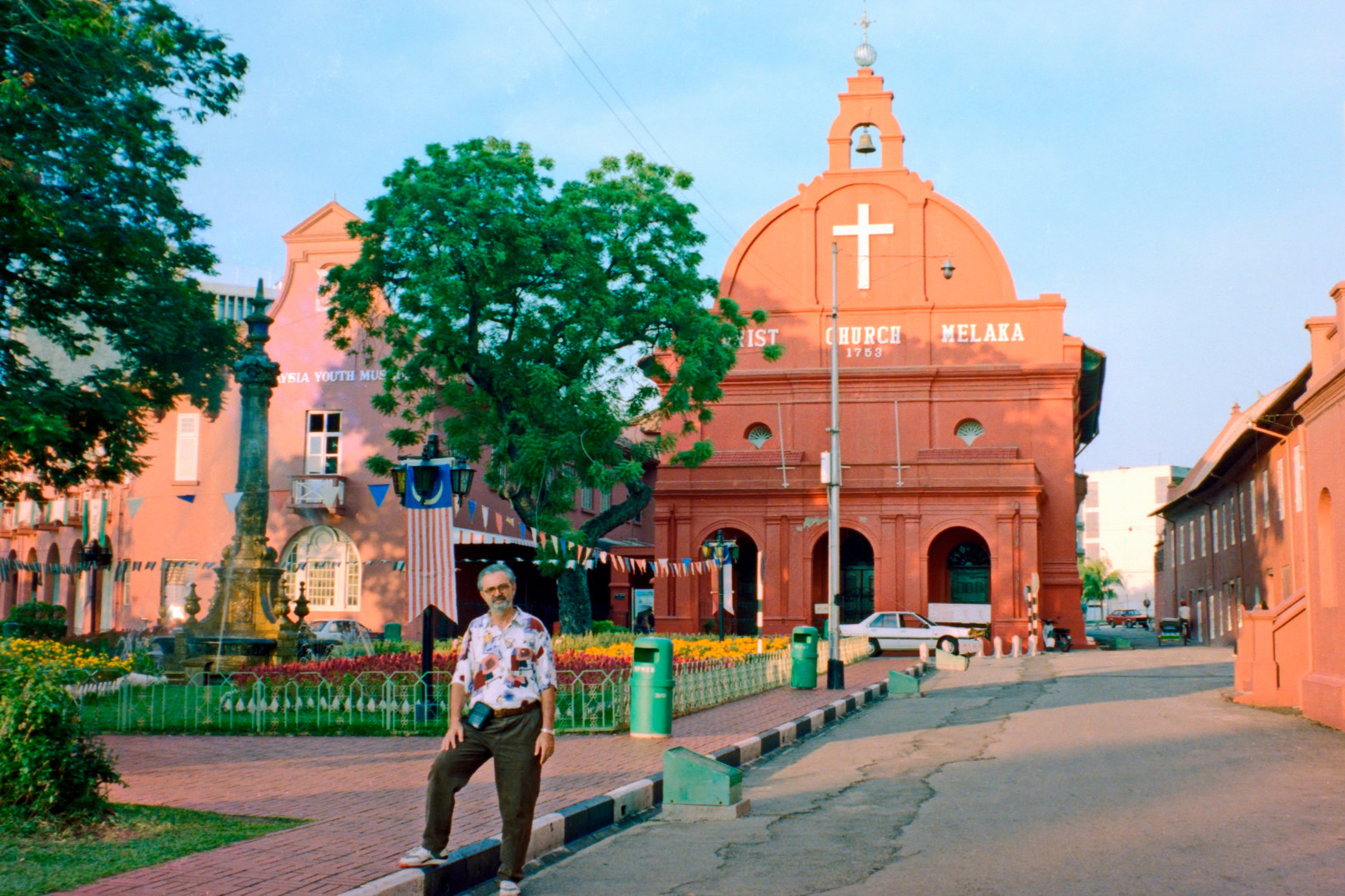
In 1741, in commemoration of the centenary of the capture of Malacca from the Portuguese, the Dutch burgher community decided to build a new church to replace the ageing Bovenkerk. The foundation stone was laid by the Malacca born Captain of the Malacca Burghers, Abraham de Wind, on behalf of his father, Claas de Wind, a prominent Burgher who had been the Secunde (Deputy Governor) of Malacca. The church was completed 12 years later in 1753
5
Portuguese fortress built in Malacca, Malaysia, in 1512. The oldest part of the fortress was a five-storey keep which gave its name to the fortress as a whole.Some time following the Battle of Malacca (1641) and the occupation of the city by the Dutch, the keep was destroyed but the outer walls of the fortress were reinforced. However, in 1807 the British destroyed most of the fortress. The Porta de Santiago gateway, and the restored Middelburg Bastion, are the only parts of the fortress that remain today. They are among the oldest European architectural remains in Southeast Asia and the Far East.
6
Stop 6
The temple site was founded during the era of Dutch Malacca by the Chinese Kapitans Tay Kie Ki Tay Hong Yong in 1645.Additional structures were then constructed in 1673 under the leadership of Kapitan Li Wei King Koon Chang with materials imported from China.The temple served as the main place of worship for the local Hoklo (Hokkien) community. Kapitan Chan Ki Lock constructed a main hall for the temple in 1704.In 1801, the temple structures were renovated under the leadership of Kapitan Chua Su Cheong Tok Ping who was the father of Choa Chong Long, the first Kapitan of Singapore, with the addition of additional structures.
In 1962, then abbot Seck Kim Seng ordained Houn Jiyu-Kennett, a Zen nun from England and the future founder of the Order of Buddhist Contemplatives, at this temple.[9][10] The temple was awarded a UNESCO award for outstanding architectural restoration in 2003.
7
The original structure built by Indian Muslim traders in 1748 was a wooden building and in 1872, it was rebuilt with bricks. The mosque is one of the traditional mosques in Malacca, which still retains its original design. The architectural design of the mosque is a cross between Sumatran, Chinese, Hindu, and the local Malays. The minaret (resembles a pagoda), ablution pool and entrance arch were built at the same time with the main building. The Kampung Kling Mosque is named based on a village which Indian traders dwell called Kampung Kling.
The mosque also has a blend of English and Portuguese glazed tiles, Corinthian columns with symmetrical arches in the main prayer hall, a Victorian chandelier, a wooden pulpit with Hindu and Chinese-style carvings, and Moorish cast iron lamp-posts in the place of ablution for pre-prayer cleansing. The Department of Museums and Antiquities completed conservation works on the mosque in the 1990s.
8
Stop 8
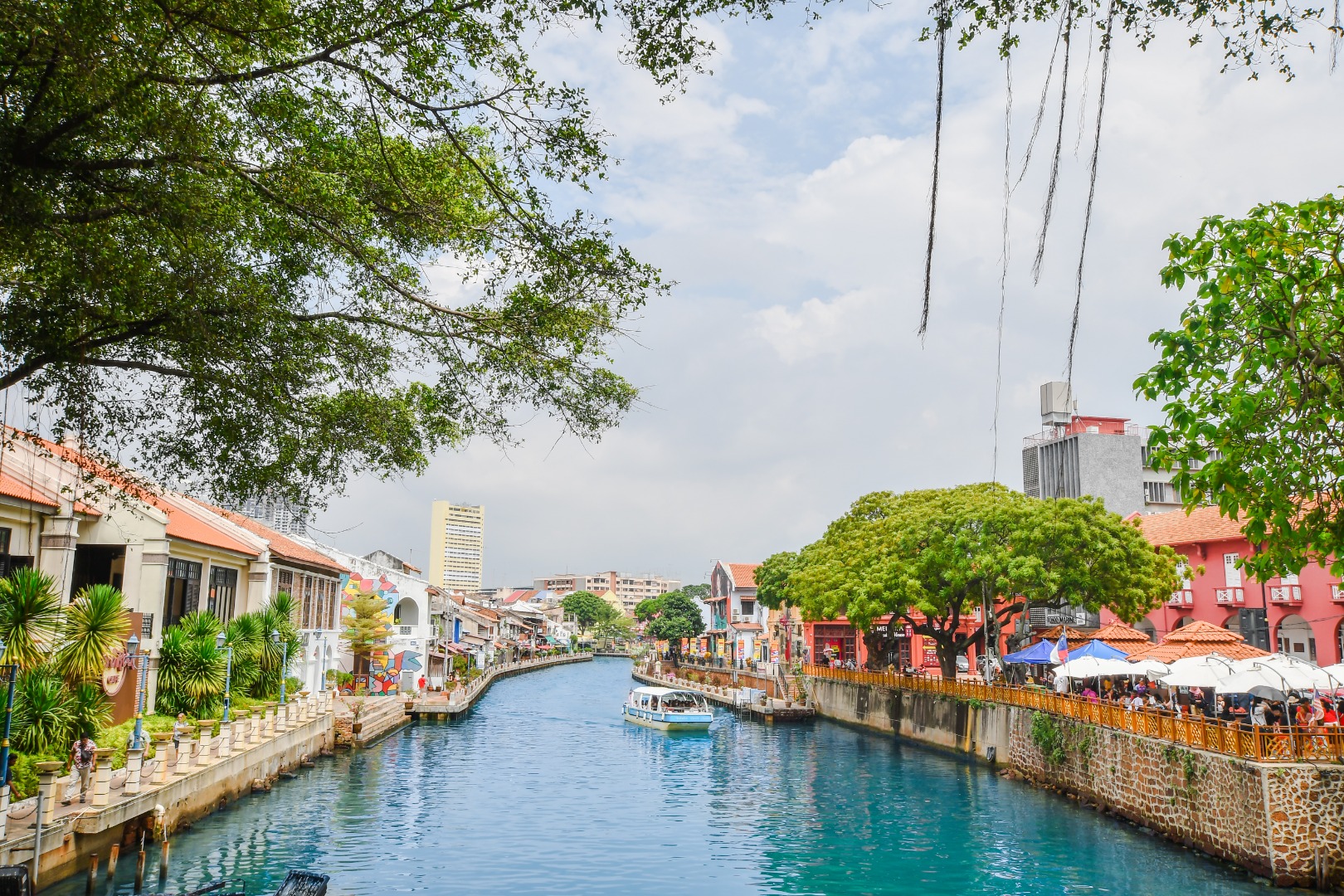
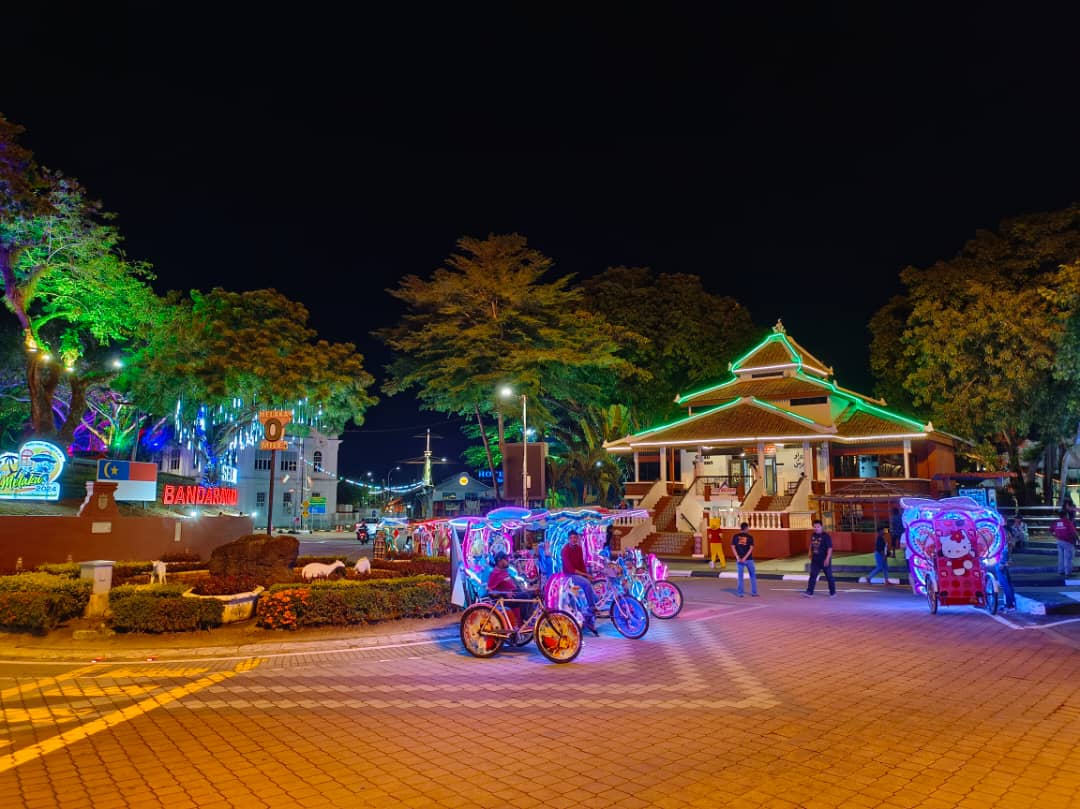
The Jonker Walk is the Chinatown area in Malacca City in the state of Malacca.It starts from across Malacca River near the Stadthuys, with the street in the area filled with historical houses along its left and right sides dating back to 17th century, many of which are shops selling antiques, textiles, foods, handicrafts and souvenirs such as keychains and shirts.The area turns into a night market every Friday, Saturday and Sunday in the evening from 6 p.m. until 12 midnight, with its street blocked for traffic.
9
The temple is situated on Jalan Tukang Emas, also known as "Harmony Street" because of its proximity to the Kampung Kling Mosque and Cheng Hoon Teng Temple.
The temple was built by Thavinayagar Chitty, the leader of the Chitty people, in 1781 after the Dutch colonial government of Malacca gave him a plot of land. The temple is dedicated to Vinayagar or Ganesha, the elephant deity.In the back room is a sculpture of the deity with the head of an elephant and the body of a man with four hands. There is another altar dedicated to Lord Muruga, the younger brother of Lord Vinayagar.[
What's not included
Alcoholic drinks (available to purchase)
Available languages
Guide guide
EN
Reviews breakdown
Viator
4.6
5 reviews
5★
3
4★
2
3★
0
2★
0
1★
0
Tripadvisor
4.4
24 reviews
5★
19
4★
0
3★
2
2★
1
1★
2
Important information
Infants are required to sit on an adult’s lap
Travelers should have at least a moderate level of physical fitness
Child rate applies only when sharing with 2 paying adults
Children must be accompanied by an adult
Infant meals not included
About Kuala Lumpur
Kuala Lumpur is a vibrant metropolis where modern skyscrapers stand alongside historic mosques and colonial-era buildings. Known for its multicultural diversity, bustling street markets, and iconic landmarks like the Petronas Twin Towers, KL offers a unique blend of tradition and modernity.
Top Attractions
Petronas Twin Towers
The iconic Petronas Twin Towers were the tallest buildings in the world from 1998 to 2004. The towers feature a skybridge and a shopping mall at the base.
Architecture
1-2 hours
MYR 83 (adult), MYR 33 (child)
Batu Caves
Batu Caves is a Hindu shrine and temple complex located in a limestone hill. It is known for its colorful statues and the annual Thaipusam festival.
Religious
2-3 hours
Free (donations welcome)
Kuala Lumpur Tower
The Kuala Lumpur Tower is the second-tallest freestanding tower in the world. It offers panoramic views of the city from its observation deck.
Architecture
1-2 hours
MYR 50 (adult), MYR 30 (child)
Must-Try Local Dishes
Nasi Lemak
Coconut milk-infused rice served with spicy sambal, fried anchovies, peanuts, and boiled egg.
Breakfast/Lunch
Vegetarian options available
Roti Canai
Flaky, layered flatbread served with curry.
Lunch/Dinner
Vegetarian options available
Satay
Grilled skewered meat served with peanut sauce.
Snack
Vegetarian options available
Popular Activities
Hiking in the highlands
Water sports in Port Dickson
Spa treatments
Tea tasting in Cameron Highlands
Visiting temples and mosques
Exploring Chinatown
Swimming
Boat rides
Best Time to Visit
December to February
This period offers cooler temperatures and lower humidity, making it ideal for outdoor activities and sightseeing. The city is lively with various festivals and events.
26-31°C
79-88°F
Practical Information
Language
- Official: Malay
- Widely spoken: English, Chinese, Tamil
- English: Widely spoken
Currency
Malaysian Ringgit (MYR)
Time Zone
GMT+8
Electricity
240VV, 50HzHz
Safety Information
Overall Safety Rating: Generally safe
Kuala Lumpur is generally safe for travelers, with low crime rates and a strong police presence. However, petty crimes like pickpocketing and scams can occur in crowded areas.
Important Precautions:
- • Be cautious of your surroundings
- • Keep valuables secure
- • Use reputable tour operators and transport services
Getting there
By air
- Kuala Lumpur International Airport • 50 km south of the city
By train
Kuala Lumpur Sentral
By bus
Pudu Sentral, Titiwangsa Bus Station
Getting around
Public transport
RapidKL is the main public transport system, including LRT (Light Rail Transit), MRT (Mass Rapid Transit), Monorail, and BRT (Bus Rapid Transit).
Taxis
Available • Apps: Grab
Rentals
Car, Bike, Scooter
Neighborhoods
Bukit Bintang
Chinatown
KLCC
Day trips
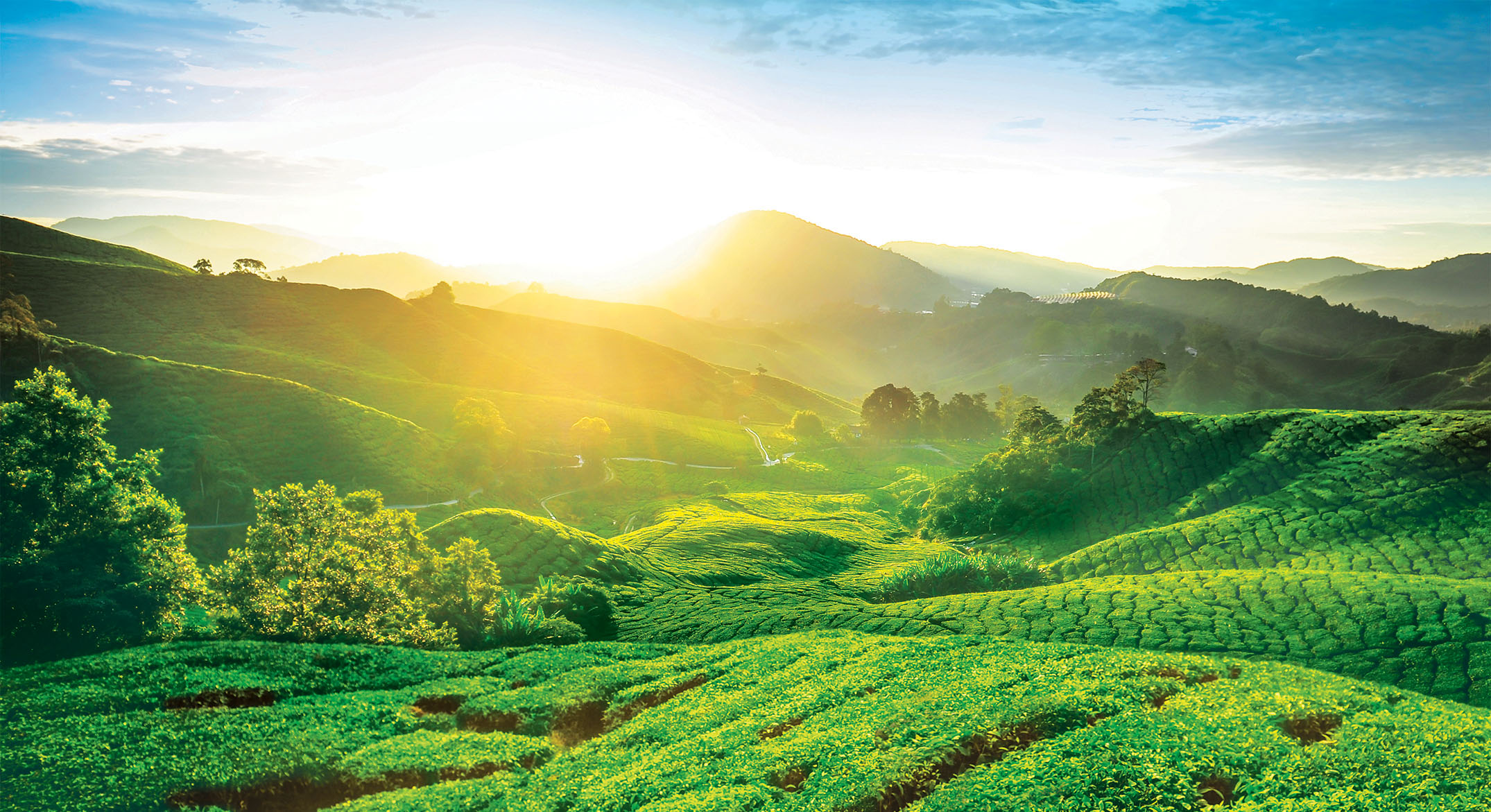
Cameron Highlands
200 km north of KL • Full day
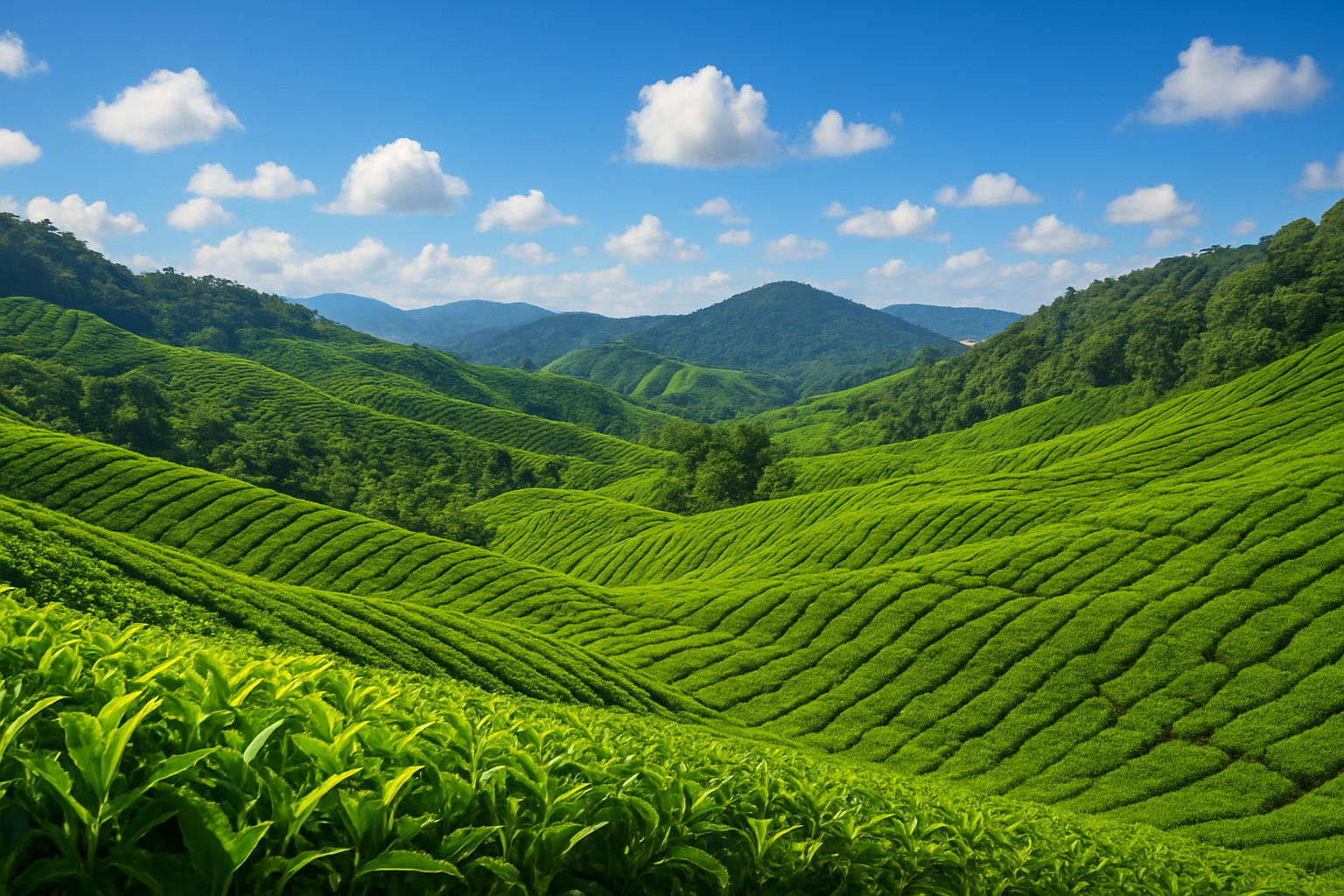
A scenic highland region known for its tea plantations, cool climate, and lush landscapes.
Port Dickson
100 km south of KL • Full day
A popular beach destination with beautiful sandy beaches and water sports activities.
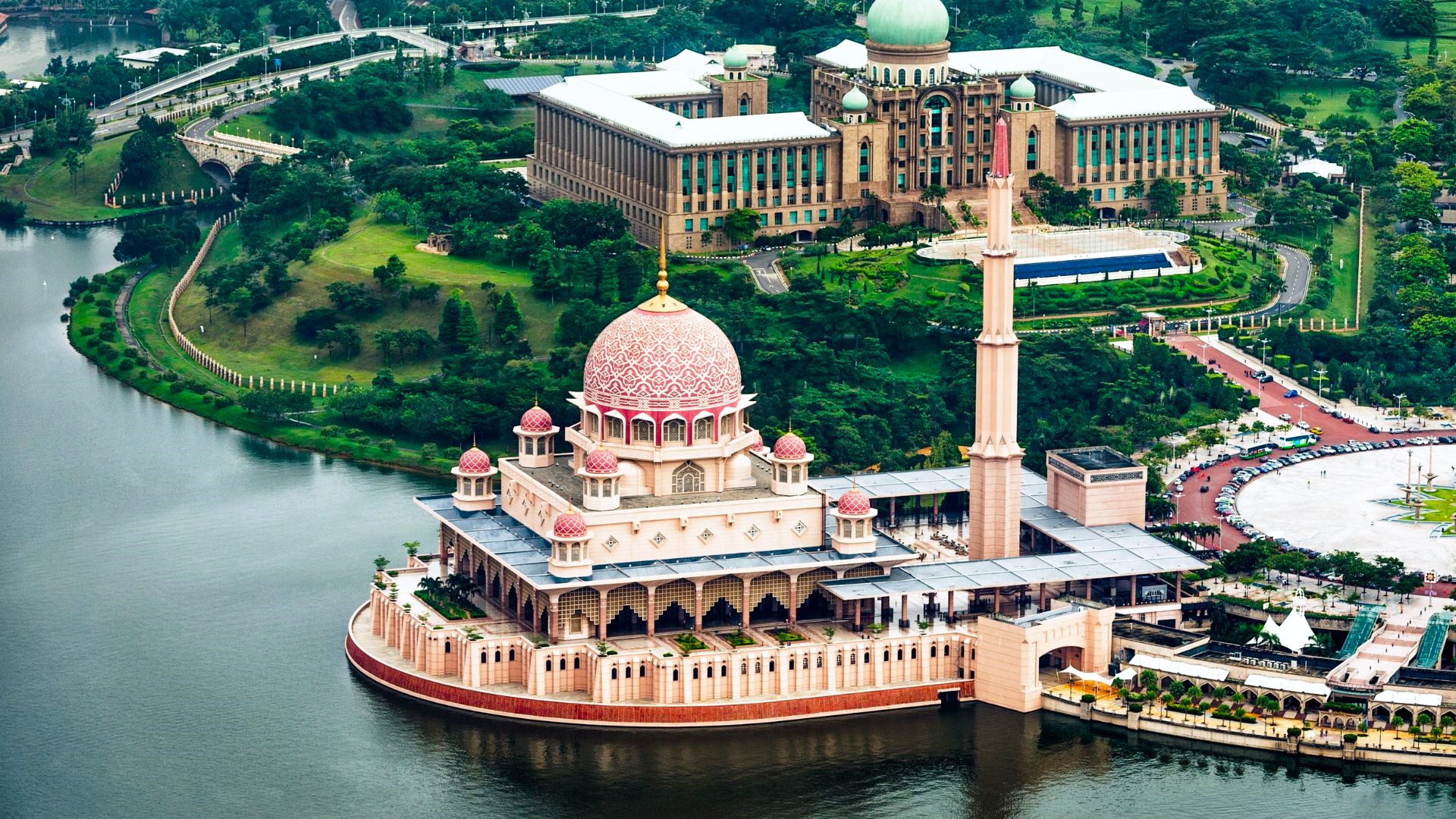
Putrajaya
30 km south of KL • Half day
A planned administrative and judicial center with beautiful architecture and landscaped gardens.
Festivals
Thaipusam • January/February (based on the Hindu calendar)
Chinese New Year • January/February (based on the lunar calendar)
Hari Raya Aidilfitri • Varies (based on the Islamic calendar)
Pro tips
- Visit Batu Caves during the Thaipusam festival for a unique cultural experience
- Explore the city's street food scene for authentic and affordable dining options
- Use the RapidKL public transport system to avoid traffic congestion
- Visit the KL Tower Sky Box for a unique and thrilling experience
- Experience the city's nightlife in areas like Changkat Bukit Bintang and Jalan Alor
From $25
per person
Price varies by option
Secure booking
Free cancellation available
Instant confirmation