One Day Walking Tour of Historic Landmarks in Bukhara
Active
4h
For a full refund, cancel at least 24 hours before the scheduled departure time.
Instant confirmation
Mobile or paper ticket accepted
About this experience
This tour is more than just sightseeing — it’s a journey into the heart of Bukhara’s life, culture, and traditions. As we walk through the city, I’ll not only share the fascinating history of its landmarks but also bring you closer to the people, crafts, and everyday life that make Bukhara unique. You’ll see artisans at work, discover local customs, and learn how history is woven into the lives of the city’s residents.
By the end of the day, you won’t just have seen Bukhara — you’ll have experienced it, gaining insights into its culture, traditions, and vibrant heritage in a way that goes beyond guidebooks and buildings.
Available options
One Day Walking Tour of Historic Landmarks in Bukhara
What's included
Bottled water
Detailed itinerary
1
At the very heart of our walk is the peaceful pool of Lyabi‑Hauz. Legend tells that I might have sat where you’re standing now if not for a determined Jewish widow who once refused to sell her land to create the pool. Instead of forcing her outright, the noble builder dug a canal along her house until she agreed — and in return she asked for land to build a synagogue, which later became Bukhara’s Jewish quarter. It’s one of the many stories showing how this place is more than water and architecture — it’s layers of human history.
2
Next, we visit the Nadir Divanbegi Madrasah, a 17th-century school built by the famous governor Nadir Divanbegi. You’ll see its impressive blue-tiled façade, intricate carvings, and peaceful courtyard, which showcase the elegance of Bukhara’s Islamic architecture. While here, I’ll share stories about the madrasah’s history and its role in education and community life during the Silk Road era.
3
We then visit the Synagogue of Bukhara, located near the old Jewish quarter. This historic synagogue reflects the rich cultural and religious diversity of the city. While here, I’ll share stories about the Jewish community’s long history in Bukhara and their contributions to the city’s traditions and culture.
4
Next, we explore the Trading Domes of Bukhara, a bustling market complex that has been at the heart of the city’s commerce for centuries. You’ll see rows of shops and covered bazaars selling everything from spices, textiles, and jewelry to traditional crafts. I’ll guide you through the domes and share stories about their history as a vital part of the Silk Road trade network.
5
Next, we visit the Ulugbek Madrasah, one of Bukhara’s most famous 15th-century schools. Its striking blue-tiled façade, intricate patterns, and grand entrance make it a true masterpiece of Islamic architecture. While here, I’ll share fascinating stories about Ulugbek, the renowned astronomer and ruler, and explain the madrasah’s role in education and scientific achievements during the Silk Road era.
6
Next, we visit the Abdulaziz Khan Madrasah, built in 1651. You’ll see its beautiful tilework, intricate decorative designs, and carved stucco, which reflect the influence of Persian architecture. While here, I’ll share stories about the madrasah’s history and its role in Bukhara’s cultural and educational life.
7
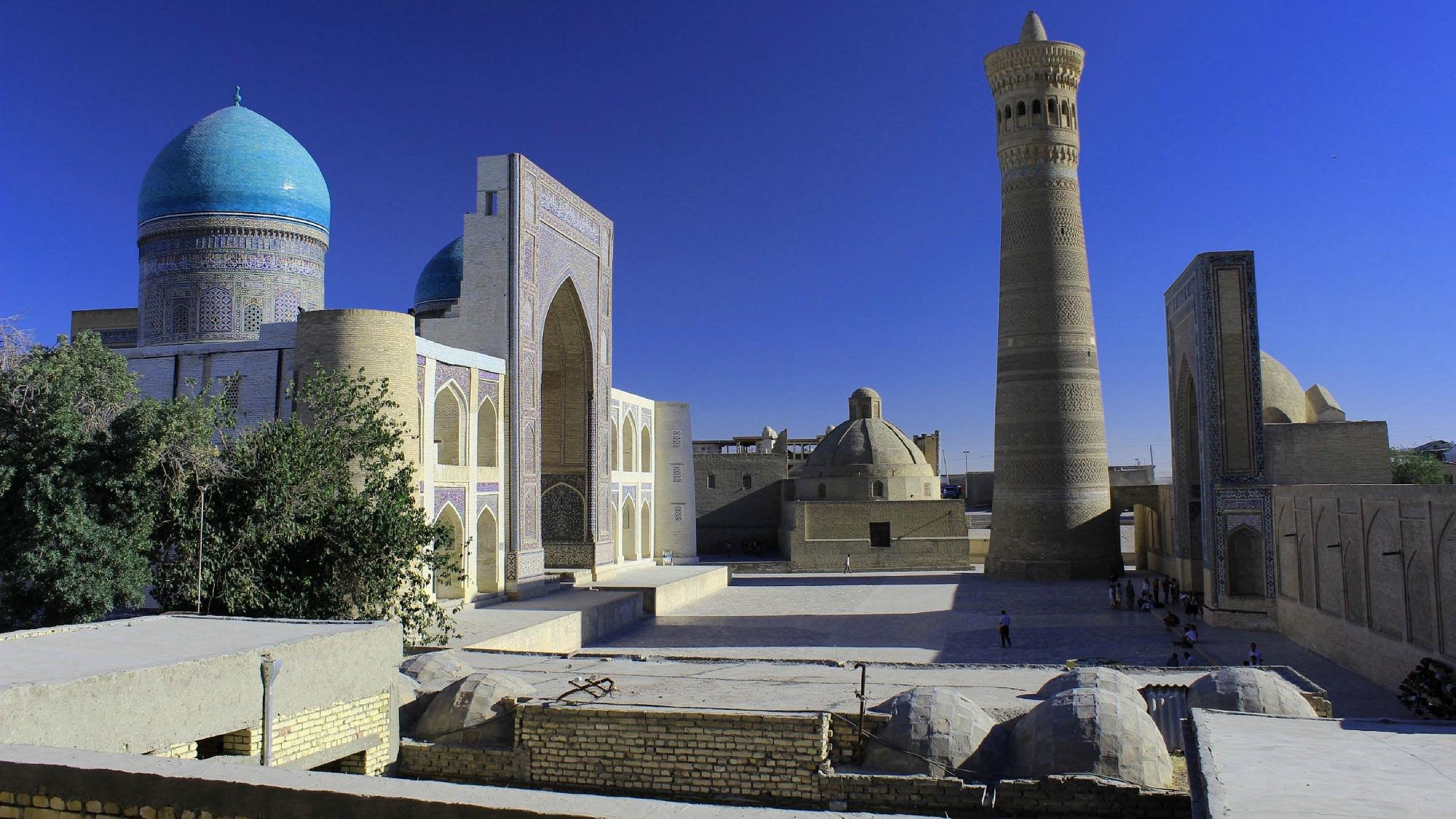
Next, we visit the Kalon Minaret, one of Bukhara’s most iconic landmarks. Built in 1127, this towering structure stands 47 meters tall and features intricate brick patterns and decorative motifs. Interestingly, it survived the destruction of Bukhara by Genghis Khan in the 13th century, when much of the city was destroyed, making it a remarkable symbol of resilience and history. While here, I’ll share fascinating stories about its past and its role in the city.
8
Next, we visit the Mir-i-Arab Madrasah, the only madrasah in Central Asia that has been continuously functioning since its establishment in the 16th century. Here, you can see the living tradition of Islamic education, with students still studying religious sciences just as they have for centuries. I’ll also share insights into the religious and cultural life of Bukhara and explain the madrasah’s role in preserving Islamic scholarship in the region.
9
Next, we visit the Ark of Bukhara, a massive fortress that served as the residential and administrative center of Bukhara’s rulers for centuries. As we explore its walls, gates, and courtyards, I’ll share stories about its history, the rulers who lived here, and its role as the political and cultural heart of the city. You’ll also get a glimpse of the architectural features that made it a formidable stronghold.
10
Next, we visit the Bolo-Hauz Mosque, famous for its elegant wooden columns and beautiful porch overlooking the pool. Built in the 18th century, this mosque is a peaceful and picturesque spot that reflects Bukhara’s architectural charm. While here, I’ll share stories about its history, religious significance, and role in the daily life of the city.
11
We finish the tour at the Samanids Mausoleum, one of Bukhara’s oldest and most remarkable monuments. Built in the 10th century, it is not only the oldest building in Central Asia but also one of the very first Islamic structures in the region, famous for its elegant brickwork and geometric patterns. From here, I can show you the way if you want to walk back to your hotel, return to Lyabi-Hauz, or explore the old city nearby. You may also use local transportation if you prefer.
What's not included
Coffee and/or Tea
Entrance fees are not included in the tour price. If you would like to visit the museums or walk inside certain attractions, you can pay the entrance fees on the spot which gives flexibility to choose
Available languages
Guide guide
EN
TR
Important information
Infants and small children can ride in a pram or stroller
Public transportation options are available nearby
Specialized infant seats are available
Not recommended for travelers with poor cardiovascular health
Travelers should have at least a moderate level of physical fitness
This a private tour/activity. Only your group will participate
Meeting point
I will meet you right at the main gate of the Nadir Divanbegi Madrasah in Bukhara. The gate faces the Lyabi-Hauz square and is easy to find with its beautiful blue-tiled façade.
Please come to the front entrance of the Madrasah — I’ll be waiting there so you can easily spot me.
About Bukhara
Bukhara is one of the oldest and most well-preserved cities in Central Asia, renowned for its rich history, stunning Islamic architecture, and vibrant cultural heritage. This ancient Silk Road city offers a unique glimpse into Uzbekistan's past, with over 140 architectural monuments dating back over a millennium.
Top Attractions
Po-i-Kalyan Complex
The Po-i-Kalyan Complex is the heart of Bukhara's historic center, featuring the Kalyan Minaret, Kalyan Mosque, and Mir-i Arab Madrasah. This UNESCO-listed site is a masterpiece of Islamic architecture.
Historical/Architectural
1-2 hours
Free (small fee for some areas)
Ark of Bukhara
The Ark of Bukhara is a massive fortress that served as the residence of Bukhara's rulers for centuries. It houses museums and historic buildings within its walls.
Historical
1 hour
5,000 UZS
Lyabi-Hauz Ensemble
The Lyabi-Hauz Ensemble is a picturesque complex centered around a large pond (hauz) and surrounded by madrasahs, mosques, and tea houses. It's a popular gathering spot for locals and tourists.
Historical/Cultural
1 hour
Free
Chashma-Ayub Mausoleum
This mausoleum is said to be built around a spring that appeared miraculously when the prophet Job (Ayub) touched the ground with his staff. It's a peaceful spot with beautiful tile work.
Religious
30 minutes
Free
Trade Domes
Bukhara's trade domes, such as the Toki Zargaron (Jewelers' Dome), Toki Telpak Furushon (Hatsellers' Dome), and Toki Sarrofon (Money Changers' Dome), are a testament to the city's rich trading history. These domes once housed bustling markets and still retain their historic charm.
Historical/Cultural
1 hour
Free
Must-Try Local Dishes
Plov
A rice dish cooked with meat, carrots, and spices, often served at celebrations and gatherings
Main Dish
Contains meat, can be vegetarian if made without meat
Lagman
A hearty noodle soup with meat, vegetables, and a rich broth
Main Dish
Contains meat, can be vegetarian if made without meat
Samsa
Baked pastries filled with meat, pumpkin, or potatoes
Snack
Varies by filling, often contains meat
Shurpa
A flavorful soup made with meat, vegetables, and spices
Soup
Contains meat, can be vegetarian if made without meat
Popular Activities
Camel trekking
Sandboarding
Hiking
Tea house visits
Spas and hammams
Reading in parks
Visiting historic sites
Attending local festivals
Best Time to Visit
April to June, September to October
These months offer pleasant weather for exploring the city's historic sites. The temperatures are comfortable, and the crowds are manageable.
15°C to 30°C
59°F to 86°F
Practical Information
Language
- Official: Uzbek
- Widely spoken: Russian, English (limited)
- English: Limited
Currency
Uzbekistani Som (UZS)
Time Zone
GMT+5
Electricity
220VV, 50HzHz
Safety Information
Overall Safety Rating: Generally safe
Bukhara is generally safe for travelers, with low levels of violent crime. However, petty theft and scams can occur, especially in tourist areas.
Important Precautions:
- • Use reputable tour operators
- • Negotiate taxi fares in advance
- • Keep valuables secure
Getting there
By air
- Bukhara International Airport • 5 km from city center
By train
Bukhara Railway Station
By bus
Bukhara Central Bus Station
Getting around
Public transport
Buses are the primary mode of public transport in Bukhara. They are affordable and connect major attractions and neighborhoods.
Taxis
Available • Apps: Yandex.Taxi
Rentals
Car, Bike, Scooter
Neighborhoods
Historic Center
Modern Bukhara
Day trips
Vobkent
30 km from Bukhara • Half day to full day
Vobkent is a small town known for its historic mosque and mausoleum, offering a glimpse into the region's Islamic heritage.
Gijduvan
40 km from Bukhara • Full day
Gijduvan is famous for its ceramics and traditional pottery workshops, offering a hands-on experience in this ancient craft.
Kyzylkum Desert
100 km from Bukhara • Overnight
The Kyzylkum Desert offers a unique desert experience with opportunities for camel trekking, stargazing, and exploring the vast sand dunes.
Festivals
International Festival of Classical Music • September
Siyavushbek Festival • August
Pro tips
- Visit the Po-i-Kalyan Complex early in the morning to avoid crowds and the heat
- Try the local plov at a traditional chaikhana for an authentic experience
- Bargain politely when shopping at bazaars, as prices are often inflated for tourists
- Carry small change for bus rides, taxis, and small purchases
- Learn a few basic phrases in Uzbek or Russian to enhance your interactions with locals
From $25
per person
Price varies by option
Secure booking
Free cancellation available
Instant confirmation