Full Day Tour to the Heart of Lisbon
Active
8h
For a full refund, cancel at least 24 hours before the scheduled departure time.
Instant confirmation
Mobile or paper ticket accepted
About this experience
We begin at the Belém Tower, a sentinel of the Tagus River. The magnificent Jerónimos Monastery dazzles with its Manueline architecture, while the Padrão dos Descobrimentos celebrates the navigators who took Portugal overseas. We cross the 25 de Abril Bridge and climb to the iconic São Jorge Castle, where a panoramic view reveals the red roofs of Alfama, the capital’s oldest and most authentic neighbourhood. We descend to the National Pantheon, where illustrious figures from Portuguese history rest. We continue to the São Pedro de Alcântara Viewpoint, where Lisbon reveals itself in all its beauty. We come across the ruins of the Carmo Convent, which silently tell the story of the 1755 earthquake. We descend to Praça do Comércio and continue to the vibrant Praça do Rossio, where the imposing Rossio Station stands. We head to the Parque Eduardo VII and finally the Palácio da Ajuda, where royal history comes to life, and explore the fascinating Museu do Tesouro Real.
Available options
Tour to Lisbon(4H) SEDAN
Transfer included<br/>Duration: 4 hours<br/>Not included<br/>You can choose the monuments : You can choose the monuments you want in the 4 hour period.<br/>Mercedes Benz E Class<br/>Pickup included
Fantastic Tour to Lisbon - VAN
Transfer included<br/>Duration: 8 hours<br/>Not included<br/>You can choose the monuments : You can choose the monuments you want in the 8 hours period.<br/>Mercedes Benz V Class<br/>Pickup included
Tour to Lisbon (4H) VAN
Transfer included<br/>Duration: 4 hours<br/>Not included<br/>You can choose the monuments : You can choose the monuments you want in the 4 hour period.<br/>Mercedes Benz V Class<br/>Pickup included
Full day Tour to Lisbon-SEDAN
Transfer included<br/>Duration: 8 hours<br/>Not included<br/>You can choose the monuments : You can choose the monuments you want in the 8 hour period.<br/>Mercedes Benz E Class<br/>Pickup included
What's included
Water bottle
Private tour - 1 to 3 px in Luxury Sedan or 1 or 8 in Luxury Van
Air-conditioned vehicle
Clean and disinfected vehicle
Mobile phone charger for apple and android
Hotel pick-up/drop-off (or other chosen location)
Detailed itinerary
1
Stop 1
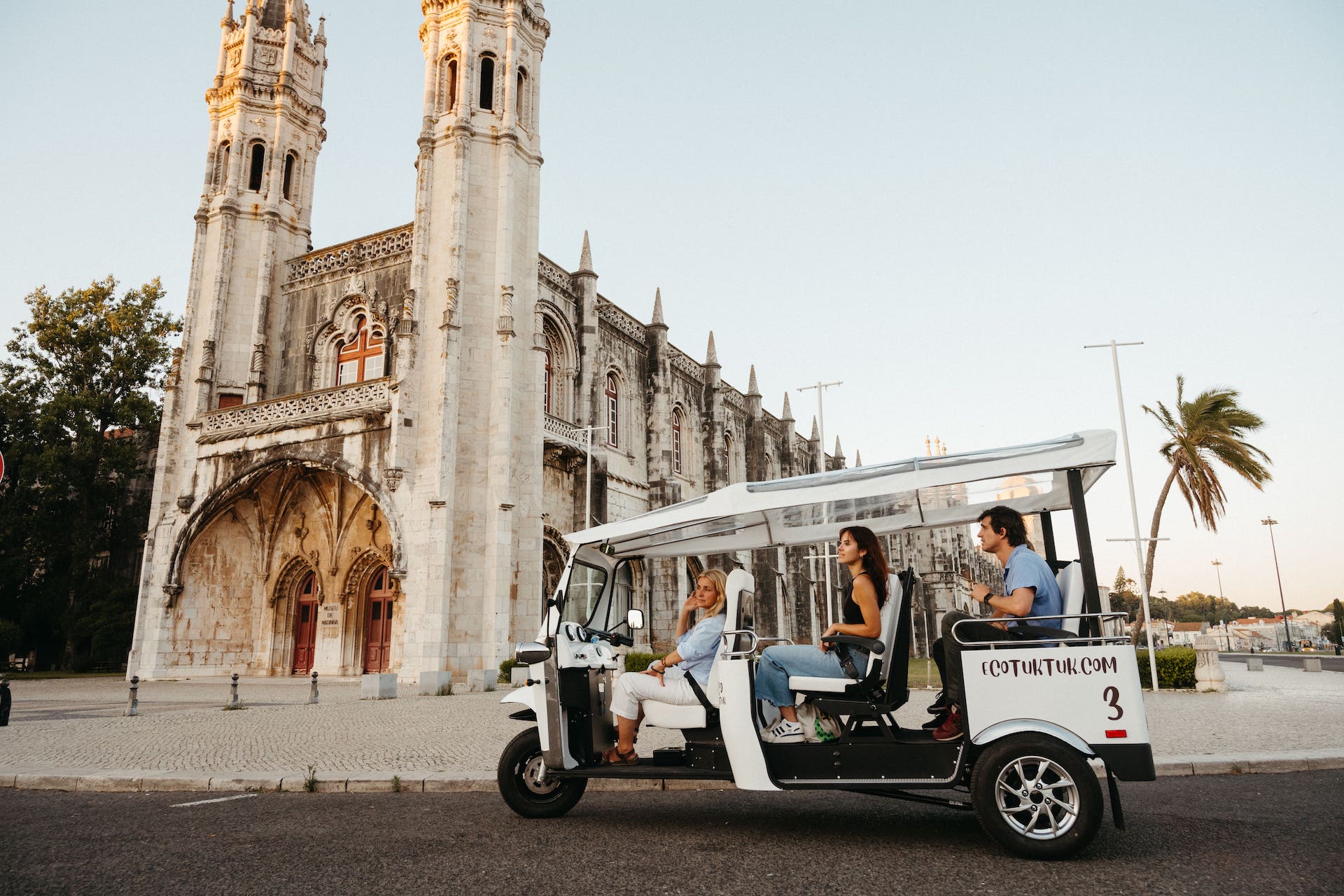
Located in Belém, formerly called Mosteiro de Santa Maria
de Belém and order to build by the king D. Manuel I., the
construction started at the beginning of the century XVI and
extended for a hundred years. This monastry is the most
remarkable portuguese monastic ensemble of it's time and
one of main hall-church in Europe. It was classified as a
national monument since 1907 and in 1983 a s a world
heritage by UNESCO. On July 7, 2007 it was elected as one
of the seven wonders of Portugal. Linked to the Portuguese
Royal House and the epic Discoveries, the Mosteiro dos
Jerónimos was, from a very early stage, internalized as one
of the symbols of the nation. Since 2016 it has the status of
national pantheon.
2
Stop 2
The Belém Tower is located on the right riverside of rio
Tejo, where once existed the praia de Belém. It was
originally surrounded by water in its entire perimeter. The
monument is an architectural icon from the reign of D.
Manuel I. Over time, the tower lost its defense function of the
Tejo line and began to be used for dungeons. The
monument stands out for its implicit nationalism, such
characteristics refer to the typical architecture of a time when
the country was a global power (at the beginning of the
Modern Age). Like the Mosteiro dos Jerónimos, it was
classified in 1983 as a UNESCO World Heritage Site and
elected as one of the Seven Wonders of Portugal in 2007.
3
Stop 3
The Castelo de São Jorge is located in the parish of Santa Maria Maior. The castle's first fortresses date back to the 1st century BC, having been rebuilt several times by various peoples and given different names. The current name derives from the castle's devotion to São Jorge,
patron saint of knights and crusades, made by order of D. João I in the XIV century.
In the first half of the XX century, being already in an advanced state of ruin, in 1940 monumental reconstruction works were carried out. For this reason, contrary to what one might think at first sight, the "medieval character" of this military ensemble is due to this reconstruction
campaign, and not to the preservation of the castle's space from the Middle Ages to the present day. It stands in a dominant position on the highest hill in the historic centre, offering visitors one of the most beautiful views over the city and the Tejo river estuary.
4
Stop 4
Alfama it is the oldest and one of the most typical neighborhoods in the city of Lisbon. Its name derives from Arabic al-hamma (aã~Jl), which means 'source of warm waters, good waters'. Most of its buildings withstood the 1755 earthquake. It has the most spectacular views from the
viewpoints of Portas do Sol, the Torre da Igreja de Santa Cruz do Castelo and the Santa Luzia.
Alfama is a very peculiar neighborhood, it resembles an old village not only in appearance but also in having a relatively small and close community.
5
Stop 5
The Panteão Nacional, created by Decree of September 26, 1836, it has been installed in the church of Santa Engrácia, since December 1, 1966. Before the completion of the works (from 1836 to 1966), the Panteão Nacional was installed in the Mosteiro dos Jerónimos. It is intended to honor and perpetuate the memory of Portuguese citizens who have distinguished themselves for services rendered to the country, such as in the exercise of high public positions, in high military services, in the expansion of Portuguese culture, in literary, scientific and artistic creation or in defense of the values of civilization. The honors of Panteão can consist in the deposition of the mortal remains of distinguished citizens or in the affixing of a tombstone
alluding to their life and work.
6
Stop 6
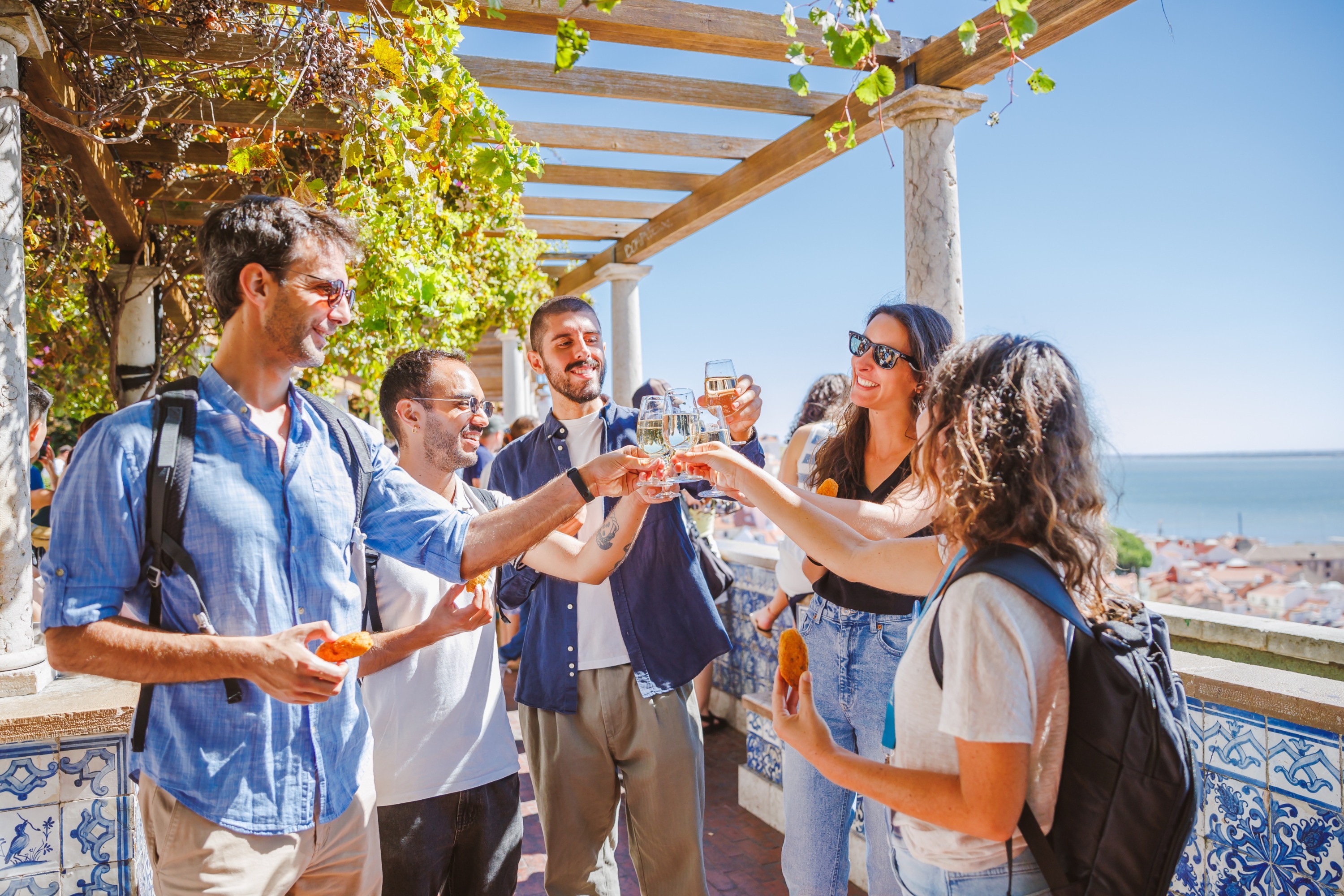
At the Sophia de Mello Breyner Andresen Viewpoint, formerly the Graça Viewpoint, you can enjoy one of the most beautiful views of the city. The popular neighborhood of Graça developed at the end of the XIX century. Behind the viewpoint is the aforementioned Augustinian monastery, founded in 1271 and rebuilt after the earthquake.
7
Stop 7
The Garden of São Pedro de Alcântara was built in 1864. The original project dates back to the 18th century, where El-Rei D. João V had a 20 meter high wall built with a view to creating a Mother of Water - a monumental deposit that it would extend the Águas Lives Aqueduct to Graça. However, the earthquake of 1755 imposed other priorities and the land began to serve as a dump for dead animals that were thrown from the wall below. Only in 1830 did the Royal
Police Guard make the space their "garden". Five years later, Lisbon City Council, following the victory of Liberalism and the recovery of executive powers, converted the space into a public garden. The garden has a small lake and a viewpoint.
8
Stop 8
Praça do Comércio, formerly Terreiro do Paço was the site of the palace of the kings of Portugal for about two centuries. It is one of the largest squares in Europe, measuring around 36,000 m2. It is considered a historical symbol of political power and manifestation of capital in
Portugal. In 1511, King D. Manuel I transferred his residence from the Castelo de São Jorge to this location by the river. The famous Martinho da Arcada café is located in one of the buildings on the square, the oldest in Lisbon, and one of Fernando Pessoa's favourites. It was for a long time the noblest entrance to Lisbon and, on the marble steps of Cais das Colunas, coming from the river, heads of state and other prominent figures were disembarked and received. In the center of the square, you can see the equestrian statue D. José, erected in 1775 by Joaquim Machado de Castro, the main Portuguese sculptor of the 18th century.
9
The Casa dos Bicos or Casa de Brás de Albuquerque is one of the centers of the Lisbon Museum. The house was built in 1523, by order of D. Brás de Albuquerque. The facade is clad
in stone trimmed in the shape of a diamond tip, the "beaks" showing a clear Italian Renaissance influence. The José Saramago Foundation now operates at Casa dos Bicos,
hosting the library of the Nobel Prize-winning writer for Literature, as well as a permanent exhibition on his life and work. The ground floor has been, since July of 2020, the Archaeological Center of the Museum of the City of Lisbon, where you can find a collection that traces the city's history from the Roman occupation to the XVIII century.
10
The Teatro Nacional Dona Maria I has a capacity for 948 people seated and is located in Praça de D. Pedro IV in Lisbon. It was inaugurated on April 13, 1846, during the celebrations of the 27th anniversary of D. Maria Il, but the history of the D. Maria I National Theater began ten years before its inauguration. In the revolution of September 9, 1836, Passos Manuel assumed the direction of the Government and one of the measures he took that same year was to instruct writer and politician Almeida Garrett to think about Portuguese theater in global terms and present a plan for the foundation and organization of a national theater that contributes to the civilization and moral improvement of the Portuguese nation. The emergence of a national theater was not only a cultural issue but, above all, a political one, and assumed as a matter closely linked to the nation's own independence.
11
The Praça do Rossio, officially called Praça Dom Pedro IV, it has been one of the city's nerve centers. This lower part of the city was called Valverde, due to a tributary of the Tejo river.
On the left side of the National Theater is the Rossio Railway Station with its imposing façade built in 1887. It is one of the main stations in Lisbon.
12
Stop 12
Pass by
The Parque Eduardo VII of England is the largest park in the center of Lisbon, being better known only as Parque Eduardo VII. It was baptized in 1903 in honor of Edward VII of the United Kingdom, who had visited Lisbon the previous year to reaffirm the alliance between the two countries. Until then, it was called Parque da Liberdade and was built in the first half of the XX century. The space it occupies extends over about twenty-five hectares.
13
Stop 13
The Palácio Nacional da Ajuda or Paço de Nossa Senhora da Ajuda is a Portuguese national monument. Its construction began at the end of the 18th century (1795) to replace the Real Barraca. The initial project, designed by Manuel Caetano de Sousa, underwent a profound change with a new project in 1802. With neoclassical inspiration,
by the architects Francisco Xavier Fabri and José da Costa e Silva, the Palace was inhabited with several interruptions, and remained unfinished. It functioned as Royal Palace with king D. Luis I (1838-1889), who settled there permanently from 1861 onwards. In the vestibule, the 47 statues signed by Portuguese artists are worth mentioning. Ended with the establishment of the Republic in 1910, the interior of the Palace was turned into a museum, as of 1968, presenting a
relevant collection of furniture, gold, silver and jewelery.
14
The Royal Treasury Museum/Crown Jewels is a must-see for lovers of unique pieces. Comprising 11 sections, the museum exhibits a large part of the assets of the former Portuguese Royal House, including jewels from the Crown and private collections of the royal family. Located in the new wing of the Ajuda National Palace, the museum offers a unique experience with inestimable historical, artistic and cultural value.
What's not included
Guided tours inside the monuments are not included
Mosteiro dos Jerónimos tickets are not included - 18€ - Pay locally
Torre de belém tickets are not included - 15€ - Pay locally
São Jorge Castle tickets are not included - 15€ - Pay locally
Panteão Nacional tickets are not included - 10€ - Pay locally
Nacional Palace of ajuda tickets are not included - 15€ - Pay locally
Food
Available languages
Guide guide
EN
ES
Important information
Wheelchair accessible
Infants and small children can ride in a pram or stroller
Service animals allowed
Public transportation options are available nearby
Infants are required to sit on an adult’s lap
Specialized infant seats are available
Transportation options are wheelchair accessible
Travelers should have at least a moderate level of physical fitness
Meeting point
If the pick-up is made at the Hotel, we will meet you at the reception, and if it is at the Airport, we will be waiting for you in the arrivals area with a tablet with your name on it.
About Lisbon
Lisbon, the capital of Portugal, is a vibrant city known for its rich history, stunning architecture, and warm climate. With its charming streets, historic trams, and breathtaking viewpoints, Lisbon offers a unique blend of old-world charm and modern energy.
Top Attractions
Belém Tower
A UNESCO World Heritage Site, this 16th-century tower is an iconic symbol of Lisbon's Age of Discoveries.
Historical
1-2 hours
€6
Alfama District
Lisbon's oldest district, known for its narrow, winding streets, Fado music, and historic charm.
Historical
Half day
Free to explore, attractions may have entry fees
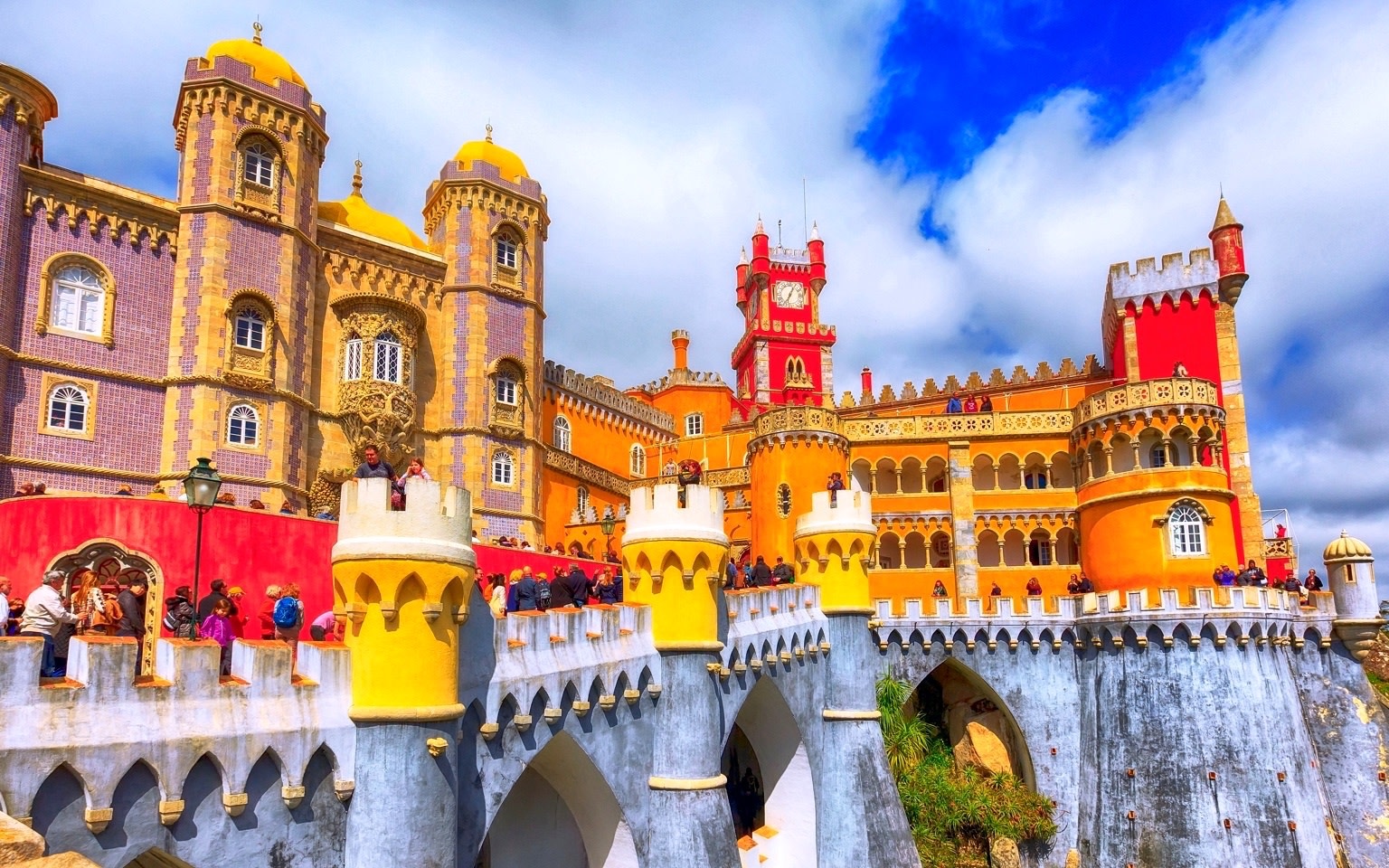
Sintra
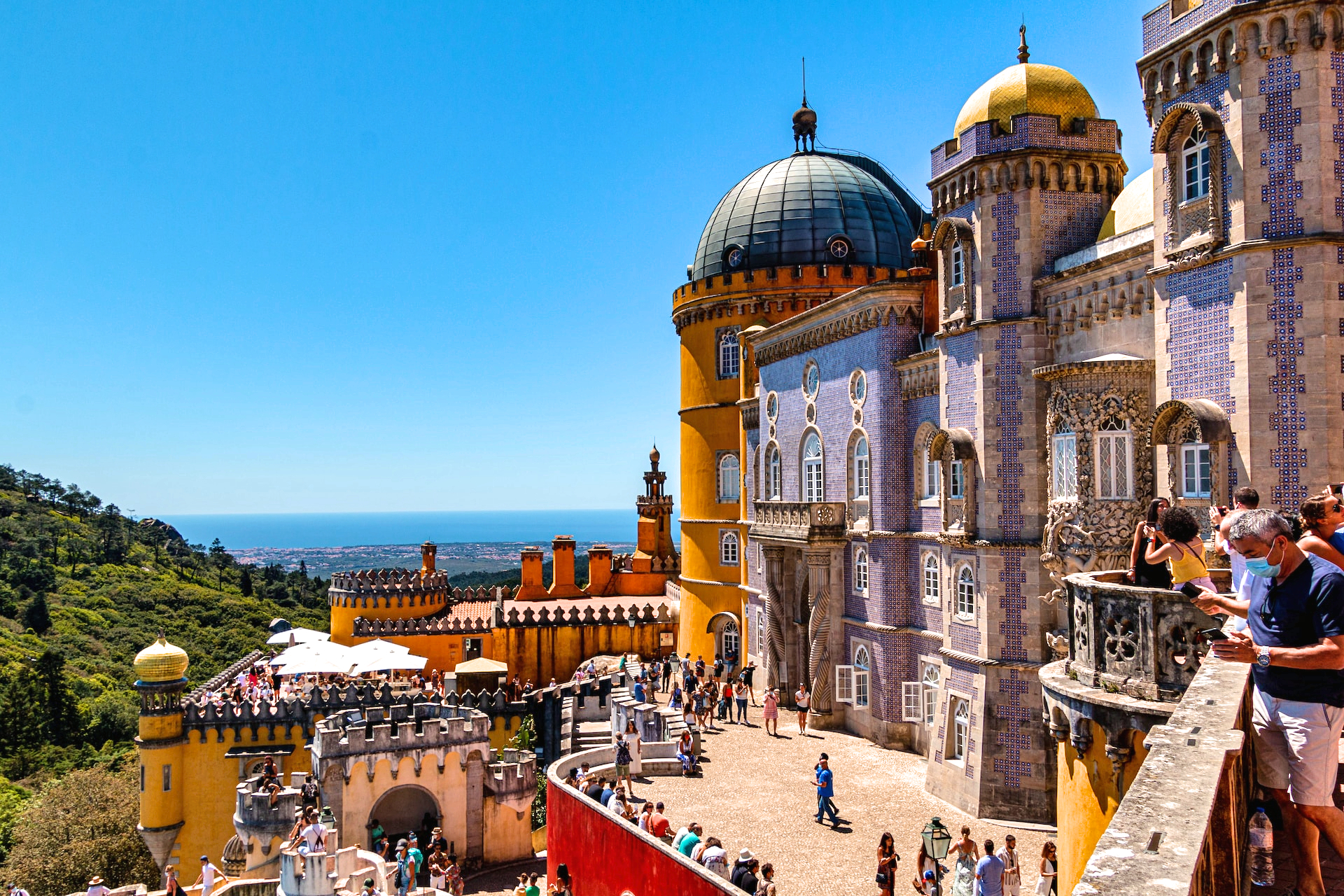
A UNESCO World Heritage Site, Sintra is a romantic town with stunning palaces and castles.
Historical
Full day
Varies by attraction, around €10-€15 per site
Must-Try Local Dishes
Bacalhau à Brás
Shredded codfish with eggs, potatoes, and onions
Main Dish
Contains fish and eggs
Pastel de Nata
Custard tart with a flaky pastry crust
Dessert
Contains dairy and eggs
Francesinha
A sandwich with meat, cheese, and a beer-based sauce
Main Dish
Contains meat, cheese, and gluten
Popular Activities
Hiking in Sintra
Surfing in Ericeira
Parasailing in Cascais
Beach lounging in Costa da Caparica
Spa day in a luxury hotel
Picnic in Jardim da Estrela
Visiting museums and galleries
Attending Fado performances
Best Time to Visit
March to May, September to October
These months offer pleasant weather and fewer crowds, making it ideal for sightseeing and outdoor activities.
15-25°C
59-77°F
Practical Information
Language
- Official: Portuguese
- Widely spoken: English, Spanish, French
- English: Moderately spoken
Currency
Euro (EUR)
Time Zone
GMT+1 (Western European Time, WET)
Electricity
230VV, 50HzHz
Safety Information
Overall Safety Rating: Generally safe
Lisbon is generally safe, but pickpocketing and petty theft can occur in crowded areas.
Important Precautions:
- • Be cautious of pickpockets in crowded areas
- • Use licensed taxis or ride-sharing apps
- • Avoid walking alone at night in less crowded areas
Getting there
By air
- Humberto Delgado Airport • 7 km from city center
By train
Santa Apolónia, Oriente
By bus
Sete Rios, Jardim do Campo Grande, Gare do Oriente
Getting around
Public transport
Efficient and clean, with four lines connecting major attractions.
Taxis
Available • Apps: Bolt, FreeNow
Rentals
Car, Bike, Scooter
Neighborhoods
Alfama
Baixa
Bairro Alto
Day trips
Sintra
25 km from Lisbon • Full day
A romantic town with stunning palaces, castles, and lush gardens.
Cascais
30 km from Lisbon • Half day to full day
A charming coastal town with beautiful beaches, historic sites, and a relaxed atmosphere.
Óbidos
80 km from Lisbon • Full day
A medieval town with a well-preserved castle, narrow streets, and charming shops.
Festivals
Santos Populares • June 13th
Festival dos Oceanos • June to September
Arraial do Alfoz • June to September
Pro tips
- Visit the Time Out Market for a variety of local and international cuisines
- Take a day trip to Sintra and Cascais for a mix of history and beach relaxation
- Explore the LX Factory for a unique shopping and dining experience
- Ride the historic Tram 28 for a scenic tour of the city
- Visit the MAAT museum for a blend of art, architecture, and technology
From $25
per person
Price varies by option
Secure booking
Free cancellation available
Instant confirmation