Vinohrady: Belle Époque Prague Walk - Parks, Villas and Mascarons
Active
2h
For a full refund, cancel at least 24 hours before the scheduled departure time.
Instant confirmation
Mobile or paper ticket accepted
About this experience
While most Prague tours focus on the Old Town, Prague Castle (and sometimes Vyšehrad), and the legendary early chapters of Czech history, this tour explores a district that emerged in the late 19th century, during Prague’s rise as an industrial and commercial centre of Austro-Hungary and, at the same time, as a focal point of the Czech patriotic movement. Its architecture is a clear manifestation of Neo-Renaissance and Modernist styles and is closely linked to the turbulent history of Prague in the 20th century, from the declaration of independent Czechoslovakia in 1918 to the fall of communism in 1989. Today, it is a trendy quarter mixing local and international vibes.
Available options
Vinohrady: Belle Époque Prague Walk – Parks, Villas & Mascarons
Vinohrady: Belle Époque Prague Walk – Parks, Villas & Mascarons - Russian
What's included
Knowledgeable local guide
Local insights and stories
Historical and cultural commentary
Small-group experience
Guided walking tour of Vinohrady
Detailed itinerary
1
Built at the end of the 19th century, this monumental Neo-Gothic church became a spiritual and social landmark of the rapidly growing Vinohrady district. Its rich decoration reflects the ambitions of a confident middle class and features works by some of the leading Czech artists of the time. More than a place of worship, it marked Vinohrady’s arrival as a prestigious and self-aware urban neighborhood.
2
Opened around 1900, Divadlo na Vinohradech occupies a lavish Neo-Renaissance building and has been one of Prague’s leading drama theatres from its beginnings to this day.
3
Náměstí Míru (Peace Square; named so since 1948) is the main square of Vinohrady district, formerly a town. It is surrounded by architecturally and socially significant buildings, including the National House at Vinohrady, Divadlo na Vinohradech, and the Basilica of St. Ludmila. The square is closely linked to Prague’s tram history, with tram services operating here since 1897.
4
Vinohradská Avenue is the main street of the district and one of Prague’s most important traffic arteries, extending eastward for several kilometres, changing names and linking the western districts of the city. In its initial sections, nearly every building is an architectural landmark of Neo-Renaissance or Modernism, and the avenue hosts a number of official and socially important institutions, most notably the Czech Radio. The radio building was, among other events in its long history, one of the centres of resistance during the 1968 invasion.
5
Italská (Italian) Street, in contrast to Vinohradská Avenue, is a typical residential side street in Vinohrady. It offers a concentrated display of Neo-Renaissance architecture, where façades were designed to communicate status, taste, and individuality. Intricate balconies, monumental portals, and expressive mascarons create a continuous visual narrative carved in stone.
6
Riegrovy sady is a vast park that emerged as a city park together with the entire Vinohrady district at the beginning of the 20th century. From its beginnings, it became a popular promenade for the upper middle class settled in Vinohrady. Today, you can find people exercising on the lawns, groups sitting on benches or blankets, musicians performing for passers-by, and locals walking their dogs. A wide view over the city draws people here to watch the sunset. In summer, the park hosts a large and lively beer garden.
7
The Church of the Most Sacred Heart of Our Lord is a monumental landmark in Prague. Completed in 1932 to commemorate the millennium of the first Czech saint and patron, St. Wenceslas, it is an architectural masterpiece that can hardly be paralleled or attributed to any particular style.
8
Čapek Brothers Gardens is a small green space in the quiet heart of Vinohrady. It is named after the brothers Karel Čapek and Josef Čapek, influential Czech intellectuals of the early 20th century. Though hidden from the city’s bustle, the park is flanked by a number of architecturally interesting buildings. It marks the beginning of the villa quarter of Vinohrady, with nearby villas built for prominent figures of the early 20th century, notable for both their architecture and the stories of their owners. Nearby stand the Hussite Church (Congregational House) in the Constructivist style and the former Vinohrady Water Tower, another example of civic architecture closely connected with the development of Prague in the late 19th century.
9
Grébovka, also known as Havlíček park, is a spacious park laid out on the slopes descending toward the Botič stream. It was created as a romantic countryside park around the villa of the industrialist Moritz Gröbe. The park still contains a vineyard reflecting the area’s historical name, Vinohrady (“vineyards”), with its own wine production, as well as characteristic features of a romantic park such as a grotto, a lake, and a waterfall. Today, it remains one of the most popular parks among Prague residents.
What's not included
Food and drinks
Public transport tickets
Gratuities
Hotel pickup and drop-off
Available languages
Guide guide
RU
EN
Important information
Service animals allowed
Public transportation options are available nearby
Travelers should have at least a moderate level of physical fitness
Meeting point
In front of the Church of St. Ludmila on Náměstí Míru (the large, easily recognizable church). Look for the guide wearing a hat.
About Prague
Prague, the capital of the Czech Republic, is a city of stunning architecture, rich history, and vibrant culture. Known for its well-preserved Old Town, Prague Castle, and the iconic Charles Bridge, it offers a blend of medieval charm and modern sophistication. The city is a UNESCO World Heritage site and a must-visit destination in Europe.
Top Attractions
Prague Castle
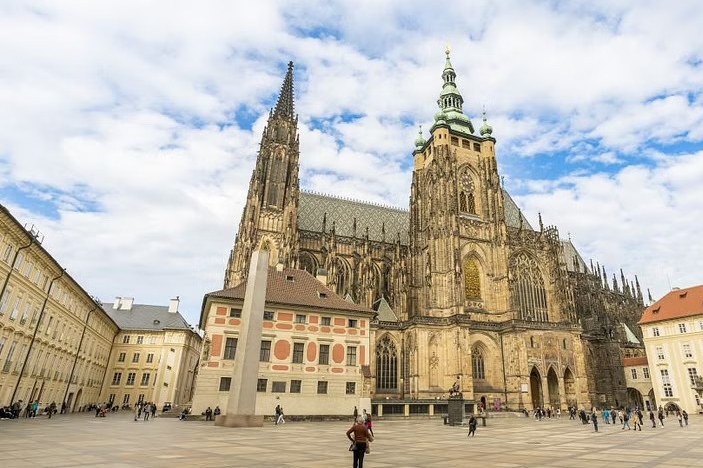
Prague Castle is the largest ancient castle in the world and a UNESCO World Heritage site. It offers stunning views of the city and houses several historical buildings, including St. Vitus Cathedral and the Old Royal Palace.
Historical/Architecture
2-3 hours
Moderate (15 EUR for adults, discounts available)
Charles Bridge
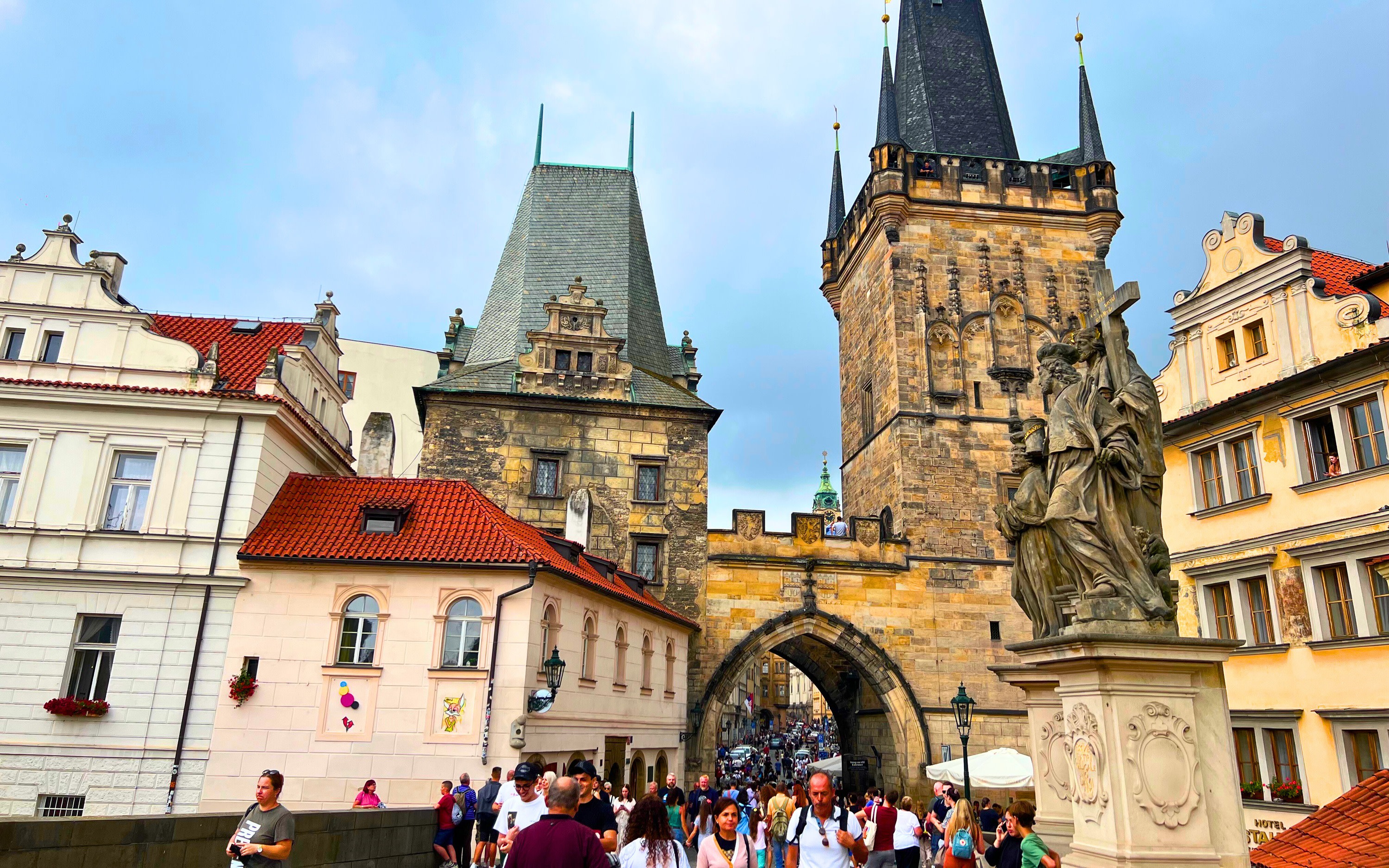
Charles Bridge is one of the most iconic landmarks in Prague. Built in the 14th century, it is lined with statues of saints and offers beautiful views of the Vltava River and Prague's skyline.
Historical/Architecture
1-2 hours
Free
Old Town Square
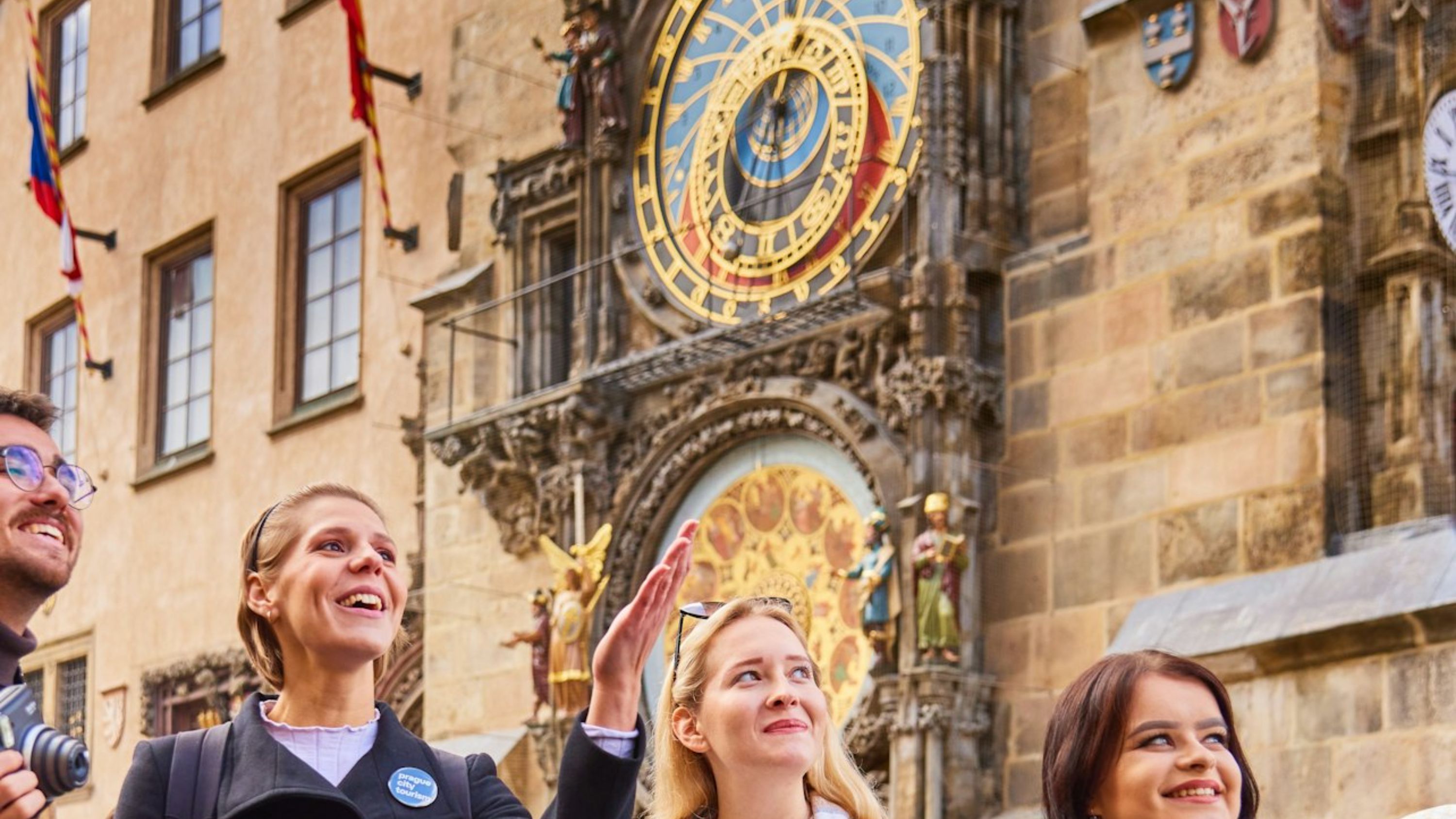
Old Town Square is the heart of Prague's historic center and home to the famous Astronomical Clock and the Church of Our Lady before Týn. It's a vibrant hub of activity with markets, events, and street performances.
Historical/Cultural
1-2 hours
Free (some attractions may have entry fees)
Petřín Hill and Lookout Tower
Petřín Hill is a beautiful park offering panoramic views of Prague. The Petřín Lookout Tower, often referred to as 'Prague's Eiffel Tower,' is a miniature version of the famous Parisian landmark and provides stunning views from its observation deck.
Nature/Adventure
2-3 hours
Moderate (10 EUR for tower entry, discounts available)
Jewish Quarter (Josefov)
The Jewish Quarter, known as Josefov, is a historic area with a rich cultural heritage. It includes several synagogues, the Old Jewish Cemetery, and the Jewish Museum, which provide insight into the history of Prague's Jewish community.
Historical/Cultural
2-3 hours
Moderate (15 EUR for combined museum entry, discounts available)
Must-Try Local Dishes
Svíčková
A traditional Czech dish consisting of marinated beef sirloin in a creamy vegetable sauce, served with bread dumplings and whipped cream.
Main Course
Contains beef, dairy, and gluten.
Guláš
A rich and flavorful Czech goulash made with beef, onions, and paprika, typically served with bread dumplings or potatoes.
Main Course
Contains beef, onions, and gluten (if served with dumplings).
Trdelník
A sweet pastry made from rolled dough wrapped around a stick, grilled, and coated with sugar and cinnamon. Often filled with ice cream or whipped cream.
Dessert
Contains wheat, sugar, and may contain dairy.
Pilsner Urquell
A world-famous Czech pilsner beer, known for its crisp and refreshing taste. It's brewed using traditional methods and high-quality ingredients.
Drink
Contains barley and hops.
Popular Activities
Hiking in the Bohemian Switzerland National Park
Rafting on the Vltava River
Cycling tours
Spa treatments in Karlovy Vary
Boat tours on the Vltava River
Picnics in Letná Park
Visiting museums and galleries
Attending classical music performances
Best Time to Visit
May to September
The weather is pleasant, and all tourist attractions are open. It's the best time for sightseeing and outdoor activities.
15°C to 25°C
59°F to 77°F
Practical Information
Language
- Official: Czech
- Widely spoken: English, German
- English: Moderately spoken
Currency
Czech Koruna (CZK)
Time Zone
GMT+1 (Central European Time, CET)
Electricity
230VV, 50HzHz
Safety Information
Overall Safety Rating: Generally safe
Prague is generally a safe city for travelers, with low crime rates and a welcoming atmosphere. However, as with any major city, it's important to be aware of your surroundings and take precautions to protect yourself and your belongings.
Important Precautions:
- • Keep valuables secure and out of sight
- • Use reputable taxi services or apps
- • Be cautious of strangers approaching you with offers or requests
Getting there
By air
- Václav Havel Airport Prague • 10 km from city center
By train
Prague Main Station, Holešovice Station
By bus
Florenc Central Bus Station, Černý Most Bus Station
Getting around
Public transport
Trams are the most iconic and efficient way to get around Prague. The network covers most of the city and is well-connected to metro and bus lines.
Taxis
Available • Apps: Uber, Bolt
Rentals
Car, Bike, Scooter
Neighborhoods
Old Town (Staré Město)
Malá Strana
Vinohrady
Žižkov
New Town (Nové Město)
Day trips
Kutná Hora
70 km from Prague • Half day to full day
Kutná Hora is a historic town known for its stunning architecture, including the Sedlec Ossuary (Bone Church) and St. Barbara's Cathedral. It offers a unique glimpse into the region's rich history and cultural heritage.
Karlštejn Castle
25 km from Prague • Half day
Karlštejn Castle is a stunning Gothic castle built in the 14th century by King Charles IV. It offers beautiful views of the surrounding countryside and a fascinating insight into the region's medieval history.
Český Krumlov
180 km from Prague • Full day to overnight
Český Krumlov is a charming and well-preserved medieval town, known for its stunning architecture, cobblestone streets, and the impressive Český Krumlov Castle. It's a UNESCO World Heritage site and a popular day trip from Prague.
Festivals
Prague Spring International Music Festival • May to June
Prague International Film Festival • March
Prague Beer Fest • May
Pro tips
- Visit the Prague Castle early in the morning to avoid crowds
- Explore the city's historic sites and architecture on foot
- Try traditional Czech dishes at local restaurants and pubs
- Experience the city's vibrant nightlife and entertainment scene
- Take a day trip to nearby destinations, such as Kutná Hora or Karlštejn Castle
From $25
per person
Price varies by option
Secure booking
Free cancellation available
Instant confirmation