Samarkand Historical City Highlights Guided Walking Tour
Active
4h
For a full refund, cancel at least 24 hours before the scheduled departure time.
Instant confirmation
Mobile or paper ticket accepted
About this experience
Embark on a journey through the heart of Samarkand, Uzbekistan, where the echoes of the Silk Road and the grandeur of the Timurid Empire come alive. This guided walking tour offers an unparalleled exploration of Samarkand’s UNESCO World Heritage sites, showcasing a breathtaking blend of Persian, Turkic, and Mongol architectural influences. Marvel at the majestic Gur-i Amir Mausoleum, the final resting place of the legendary conqueror Tamerlane, adorned with intricate tilework and a towering dome. Wander through the iconic Registan Square, a masterpiece of Islamic architecture with its trio of ornate madrasas that once pulsed as the city’s cultural and intellectual core. Experience the awe-inspiring Bibi-Khanym Mosque, a monument of love built by Timur for his wife, and feel the spiritual resonance of the Hazrat Khizr Mosque, steeped in legend and modern history. Conclude at the Shah-i-Zinda necropolis, a vibrant tapestry of mausoleums renowned for their exquisite craftsmanship.
Available options
Group Tour (Join-In)
Private Tour
You and only your closests: This option allows you to book the whole trip only for you and your family. The guide will be only at your service.
What's included
Professional guide
All Taxes and Fees
Detailed itinerary
1
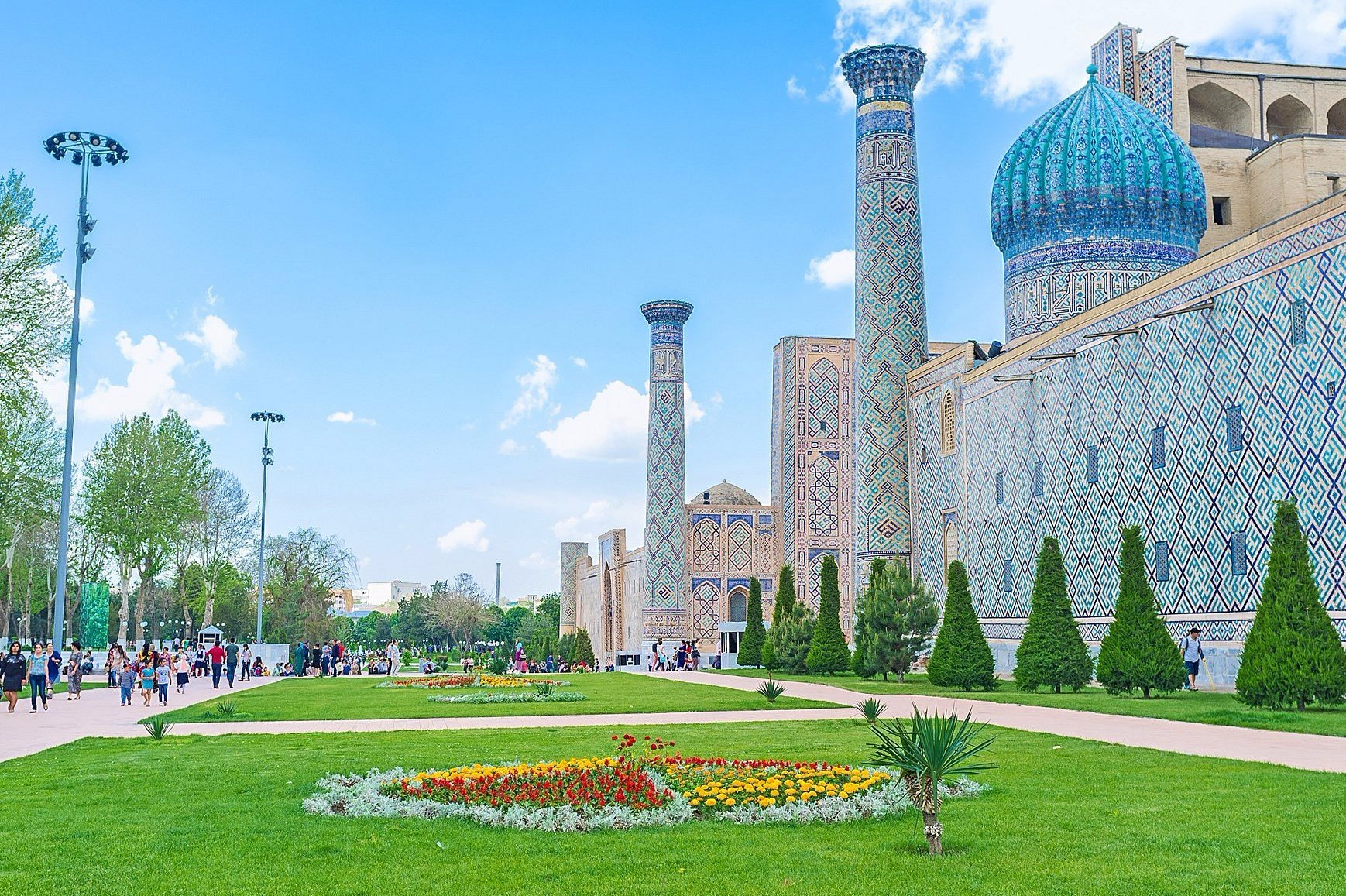
The Gur-e-Amir (meaning "Tomb of the King") is a historical mausoleum in Samarkand, Uzbekistan. It is the burial site of the famous conqueror Tamerlane (Timur), who founded the Timurid Empire in the 14th century and is regarded as one of the most significant figures in Central Asian history. The Gur-e-Amir is a magnificent example of Timurid architecture. It has a large, imposing dome, intricate tilework, and majestic minarets. The structure combines Persian, Turkic, and Mongol architectural styles.
2
Stop 2
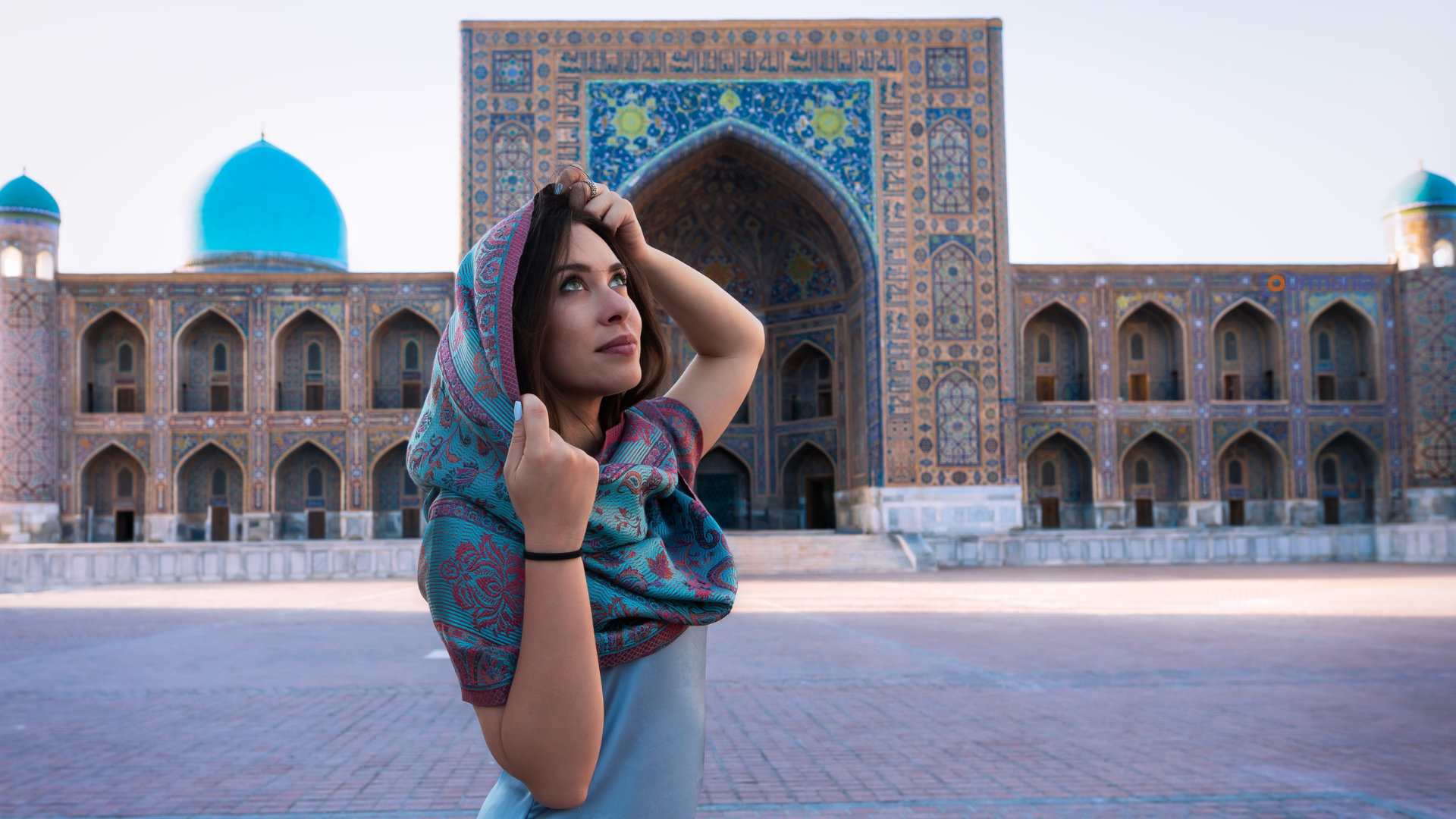
Registan Square is one of the most iconic landmarks in Samarkand, Uzbekistan, and is considered one of the most beautiful public squares in the world. It was once the heart of the ancient city of Samarkand, which was a prominent center of trade, culture, and learning along the Silk Road.
The square is surrounded by three majestic madrasas (Islamic educational institutions), each an outstanding example of Islamic architecture with stunning tile work, intricate designs, and grand entrances.
3
Stop 3
The Bibi-Khanym Mosque is one of the most famous landmarks in Samarkand, Uzbekistan, and stands as a testament to the grandeur and architectural brilliance of the Timurid Empire. Built during the reign of Emperor Timur (Tamerlane) in the late 14th century, the mosque is one of the largest and most impressive examples of Islamic architecture in Central Asia. The Bibi-Khanym Mosque was commissioned by Timur in honor of his wife Bibi-Khanym, who was one of the most prominent women in his court. According to legend, Timur built the mosque for her after she made a request for a grand structure to be erected in Samarkand, and it is said that the mosque's design was inspired by her beauty and stature.
4
Siab Bazaar, Samarkand’s largest and oldest market, is a vibrant hub of Uzbek culture located near the Bibi-Khanym Mosque. This bustling oriental bazaar, dating back to the 14th century, spans over 7 hectares and offers a sensory feast of sights, sounds, and aromas. Tourists can explore colorful stalls brimming with fresh fruits, vegetables, spices, dried fruits, nuts, and the famous Samarkand bread, known for its long-lasting freshness and intricate designs. Handicrafts, ceramics, textiles, and souvenirs are also abundant, with bargaining being a cherished tradition. The market’s lively atmosphere, friendly vendors, and proximity to historic landmarks like Registan Square make it a must-visit for an authentic taste of Samarkand’s rich heritage and daily life
5
The Hazrat Khizr Mosque is a historical monument in Samarkand (mid-19th century); associated with the name of the legendary Islamic prophet Khizr. The building was erected on the site of an ancient mosque (according to the inscription on the mihrab, in 1855). The monument is located opposite the Shakh-i-Zinda complex on a hill. In 2018, the mausoleum of the First President of the Republic of Uzbekistan Islam Karimov was opened in the territory of the mosque
6
Stop 6
Shah-i-Zinda (meaning "The Living King") is a complex of stunning mausoleums located in Samarkand, Uzbekistan. It is one of the most significant and visually striking historical sites in the city and is a UNESCO World Heritage site. The complex is famous for its intricate tilework, historical importance, and spiritual significance, and it is often regarded as one of the most beautiful necropolises in Central Asia.
What's not included
Admission tickets
Available languages
Guide guide
RU
EN
Reviews breakdown
Viator
5.0
5 reviews
5★
5
4★
0
3★
0
2★
0
1★
0
Tripadvisor
4.8
17 reviews
5★
14
4★
2
3★
1
2★
0
1★
0
Important information
Infants are required to sit on an adult’s lap
Not recommended for travelers with poor cardiovascular health
Suitable for all physical fitness levels
Meeting point
The exact meeting point will provided the day before of your actual tour. If you have any questions, please do not hesitate to contact us via Whatsapp +998770761818.
About Samarkand
Samarkand is one of the oldest continuously inhabited cities in Central Asia, known for its rich history and stunning Islamic architecture. It's a UNESCO World Heritage site with landmarks that reflect the city's status as a hub on the ancient Silk Road.
Top Attractions
Registan Square
Registan Square is the heart of Samarkand, featuring three stunning madrasahs (Islamic schools) with intricate tile work and towering minarets. It's one of the most iconic sights in Central Asia.
Historical/Architecture
1-2 hours
Moderate (entry fee applies)
Gur-e-Amir Mausoleum
This mausoleum is the burial place of Timur (Tamerlane), the founder of the Timurid Empire. It's known for its stunning blue tile work and intricate design.
Historical/Architecture
1 hour
Moderate (entry fee applies)
Shah-i-Zinda Necropolis
This ancient necropolis is a collection of stunning mausoleums and tombs, known for their intricate tile work and peaceful atmosphere. It's a must-visit for history and architecture lovers.
Historical/Architecture
1-2 hours
Moderate (entry fee applies)
Bibi-Khanym Mosque
This grand mosque was built by Timur in honor of his favorite wife, Bibi-Khanym. It's one of the largest mosques in the Islamic world and features stunning architecture and tile work.
Historical/Architecture
1 hour
Moderate (entry fee applies)
Siab Bazaar
This bustling bazaar is a great place to experience local life and sample traditional Uzbek food. It's a sensory overload with its colors, smells, and sounds.
Cultural
1-2 hours
Free to enter, budget for purchases
Must-Try Local Dishes
Plov
Plov is a rice dish cooked with meat (usually lamb or beef), carrots, and onions. It's a staple of Uzbek cuisine and is often served at celebrations.
Main dish
Contains meat, not suitable for vegetarians
Lagman
Lagman is a noodle soup with meat, vegetables, and a rich broth. It's a hearty and flavorful dish that's perfect for colder weather.
Main dish
Contains meat, not suitable for vegetarians
Samsa
Samsa are baked pastries filled with meat, onions, and spices. They're a popular street food and are often sold at bazaars.
Snack
Contains meat, not suitable for vegetarians
Non
Non is a traditional Uzbek bread, often baked in a tandoor oven. It's a staple of Uzbek cuisine and is served with most meals.
Bread
Vegetarian
Popular Activities
Hiking in the nearby mountains
Exploring historic sites
Horseback riding
Visiting tea houses
Enjoying a traditional hammam (bathhouse)
Strolling through historic neighborhoods
Attending local festivals
Visiting museums and historic sites
Best Time to Visit
April to June, September to October
These months offer the best weather for sightseeing, with mild temperatures and minimal rainfall. It's ideal for exploring the city's historic sites and enjoying outdoor activities.
15-30°C
59-86°F
Practical Information
Language
- Official: Uzbek
- Widely spoken: Russian
- English: Limited
Currency
Uzbekistani Som (UZS)
Time Zone
UTC+5
Electricity
220VV, 50HzHz
Safety Information
Overall Safety Rating: Generally safe
Samarkand is generally safe for travelers, but petty crime and scams can occur. Be cautious of pickpockets and scams, especially in crowded areas and tourist sites. Avoid walking alone at night in poorly lit areas.
Important Precautions:
- • Be cautious of pickpockets and scams
- • Avoid walking alone at night in poorly lit areas
- • Use official taxis or ride-hailing apps
Getting there
By air
- Samarkand International Airport • 10 km from city center
By train
Samarkand Railway Station
By bus
Samarkand Bus Station
Getting around
Public transport
The bus system is affordable and covers most parts of the city. Buses are often crowded but are a good way to get around.
Taxis
Available • Apps: Yandex.Taxi
Rentals
Car, Bike, Scooter
Neighborhoods
City Center
Afrosiab
Kuk-Saroy
Day trips
Shakhrisabz
90 km from Samarkand • Full day
Shakhrisabz is a historic city known for its stunning architecture and ties to Timur (Tamerlane). It's a UNESCO World Heritage site with several impressive ruins and monuments.
Penjikent
120 km from Samarkand • Full day
Penjikent is a charming town in Tajikistan, known for its historic ruins and natural beauty. It's a great day trip for those interested in history and the outdoors.
Ulugbek's Observatory
5 km from Samarkand • Half day
Ulugbek's Observatory is a historic site dedicated to the astronomical work of Ulugbek, the grandson of Timur. It's a fascinating place to learn about the history of astronomy and science in Central Asia.
Festivals
Silk and Spices Festival • May
Navruz (Nowruz) • March 21
Eid al-Fitr • Varies (depending on the lunar calendar)
Pro tips
- Learn a few basic phrases in Uzbek or Russian to enhance your experience and connect with locals
- Hire a local guide to learn about the history and significance of the city's many historic sites
- Visit the bazaars early in the morning for the best selection and atmosphere
- Try local specialties like plov, lagman, and samsa at traditional restaurants and street food stalls
- Consider staying in a guesthouse or homestay for a more local and authentic experience
From $25
per person
Price varies by option
Secure booking
Free cancellation available
Instant confirmation