Shakhrisabz Private Day Tour from Samarkand
Active
7h
For a full refund, cancel at least 24 hours before the scheduled departure time.
Instant confirmation
Mobile or paper ticket accepted
About this experience
Avoid the hassle of renting a car to see a beautiful landscape and historical monuments beyond Samarkand with help from 7 hours a day tour which includes transport from Samarkand, local guide in Shakhrisabz and entrance tickets to the monuments.
Beyond Samarkand, the road to the south, through Zarafshan Range, a Pamiri spur, towards the Takhtakaracha Pass. Along this major Silk Road branch marched the armies of the Greats, Alexander and Amir Temur, en route to India. In 1395 Amir Temur ordered a palace and garden built here, between his imperial capital and his birthplace Shakhrisabz, 90 kilometers south. The road passes through villages, resting in the shade of white acacias, Persian walnut, pine and plane trees. The peak of the pass is more than 1620 meters in elevation and in a clear day after the peak of the pass there is a spot of fine panorama of the town Kitob of Kashkadarya province.
Available options
Shakhrisabz Private Day Tour from Samarkand
Pickup included
What's included
Entrance tickets to the monuments
Air-conditioned vehicle
English speaking local guide in Shakhrisabz
Detailed itinerary
1
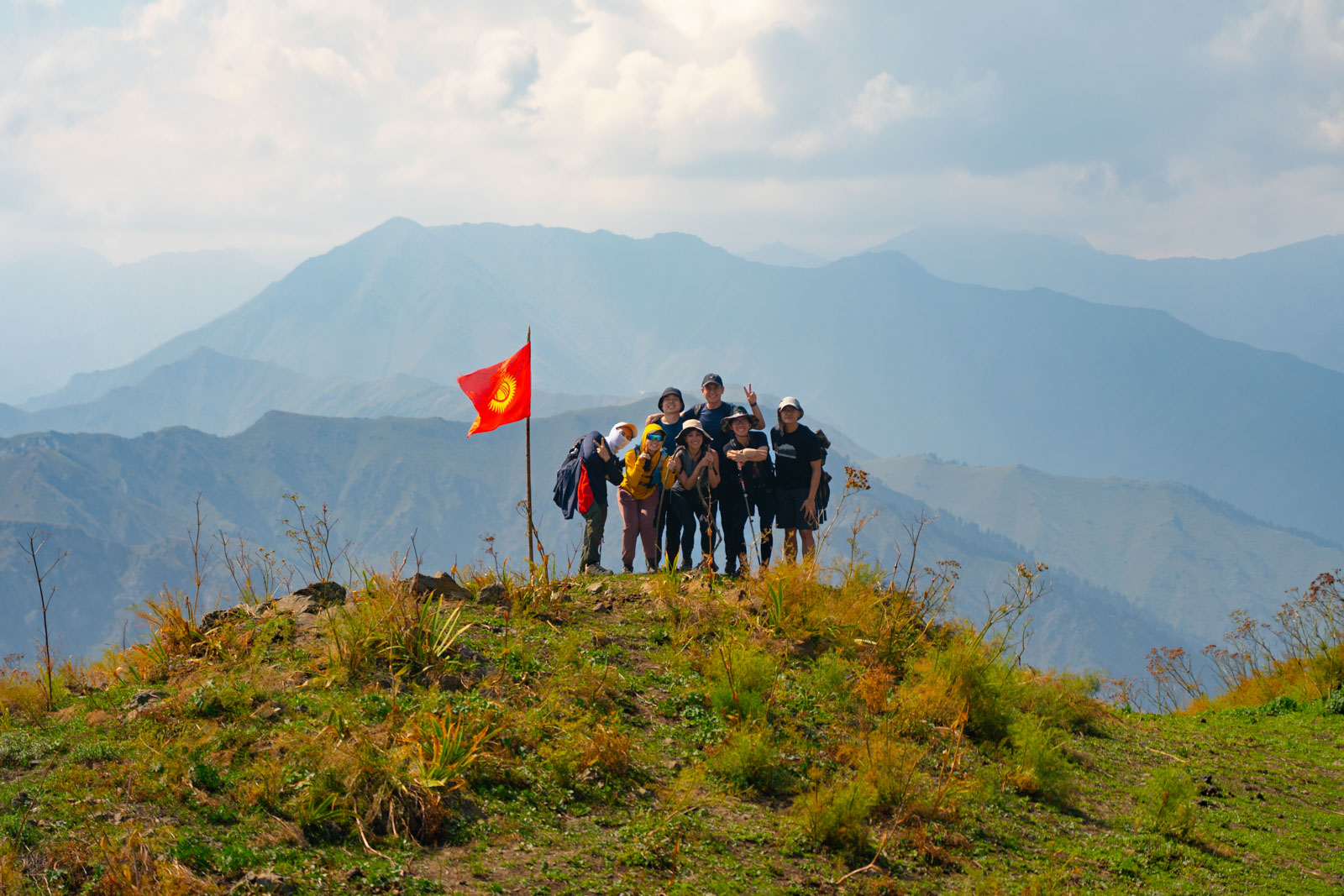
Beyond Samarkand, the road to the south, through Zarafshan Range, a Pamiri spur, towards the Takhtakaracha Pass. Along this major Silk Road branch marched the armies of the Greats, Alexander and Amir Temur, en route to India. Photo stop to capture unusual shape of stones and snow capped mountains (one can see snow from November to March).
2
You stop on top of Takhtakaracha Pass take picture of local market (the peak of the pass is more than 1620 meters in elevation).
3
In a clear day after the peak of the pass there is a spot of fine panorama of the town Kitob of Kashkadarya province.
4
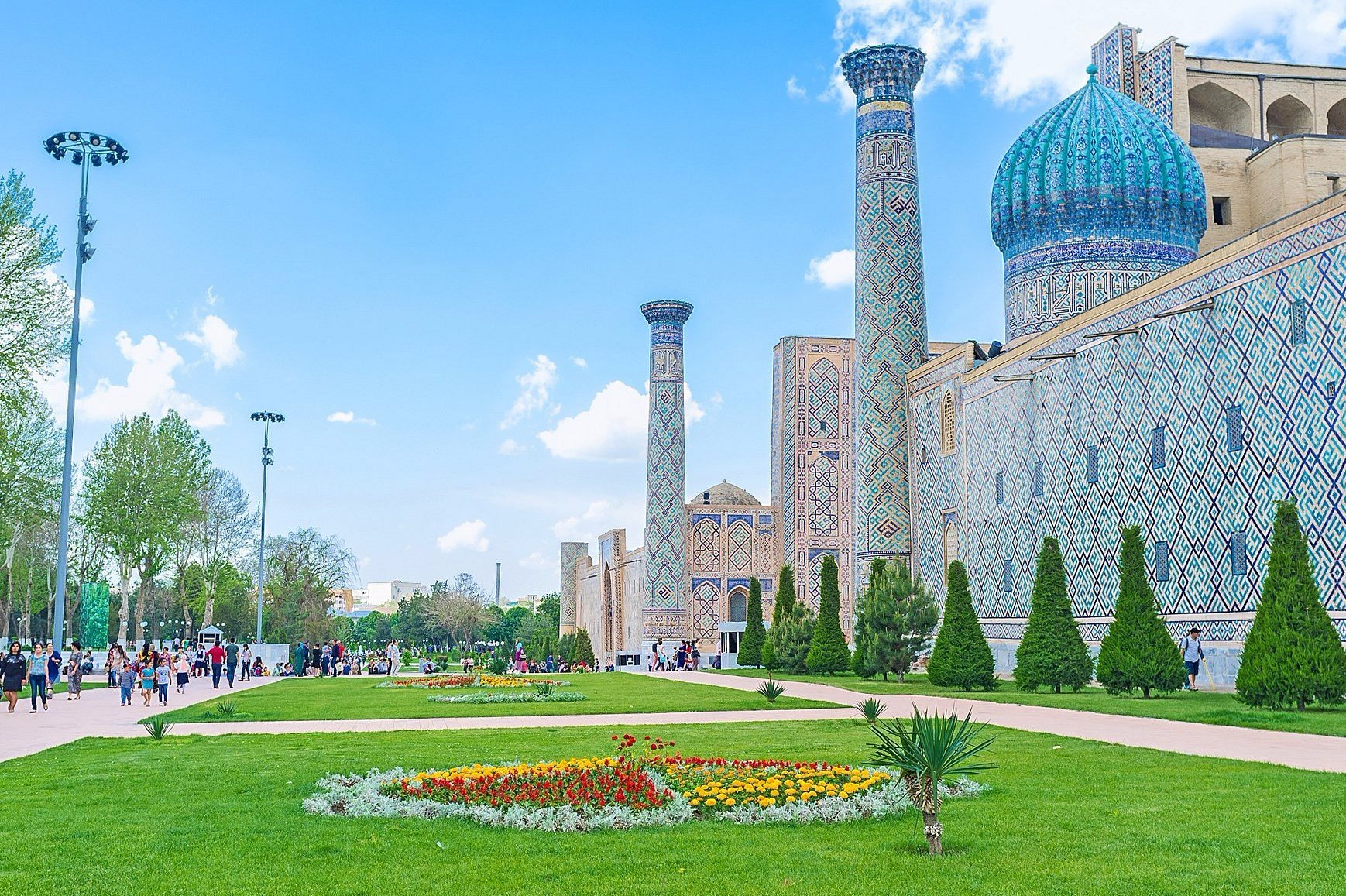
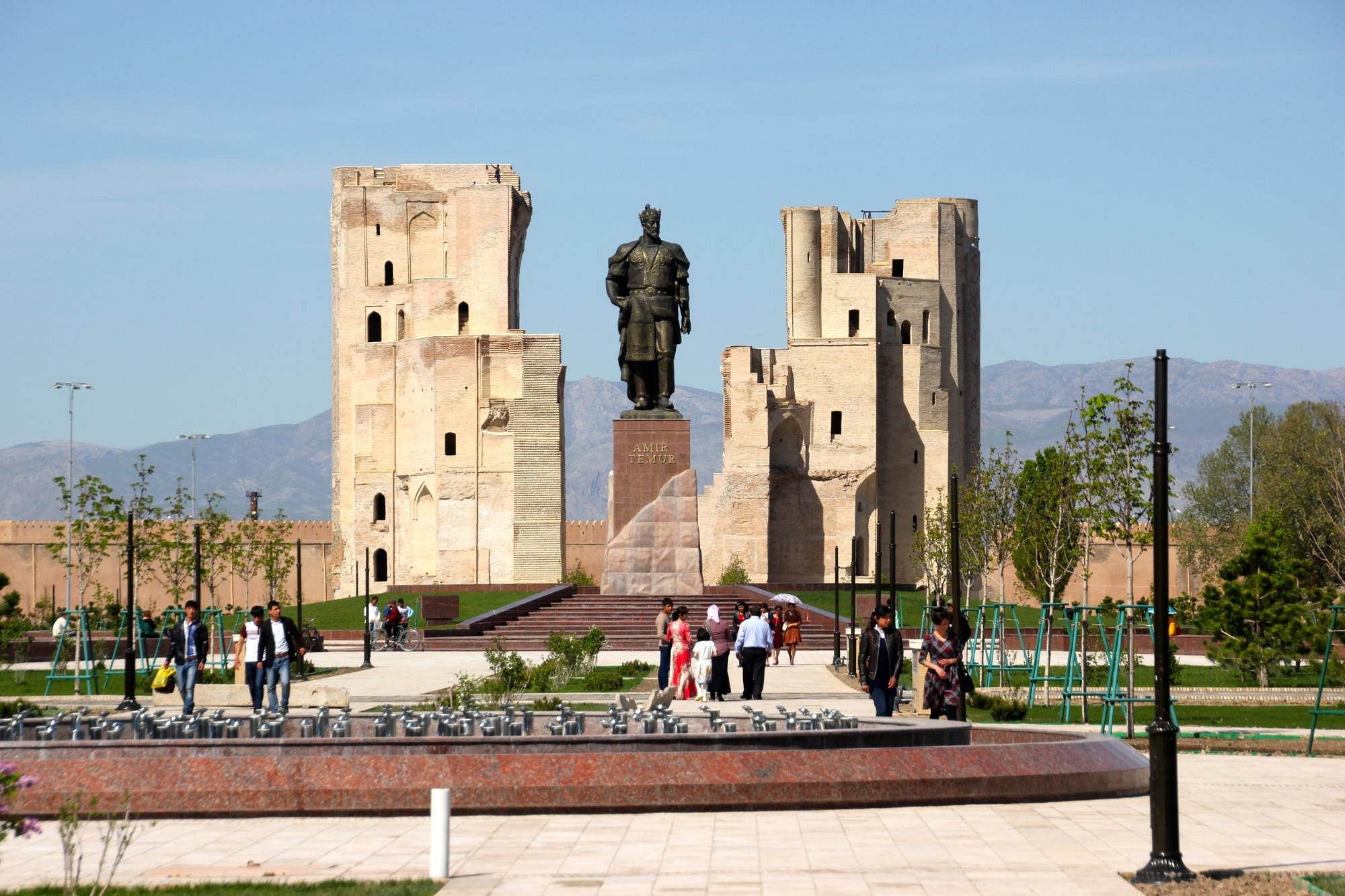
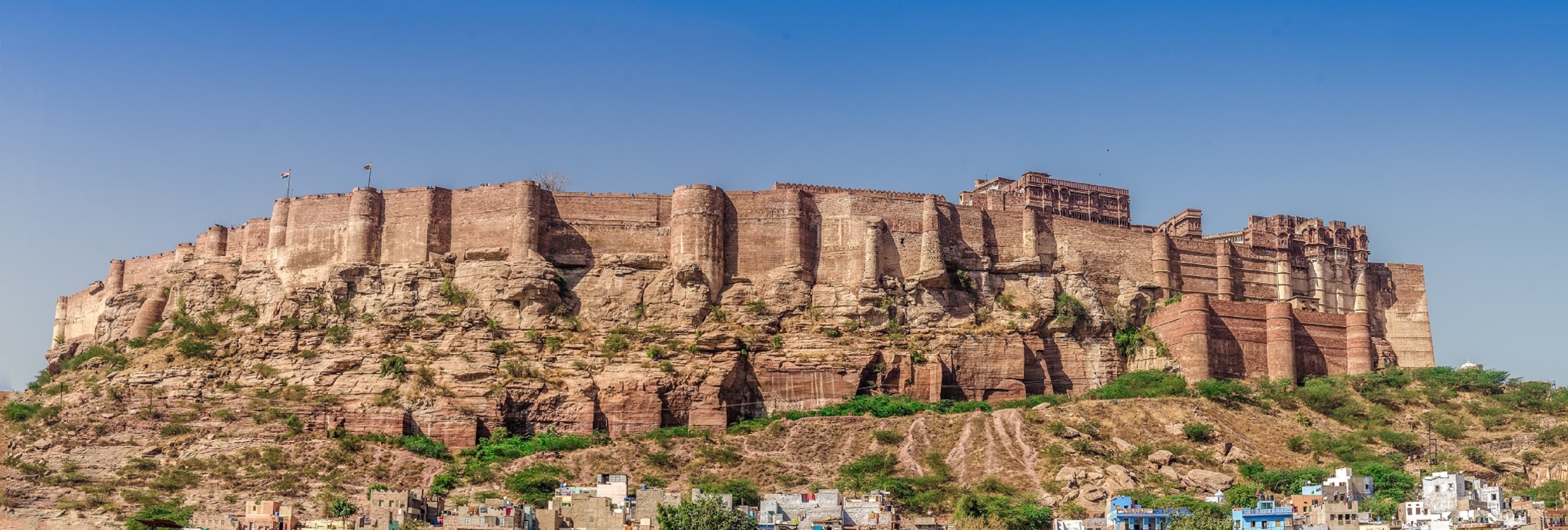
Ak Saray Palace (“a white palace” in Uzbek) built in 1380-1404. Amir Temur gathered its craftsmen to his hometown to build his greatest palace, similar in structure to Samarkand’s Bibi Khanum Mosque. The name Ak-Serai (White Palace) symbolizes his noble descent, not the dominant colour, for blue, green and gold patterned the vast mosaics.
5
Statue of Amir Temur— there are three huge statues of Temur: one is in Samarkand, one is in Tashkent and the third is in his hometown Shakhrisabz in standing position. The bronze statue weighs 20 tons and 9 meters high built after the Independence (1991).
6
Complex of Dor-us Siyadat (“place of sadness” in Uzbek) from XIV century. It arose on the death of his eldest and favorite son Jahangir, killed in 1375 (aged only 22). When another son, Umar Sheikh, joined Jahangir in 1394, Temur even built himself a crypt.
7
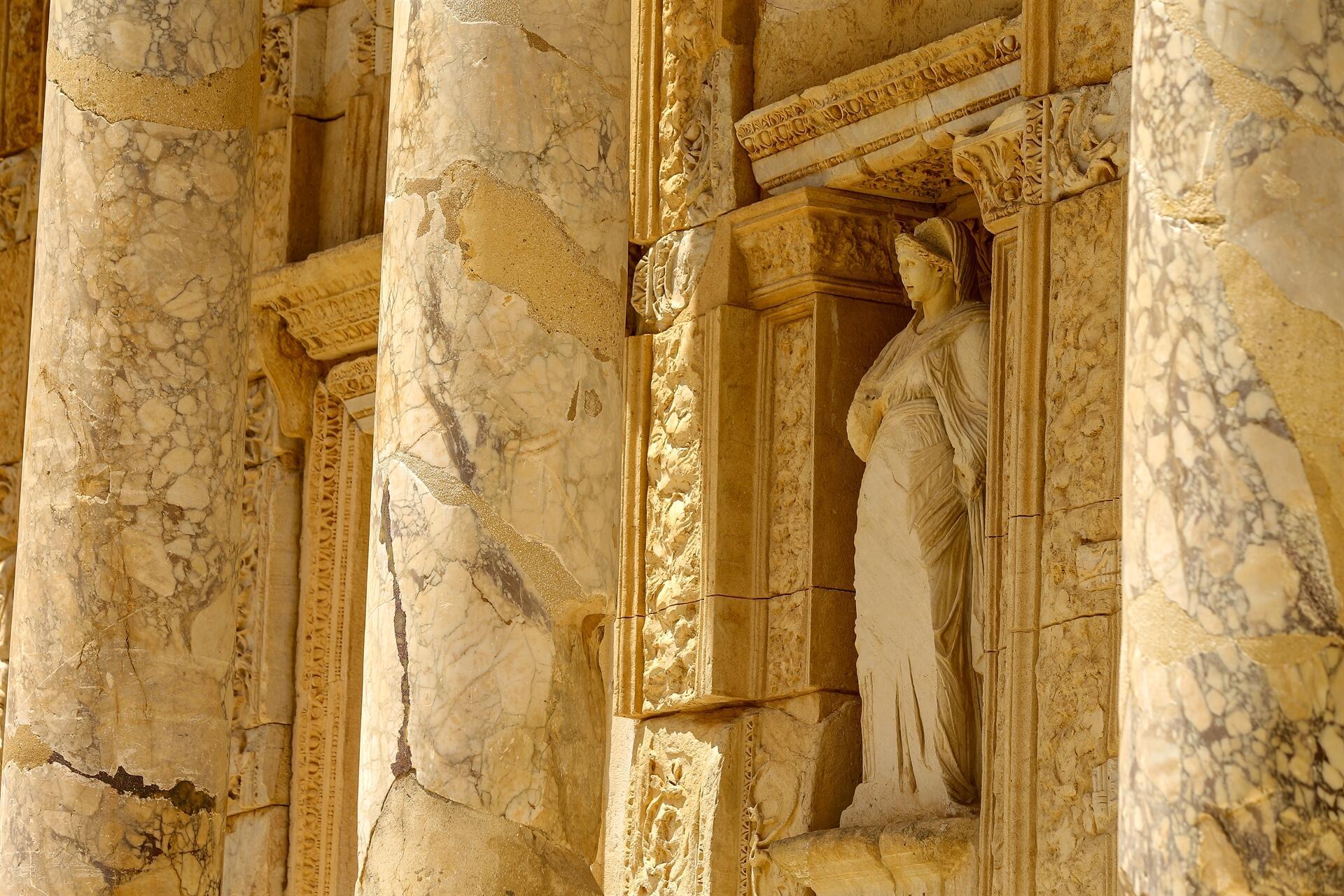
Dor-ut Tilavat (“place of praying” In Uzbek) from XIV-XV centuries, contains the Kok Gumbaz Mosque (1435) built by grandson of Temur Mirzo Ulugbek, the mausoleum constructed by Amir Temur in 1373-1374 for Sheikh Shamseddin Kulyal, a Sufic leader and spiritual advisor of Temur’s father , Taraghay.
What's not included
Lunch
Photo and video charges 5 usd (for photography cameras. It is free if travelers use phone cameras)
Gratuities
Available languages
Guide guide
EN
Reviews breakdown
Viator
5.0
4 reviews
5★
4
4★
0
3★
0
2★
0
1★
0
Important information
Infants and small children can ride in a pram or stroller
Public transportation options are available nearby
Infants are required to sit on an adult’s lap
Suitable for all physical fitness levels
Total duration of the tour is 7 hours which includes driving to Shakhrisabz and back, also lunch time.
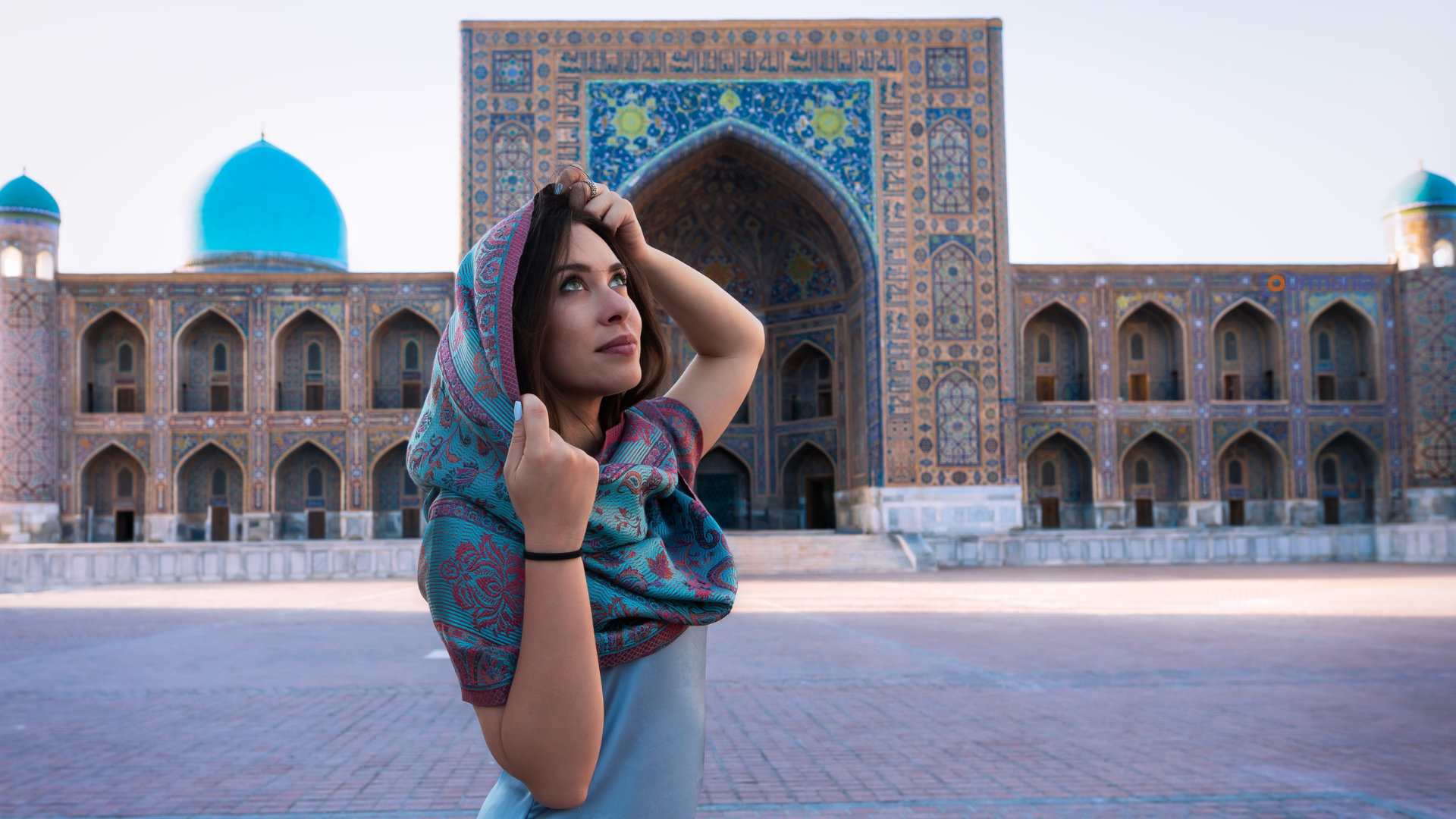
On this tour you visit architectural marvels which have a rich history and important religious sites. It’s recommended to follow a specific dress code when visiting these iconic landmarks. Both men and women should wear clothing that covers their shoulders and knees. Avoid wearing tight, revealing, or transparent clothing. Women should cover their hair with a headscarf or shawl when they enter to holy places.
Meeting point
In front of Amir Temur mausoleum
About Samarkand
Samarkand is one of the oldest continuously inhabited cities in Central Asia, known for its rich history and stunning Islamic architecture. It's a UNESCO World Heritage site with landmarks that reflect the city's status as a hub on the ancient Silk Road.
Top Attractions
Registan Square
Registan Square is the heart of Samarkand, featuring three stunning madrasahs (Islamic schools) with intricate tile work and towering minarets. It's one of the most iconic sights in Central Asia.
Historical/Architecture
1-2 hours
Moderate (entry fee applies)
Gur-e-Amir Mausoleum
This mausoleum is the burial place of Timur (Tamerlane), the founder of the Timurid Empire. It's known for its stunning blue tile work and intricate design.
Historical/Architecture
1 hour
Moderate (entry fee applies)
Shah-i-Zinda Necropolis
This ancient necropolis is a collection of stunning mausoleums and tombs, known for their intricate tile work and peaceful atmosphere. It's a must-visit for history and architecture lovers.
Historical/Architecture
1-2 hours
Moderate (entry fee applies)
Bibi-Khanym Mosque
This grand mosque was built by Timur in honor of his favorite wife, Bibi-Khanym. It's one of the largest mosques in the Islamic world and features stunning architecture and tile work.
Historical/Architecture
1 hour
Moderate (entry fee applies)
Siab Bazaar
This bustling bazaar is a great place to experience local life and sample traditional Uzbek food. It's a sensory overload with its colors, smells, and sounds.
Cultural
1-2 hours
Free to enter, budget for purchases
Must-Try Local Dishes
Plov
Plov is a rice dish cooked with meat (usually lamb or beef), carrots, and onions. It's a staple of Uzbek cuisine and is often served at celebrations.
Main dish
Contains meat, not suitable for vegetarians
Lagman
Lagman is a noodle soup with meat, vegetables, and a rich broth. It's a hearty and flavorful dish that's perfect for colder weather.
Main dish
Contains meat, not suitable for vegetarians
Samsa
Samsa are baked pastries filled with meat, onions, and spices. They're a popular street food and are often sold at bazaars.
Snack
Contains meat, not suitable for vegetarians
Non
Non is a traditional Uzbek bread, often baked in a tandoor oven. It's a staple of Uzbek cuisine and is served with most meals.
Bread
Vegetarian
Popular Activities
Hiking in the nearby mountains
Exploring historic sites
Horseback riding
Visiting tea houses
Enjoying a traditional hammam (bathhouse)
Strolling through historic neighborhoods
Attending local festivals
Visiting museums and historic sites
Best Time to Visit
April to June, September to October
These months offer the best weather for sightseeing, with mild temperatures and minimal rainfall. It's ideal for exploring the city's historic sites and enjoying outdoor activities.
15-30°C
59-86°F
Practical Information
Language
- Official: Uzbek
- Widely spoken: Russian
- English: Limited
Currency
Uzbekistani Som (UZS)
Time Zone
UTC+5
Electricity
220VV, 50HzHz
Safety Information
Overall Safety Rating: Generally safe
Samarkand is generally safe for travelers, but petty crime and scams can occur. Be cautious of pickpockets and scams, especially in crowded areas and tourist sites. Avoid walking alone at night in poorly lit areas.
Important Precautions:
- • Be cautious of pickpockets and scams
- • Avoid walking alone at night in poorly lit areas
- • Use official taxis or ride-hailing apps
Getting there
By air
- Samarkand International Airport • 10 km from city center
By train
Samarkand Railway Station
By bus
Samarkand Bus Station
Getting around
Public transport
The bus system is affordable and covers most parts of the city. Buses are often crowded but are a good way to get around.
Taxis
Available • Apps: Yandex.Taxi
Rentals
Car, Bike, Scooter
Neighborhoods
City Center
Afrosiab
Kuk-Saroy
Day trips
Shakhrisabz
90 km from Samarkand • Full day
Shakhrisabz is a historic city known for its stunning architecture and ties to Timur (Tamerlane). It's a UNESCO World Heritage site with several impressive ruins and monuments.
Penjikent
120 km from Samarkand • Full day
Penjikent is a charming town in Tajikistan, known for its historic ruins and natural beauty. It's a great day trip for those interested in history and the outdoors.
Ulugbek's Observatory
5 km from Samarkand • Half day
Ulugbek's Observatory is a historic site dedicated to the astronomical work of Ulugbek, the grandson of Timur. It's a fascinating place to learn about the history of astronomy and science in Central Asia.
Festivals
Silk and Spices Festival • May
Navruz (Nowruz) • March 21
Eid al-Fitr • Varies (depending on the lunar calendar)
Pro tips
- Learn a few basic phrases in Uzbek or Russian to enhance your experience and connect with locals
- Hire a local guide to learn about the history and significance of the city's many historic sites
- Visit the bazaars early in the morning for the best selection and atmosphere
- Try local specialties like plov, lagman, and samsa at traditional restaurants and street food stalls
- Consider staying in a guesthouse or homestay for a more local and authentic experience
From $25
per person
Price varies by option
Secure booking
Free cancellation available
Instant confirmation