Lubeck Interactive City Tour
Active
1h
For a full refund, cancel at least 24 hours before the scheduled departure time.
Instant confirmation
Mobile or paper ticket accepted
About this experience
Discover Lubeck your way with Ciceru’s self-guided walking tour—audio and text in 7 languages, right on your phone.
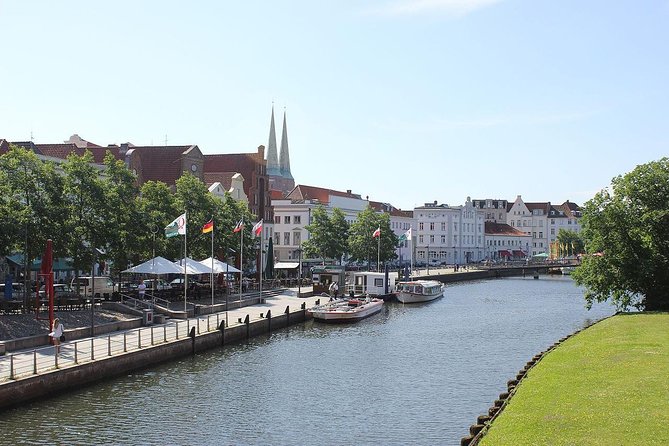
Begin at the Holstentor, the city’s iconic gate, and uncover its defensive past. Admire the Salzspeicher, the red-brick warehouses that stored the “white gold” that fueled Lübeck’s trade. Step into the heart of the city at the Rathaus, where Gothic and Renaissance architecture reflect Lübeck’s power in the Hanseatic League. Walk past St. Mary’s Church, a towering Gothic masterpiece, and spot the famous devil statue. Visit the Buddenbrook House, the setting of Thomas Mann’s novel, and explore Lübeck’s merchant elite. See the ornate façade of the Hospital of the Holy Spirit, one of Europe’s oldest charitable institutions, before reaching the Burgtor, the city’s northernmost gate.
With 7 stops and engaging riddles, this self-guided tour lets you explore at your own pace. Experience Lübeck one riddle at a time!
Available options
Lubeck Interactive City Tour
What's included
Self-guided tour on your smartphone, APP not needed!
Available in: English, Deutsch, Italiano, Français, Español, Português, 中文
Audioguide with quizzes about each point of interest along the tour
Detailed itinerary
1
Stop 1
Standing before Lübeck’s most iconic landmark, you’ll explore the history of this medieval gate, its leaning towers, and its role in defending the city’s Hanseatic might.
2
From across the Trave River, you’ll admire these historic red-brick buildings and uncover the story of salt—the “white gold” that fueled Lübeck’s prosperity.
3
In the heart of the city, you’ll marvel at the striking mix of Gothic and Renaissance architecture and discover how Lübeck’s rulers shaped one of Europe’s most powerful trading empires.
4
As you stand beside this towering Gothic masterpiece, you’ll learn about its war-torn past, the legend of the devil, and its significance to Lübeck’s skyline.
5
From the outside of this elegant townhouse, you’ll explore its connection to Thomas Mann’s famous novel and the history of Lübeck’s merchant families.
6
Gazing at its ornate façade, you’ll uncover the story of one of Europe’s oldest charitable institutions and its enduring role in Lübeck’s social history.
7
At Lübeck’s northernmost city gate, you’ll step back into a time of fortifications, trade, and war, discovering how this medieval stronghold guarded the city’s past.
What's not included
A physical guide (the tour is accessible on your smartphone)
Tickets or entrance fees for any attractions along the tour
Access offline. Internet needed on your phone
Available languages
Audio guide
DE
ZH-TW
PT
EN
IT
FR
ES
Written guide
DE
ZH-TW
PT
EN
IT
FR
ES
Reviews breakdown
Viator
3.5
2 reviews
5★
1
4★
0
3★
0
2★
1
1★
0
Tripadvisor
5.0
1 reviews
5★
1
4★
0
3★
0
2★
0
1★
0
Important information
Service animals allowed
Public transportation options are available nearby
Not recommended for travelers with spinal injuries
Not recommended for pregnant travelers
Not recommended for travelers with poor cardiovascular health
Suitable for all physical fitness levels
Meeting point
Begin your tour at the Holstentor. For the best experience, we recommend starting from Holstentorplatz, facing the Holstentor from the west. You can open the app anywhere in the area to start the game.
Important notes
No app needed—start your Ciceru experience right from your smartphone!
Your ticket is valid for 6 months, or 48 hours once activated at ciceru.com/start.
When you're ready, just head to that link with your phone and activate the Ciceru ticket you’ll receive in your next email.
Didn’t get your ticket within the hour?
Check your spam folder or contact us at info@ciceru.com and we’ll help you out!
About Kiel
Kiel is a vibrant maritime city in northern Germany, known for its beautiful fjord, historic sailing traditions, and lively festivals. It's a gateway to the Baltic Sea and offers a mix of urban charm and natural beauty.
Top Attractions
Kiel Fjord
The Kiel Fjord is a stunning natural harbor that offers beautiful views, water sports, and scenic walks. It's a central feature of the city and a must-visit.
Nature
2-3 hours
Free (boat tours cost extra)
Kiel Canal
The Kiel Canal is one of the busiest artificial waterways in the world. It connects the North Sea and the Baltic Sea and is a marvel of engineering.
Engineering
1-2 hours
Free (boat tours cost extra)
Kiel Week
Kiel Week is the world's largest sailing event, held annually in late June. It features sailing competitions, concerts, and a vibrant festival atmosphere.
Festival
10 days
Free (some events require tickets)
Kiel Maritime Museum
The Kiel Maritime Museum offers a fascinating look into the city's rich maritime history. It features exhibits on sailing, shipbuilding, and naval history.
Museum
1-2 hours
€8 (adults), €4 (children)
Kiel Castle
Kiel Castle, also known as Kieler Schloss, is a historic castle that now houses the State Museum of Schleswig-Holstein. It offers a glimpse into the region's history and culture.
Historical
1-2 hours
€5 (adults), €2.50 (children)
Botanical Garden Kiel
The Botanical Garden Kiel is a beautiful green space featuring a variety of plant species, greenhouses, and themed gardens. It's a perfect spot for nature lovers.
Nature
1-2 hours
Free (donations welcome)
Must-Try Local Dishes
Labskaus
A traditional Northern German dish made with corned beef, potatoes, beets, and onions, often served with a fried egg and rollmops (pickled herring).
Main Course
Contains meat and fish, not suitable for vegetarians or vegans.
Bratwurst
A classic German sausage made from pork, beef, or veal, grilled and served with mustard and bread.
Main Course
Contains meat, not suitable for vegetarians or vegans.
Finkenwerder Scholle
A traditional Baltic Sea dish made with fresh plaice (a type of flatfish), typically served with shrimp, vegetables, and a creamy sauce.
Main Course
Contains fish, not suitable for vegetarians or vegans.
Kieler Sprotten
Small, smoked sprats (a type of fish) that are a local delicacy in Kiel. They are often served with bread and butter.
Appetizer
Contains fish, not suitable for vegetarians or vegans.
Popular Activities
Sailing
Kayaking
Hiking
Cycling
Beach activities
Spa treatments
Scenic walks
Boat tours
Best Time to Visit
May to September
The best time to visit Kiel is during the summer months when the weather is warm and pleasant, and the city hosts its famous Kiel Week festival. This is the peak tourist season with the highest number of visitors.
15°C to 25°C
59°F to 77°F
Practical Information
Language
- Official: German
- Widely spoken: English, Danish
- English: Widely spoken, especially among younger people and in tourist areas
Currency
Euro (EUR)
Time Zone
GMT+1 (Central European Time, CET), GMT+2 (Central European Summer Time, CEST) during daylight saving time
Electricity
230VV, 50HzHz
Safety Information
Overall Safety Rating: Generally safe
Kiel is generally a safe city with low crime rates. However, as with any destination, it's important to take basic precautions to ensure a safe and enjoyable trip.
Important Precautions:
- • Keep valuables secure and out of sight
- • Be cautious when using ATMs, especially at night
- • Use licensed taxis or ride-sharing services
Getting there
By air
- Kiel Airport • 10 km from city center
- Hamburg Airport • 90 km from Kiel
By train
Kiel Hauptbahnhof
By bus
Kiel ZOB (Central Bus Station)
Getting around
Public transport
The KVAG bus network covers the entire city and is the primary mode of public transport. Buses are frequent and reliable.
Taxis
Available • Apps: MyTaxi, FreeNow
Rentals
Car, Bike, Scooter
Neighborhoods
Kiel City Center
Düsternbrook
Gaarden
Wik
Mettenhof
Day trips
Lübeck
70 km from Kiel • 1.5 hours by car or train
Lübeck is a beautiful medieval city known for its well-preserved old town, historic architecture, and maritime history. It's a UNESCO World Heritage site and offers a rich cultural experience.
Flensburg
100 km from Kiel • 1.5 hours by car or train
Flensburg is a charming city near the Danish border, known for its historic sites, beautiful fjord, and maritime heritage. It's a great place for a relaxing day trip.
Schleswig
30 km from Kiel • 30 minutes by car or train
Schleswig is a historic city with a rich Viking heritage, beautiful architecture, and a charming old town. It's a great place to explore German history and culture.
Festivals
Kiel Week • Late June
Kieler Umzug • November
Kieler Weihnachtsmarkt • December
Pro tips
- Visit during Kiel Week for a unique and vibrant experience, but book accommodations well in advance
- Explore the Kiel Fjord by boat or rent a bike to enjoy the scenic views and waterfront promenade
- Try local specialties like Labskaus, Bratwurst, and Kieler Sprotten for an authentic taste of Kiel
- Use public transport or rent a bike to get around the city, as parking can be challenging and expensive
- Take a day trip to nearby destinations like Lübeck, Flensburg, or Plön for a mix of history, nature, and relaxation
From $25
per person
Price varies by option
Secure booking
Free cancellation available
Instant confirmation