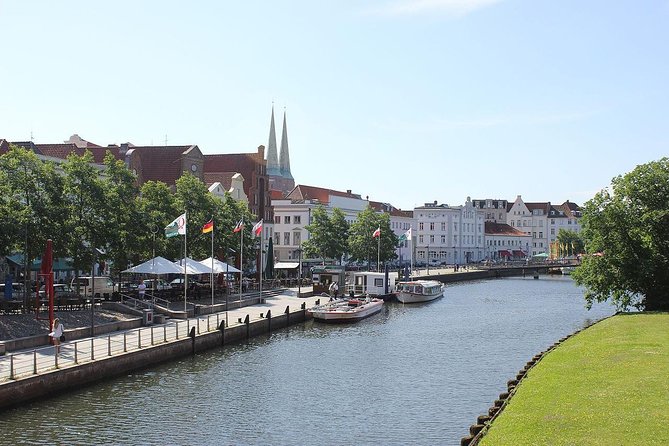


Lübeck walking tour with licensed guide
Active
1h - 2h
All sales are final. No refund is available for cancellations.
Instant confirmation
Mobile or paper ticket accepted
About this experience
Visit the city of Lubeck which has one of the major ports of Germany and is the medieval capital of the Hanseatic League.
Available options
Lübeck walking tour with licensed guide
What's included
licensed guide
Detailed itinerary
1
Stop 1
Visit the Holsten Gate, a city gate marking off the western boundary of the old center of the Hanseatic city of Lübeck. Built in 1464, the Brick Gothic construction is one of the relics of Lübeck's medieval city fortifications and one of two remaining city gates, the other being the Citadel Gate (Burgtor). Known for its two-round towers and arched entrance, it is regarded today as a symbol of the city. Together with the old city centre (Altstadt) of Lübeck it has been a UNESCO World Heritage Site since 1987
2
We will then move on to the Lübeck Cathedral, a large brick-built Lutheran cathedral in Lübeck. It is a part of the Lübeck World Heritage Site. It was started in 1173 by Henry the Lion as a cathedral for the Bishop of Lübeck. It was partly destroyed in a bombing raid in World War II (1942), when the Arp Schnitger organ was destroyed by fire, but was subsequently reconstructed.
It is also famous for works of Bernt Notke and Thomas Quellinus, which survived the bombing raid in 1942. The famous altar by Hans Memling is now in Lübeck's St. Annen Museum. The current church was finished in 1982.
In 1873 the Cathedral celebrated its 700th anniversary, when an offshoot of the Lutheran Memorial Beech Tree, in Steinbach near Bad Liebenstein in Thuringia, was planted in the churchyard.
3
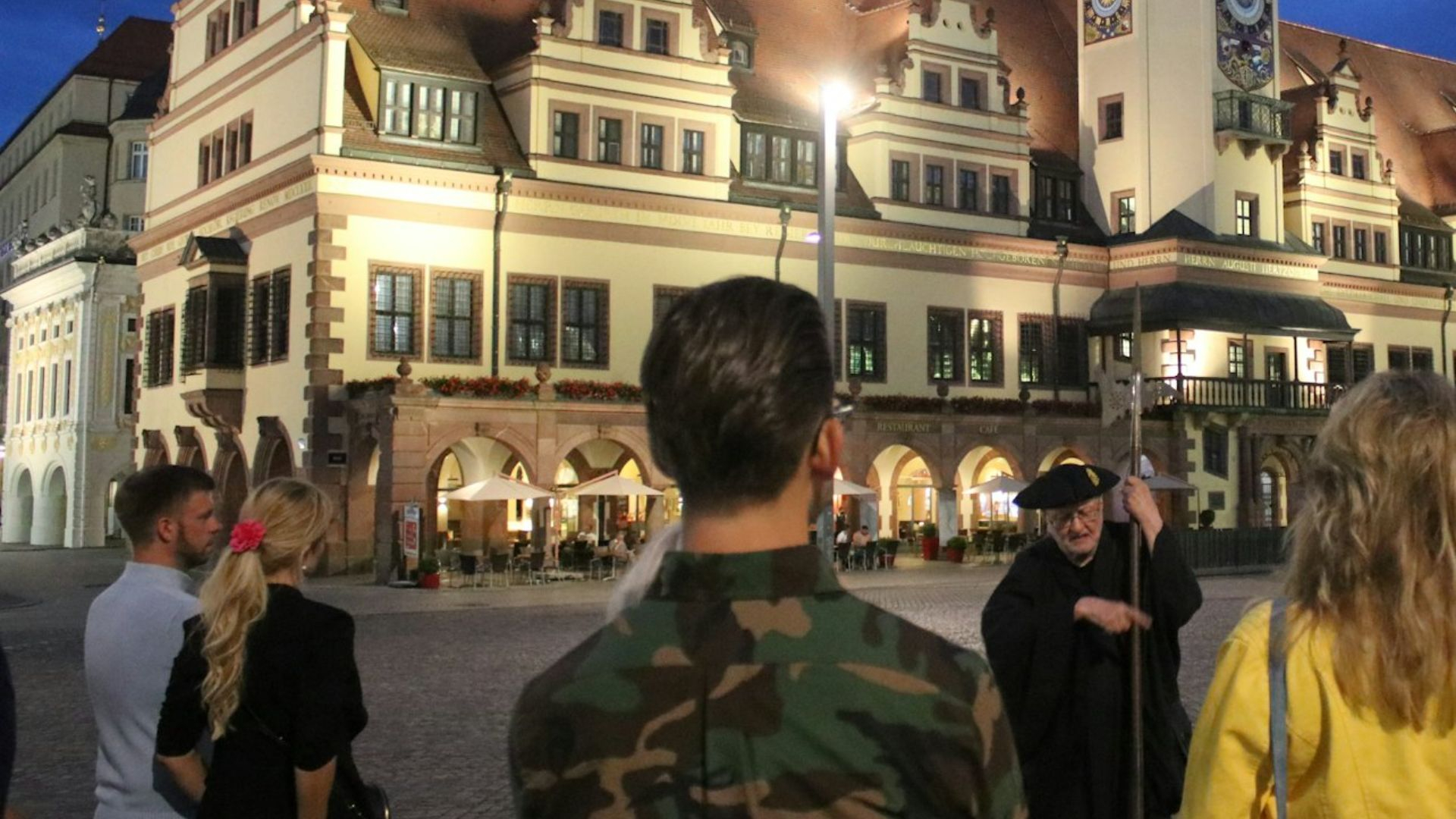
Built around 1240, the Town Hall of the Hanseatic City of Lübeck is one of the most famous buildings of the brick Gothic, one of the most beautiful town halls in Germany . It is one of the largest medieval town halls in Germany.
4
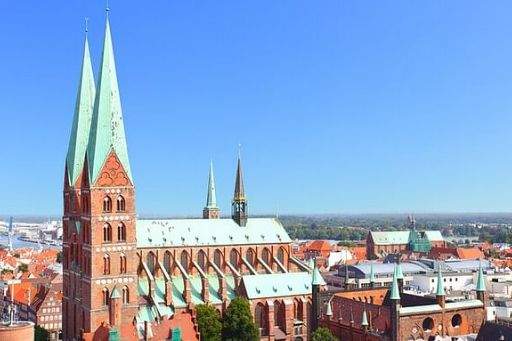
You will see the St. Mary's Church in Lübeck which was built between 1250 and 1350. It has always been a symbol of the power and prosperity of the old Hanseatic city and is situated at the highest point of the island that forms the old town of Lübeck. It is part of the UNESCO World Heritage Site of the old Hanseatic City of Lübeck
5
We will then visit St. Anne's Museum, previously an Augustinian nunnery, St. Anne's Priory. Since 1915 it has housed St. Anne's Museum, one of Lübeck's museums of art and cultural history containing Germany's largest collection of medieval sculpture and altar-pieces, including the famous altars by Hans Memling (formerly at Lübeck Cathedral), Bernt Notke, Hermen Rode, Jacob van Utrecht and Benedikt Dreyer.
6
We then head towards the Buddenbrookhaus, an elegant townhouse in Lubeck, built during 1758, it was the home of writers Thomas and Heinrich Mann. Located near St. Mary’s Church, the house was almost totally destroyed during World War II bombing
7
Moving on, we will go to St. Peter's Church Dating back to the 12th Century, this church offers great views of Lübeck from the top, it was damaged by World War II bombing and restoration work on this 12th century church is still being carried out for its interiors. This stately church is used as a venue for cultural and art events.
Available languages
Guide guide
DE
EN
Reviews breakdown
Viator
5.0
1 reviews
5★
1
4★
0
3★
0
2★
0
1★
0
Important information
Service animals allowed
Public transportation options are available nearby
Suitable for all physical fitness levels
Meeting point
Meeting Point at hotel possible (if centrally located).
About Kiel
Kiel is a vibrant maritime city in northern Germany, known for its beautiful fjord, historic sailing traditions, and lively festivals. It's a gateway to the Baltic Sea and offers a mix of urban charm and natural beauty.
Top Attractions
Kiel Fjord
The Kiel Fjord is a stunning natural harbor that offers beautiful views, water sports, and scenic walks. It's a central feature of the city and a must-visit.
Nature
2-3 hours
Free (boat tours cost extra)
Kiel Canal
The Kiel Canal is one of the busiest artificial waterways in the world. It connects the North Sea and the Baltic Sea and is a marvel of engineering.
Engineering
1-2 hours
Free (boat tours cost extra)
Kiel Week
Kiel Week is the world's largest sailing event, held annually in late June. It features sailing competitions, concerts, and a vibrant festival atmosphere.
Festival
10 days
Free (some events require tickets)
Kiel Maritime Museum
The Kiel Maritime Museum offers a fascinating look into the city's rich maritime history. It features exhibits on sailing, shipbuilding, and naval history.
Museum
1-2 hours
€8 (adults), €4 (children)
Kiel Castle
Kiel Castle, also known as Kieler Schloss, is a historic castle that now houses the State Museum of Schleswig-Holstein. It offers a glimpse into the region's history and culture.
Historical
1-2 hours
€5 (adults), €2.50 (children)
Botanical Garden Kiel
The Botanical Garden Kiel is a beautiful green space featuring a variety of plant species, greenhouses, and themed gardens. It's a perfect spot for nature lovers.
Nature
1-2 hours
Free (donations welcome)
Must-Try Local Dishes
Labskaus
A traditional Northern German dish made with corned beef, potatoes, beets, and onions, often served with a fried egg and rollmops (pickled herring).
Main Course
Contains meat and fish, not suitable for vegetarians or vegans.
Bratwurst
A classic German sausage made from pork, beef, or veal, grilled and served with mustard and bread.
Main Course
Contains meat, not suitable for vegetarians or vegans.
Finkenwerder Scholle
A traditional Baltic Sea dish made with fresh plaice (a type of flatfish), typically served with shrimp, vegetables, and a creamy sauce.
Main Course
Contains fish, not suitable for vegetarians or vegans.
Kieler Sprotten
Small, smoked sprats (a type of fish) that are a local delicacy in Kiel. They are often served with bread and butter.
Appetizer
Contains fish, not suitable for vegetarians or vegans.
Popular Activities
Sailing
Kayaking
Hiking
Cycling
Beach activities
Spa treatments
Scenic walks
Boat tours
Best Time to Visit
May to September
The best time to visit Kiel is during the summer months when the weather is warm and pleasant, and the city hosts its famous Kiel Week festival. This is the peak tourist season with the highest number of visitors.
15°C to 25°C
59°F to 77°F
Practical Information
Language
- Official: German
- Widely spoken: English, Danish
- English: Widely spoken, especially among younger people and in tourist areas
Currency
Euro (EUR)
Time Zone
GMT+1 (Central European Time, CET), GMT+2 (Central European Summer Time, CEST) during daylight saving time
Electricity
230VV, 50HzHz
Safety Information
Overall Safety Rating: Generally safe
Kiel is generally a safe city with low crime rates. However, as with any destination, it's important to take basic precautions to ensure a safe and enjoyable trip.
Important Precautions:
- • Keep valuables secure and out of sight
- • Be cautious when using ATMs, especially at night
- • Use licensed taxis or ride-sharing services
Getting there
By air
- Kiel Airport • 10 km from city center
- Hamburg Airport • 90 km from Kiel
By train
Kiel Hauptbahnhof
By bus
Kiel ZOB (Central Bus Station)
Getting around
Public transport
The KVAG bus network covers the entire city and is the primary mode of public transport. Buses are frequent and reliable.
Taxis
Available • Apps: MyTaxi, FreeNow
Rentals
Car, Bike, Scooter
Neighborhoods
Kiel City Center
Düsternbrook
Gaarden
Wik
Mettenhof
Day trips
Lübeck
70 km from Kiel • 1.5 hours by car or train
Lübeck is a beautiful medieval city known for its well-preserved old town, historic architecture, and maritime history. It's a UNESCO World Heritage site and offers a rich cultural experience.
Flensburg
100 km from Kiel • 1.5 hours by car or train
Flensburg is a charming city near the Danish border, known for its historic sites, beautiful fjord, and maritime heritage. It's a great place for a relaxing day trip.
Schleswig
30 km from Kiel • 30 minutes by car or train
Schleswig is a historic city with a rich Viking heritage, beautiful architecture, and a charming old town. It's a great place to explore German history and culture.
Festivals
Kiel Week • Late June
Kieler Umzug • November
Kieler Weihnachtsmarkt • December
Pro tips
- Visit during Kiel Week for a unique and vibrant experience, but book accommodations well in advance
- Explore the Kiel Fjord by boat or rent a bike to enjoy the scenic views and waterfront promenade
- Try local specialties like Labskaus, Bratwurst, and Kieler Sprotten for an authentic taste of Kiel
- Use public transport or rent a bike to get around the city, as parking can be challenging and expensive
- Take a day trip to nearby destinations like Lübeck, Flensburg, or Plön for a mix of history, nature, and relaxation
From $25
per person
Price varies by option
Secure booking
Free cancellation available
Instant confirmation