ISTANBUL SIGNATURE : Private Full-Day Guided City Tour
Active
4h - 6h
For a full refund, cancel at least 24 hours before the scheduled departure time.
Instant confirmation
Mobile or paper ticket accepted
About this experience
Istanbul Signature: Private Full-Day Guided City Tour Offers
Complete, hassle-free experience – Enjoy a seamless full-day exploration of Istanbul’s most legendary and historic highlights
Door-to-door transfers included – Travel comfortably with round-trip transportation, eliminating planning and logistics, if the option is selected
Expertly paced full-day itinerary – Discover the city’s top attractions efficiently without feeling rushed
UNESCO World Heritage landmarks – Visit iconic sites including Hagia Sophia, the Blue Mosque, Topkapi Palace, and the Basilica Cistern in one day
Grand Bazaar visit – Explore and shop at one of the world’s largest and oldest markets, featuring thousands of stalls offering carpets, jewelry, leather goods, bags, and ceramics
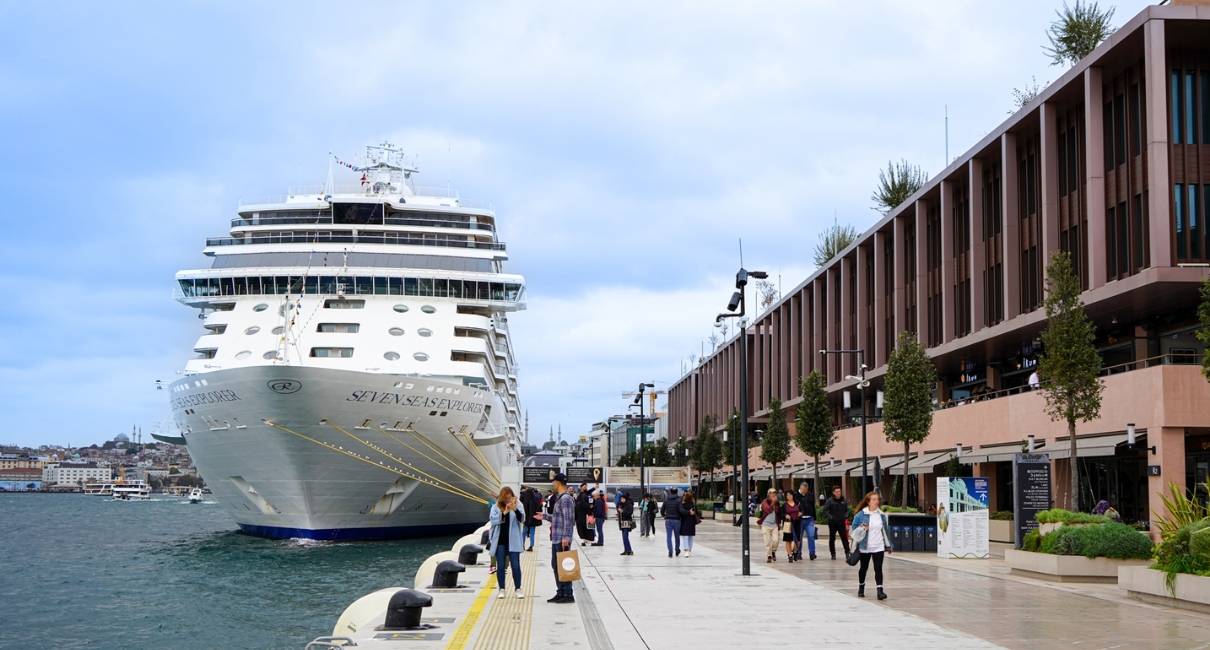
Ideal for key travelers – Perfect for first-time visitors, short-stay travelers, and cruise passengers seeking maximum sightseeing with minimal stress
Available options
Private Guided Walking Tour
Pickup included
Private tour with Transfer
Transportation: Pick up and Drop off included<br/>Mercedes : AC vehicle pick up and drop off included <br/>Pickup included
What's included
Private tour
Professional Tourist Guide
Detailed itinerary
1
Stop 1
The Hippodrome of Constantinople, now known as Sultanahmet Square in Istanbul, was an ancient chariot racing stadium and a major social center of the Byzantine Empire. Built by Roman Emperor Septimius Severus in the early 3rd century and later expanded by Emperor Constantine I, it could hold tens of thousands of spectators.
Though much of the original structure is no longer visible, several historical monuments remain:
- **The Obelisk of Theodosius**: A 3,500-year-old Egyptian obelisk brought to Constantinople by Emperor Theodosius I.
- **The Serpent Column**: Originally from Delphi, Greece, this bronze column commemorates a Greek victory over the Persians.
- **The Walled Obelisk**: A less ornate stone obelisk built during the reign of Constantine VII.
The Hippodrome was not only a place for races but also for political events and gatherings, making it a key hub in Byzantine social and political life.
2
Stop 2
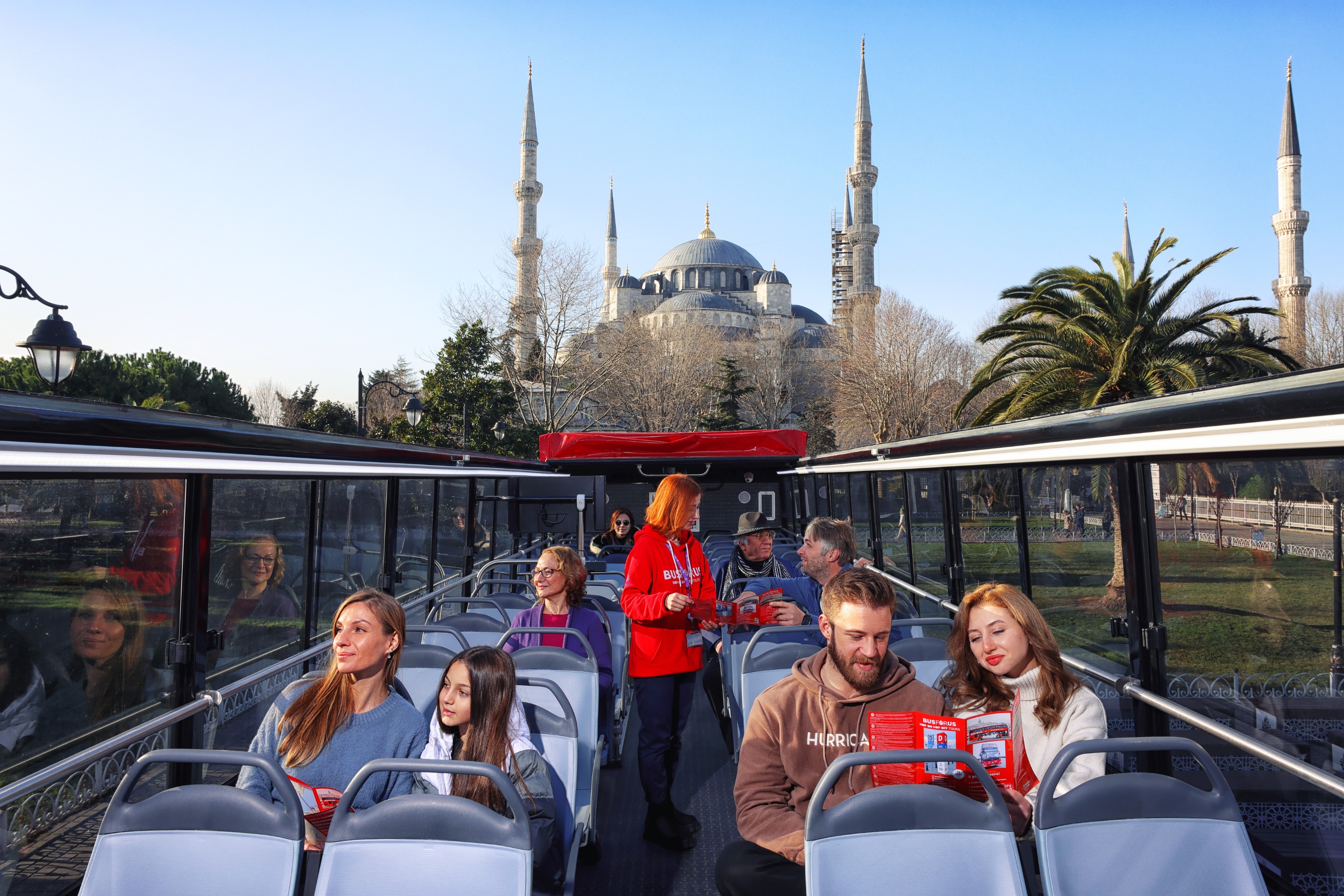
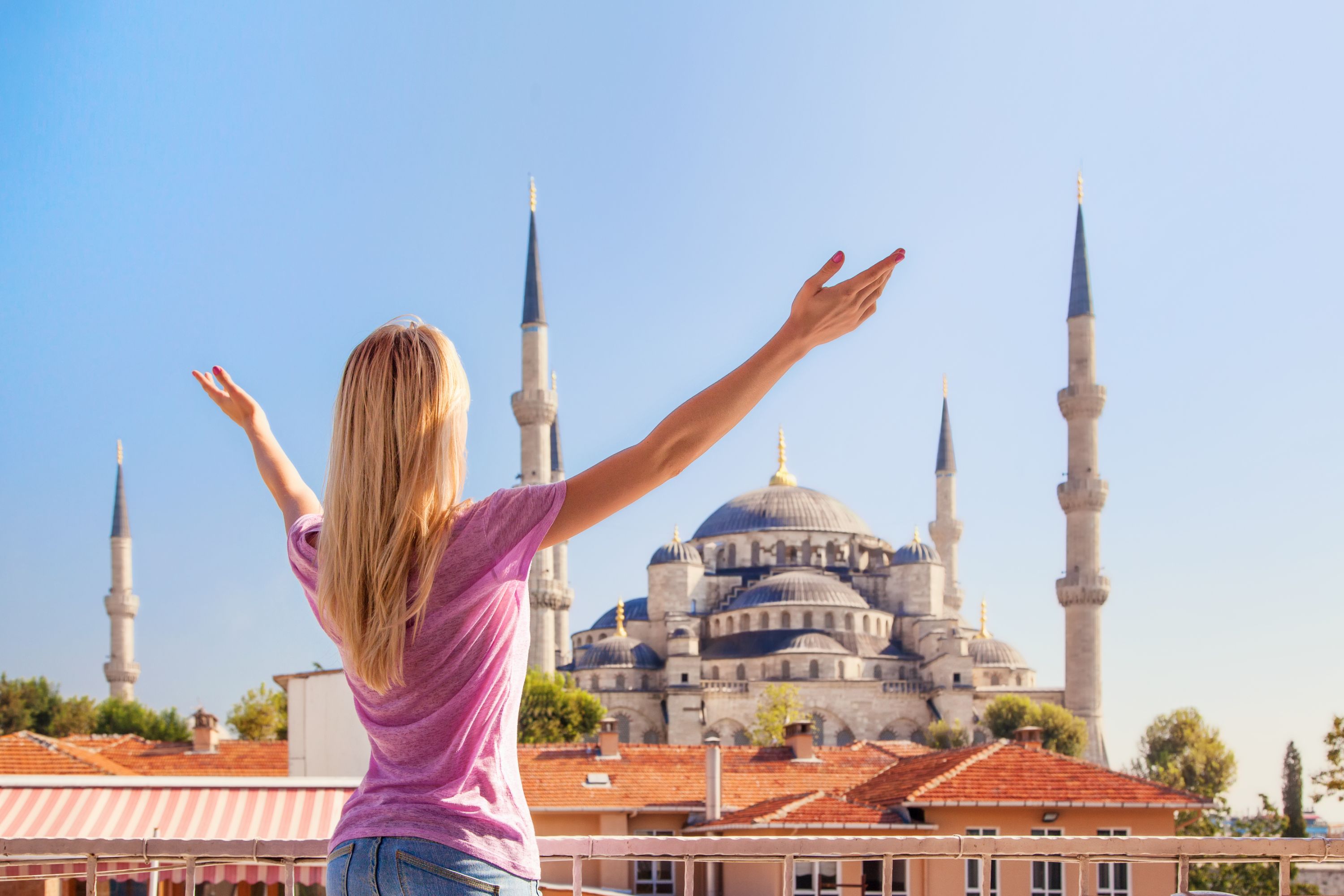
The Blue Mosque, also known as the Sultan Ahmed Mosque, is one of Istanbul's most famous landmarks and a prime example of classical Ottoman architecture. It was built between 1609 and 1616 during the reign of Sultan Ahmed I, The mosque is located near Hagia Sophia, creating a stunning architectural contrast between the two iconic structures.
The mosque gets its nickname "Blue Mosque" from the more than 20,000 handmade İznik ceramic tiles that adorn its interior walls, many of which feature blue hues. These tiles, along with the mosque's interior lighting from over 200 stained glass windows, create a serene and luminous atmosphere.
It is also a major tourist attraction, drawing visitors from around the world who come to admire its stunning architecture, intricate tile work, and historical significance. The mosque's proximity to other historic sites like Hagia Sophia and the Topkapi Palace makes it a central part of Istanbul's cultural and historical landscape.
3
Stop 3
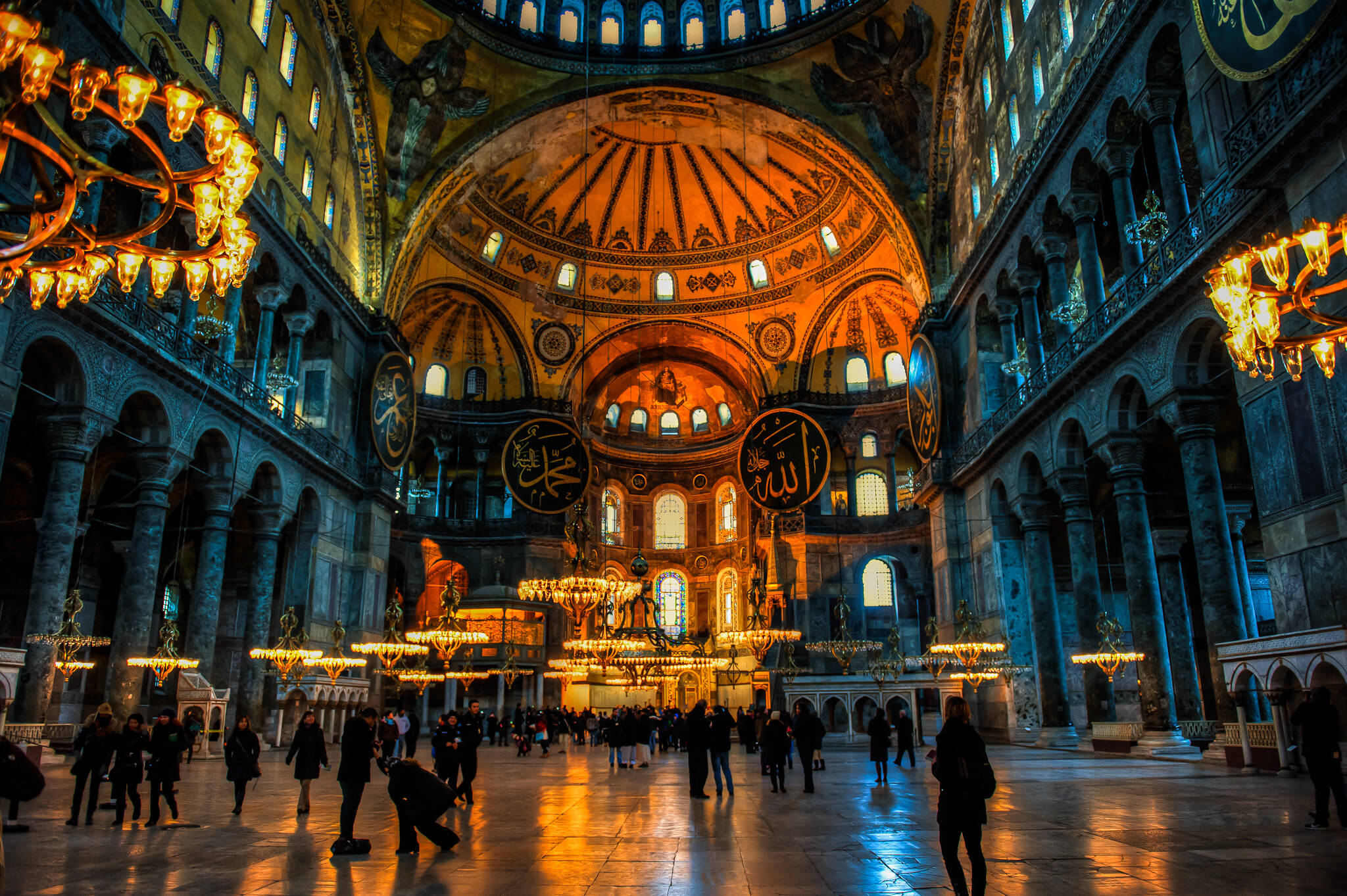
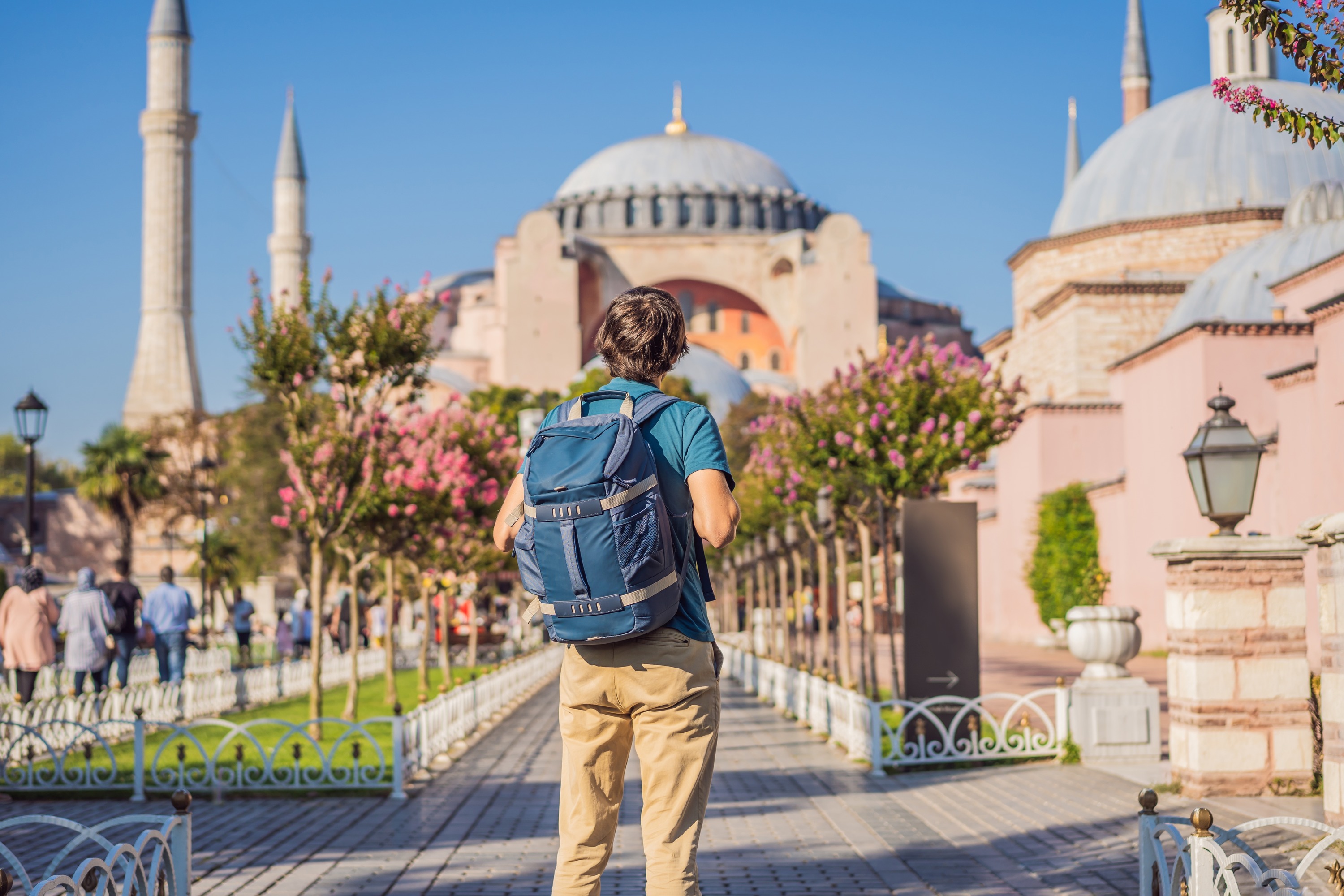
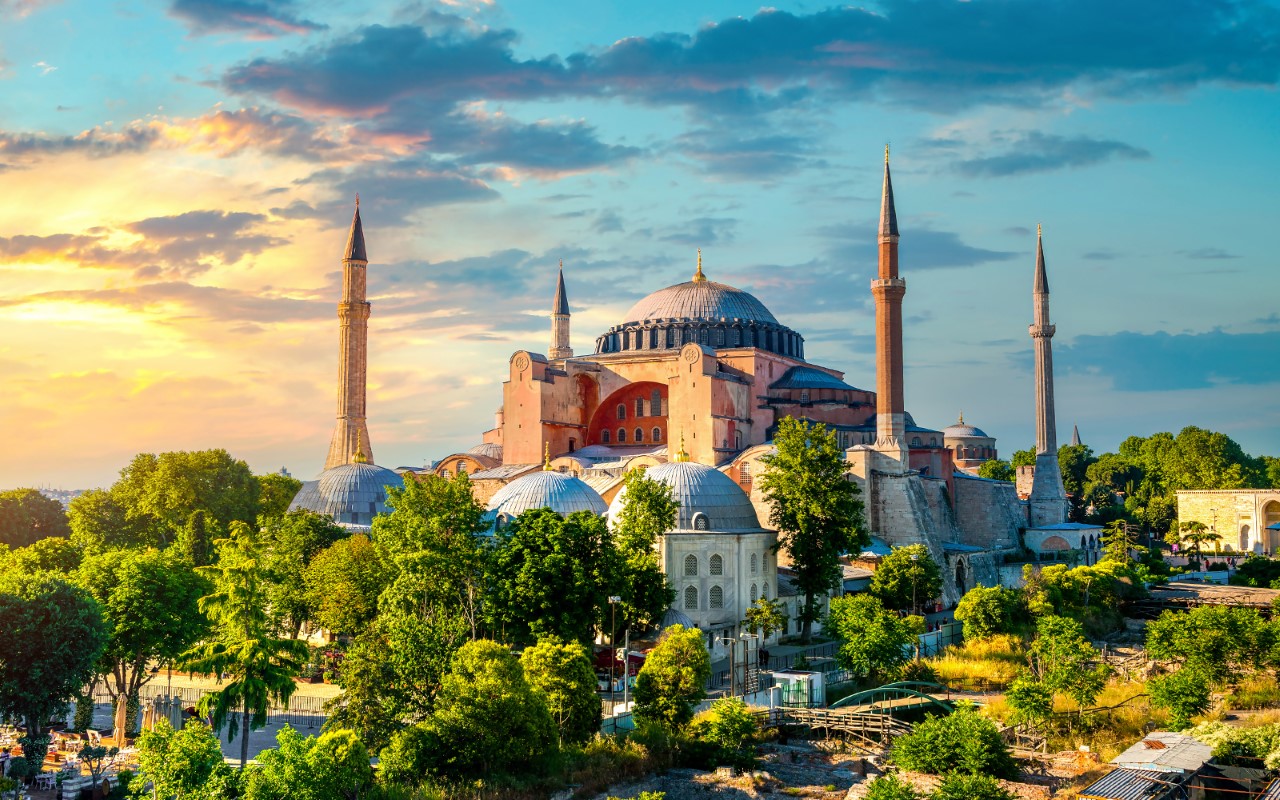
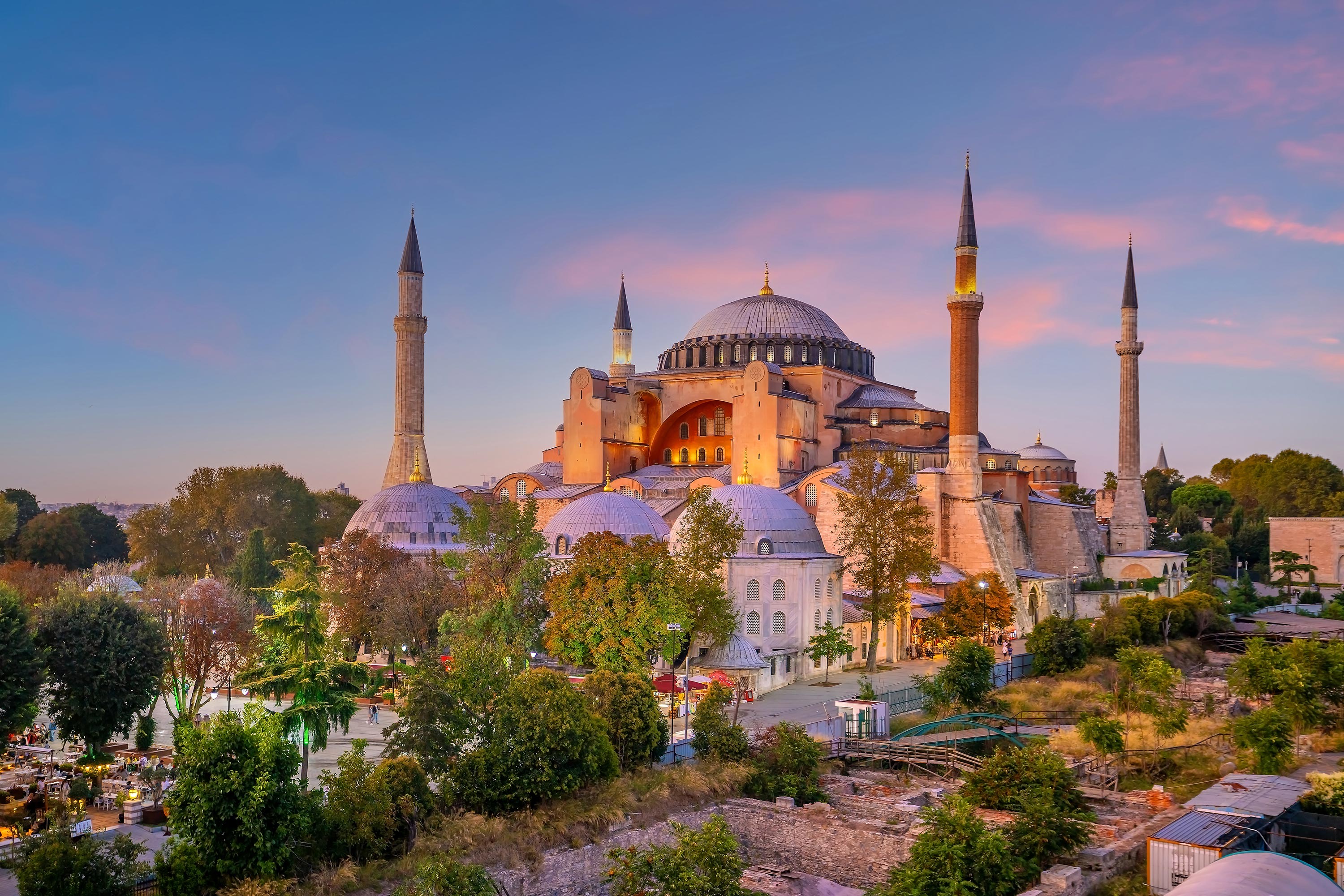
Hagia Sophia is one of the most iconic architectural achievements in history. Constructed between 532 and 537 AD under the Byzantine Emperor Justinian I, it was the world's largest building and an engineering marvel of its time.
The structure has a rich and layered history. It was an Eastern Orthodox cathedral for almost 1,000 years, converted into a mosque after the Ottoman conquest of Constantinople in 1453, and then turned into a museum in 1935. In 2020, Hagia Sophia was reconverted into a mosque, although it still retains its status as a cultural and historical monument, welcoming people from all over the world.
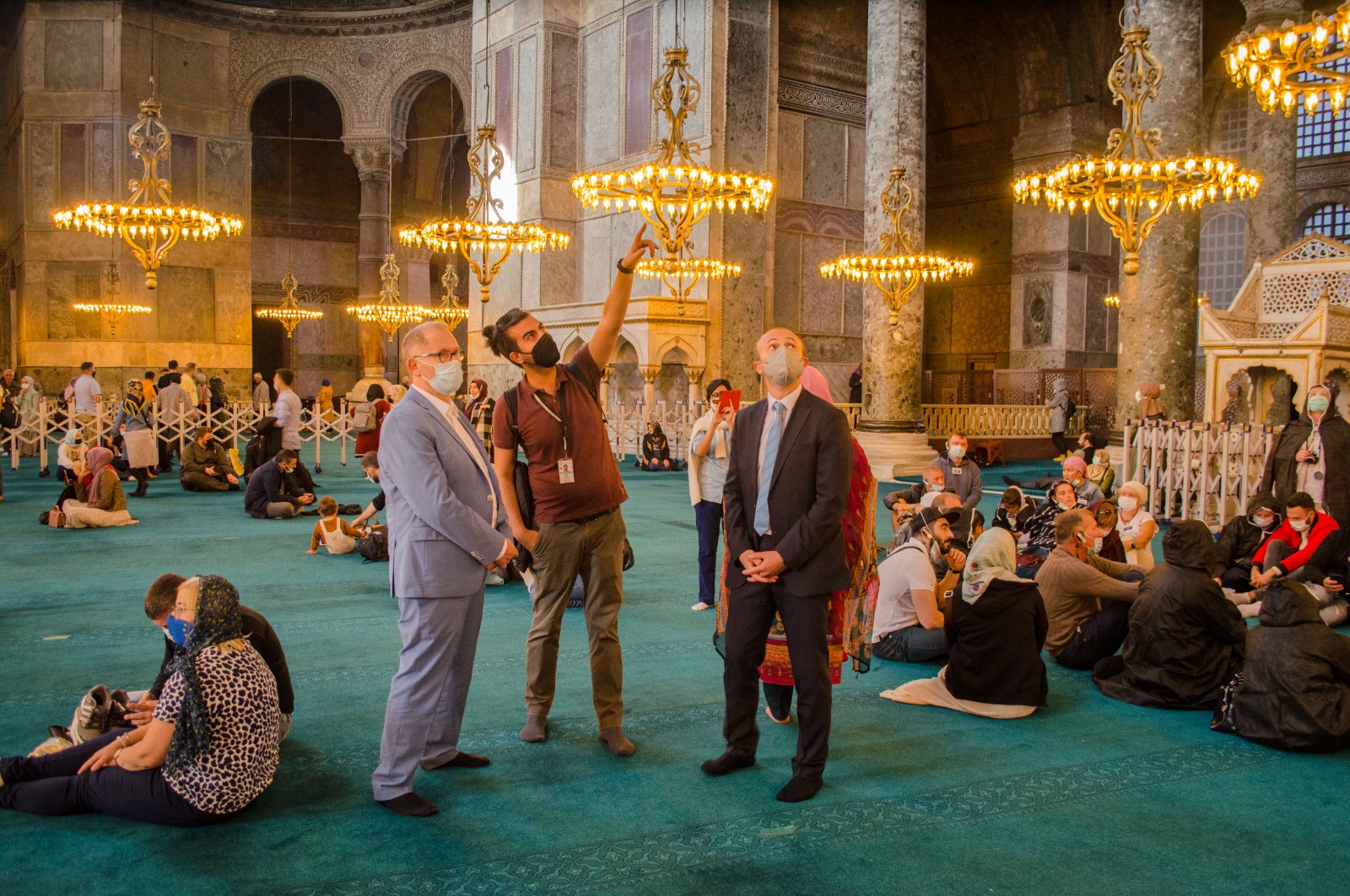
Hagia Sophia's architecture combines elements of both Christian and Islamic art and design. Inside, it features intricate mosaics, marble pillars, and large calligraphic panels added during the Ottoman era. Despite the changes in its religious function over centuries, it remains a symbol of harmony between cultures and religions.
4
Stop 4
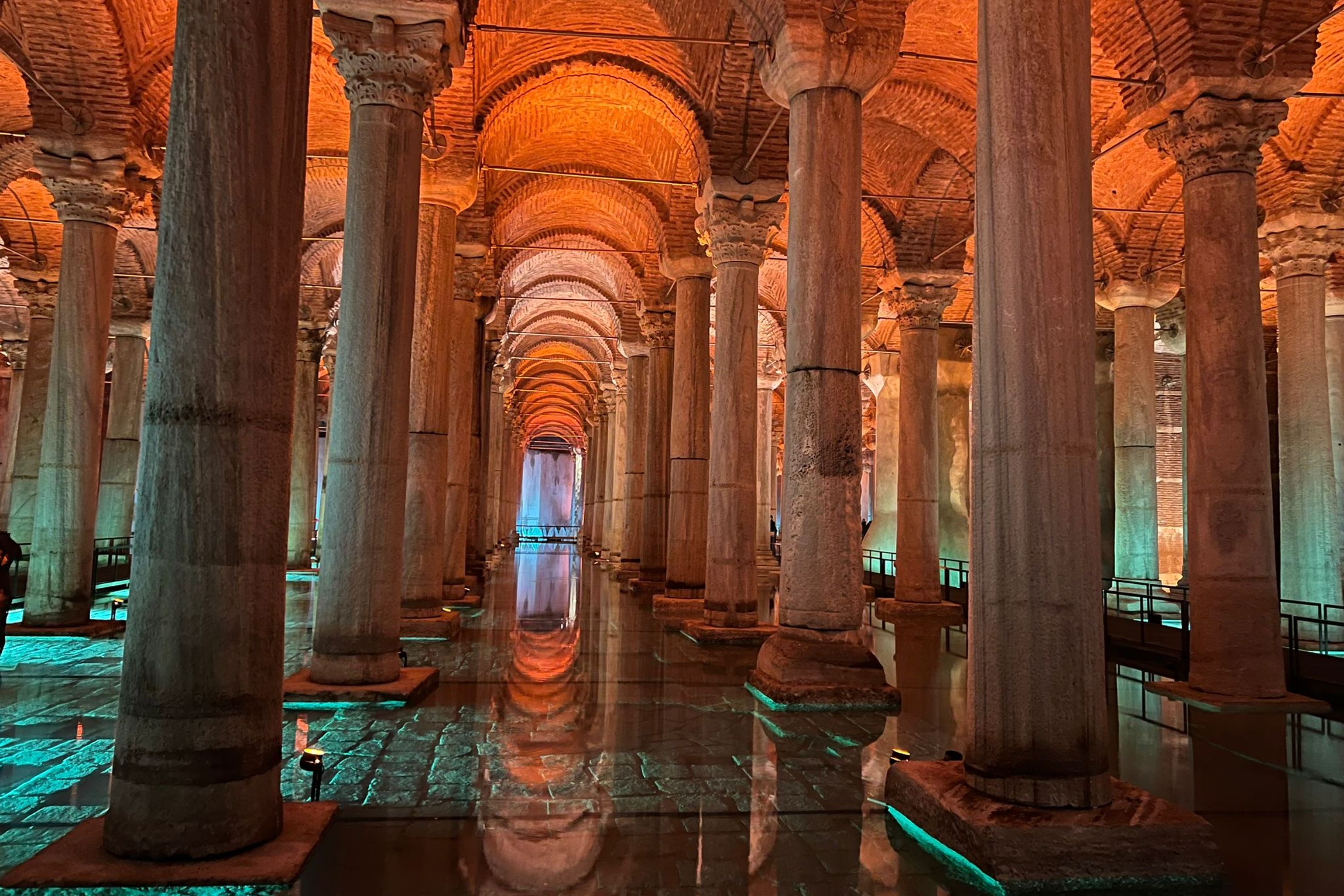
The Basilica Cistern, located in Istanbul, is an ancient underground water storage facility built during the reign of Byzantine Emperor Justinian I in the 6th century. It is famous for its grand, cathedral-like architecture with 336 marble columns, arranged in 12 rows, that support the ceiling. The dimly lit, atmospheric space has vaulted ceilings and is partially filled with water, reflecting the columns beautifully. Two of the columns feature Medusa heads as their bases, adding a mysterious element to the cistern's allure.
5
The Grand Bazaar (Kapalıçarşı in Turkish) is one of the largest and oldest covered markets in the world, located in Istanbul, Turkey. Established in the 15th century, shortly after the Ottoman conquest of Constantinople, it spans over 30,000 square meters and contains more than 4,000 shops.
The bazaar is renowned for its vibrant atmosphere, with a labyrinth of streets and alleys lined with stalls selling everything from carpets and textiles to jewelry, ceramics, and spices. Its architectural design reflects Ottoman aesthetics, featuring domed roofs, arched passages, and intricate tile work.
The Grand Bazaar is not only a major tourist attraction but also a vital part of Istanbul’s commercial and cultural life, offering a glimpse into the city's rich history and vibrant traditions.
6
Stop 6
Topkapi Palace was the primary residence and administrative center of the Ottoman sultans for nearly 400 years, from the 15th to the 19th centuries. Built by Sultan Mehmed II after the conquest of Constantinople in 1453, the palace sits on a promontory with stunning views over the Bosporus and the Golden Horn.
Key features of the palace include:
- **The Imperial Gate**: The grand entrance leading to the First Courtyard.
- **The Harem**: A private section where the sultan's family and concubines lived, featuring intricately decorated rooms.
- **The Treasury**: Housing a collection of precious items, including the famous Topkapi Dagger and the Spoonmaker's Diamond.
- **The Sacred Relics**: Artifacts of religious significance, including items attributed to the Prophet Muhammad.
The palace is a sprawling complex of courtyards, pavilions, and gardens, showcasing Ottoman architecture, art, and culture. Today, it is a museum and one of Istanbul's most visited historical sites.
What's not included
Hagia sophia Entry Ticket
Topkapi Palace Entry Ticket
Basilica cistern Entry Ticket
Gratuities
Lunch
Available languages
Guide guide
EN
Reviews breakdown
Tripadvisor
5.0
29 reviews
5★
29
4★
0
3★
0
2★
0
1★
0
Important information
Infants and small children can ride in a pram or stroller
Public transportation options are available nearby
Specialized infant seats are available
Suitable for all physical fitness levels
About Turkey
Turkey, a transcontinental country, bridges Europe and Asia, offering a rich tapestry of history, culture, and natural beauty. From the bustling streets of Istanbul to the ancient ruins of Ephesus and the serene beaches of the Aegean and Mediterranean coasts, Turkey is a destination that caters to a wide range of interests.
Top Attractions
Hagia Sophia
A masterpiece of Byzantine architecture, the Hagia Sophia has served as a church, mosque, and now a museum. Its massive dome and stunning mosaics are a testament to its historical significance.
Historical/Religious
2-3 hours
Moderate (around 1000 TRY or 150 USD)
Ephesus
One of the most well-preserved ancient cities, Ephesus features impressive ruins, including the Library of Celsus and the Great Theatre.
Historical
Half-day to full day
Moderate (around 150 TRY or 25 USD)
Cappadocia
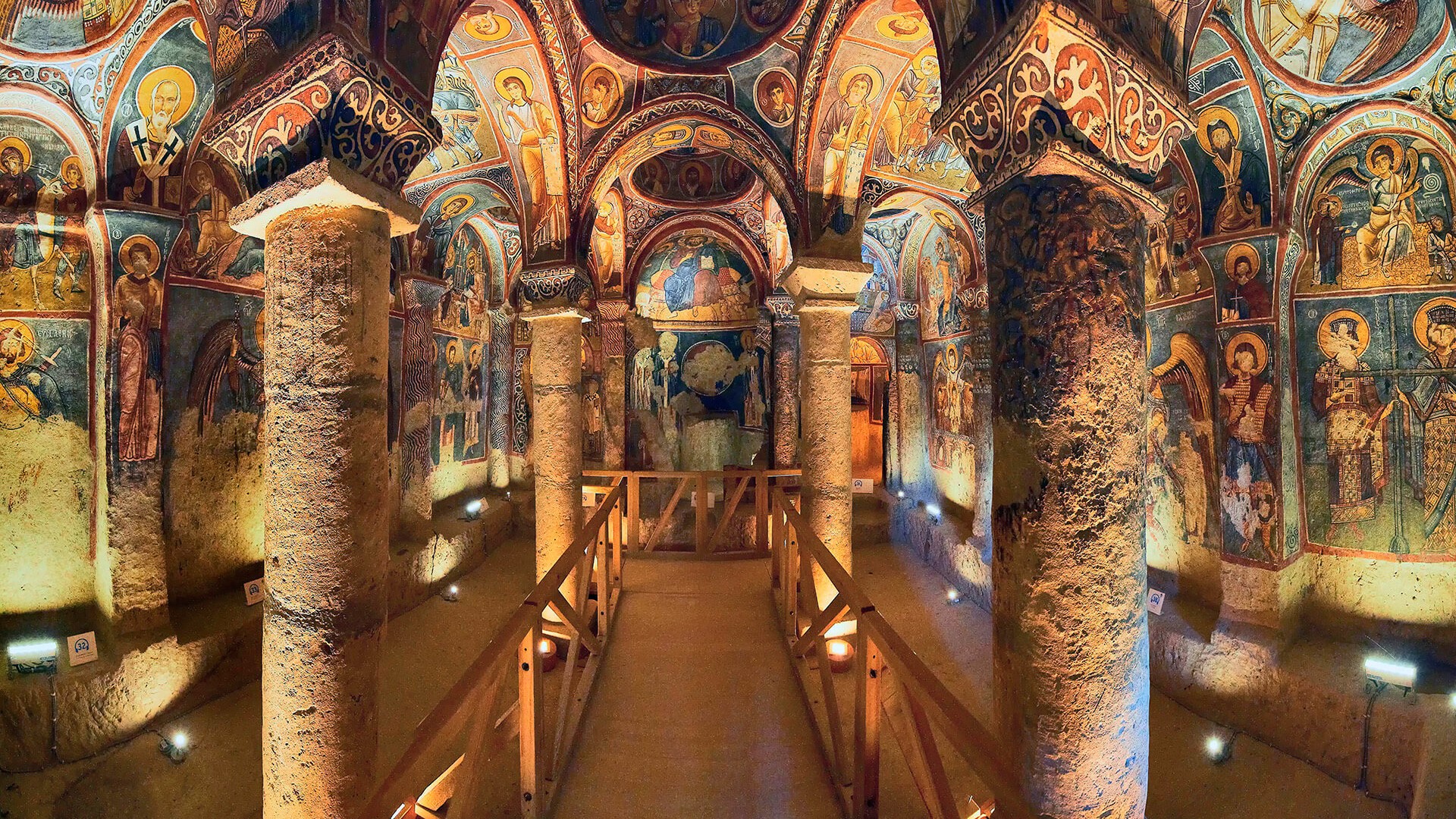
Known for its unique rock formations and underground cities, Cappadocia offers hot air balloon rides, hiking, and cave dwellings.
Nature/Adventure
2-3 days
Moderate to Expensive (depending on activities)
Must-Try Local Dishes
Kebabs
Grilled or skewered meats, often seasoned with spices and served with bread, rice, or vegetables.
Main Course
Contains meat, can be made with various types of meat or vegetarian options.
Meze
A selection of small dishes, often including dips like hummus, baba ganoush, and various salads.
Appetizer
Can be vegetarian or vegan, depending on the specific dishes.
Baklava
A sweet pastry made with layers of filo dough, nuts, and honey or syrup.
Dessert
Contains nuts and sugar, can be made with various types of nuts.
Popular Activities
Hiking in Cappadocia
Paragliding in Oludeniz
Skiing in Uludağ
Hammam (Turkish bath)
Beach relaxation in Antalya
Yoga retreats in Fethiye
Visiting museums and historical sites
Attending traditional music and dance performances
Best Time to Visit
April to May, September to November
These months offer pleasant weather, perfect for sightseeing and outdoor activities. The tourist crowds are manageable, and the prices are relatively lower compared to the summer peak season.
15°C to 30°C
59°F to 86°F
Practical Information
Language
- Official: Turkish
- Widely spoken: English, German, French
- English: Moderately spoken in tourist areas, limited elsewhere
Currency
Turkish Lira (TRY)
Time Zone
GMT+3
Electricity
220VV, 50HzHz
Safety Information
Overall Safety Rating: Generally safe, but exercise caution in certain areas
Turkey is generally safe for tourists, but petty crime, scams, and occasional political protests can occur. Stay informed and take necessary precautions.
Important Precautions:
- • Be cautious of your surroundings, especially in crowded areas
- • Use licensed taxis or ride-hailing apps
- • Keep valuables secure and out of sight
Getting there
By air
- Istanbul Airport • 35 km from Istanbul city center
- Sabiha Gökçen International Airport • 32 km from Istanbul city center
By train
Istanbul Sirkeci Station, Istanbul Haydarpaşa Station
By bus
Istanbul Bus Terminal (Otogar), Ankara Bus Terminal
Getting around
Public transport
The metro system in Istanbul is efficient and covers major attractions. Other cities have smaller metro networks.
Taxis
Available • Apps: BiTaksi, Uber
Rentals
Car, Bike, Scooter
Neighborhoods
Sultanahmet
Beşiktaş
Kadıköy
Day trips
Princes' Islands
15-20 km from Istanbul • Half day to full day
A group of islands known for their peaceful atmosphere, historic mansions, and horse-drawn carriages. Perfect for a relaxing escape from the city.
Bursa
100 km from Istanbul • Full day
Known as the first capital of the Ottoman Empire, Bursa offers a rich history, beautiful mosques, and the famous Uludağ mountain for outdoor activities.
Troy
300 km from Istanbul • Full day
The ancient city of Troy, famous for the Trojan War and its archaeological significance. The site features the iconic Trojan Horse and well-preserved ruins.
Festivals
Istanbul Biennial • September to November (every two years)
Ephesus International Festival • May to June
International Izmir Short Film Festival • April
Pro tips
- Learn a few basic Turkish phrases to enhance your interaction with locals
- Use the Istanbulkart for discounted public transportation fares in Istanbul
- Visit major attractions early in the morning or late in the afternoon to avoid crowds
- Bargain politely when shopping at bazaars and markets
- Try local street food for an authentic and affordable culinary experience
From $25
per person
Price varies by option
Secure booking
Free cancellation available
Instant confirmation