Sofia Hidden Gems: Small-Group Walking Tour with Tram Ride
Active
2h - 3h
For a full refund, cancel at least 24 hours before the scheduled departure time.
Instant confirmation
Mobile or paper ticket accepted
About this experience
Discover Sofia’s hidden streets and landmarks on foot, then hop on the metro for a quick ride across the city. Enjoy insider stories, a city transport card, and explore like a local. Small groups (up to 8–10) ensure a personal, authentic experience.
Available options
In italian
italian Guide
Guided Walking Tour
What's included
English Guide
City Transport Card and a tram/metro short ride
Detailed itinerary
1
Stop 1
The Saint Sofia Church (Bulgarian: църква „Света София“, tsarkva "Sveta Sofia", "Church of Holy Wisdom") is one of the oldest church in the Bulgarian capital Sofia, dating to the fourth century. In the predecessor building took place the Council of Serdica held most probably in 343 and attended by 316 bishops. In the 14th century, the church gave its name to the city, previously known as Serdika (Сердика)
2
Stop 2
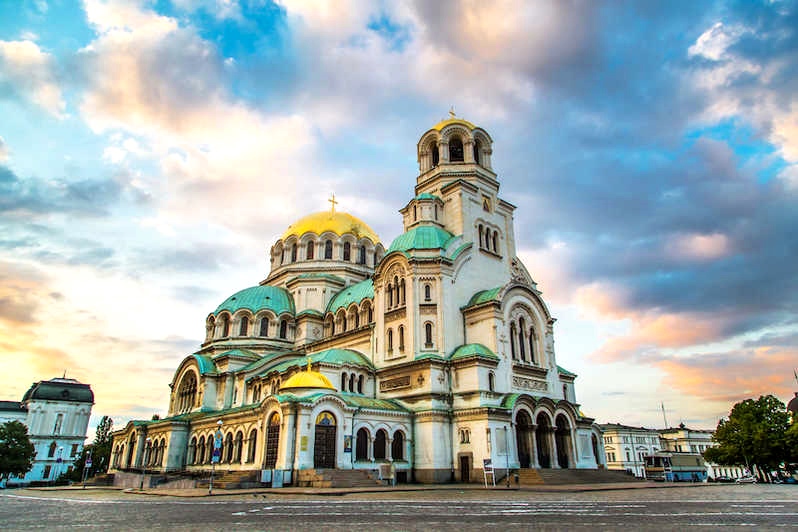
This is a Bulgarian Orthodox cathedral in Sofia, the capital of Bulgaria. Built in Neo-Byzantine style, it is one of the 50 largest Christian church buildings by volume in the world.
3
Kvadrat 500, the newest and largest building of the National Gallery, opened on 25 May 2015. Some 1,700 artworks from the gallery’s rich fund of over 42,000 museum pieces by Bulgarian and foreign artists are exhibited in 28 halls on four levels. The Bulgarian collection dates back to the 1890s, while the greater part of the foreign collection was formed in the 1980s.
The exposition features works tracing the path of Bulgarian art from the mid-19th century and from the 20th century, European art from the 15th–19th centuries, and art exhibits from Asia, Africa, and America.
4
Today the Library's collection contains nearly 8.5 million documents. Every year, it receives about 70 000 publications. The National Library “St. St. Cyril and Methodius” is the largest book treasury in Bulgaria. The tourist will visit inside
5
The Sofia University St. Kliment Ohridski is the first higher educational institution in Bulgaria. Its history is an embodiment and a continuation of centuries of cultural and educational tradition in this country.
Public teaching activities in Bulgaria date back to the second half of the 9th century.
During the Bulgarian Renaissance, a new idea for opening a School of Higher Education was conceived.
The prestige of the School of Higher Education grew rapidly with the cultural and educational mission it acquired after the Liberation in 1878. We will visit inside
6
It was built in 1884-1886 at the design of architect Constantin Yovanovic, who studied in Vienna and Switzerland and authored the design of the Serbian Assembly (1891-1892) as well. The style of the building is neo-Renaissance.
7
In 1890, three Bulgarian musicians Dragomir Kazakov, Ivan Slavkov and Angel Bukoreshtliev organized the first opera troupe in Bulgaria as a branch of the "Sofia Drama and Opera Troupe". The performances - 12 whole operas and excerpts from 11 operas, with the participation of Bulgarians, Czechs and Italians accompanied by piano, the Guards Orchestra, the orchestra of the Sixth Infantry Regiment and people of the Italian Singing Society are accepted with unexpected success.
8
Stop 8
Pass by
The building of the National Theatre was finished in 1906 and the opening ceremony was held on 3 January 1907. It was designed by the architects Ferdinand Fellner and Hermann Helmer, who were hugely popular in the early twentieth century, to become one of Sofia’s most imposing and representative buildings in the Art Nouveau style, which was all the rage in those days. The plafond and the walls of the auditorium seating 848 were painted by artist Rudolf Fuchs from Vienna.
9
The Largo (Bulgarian: Ларго, definite form Ларгото, Largoto) is an architectural ensemble of three Socialist Classicism edifices in central Sofia, the capital of Bulgaria, designed and built in the 1950s with the intention of becoming the city's new representative centre.
10
Stop 10
The Church of Saint George (Bulgarian: Ротонда „Свети Георги“, romanized: Rotonda "Sveti Georgi") is a Late Antique red brick rotunda in Sofia, Bulgaria. Built in the early 4th century as Roman baths, it became a church inside the walls of Serdica, capital of ancient Dacia Mediterranea during the Roman Empire and Byzantine Empire.[1] The Early Christian church is considered the oldest building in modern Sofia and belongs to the Bulgarian Orthodox Church.
11
Ancient cultural and communication complex “Serdica” combines areas with various purposes, divided into two zones. The “Largo” zone, situated underneath Nezavisimost Square, integrates the unearthed archaeological remains into a site for cultural events. The remains of one of the two main streets of the Roman town, the decumanus maximus, which connects the eastern and the western gate of the city, can be seen here. A large residential building, covering an entire insula (urban block), can be seen south of it. The building also had small shops, from which travelers and the town’s inhabitants could purchase food and various goods. A lapidarium is located close to the building.
12
The current Central Mineral Baths building was designed in the Vienna Secession style, but integrating typically Bulgarian, Byzantine and Eastern Orthodox ornamental elements, by the architects Petko Momchilov and Friedrich Grünanger in 1904–1905 and approved on 30 January 1906, as projects by an Austrian (in 1889) and a French architect (in 1901) were declined.
13
Stop 13
Pass by
In the early 20th century, the Jewish community of Sofia (lead by rabbi Dr. Ehrenpreis and president of the community Ezra Sol) collected donations and invited the Viennese architect Friedrich Grünanger to prepare a project for the Synagogue. You can see the names of the 10 "top contributors" to the left on the wall after entering. In just 4 years, the architect managed to organize and complete the construction. Tombstones from an old Jewish cemetery were used to build the base of the Synagogue.
The value of its construction amounts to 437 000 golden leva.
The building of the Central Sofia Synagogue was built on the old site of another one known with the Hebrew name “Ahava ve Chesed” (Love and Goodness),
14
The Western Gate of Serdica is protected by towers – in the preserved section of the fortress wall a pentagonal tower is next to the gate and another triangular tower – in close proximity. The Western gate of Serdica is located between "St. Joseph" Catholic Cathedral, Todor Alexandrov boulevard and the Monument Symbol of the City of Sofia.
15
Zhenski Pazar Market (Bulgarian: “Женски пазар”) is the oldest market in Sofia. Established more than 140 years ago, it has become one of the most important trading centres in the metropolitan city.
16
Banya Bashi Mosque is located in the center of Sofia, near the hot mineral springs. (Banya Bashi means “many baths”). It was built in 1576 during the Ottoman military expansion by the best known Ottoman architect Miamar Sinan. He was also created Selemiye mosque in Edrine and Suleyman mosque in Istanbul.
What's not included
Gratuities
Available languages
Guide guide
EN
Reviews breakdown
Viator
5.0
3 reviews
5★
3
4★
0
3★
0
2★
0
1★
0
Tripadvisor
5.0
4 reviews
5★
4
4★
0
3★
0
2★
0
1★
0
Important information
Public transportation options are available nearby
Suitable for all physical fitness levels
The tour includes the travel time from place to place
Do not forget suncream!
Meeting point
A guide with blue jacket/ shirt will be waiting for you at the entrance of the church
About Sofia
Sofia is the vibrant capital of Bulgaria, nestled at the foot of the Vitosha Mountain. Known for its rich history, stunning architecture, and lively cultural scene, it offers a unique blend of ancient and modern attractions. The city is a treasure trove of Roman ruins, Orthodox churches, and Soviet-era landmarks, all set against the backdrop of beautiful natural surroundings.
Top Attractions
Alexander Nevsky Cathedral
This iconic cathedral is one of Sofia's most famous landmarks. It was built in honor of the Russian soldiers who died during the Russo-Turkish War.
Religious
1-2 hours
Free (small fee for the museum and bell tower)
Vitosha Mountain
Vitosha Mountain offers a stunning backdrop to Sofia and is a popular destination for hiking, skiing, and enjoying nature.
Nature
Half day to full day
Free (lift tickets for skiing cost around €10-€20)
National History Museum
This museum houses a vast collection of artifacts that tell the story of Bulgaria's rich history.
Museum
2-3 hours
€5
Boyana Church
A UNESCO World Heritage site, Boyana Church is known for its stunning frescoes dating back to the 13th century.
Historical
1 hour
€4
Sofia Central Mineral Baths
This historic building was once a public bathhouse and is now a popular spot for shopping and dining.
Historical
1-2 hours
Free to explore
Must-Try Local Dishes
Banitsa
A traditional Bulgarian pastry made with layers of filo dough, cheese, and eggs. It's often served for breakfast with a side of yogurt.
Breakfast
Vegetarian
Shopska Salad
A refreshing salad made with tomatoes, cucumbers, onions, and grated sirene cheese. It's a staple in Bulgarian cuisine and is often served as a side dish.
Appetizer
Vegetarian
Kebapche
A grilled minced meat sausage made with a mix of pork and beef, seasoned with spices like black pepper, cumin, and coriander. It's often served with french fries or lyutenitsa (a spicy pepper and tomato spread).
Main Course
Contains meat
Tarator
A cold soup made with yogurt, cucumbers, garlic, and dill. It's a refreshing dish, especially during the hot summer months.
Appetizer
Vegetarian, Vegan (if made with plant-based yogurt)
Popular Activities
Hiking in Vitosha Mountain
Skiing in Bansko or nearby resorts
Mountain biking and other outdoor activities
Visiting spas and wellness centers
Strolling through parks and gardens
Enjoying a meal or drink at a rooftop bar
Exploring museums and galleries
Attending concerts and performances
Best Time to Visit
May to September
This is the best time to visit Sofia for warm weather and outdoor activities. The city is lively with festivals and cultural events.
15°C to 30°C (59°F to 86°F)
59°F to 86°F
Practical Information
Language
- Official: Bulgarian
- Widely spoken: English, Russian, Romanian
- English: Moderately spoken in tourist areas, limited in other places
Currency
Bulgarian Lev (BGN)
Time Zone
GMT+2 (EET)
Electricity
220VV, 50HzHz
Safety Information
Overall Safety Rating: Generally safe
Sofia is generally a safe city for travelers, but petty crime and pickpocketing can occur in crowded tourist areas. It's important to take basic precautions to protect yourself and your belongings.
Important Precautions:
- • Keep valuables secure and out of sight
- • Use licensed taxis or ride-sharing apps
- • Be cautious of strangers approaching you with petitions or surveys
Getting there
By air
- Sofia Airport • 10 km (6 miles) from city center
By train
Central Railway Station
By bus
Central Bus Station, South Bus Station
Getting around
Public transport
The metro is efficient, clean, and affordable. It's the fastest way to get around Sofia.
Taxis
Available • Apps: Yellow Taxi, OK Taxi
Rentals
Car, Bike, Scooter
Neighborhoods
City Center
Lozenets
Studentski Grad
Orlov Most
Day trips
Rila Monastery
120 km (75 miles) • Full day
The Rila Monastery is one of the most important cultural and historical sites in Bulgaria. It's a UNESCO World Heritage site and is known for its stunning architecture and beautiful frescoes.
Plovdiv
150 km (93 miles) • Full day
Plovdiv is one of the oldest continuously inhabited cities in the world. It's known for its rich history, beautiful architecture, and vibrant cultural scene.
Bansko
160 km (100 miles) • Full day or overnight
Bansko is a popular ski resort in the winter and a great destination for hiking and outdoor activities in the summer. It's known for its stunning mountain scenery and traditional Bulgarian charm.
Festivals
Sofia Film Fest • March
Sofia Pride • June
Sofia International Film Festival • October
Pro tips
- Visit the Alexander Nevsky Cathedral early in the morning or late in the afternoon to avoid crowds and enjoy the beautiful light.
- Try traditional Bulgarian rakia and meze at a local bar for an authentic experience.
- Explore the underground caves and tunnels of Sofia for a unique and fascinating look at the city's history.
- Take a day trip to the Rila Monastery or Plovdiv for a taste of Bulgaria's rich history and culture.
- Visit the National Palace of Culture for concerts, performances, and other cultural events.
From $25
per person
Price varies by option
Secure booking
Free cancellation available
Instant confirmation