Sofia Food & Tasting Tour with Communist-Era Tram Ride
Active
3h
For a full refund, cancel at least 24 hours before the scheduled departure time.
Instant confirmation
Mobile or paper ticket accepted
About this experience
On this small-group tour, you'll taste your way through the city with 5 authentic Sofia food stops off the beaten path: from flaky banitsa and grilled cheese on a tile, to peppers stuffed the old way, slow-cooked lamb, and a surprise dessert. Each stop reveals a piece of local life, history, and flavor — all guided by a passionate local host. Taste authentic Bulgarian specialties at multiple stops while traveling on Sofia’s historic public tram with a city card for the day! Please note: the tasting menu is optional and may be adjusted according to availability or seasonal ingredients. We recommend coming with an empty stomach and skipping a big breakfast beforehand!
Available options
5 food stops with walking tour
Duration: 3 hours<br/>5 Food Stops<br/>Tram
New
What's included
Traditional meals and salad
Appetizers and dessert
City Card for the day
Breakfast
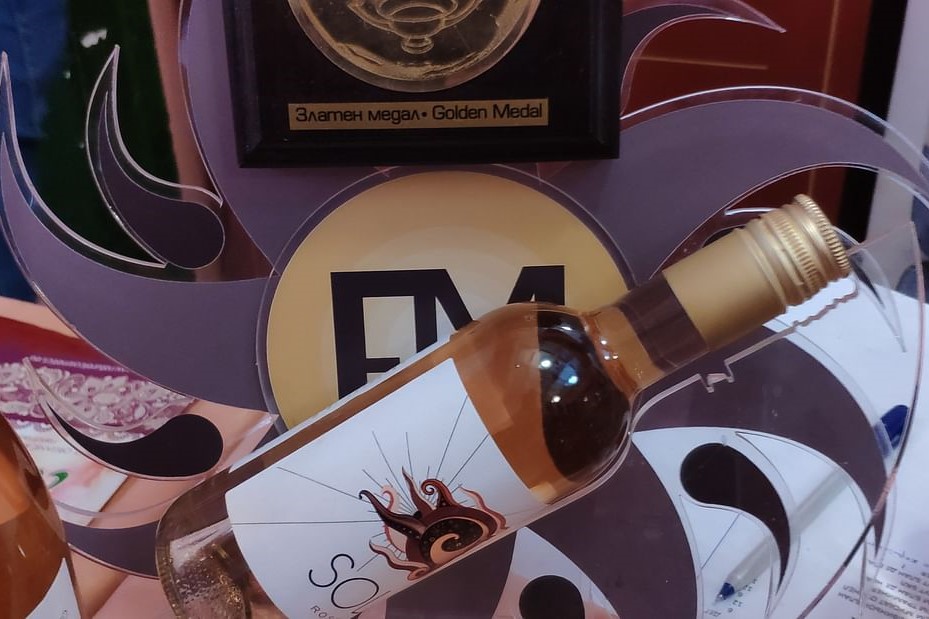
Bulgarian beer and a glass of local quality wine
5 food stops
Detailed itinerary
1
Stop 1
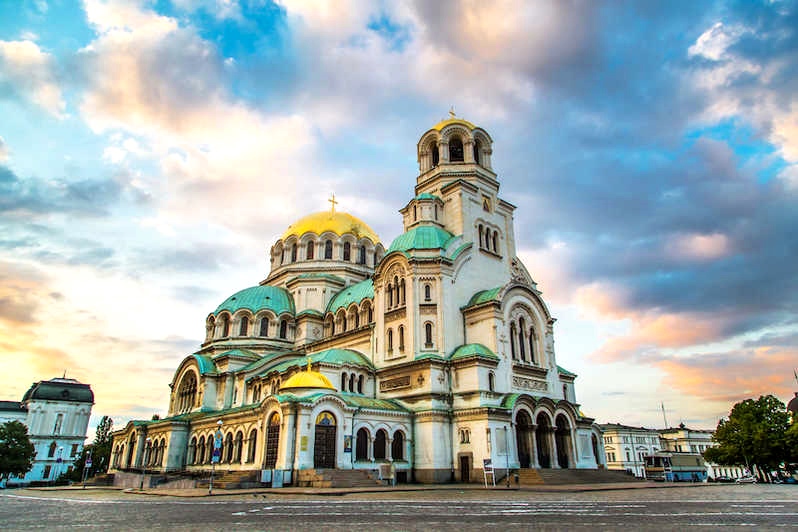
Built in Neo-Byzantine style it is the is one of the biggest Eastern Orthodox cathedrals in the world, as well as one of Sofia's symbols and primary tourist attractions.
2
The design of that Building, in Neoclassical style, by the Viennese architect Friedrich Schwanberg was realised in the period between 1881 and 1883.
3
With its 8.5 million documents the National Library “St. St. Cyril and Methodius” is the largest book treasury in Bulgaria. Visitors will see temporary exhibitions inside. The collection of old, rare and valuable books includes a total of about 17 000 volumes of books and periodicals printed in the period 15th-21st centuries. The materials are organized in separate collections.
4
The building National Assembly sits is of historic significance and it is a monument of culture. It was built in 1884-1886 at the design of architect Constantin Yovanovic
5
Sofia University "St. Kliment Ohridski" and The "St. St. Cyril and Methodius" National Library are near the Eagles' Bridge. The university was founded on 1 October 1888. Monday-Friday visitors could also see the amazing central hall with the big stained glass windows.
6
Established more than 140 years ago, it has become one of the most important trading centres in the metropolitan city. Almost 60 000 visit Zhenski Pazar Market every day. The market is located in the so-called Area of Tolerance in Sofia. The name itself is coined after the close proximity of the temples of all the official religious communities in Bulgaria. Here you can find the church “Saints Cyril and Methodius“, the “Banya bashi” Mosque, and the Central Synagogue of Sofia.
7
The first fortification wall of Serdica was erected in the second half of the 2nd century AD. It had a width of 2.20 m. At the end of the 3rd , the beginning of the 4th c.АD, a remodeling of the wall was undertaken and a ditch was dug in front of it - 14 m west of the Western gate at about 2 m deep and 5 m wide, functioning in the 4th century.
8
Ancient cultural and communication complex “Serdica” combines areas with various purposes, divided into two zones. The “Largo” zone, situated underneath Nezavisimost Square, integrates the unearthed archaeological remains into a site for cultural events. The remains of one of the two main streets of the Roman town, the decumanus maximus, which connects the eastern and the western gate of the city, can be seen here. A large residential building, covering an entire insula (urban block), can be seen south of it. The building also had small shops, from which travelers and the town’s inhabitants could purchase food and various goods.
9
Stop 9
Pass by
The building of the Central Sofia Synagogue is rightly described as the pride of the Bulgarian Jewish community. It is one of the three largest Sephardic (Spanish-Jewish) synagogues in Europe and the largest on the Balkan Peninsula.
10
Visitors will go to see the Natural Hot Springs of the city-46 degrees Celsius The current Central Mineral Baths building was designed in the Vienna Secession style, but integrating typically Bulgarian, Byzantine and Eastern Orthodox ornamental elements, by the architects Petko Momchilov and Friedrich Grünanger in 1904–1905 and approved on 30 January 1906, as projects by an Austrian (in 1889)
11
It was built by the initiative and with the financial support of Mullah Effendi Kada Seyfullah and is also known as Mollah Effendi Mosque. It was designed by the famous Ottoman architect Mimar Sinan, who also built the mosque of Sultan Selim on Edirne and the Suleymaniye Mosque in Istanbul.
Because of the number 974 above the entrance arch, the mosque is considered to be built in 974, the Hijri (Islamic calendar) or in 1566 – 1567 AD.
What's not included
Gratuities
Available languages
Guide guide
EN
Reviews breakdown
Viator
5.0
17 reviews
5★
17
4★
0
3★
0
2★
0
1★
0
Tripadvisor
5.0
18 reviews
5★
18
4★
0
3★
0
2★
0
1★
0
Important information
Infants and small children can ride in a pram or stroller
Service animals allowed
Public transportation options are available nearby
Not recommended for travelers with poor cardiovascular health
Suitable for all physical fitness levels
We can accommodate dietary restrictions such as vegetarian, vegan, gluten-free, etc. If you have dietary requirements. Please indicate it to the special requirements at the time of booking
The tour includes the travel time from place to place
Alcoholic drinks is not suitable for children 17 years old or under!
The 14 allergens are: celery, cereals containing gluten (such as wheat, rye, barley, and oats), crustaceans (such as prawns, crabs and lobsters), eggs, fish, lupin, milk, molluscs (such as mussels and oysters), mustard, peanuts, sesame, soybeans, sulphur dioxide and sulphites (if the sulphur dioxide and sulphites are at a concentration of more than ten parts per million) and tree nuts (such as almonds, hazelnuts, walnuts, brazil nuts, cashews, pecans, pistachios and macadamia nuts).
Meeting point
A guide with a blue shirt or jacket will be waiting for you in front of the main door of the church.
About Sofia
Sofia is the vibrant capital of Bulgaria, nestled at the foot of the Vitosha Mountain. Known for its rich history, stunning architecture, and lively cultural scene, it offers a unique blend of ancient and modern attractions. The city is a treasure trove of Roman ruins, Orthodox churches, and Soviet-era landmarks, all set against the backdrop of beautiful natural surroundings.
Top Attractions
Alexander Nevsky Cathedral
This iconic cathedral is one of Sofia's most famous landmarks. It was built in honor of the Russian soldiers who died during the Russo-Turkish War.
Religious
1-2 hours
Free (small fee for the museum and bell tower)
Vitosha Mountain
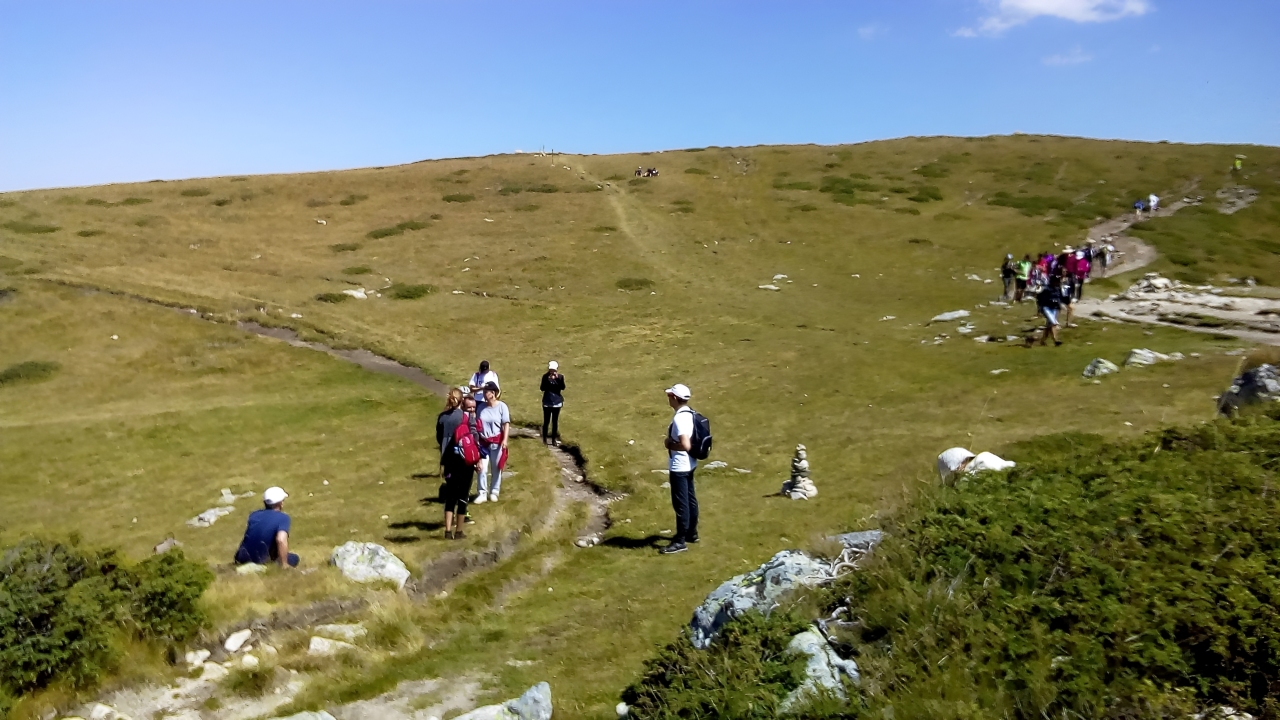
Vitosha Mountain offers a stunning backdrop to Sofia and is a popular destination for hiking, skiing, and enjoying nature.
Nature
Half day to full day
Free (lift tickets for skiing cost around €10-€20)
National History Museum
This museum houses a vast collection of artifacts that tell the story of Bulgaria's rich history.
Museum
2-3 hours
€5
Boyana Church
A UNESCO World Heritage site, Boyana Church is known for its stunning frescoes dating back to the 13th century.
Historical
1 hour
€4
Sofia Central Mineral Baths
This historic building was once a public bathhouse and is now a popular spot for shopping and dining.
Historical
1-2 hours
Free to explore
Must-Try Local Dishes
Banitsa
A traditional Bulgarian pastry made with layers of filo dough, cheese, and eggs. It's often served for breakfast with a side of yogurt.
Breakfast
Vegetarian
Shopska Salad
A refreshing salad made with tomatoes, cucumbers, onions, and grated sirene cheese. It's a staple in Bulgarian cuisine and is often served as a side dish.
Appetizer
Vegetarian
Kebapche
A grilled minced meat sausage made with a mix of pork and beef, seasoned with spices like black pepper, cumin, and coriander. It's often served with french fries or lyutenitsa (a spicy pepper and tomato spread).
Main Course
Contains meat
Tarator
A cold soup made with yogurt, cucumbers, garlic, and dill. It's a refreshing dish, especially during the hot summer months.
Appetizer
Vegetarian, Vegan (if made with plant-based yogurt)
Popular Activities
Hiking in Vitosha Mountain
Skiing in Bansko or nearby resorts
Mountain biking and other outdoor activities
Visiting spas and wellness centers
Strolling through parks and gardens
Enjoying a meal or drink at a rooftop bar
Exploring museums and galleries
Attending concerts and performances
Best Time to Visit
May to September
This is the best time to visit Sofia for warm weather and outdoor activities. The city is lively with festivals and cultural events.
15°C to 30°C (59°F to 86°F)
59°F to 86°F
Practical Information
Language
- Official: Bulgarian
- Widely spoken: English, Russian, Romanian
- English: Moderately spoken in tourist areas, limited in other places
Currency
Bulgarian Lev (BGN)
Time Zone
GMT+2 (EET)
Electricity
220VV, 50HzHz
Safety Information
Overall Safety Rating: Generally safe
Sofia is generally a safe city for travelers, but petty crime and pickpocketing can occur in crowded tourist areas. It's important to take basic precautions to protect yourself and your belongings.
Important Precautions:
- • Keep valuables secure and out of sight
- • Use licensed taxis or ride-sharing apps
- • Be cautious of strangers approaching you with petitions or surveys
Getting there
By air
- Sofia Airport • 10 km (6 miles) from city center
By train
Central Railway Station
By bus
Central Bus Station, South Bus Station
Getting around
Public transport
The metro is efficient, clean, and affordable. It's the fastest way to get around Sofia.
Taxis
Available • Apps: Yellow Taxi, OK Taxi
Rentals
Car, Bike, Scooter
Neighborhoods
City Center
Lozenets
Studentski Grad
Orlov Most
Day trips
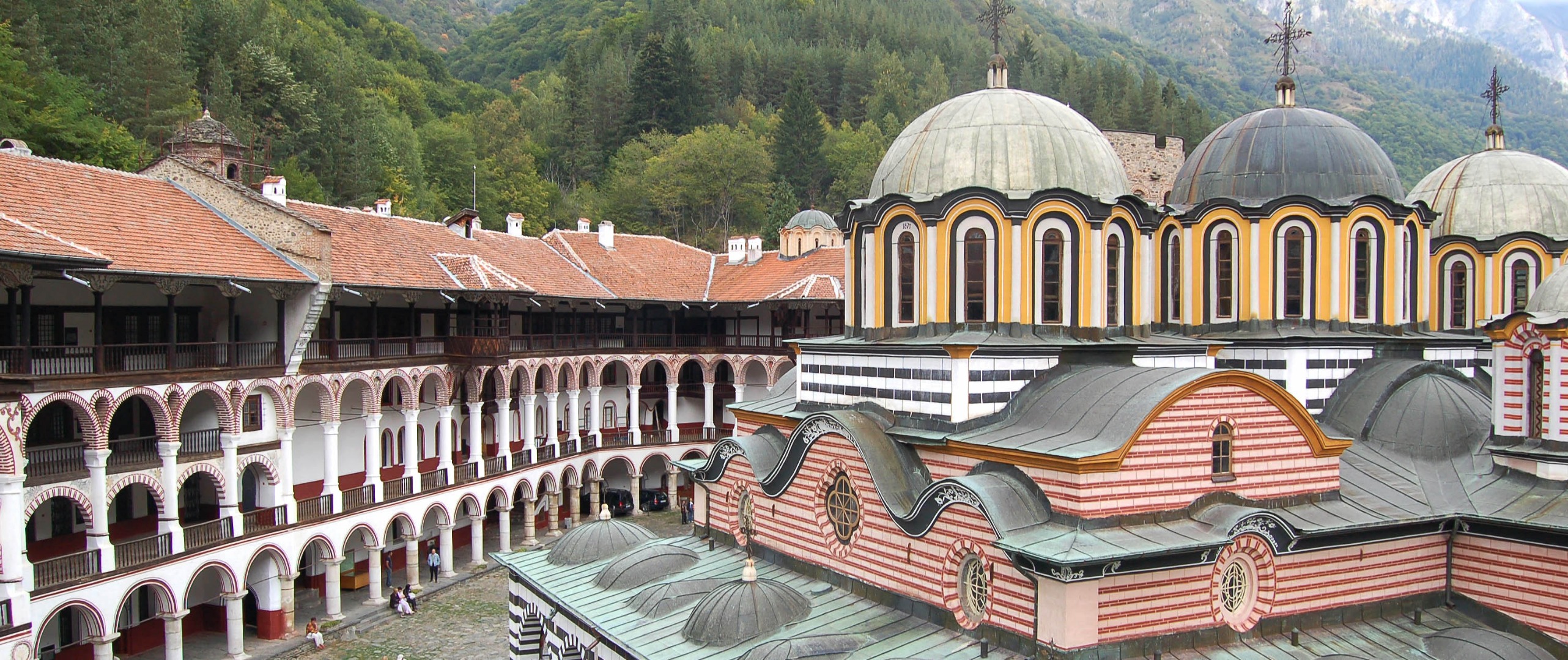
Rila Monastery
120 km (75 miles) • Full day
The Rila Monastery is one of the most important cultural and historical sites in Bulgaria. It's a UNESCO World Heritage site and is known for its stunning architecture and beautiful frescoes.
Plovdiv
150 km (93 miles) • Full day
Plovdiv is one of the oldest continuously inhabited cities in the world. It's known for its rich history, beautiful architecture, and vibrant cultural scene.
Bansko
160 km (100 miles) • Full day or overnight
Bansko is a popular ski resort in the winter and a great destination for hiking and outdoor activities in the summer. It's known for its stunning mountain scenery and traditional Bulgarian charm.
Festivals
Sofia Film Fest • March
Sofia Pride • June
Sofia International Film Festival • October
Pro tips
- Visit the Alexander Nevsky Cathedral early in the morning or late in the afternoon to avoid crowds and enjoy the beautiful light.
- Try traditional Bulgarian rakia and meze at a local bar for an authentic experience.
- Explore the underground caves and tunnels of Sofia for a unique and fascinating look at the city's history.
- Take a day trip to the Rila Monastery or Plovdiv for a taste of Bulgaria's rich history and culture.
- Visit the National Palace of Culture for concerts, performances, and other cultural events.
From $25
per person
Price varies by option
Secure booking
Free cancellation available
Instant confirmation