Hiroshima 3hr Peace Cycling Tour with Local Guide
Active
3h
For a full refund, cancel at least 24 hours before the scheduled departure time.
Instant confirmation
Mobile or paper ticket accepted
About this experience
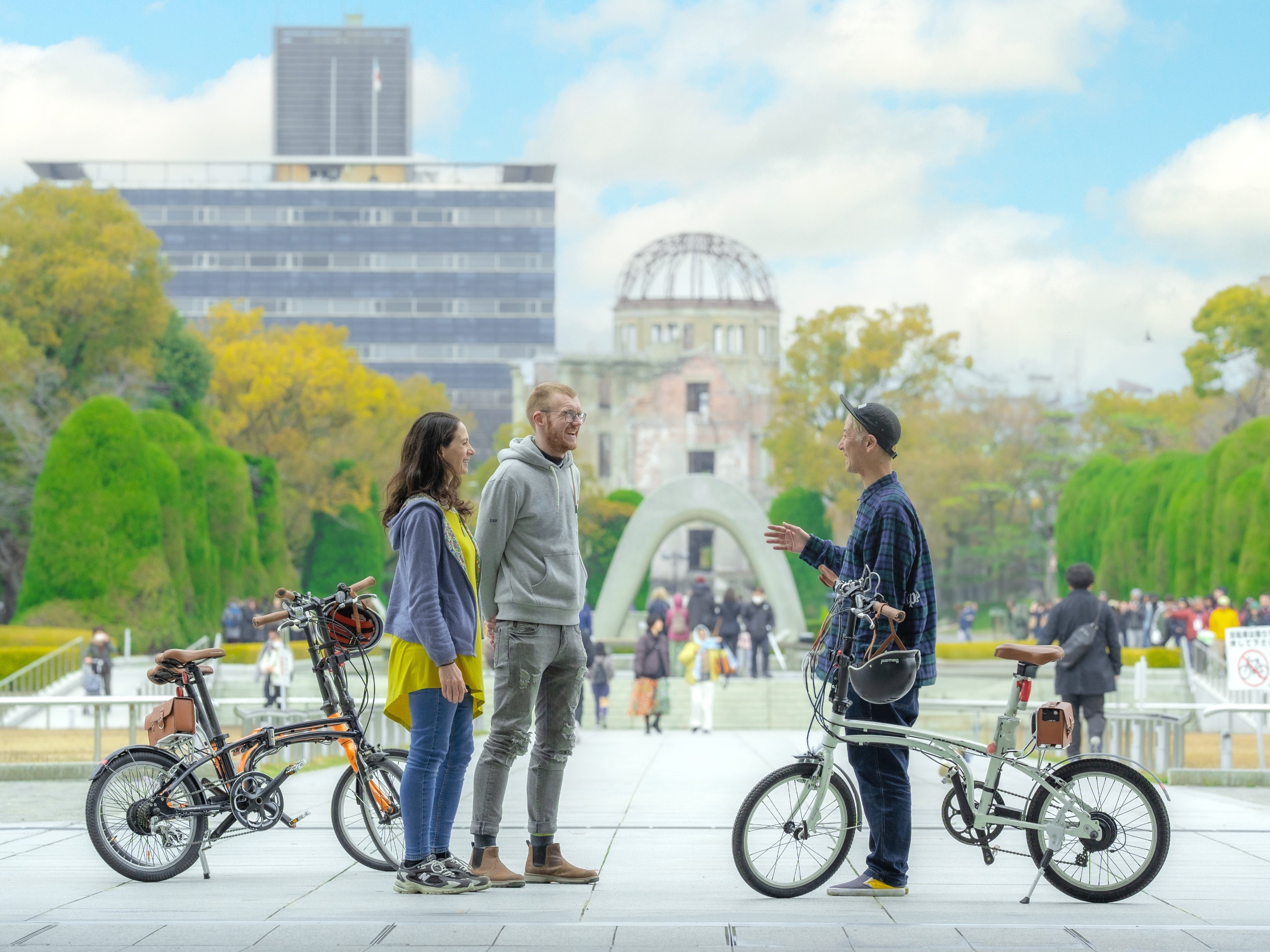
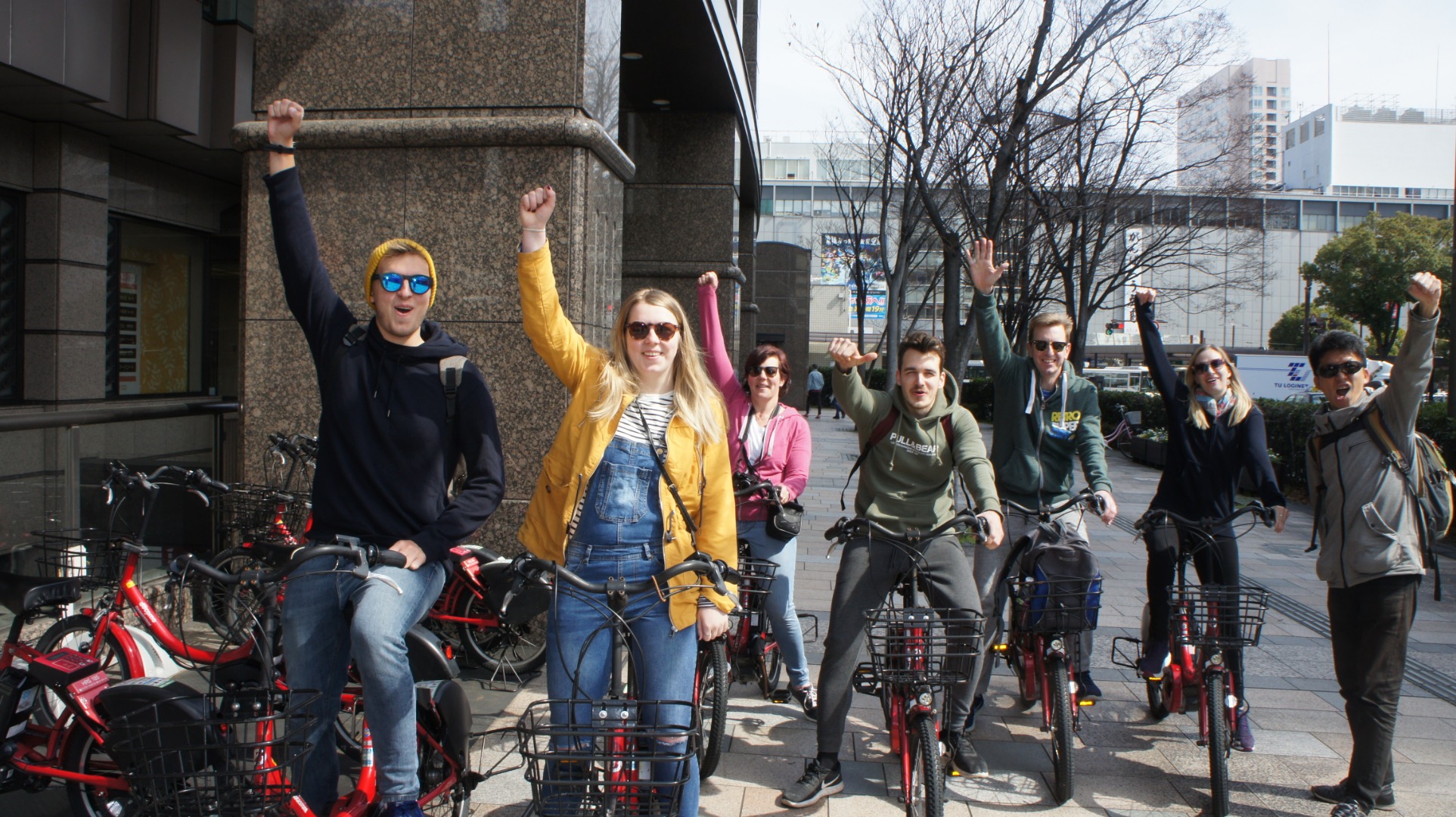
This is a guided cycling tour in which participants ride an electric bicycle and learn about the reconstruction of Hiroshima's bombed heritage sites and how we are trying to protect peace in the city of Hiroshima. This tour is led by our friendly team from Hiroshima. This tour is an English guided tour.
・Learn about local feelings towards the Peace Park from about 70 years ago.
・The area within a 2.5km radius from the hypocenter was severely damaged. We are heading to multiple bombed heritage sites that still remain.
・You will ride a comfortable electric bicycle through the local area to experience the Hiroshima Peace Museum and more.
・We will take you to unique places well-known by our local Japanese team.
・We will ride along the beautiful riverside and in the park to get an idea of the destruction of Hiroshima at that time and how the city has changed into what it is now.
Available options
Hiroshima Cycling Peace Tour
What's included
English-speaking guide
Insurance fee for bikes
Rental bicycles
Detailed itinerary
1
Stop 1
10:00-10:05 Meet up at the rest house of Hiroshima Peace Memorial Park.
Start off with greetings, introduction, explanation of the route, and corona prevention procedures (temperature checks, etc.).
2
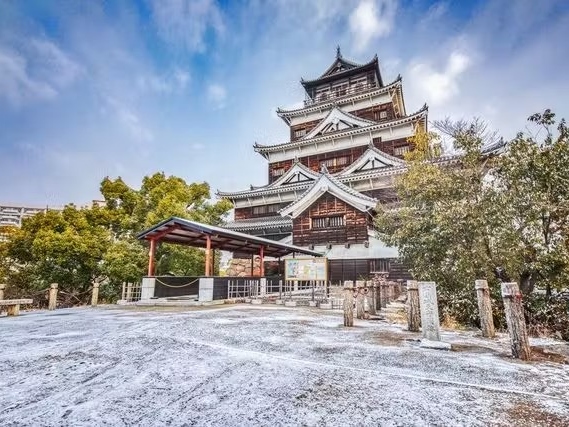
10:05-10:25 Hiroshima Castle
Your guide will take you to Hiroshima Castle which is the location of the military fort that was the first to report about the atomic bomb.
Your guide will explain the situation and significance of the military base and castle.
3
10:25-10:40 Hiroshima Gokoku Shrine and Shrine Gate
You will learn more about some lesser-known heritage sites such as the Guardian Dog statue and the Gokoku Shrine gate which withstood the atomic bomb.
4
10:40-11:00 Hiroshima Central Park
Walk through a vast green park to enjoy the beautiful nature that Hiroshima has to offer.
5
11:00-11:10 Aioi Bridge
Next, you will visit the bridge that was the target of the bomb. Both the river and the bridge have remained since that time. You will witness the continuation of history.
6
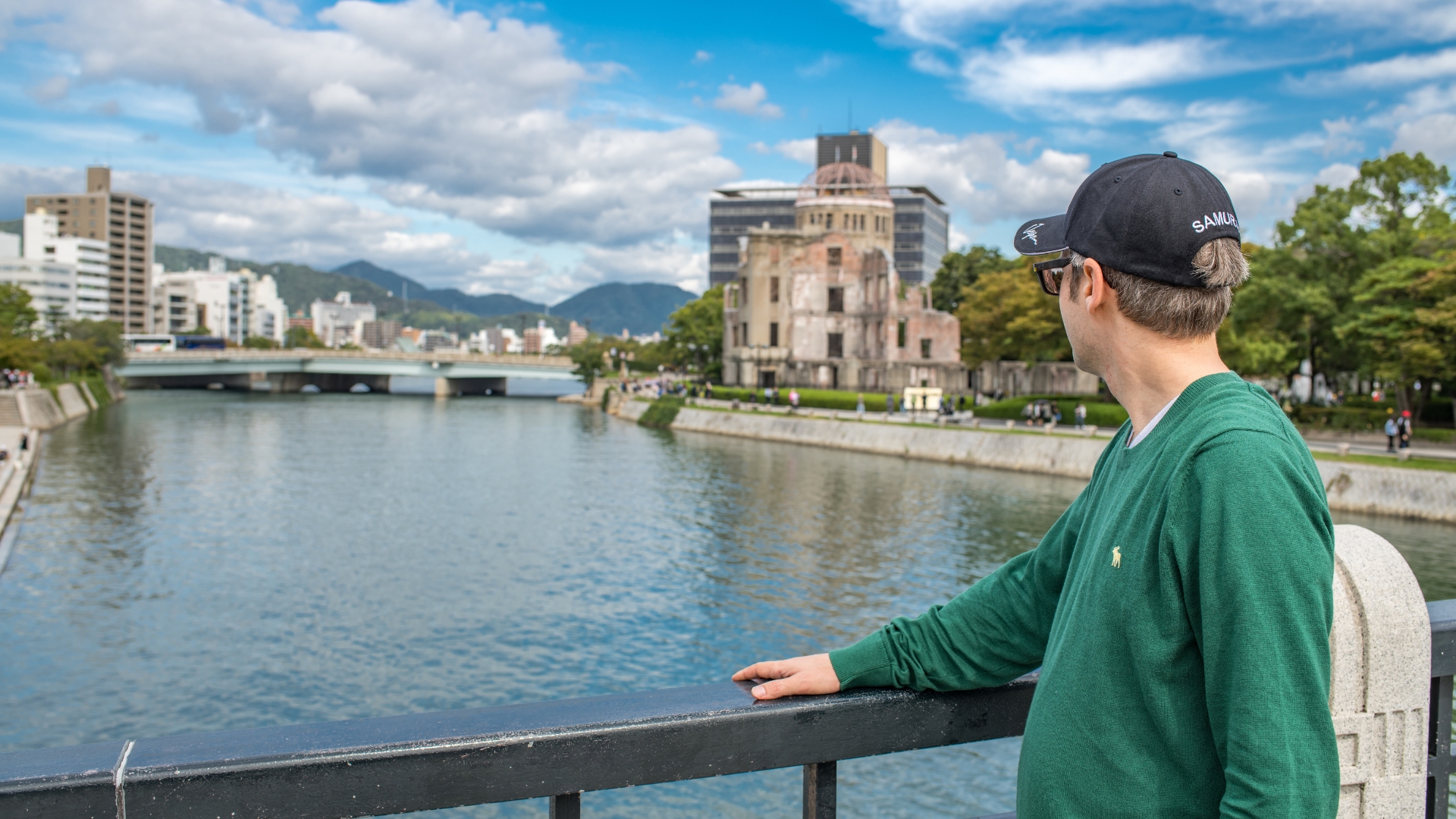
11:10-11:25 Atomic Bomb Dome
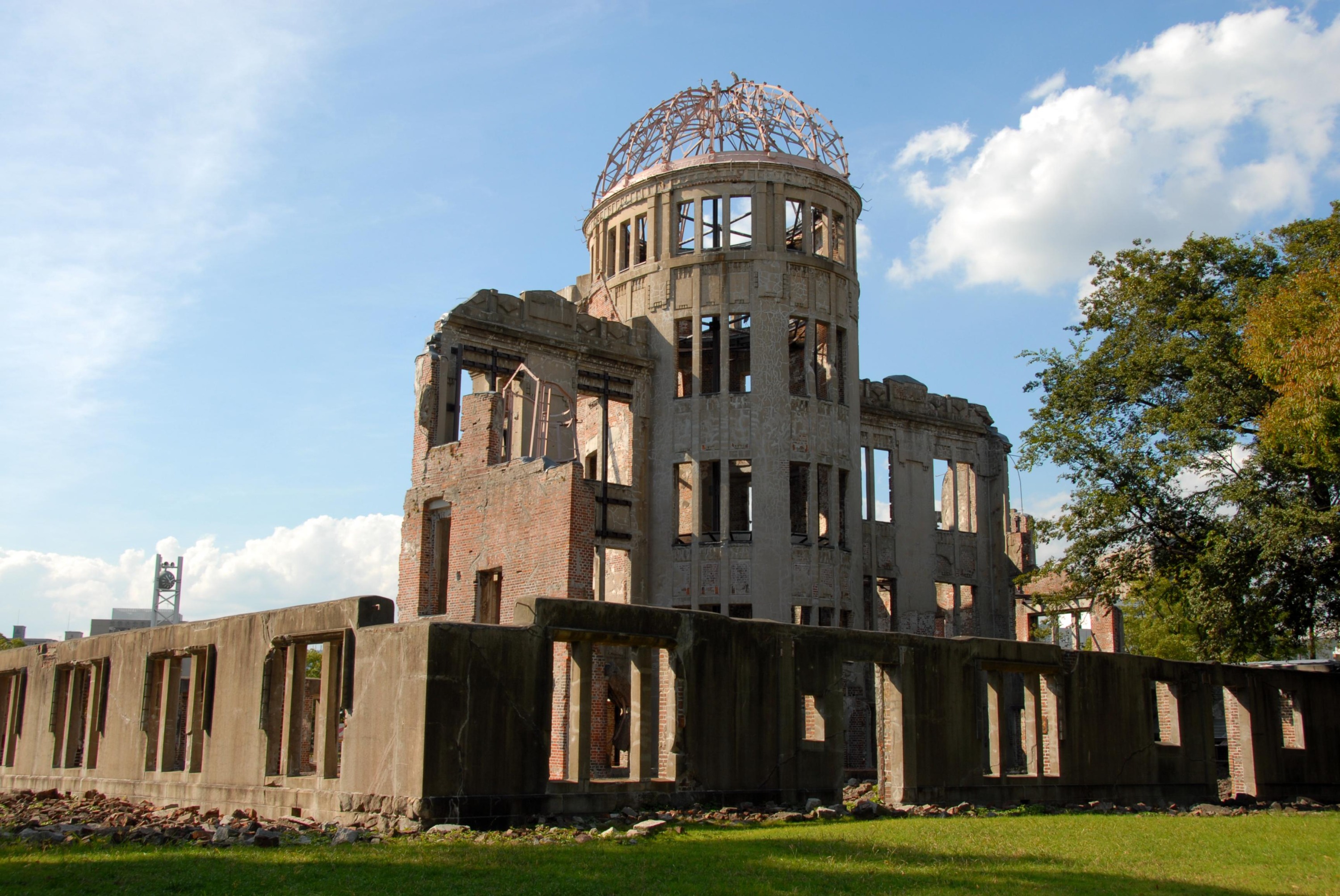
After that, you will witness the world-renowned Atomic Bomb Dome. You will learn about the many stories and memories of the local people.
7
11:25-11:40 Motoyasu River and the Peace Bridge
When heading south towards the suburbs from the Atomic Bomb Dome and Peace Park, you will see the gorgeous riverside nature. Your guide will explain the meaning and memories that are embedded in the Peace Park.
8
11:40-12:00 Higashisenda Park
Located 1km from the center of the blast is a park filled with trees sent from countries all around the world. You will hear the stories related to this site.
9
12:00-12:20 Hiroshima Red Cross Hospital
Located 1.5km from the center of the blast is the remnants of the Red Cross Hospital's building. Here, you will face the hard reality of how strong the bomb was.
10
12:20-12:30 Hiroshima Railway
Located 2km-2.5km from the center of the blast is the Hiroshima Railway. Did you know that there are two trains that survived that blast and still used today? They started running again only three days after the explosion.
11
12:30-12:40 Miyuki Bridge and Kobayashi River
Right where the bomb's reach ended, there is a picture on display. This significant picture shows the reality of the difference between now and then.
12
12:40-12:50 Surviving Weeping Willow Tree
This is the highlight of the tour. This tree continued to grow despite the rumors that there would be natural growth for at least 70 years. This tree represents the strength, determination, and hope of the people of Hiroshima.
13
12:50-13:00 Peace Boulevard
On the way back to the Peace Park, we will pass by various monuments and trees that are significant to Hiroshima's history. At the same time, you will also witness the current thriving city.
14
Stop 14
13:00 Hiroshima Peace Memorial Park
Once we arrive back at the park, your trip will come to an end.
*The afternoon tour is scheduled to meet at 14:00 and return at 17:00.
Available languages
Guide guide
EN
Reviews breakdown
Viator
5.0
37 reviews
5★
36
4★
1
3★
0
2★
0
1★
0
Tripadvisor
5.0
93 reviews
5★
91
4★
1
3★
0
2★
1
1★
0
Important information
Public transportation options are available nearby
Suitable for all physical fitness levels
If you are late for the meeting time without prior notice, the tour will be cancelled. In such cases, a 100% cancellation fee will be incurred on the day of the tour and is non-refundable.
In addition, even if you contact us in advance, it may be canceled due to the convenience of other customers.
Participation requirements : Adult bicycle (electric): Height 145 cm or more
Bicycle with seat for children (electric) : Infants' ride here are free of charge.
Children's bicycle (cross bike type): 2 Children's bicycles* for one booking are available. Children under age 15 can use both children's bicycles and adult bicycles at child rate. (For children of height 110 cm to 145 cm)
Bicycle with seat for infants (electric) and Children's bicycle (cross bike type) are limited, so please contact us before making a reservation if you wish.
Bicycles with seats for children (electric) are for children under 22 kg and under 115 cm.
If the number of seats for infants and children's bicycles are full reserved, children of heights who cannot use adult bicycles may not be able to participate. After making a reservation, we will contact you after checking the stock of the bicycle.
Free Wi-Fi: None(Hiroshima Free Wi-Fi is available throughout the city)
It will be a mixed tour for up to 10 people.
The timetable may change depending on the situation on the day.
Others (exemption from liability): Depending on the weather, etc., it may be canceled for safety reasons.
As this is a shared tour, if there are guests in other groups who are not accustomed to cycling, especially children, we will adjust the pace accordingly. We appreciate your understanding.
Insurance available: Insurance for bicycle accidents (included in price)
If the plan cannot be held due to rain, you can choose to change to the Rainy Day Limited Peace Route or refund the tour. Please select a suitable option.
The tour can be changed to a walking tour for rainy days only. Visit the hypocenter, which was reduced to scorched earth in an instant. Walk around the site with a radius of about 0.5 km to 1 km. If you do not wish to change it, we will offer a refund.
【Rainy Day Route】10:00 / 14:00 set: → Peace Memorial Park → Atomic Bomb Dome → Hypocenter → Former Bank of Japan → Fukuromachi Elementary School → Main street → Tour is scheduled to end at 13:00 / 17:00
What is the difference between the 2 and 3 hour tour types?: Explore Hiroshima city with a focus on the wartime and post-war recovery during this 2 hour guided tour.This cycling tour takes you through Hiroshima, with an emphasis on the Peace Park and the city's beautifully reconstructed present. Key highlights include the Peace Park and significant sites related to the atomic bombing.
【2 hour】Explore Hiroshima city with a focus on the wartime and post-war recovery during this 2 hour guided tour.This cycling tour takes you through Hiroshima, with an emphasis on the Peace Park and the city's beautifully reconstructed present. Key highlights include the Peace Park and significant sites related to the atomic bombing.
【3 hour】In addition to the 2 hour tour route, we will guide you to spots such as Hiroshima Castle, providing more detailed insights into the pre- war and post-war recovery. Visit places that still hold stories from different eras and experience Hiroshima's history.This tour is recommended for those who want to go deeper and communicate closely with their guide.
Luggage storage:About luggage, there is no place to leave your luggage at the Rest House. There are coin lockers at the International Conference Center Hiroshima and Hiroshima Peace Memorial Museum, located a 6-minute walk from the Rest House.
International Conference Center Hiroshima:https://www.pcf.city.hiroshima.jp/icch/facilities.html
Hiroshima Peace Memorial Museum:https://hpmmuseum.jp/modules/info/index.php?action=PageView&page_id=50〈=eng
Meeting point
Rest House of Hiroshima Peace Park Tourist Information
1-1 Nakajimacho, Naka Ward, Hiroshima 730-0811
Access:Take the Hiroshima Electric Railway train from Hiroshima Station and get off at Atomic Bomb Dome Station (about 20 minutes). 5-minute walk from Atomic Bomb Dome Station.
Important notes
①If you have any questions or inquiries about the tour, please send them to this e-mail address. If you have not received a response after two days, we apologize for the inconvenience, but please contact us again.
E-mail Address : sokoikoinfo@mintinc.co.jp
Support Hours : 9:00am - 6:00pm
②If you did not fill in your request for rainy weather in the request box when you made your reservation, please send your answers to the following questions to this e-mail address.
E-mail Address : sokoikoinfo@mintinc.co.jp
[1]In case of rain, Wish to participate in the walking tour.
[2]In case of rain, Do not wish to participate in the walking tour and want to full refund of the tour fee.
About Hiroshima
Hiroshima is a vibrant city known for its poignant history and remarkable resilience. It is the capital of Hiroshima Prefecture and serves as a powerful reminder of the atomic bombing during World War II, while also offering rich cultural experiences and natural beauty.
Top Attractions
Peace Memorial Park and Museum
A poignant and powerful site dedicated to the memory of the atomic bombing in 1945. The park and museum serve as a symbol of peace and a reminder of the horrors of war.
Historical
2-3 hours
Free (Museum: ¥200)
Miyajima Island
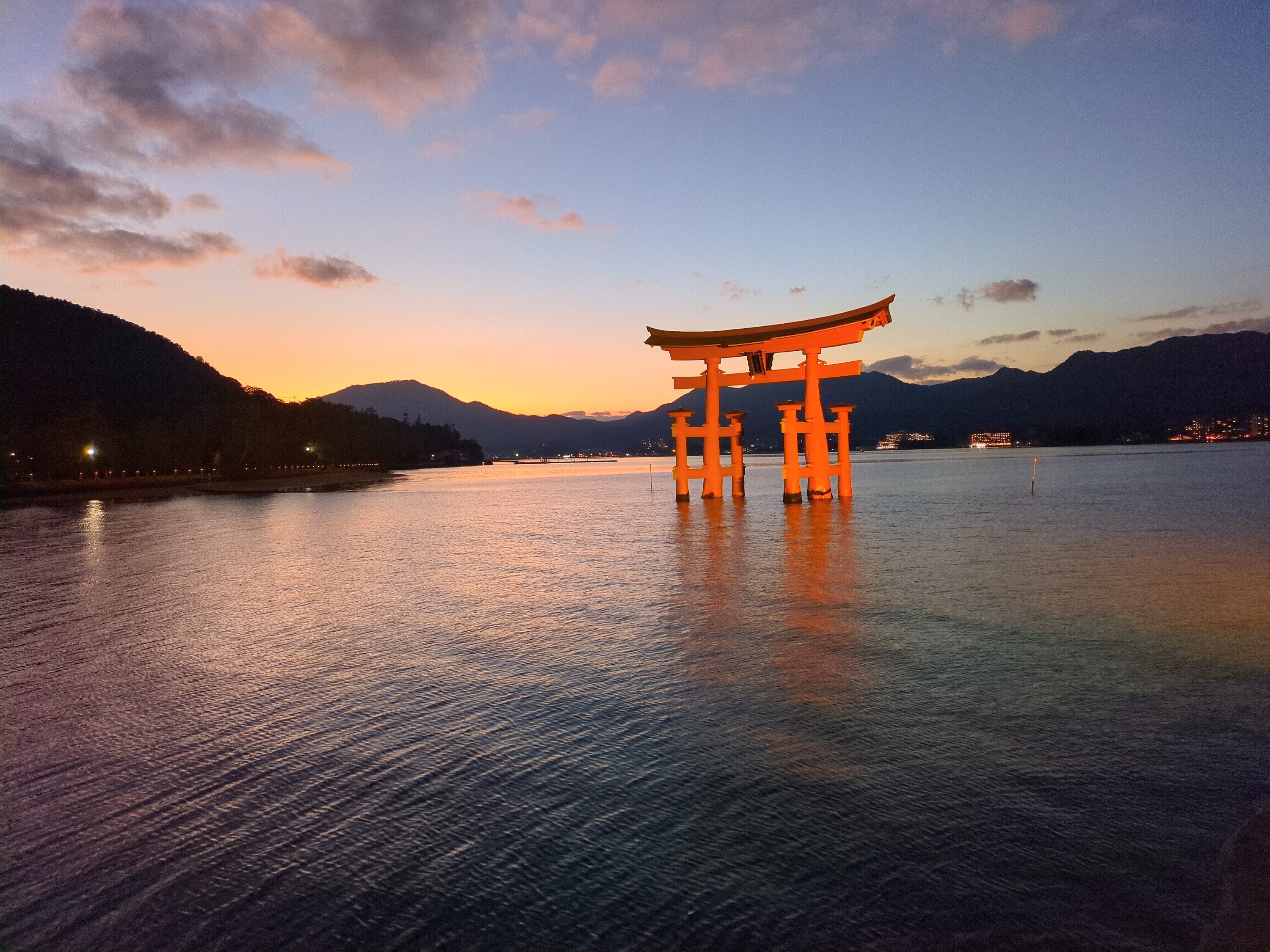
A beautiful island known for its floating torii gate, scenic views, and historic temples. It is a UNESCO World Heritage site and a must-visit destination near Hiroshima.
Nature/Historical
Full day
Ferry: ¥360 (round trip), Shrine: ¥300
Shukkeien Garden
A beautiful traditional Japanese garden with ponds, bridges, and meticulously landscaped areas. It offers a peaceful retreat from the city bustle.
Nature
1-2 hours
¥260
Hiroshima Castle
A reconstructed castle that offers a glimpse into Hiroshima's feudal past. The castle houses a museum and provides panoramic views of the city.
Historical/Architecture
1-2 hours
¥370
Hiroshima Okonomimura
A multi-story building dedicated to Hiroshima's famous okonomiyaki (savory pancake). It houses several restaurants and offers a fun, interactive dining experience.
Food/Cultural
1-2 hours
Budget to Moderate
Must-Try Local Dishes
Hiroshima-style Okonomiyaki
A layered savory pancake made with noodles, cabbage, and various toppings, typically cooked on a teppan (iron griddle).
Dinner
Contains wheat, meat, and seafood. Vegetarian and vegan options may be available.
Hiroshima-style Oysters
Hiroshima is famous for its oysters, which are often grilled, fried, or served raw. They are typically harvested from the Seto Inland Sea.
Snack/Dinner
Contains shellfish. Not suitable for those with seafood allergies.
Hiroshima-style Udon
Thick, chewy wheat noodles served in a hot broth, often with various toppings like tempura or beef.
Lunch/Dinner
Contains wheat. Vegetarian and vegan options may be available.
Hiroshima-style Anago Meshi
Grilled saltwater eel served over rice, a local delicacy with a rich, savory flavor.
Lunch/Dinner
Contains fish. Not suitable for those with seafood allergies.
Popular Activities
Hiking on Miyajima Island
Cycling around Hiroshima
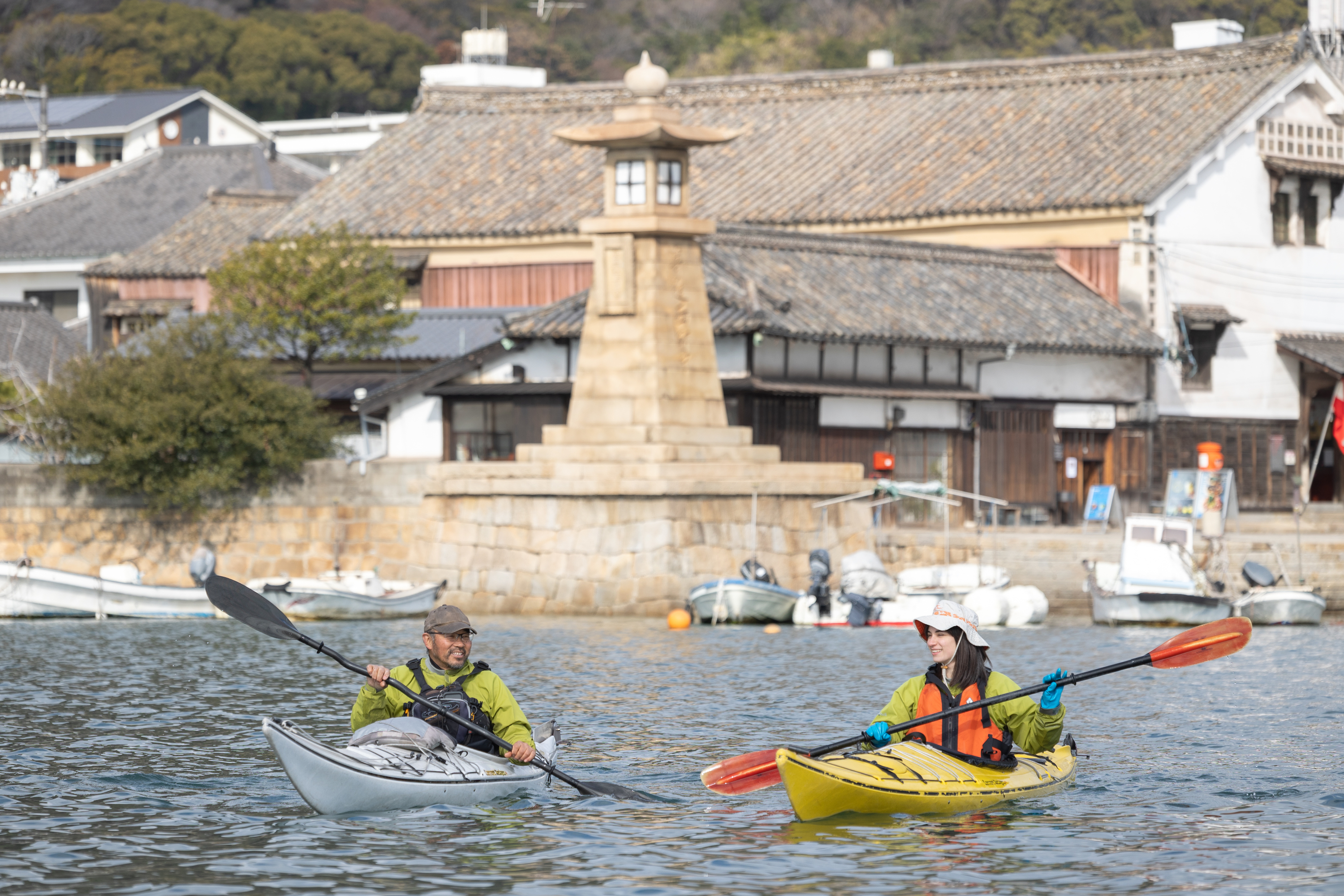
Kayaking in the Seto Inland Sea
Visiting Shukkeien Garden
Taking a leisurely streetcar ride
Enjoying a traditional tea ceremony
Visiting the Peace Memorial Park and Museum
Exploring the Hiroshima Castle
Best Time to Visit
Spring (March to May) and Autumn (September to November)
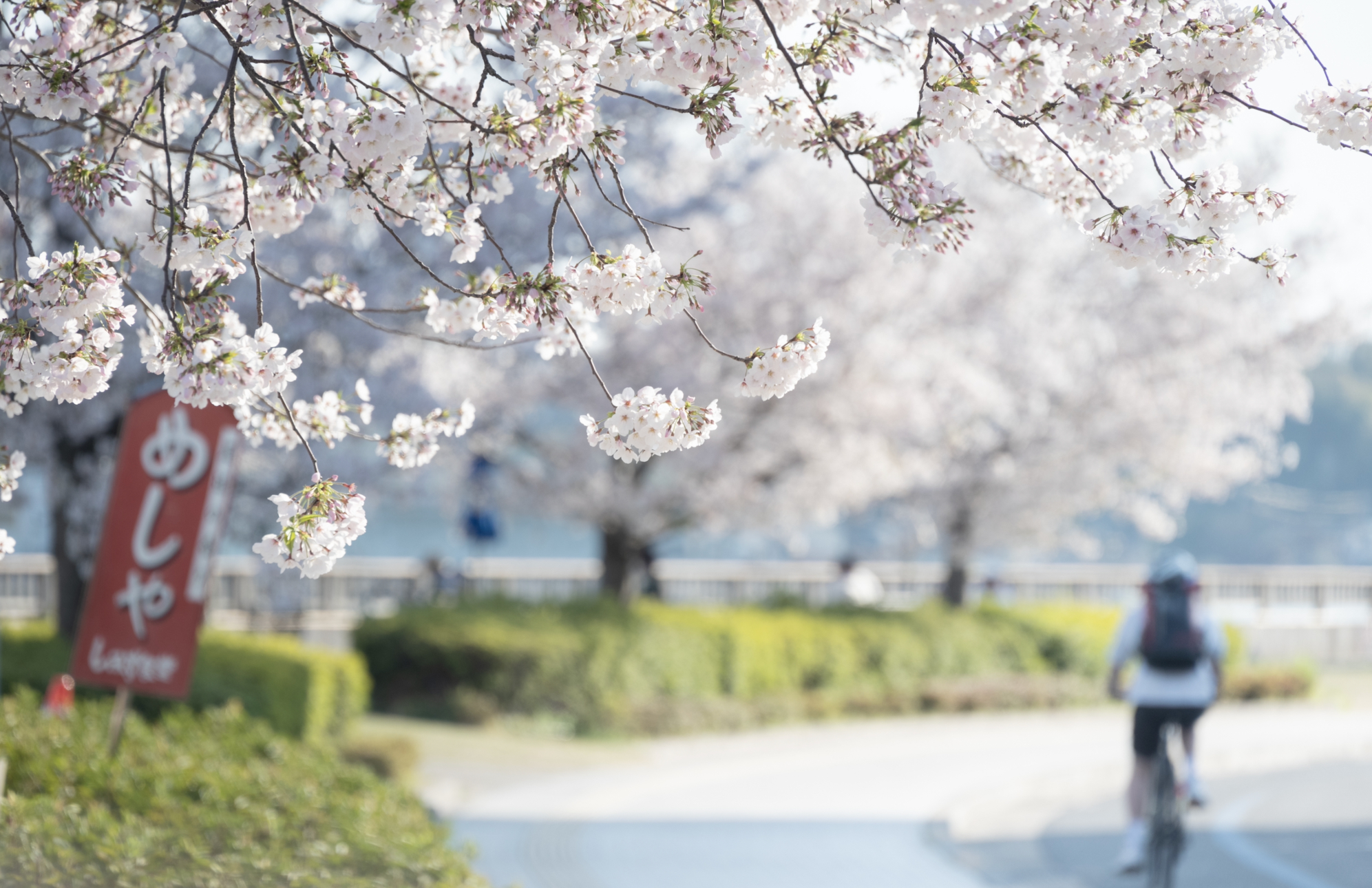
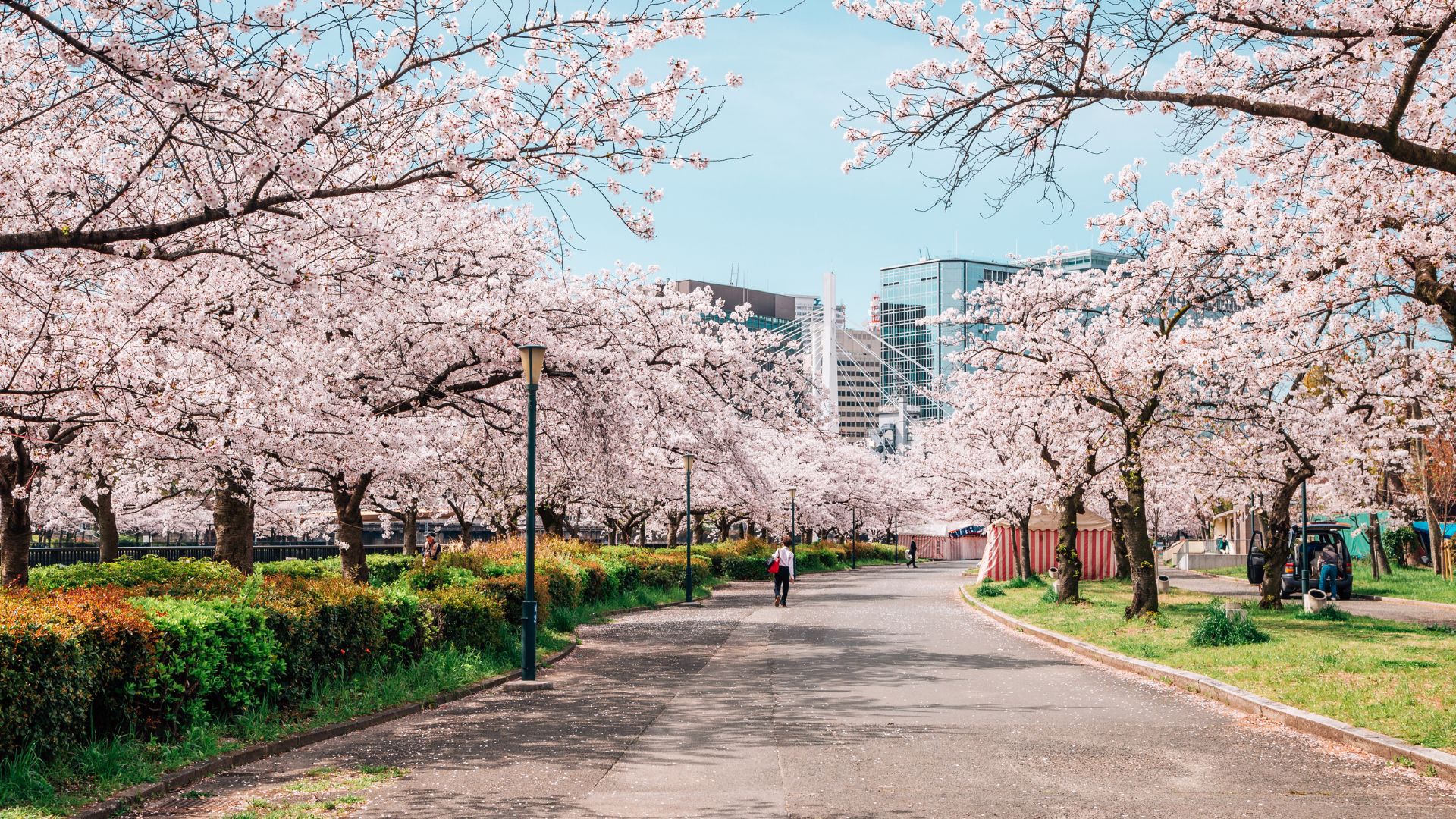
Spring offers cherry blossoms and mild weather, while autumn provides comfortable temperatures and vibrant foliage. These are the best times to visit for pleasant weather and outdoor activities.
15-25°C
59-77°F
Practical Information
Language
- Official: Japanese
- Widely spoken: English (limited)
- English: Limited
Currency
Japanese Yen (JPY)
Time Zone
GMT+9
Electricity
100VV, 50/60HzHz
Safety Information
Overall Safety Rating: Very safe
Hiroshima is a very safe city with a low crime rate. Violent crime is rare, and pickpocketing or petty theft is uncommon. However, travelers should still exercise caution and be aware of their surroundings.
Important Precautions:
- • Be cautious of unlicensed taxis and always check that the taxi has a meter.
- • Keep valuables secure and be aware of your surroundings in crowded areas.
- • Use reputable tour guides and services, and be wary of offers that seem too good to be true.
Getting there
By air
- Hiroshima Airport • 50 km from city center
By train
Hiroshima Station
By bus
Hiroshima Bus Center
Getting around
Public transport
The streetcar system is the main form of public transport in Hiroshima, offering an affordable and convenient way to get around.
Taxis
Available • Apps: JapanTaxi, DiDi
Rentals
Car, Bike, Scooter
Neighborhoods
Naka-ku
Higashi-ku
Nishi-ku
Minami-ku
Asaminami-ku
Day trips
Miyajima Island
10 km from Hiroshima • Full day
A beautiful island known for its floating torii gate, scenic views, and historic temples. It is a UNESCO World Heritage site and a must-visit destination near Hiroshima.
Onomichi
80 km from Hiroshima • Full day
A charming port city known for its historic temples, scenic views, and literary connections. Onomichi offers a mix of cultural attractions and natural beauty.
Iwakuni
50 km from Hiroshima • Full day
A historic city known for its stunning castle, beautiful gardens, and traditional samurai district. Iwakuni offers a mix of cultural attractions and scenic views.
Festivals
Hiroshima Flower Festival • May 3-5
Hiroshima International Animation Festival • August (varies by year)
Hiroshima Peace Memorial Ceremony • August 6
Pro tips
- Get a Hiroshima Amazing Pass for unlimited rides on the streetcar, bus, and ferry to Miyajima Island, as well as entry to major attractions.
- Visit the Peace Memorial Park and Museum early in the morning for a more serene and reflective experience.
- Try cooking your own Hiroshima-style okonomiyaki at Okonomimura for a fun and interactive dining experience.
- Hike Mount Misen on Miyajima Island for stunning views of the Seto Inland Sea and the surrounding area.
- Use IC cards like ICOCA for seamless payments on public transport and to save money on fares.
From $25
per person
Price varies by option
Secure booking
Free cancellation available
Instant confirmation