Private Tour Lisbon-Faro / Faro-Lisboa with 4 Parages
Active
9h
For a full refund, cancel at least 24 hours before the scheduled departure time.
Instant confirmation
Mobile or paper ticket accepted
About this experience
Exploring the wonderful cida DEs, villages and beaches of southern Portugal is a unique and personalized experience. Imagine walking through the charming streets OF picturesque villages, DE discovering the rich local history and relaxing on golden sandy beaches. Each place has its own charm and stories to tell.
DE 5 destinations you can choose 4
This transfer, whether DE tourism or DE business, will be a pleasant, comfortable and relaxing ride, in which safety, punctuality and professionalism are our commitment.
You will travel in luxury cars, BMW 520d, up to 3pax or Mercedes Van, up to 7pax equipped with AC, WIFI, NO DE greatest comfort.
All our services are private, you will travel only with your friends, family or work colleagues.
Our professional drivers will be your personal assistants during the journey, taking care DE that everything is at your pleasure.
Available options
Private Tour Lisbon-Faro
4 Parages<br/>Duration: 9 hours<br/>Lisbon-Faro: Choose 4 DE 5 options
Setúbal*Portimão*Lagos*Sagres*Albufeira<br/>Luxury Sedan or Luxury Van: Sedan Luxury BMW 520d or Van Luxury Mercedes<br/>Pickup included
Private Tour Faro-Lisboa
4 Parages<br/>Duration: 9 hours<br/>Faro-Lisboa: Choose 4 DE 5 options
Sagres*Lagos*Portimão*Albufeira*Setúbal<br/>Luxury Sedan or Luxury Van: Sedan Luxury BMW 520d or Van Luxury Mercedes<br/>Pickup included
What's included
Private transportation
WiFi on board
Bottles DE mineral water
Air-conditioned vehicle
luxury vehicle
What you'll see
Itinerary:
This is a normal itinerary for this product.
Place DE departure:
Departure DE Lisbon, District DE Lisbon, Portugal
Departing from Faro, Faro District, Portugal
Place DE stop : Setúbal, District Setúbal, Portugal
Setúbal is a Portuguese town, capital of the District DE Setúbal, located southeast of Lisbon, on the north bank of the Estuary of the Sado River. With approximately 51,49 km2 of area, the cida DE has very ancient origins, with traces OF human occupation OF the Neolithic and the presence of peoples such as Phoenicians, Greeks, Carthaginians and, later, the Romans, who installed fish salting factories and developed local ceramics.
During the Middle Ages, Setúbal was marked POR periods OF stagnation due to invasions and piracy, but it again prospered from the thirteenth century, under the protection OF the Gold DE m of Santiago. NO 15th century, it became known also POR iconic buildings such as the Monastery DE Jesus, a reference of the Manueline style and an important historical monument, now converted into a museum. Another DE stack is the Castle of St. Philip, a 16th-century fortress overlooking the city and the estuary, now adapted as a B&B.
Today, Setúbal is known for its industrial port and automotive sector, as well DE being a tourist destination appreciated for its beaches, natural parks and gastronomy, especially fresh fish and fried chocolate. The cida DE retains a traditional environment, with squares, old palaces and narrow streets, being valued DA both for its historical-cultural heritage and its proximity to natural areas of great beauty, such as the Arrábida Natural Park.
Duration: 1 hour
Place DE stop : Lagos, Distrito Faro, Portugal
Located in the Algarve region of Portugal, the cida DE Lagos has a rich history dating back to the Roman period. Originally known as "Lacobriga", the cida DE was an important centre of commerce and fishing during the Roman period. With the fall of the Roman Empire, Lagos went POR several invasions, including that of the Visigoths and, later, of the Moors, who conquered it NO 8th century.
During the Muslim occupation, Lagos prospered and became an important port. The cida DE was regained by the Christians in 1249, during the Reconquista, and became part of the Kingdom of Portugal. NO 15th century, Lagos gained DE stack as one of the main ports of departure for Portuguese maritime exploration, especially during the Age of Discoveries. It was DE there that many sailors, such as Infante Dom Henrique, departed in search DE new trade routes and unknown lands.
NO 16th century, Lagos was fortified to protect itself DE attacks, especially from pirates. The cida DE was also an important center OF slave trade during this period. NO, the cida DE suffered a major blow in 1755, when a devastating earthquake destroyed much of its infrastructure.
Today, Lagos is known POR its beautiful beaches, rich cultural and historical heritage, and attracts tourists DE all over the world. The cida DE preserves many vestiges DE its past, including churches, fortresses and the famous Slave Market, which relates to its history of commerce. The combination OF history, culture and natural beauty makes Lagos a fascinating destination in Portugal.
Duration: 1 hour
Place DE stop : Portimão, Distrito Faro, Portugal
Portimão is a city NO southwest of the Algarve in Portugal, known for its historic connection to the sea, the Ara River DE and its extensive fine sand beaches and crystal clear waters. The history OF Portimão dates back to prehistory, with traces OF Phoenician, Carthaginian, Greek, Roman and Arab occupation, reflecting its importance as a point OF commercial and cultural exchange between the Mediterranean, the Atlantic and the North OF Africa.
During the I DA MEDIA, Portimão was conquered by the Muslims by the Knights of the Order of Santiago in 1290 and elevated to the Villa in 1453. In DE following centuries, the construction of the fortresses DE São João (Ferragudo) and Santa Catarina (Praia DA Rocha) provided greater security against pirate attacks.
The great DE economic development of Portimão occurred NO 19th century with the conserve industry and the intensification OF fishing, becoming one of the main ports OF fishing DE Portugal. Industrial growth led to the construction of the bridge in the river area, reinforcing the port's role in the local economy. In 1924, Portimão was elevated to the category DE city and continued to expand urbanly.
Today, Portimão is an important Algarve urban centre, with about 40,000 inhabitants. DE stands out also for its cultural offer, architectural heritage and events that celebrate the local history, in addition to being a tourist destination SO sought after for its beaches and typical gastronomy, such as the roasted sardines at the traditional pier.
Duration: 1 hour
Place DE stop : Albufeira, Distrito Faro, Portugal
Albufeira is a city and municipality in DE Algarve, NO southern Portugal, recognized for its historic past and its importance as a tourist destination. Its human occupation dates back, at least, to the year 2000 a.C., having been inhabited POR Phoenicians, Romans and, later, POR Muslims, who gave it the Arabic name "al-Buħayra" (the lagoon, by the sea or castle of the sea) due to its location in an amphitheatre over the ocean.
During the Islamic period, Albufeira was fortified and possessed an almorávid castle, of which only ruins remain today. This virtually inexpugnable fortification was the last Arab stronghold to fall to the troops of King Afonso III in 1249, and was DEfter donated to the Order of Avis. The narrow streets, white houses with bows and arches, and part of the castle walls still witness the Arab influence.
Over the course OF its history, Albufeira has been marked BY several constructive events, notably the earthquake of 1755, which devastated almost the entire Villa and caused hundreds OF deaths. Despite these challenges, the city was being rebuilt and developed, especially from the 19th century, with fishing as the main economic engine.
Today, Albufeira DE stands as one of the main tourist sites in Portugal, famous for its beaches, nightlife and cultural heritage, such as the Matriz Church (an old mosque adapted to Christian worship) and the Church of St. Sebastian. In 2009 - 2010, he entered the Guinness World Records by performing the world's largest toast at Fishermen's Beach, with 25,000 people.
Duration: 1 hour
Place DE stop : Faro, Faro, District Faro, Portugal
Faro is the capital OF the Algarve region, NO south OF Portugal, and plays a central role both administratively and culturally. The cida DE has a rich history dating back to antiquity, with evidence of Roman occupation in the area. During the Roman period, the city was known as Ossonoba and was an important commercial and port center.
With the arrival of the Moors NO 8th century, the city gained the name "Faru" and prospered under Islamic rule, which left a lasting mark on local architecture and culture. After the Christian reconquest in 1249, Faro began to develop as an economic and administrative center.
NO 16th century, Faro became the seat of the Algarve bishophood, which contributed to its growth and importance. One of the most significant historical landmarks DE Faro is its cathedral, the Sé DE Faro, located in the Old Town, an area surrounded POR walls that preserves the charm of the old settlement.
The cida DE faced SAFIES over the centuries, including pirate attacks and the devastating 1755 earthquake, which caused significant damage. Faro was reconstructed DA and continued to expand, especially with the arrival of the railroad NO 19th century, which facilitated transportation and trade.
Today, Faro is known POR its unique blend DE history, culture and natural beauty. It is the entrance DOOR to the Algarve, with the Faro International Airport facilitating access to this picturesque region. Cida DE offers a combination of tourist attractions, from the picturesque streets DA Ci DA Velha to the vibrant nightlife and proximity to the Natural Park of Ria Formosa, an ecological sanctuary of international importance. Faro is also famous for its gastronomy, DE stacking up the dishes of fish and seafood.
Place DE arrival:
Get to Faro, District DE Faro, Portugal
Get to Lisbon, District DE Lisbon, Portugal
The Cave DE Benagil, or Algar DE Benagil, is one of the most impressive natural wonders of the Algarve and one of its most iconic sights. Located among the dramatic golden cliffs of the municipality DE Lagoa, this cave is famous for its unique formation and the small secret beach NO its interior.
What makes the Cave DE Benagil special?
Formation and beauty: Formed over the course OF thousands OF years by the erosion of the sea and wind, the cave is composed POR typical calcary rocks OF the Algarve coast. Its great differential is the circular opening NO top – known as “eye” – that DEeds sunlight in, illuminating the golden sand and creating a spectacle of light and color.
Secret beach: Inside DA cave there is a small beach DE fine sand, considered POR many as one of the most beautiful in the world. The contrast of the golden DA rock and turquoise blue of the sea is simply unforgettable.
Access only by sea: It is not possible to enter by land; you only get to the cave DE boat, kayaking or stand up paddle. This makes the visit even more adventurous and helps preserve the environment.
How to visit the Cave DE Benagil
Here are some practical tips for your visit :
Boat tour : Saem DE Benagil, Carvoeiro, Portimão and other nearby cities. Tours often include visits to other caves and coastal formations.
Kayak or SUP: For those who want more autonomy and contact with nature, it is possible to rent equipment and sail to the cave.
Trail to the top: It is possible to walk through the cliffs and observe the opening DA the cave DE above — the view is amazing, but there is no direct access to the interior.[3]
Different points DE vue
Those looking for comfort and safety opt FOR boat trips — ideal for families and groups.
Adventurers prefer to explore DE kayaking or SUP, enjoying the freedom and tranquility of the sea.
There are also those who prefer to admire the “eye” DA the cave only from the top of the cliffs, taking advantage of to take unique photos.
Quick tips to get better
Use sunscreen, water and hat — sun exposure is intense.
If possible, go early or outside DA high season to avoid crowds.
Book the tour in advance, especially NO summer.
- Our transfers are quite flexible, and direct transfers can be made at any time of the day or DA night 24x7, (3h30).
- Direct transfers range from 650€ POR group (up to 3pax) Sedan or 750€ POR group (up to 7pax) Van.
- The DE 3 stops start at (8h/9h/10h)
What's not included
Meals
Entrance - Monuments and Events
Available languages
Guide guide
PT
EN
ES
Important information
Specialized infant seats are available
Service animals allowed
Infants and small children can ride in a pram or stroller
All areas and surfaces are wheelchair accessible
Transportation options are wheelchair accessible
Wheelchair accessible
Suitable for all physical fitness levels
About Lisbon
Lisbon, the capital of Portugal, is a vibrant city known for its rich history, stunning architecture, and warm climate. With its charming streets, historic trams, and breathtaking viewpoints, Lisbon offers a unique blend of old-world charm and modern energy.
Top Attractions
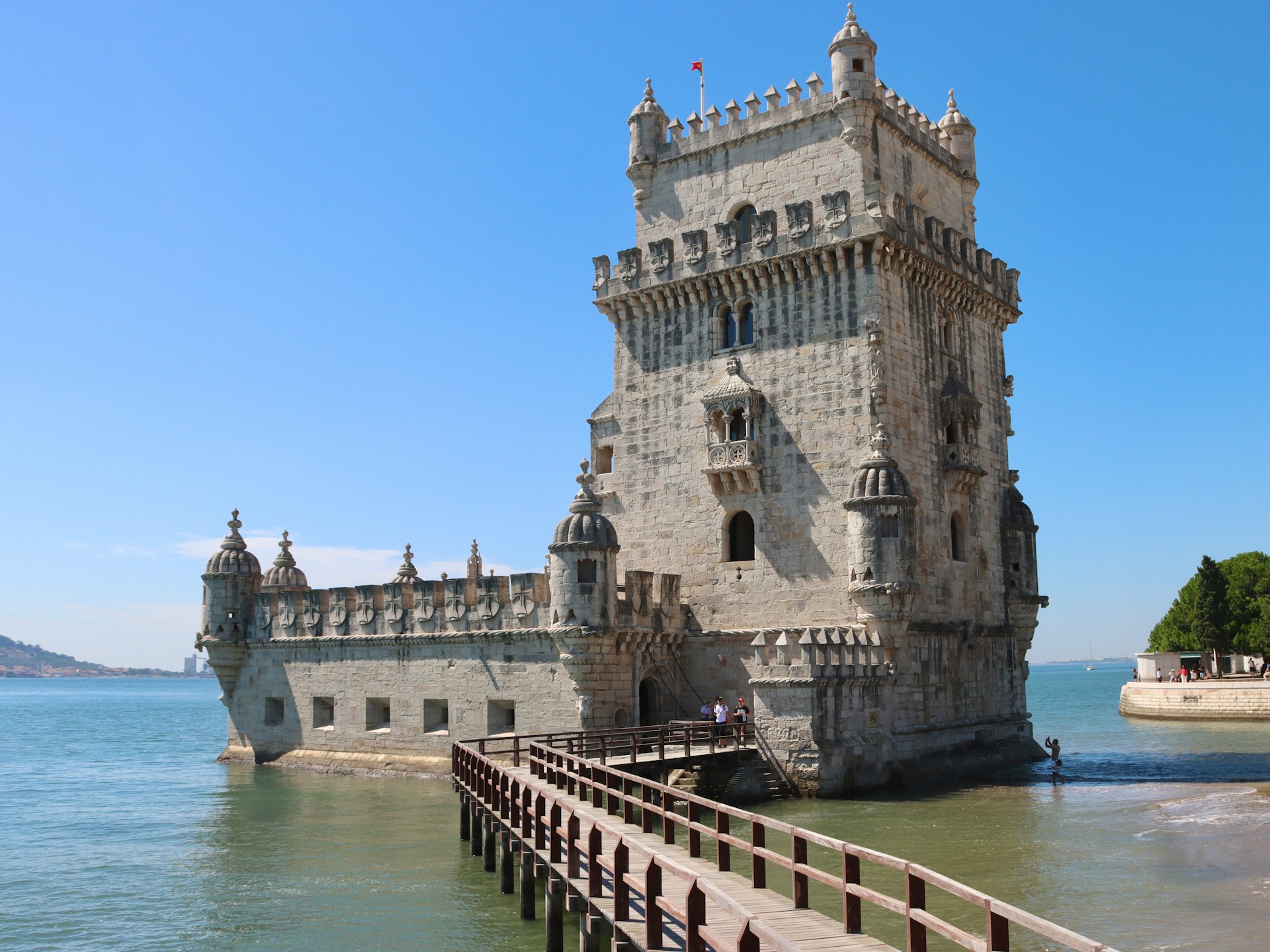
Belém Tower
A UNESCO World Heritage Site, this 16th-century tower is an iconic symbol of Lisbon's Age of Discoveries.
Historical
1-2 hours
€6
Alfama District
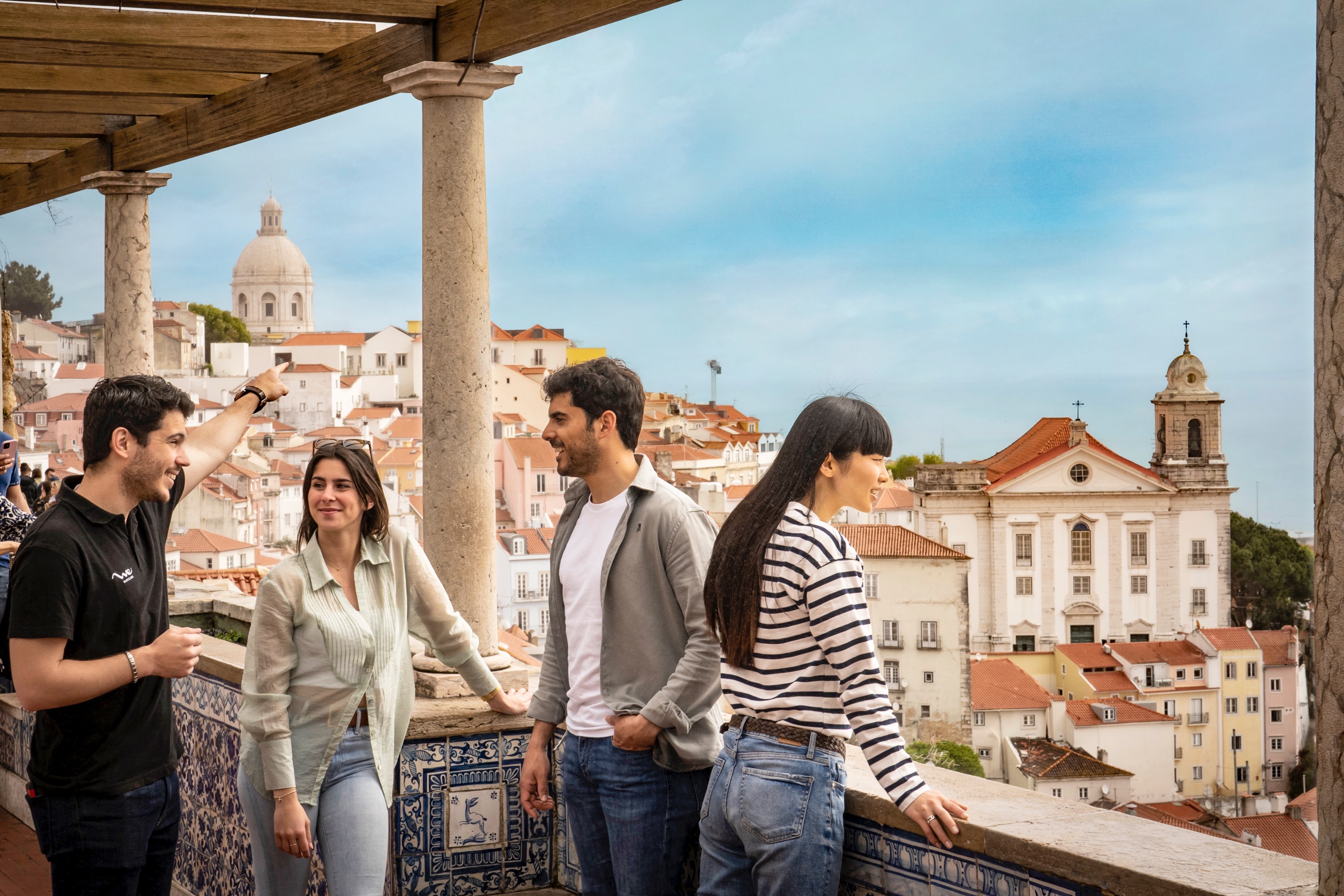
Lisbon's oldest district, known for its narrow, winding streets, Fado music, and historic charm.
Historical
Half day
Free to explore, attractions may have entry fees
Sintra
A UNESCO World Heritage Site, Sintra is a romantic town with stunning palaces and castles.
Historical
Full day
Varies by attraction, around €10-€15 per site
Must-Try Local Dishes
Bacalhau à Brás
Shredded codfish with eggs, potatoes, and onions
Main Dish
Contains fish and eggs
Pastel de Nata
Custard tart with a flaky pastry crust
Dessert
Contains dairy and eggs
Francesinha
A sandwich with meat, cheese, and a beer-based sauce
Main Dish
Contains meat, cheese, and gluten
Popular Activities
Hiking in Sintra
Surfing in Ericeira
Parasailing in Cascais
Beach lounging in Costa da Caparica
Spa day in a luxury hotel
Picnic in Jardim da Estrela
Visiting museums and galleries
Attending Fado performances
Best Time to Visit
March to May, September to October
These months offer pleasant weather and fewer crowds, making it ideal for sightseeing and outdoor activities.
15-25°C
59-77°F
Practical Information
Language
- Official: Portuguese
- Widely spoken: English, Spanish, French
- English: Moderately spoken
Currency
Euro (EUR)
Time Zone
GMT+1 (Western European Time, WET)
Electricity
230VV, 50HzHz
Safety Information
Overall Safety Rating: Generally safe
Lisbon is generally safe, but pickpocketing and petty theft can occur in crowded areas.
Important Precautions:
- • Be cautious of pickpockets in crowded areas
- • Use licensed taxis or ride-sharing apps
- • Avoid walking alone at night in less crowded areas
Getting there
By air
- Humberto Delgado Airport • 7 km from city center
By train
Santa Apolónia, Oriente
By bus
Sete Rios, Jardim do Campo Grande, Gare do Oriente
Getting around
Public transport
Efficient and clean, with four lines connecting major attractions.
Taxis
Available • Apps: Bolt, FreeNow
Rentals
Car, Bike, Scooter
Neighborhoods
Alfama
Baixa
Bairro Alto
Day trips
Sintra
25 km from Lisbon • Full day
A romantic town with stunning palaces, castles, and lush gardens.
Cascais
30 km from Lisbon • Half day to full day
A charming coastal town with beautiful beaches, historic sites, and a relaxed atmosphere.
Óbidos
80 km from Lisbon • Full day
A medieval town with a well-preserved castle, narrow streets, and charming shops.
Festivals
Santos Populares • June 13th
Festival dos Oceanos • June to September
Arraial do Alfoz • June to September
Pro tips
- Visit the Time Out Market for a variety of local and international cuisines
- Take a day trip to Sintra and Cascais for a mix of history and beach relaxation
- Explore the LX Factory for a unique shopping and dining experience
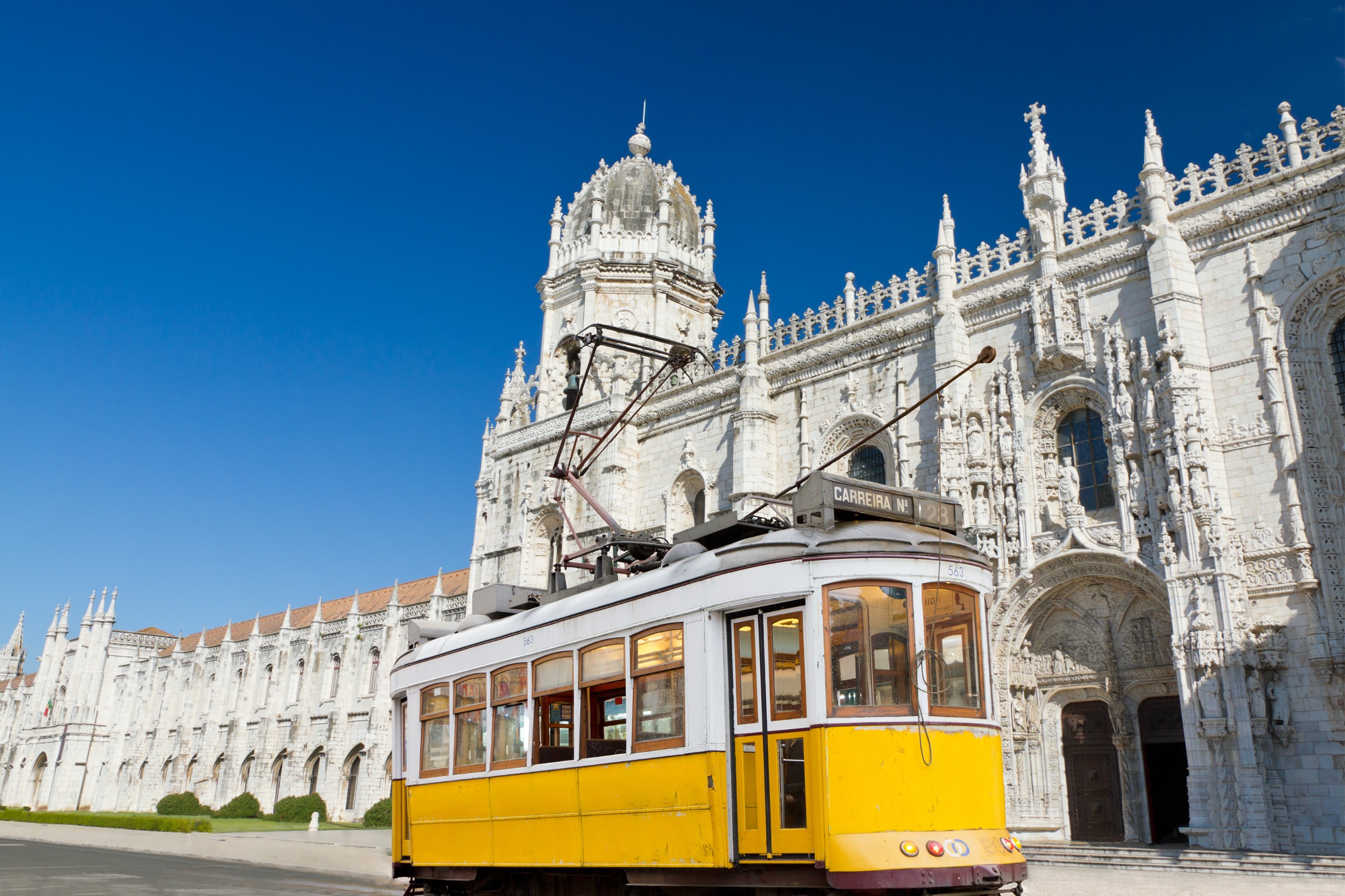
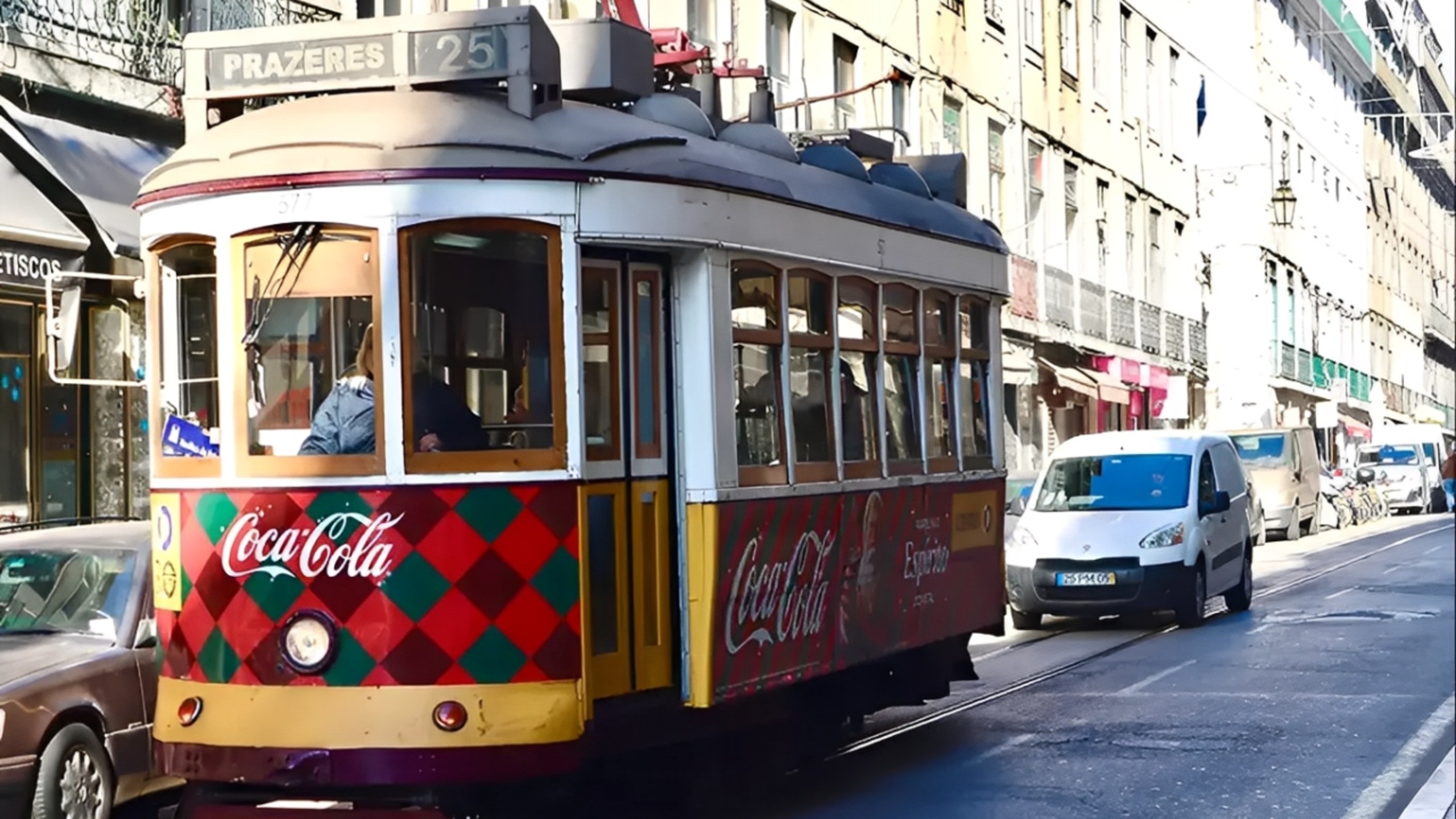
- Ride the historic Tram 28 for a scenic tour of the city
- Visit the MAAT museum for a blend of art, architecture, and technology
From $25
per person
Price varies by option
Secure booking
Free cancellation available
Instant confirmation