Palermo Walking Tour with Audio and Written Guide by a Local
Active
6h - 7h
For a full refund, cancel at least 24 hours before the scheduled departure time.
Instant confirmation
Mobile or paper ticket accepted
About this experience
If you're looking for a fun and curious way to visit Palermo, you've come to the right place! With this digital guide created with the support of a local, you will be able to visit all the most important monuments at your own pace. You'll get to know the stories and curiosities of Palermo! But also you will discover everything about local foods, Italian Aperitivo in authentic local restaurants, and much more! What are you waiting for?
Available options
Palermo Walking Tour with Audio and Written Guide by a Local
What's included
Best advices for local restaurant with authentic food
Audio-guide and text in multiple languages (Eng, Esp, Ita, De, Fr)
Connected with google maps
Tips for monuments, history and curiosities
Digital guide to visit the city by yourself
Detailed itinerary
1
The Church of San Giovanni degli Eremiti in Palermo is a monument of great charm, part of the UNESCO itinerary “Arab-Norman Palermo and the Cathedrals of Cefalù and Monreale.” The complex stands on a site with a long religious tradition, which first included a monastery dedicated to Saint Hermes and, during the Muslim domination, a mosque. The church was later entrusted to the Benedictines and became an important religious center. During this period the abbot also acted as the King’s confessor.
2
Stop 2
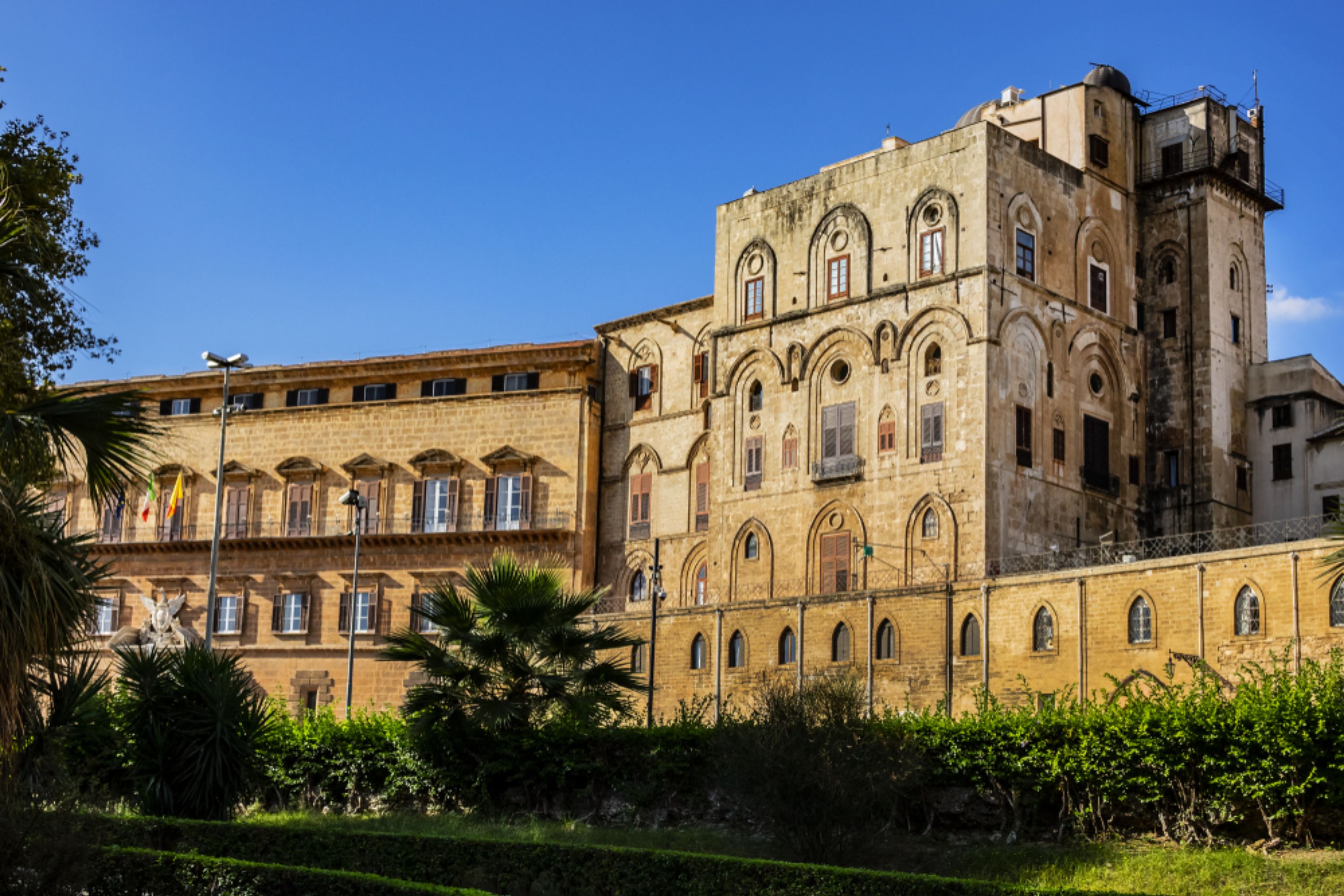
The Norman Palace, also known as the Royal Palace, is one of the most significant and historically relevant monuments in Palermo. It is the oldest royal palace in Europe. The Norman Palace stands on an older structure, dating back to the Punic-Roman period. In the underground areas that can still be visited, it is even possible to see the remains of the first Punic settlements.
3
Stop 3
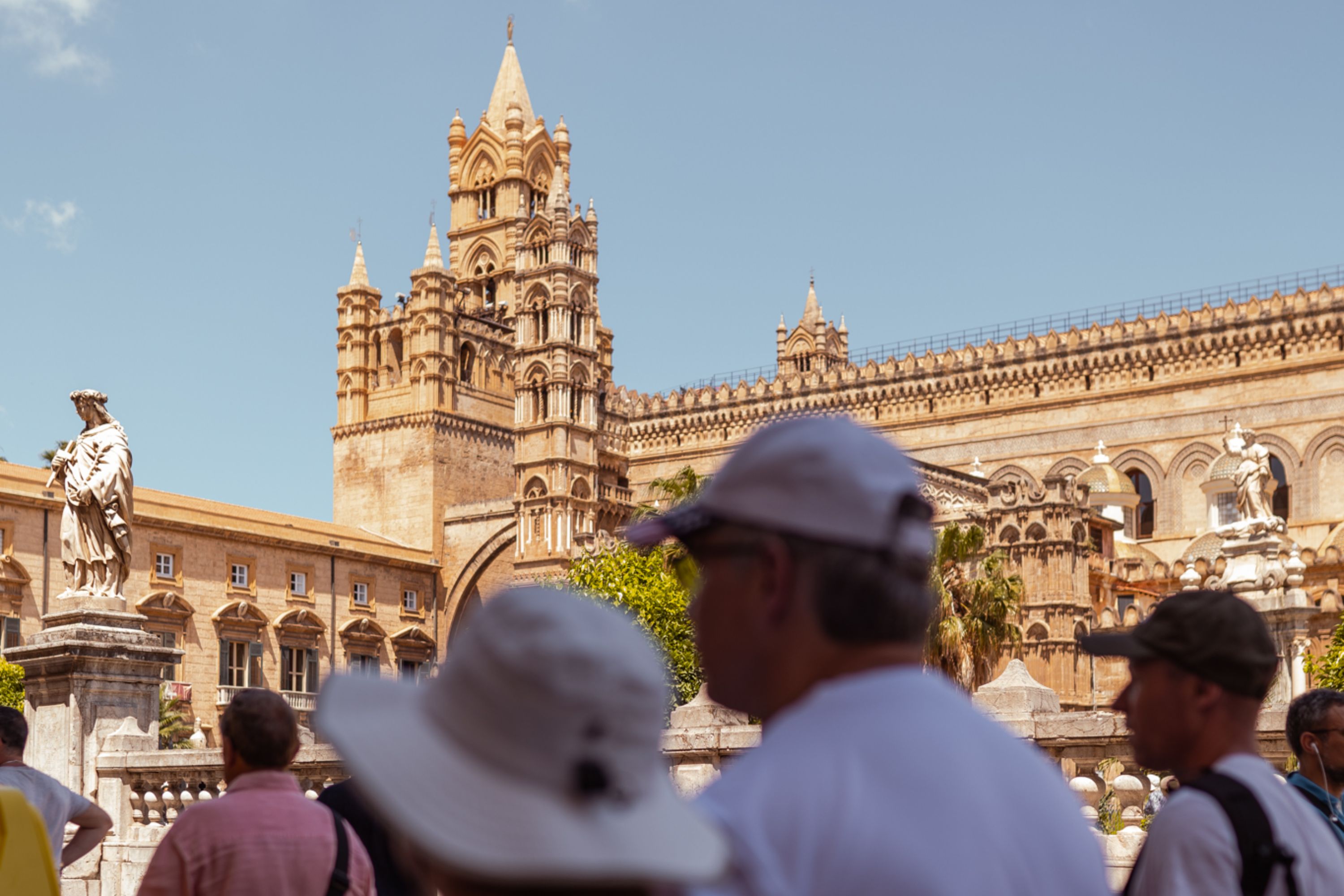
Palermo Cathedral combines Byzantine, Islamic and Latin elements and has been recognized as a World Heritage Site by UNESCO. The cathedral is an important site of Christian worship and houses the Diocesan Museum and the Chapel with the relics of Santa Rosalia, patron saint of the city, as well as the tombs of the Norman kings.
4
Stop 4
The Teatro Massimo in Palermo is the largest opera house in Italy and the third in Europe. Situated in a strategic position, on the border between the old city and the northern expansion, this imposing neoclassical building was designed by Giovanni Battista Filippo Basile.
5
Stop 5
Piazza Villena, known to the people of Palermo as Piazza dei Quattro Canti, was created in the Palermo of the seventeenth century where the new Via Maqueda, commissioned by the viceroy from whom it takes its name, met the already existing Via Vittorio Emanuele, also known as the Cassaro. This intersection determined the division of the city into four districts, called “Mandamenti”.
6
Stop 6
Piazza Pretoria is one of the most famous and fascinating squares in Palermo, located in the heart of the historic center of the city, also known as “Piazza della Vergogna” (Square of Shame) because of the fountain in the center of the square itself.
7
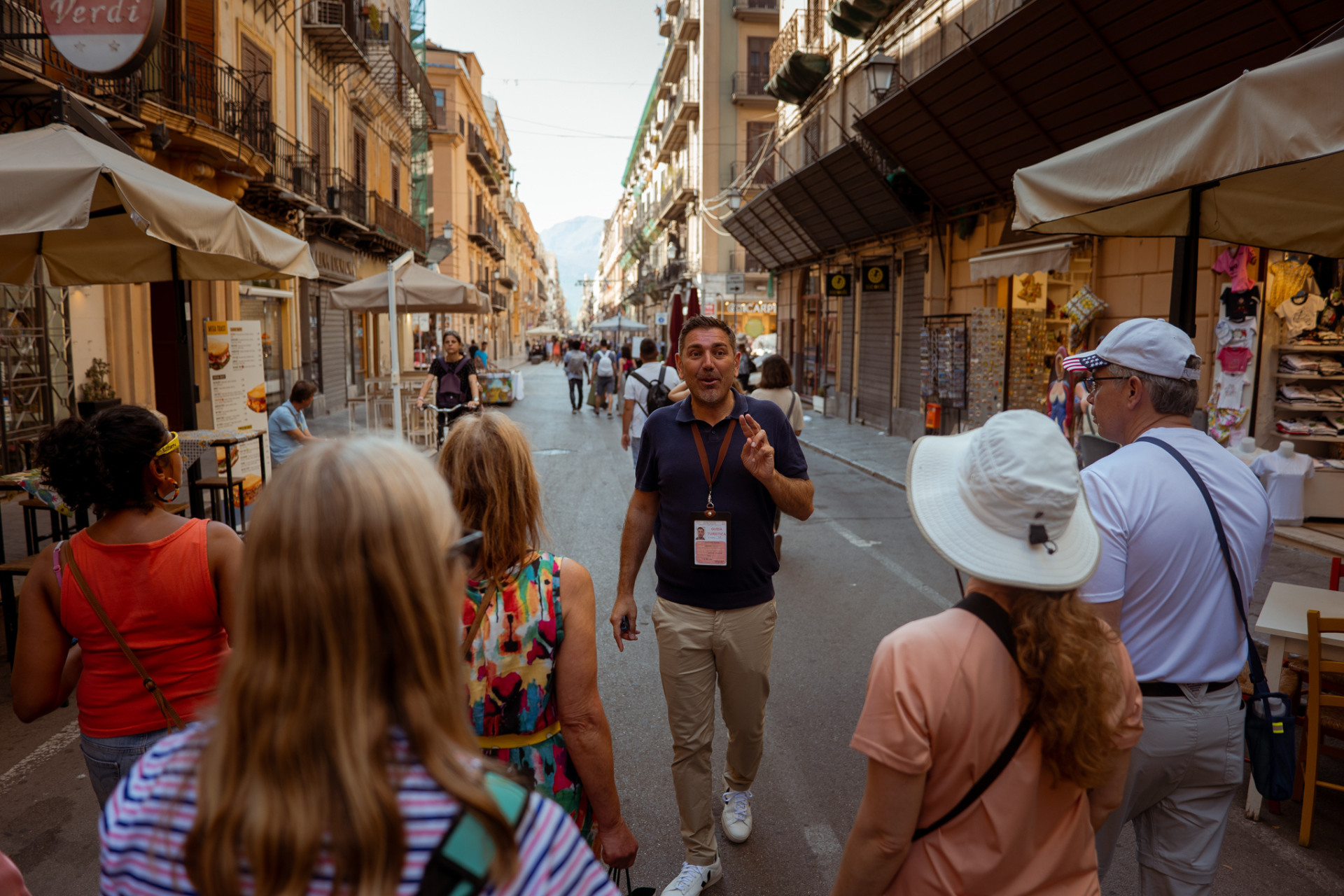
You can’t stay in Palermo without visiting at least once one of the city’s historic markets. The most important are La Vucciria, Capo and Ballarò. he Vucciria market is located in the historic Loggia district, between Via Roma, Piazza San Domenico and Via Vittorio Emanuele. In the past, this market was one of the liveliest and most chaotic in the city center, and its name derives from the French “boucherie” which means “butcher’s shop”, since meat was originally sold here.
8
Kalsa is one of the oldest neighborhoods in Palermo, dating back to the era of Islamic domination. The Kalsa still retains an oriental atmosphere today, accentuated by the presence of monuments in Arab-Norman style.
9
Palazzo Abatellis, located in Piazza Magione, is a prestigious example of Gothic and Renaissance architecture, built in the 15th century for Francesco Abatellis, a Sicilian nobleman. Designed by Matteo Carnilivari, the building combines Gothic elements with Renaissance influences.
10
If you like majolica, this private collection is just right for you. The collection, distributed in eight rooms, is divided by era and geographical origin. It includes tiles produced mainly in Campania and Sicily between the 15th and 19th centuries, used for floors in noble and bourgeois homes.
What's not included
Chiesa degli Eremiti Ticket: 7€
Palazzo dei Normanni ticket: 17€
Teatro Massimo ticket: 12€
Available languages
Audio guide
DE
EN
IT
FR
ES
Written guide
DE
EN
IT
FR
ES
Reviews breakdown
Viator
4.3
7 reviews
5★
4
4★
2
3★
0
2★
1
1★
0
Tripadvisor
4.5
13 reviews
5★
9
4★
3
3★
0
2★
1
1★
0
Important information
Wheelchair accessible
Infants and small children can ride in a pram or stroller
Service animals allowed
Public transportation options are available nearby
Suitable for all physical fitness levels
You will need a smartphone with internet connection to use the digital guide (details to activate the digital guide will be in your voucher, read it carefully!)
You'll be able to hear the audio through your speakers or, if you have them, through your headphones
Meeting point
My itinerary starts out from this church! However, you can access to the digital guide even before getting here!
Important notes
⚠️TO ACTIVATE YOUR TOUR⚠️ you can click here: https://www.walkingcap.com/palermodigitalguide/
(If you can't click on the link, just copy/paste it in your browser)
Password: 842647549
If you need some support (or you can't login) check the FAQ here: https://walkingcap.com/faq
Or contact me on whatsapp here: +390350311698
or with this link: https://wa.me/message/JSWUDT7IX3WTA1
About Palermo
Palermo, the vibrant capital of Sicily, is a city of rich history, stunning architecture, and a unique cultural blend. Known for its Norman-Arab-Byzantine influences, Palermo offers a mix of grand palaces, bustling markets, and delicious street food that will captivate any traveler.
Top Attractions
Palermo Cathedral
A stunning example of Norman-Arab-Byzantine architecture, Palermo Cathedral is a must-visit for its historical significance and beautiful interior.
Historical/Religious
1-2 hours
€7 for the cathedral and cloister
Palermo Cathedral
This grand palace was the seat of the Norman kings of Sicily. It houses the Palatine Chapel, known for its stunning mosaics and Arabic-Norman architecture.
Historical/Architectural
1.5-2 hours
€12 for the palace and chapel
Ballarò Market
One of Palermo's most famous street markets, Ballarò offers a vibrant atmosphere with fresh produce, street food, and local crafts.
Cultural/Shopping
1-2 hours
Free to explore
Monreale Cathedral
Located just outside Palermo, Monreale Cathedral is famous for its stunning Byzantine mosaics and is a UNESCO World Heritage Site.
Historical/Religious
2-3 hours including travel
€6 for the cathedral and cloister
Teatro Massimo
The largest opera house in Italy and one of the most famous in the world, Teatro Massimo is a masterpiece of neoclassical architecture.
Architectural/Entertainment
1 hour for a tour
€7 for a guided tour
Must-Try Local Dishes
Arancini
Fried rice balls stuffed with ragù, mozzarella, and peas.
Snack
Vegetarian options available
Panelle
Chickpea fritters, a popular street food in Palermo.
Snack
Vegan
Pasta alla Norma
Pasta with tomato sauce, fried eggplant, ricotta salata, and basil.
Main Course
Vegetarian
Cannoli
Crispy pastry tubes filled with sweet ricotta.
Dessert
Vegetarian
Popular Activities
Hiking in the nearby mountains
Swimming and snorkeling at Mondello Beach
Beach lounging at Mondello Beach
Enjoying a leisurely meal at a seaside restaurant
Visiting museums and historical sites
Attending local festivals and events
Boat tours to the nearby islands
Swimming and water sports at the beach
Best Time to Visit
April to June, September to October
These months offer pleasant weather and fewer crowds. It's ideal for sightseeing and outdoor activities.
15°C to 30°C
59°F to 86°F
Practical Information
Language
- Official: Italian
- Widely spoken: Sicilian, English (limited)
- English: Limited
Currency
Euro (EUR)
Time Zone
GMT+1 (Central European Time), GMT+2 during daylight saving time
Electricity
230VV, 50HzHz
Safety Information
Overall Safety Rating: Generally safe
Palermo is generally safe for tourists, but petty crime and pickpocketing can occur in crowded areas. Be aware of your surroundings and take precautions to protect your belongings.
Important Precautions:
- • Keep valuables secure
- • Use licensed taxis
- • Be cautious of strangers approaching you
Getting there
By air
- Palermo Falcone-Borsellino Airport • 32 km from city center
By train
Palermo Centrale
By bus
Palermo Centrale Bus Station
Getting around
Public transport
The bus system is the primary mode of public transport in Palermo. It's affordable but can be crowded during peak hours.
Taxis
Available • Apps: FreeNow, ItTaxi
Rentals
Car, Bike, Scooter
Neighborhoods
Kalsa
Vigàta
Mondello
Day trips
Monreale
7 km • Half day
Monreale is famous for its stunning Byzantine mosaics and the Benedictine Abbey.
Cefalù
70 km • Full day
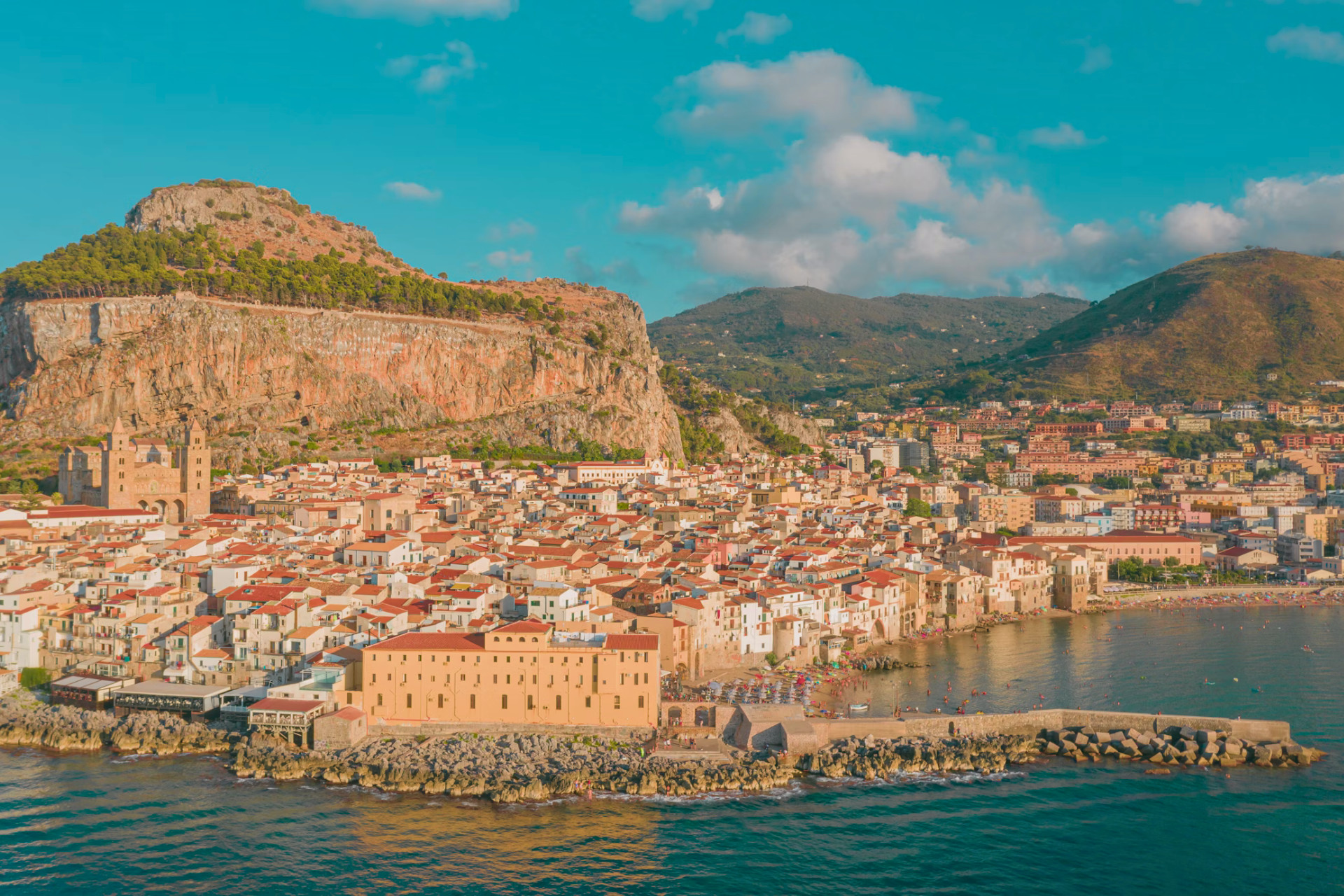
A charming coastal town known for its beautiful beach and medieval cathedral.
Erice
120 km • Full day
A medieval hilltop town with stunning views and well-preserved architecture.
Festivals
Festa di Santa Rosalia • July 10-15
Sagra del Mandarino • January to February
Palermo Pride • June
Pro tips
- Visit the markets early in the morning for the best selection and freshest produce
- Learn a few basic Italian phrases to enhance your experience and interact with locals
- Take a food tour to discover the best street food and local specialties
- Explore the city on foot to discover hidden gems and charming streets
- Visit the cathedral and other religious sites early in the morning to avoid crowds
From $25
per person
Price varies by option
Secure booking
Free cancellation available
Instant confirmation