Évora & Monsaraz : UNESCO Heritage, Wine & Medieval Charm
Active
9h - 10h
For a full refund, cancel at least 24 hours before the scheduled departure time.
Instant confirmation
Mobile or paper ticket accepted
About this experience
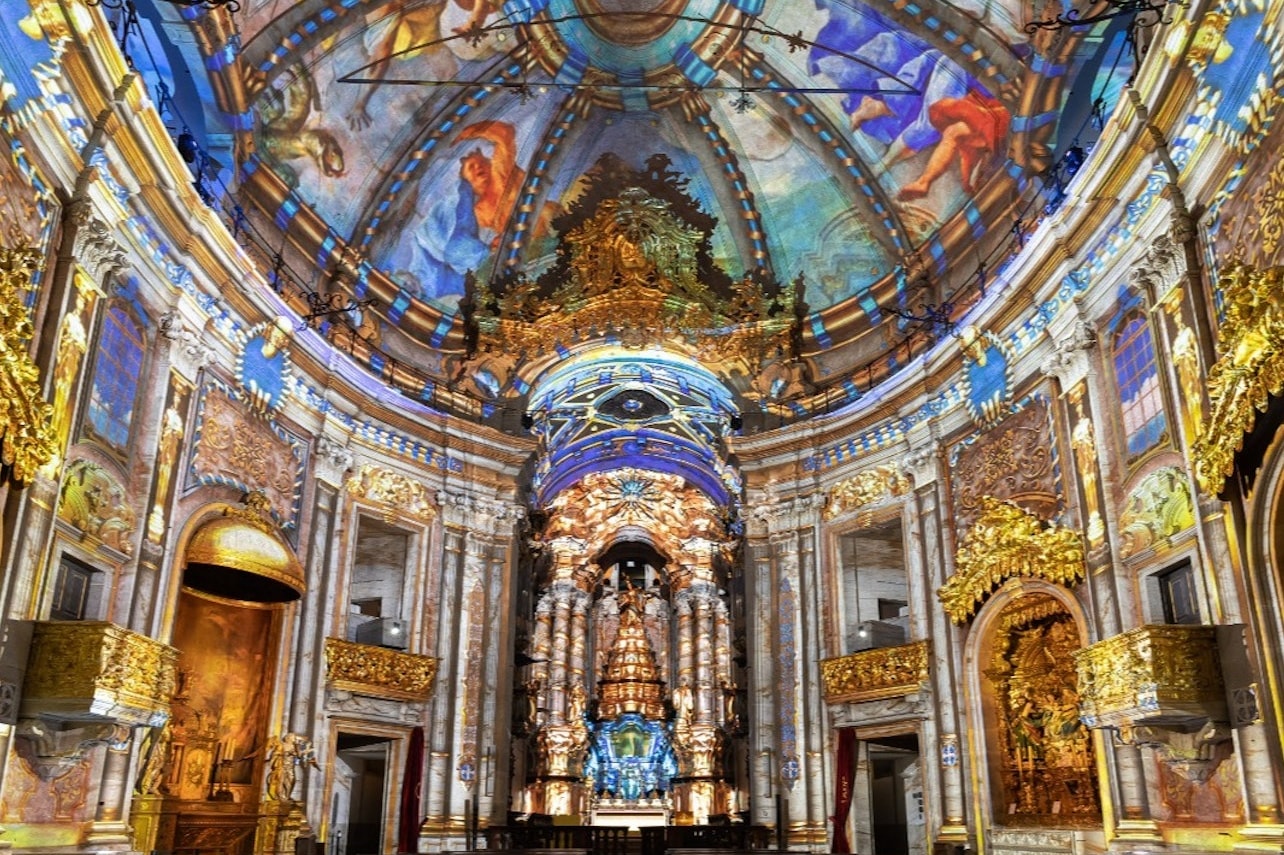
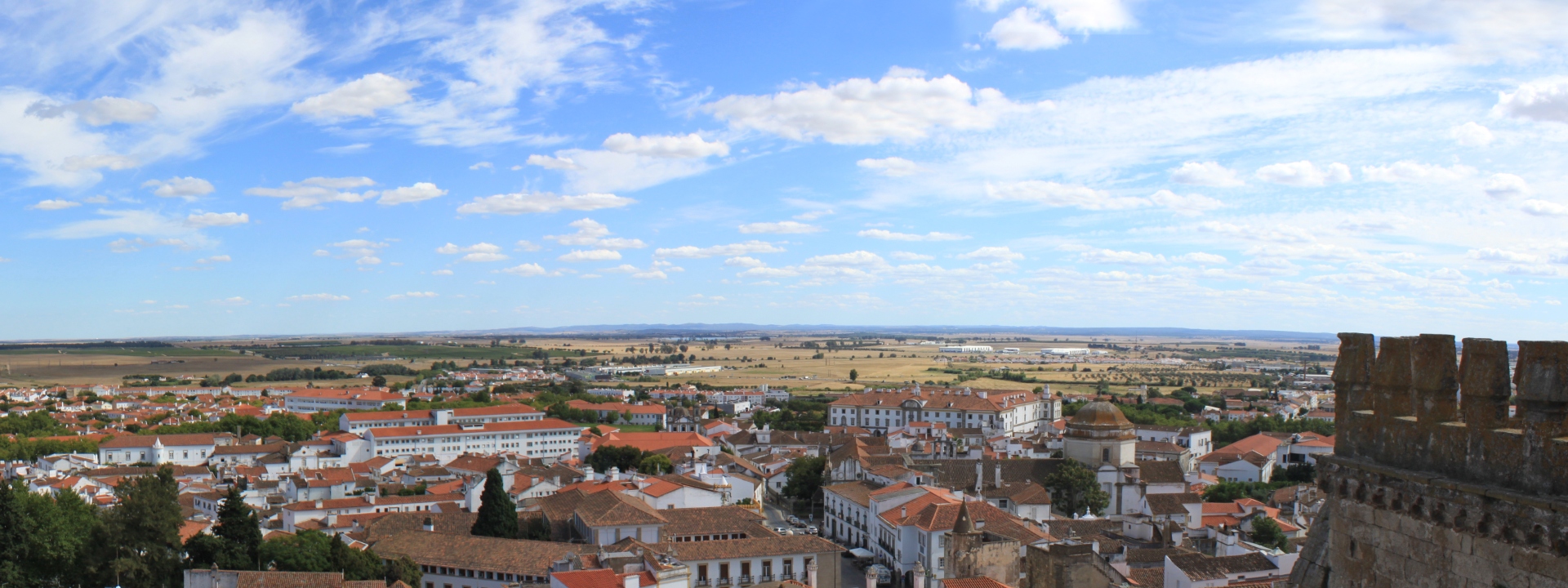
Begin your journey in Évora’s UNESCO-listed center, exploring the grand Cathedral, the Roman Temple, and the haunting Chapel of Bones.
Enjoy a traditional Alentejo lunch and, in the afternoon,
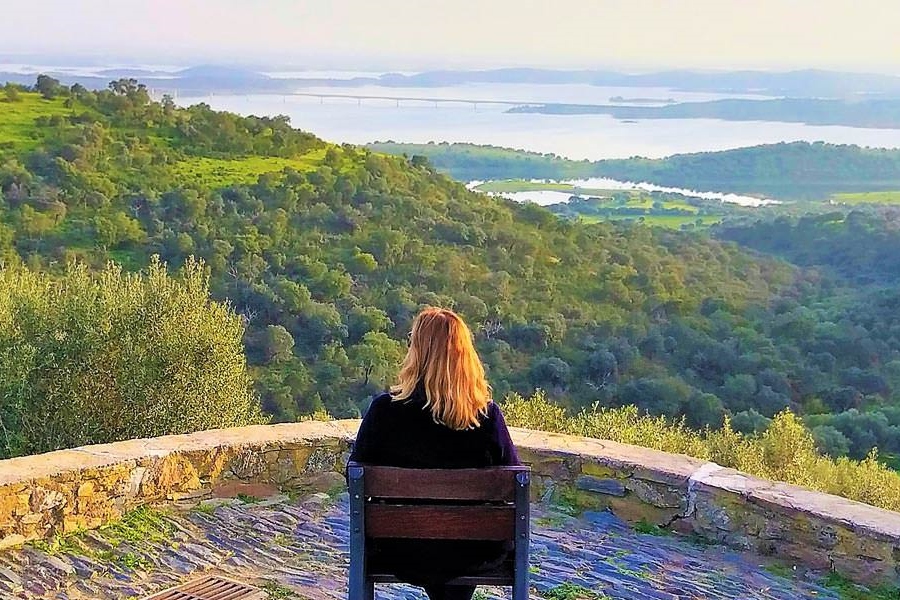
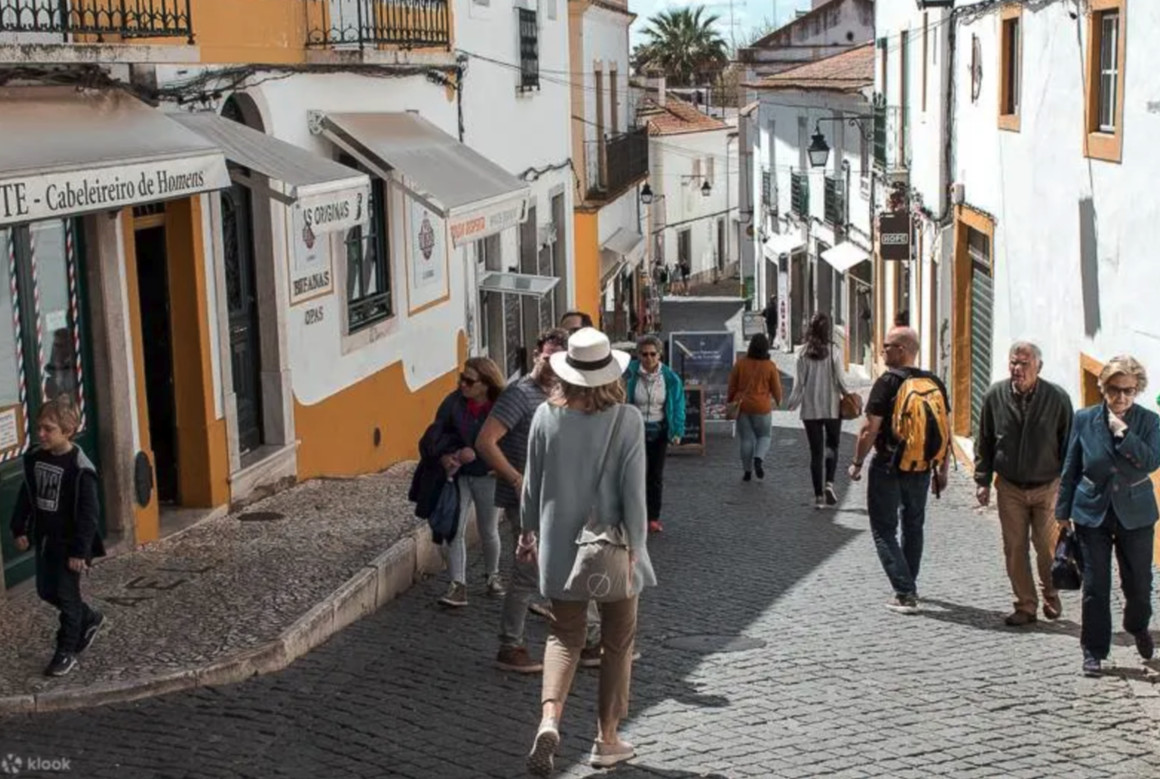
Visit Monsaraz — a charming medieval village with whitewashed houses, cobbled streets, and panoramic views of Alqueva Lake.
For wine lovers, add an optional wine tasting with regional gastronomy pairing (€18/person).
**Entrance Fees (not included) :**
Evora Cathedral – €5
Chapel of Bones – Adults €6, Youth/Seniors €4, Family €15, under 12 free.
**Options:**
Shared tour – small groups, meeting at Hard Rock Café Lisbon, minimum 3 participants.
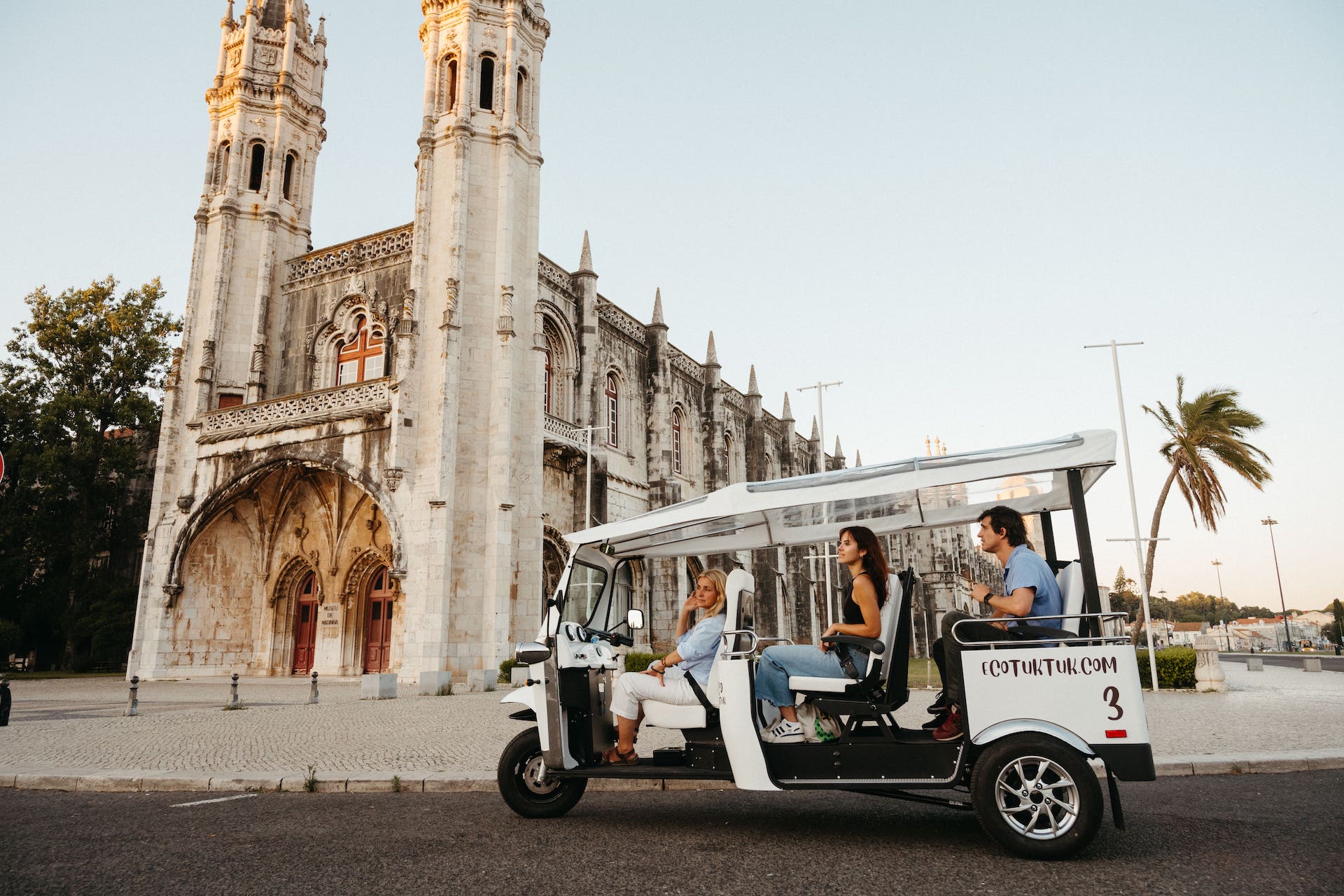
Private tour – exclusive experience for your group, includes hotel pick-up/drop-off, minimum 2 people.
Available options
Private Tour
Private Tour: The private tour offers an exclusive experience for your group, with personalized attention and hotel pick-up and drop-off<br/>Pickup included
Shared Tour
Shared Tour: The shared tour runs with small groups meeting at Hard Rock Café Lisbon and requires a minimum of 3 participants
What's included
WiFi on board
All Fees and Taxes
Air-conditioned vehicle
· Bottled water · Comfortable Transport, Mercedes Vito · Full Insurance Coverage
Detailed itinerary
1
Travel from the Lisbon region (visitor accommodation) to Evóra, in a comfortable and spacious vehicle, a 9-seater Mercedes Vito.
2
Stop 2
The Chapel of Bones was built in the 17th century on the initiative of three Franciscan friars whose aim was to convey the message of the transience and fragility of human life. This message is clearly conveyed through the inscription: “We bones who are here, await yours”. It basically shows the macabre taste of Baroque man for necrophilia.
The Chapel of Bones, full of skulls and other bones, is made up of three naves measuring approximately 18.70m long and 11m wide. Natural light strategically enters these naves only through three small gaps on the left side. It is a very dark place! Be brave…
The walls of the Chapel of Bones and the eight pillars that make it up are covered with carefully arranged human bones and skulls, joined together with brown cement. The vaults are made of white plastered brick and painted with motifs that symbolise or allude to death.
3
Stop 3
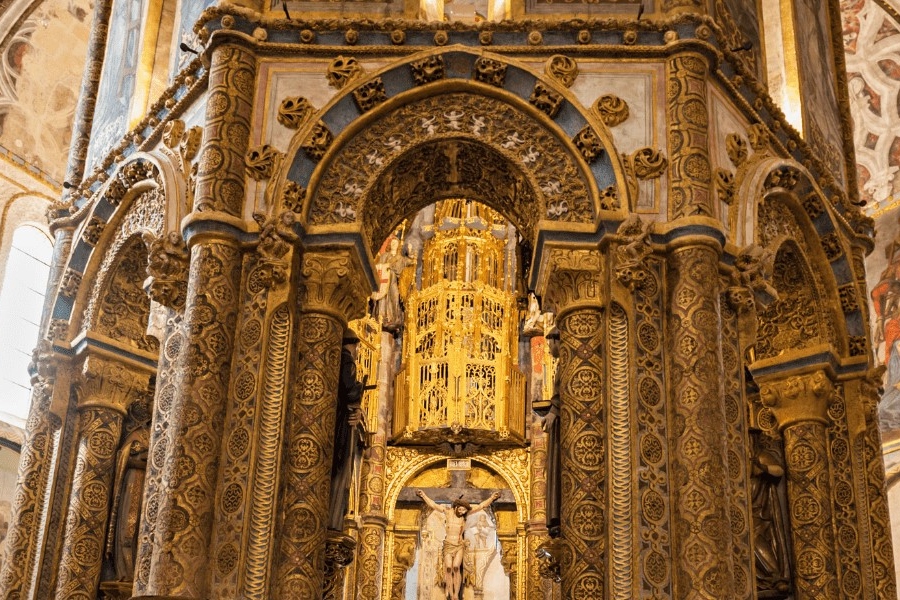
The Cathedral of Évora or Sé de Évora, its real name is Basílica Sé de Nossa Senhora da Assunção. It is the largest medieval cathedral in Portugal and has no parallel in the rest of the country.
The Sé de Évora “protects” the city from its highest point, the chosen location for other iconic buildings in Évora such as the Roman Temple of Évora (Temple of Diana), the Évora Museum or the Eugénio de Almeida Art and Culture Centre.
The Cathedral of Évora, whose construction began in 1186 and was consecrated in 1204, was only completed in 1250. It is a fascinating and imposing monument. Made entirely of granite, it is marked by the transition from the Romanesque to the Gothic style.
It was improved during the 15th and 16th centuries, with the upper choir, the pulpit, the baptistery and the arch of the Chapel of Nossa Senhora da Piedade or Capela do Esporão (1529) all from this period. This chapel in the Évora Cathedral is an unusual example of hybrid Plateresque architecture.
4
Stop 4
The Roman Temple of Évora is one of the grandest and best preserved Roman temples in the entire Iberian Peninsula, having been declared a World Heritage Site by UNESCO in 1986. It is the city's symbol, a kind of calling card. It is one of the most important historical landmarks in Évora, and is also one of the most visible symbols of the Roman occupation of the city. Built in the Corinthian style, the Roman temple was built at the beginning of the 1st century AD. Even today, this construction, which is around 2,000 years old, is known as the Temple of Diana. The confusion is due to a legend created in the 17th century that associated the construction of the “Temple of Diana” in Évora in honour of the Roman goddess of hunting. In fact, the Roman Temple of Évora was built to pay homage to Emperor Augustus, who was venerated as a god, and was part of what would later become the Roman forum. It was modified in the two centuries that followed (2nd and 3rd centuries AD) and partially destroyed in the 5th century, during the invasion of barbarian peoples.
5
Stop 5
It is, par excellence, the “example” of the Portuguese historic centre, with visible repercussions in most of the overseas territory. Évora owes its relevance to a thousand-year-old history that goes back to Prehistory. But history took over, making it one of the most notable Roman cities in Lusitania – Ebora Liberalitas Júlia – of which numerous remains remain, notably the Roman Temple.
It then became one of the great urban centres in the south of the Portuguese kingdom, a constant place of visit and stay for monarchs. It saw the birth and development of the first brilliant features of Gothic architecture, combined with the heritage (and the search for emulation) of the “Moorish” or Arab world in the so-called “Mudejar style”, during the 15th and 16th centuries. It later received the influence of humanism and it is here that some of the first great architectural works of the Iberian Renaissance appeared, around 1530.
6
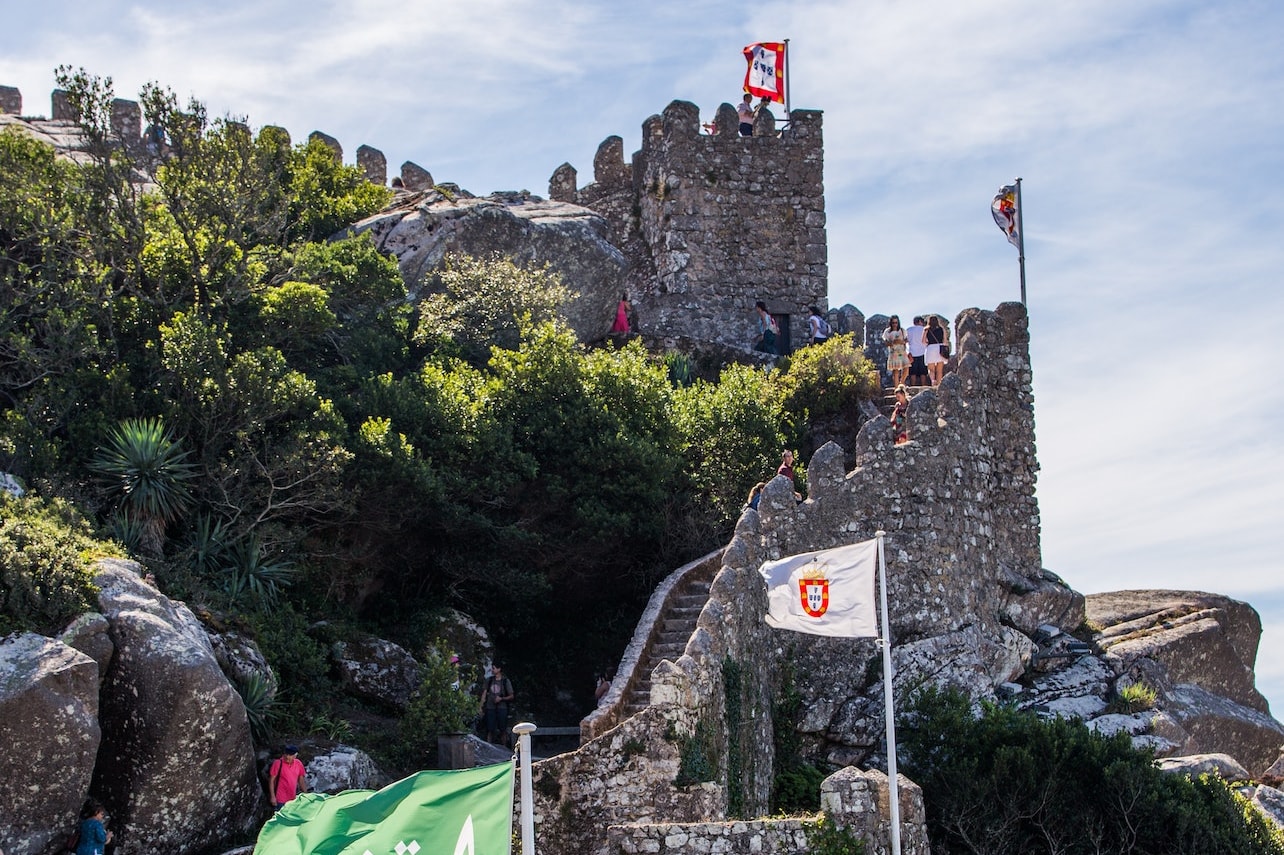
Perched high on a hilltop overlooking the Alentejo plains and the Alqueva Lake, Monsaraz is one of Portugal’s most enchanting medieval villages. Surrounded by ancient walls, its narrow cobbled streets, whitewashed houses, and historic castle transport visitors back in time to an era of knights and legends.
Strolling through Monsaraz feels like walking through a living museum, where every corner offers breathtaking views and every stone holds a piece of history. The peaceful atmosphere, combined with the stunning natural landscapes, makes Monsaraz an unforgettable highlight of any journey through Alentejo.
7
Stop 7
Travel from Evóra to the Lisbon region (visitor accommodation), in a comfortable and spacious vehicle, a 9-seater Mercedes Vito.
What's not included
Lunch
Visitors' personal expenses
The program doesn ́t include the entrance fees in the monuments and the optional wine tasting
Available languages
Guide guide
PT
EN
Important information
Service animals allowed
Not recommended for travelers with spinal injuries
Suitable for all physical fitness levels
Meeting point
· In the corner of the Hard Rock Cafe in Lisbon
· To facilitate communication, use WhatsApp through the contact provided to arrange the tour.
About Lisbon
Lisbon, the capital of Portugal, is a vibrant city known for its rich history, stunning architecture, and warm climate. With its charming streets, historic trams, and breathtaking viewpoints, Lisbon offers a unique blend of old-world charm and modern energy.
Top Attractions
Belém Tower
A UNESCO World Heritage Site, this 16th-century tower is an iconic symbol of Lisbon's Age of Discoveries.
Historical
1-2 hours
€6
Alfama District
Lisbon's oldest district, known for its narrow, winding streets, Fado music, and historic charm.
Historical
Half day
Free to explore, attractions may have entry fees
Sintra
A UNESCO World Heritage Site, Sintra is a romantic town with stunning palaces and castles.
Historical
Full day
Varies by attraction, around €10-€15 per site
Must-Try Local Dishes
Bacalhau à Brás
Shredded codfish with eggs, potatoes, and onions
Main Dish
Contains fish and eggs
Pastel de Nata
Custard tart with a flaky pastry crust
Dessert
Contains dairy and eggs
Francesinha
A sandwich with meat, cheese, and a beer-based sauce
Main Dish
Contains meat, cheese, and gluten
Popular Activities
Hiking in Sintra
Surfing in Ericeira
Parasailing in Cascais
Beach lounging in Costa da Caparica
Spa day in a luxury hotel
Picnic in Jardim da Estrela
Visiting museums and galleries
Attending Fado performances
Best Time to Visit
March to May, September to October
These months offer pleasant weather and fewer crowds, making it ideal for sightseeing and outdoor activities.
15-25°C
59-77°F
Practical Information
Language
- Official: Portuguese
- Widely spoken: English, Spanish, French
- English: Moderately spoken
Currency
Euro (EUR)
Time Zone
GMT+1 (Western European Time, WET)
Electricity
230VV, 50HzHz
Safety Information
Overall Safety Rating: Generally safe
Lisbon is generally safe, but pickpocketing and petty theft can occur in crowded areas.
Important Precautions:
- • Be cautious of pickpockets in crowded areas
- • Use licensed taxis or ride-sharing apps
- • Avoid walking alone at night in less crowded areas
Getting there
By air
- Humberto Delgado Airport • 7 km from city center
By train
Santa Apolónia, Oriente
By bus
Sete Rios, Jardim do Campo Grande, Gare do Oriente
Getting around
Public transport
Efficient and clean, with four lines connecting major attractions.
Taxis
Available • Apps: Bolt, FreeNow
Rentals
Car, Bike, Scooter
Neighborhoods
Alfama
Baixa
Bairro Alto
Day trips
Sintra
25 km from Lisbon • Full day
A romantic town with stunning palaces, castles, and lush gardens.
Cascais
30 km from Lisbon • Half day to full day
A charming coastal town with beautiful beaches, historic sites, and a relaxed atmosphere.
Óbidos
80 km from Lisbon • Full day
A medieval town with a well-preserved castle, narrow streets, and charming shops.
Festivals
Santos Populares • June 13th
Festival dos Oceanos • June to September
Arraial do Alfoz • June to September
Pro tips
- Visit the Time Out Market for a variety of local and international cuisines
- Take a day trip to Sintra and Cascais for a mix of history and beach relaxation
- Explore the LX Factory for a unique shopping and dining experience
- Ride the historic Tram 28 for a scenic tour of the city
- Visit the MAAT museum for a blend of art, architecture, and technology
From $25
per person
Price varies by option
Secure booking
Free cancellation available
Instant confirmation