LISBON DAILY TOUR in a Vintage Jeep with FOOD & DRINK Tastings
Active
2h - 8h
For a full refund, cancel at least 24 hours before the scheduled departure time.
Instant confirmation
Mobile or paper ticket accepted
About this experience
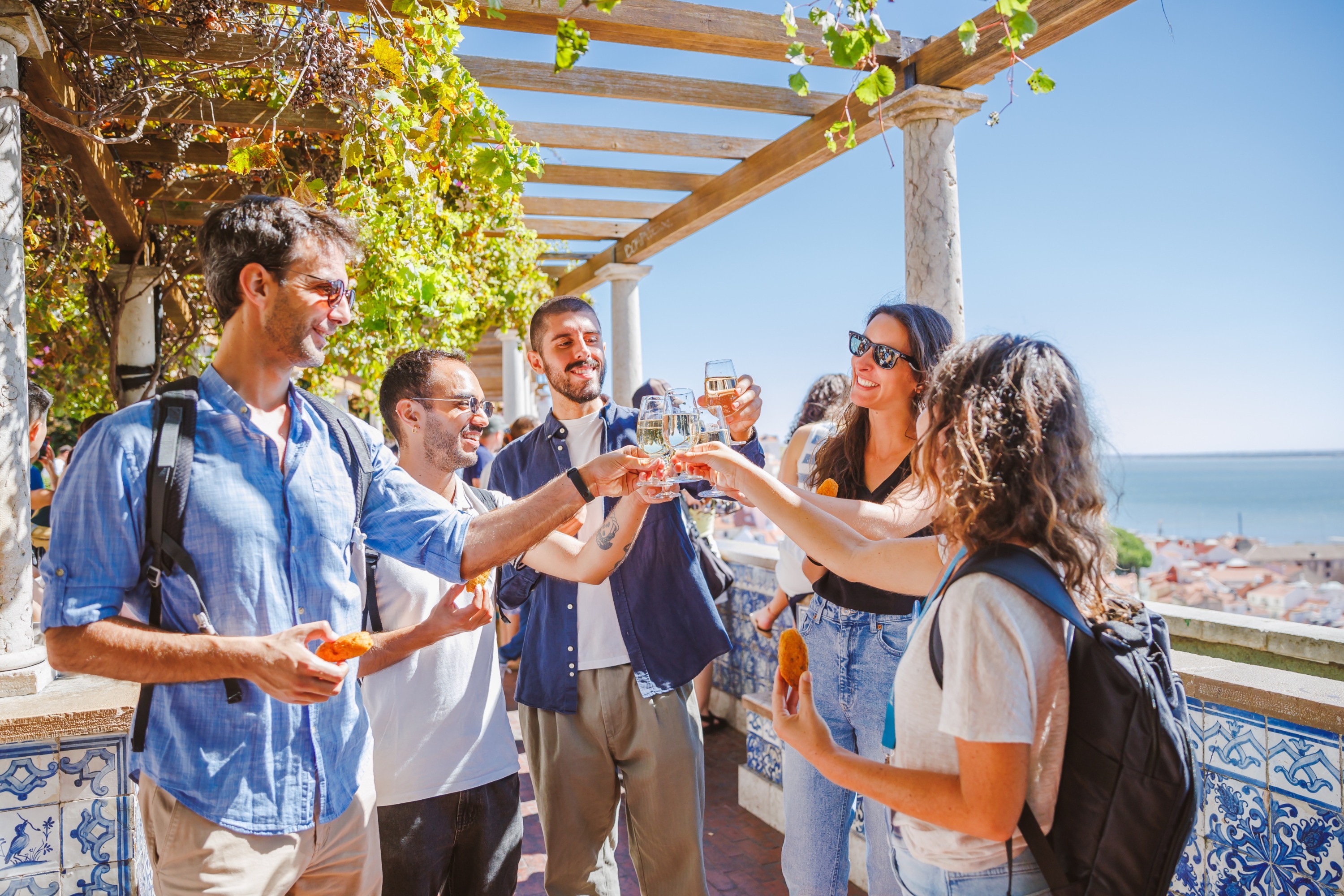
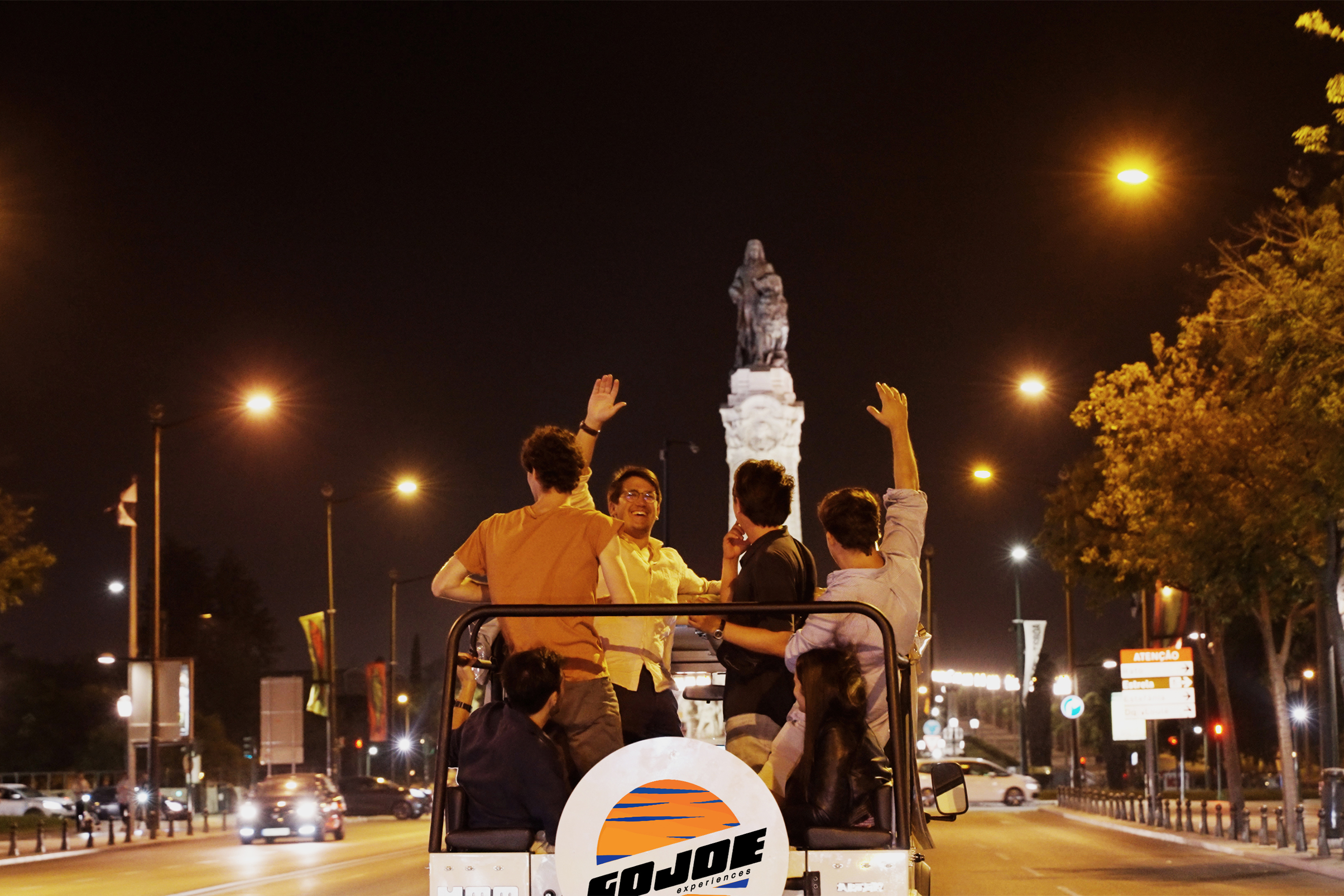
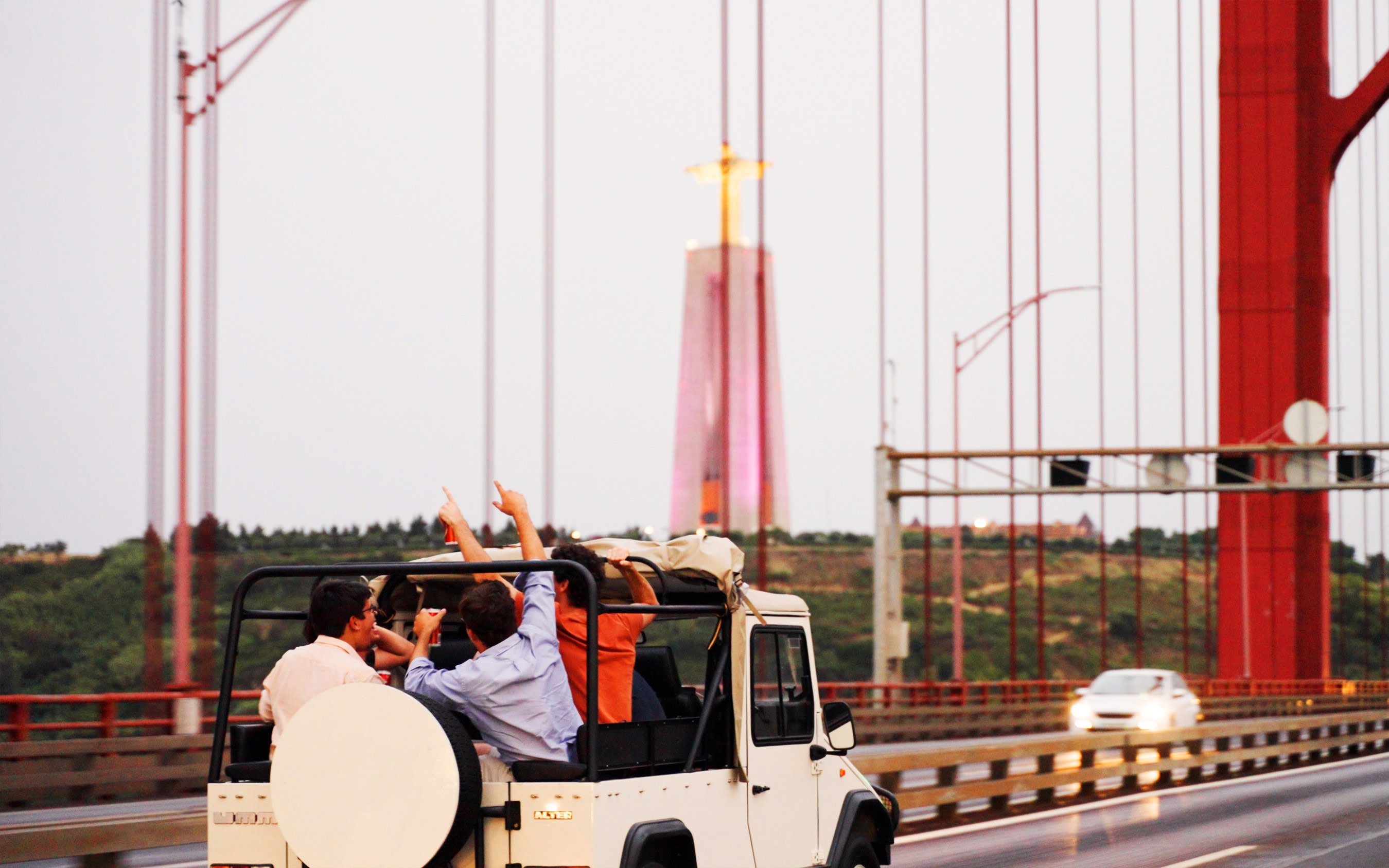
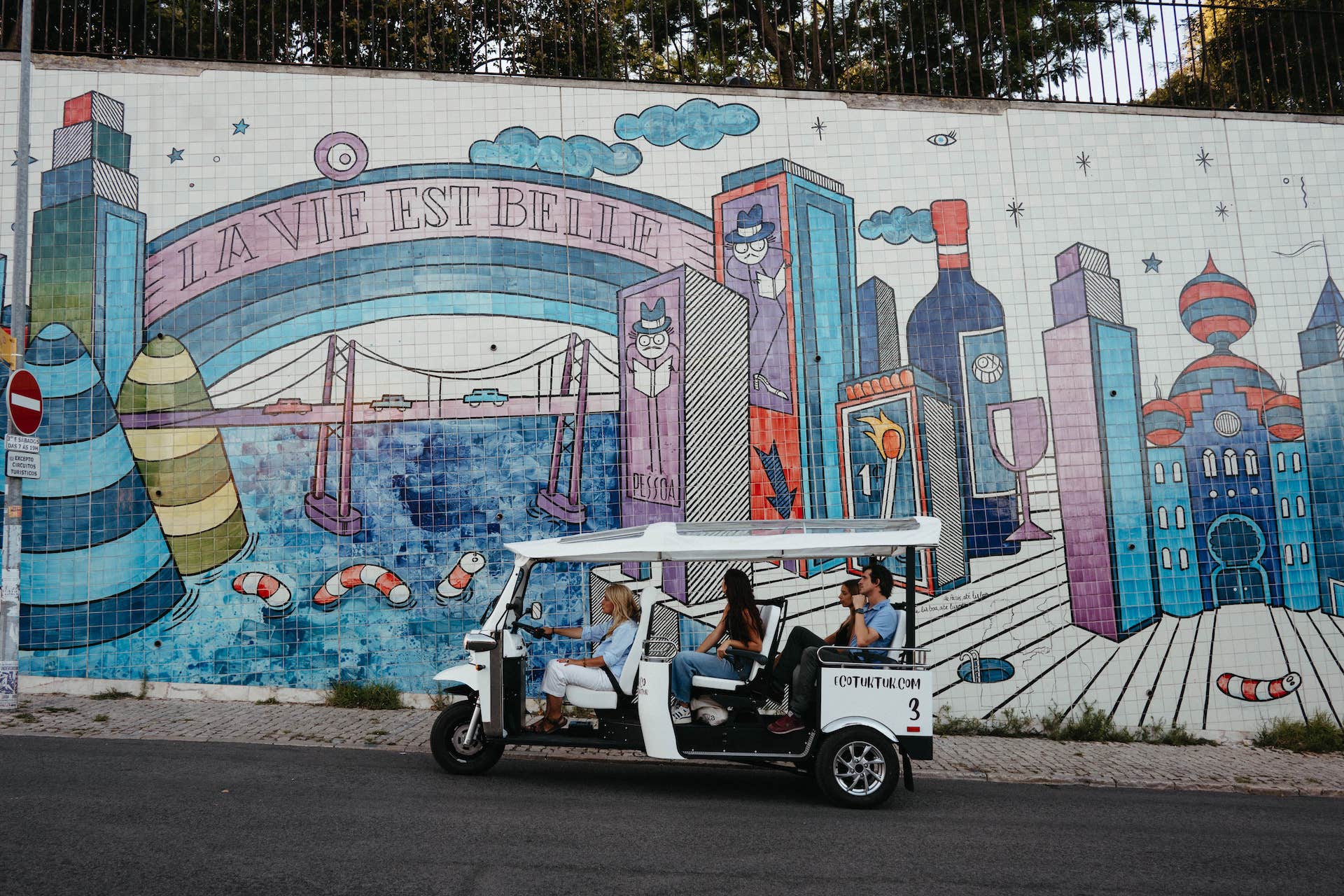
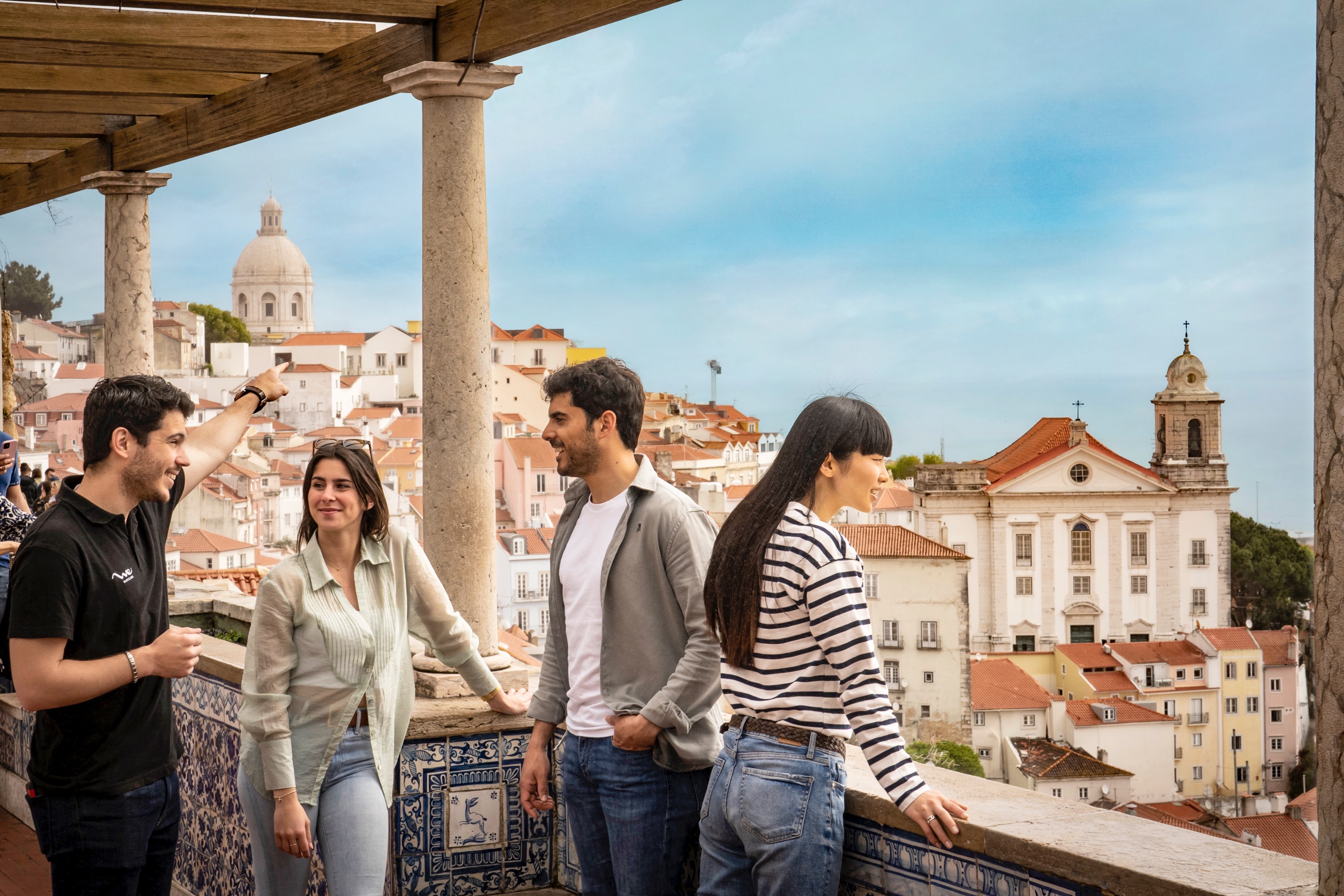
Discover the beauty and flavors of Lisbon in a vintage convertible jeep, guided by a true Lisbon local! This unique experience takes you through the city’s most iconic landmarks, with strategic stops at stunning viewpoints for breathtaking panoramas. We will pick you up at your chosen location and drop you wherever you like. By being a PRIVATE fully customizable experience it allows you to decide where we go and when, ensuring you explore the city at your own pace. But that’s not all—along the way, you’ll indulge in an unforgettable culinary experience, sampling traditional Portuguese dishes and drinks. The food and drink menu is send after the booking is confirm so you can choose to share between the group. And to top off your adventure, capture the moment with a postcard-worthy photo that you can send to anyone, anywhere. What more could you ask for? Come, see, and taste Lisbon like never before!
Available options
3 HOURS WITH DRINKS
Duration: 3 hours<br/>DRINK TASTINGS: Drinks - Tastings of a menu of 20 portuguese drinks, water and bear included.<br/>Pickup included
2 HOURS WITH DRINKS
Duration: 2 hours<br/>DRINK TASTINGS: Drinks - Tastings of a menu of 20 portuguese drinks, water and bear included.<br/>Pickup included
8 HOURS WITH DRINKS
Duration: 8 hours<br/>Drink tastings: Tastings of a menu of 20 portuguese drinks, water and bear included during the experience.
<br/>Pickup included
8 HOURS WITH FOOD & DRINKS
Duration: 8 hours<br/>FOOD AND DRINK TASTINGS: Meal - 2 dishs of the tasting menu to share. Drinks - Tastings of a menu of 20 portuguese drinks, water and bear included.<br/>Pickup included
6 HOURS WITH FOOD & DRINKS
Duration: 6 hours<br/>FOOD & DRINK TASTINGS: Meal - 2 dishs of the tasting menu to share. Drinks - Tastings of a menu of 20 portuguese drinks, water and bear included.<br/>Pickup included
4 HOURS WITH FOOD & DRINKS
Duration: 4 hours<br/>FOOD & DRINK TASTINGS: Meal - 2 dishs of the tasting menu to share. Drinks - Tastings of a menu of 20 portuguese drinks, water and bear included.<br/>Pickup included
4 HOURS WITH DRINKS
Duration: 4 hours<br/>DRINK TASTINGS: Drinks - Tastings of a menu of 20 portuguese drinks, water and bear included.<br/>Pickup included
6 HOURS WITH DRINKS
Duration: 6 hours<br/>DRINK TASTINGS: Drinks - Tastings of a menu of 20 portuguese drinks, water and bear included.<br/>Pickup included
3 HOURS WITH FOOD & DRINKS
Duration: 3 hours<br/>FOOD & DRINK TASTINGS: Meal - 2 dishs of the tasting menu to share. Drinks - Tastings of a menu of 20 portuguese drinks, water and bear included.<br/>Pickup included
2 HOURS WITH FOOD & DRINKS
Duration: 2 hours<br/>FOOD & DRINK TASTINGS: Meal - 2 dishs of the tasting menu to share. Drinks - Tastings of a menu of 20 portuguese drinks, water and bear included.<br/>Pickup included
What's included
In-person: English, Spanish, Portuguese and Guide is licensed or certified
Private transportation
WiFi on board
Drink tastings of a menu of 20 Portuguese drinks. (menu option) - Water and beer included (Super Bock).
A free postcard picture
Pick-up and drop-off at any location inside of the metropolitan area of the city.
An awesome local driver
Tourist insurance included.
2 finger food sharing plates from the menu (menu option, portions adjusted to the group size)
Blankets and sunscreen.
Detailed itinerary
1
Construction began in 1934 after a visit to Brazil by the Cardinal-Patriarch of Lisbon, who was reportedly impressed by the imposing image of Christ the Redeemer on Rio de Janeiro.
At 110 meters high, the Cristo-Rei Sanctuary became a historical reference in spirituality during the first half of the 20th century. Currently, the monument is a place of prayer and a beautiful viewpoint over the capital. There are those who say that the statue was built in fulfillment of a vow formulated by the Portuguese Episcopate that asked "to God that Portugal did not participate in the Second World War". The Cardinal affirms, before the crowd, that this monument will forever signify the gratitude of the Portuguese people for the peace that had been offered to them. This monument, is one of the biggest and iconic symbols that enhance and decorate the metropolis. In where we are going to have a drink tasting experience. 10 year Moscatel and 10 years Madeira wine tasting
2
Stop 2
The construction of the Portuguese empire required that the entrance to the Tagus be properly protected and ensure a military rhetoric translated into an effective and dissuasive defense system. Its grandeur and importance should have been enough to send a clear signal to the other European powers and their fleets that the river was protected and under control. In this way, under the direction of King D. João II, the defense of the mouth of the Tagus river was organised. The system conceived at the time was intended to ensure coverage of the Tagus bar by artillery fire, which represented a significant technological advance. The place chosen for the building of the main defense of the bar, to the north and south, would have to be located at the precise point where the Tagus is narrowest. Where we are going to make a drink tasting.
3
Stop 3
Opened in 1882, this park, originally called Parque da Liberdade, is located opposite Avenida da Liberdade. In 1903, the name was changed in honor of the King of England, who visited Portugal with the aim of strengthening the Luso-British alliance. It has one of the best views over the city. Drink tasting experiences.
4
Stop 4
The S. Gens site - also known as Monte de S. Gens - is a very ancient place of worship, and it is likely that the little chapel there is of Visigoth origin, if not Paleochristian. Its current formulation dates from 1796, having been reconstructed after the Earthquake. Inside, on the right side of the church, protected by a wooden door that leads to a small cubicle, is the famous chair of St. Gens on which, according to legend, the holy bishop, the first bishop, would have sat. of the city, about 290 A.D. It is a marble monolith, polished and ergonomically shaped, worn by time and where pregnant women usually sit, praying to ask for a good delivery. It is probably the most magnifecent view point of the city. We are going to have were one of the drink tastings. Drink tasting experience.
5
Stop 5
Parque das Nações is located in an area of Lisbon that was completely rehabilitated to host the 1998 World Exhibition, dedicated to the theme "The Oceans".
Before there was a Parque das Nações or an International Expo in Lisbon, the eastern part of the capital was a completely different scenario. Expo 98 was one of the most important events in the city's history and was even considered by the Bureau International des Expositions itself as the best international exhibition ever.
Food Services: Portuguese Cheese Plater wirh Red Sangria and Portuguese Cold Cuts Plater with Rosé Wine
6
Stop 6
This will be the best place to enjoy the view over the Castle, Baixa and the Tagus River.
We are going to have were one of the drink tastings.
7
Cais do Ginjal represents the facade of this Municipality to the heart of Lisbon and the entire metropolitan area. It is one of the main views of Almada over the city of Lisbon.
Food Service: Tradiconal Portuguese Fries with Green Wine, Fish dish with White Wine, Meat Dish with Red Wine and Dessert with Ginjinha tasting
8
Stop 8
Pass by
Natural sources, although abundant especially in the oldest part of Lisbon, were not enough to provide water for the entire population. Concerns about the city's hygiene were growing and, in the reign of King João V, the situation was close to collapse. The population flocked to the old fountains, where disputes continued, sometimes with great violence. The cost of obtaining water, often referred to by foreigners who visited Lisbon, was enormous and the water carriers reached extremes of speculation.
In 1731, King D. João V. ordered the construction of the Águas Livres Aqueduct. With the aim of bringing water from Sintra to the Mãe d'Água Reservoir, which stored and distributed it to all the fountains and fountains in the city. Just passing.
9
Stop 9
Pass by
Built with the deck 70 meters high, which houses the road and railway routes, and with the main pillars of the bridge reaching a height of 190 meters, this completely changes the relationship between the two banks. The new bridge has completely changed the territory and the skyline of Lisbon and the Tagus estuary, it is the crown of the city and one of the great symbols of the progress of the city and the country, which are modernizing at its expense.
10
Stop 10
Pass by
It was here that Vasco da Gama attended mass before leaving with his fleet to discover the sea route to India. Considered a UNESCO World Heritage Site since 1983. The Jerónimos Monastery is one of the most beautiful and imposing monuments of Manueline architecture in Lisbon. The monument, in lias limestone, was built from 1501 onwards, at the request of King Manuel I, for the members of his dynasty to gather there. Construction was subsidized by revenues from trade in Africa and the East. Just passing by.
11
Stop 11
Pass by
The original building of Padrão dos Descobrimentos was erected in 1940, on the occasion of the Exhibition of the Portuguese World. This monument, dedicated to the Portuguese Discoveries, has the stylized shape of a caravel with 33 figures linked, directly or indirectly, to the Discoveries. The Padrão was erected as part of the commemorations of the 5th centenary of the death of Infante D. Henrique and inaugurated in 1960. Decorating the access yard to this monument, there is a compass rose, in marble, containing the main routes of the Discoveries portuguese.
12
Luís Vaz de Camões was an extraordinary poet, becoming one of the most important references of literature in the Portuguese language. He was in India and Macau and was the victim of a shipwreck, during which he lost all his possessions, saving himself by swimming with the manuscript of Os Lusíadas. When he returned to Portugal, in 1569, he prepared the publication of Os Lusíadas, an epic poem dedicated to King D. Sebastião.
The Monument to Camões, inaugurated in 1867, is the first monument of urban sculpture to be erected in Lisbon, after the Equestrian Statue in Praça do Comércio.
13
Sebastião José de Carvalho e Melo (1699-1782), who became known by the name Marquês de Pombal, was appointed Minister of the Kingdom by King José I. On November 1, 1755, a violent earthquake devastated the lower part of the city of Lisbon. The Marquês de Pombal took immediate action: he ordered the dead to be buried and the wounded to be helped; he ordered the city to be watched to prevent thefts and commissioned a team of architects to draw up a plan for the reconstruction of the city. This is how, less than a year after the calamity, Lisbon was already partially rebuilt.
14
Stop 14
Pass by
It is one of the oldest and busiest in Lisbon. This square, where fairs, bullfights, festivals, popular revolutions and uprisings of faith were held, was largely destroyed during the 1755 earthquake. Several buildings disappeared almost completely, resulting in subsequent reconstruction with new Pombaline buildings and a rectangular square. In 1846, construction began on the Teatro Nacional D. Maria II, which would embellish the square with an imposing facade in neo-Paladian style. In the center, a statue of D. Pedro IV, the first emperor of independent Brazil, was placed.
15
Stop 15
Pass by
Built in 1147, this religious building is the most important in the city Built over a Muslim mosque, after the conquest of Lisbon. Its architecture is inspired by the Romanesque Cathedral of Coimbra, visible on the façade with two bell towers, reminiscent of a kind of fortress, as well as the magnificent rose window in the centre. However, the current cathedral presents a mixture of styles, due to the successive modifications it has undergone over time, Romanesque, Gothic and Baroque. The most precious piece is the chest that contains the remains of St. Vincent, patron saint of the city.
16
Stop 16
Pass by
The temple has a plan in the shape of a Greek cross and is topped by a majestic dome. Considered the most beautiful Baroque monument in the city, in 1916 it became the National Pantheon, where some of the great figures of Portuguese history lie. Amália Rodrigues, Eusébio, Sophia de Mello Breyner, Almeida Garrett.
17
Stop 17
Pass by
Terreiro do Paço, current Praça do Comércio was built in 1515, nicknamed as a reference to the Royal Palace that King D. Manuel King of Portugal had built there for the royal residence. Already since the century. During the 15th century, at the time of the discoveries, this was a central point of Lisbon life, where processions, acts of faith, bullfights, markets and festivities took place. Since then it has continued to be one of the most important seats of power in Portugal. In 1775, with the earthquake that devastated the then Terreiro do Paço, this was transformed and gave way to Praça do Comércio, with its rigid and upright geometry that exists today. As part of the reconstruction plan for Baixa de Lisboa, carried out by Marquês de Pombal after the earthquake.
18
In this place, countless vessels will be built over the centuries, including ships that were protagonists in the famous Portuguese maritime discoveries, and that boosted the phenomenon of globalization. Today it is a kind of extension of Terreiro do Paço as it connects it to the Tagus River.
19
Stop 19
Pass by
The palace maintained the role of Royal House until the establishment of the Republic in 1910, when it became the official residence of the Head of State. Although not all presidents reside in the palace, it has been used to receive political and state visits. Whenever the President of the Republic is present, a green flag with the national coat of arms is hoisted.
20
During EXPO'98, the building was designated Pavilhão da Utopia, then Pavilhão Atlântico and now Altice arena after the naming rights were purchased by the telecommunications company. The shape also refers to the horseshoe crab, which represents the oldest animal group that still lives on Earth. The wooden beams that support the roof make the interior look like the hull of a ship, namely that of an inverted 16th century ship.
21
Stop 21
Pass by
Lisbon Oceanarium originally Pavilhão dos Oceanos It was built and inaugurated within the framework of Expo 98, the last world exhibition of the 20th century, with the theme "The Oceans, a Heritage for the Future". It is a reference public aquarium in Lisbon, Portugal and the world, being considered the second largest aquarium in Europe. It annually receives about 1 million visitors, which makes it the most visited cultural facility in Portugal.
What's not included
Gratuities
Available languages
Guide guide
PT
EN
FR
ES
Reviews breakdown
Viator
5.0
4 reviews
5★
4
4★
0
3★
0
2★
0
1★
0
Tripadvisor
5.0
25 reviews
5★
25
4★
0
3★
0
2★
0
1★
0
Important information
Service animals allowed
Public transportation options are available nearby
Not recommended for travelers with spinal injuries
Not recommended for pregnant travelers
Suitable for all physical fitness levels
Extra time will be spent explaining the history of the Museum and other monuments inside the Jeep.
We only serve alcoholic drinks for travelers 21 years old and above. Minor travelers below 21 years old will be served non-alcoholic drinks.
About Lisbon
Lisbon, the capital of Portugal, is a vibrant city known for its rich history, stunning architecture, and warm climate. With its charming streets, historic trams, and breathtaking viewpoints, Lisbon offers a unique blend of old-world charm and modern energy.
Top Attractions
Belém Tower
A UNESCO World Heritage Site, this 16th-century tower is an iconic symbol of Lisbon's Age of Discoveries.
Historical
1-2 hours
€6
Alfama District
Lisbon's oldest district, known for its narrow, winding streets, Fado music, and historic charm.
Historical
Half day
Free to explore, attractions may have entry fees
Sintra
A UNESCO World Heritage Site, Sintra is a romantic town with stunning palaces and castles.
Historical
Full day
Varies by attraction, around €10-€15 per site
Must-Try Local Dishes
Bacalhau à Brás
Shredded codfish with eggs, potatoes, and onions
Main Dish
Contains fish and eggs
Pastel de Nata
Custard tart with a flaky pastry crust
Dessert
Contains dairy and eggs
Francesinha
A sandwich with meat, cheese, and a beer-based sauce
Main Dish
Contains meat, cheese, and gluten
Popular Activities
Hiking in Sintra
Surfing in Ericeira
Parasailing in Cascais
Beach lounging in Costa da Caparica
Spa day in a luxury hotel
Picnic in Jardim da Estrela
Visiting museums and galleries
Attending Fado performances
Best Time to Visit
March to May, September to October
These months offer pleasant weather and fewer crowds, making it ideal for sightseeing and outdoor activities.
15-25°C
59-77°F
Practical Information
Language
- Official: Portuguese
- Widely spoken: English, Spanish, French
- English: Moderately spoken
Currency
Euro (EUR)
Time Zone
GMT+1 (Western European Time, WET)
Electricity
230VV, 50HzHz
Safety Information
Overall Safety Rating: Generally safe
Lisbon is generally safe, but pickpocketing and petty theft can occur in crowded areas.
Important Precautions:
- • Be cautious of pickpockets in crowded areas
- • Use licensed taxis or ride-sharing apps
- • Avoid walking alone at night in less crowded areas
Getting there
By air
- Humberto Delgado Airport • 7 km from city center
By train
Santa Apolónia, Oriente
By bus
Sete Rios, Jardim do Campo Grande, Gare do Oriente
Getting around
Public transport
Efficient and clean, with four lines connecting major attractions.
Taxis
Available • Apps: Bolt, FreeNow
Rentals
Car, Bike, Scooter
Neighborhoods
Alfama
Baixa
Bairro Alto
Day trips
Sintra
25 km from Lisbon • Full day
A romantic town with stunning palaces, castles, and lush gardens.
Cascais
30 km from Lisbon • Half day to full day
A charming coastal town with beautiful beaches, historic sites, and a relaxed atmosphere.
Óbidos
80 km from Lisbon • Full day
A medieval town with a well-preserved castle, narrow streets, and charming shops.
Festivals
Santos Populares • June 13th
Festival dos Oceanos • June to September
Arraial do Alfoz • June to September
Pro tips
- Visit the Time Out Market for a variety of local and international cuisines
- Take a day trip to Sintra and Cascais for a mix of history and beach relaxation
- Explore the LX Factory for a unique shopping and dining experience
- Ride the historic Tram 28 for a scenic tour of the city
- Visit the MAAT museum for a blend of art, architecture, and technology
From $25
per person
Price varies by option
Secure booking
Free cancellation available
Instant confirmation