Private Day Angkor Wat Temple and Banteay Srei Temple Tour
Active
8h
For a full refund, cancel at least 24 hours before the scheduled departure time.
Instant confirmation
Mobile or paper ticket accepted
About this experience
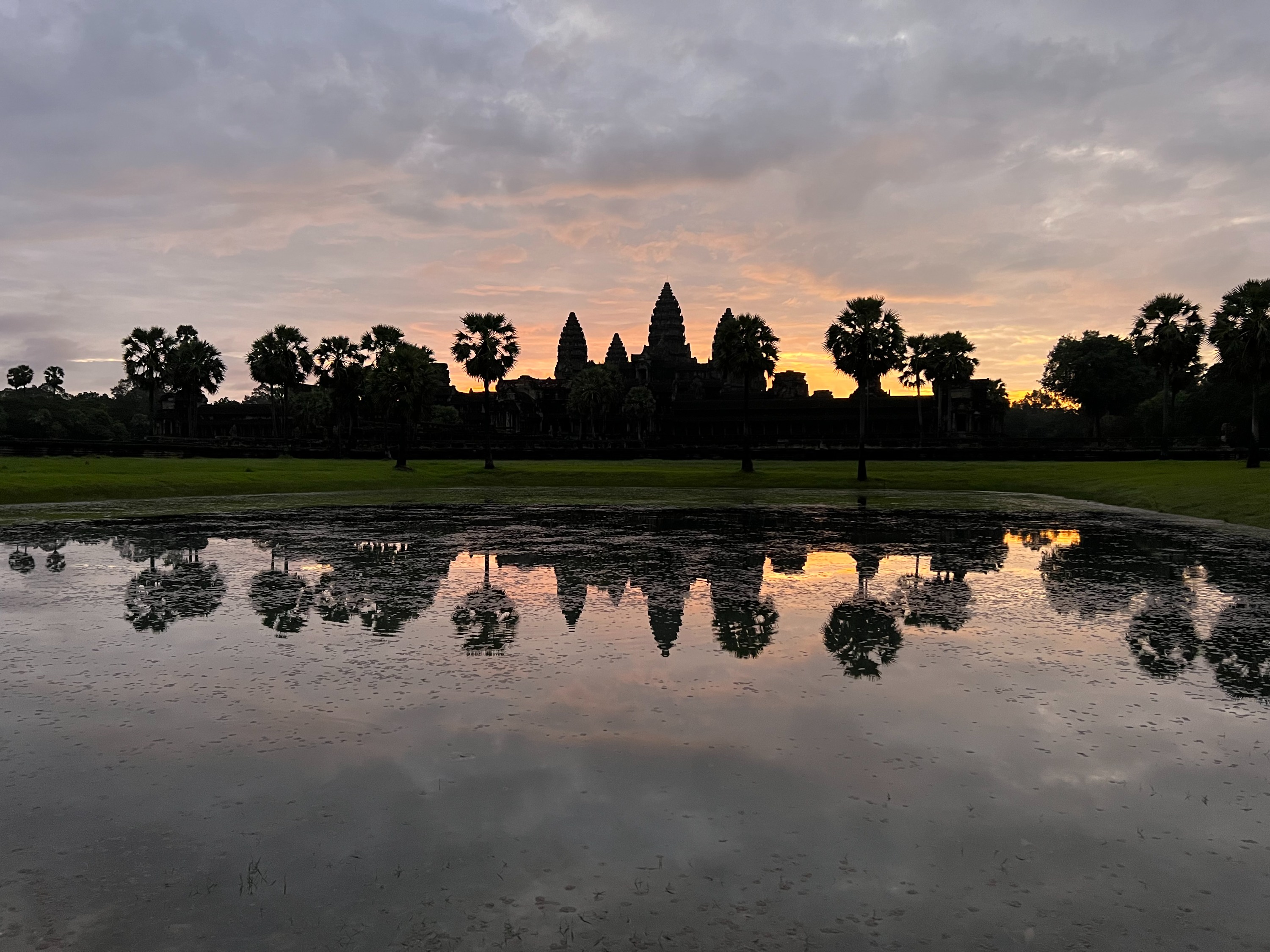
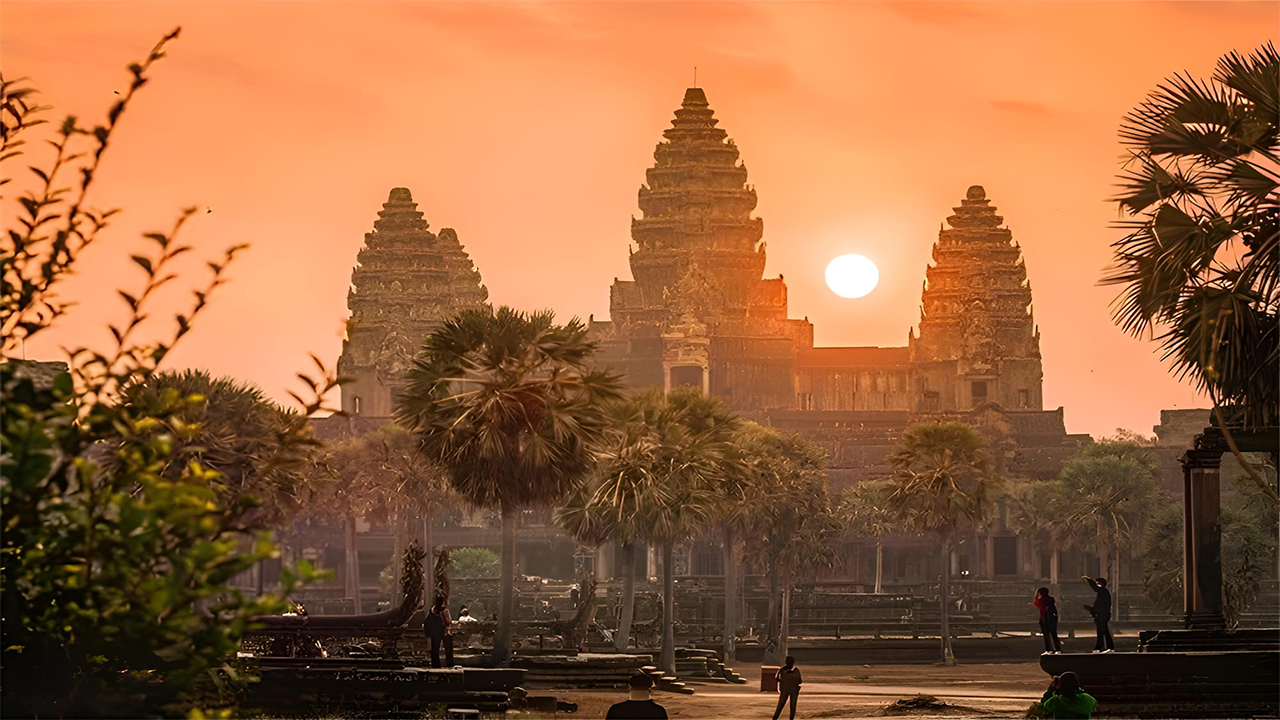
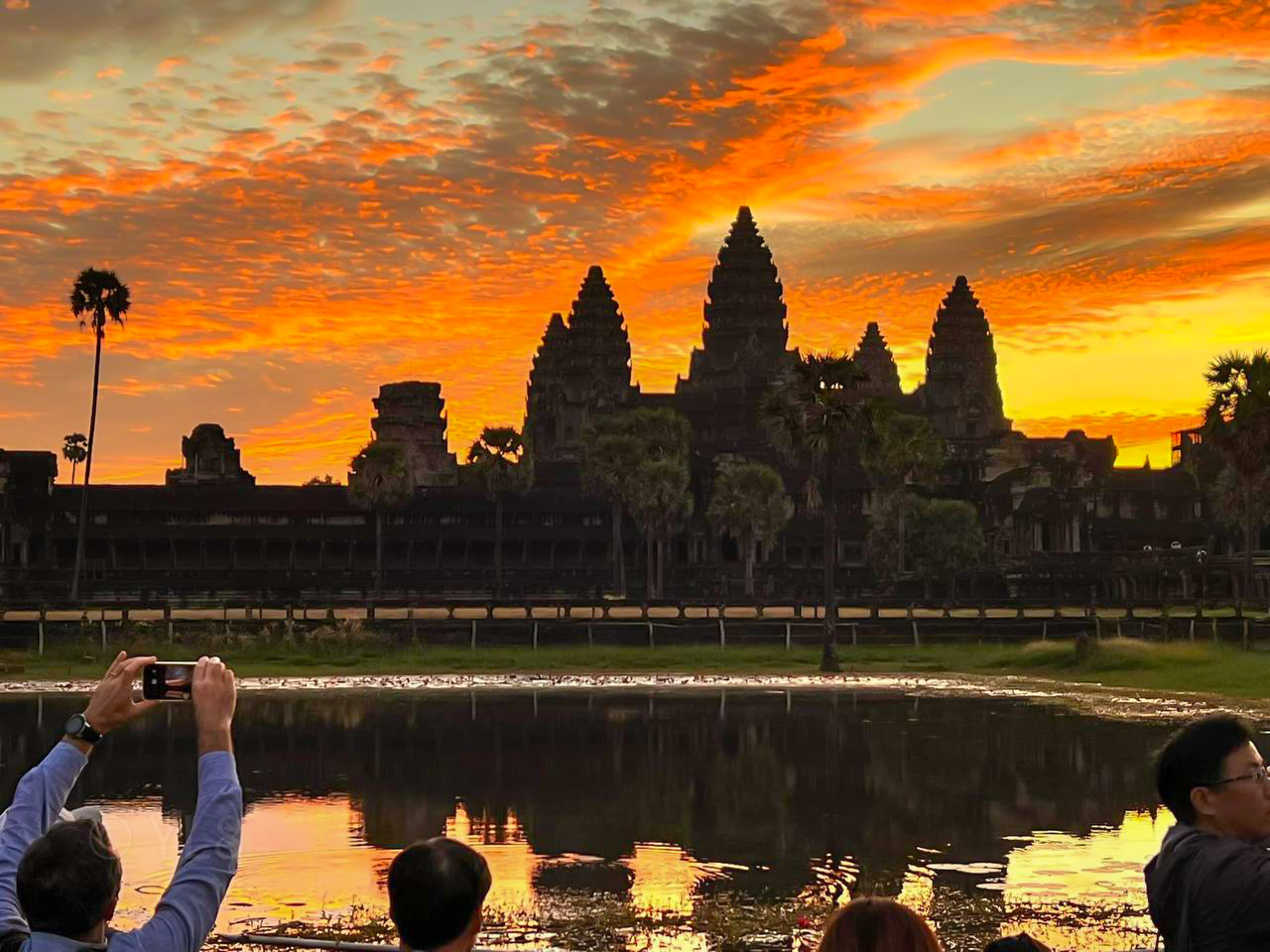
Angkor Wat temple has 5 concentric rectangular walls and also moats alongside. This symbolizes a cosmic chain of mountains and ocean. The central tower, which is the main tower, represents the mountain Meru, which is said to be the center of the Hindu and Buddhist universe.
Banteay Srei, or the Temple of Women, is a known jewel of Khmer art which dates back to the 10th century. This Hindu temple, having a smaller size compared to other temples, will mesmerize you with its artistry which you will find in the motifs, figures of gods, and also in the detailed carving.
Ta Prohm is a royal monastery that was built in the 12 century. The temple is located amidst the dense Cambodian jungle and is recognized by its labyrinth pattern of the Vines resting all over the ruins. There are giant tree roots of the vine which sprawl along the ground covering the whole structure.
Available options
1-Day Angkor Wat Temple + Small Circle & Banteay Srei Temple
Pickup included
What's included
Pick up / Drop off at Airport
Parking fees and roads tolls
Air-conditioned vehicle
English Tour Guide
Cool Water and Towels
Detailed itinerary
1
Ta Prohm’s original name was Rajavihara, meaning “monastery of the King”. It was built as a Mahayana Buddhist monastery and university. The construction of the temple is dated to 1186AD, but it is generally considered to have been added to and embellished over a period of several years. As Maurice Glaize comments in his appraisal of the temple, “While for some time all the various temples in the style of the Bayon were attributed to a single king – Jayavarman VII – during his twenty or so years reign, today it seems more likely that he could not, in such a short time, have done more than just transform, extend or complete already existing religious establishments with his mark.”
2
Stop 2
Pre Rup was built as the state temple for King Rajendravarman in the late 10th century in either 961 or 962 AD. It was built only 9 years after East Mebon which is exactly 1.3km north.
It’s not known exactly what the temple was used for, but the modern name “Pre Rup” suggests that it was used for funerals. French historian, Philippe Stern, thought that Pre Rup stood at the centre of a new city built by King Rajendravarman. However, this also hasn’t been confirmed.
Pre Rup is historically significant because it was the second temple built after the Khmer capital city was moved to Angkor Thom after a period of turbulent politics. The capital was moved back from Koh Ker and then again to Angkor Thom where it remained until the end of the Khmer empire.
Like most other temples in the area, it’s thought that Pre Rup was abandoned at some point in the 16th century.
3
Stop 3
Banteay Srei temple (Pink Ladies Temple) is a 10th-century Cambodian temple dedicated to the Hindu god Shiva. Located in the area of Angkor, it lies near the hill of Phnom Dei, 25 km (16 mi) north-east of the main group of temples that once belonged to the medieval capitals of Yasodharapura and Angkor Thom. Banteay Srei is built largely of red sandstone,a medium that lends itself to the elaborate decorative wall carvings which are still observable today. The buildings themselves are miniature in scale,unusually so when measured by the standards of Angkorian construction. The sefactors have made the temple extremely popular with tourists, and have led to its being widely praised as a "precious gem", or the "jewel of Khmer art."
4
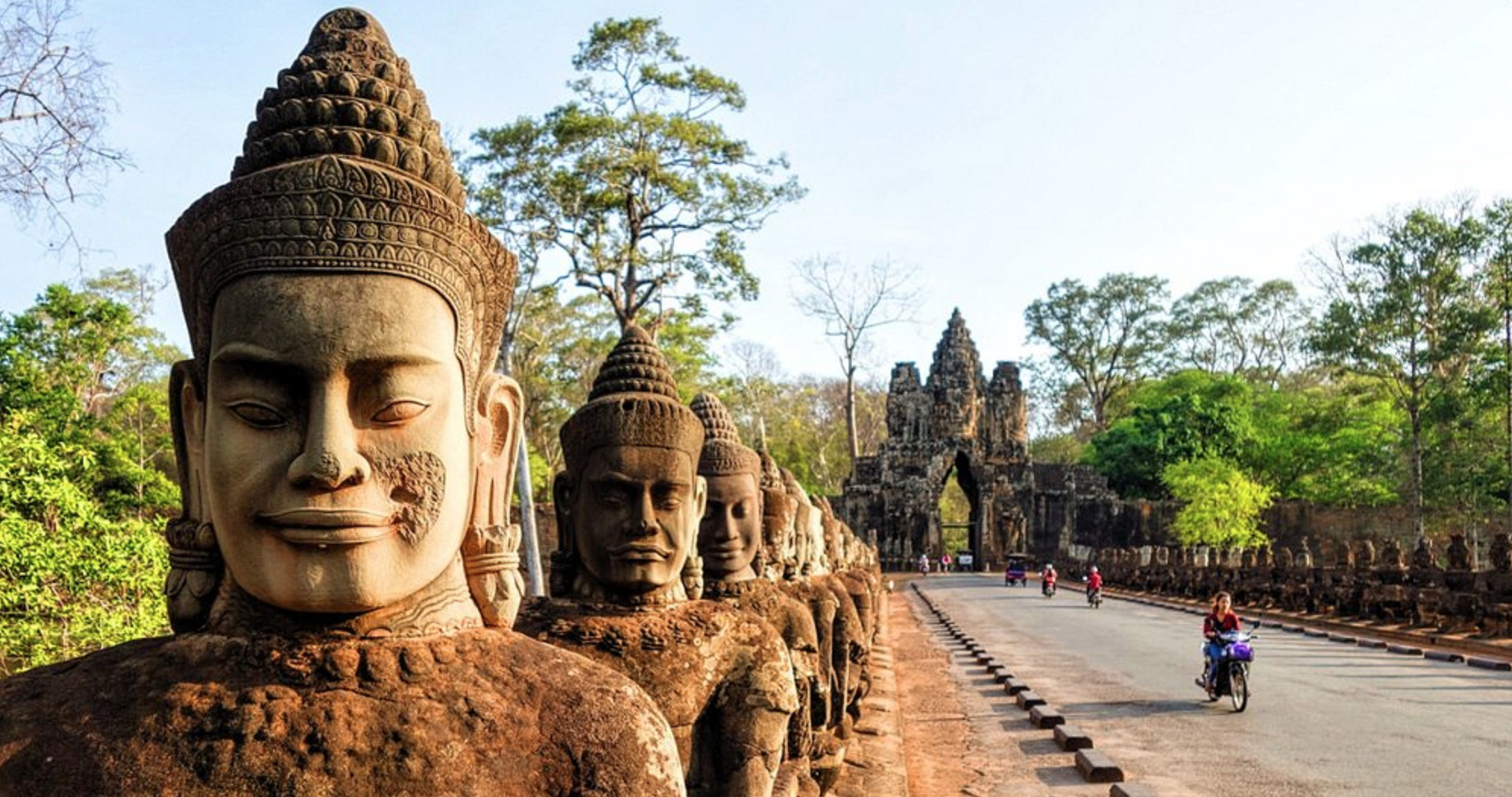
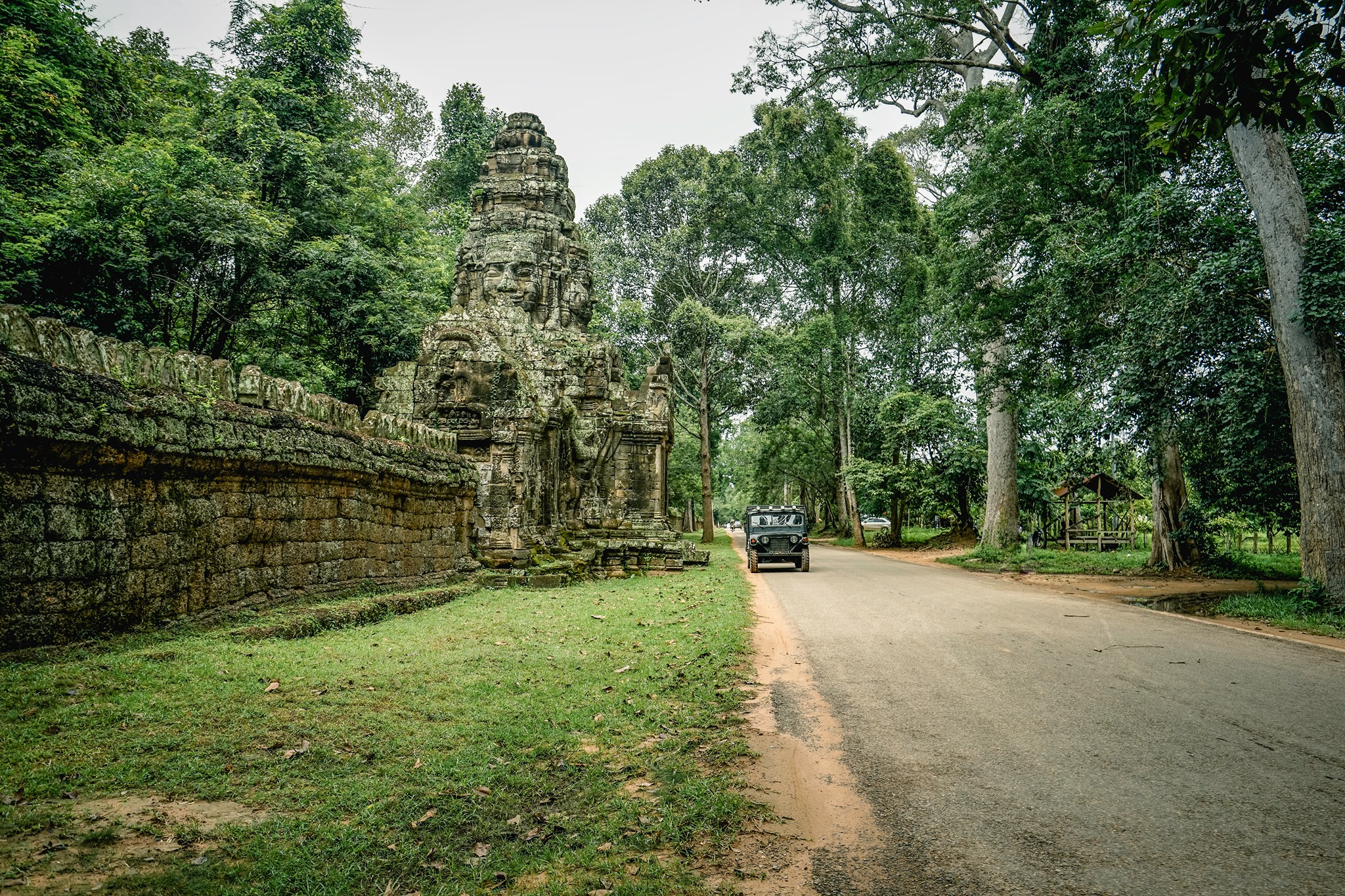
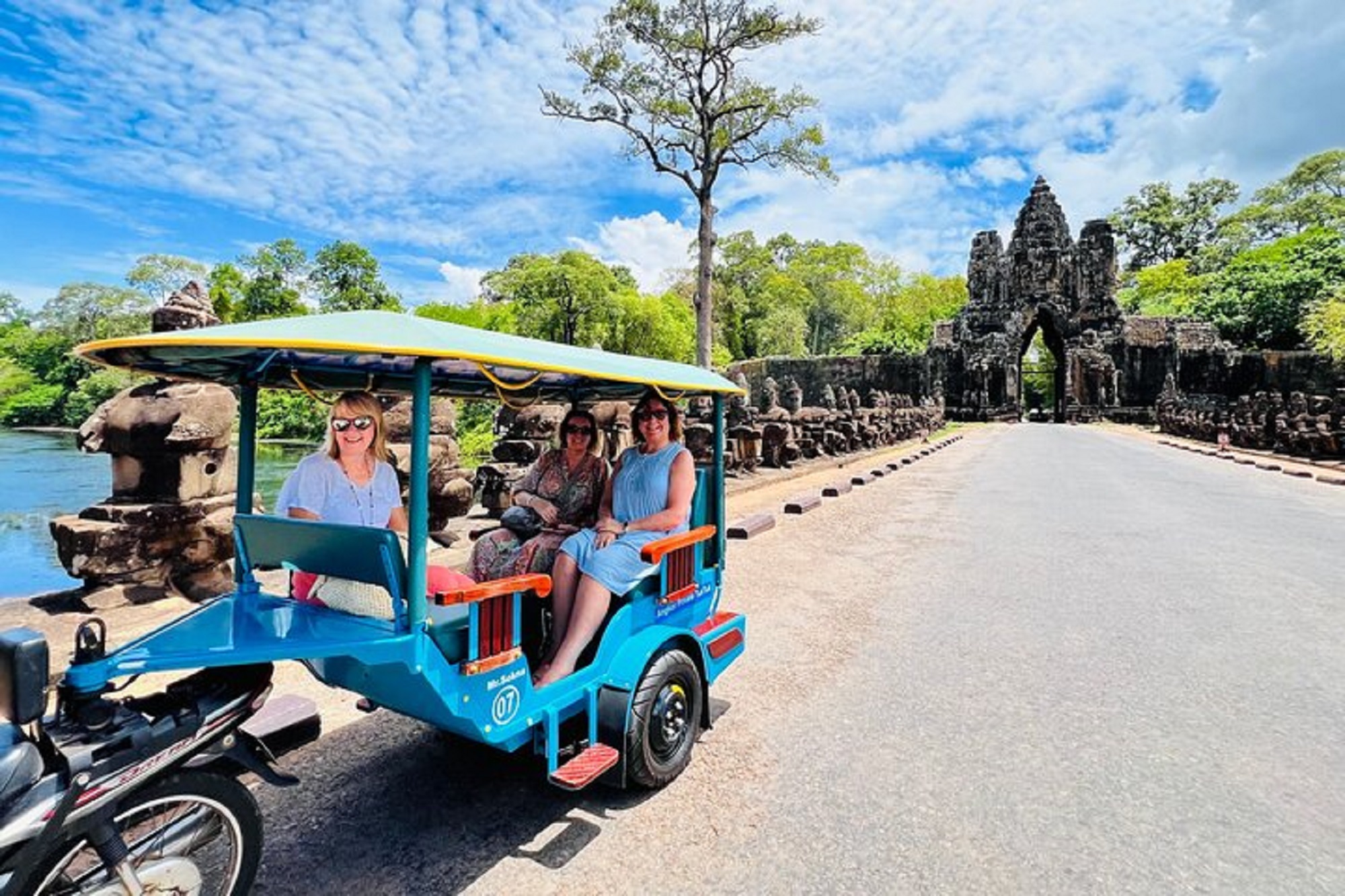
Approaching Angkor Thom you are first met by the grand causeway that crosses the 100 m wide moat which is flanked on either side by a naga balustrade beginning with a massive stone carving of a seven-headed Naga (mythical serpent) being held by a multi-armed and multi-headed giant. On each side, there are 54 stone giants pulling on the body of the Naga serpent.
On one side, the giants represent Devas featuring slender oval eyes and a casual smile, on the other side, depicting Asuras with round bulging eyes and grimacing faces, together representing an endless tug of war between good and evil, the polar forces generating the dynamism of life itself. Some will also connect it to the ancient myth, Churning of the Sea of Milk, as so famously depicted on the southern gallery wall of Angkor Wat, and go even further to say that Angkor Thom represents a giant mandala with the Bayon at its center, representing the famed Mount Meru.
5
Stop 5
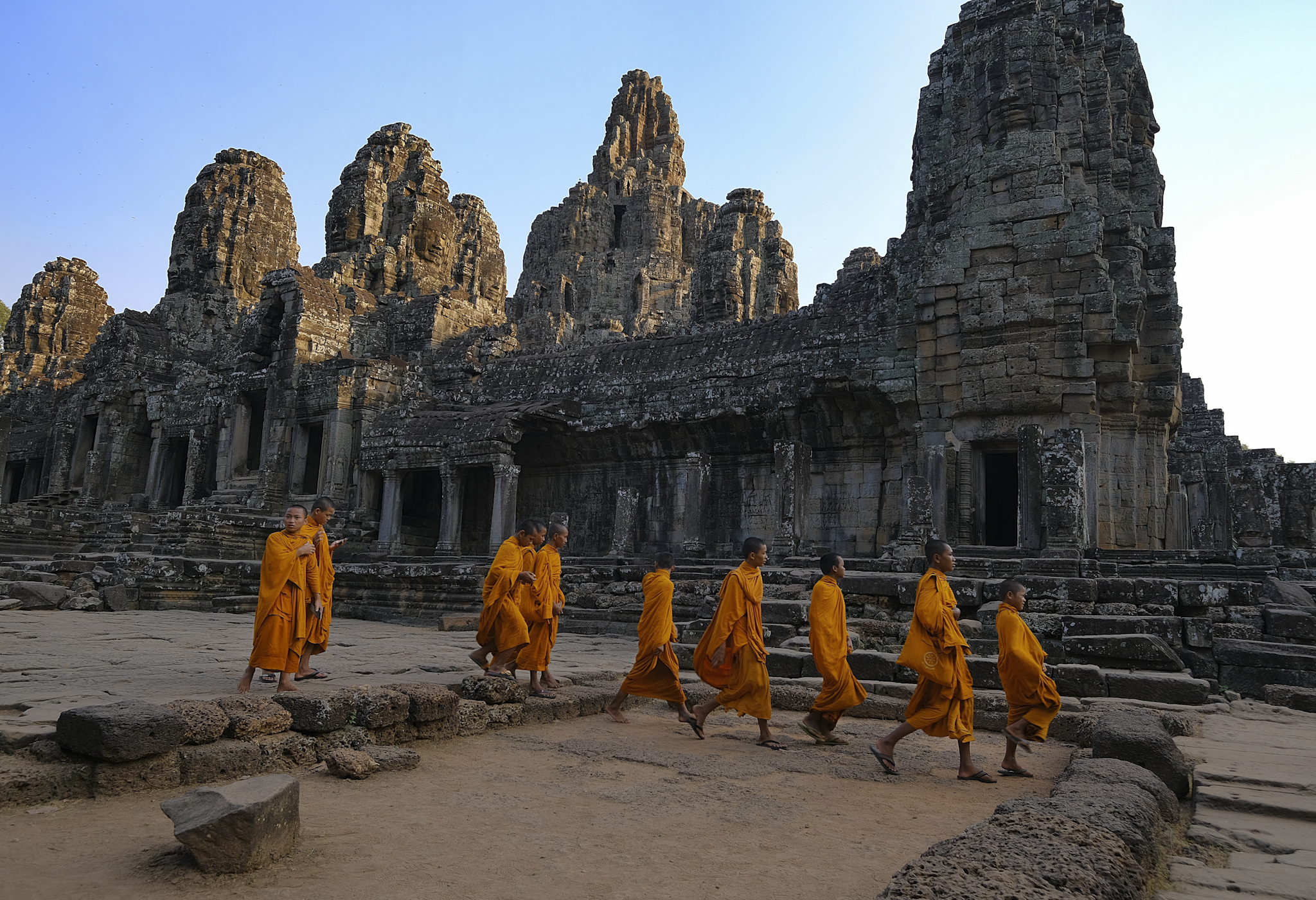
There are 173 gigantic faces remaining on Bayon’s towers with debate and theories going on to this day over who the faces actually represent.
Many local Khmer believe that they represent the Four Faces of Prohm (Brahma) carved in the image of the Jayavarman VII himself as the Buddhist God-King, while others believe they are a representation of the Buddhist deity, Avalokiteshvara/Lokesvara. A google search will surely turn up even more theories.
The temple is positioned at the center of Angkor Thom with roads leading directly to the north, south, east, and west gates of Angkor Thom which provide the site with an outer wall and moat. According to the hypothesis of some experts, this completes the site from the viewpoint of the mix of architecture and mythology in the ancient Khmer world with Bayon at the center in a grand representation of the Churning of the Sea of Milk, while other experts negate this theory entirely.
6
The Baphuon is the state temple of King Udayadityavarman II. It is located in the old Khmer capital city Angkor Thom, between the Royal Palace and the Prasat Bayon. The sandstone monument that was dedicated to Shiva is in the shape of a stepped pyramid.
When the temple was converted into a Buddhist temple in the 15th century, part of the Baphuon was demolished and the stones used to build a Buddha image on the West end of the temple. The very large reclining Buddha image, which shape is difficult to make out, was never completed.
7
Stop 7
Phimeanakas is a temple with a story and everyone loves a good story! It’s also part of the royal enclosure, so it’s likely that you’ll pass through at some point during your visit. The area surrounding the temple is thick with trees and ponds which make it feel a little cooler which is great if you’re visiting in the hot afternoon.
8
Stop 8
The Elephants terrace was built by King Jayavarman VII at the end of the 12th century. The terrace stretches out over a length of more than 300 meters from the Baphuon in the South to the Leper King terrace to the North.
9
Stop 9
The Royal Terraces, comprising of the Terrace of the Elephants to the South and the Terrace of the Leper King to the North, form the Eastern boundary of the Royal Palace grounds.
They face the parade grounds where processions, parades and other events were held. The King would watch the events standing on the Elephant terrace, which he also used as an audience hall to listen to the complaints and problems of the citizens of Angkor.
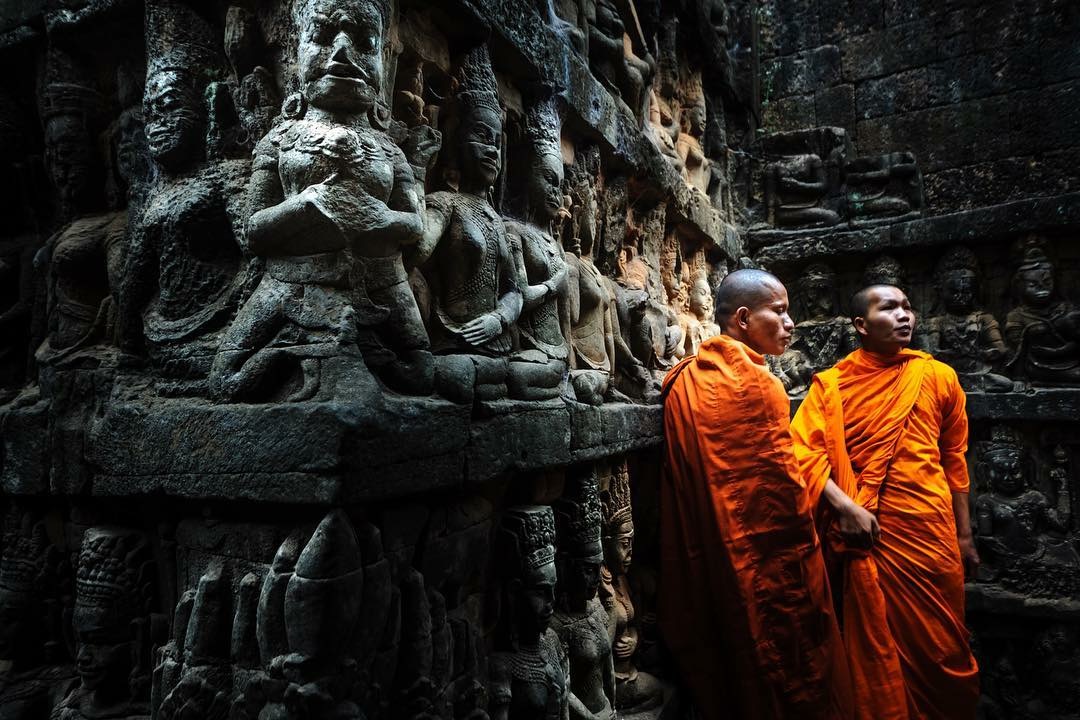
Both terraces contain extensive sculptings of Devatas, Apsaras, mythological animals and demons. The Elephants terrace and the Leper King terrace were restored during the 1990’s and 2000’s by the EFEO.
10
Stop 10
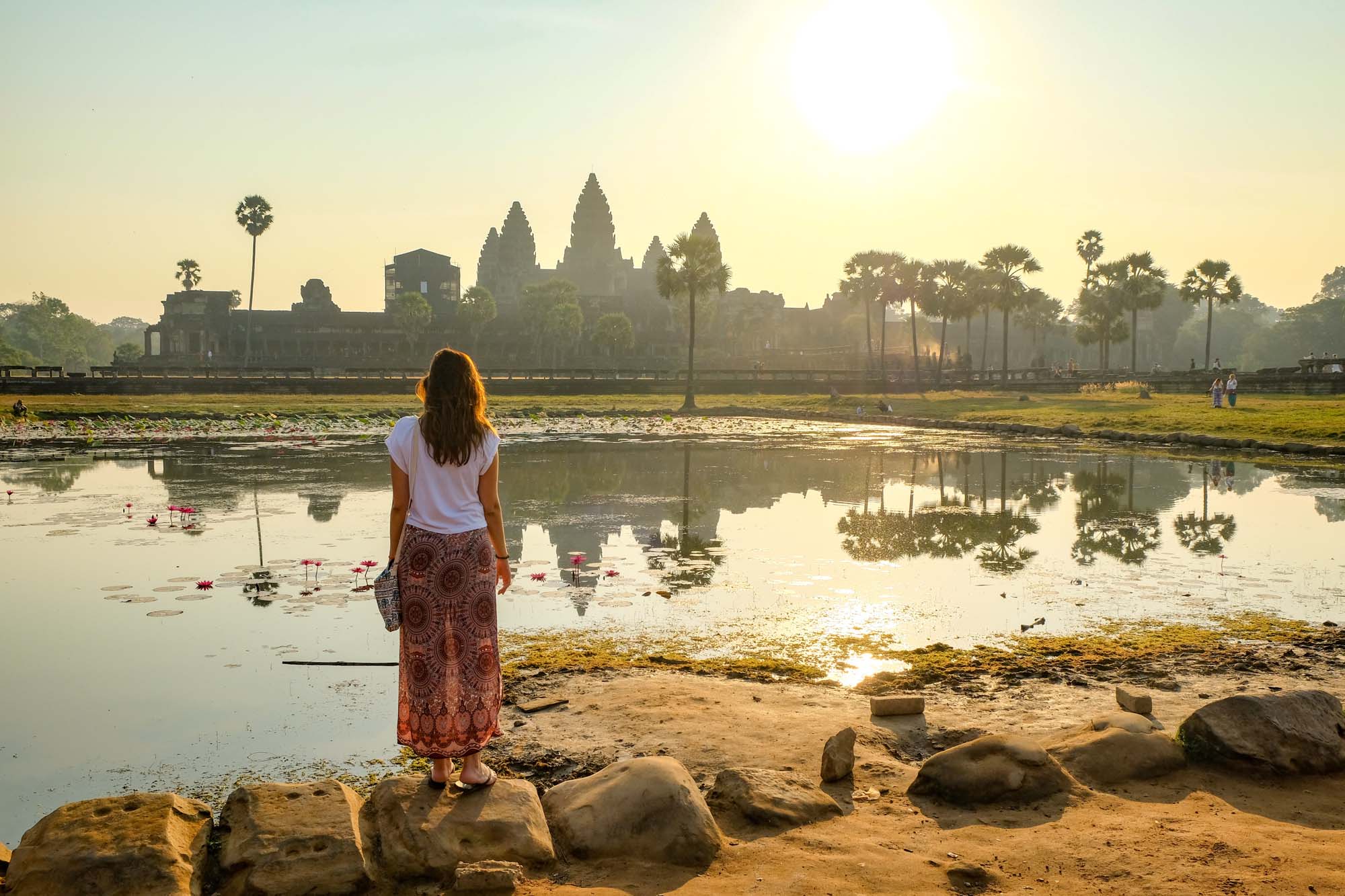
Representing the abode of Hinduism's ancient gods, the spectacular temple of Angkor Wat is quite literally heaven on earth and the jewel in the Khmer archaeological crown. It's the largest of all Angkor's temples and one of the best preserved. Surrounded by a huge rectangular reservoir and an outer wall measuring over 3km in length, the temple consists of three tiered galleries and five towers shaped like lotus buds.
Such is the national pride in the site that the outline of the temple features on Cambodia's national flag. Little can prepare you for the sheer scale, splendour and symmetry of Angkor Wat, a perfect blend of artistic genius and spiritual devotion. Although somewhat neglected after the 16th century, Angkor Wat is unique in that it was never completely abandoned and the moat safeguarded the temple against the encroaching jungle.
Aside from its size and remarkable condition, Angkor Wat is also famous for its extensive decoration, specifically its bas-reliefs.
What's not included
Temples Pass - 1Day
Available languages
Guide guide
EN
Reviews breakdown
Viator
5.0
2 reviews
5★
2
4★
0
3★
0
2★
0
1★
0
Tripadvisor
5.0
18 reviews
5★
18
4★
0
3★
0
2★
0
1★
0
Important information
Public transportation options are available nearby
Specialized infant seats are available
Not recommended for travelers with poor cardiovascular health
Suitable for all physical fitness levels
About Siem Reap
Siem Reap is the vibrant gateway to the ancient Angkor temples, a UNESCO World Heritage site. This charming city offers a blend of rich history, vibrant markets, and lush landscapes, making it a must-visit destination in Cambodia.
Top Attractions
Angkor Wat
Angkor Wat is the largest religious monument in the world and a UNESCO World Heritage site. This iconic temple complex is a masterpiece of Khmer architecture and a symbol of Cambodia.
Historical
Half to full day
USD 37 for 3-day pass
Angkor Thom
Angkor Thom is a walled city and the last capital of the Khmer Empire. It features several impressive temples, including the Bayon Temple with its famous smiling faces.
Historical
Half to full day
USD 37 for 3-day pass
Ta Prohm
Ta Prohm is a temple complex overgrown by jungle, featuring a unique blend of nature and architecture. It was famously used as a filming location for the movie 'Tomb Raider'.
Historical
1-2 hours
USD 37 for 3-day pass
Pub Street
Pub Street is the heart of Siem Reap's nightlife, offering a vibrant mix of bars, restaurants, and street food vendors. It's a great place to experience the city's lively atmosphere.
Entertainment
Evening
Free to explore, budget for food and drinks
Siem Reap Night Market
The Siem Reap Night Market is a bustling market offering a variety of local crafts, souvenirs, and street food. It's a great place to shop for unique gifts and experience local culture.
Shopping
1-2 hours
Budget to moderate
Must-Try Local Dishes
Amok
A creamy, coconut-based curry with fish, chicken, or tofu, steamed in banana leaves. It's a traditional Khmer dish with a unique flavor.
Main dish
Vegetarian options available
Nom Banh Chok
A popular breakfast dish consisting of rice noodles topped with a fish-based green curry gravy and fresh vegetables.
Breakfast
Vegetarian options available
Bai Sach Chrouk
Grilled pork served with broken rice and pickled vegetables. It's a popular breakfast dish in Cambodia.
Breakfast
Contains meat
Lok Lak
A stir-fried beef dish with a tangy lime and pepper sauce, served with rice and fresh vegetables.
Main dish
Contains meat
Popular Activities
Hiking in the Angkor Archaeological Park
Exploring the bamboo train in Battambang
Visiting spas and wellness centers
Enjoying a traditional Khmer massage
Exploring temples and historical sites
Attending traditional dance performances
Boat tours on Tonlé Sap Lake
Swimming in waterfalls
Best Time to Visit
November to February
The best time to visit Siem Reap is during the dry season when the weather is pleasant and ideal for exploring the temples. The cooler temperatures make it comfortable for long days of sightseeing.
20-30°C
68-86°F
Practical Information
Language
- Official: Khmer
- Widely spoken: English
- English: Moderately spoken in tourist areas
Currency
Cambodian Riel (KHR)
Time Zone
Indochina Time (ICT), GMT+7
Electricity
230VV, 50HzHz
Safety Information
Overall Safety Rating: Generally safe
Siem Reap is generally safe for tourists, but petty crime and scams can occur. Exercise caution and be aware of your surroundings.
Important Precautions:
- • Be cautious of scams and overcharging.
- • Avoid walking alone at night in isolated areas.
- • Use reputable tour operators and transportation services.
Getting there
By air
- Siem Reap International Airport • 5 km from city center
By bus
Siem Reap Virak Buntham Express Terminal, Siem Reap Giant Ibis Bus Terminal
Getting around
Public transport
Tuk-tuks are the most popular and affordable mode of transport in Siem Reap. They are widely available and can be negotiated for short or long trips.
Taxis
Available • Apps: PassApp, Grab
Rentals
Car, Bike, Scooter
Neighborhoods
Wat Bo
Wat Damnak
Sivatha
Day trips
Battambang
150 km from Siem Reap • Full day
Battambang is a charming colonial town known for its well-preserved French architecture, bamboo train, and nearby temples. It's a great destination for a day trip from Siem Reap.
Kampong Phluk
16 km from Siem Reap • Half day
Kampong Phluk is a floating village on the edge of the Tonlé Sap Lake. It offers a unique glimpse into the lives of the local community and the stunning natural beauty of the area.
Kbal Spean
25 km from Siem Reap • Half day
Kbal Spean is a remote archaeological site featuring ancient carvings and a beautiful river setting. It's a great destination for those looking to explore off-the-beaten-path attractions.
Festivals
Khmer New Year (Choul Chnam Thmey) • April 13-15 (dates vary)
Bon Om Touk (Water Festival) • November (dates vary)
Angkor Photo Festival • December (dates vary)
Pro tips
- Hire a local guide for the Angkor Archaeological Park to gain a deeper understanding of the temples' history and significance.
- Visit the temples early in the morning or late in the afternoon to avoid crowds and the heat.
- Try local street food like nom banh chok and bai sach chrouk for an authentic culinary experience.
- Bargain for better prices at markets and street stalls, but do so respectfully and with a smile.
- Use a map app like Google Maps for navigation, as street signs can be limited and confusing.
From $25
per person
Price varies by option
Secure booking
Free cancellation available
Instant confirmation