10 hours Two Towns Private Tour by car: Telč & Třebíč
Active
10h
For a full refund, cancel at least 24 hours before the scheduled departure time.
Instant confirmation
Mobile or paper ticket accepted
About this experience
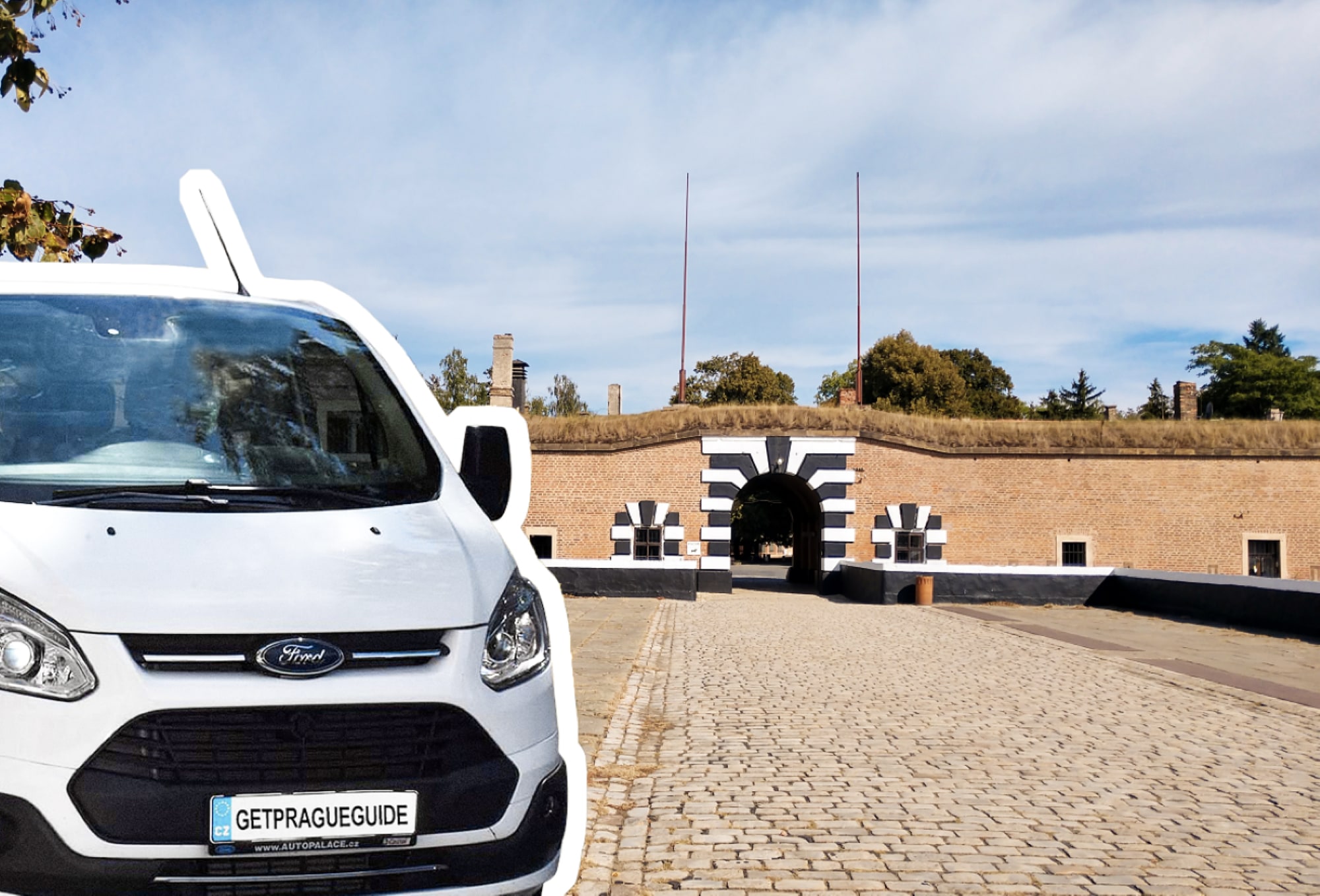
I and the professional driver will pick you up at 8 am in a lobby of the hotel you are staying in. This tour takes 10 hours and it is provided by A/C private car or minivan. Bottled water will be available in the car for you free of charge. It takes about 2 hours to reach Telč town from Prague by car.
Two of the greatest gems in Třebíč are the Roman-Gothic Basilica of St.Prokop and the Jewish Quarter. The Třebíč Ghetto is a unique complex encompassing more than 120 houses, two synagogues and a historical cemetery. This was the first Jewish monument outside Israel to be inscribed on the UNESCO World Heritage List.
Available options
10 hours Two Towns Private Tour by car: Telč & Třebíč
Pickup included
What's included
Hotel pickup and drop-off
Bottled water
Air-conditioned vehicle
Professional licensed guide
Detailed itinerary
1
I and the professional driver will pick you up at 8 am in a lobby of the hotel you are staying in. This tour takes 10 hours and it is provided by A/C private car or minivan. Bottled water will be available in the car for you free of charge. It takes about 2 hours to reach Telč town from Prague by car.
Telč boasts one of most beautiful town squares in the Czech Republic – if not all of Central Europe. The heart of the elongated town square is a Baroque Marian column and two fountains, and the square´s perimeter is lined with historically valuable arcaded town houses.
In 1963 Vojtěch Jasný made the film The Cassandra Cat in Telč. In 1979 Werner Herzog filmed the movie Woyzeck in Telč.
Multiple Czech fairy tale movies were filmed in the Telč Castle, most known are The Proud Princess (1952) or Z pekla štěstí (1999).
2
The Gothic castle was built in the second half of the 14th century. At the end of the 15th century the castle fortifications were strengthened and a new gate-tower built. In the middle of the 16th century the medieval castle no longer satisfied Renaissance nobleman Zachariáš of Hradec, who had the castle altered in the Renaissance style. The ground floor was vaulted anew, the façade decorated with sgraffito, and the state apartments and living quarters received stucco ornamentation together with trompe-l'œil and chiaroscuro paintings in 1553. The counter-reformation brought the Jesuits to the town, who built the church of Name of Jesus in 1666–67, according to the plans of Domenico Orsi. The column of the Virgin and the fountain in the centre of the square date from the 18th century.
3
Marian (Plague) Column stands in the upper part of the square. It was built in the years 1716 - 1720 from the legacy of townswoman Zuzana Hodová (she lived in the house no. 52) who donated 1000 gold pieces. Author of the column is sculptor David Lipart of Brtnice and his assistant František Neuwirt.
The pedestal of the column holds the saints - John of Nepomuk, James, Francis Xaverius, Rochus, Sebestian and the Guardian Angel. In the cave you can see St. Rosalie and from teh second side Mary Magdalene. On the top of the greyish column stands the Virgin Mary on the globe.
4
The watch tower is about a mile walk from the town center only. It offers views of the town you hardly get from the town towers. A small charge (50 CZK) has to be paid.
5
Třebíč is a town in the Moravian part of the Vysočina Region of the Czech Republic. Třebíč is a regional centre with a population of approximately 36,000. It is the administrative capital of the Třebíč District.
In the age of its expansion, Třebíč was the third most important town in Moravia. The population growth started after World War II.
There are several well-known tourist sights in the town. The Jewish Quarter and St. Procopius Basilica are listed as a UNESCO World Heritage Site.
6
The Jewish Quarter is one of the best preserved Jewish ghettos in Europe. Therefore, it was listed in 2003 (together with the Jewish Cemetery and the St. Procopius Basilica in Třebíč) in the UNESCO World Heritage List and it is the only Jewish monument outside Israel specifically placed on the List.
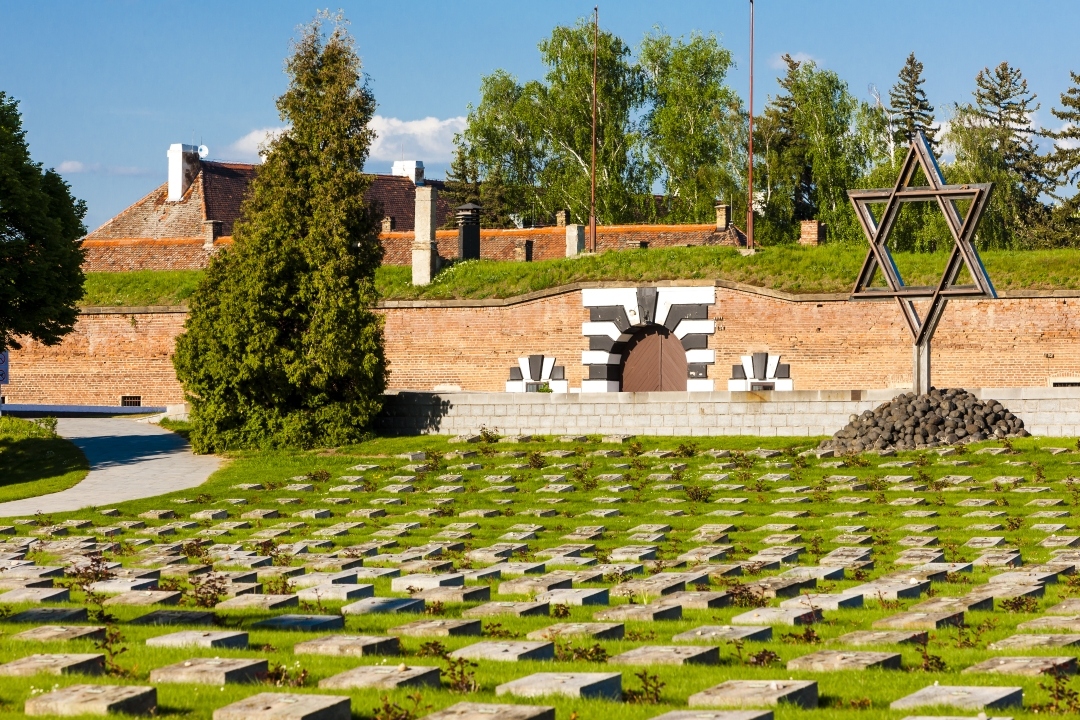
The Jewish Quarter is situated on the north bank of the River Jihlava, surrounded by rocks and the river. In the Jewish Quarter there are 123 houses, two synagogues and a Jewish cemetery which isn't in the area of the town.
All original Jewish inhabitants (in 1890 there lived nearly 1,500 Jews, but in the 1930s only 300 of them were of Jewish faith) were deported and murdered in concentration camps by Nazis during World War II. Only ten of them came back after the war. Therefore, many buildings of the Jewish town (e. g. the town hall, rabbi's office, hospital, poorhouse or school) do not serve their original purpose any more and the houses are now owned by people of non-Jewish faith.
7
St. Procopius Basilica is a Romanesque-Gothic Christian church built on the site of the original Virgin Mary's Chapel of the Benedictine monastery in 1240–1280. It became a national cultural monument in 2002 as a part of the "monastery with St. Procopius church". The basilica together with the Jewish Quarter in Třebíč were inscribed as a UNESCO World Heritage Site in 2003.
The basilica was originally dedicated to the Assumption of the Virgin Mary. Saint Procopius became the Patron saint of the basilica on the quincentenary his canonization in 1704. Jan Karel, Count of Valdštejn established a castle chapel of St. Procopius from the presbytery of the basilica.
As of 2013, the renovated Třebíč castle is a museum adjacent to the Basilica.
8
For the first time ever, the entire building was reconstructed thus creating space for four thematically independent exhibitions, which focus in different ways on topics linked with the town of Třebíč and the wider region. These include the mineralogical exhibition entitled The World of Inanimate Nature, the monastery exhibition The World of Portals and Gates, the castle tour The Waldstein Family at Třebíč and finally, the museum exhibition entitled People. Places. Destinies.
In addition to tours that offer a deeper understanding of the region and the museum’s collections, you can also visit short-term exhibitions in the former castle stables as well as concerts and lectures in the Stone Hall.
Educational programmes are prepared for schools on a regular basis involving modern technologies both in the exhibitions as well as in a multi-function hall and study.
The reconstruction also made the premises fully accessible to the disabled visitors.
What's not included
Entrance fee to the Telč chateau
We can have a nice lunch in a local Czech restaurant in a centre of town.
Lookout Tower in Telč
Entrance fee to the Basilica of St Prokopius in Třebíč town
Entrance fee to the Rear synagogue in Třebíč town
Available languages
Guide guide
EN
Important information
Public transportation options are available nearby
Not recommended for travelers with poor cardiovascular health
Travelers should have at least a moderate level of physical fitness
Children must be accompanied by an adult
Dress code is smart casual
Operates in all weather conditions, please dress appropriately
A small amount of walking is involved. Good walking shoes are recommended.
A minimum of two people per booking is required
A maximum of 6 people per booking
Vegetarian meal is available to buy
Travel time (time spent on tour) : 10 hours
All attractions are seen with a guide
You are getting to a major attractions by private car or minivan.
Meeting point
In front of the hotel
Important notes
• Dress code is smart casual
• Comfortable walking shoes are recommended
Hotel pickups commence prior to this time
About Prague
Prague, the capital of the Czech Republic, is a city of stunning architecture, rich history, and vibrant culture. Known for its well-preserved Old Town, Prague Castle, and the iconic Charles Bridge, it offers a blend of medieval charm and modern sophistication. The city is a UNESCO World Heritage site and a must-visit destination in Europe.
Top Attractions
Prague Castle
Prague Castle is the largest ancient castle in the world and a UNESCO World Heritage site. It offers stunning views of the city and houses several historical buildings, including St. Vitus Cathedral and the Old Royal Palace.
Historical/Architecture
2-3 hours
Moderate (15 EUR for adults, discounts available)
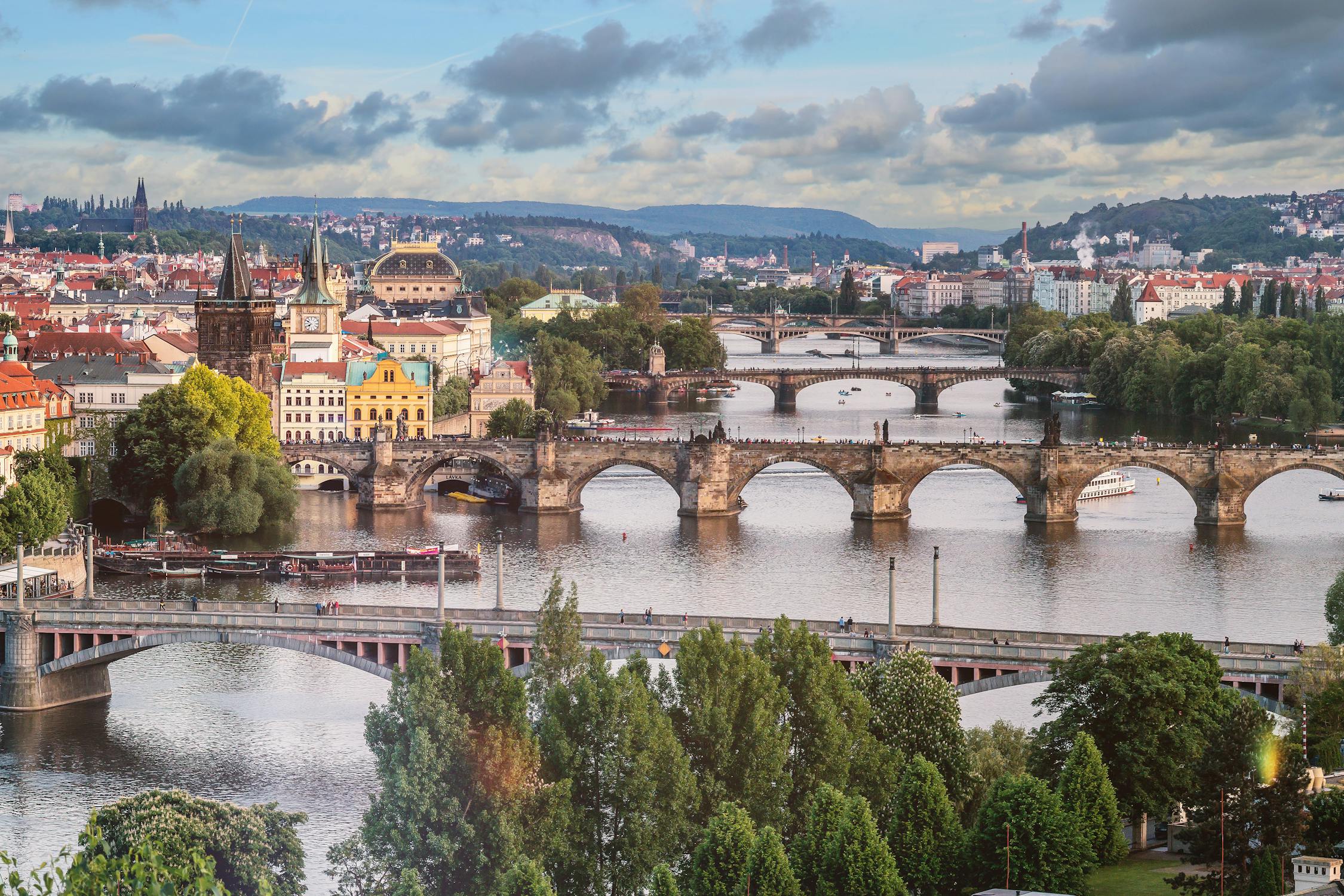
Charles Bridge
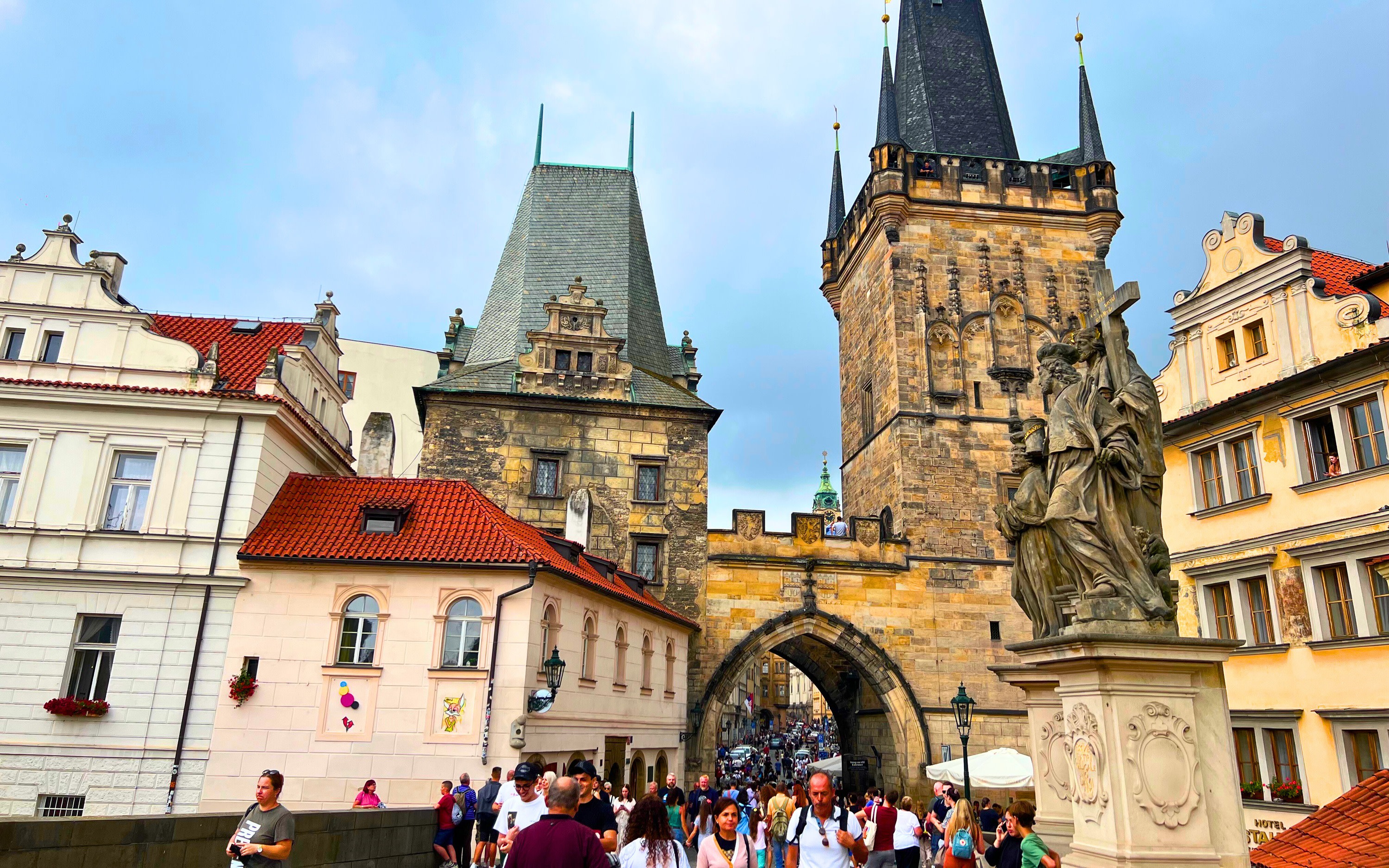
Charles Bridge is one of the most iconic landmarks in Prague. Built in the 14th century, it is lined with statues of saints and offers beautiful views of the Vltava River and Prague's skyline.
Historical/Architecture
1-2 hours
Free
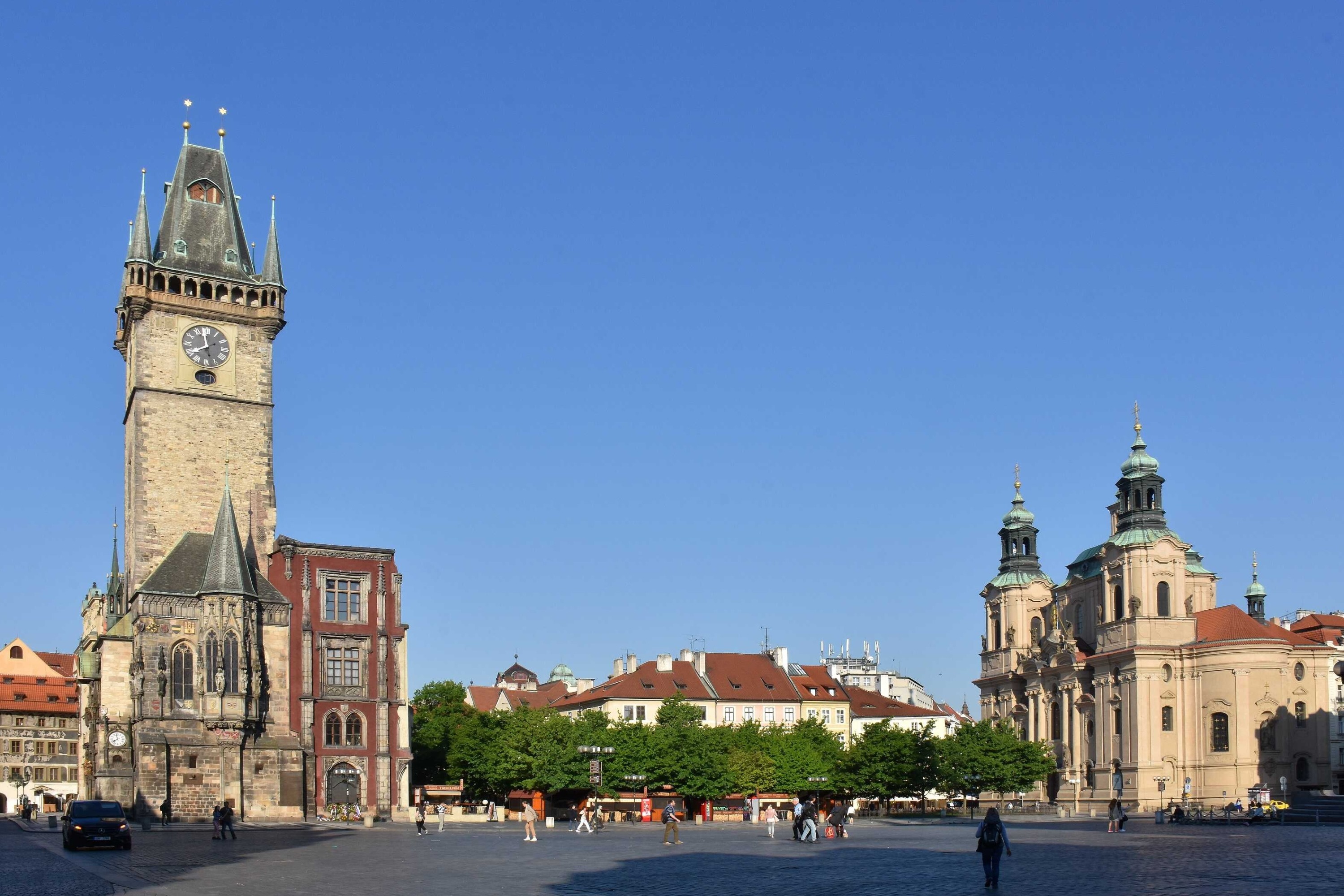
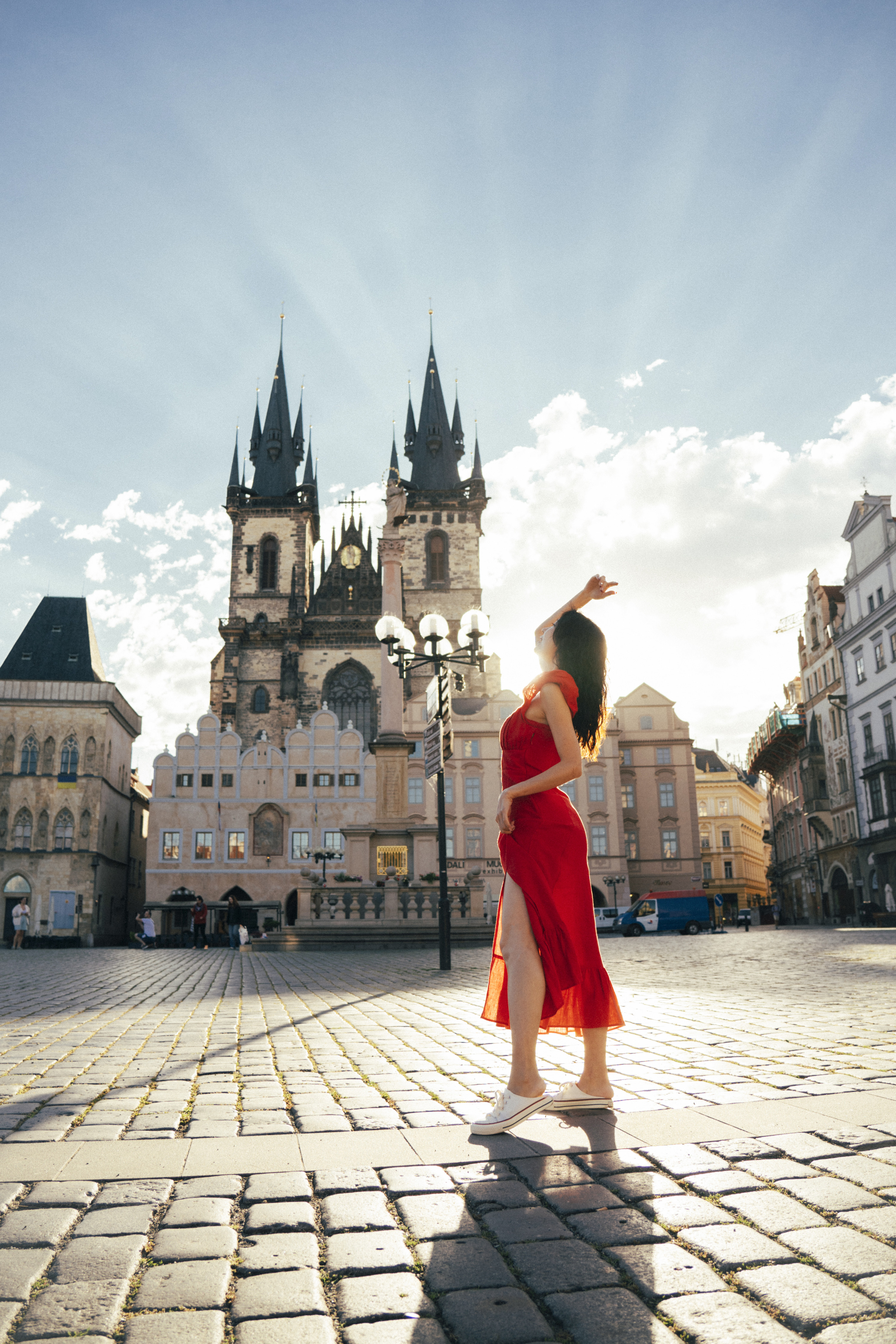
Old Town Square
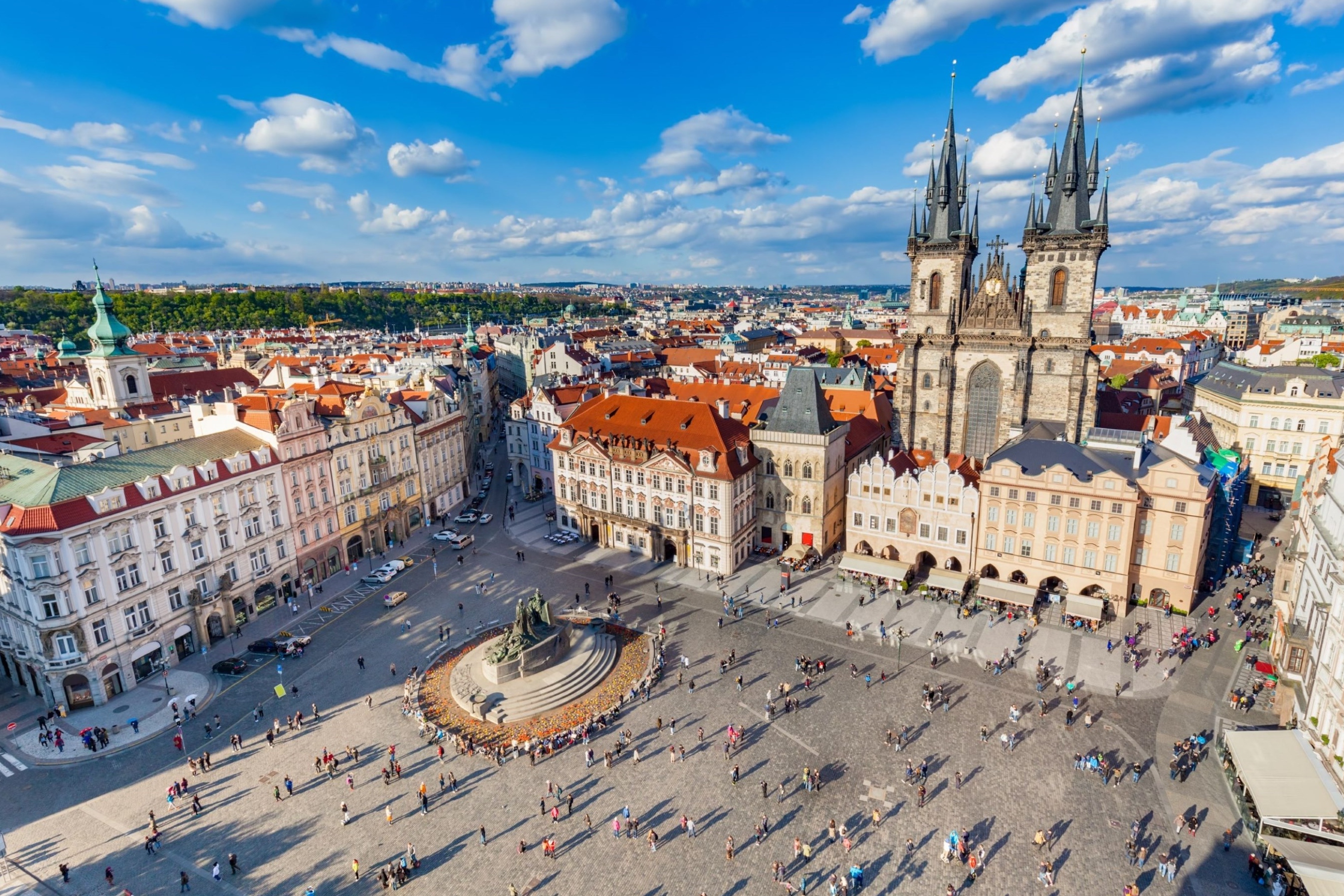
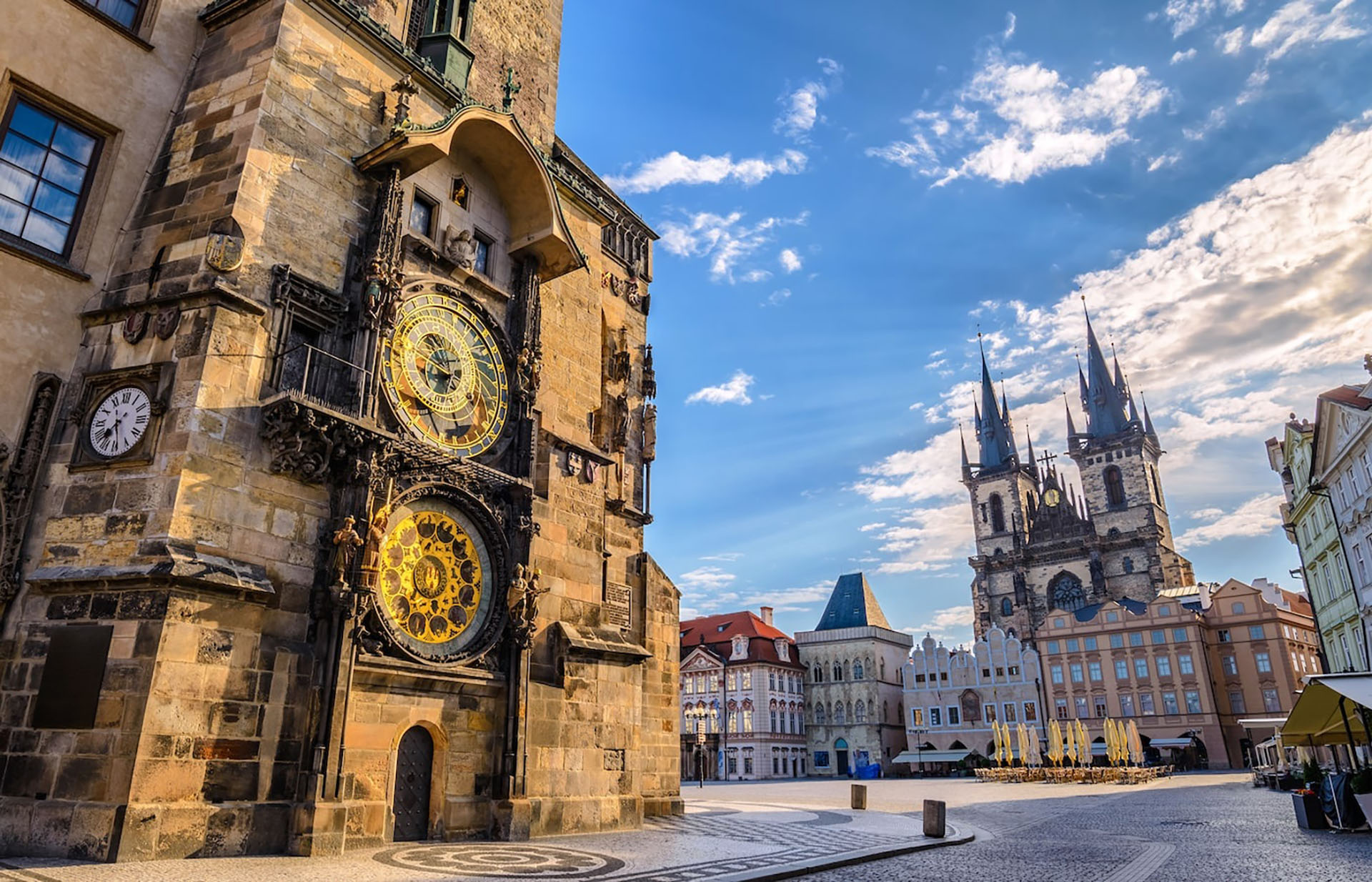
Old Town Square is the heart of Prague's historic center and home to the famous Astronomical Clock and the Church of Our Lady before Týn. It's a vibrant hub of activity with markets, events, and street performances.
Historical/Cultural
1-2 hours
Free (some attractions may have entry fees)
Petřín Hill and Lookout Tower
Petřín Hill is a beautiful park offering panoramic views of Prague. The Petřín Lookout Tower, often referred to as 'Prague's Eiffel Tower,' is a miniature version of the famous Parisian landmark and provides stunning views from its observation deck.
Nature/Adventure
2-3 hours
Moderate (10 EUR for tower entry, discounts available)
Jewish Quarter (Josefov)
The Jewish Quarter, known as Josefov, is a historic area with a rich cultural heritage. It includes several synagogues, the Old Jewish Cemetery, and the Jewish Museum, which provide insight into the history of Prague's Jewish community.
Historical/Cultural
2-3 hours
Moderate (15 EUR for combined museum entry, discounts available)
Must-Try Local Dishes
Svíčková
A traditional Czech dish consisting of marinated beef sirloin in a creamy vegetable sauce, served with bread dumplings and whipped cream.
Main Course
Contains beef, dairy, and gluten.
Guláš
A rich and flavorful Czech goulash made with beef, onions, and paprika, typically served with bread dumplings or potatoes.
Main Course
Contains beef, onions, and gluten (if served with dumplings).
Trdelník
A sweet pastry made from rolled dough wrapped around a stick, grilled, and coated with sugar and cinnamon. Often filled with ice cream or whipped cream.
Dessert
Contains wheat, sugar, and may contain dairy.
Pilsner Urquell
A world-famous Czech pilsner beer, known for its crisp and refreshing taste. It's brewed using traditional methods and high-quality ingredients.
Drink
Contains barley and hops.
Popular Activities
Hiking in the Bohemian Switzerland National Park
Rafting on the Vltava River
Cycling tours
Spa treatments in Karlovy Vary
Boat tours on the Vltava River
Picnics in Letná Park
Visiting museums and galleries
Attending classical music performances
Best Time to Visit
May to September
The weather is pleasant, and all tourist attractions are open. It's the best time for sightseeing and outdoor activities.
15°C to 25°C
59°F to 77°F
Practical Information
Language
- Official: Czech
- Widely spoken: English, German
- English: Moderately spoken
Currency
Czech Koruna (CZK)
Time Zone
GMT+1 (Central European Time, CET)
Electricity
230VV, 50HzHz
Safety Information
Overall Safety Rating: Generally safe
Prague is generally a safe city for travelers, with low crime rates and a welcoming atmosphere. However, as with any major city, it's important to be aware of your surroundings and take precautions to protect yourself and your belongings.
Important Precautions:
- • Keep valuables secure and out of sight
- • Use reputable taxi services or apps
- • Be cautious of strangers approaching you with offers or requests
Getting there
By air
- Václav Havel Airport Prague • 10 km from city center
By train
Prague Main Station, Holešovice Station
By bus
Florenc Central Bus Station, Černý Most Bus Station
Getting around
Public transport
Trams are the most iconic and efficient way to get around Prague. The network covers most of the city and is well-connected to metro and bus lines.
Taxis
Available • Apps: Uber, Bolt
Rentals
Car, Bike, Scooter
Neighborhoods
Old Town (Staré Město)
Malá Strana
Vinohrady
Žižkov
New Town (Nové Město)
Day trips
Kutná Hora
70 km from Prague • Half day to full day
Kutná Hora is a historic town known for its stunning architecture, including the Sedlec Ossuary (Bone Church) and St. Barbara's Cathedral. It offers a unique glimpse into the region's rich history and cultural heritage.
Karlštejn Castle
25 km from Prague • Half day
Karlštejn Castle is a stunning Gothic castle built in the 14th century by King Charles IV. It offers beautiful views of the surrounding countryside and a fascinating insight into the region's medieval history.
Český Krumlov
180 km from Prague • Full day to overnight
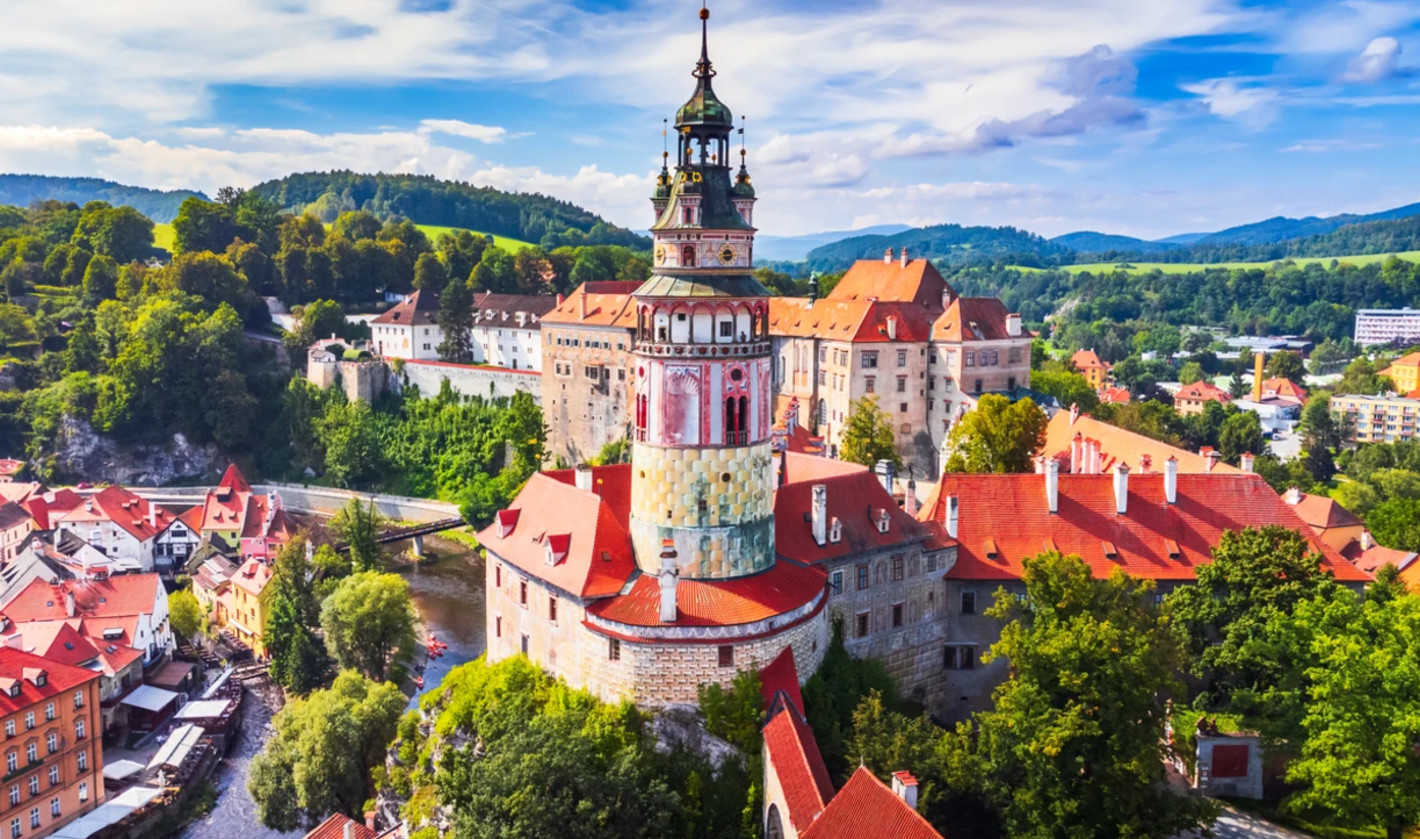
Český Krumlov is a charming and well-preserved medieval town, known for its stunning architecture, cobblestone streets, and the impressive Český Krumlov Castle. It's a UNESCO World Heritage site and a popular day trip from Prague.
Festivals
Prague Spring International Music Festival • May to June
Prague International Film Festival • March
Prague Beer Fest • May
Pro tips
- Visit the Prague Castle early in the morning to avoid crowds
- Explore the city's historic sites and architecture on foot
- Try traditional Czech dishes at local restaurants and pubs
- Experience the city's vibrant nightlife and entertainment scene
- Take a day trip to nearby destinations, such as Kutná Hora or Karlštejn Castle
From $25
per person
Price varies by option
Secure booking
Free cancellation available
Instant confirmation


![[Private Car] Czech Republic Day Trip](https://res.klook.com/image/upload/activities/iawccbdqsnjatkkrnxc4.jpg)