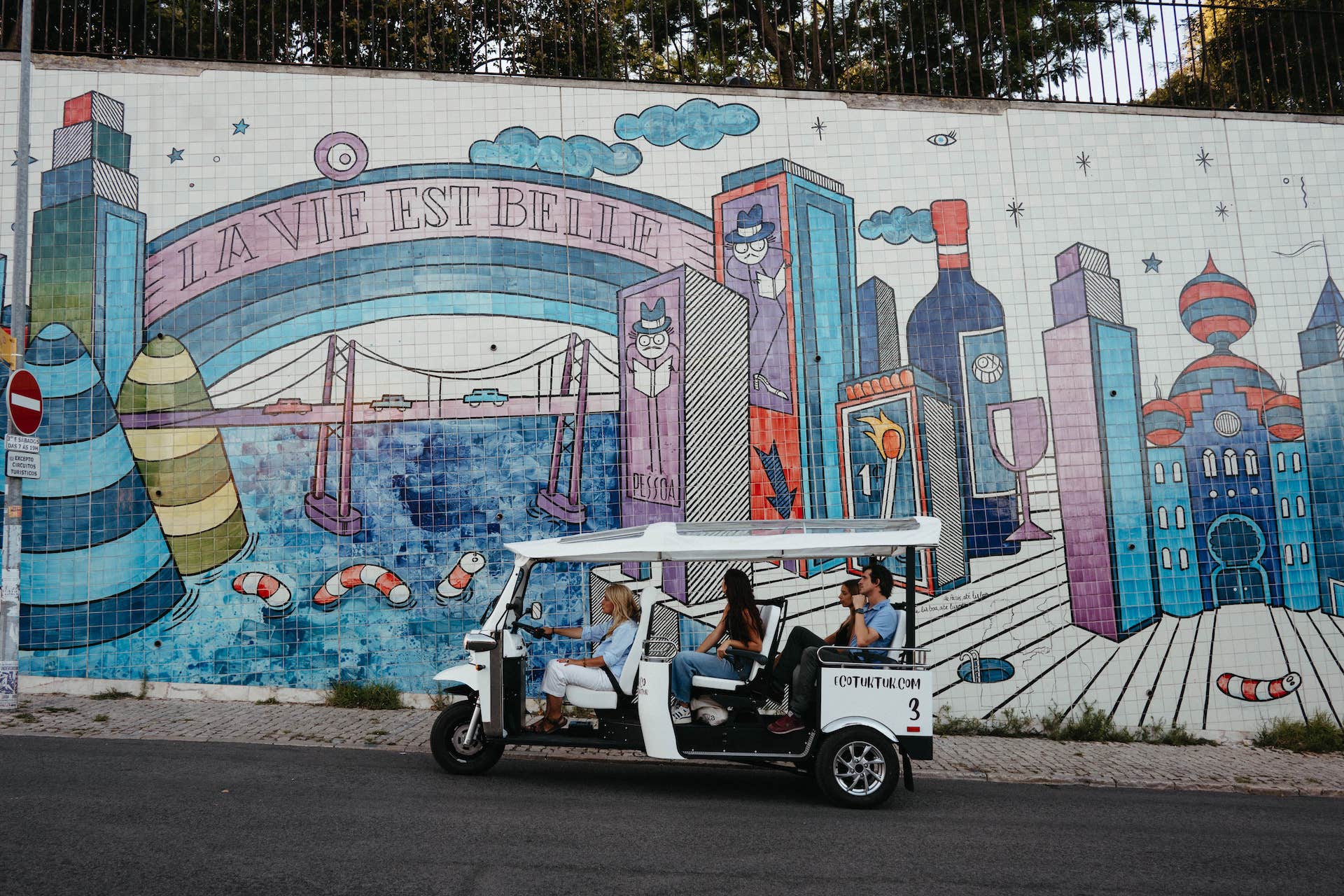
Tour in Lisbon (highlights), Cristo Rei and Belém.
Active
4h - 8h
For a full refund, cancel at least 24 hours before the scheduled departure time.
Instant confirmation
Mobile or paper ticket accepted
About this experience
This tour was designed by people who were born in the city of Lisbon for people who want to get to know the city of Lisbon.
The times described in the congratulations as well as the itinerary may vary according to your preference.
On this customizable tour you can adapt the tour and discover the secrets of Lisbon.
Lisbon is one of the oldest cities in the world and the second oldest European capital, predating other modern European capitals by centuries.
Want to know more ? Embark on this tour and come discover Portugal with Portuguese people.
Available options
Tour in Lisbon (highlights), Cristo Rei and Belém.
Pickup included
What's included
Bottled water
All Fees and Taxes
Air-conditioned vehicle
Fully customizable tour
Local Guide
Professional driver
Detailed itinerary
1
Stop 1
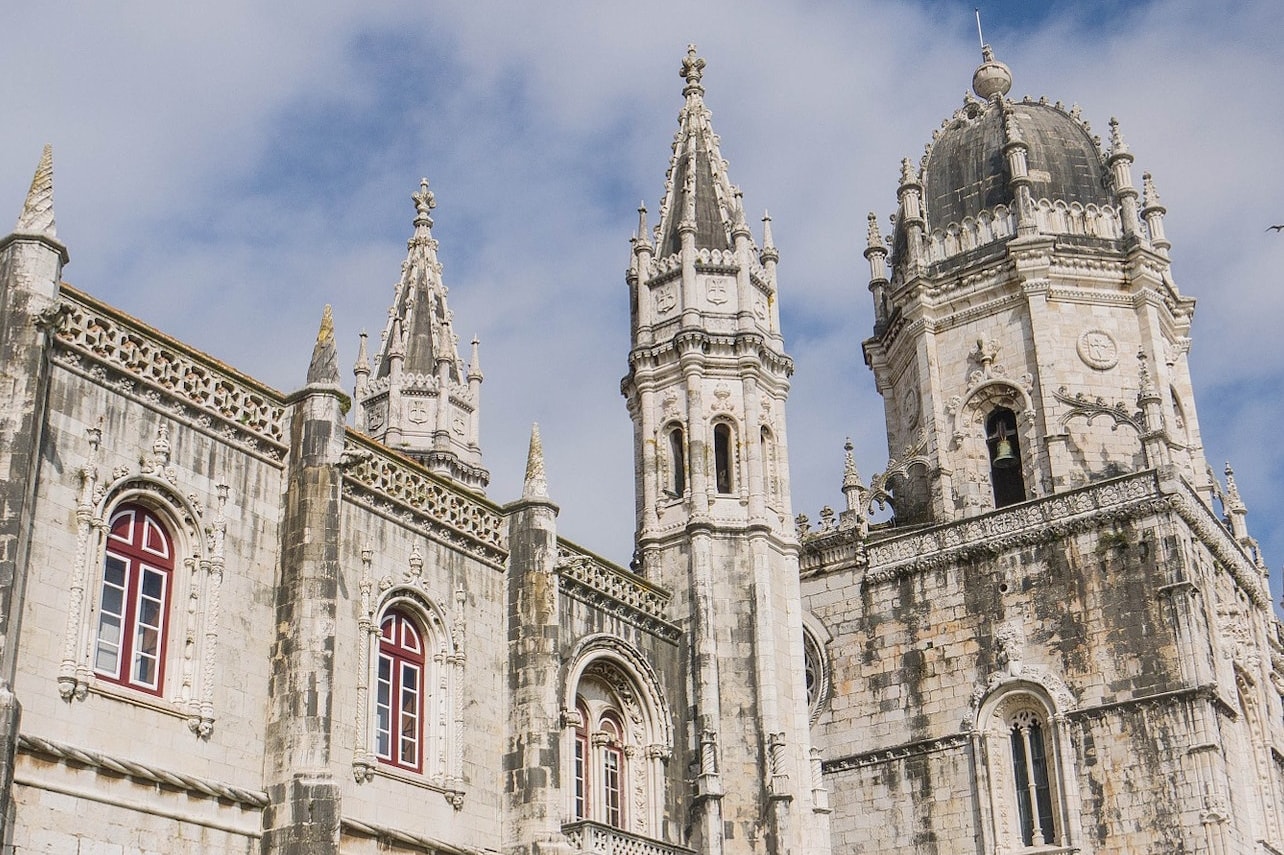
The Monastery of Santa Maria de Belém, better known as Mosteiro dos Jerónimos, is a Portuguese monastery, built at the end of the 15th century by King Manuel I and was handed over to the Order of Saint Jerónimo.
A culmination of Manueline architecture, this monastery is the most notable Portuguese monastic complex of its time and one of the main hall churches in Europe.
A mandatory stop for anyone visiting Portugal.
2
Stop 2
Since 1837
At the beginning of the 19th century, in Belém, next to the Jerónimos Monastery, there was a sugar cane refining operation associated with a small place of varied trade. As a consequence of the Liberal revolution that occurred in 1820, in 1834 all convents and monasteries in Portugal were closed, expelling the clergy and workers.
In 1837, the manufacture of “Pastéis de Belém” began, in facilities attached to the refinery, according to the old “secret recipe”, originating from the Monastery. Transmitted and exclusively known by the master pastry chefs who make them by hand, at the “Oficina do Segredo”. This recipe remains the same to this day.
Flavors of Portugal...
3
Stop 3
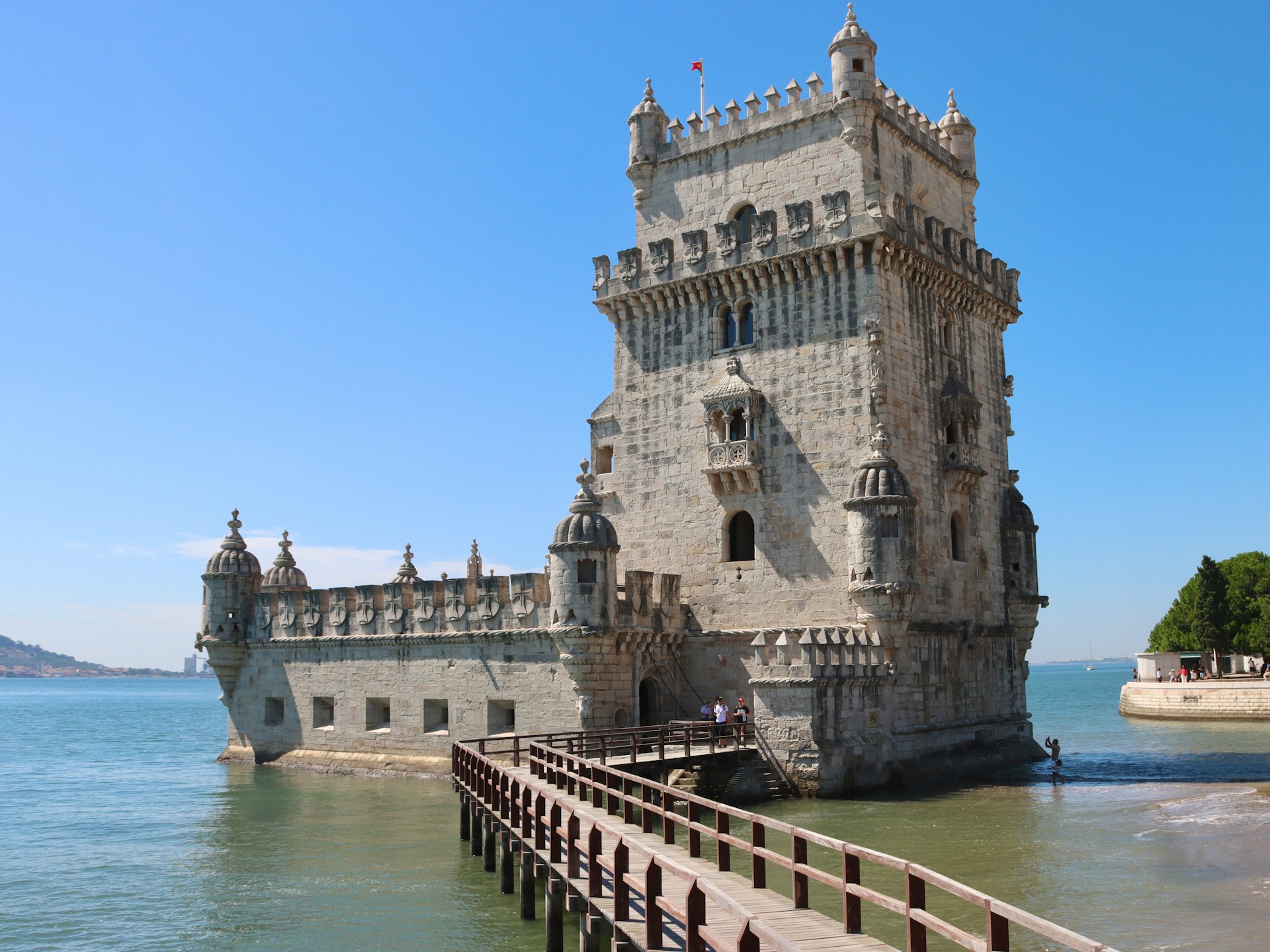
The Torre de Belém, formerly Torre de São Vicente a Par de Belém, one of the city's ex libris, the monument is an architectural icon of the reign of D. Manuel I, in a synthesis between the keep tower of medieval tradition and the bastion modern, where artillery pieces were arranged.
Want to know more? come with us and discover everything...
4
Stop 4
the Monument to the Discoveries, In a prominent position on the right bank of the Tagus River, the original monument, made of perishable materials, was erected in 1940 on the occasion of the Portuguese World Exhibition to honor the historical figures involved in the Portuguese Discoveries. The current replica, in concrete and stone, is later, having been inaugurated in 1960.
Unique architecture.
5
Stop 5
Pass by
Praça do Marquês de Pombal, also known as Rotunda do Marquês de Pombal, is an important square in the city of Lisbon, Portugal. It is located between Avenida da Liberdade and Parque Eduardo VII. In the center stands the monument to Marquês de Pombal, opened in 1934.
6
Stop 6
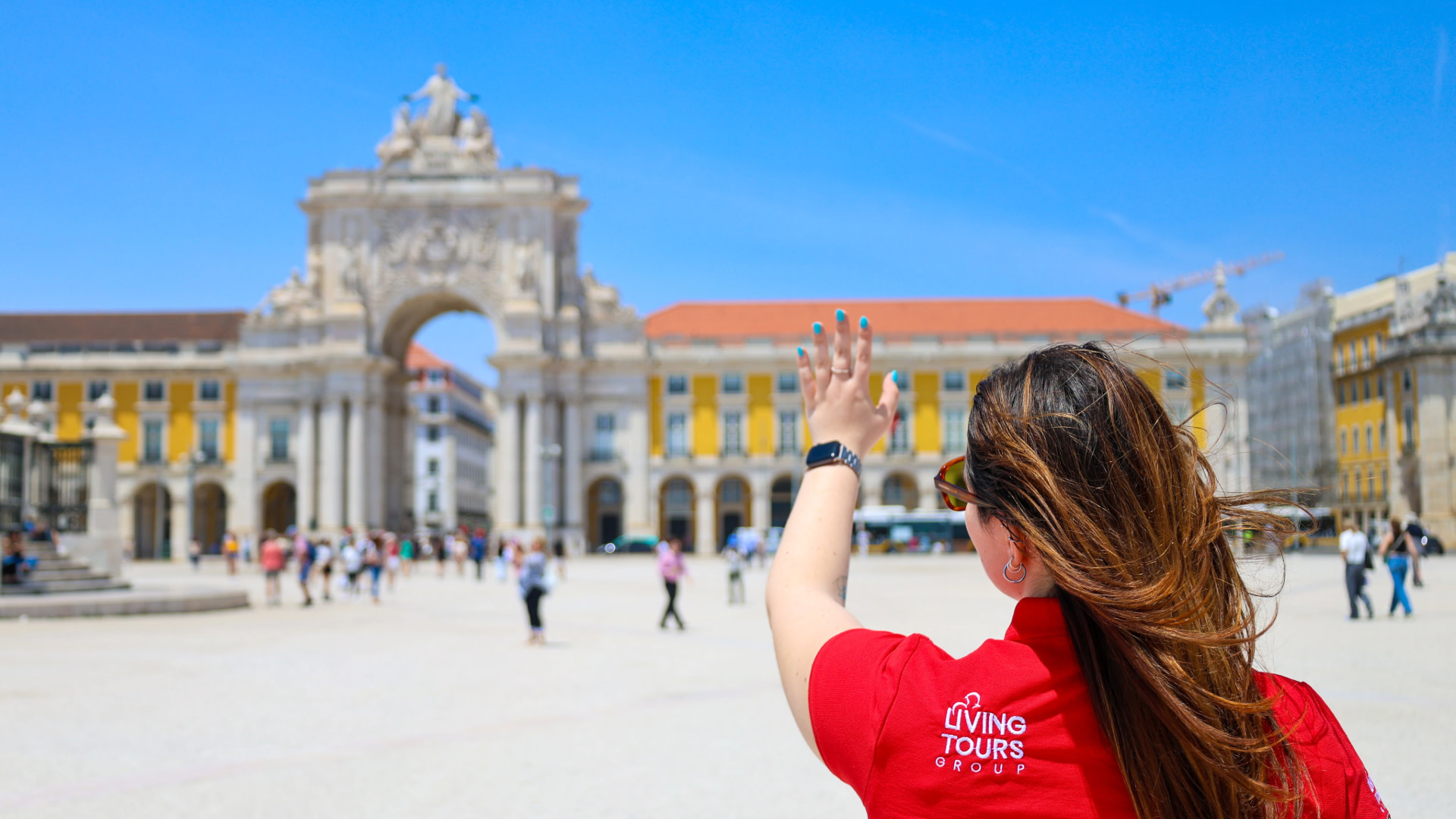
Praça do Comércio, still commonly referred to by its old name of Terreiro do Paço, is a square in downtown Lisbon located next to the Tagus River, in the area that was the site of the palace of the kings of Portugal for around two centuries and that today it is partially occupied by some government departments. It is one of the largest squares in Europe, measuring around 36,000 m² (180m x 200m). The square is limited by 79 arches.
7
Stop 7
The National Sanctuary of Christ the King is located at an altitude of 133 meters above the level of the Tagus, consisting of a portico designed by the architect António Lino, 75 meters high, topped by the statue of the Holy Redeemer with open arms facing the city of Lisbon, 28 meters high, work by Portuguese sculptor Francisco Franco de Sousa.
8
Stop 8
The National Pantheon, created by Decree of September 26, 1836, has been installed in Lisbon, in the Church of Santa Engrácia, since December 1, 1966.
The National Pantheon is intended to honor and perpetuate the memory of Portuguese citizens who distinguished themselves for services rendered to the country, in the exercise of high public positions, high military services, in the expansion of Portuguese culture, in literary, scientific and artistic creation or in defense of the values of civilization, in favor of the dignity of the human person and the cause of freedom. The honors of the Pantheon may consist of the deposition, in the National Pantheon, of the mortal remains of distinguished citizens or in the posting, in the National Pantheon, of a tombstone alluding to their life and work
9
Stop 9
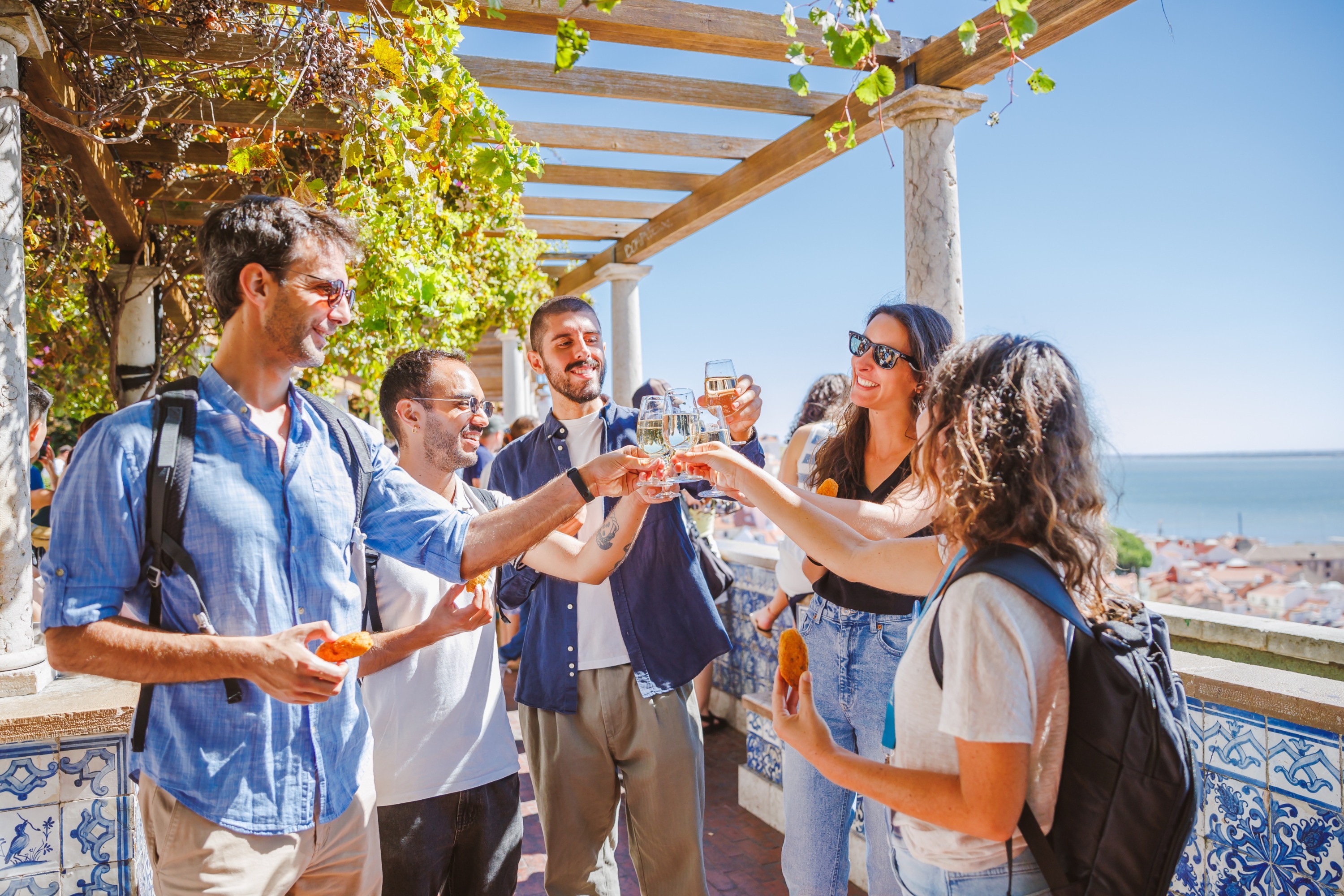
The Sophia de Mello Breyner Andresen Viewpoint[1], formerly the Graça Viewpoint, is located in the parish of São Vicente (Graça), in the former churchyard of the Convento da Graça Church in Lisbon.
In Largo da Graça, next to the Church, there is a terrace at Miradouro da Graça where you can enjoy one of the most beautiful views of the city. This view is only surpassed by that of the Miradouro da Senhora do Monte, which is just a few hundred meters away. The panorama of rooftops and buildings is less spectacular than the view of the castle, but it is a popular spot. The popular neighborhood of Graça developed at the end of the 19th century. Behind the Viewpoint is the aforementioned Augustinian monastery, founded in 1271 and rebuilt after the earthquake.
10
Stop 10
Pass by
Praça do Marquês de Pombal, also known as Rotunda do Marquês de Pombal, is an important square in the city of Lisbon, Portugal. It is located between Avenida da Liberdade and Parque Eduardo VII. In the center stands the monument to Marquês de Pombal, opened in 1934.
11
Stop 11
Pass by
The Santa Justa Elevator, also referred to as the Carmo Elevator, is a public transport system, located in the center of the city of Lisbon, in the district of the same name, in Portugal. It connects Rua do Ouro and Rua do Carmo to Largo do Carmo and is one of the most interesting monuments in downtown Lisbon. It consists of a metal tower where two cabins circulate, and a walkway that connects the upper floor to the Carmo area. The elevator structure is made of cast iron, and uses a scheme inspired by the neo-Gothic style.[2] It was built under the management of the distinguished engineer Raoul Mesnier du Ponsard, known for having carried out other projects of the same type across the country. This elevator has been planned since the 1890s, but the project was only approved by Lisbon City Council in 1900, the year in which work began.
12
Stop 12
The Águas Livres Aqueduct is a complex system for capturing, adducting and distributing water to the city of Lisbon, in Portugal, and whose most emblematic work is the grand stone archway that rises over the Alcântara valley, one of the postcards from Lisbon.
The Aqueduct was built by D. João V, in the 18th century, originating at the Águas Livres spring, in Belas, Sintra, and progressively reinforced and expanded throughout the 19th century. It survived the 1755 Earthquake unscathed.
What's not included
Tickets for monuments
Available languages
Guide guide
PT
EN
IT
ES
Reviews breakdown
Viator
5.0
1 reviews
5★
1
4★
0
3★
0
2★
0
1★
0
Tripadvisor
5.0
2 reviews
5★
2
4★
0
3★
0
2★
0
1★
0
Important information
Infants and small children can ride in a pram or stroller
Service animals allowed
Public transportation options are available nearby
Specialized infant seats are available
Not recommended for travelers with spinal injuries
Not recommended for pregnant travelers
Not recommended for travelers with poor cardiovascular health
Travelers should have at least a moderate level of physical fitness
Specific questions can be clarified via private message.
Total tour time includes travel time. Estimated travel times are in the "Trip Details". Please check, thank you.
If you need a baby seat/s, please ask
About Lisbon
Lisbon, the capital of Portugal, is a vibrant city known for its rich history, stunning architecture, and warm climate. With its charming streets, historic trams, and breathtaking viewpoints, Lisbon offers a unique blend of old-world charm and modern energy.
Top Attractions
Belém Tower
A UNESCO World Heritage Site, this 16th-century tower is an iconic symbol of Lisbon's Age of Discoveries.
Historical
1-2 hours
€6
Alfama District
Lisbon's oldest district, known for its narrow, winding streets, Fado music, and historic charm.
Historical
Half day
Free to explore, attractions may have entry fees
Sintra
A UNESCO World Heritage Site, Sintra is a romantic town with stunning palaces and castles.
Historical
Full day
Varies by attraction, around €10-€15 per site
Must-Try Local Dishes
Bacalhau à Brás
Shredded codfish with eggs, potatoes, and onions
Main Dish
Contains fish and eggs
Pastel de Nata
Custard tart with a flaky pastry crust
Dessert
Contains dairy and eggs
Francesinha
A sandwich with meat, cheese, and a beer-based sauce
Main Dish
Contains meat, cheese, and gluten
Popular Activities
Hiking in Sintra
Surfing in Ericeira
Parasailing in Cascais
Beach lounging in Costa da Caparica
Spa day in a luxury hotel
Picnic in Jardim da Estrela
Visiting museums and galleries
Attending Fado performances
Best Time to Visit
March to May, September to October
These months offer pleasant weather and fewer crowds, making it ideal for sightseeing and outdoor activities.
15-25°C
59-77°F
Practical Information
Language
- Official: Portuguese
- Widely spoken: English, Spanish, French
- English: Moderately spoken
Currency
Euro (EUR)
Time Zone
GMT+1 (Western European Time, WET)
Electricity
230VV, 50HzHz
Safety Information
Overall Safety Rating: Generally safe
Lisbon is generally safe, but pickpocketing and petty theft can occur in crowded areas.
Important Precautions:
- • Be cautious of pickpockets in crowded areas
- • Use licensed taxis or ride-sharing apps
- • Avoid walking alone at night in less crowded areas
Getting there
By air
- Humberto Delgado Airport • 7 km from city center
By train
Santa Apolónia, Oriente
By bus
Sete Rios, Jardim do Campo Grande, Gare do Oriente
Getting around
Public transport
Efficient and clean, with four lines connecting major attractions.
Taxis
Available • Apps: Bolt, FreeNow
Rentals
Car, Bike, Scooter
Neighborhoods
Alfama
Baixa
Bairro Alto
Day trips
Sintra
25 km from Lisbon • Full day
A romantic town with stunning palaces, castles, and lush gardens.
Cascais
30 km from Lisbon • Half day to full day
A charming coastal town with beautiful beaches, historic sites, and a relaxed atmosphere.
Óbidos
80 km from Lisbon • Full day
A medieval town with a well-preserved castle, narrow streets, and charming shops.
Festivals
Santos Populares • June 13th
Festival dos Oceanos • June to September
Arraial do Alfoz • June to September
Pro tips
- Visit the Time Out Market for a variety of local and international cuisines
- Take a day trip to Sintra and Cascais for a mix of history and beach relaxation
- Explore the LX Factory for a unique shopping and dining experience
- Ride the historic Tram 28 for a scenic tour of the city
- Visit the MAAT museum for a blend of art, architecture, and technology
From $25
per person
Price varies by option
Secure booking
Free cancellation available
Instant confirmation