Half or Day Private Tour For Cruise Incheon and Seoul City Tour
Active
6h - 8h
For a full refund, cancel at least 24 hours before the scheduled departure time.
Instant confirmation
Mobile or paper ticket accepted
About this experience
The name Gyeongbokgung contains the meaning that "the new dynasty will enjoy great fortune and prosper."
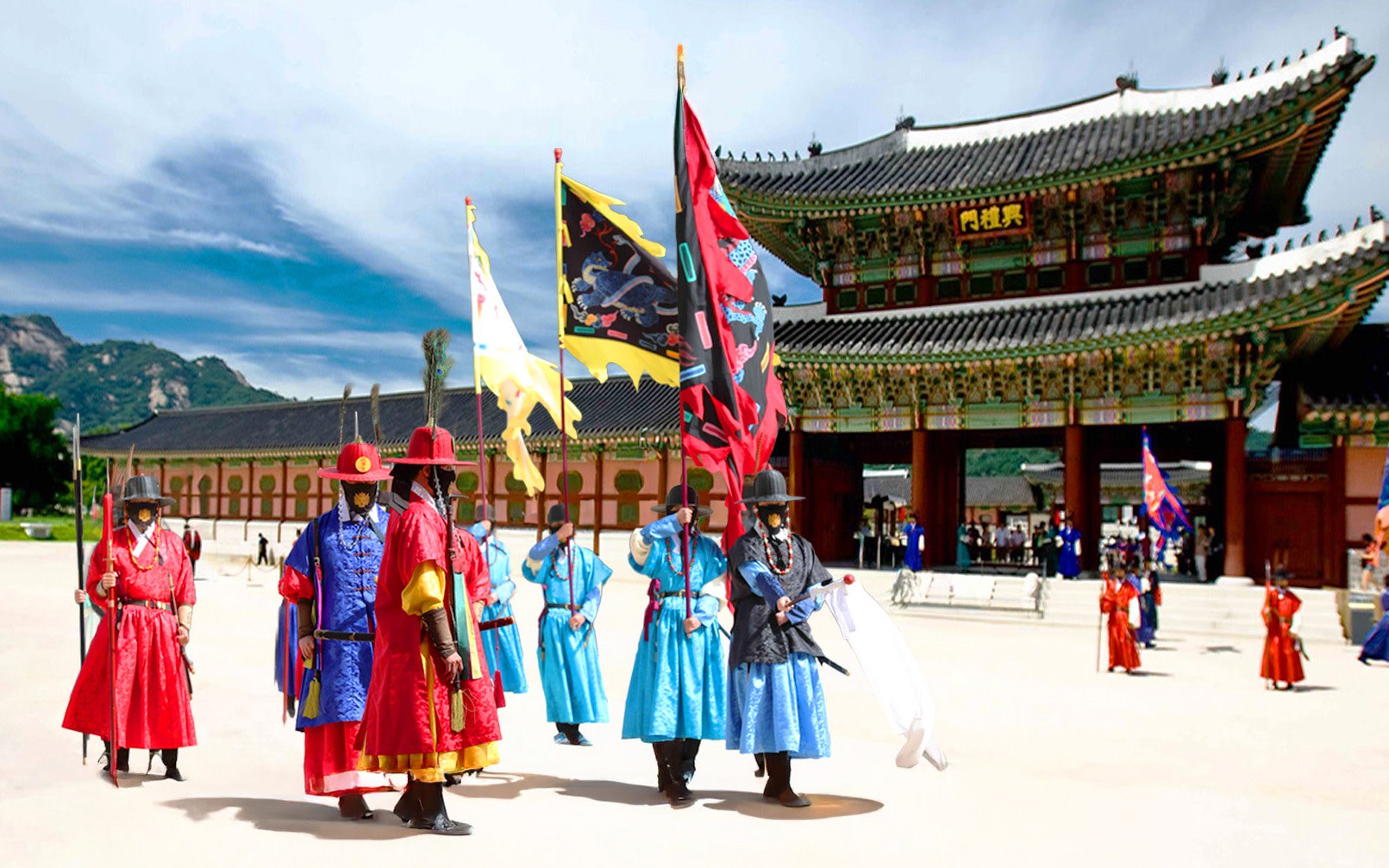
The Gyeongbokgung Palace tour provides an opportunity to increase your understanding of Korean culture. In addition, Gyeongbokgung Palace offers traditional performances such as the Changing of the Royal Guard Ceremony held every day at noon, providing foreigners with a chance to experience Korean traditions vividly.
Insa-dong has galleries, traditional tea houses, restaurants, street vendors, specialized shopping malls for handicrafts, antique shops, antique stores, and flower shops, so I recommend taking a walk and eating bibimbap.
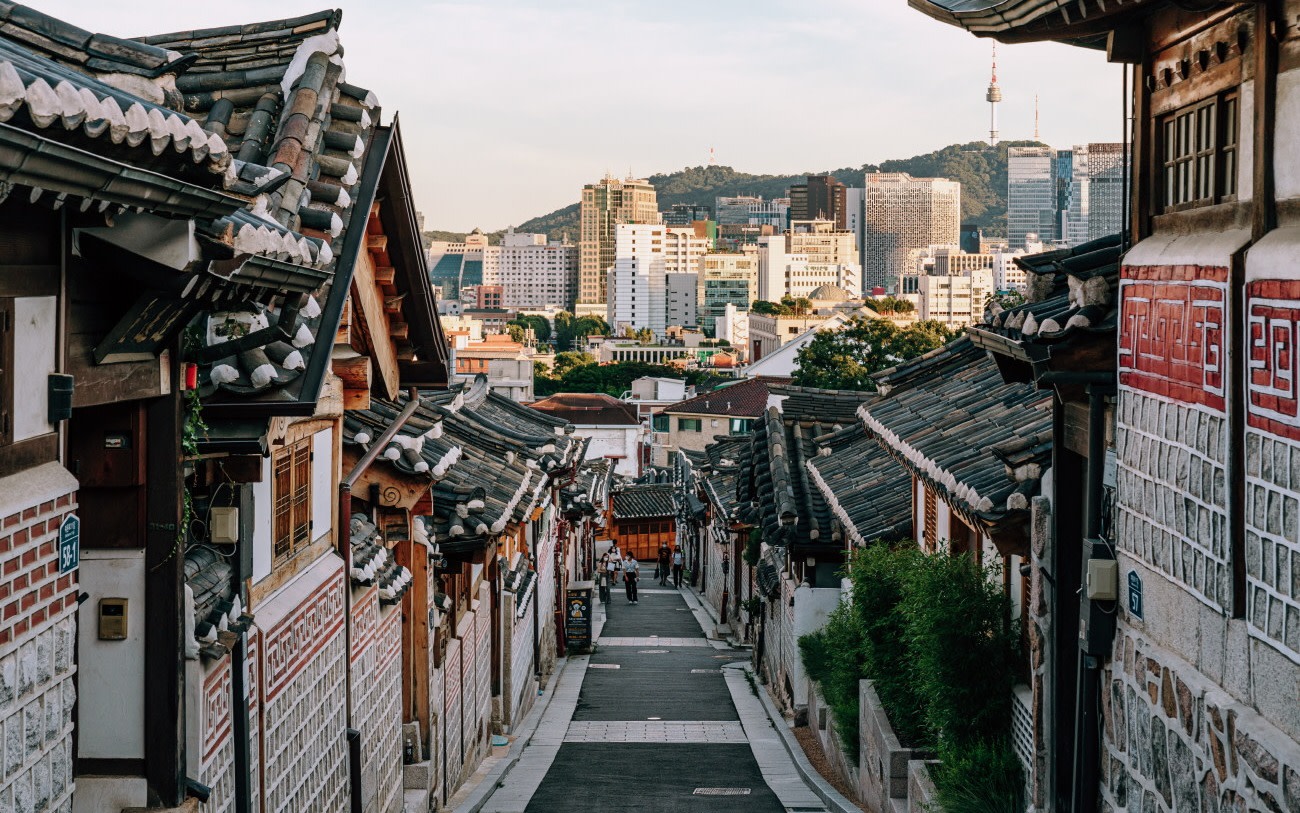
Take a walk along Bukcheon Hanok Village Road and feel and experience the beauty of Korean culture.
Gwangjang Market is the first permanent market in our country, established in 1905. The Korean pronunciation of the name was kept the same, but the meaning of ‘widely gathering and preserving’ was added, and it became the current Gwangjang Market.
Available options
8up to12 person Half day tour
Duration: 6 hours<br/>Half day tour: Gyeongbokgung Palace
Insa-dong street
National Folk Museum of Korea <br/>Solrati bus : 12 person seater Bus <br/>Half day private tour : With solrati taxi Driver<br/>Pickup included
Licensed English Guide Tour
Duration: 7 hours: With Big bus + driver + Licensed English tour guide <br/>Private Day Tour : Gyeongbokgung Palace
Insa-dong street
National Folk Museum of Korea
Bukcheon Hanok Village
DMZ (Demilitarized Zone )<br/>Country Bus: 20 person seater Bus <br/>Bus+ Driver + Licensed guide : Big bus + driver + Licensed English tour guide
Up to 18 person Same Fee ok
<br/>Pickup included
5up to 7person Day Tour
Duration: 7 hours: 7~8 Hours Private Day tour <br/>Private Day Tour : Gyeongbokgung Palace
National Folk Museum of Korea
Bukcheon Hanok Village
Insa-dong street
DMZ(Demilitarized Zone )
<br/>Staria mini van : 7person 8person seater taxi <br/>Private Day Tour : With Jumbo taxi driver<br/>Pickup included
4person Day Tour
Duration: 8 hours<br/>4 person Private Day Tour <br/>Pickup included
3person Private Day tour
Duration: 8 hours<br/>3 person Private Day Tour <br/>Pickup included
1 person Full Day tour
Duration: 7 hours: 6~8Hours tour <br/>Full Day Private Tour : Gyeongbokgung Palace
Insa-dong
National Folk Museum of Korea
bukcheon Hanok Village
DMZ (Demilitarized Zone )<br/>Staria mini van : Jumbo Taxi private tour
7person seater taxi <br/>Full day Tour : Private Day Tour <br/>Pickup included
2person private Day tour
Duration: 8 hours<br/>2 person Private Day Tour <br/>Pickup included
2person private Half Day Tour
Duration: 6 hours<br/>2 person Half day tour <br/>Pickup included
8up to 12person Day tour
Duration: 7 hours<br/>Private Day Tour : Gyeongbokgung Palace
Insa-dong street
National Folk Museum of Korea
Bukcheon Hanok Village
DMZ ( Demilitarized Zone )<br/>Solrati 12person mini Bus : Solrati 12person mini Bus <br/>8upto 12person tour: Private Day Tour
With Solrati taxi driver<br/>Pickup included
1 person Half Day Tour
Duration: 6 hours<br/>Half day tour : Gyeongbokgung Palace
National Folk Museum of Korea
Insa-dong street<br/>Staria Mini van: Private taxi tour<br/>Half day tour : Private taxi tour <br/>Pickup included
4person Half Day South
Duration: 6 hours<br/>4 person Half day tour <br/>Pickup included
5 up to 7 person Half Day tour
Duration: 6 hours<br/>Half day tour: Gyeongbokgung Palace
Insa-dong street
National Folk Museum of Korea <br/>Staria mini van : 7person ~8person seater taxi <br/>5 up to 7 person tour <br/>Pickup included
3person Private Half Day tour
Duration: 6 hours<br/>3 person Half day tour <br/>Pickup included
What's included
Even for tours of 1 to 4 people, we provide a 7-seater jumbo taxi. (If not available, Regular taxi.)
No additional charge for drop-off in Incheon Airport, Seoul Airport, Incheon City, Seoul City).
Air-conditioned vehicle/ All admission fees are included
Tour is conducted best driver who has a lot of experience in foreign tours & speaks a little English
We will recommend tours to the Seoul tour locations that customers want first.
If we have time, we can change the Day tour course as per your request.
We always provide taxis registered in south of Korea.(All taxis include transportation insurance.)
Detailed itinerary
1
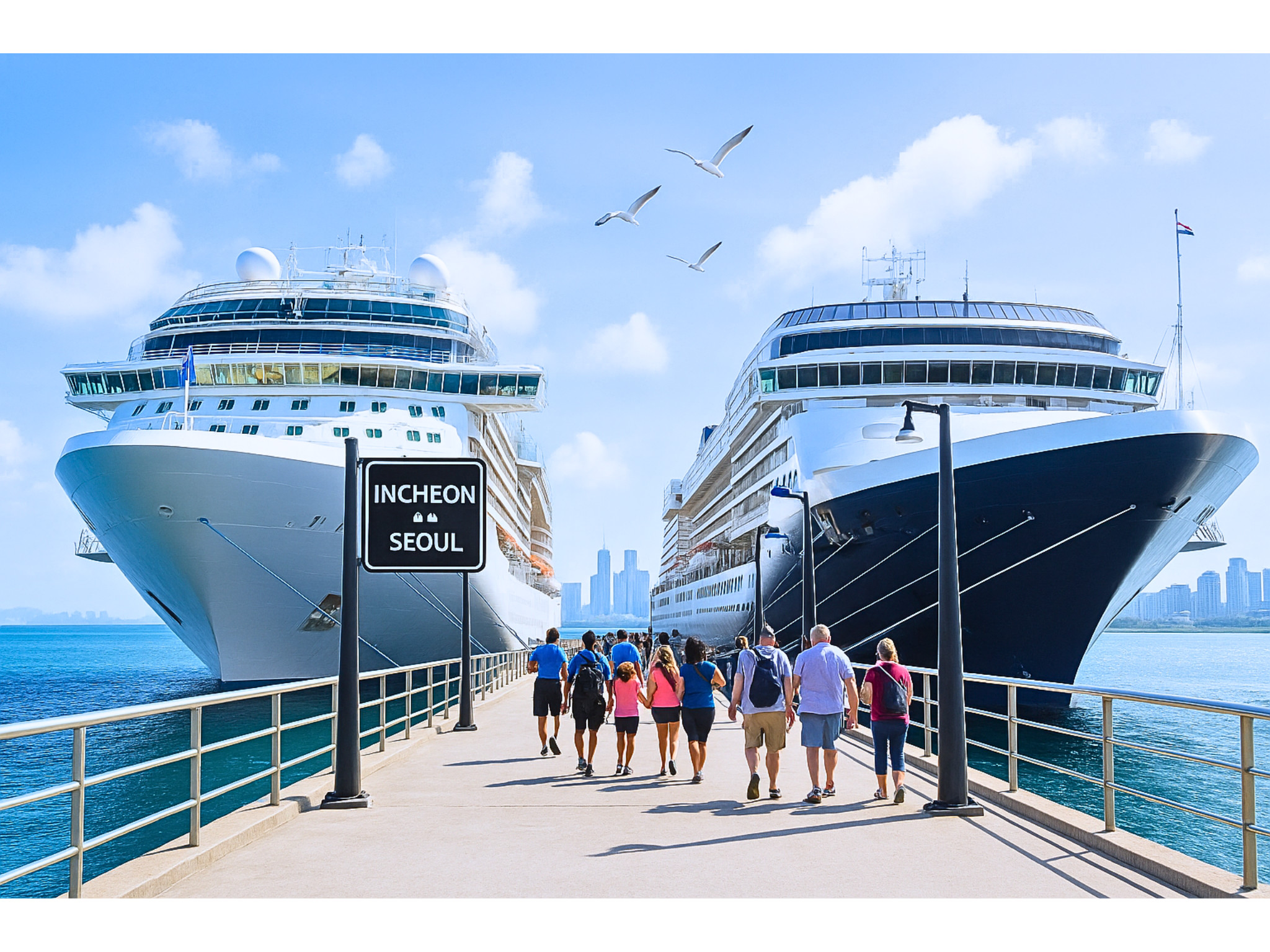
It takes about( 30minutes or 1 hour and 30 minutes to pick up customers at Incheon Port or Seoul city area and drive to Seoul Gyeongbokgung Palace. This is a driving course to Seoul where you can enjoy sightseeing in the city and listen to information about the Republic of Korea on the taxi driver's smartphone audio.
The drive from Incheon Cruise to downtown Seoul may take longer due to traffic congestion. We appreciate your understanding.
2
Stop 2
According to a story, the name Seoul was first used during the Joseon Dynasty when Jeong Do-jeon accompanied King Taejo Yi Seong-gye to Bukaksan Mountain. It was March, so the surrounding mountains were covered in snow. The land inside looked like it was inside a snow fence, so he called it Seol-ul, which became Seoul.
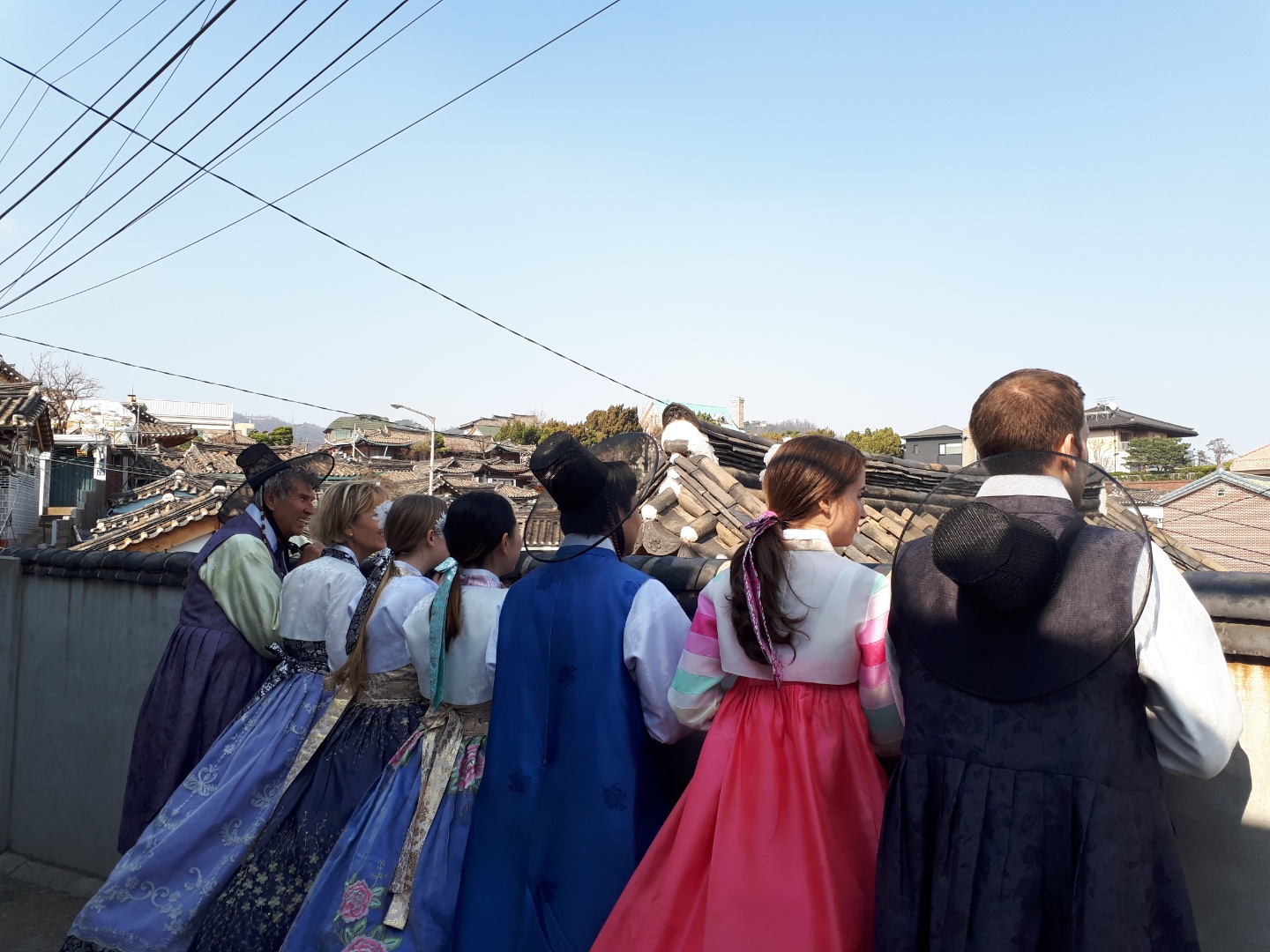
The name Gyeongbokgung Palace contains the meaning that "the new dynasty will enjoy great fortune and prosperity." You will experience the essence of the noble and dignified royal culture. It is located against Bukhansan Mountain to the north, and you can admire the main gate, Gwanghwamun. You can also experience wearing Hanbok, and
feel traditional Korean culture.
The Gyeongbokgung Palace tour provides an opportunity to gain a deeper understanding of Korean culture. Traditional performances, such as the Changing of the Royal Guards Ceremony held every day at noon, provide foreigners with a vivid experience of Korean tradition.
3
Stop 3
The National Folk Museum of Korea is an organization under the Ministry of Culture, Sports and Tourism of the Republic of Korea that oversees the collection, preservation, investigation, research, exhibition, education and exchange of lifestyles, customs and practices of the Korean people and countries around the world, as well as the tools and materials used for them.
The National Folk Museum of Korea is a national museum under the Ministry of Culture, Sports and Tourism established to collect, preserve and exhibit unique folk materials and systematically investigate and research related to them. It is closed on January 1, Lunar New Year's Day and Chuseok.
The main building has a children's museum under its wing.
4
Stop 4
Bukchon is a representative traditional residential area in Seoul, located between Gyeongbokgung Palace, Changdeokgung Palace, and Jongmyo Shrine, where traditional hanok houses are densely packed. It is also called a street museum in the city center because it has many historical sites, cultural assets, and folk materials. It is called ‘Bukchon (North Village)’ because it is the upper neighborhood of Cheonggyecheon and Jongno, and it includes Gahoe-dong, Songhyeon-dong, Anguk-dong, and Samcheong-dong. Sagan-dong, Gye-dong, Sogyeok-dong, and Jae-dong are places where historical traces remain and have been preserved for hundreds of years.
In order for Bukchon Hanok Village to become a sustainable tourist destination, it is important to practice silent tourism.
5
Stop 5
Insa-dong is a car-free street representing Seoul, and is a must-see attraction in Seoul. There are galleries, traditional tea houses, restaurants, street vendors, handicraft shops, Janmun shopping malls, antique shops, craft shops, and flower shops, so take a walk and spend some time there, and try Korean bibimbap. You will see, feel, and experience the appearance of a street with Korean characteristics, and you will have a unique memory of seeing, feeling, and experiencing a cultural aspect.
6
Stop 6
Pass by
Changgyeonggung Palace is the third palace built during the Joseon Dynasty, following Gyeongbokgung Palace and Changdeokgung Palace. Since the early days of the Joseon Dynasty, the two-palace system was in place, with Gyeongbokgung Palace as the main palace and Changdeokgung Palace as the auxiliary palace. However, the kings of the past preferred to reside in Changdeokgung Palace over Gyeongbokgung Palace, and as the royal family grew, the living space in Changdeokgung Palace gradually became cramped. Accordingly, King Seongjong built Changgyeonggung Palace next to Changdeokgung Palace so that the three queens of the royal family, including Queen Jeonghui, wife of King Sejo, Queen Ansun, wife of King Yejong, and Queen Sohye, wife of King Deokjong, could live comfortably. The name at the time was Suganggung Palace, meaning longevity and peace.
7
Stop 7
Pass by
This is also because it is a place where people from countries that participated in the Korean War, such as the United States, the United Kingdom, and Canada, can feel deeply moved because it has a facility that commemorates and pays tribute to each and every one of the veterans along with large flags of the countries that participated in the Korean War as part of the United Nations forces in 1950, and monuments for each of them. It is a must-visit place for foreign veterans or their descendants visiting Korea. When descendants of veterans come to Korea, they are often moved to see the names of their ancestors, who are not remembered in their home country, proudly engraved on the walls of the War Memorial of Korea, and they often diligently make rubbings of them.
8
Stop 8
It is the first permanent market in Korea, established in 1905. Originally, Gwangjang Market was planned to be built by covering the area between Gwanggyo (wide bridge) and Janggyo (long bridge), so it was named Gwangjang Market, meaning “wide and long,” after the first letters of the bridge names. However, when it was moved to Baeogae, the Korean pronunciation of the previous name was kept, but the meaning of “widely gathering and preserving” was newly added, and it became the current Gwangjang (廣藏) Market. Now, more than 100 years later, it has become a comprehensive market boasting a considerable transaction volume. Also, the busiest place in Gwangjang Market is the food market formed on the street where Dongmun, Buk 2 Gate, and Nam 1 Gate meet. The food market of Gwangjang Market attracts all ages, from students, middle-aged people, and the elderly. It is currently designated as a world tourist course, and is famous as a transit point for many foreign tourists traveling to Korea.
9
Stop 9
Pass by
This is also because it is a place where people from countries that participated in the Korean War, such as the United States, the United Kingdom, and Canada, can feel deeply moved because it has a facility that commemorates and pays tribute to each and every one of the veterans along with large flags of the countries that participated in the Korean War as part of the United Nations forces in 1950, and monuments for each of them. It is a must-visit place for foreign veterans or their descendants visiting Korea. When descendants of veterans come to Korea, they are often moved to see the names of their ancestors, who are not remembered in their home country, proudly engraved on the walls of the War Memorial of Korea, and they often diligently make rubbings of them.
10
Sungnyemun (崇禮門) can be seen as a name that reflects the ideological orientation of the Joseon Dynasty.
The name of the South Gate, Sungnye, means 'to raise etiquette' and is taken from the Doctrine of the Mean, one of the four books of Confucianism.
The 'Sungnyemun Guarding Ceremony' that protects Sungnyemun
It is a beautiful cultural heritage of the historic city of Seoul.
Pasu (把守) refers to defending the capital city and was one of the important military ceremonies of the Joseon Dynasty.
The 'Sungnyemun Guarding Ceremony' is held every day of the year except for Mondays. The Sungnyemun Opening Ceremony time is 10:00 to 10:10.
The guarding ceremony time is
10:10 to 10:45, and you can take pictures with the guards.
11
Stop 11
Cheonggyecheon is located between Sungnyemun and Gyeongbokgung Palace, making it a great place for a walk.
Because of Cheonggyecheon, Seoul is a human-centered environmental city, and it is a must-see tourist course for foreign tourists, connecting the world-class Cheonggye Plaza with various sculptures (Statue of Yi Sun-sin, Statue of King Sejong) and Seun Shopping Center and surrounding tourist attractions where the energy of the world gathers.
Since the opening of Cheonggyecheon, the cumulative number of visitors, including foreigners, has reached approximately 190 million over the past 10 years from 2005 to 2015, and you can take a walk around downtown Seoul on the way to Gyeongbokgung Palace.
12
Stop 12
Pass by
Jongmyo is the tomb of kings with long reigns. It was originally built to house the tombs of the five kings including Taejo, his father and grandfather. A total of 19 chambers house the spirit tablets of the kings and queens of the Joseon Dynasty. Kings with short reigns are enshrined in separate locations.
It is also called Jongmyo Daeje because it is the largest and most important ritual among the rituals, and it is held at Jongmyo, a World Heritage site, to house the spirit tablets of the kings and queens of the Joseon Dynasty. Jongmyo Daeje is held every year on the first Sunday in May and the first Saturday in November. Jongmyo Daeje is a comprehensive ritual that is rare in the world, where you can enjoy not only the ritual but also tangible and intangible world heritages such as ritual music and dance.
13
Bukak Sky Palgakjeong Pavilion, a hanok-style pavilion perched 342 meters above sea level on Bukaksan Mountain, is a prime tourist attraction in the heart of Seoul, boasting a prime location. Opened in September 1968, the Bukak Skyway is a renowned driving route leading to Bukak Palgakjeong, Seoul's main peak.
From Bukak Palgakjeong Pavilion, the magnificent scenery of Bukhansan Mountain's Bibong and Munsubong peaks unfolds on one side, while Namsan Mountain offers a breathtaking view of Seoul on the other. The pavilion boasts well-maintained street trees and approximately 100,000 ornamental trees, each blooming with seasonal flowers. Along with the Namsan Ring Road, the pavilion offers a breathtaking panoramic view of Seoul. It serves as a tourist attraction for both domestic and international visitors, offering a glimpse of Seoul at a glance.
14
After finishing the tour of Seoul City, it is time to return to the Incheon Port Cruise. The trip takes about 1 hour and 30 minutes.
What's not included
Gratuities not included (Recommend )/ Food and drink / personal Expenses
Available languages
Guide guide
EN
Written guide
EN
Reviews breakdown
Viator
4.2
5 reviews
5★
4
4★
0
3★
0
2★
0
1★
1
Tripadvisor
5.0
1 reviews
5★
1
4★
0
3★
0
2★
0
1★
0
Important information
Wheelchair accessible
Infants and small children can ride in a pram or stroller
Service animals allowed
Public transportation options are available nearby
Infants are required to sit on an adult’s lap
Not recommended for travelers with spinal injuries
Not recommended for pregnant travelers
Not recommended for travelers with poor cardiovascular health
Suitable for all physical fitness levels
This is a private tour/activity. Only your group will participate
Gyeongbokgung Palace and Royal Guard Changing Ceremony is closed on every Tuesday. Instead, you will visit Changdeokgung Palace
Royal Guard Changing Ceremony may not available during rainy days or typhoons (Bad weather)
Even if it is a tour for 1 to 4 people, This tour is always conducted in a 7-passenger jumbo taxi. If the tour does not end with a cruise, your luggage will be loaded onto the vehicle at the start of the tour and dropped off at the airport or hotel in Incheon or Seoul. There is ample trunk space to store your luggage.
The drive from Incheon Cruise to downtown Seoul may take longer due to traffic congestion. We appreciate your understanding.
Bukak Sky Palgakjeong Pavilion, a hanok-style pavilion perched atop Bukaksan Mountain at an elevation of 342 meters, is a prime tourist attraction in the heart of Seoul, boasting a prime location. Opened in September 1968, the Bukak Skyway is a renowned driving route to Bukak Palgakjeong. The approximately 19km-long scenic road stretches northeast along the ridge of Bukaksan, Seoul's main peak. Bukak Palgakjeong offers spectacular views of the surrounding mountains, including Bukhansan's Bibong and Munsubong peaks, while the other offers a breathtaking view of Seoul, nestled against the backdrop of Namsan Mountain. The pavilion offers well-maintained street trees and approximately 100,000 ornamental trees, each blooming with seasonal flowers, offering breathtaking panoramic views of Seoul and the Namsan Ring Road. A rest area is provided midway along the ridgeline, offering a chance to pause and re-evaluate the breathtaking views of Seoul. It serves as a tourist course that shows Seoul at a glance to domestic and foreign visitors who come to Seoul from far away.
Seoul is full of various foods. The joy of exploring delicious restaurants with foreign friends is truly special. It is a great pleasure to share each other's reactions while tasting traditional Korean food such as tteokbokki, kimbap, and bibimbap. The moment a friend tries kimchi for the first time, the expression on his face is bound to make him smile. These small things come together to create special memories.
A Seoul foreign tour can be a special experience for many people. The charming scenery and culture of Seoul shine even brighter when you share it with friends of different nationalities. These special moments become even more precious as people from different backgrounds come together to create a single story. As you experience Seoul’s historical sites and modern attractions at the same time, the bonds you build with new friends deepen over time.
Geunjeongjeon Hall of Gyeongbokgung Palace is the place where the king's coronation ceremony and other ceremonies were held during the Joseon Dynasty. It is called 'Gyeongbokgung Geunjeongjeon Hall'. It is the palace where the king came out and held a court meeting.
Gyeonghoeru in Gyeongbokgung Palace is a place that retains its elegant appearance, where the king held banquets with his subjects and entertained foreign envoys.
The National Hangeul Museum is closed for construction until October 8, 2025.
The National Museum of Korea is closed every Wednesday (opening hours are 10:00 to 18:00)
Gyeongbokgung Palace is closed every Tuesday, and if Tuesday is a national holiday, it is closed the following day (opening hours are 9:00 to 18:00)
Tongin Market near Gyeongbokgung Palace in Seoul is closed every Tuesday and every third Sunday. It takes about 15 minutes to walk from the back gate of Gyeongbokgung Palace to Tongin Market.
Insadong Places to Visit Ssamzigil is a specialized craft shopping mall that opened in December 2004 and has been operating for 20 years. You can see the highest quality craft works made by Korea's human cultural assets.
Insa-dong is a precious space where old but precious traditional items are exchanged in the city center. In Insa-dong has alleys intertwined like a maze around a large main street. This maze is densely packed with galleries, traditional craft shops, antique shops, traditional tea houses, traditional restaurants, and cafes. In particular, the shops in Insa-dong are very popular with young people and middle-aged people alike for their unique style. Among them, galleries are the center that has continued the pulse of Insa-dong. There are about 100 galleries here, and you can enjoy various exhibitions ranging from Korean paintings to prints and sculptures. Representative galleries include Hakgojae, which played a central role in folk art, Gana Gallery, which became a home for talented artists, and Gana Art Center. If you want to conveniently visit only the famous galleries in Insa-dong, take the Art Museum Shuttle Bus. You can visit about 10 famous galleries at a low price. Along with galleries, Insa-dong streets are filled with traditional tea houses and restaurants. They may be hard to find at first, but if you take a leisurely stroll through the alleys, it is very fun. Insa-dong is designated as a car-free street every Saturday and Sunday, and has been reborn as a cultural space for citizens. On this day, not only the existing stores but also the streets are filled with traditional performances and exhibitions, as well as candy vendors and fortune tellers. Those who find joy in this are foreigners who have flocked from all over the world. Foreign tourists who come to see Korea’s traditional culture look at antiques or buy antique art in traditional stores. They also buy candy on the street and eat traditional pajeon. You can also see many foreigners who are captivated by the charm of tradition in the city. Detailed information Request for modification of tourist information Insa-dong is a precious space where old but precious traditional items are exchanged in the city. In Insa-dong, there are alleys intertwined like a maze centered around a large street. In this maze, there are galleries, traditional craft shops, antique shops, traditional tea houses, traditional restaurants, and cafes. In particular, the stores in Insa-dong are very popular with young people as well as middle-aged people because of their unique charm. Among them, galleries are the center that has continued the tradition of Insa-dong. There are about 100 galleries here, and you can enjoy various exhibitions from Korean paintings to prints and sculptures. Representative galleries include Hakgojae, which played a central role in folk art, Gana Gallery, which became a home for talented artists, and Gana Art Center. If you want to conveniently visit only the famous galleries in Insa-dong, take the Art Museum Shuttle Bus. You can visit about 10 famous galleries at a low price. Along with the galleries, Insa-dong Street is filled with traditional tea houses and restaurants. They may be hard to find at first, but if you take a leisurely stroll through the alleys, it is very fun. Insa-dong is designated as a car-free street every Saturday and Sunday, and has been reborn as a cultural space for citizens. On this day, not only existing stores but also the streets are filled with traditional performances, exhibitions, candy vendors, and old men who read fortunes. Those who find joy in this are foreigners who have flocked from all over the world. Foreign tourists who come to see Korea's traditional culture look at antiques or buy antique art in traditional stores. And you can see many foreigners who are immersed in the charm of tradition in the city center by buying street candy and eating traditional pajeon.
Imjingak. Upon arrival, purchase an admission ticket and join other guests on a bus tour operated by Imjingak to the following three locations. You can gain a deeper understanding and empathy for the soldiers, families, and refugees who participated in the war through the DMZ video and exhibition hall. Dorasan Observatory is located at the front line of the DMZ, and is the closest place to observe the Kaesong City and Kaesong Industrial Complex in North Korea. The Third Tunnel was discovered on October 17, 1978, within the Demilitarized Zone based on intelligence from a North Korean defector who was working on a tunnel. It is estimated to be 1.2 km west of the Military Demarcation Line, and is located approximately 1.6 km south by excavating an average of 73 m of rock layer underground. It is an arch-shaped structure with a width of 2 m and a height of 2 m, and is only 52 km from Seoul. For the safety of tourists, only 265 m is open to the public.
This is also because it is a place where people from countries that participated in the Korean War, such as the United States, the United Kingdom, and Canada, can feel deeply moved because it has a facility that commemorates and pays tribute to each and every one of the veterans along with large flags of the countries that participated in the Korean War as part of the United Nations forces in 1950, and monuments for each of them. It is a must-visit place for foreign veterans or their descendants visiting Korea. When descendants of veterans come to Korea, they are often moved to see the names of their ancestors, who are not remembered in their home country, proudly engraved on the walls of the War Memorial of Korea, and they often diligently make rubbings of them.
Jongmyo information Jongmyo is the tomb of kings with long reigns. It was originally built to house the tombs of the five kings including Taejo, his father and grandfather. A total of 19 chambers enshrine the spirit tablets of the kings and queens of the Joseon Dynasty. Kings with short reigns are enshrined in separate places. Jongmyo, where the ancestral tablets of the kings are enshrined and ancestral rites are performed, was an extremely important place in the history of Joseon. When a new king ascended to the throne, he first went to Jongmyo and Sajik to bow and perform ancestral rites. Jongmyo has a simple structure with long, connected rooms, creating a grand and solemn beauty. The ancestral rite held here, Jongmyo Daeje (宗廟大祭), was a national event that had been held since the Three Kingdoms period and was the basis of the national ruling order. Jongmyo Jerye was designated as Important Intangible Cultural Property No. 56 in 1975, and UNESCO designated Jongmyo as a World Cultural Heritage in 1995. If the architecture of the palace is splendid, Jongmyo is quiet and elegant. In particular, the architectural beauty of the gable roof boasts outstanding traditional Korean architectural techniques. Jongmyo consists of Jeongjeon, where ancestral tablets are enshrined and ancestral rites are performed, Yeongnyeongjeon, which contains the meaning of long-term peace for the ancestors and descendants, Jeonsacheong, Eosuksil, Hyangdaecheong, and Shindang. It is seen as a time to honor and remember ancestors by offering food with courtesy to ancestors, and a time for families and descendants to learn, The essential meaning of courtesy is to distinguish between the superior and inferior, the noble and the humble, the high and the low, the old and the young, and so on. When these distinctions become clear, each will be respected and harmony can be achieved. Specifically, it is said that respect follows only after the distinction between the monarch and the subject, parents and children, siblings, and men and women, and when this distinction order is in harmony, the world will be peaceful. For this reason, in ancient society, courtesy was considered the foundation of politics. There were times when etiquette and law were in conflict with each other, but as Confucianism emerged in earnest, the idea of etiquette became established as an absolute means of governance. The practical act of this etiquette is the ancestral rite. Jongmyo Jerye, National Intangible Cultural Heritage Jongmyo Daeje is a ritual performed at Jongmyo, the national shrine of Joseon and a World Heritage site, to honor the spirit tablets of the kings and queens of the Joseon Dynasty. It is also called Jongmyo Daeje because it is the largest and most important of all ceremonies. Jongmyo Daeje was performed five times a year, in spring, summer, fall, winter, and on the last day of the lunar calendar, but it is currently performed on the first Sunday of May and the first Saturday of November. Jongmyo Daeje is a comprehensive ritual that is rare in the world, where one can appreciate not only the ancestral rite but also tangible and intangible world heritages such as ritual music and dance.
Important notes
Pick up Point :
Hotel and stay : Lobby area meeting ok
Cruise : terminam Lobby
We will hodl your name of card " Your name of car "
About Incheon
Incheon is a vibrant port city in South Korea, known for its modern infrastructure, rich history, and diverse cultural attractions. It's a gateway to the country, home to Incheon International Airport, and offers a unique blend of traditional and contemporary experiences.
Top Attractions
Songdo Central Park
A beautiful urban park with a large artificial canal, walking paths, and scenic views. It's a great place for a relaxing stroll or a picnic.
Nature
1-2 hours
Free
Chinatown (Jinhae
One of the oldest Chinatowns in Korea, featuring a mix of traditional and modern Chinese culture. It's a great place to try authentic Chinese cuisine and explore unique shops.
Cultural
1-2 hours
Free to explore, varies for food and shopping
Incheon Grand Park
A large park with beautiful gardens, a zoo, and a lake. It's a great place for a family outing or a peaceful walk.
Nature
2-3 hours
Free (Zoo has an admission fee)
Wolmido Island
A small island with a rich history, featuring a theme park, a lighthouse, and beautiful ocean views. It's a great place for a day trip.
Historical
Half a day
Free (Theme park has an admission fee)
Incheon Chinatown
Incheon's Chinatown is one of the oldest and largest in Korea, offering a vibrant mix of Chinese culture, food, and history.
Cultural
1-2 hours
Free to explore, varies for food and shopping
Must-Try Local Dishes
Jinhae Chicken
A popular Korean-Chinese dish made with chicken, vegetables, and a spicy sauce. It's a must-try in Incheon's Chinatown.
Main Dish
Contains gluten and spicy ingredients
Wolmido Squid
Fresh squid dishes, including grilled squid and squid stir-fried with vegetables. A local specialty in Wolmido.
Seafood
Contains seafood
Songdo Seafood
Fresh seafood dishes, including fish, shrimp, and crab. Songdo is known for its high-quality seafood restaurants.
Seafood
Contains seafood
Popular Activities
Hiking in Incheon Grand Park
Cycling around Songdo Central Park
Exploring Wolmido Island
Strolling through Songdo Central Park
Visiting traditional tea houses
Enjoying a spa day
Exploring Incheon Chinatown
Visiting historic sites like Wolmido Lighthouse
Best Time to Visit
April to June, September to October
Spring and autumn offer comfortable temperatures and beautiful scenery. This is the best time for outdoor activities and sightseeing.
10°C to 25°C
50°F to 77°F
Practical Information
Language
- Official: Korean
- Widely spoken: English, Chinese, Japanese
- English: Moderately spoken in tourist areas, limited in other places
Currency
South Korean Won (KRW)
Time Zone
GMT+9
Electricity
220VV, 60HzHz
Safety Information
Overall Safety Rating: Generally safe
Incheon is generally a safe city with low crime rates. However, as with any destination, travelers should take common-sense precautions to ensure a safe and enjoyable trip.
Important Precautions:
- • Use licensed taxis or ride-hailing apps
- • Keep valuables secure and out of sight
- • Be cautious when using ATMs, especially at night
Getting there
By air
- Incheon International Airport • 70 km from central Incheon
By train
Incheon Station
By bus
Incheon Bus Terminal
Getting around
Public transport
The subway system is efficient, clean, and easy to navigate. Signs are in both Korean and English.
Taxis
Available • Apps: KakaoTaxi, Naver Map
Rentals
Car, Bike, Scooter
Neighborhoods
Songdo
Chinatown (Jinhae-gu)
Wolmido
Jung-gu
Day trips
Seoul
30 km • Half a day to full day
South Korea's capital city offers a mix of traditional and modern attractions, including historic palaces, vibrant markets, and cutting-edge technology.
Suwon
40 km • Half a day to full day
A historic city known for its well-preserved fortress and traditional architecture. It offers a glimpse into Korea's past.
DMZ (Demilitarized Zone)
50 km • Full day
A unique and historic site offering insights into the Korean War and the ongoing division of Korea. It's a sobering but educational experience.
Festivals
Incheon Pentaport Rock Festival • July
Incheon Chinatown Chinese New Year Festival • January or February (varies by year)
Incheon International Fireworks Festival • October
Pro tips
- Use a T-money card for convenient and discounted public transportation fares
- Download a subway map app, such as Naver Map or KakaoMap, for easy navigation
- Try local street food and specialty dishes, such as Jinhae Chicken and Wolmido Squid
- Visit popular attractions early in the morning or late in the afternoon to avoid crowds
- Use ride-hailing apps, such as KakaoTaxi or Naver Map, for convenient and reliable taxi services
From $25
per person
Price varies by option
Secure booking
Free cancellation available
Instant confirmation