Private Day Tour West, South, East and Dolphin Habitat Beach Jeju
Active
11h - 12h
For a full refund, cancel at least 24 hours before the scheduled departure time.
Instant confirmation
Mobile or paper ticket accepted
About this experience
We're planning to try to spot dolphins at the southernmost dolphin habitat beach. With luck, we'll have the chance to see a beautiful dolphin family.
The waters off the Noeul Coastal Road in Daejeong-eup are a key habitat for the Indo-Pacific right whale.
The waters off Sindo-ri in Daejeong-eup (2.36㎢) are a key habitat for the globally endangered Indo-Pacific right whale. Currently, around 120 Indo-Pacific right whales are known to inhabit the waters off Jeju Island. This beach has been designated as a protected area for their habitat.
It is estimated that approximately 100 to 120 Indo-Pacific right whales currently inhabit the Jeju coast.
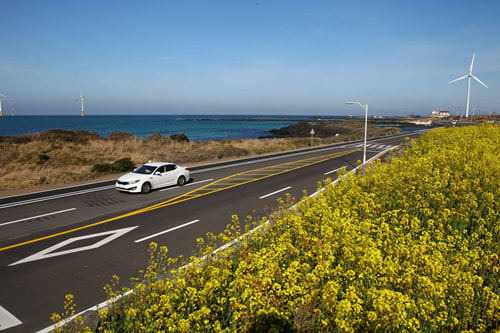
The "Noeul Coastal Road" in Daejeong-eup, is a special coastal road where visitors can encounter dolphins in their natural habitat without having to board a boat.
We will discuss lunch with you. If the customer has a special place to visit, your tour operator can add or change the tourist destination requested by the customer at any time.
Available options
Private Day tour west & south & East &Dolphin Habitat Beach Jeju
Pickup included
8person private tour
Duration: 11 hours<br/>Solrati mini bus : 12 person seater Bus taxi <br/>8 person private tour : With Mini Bus Solati Best taxi driver <br/>Pickup included
13~42 Big Bus tour
15person tour + 2person free: 15person tour + Extra 2person free charge service<br/>Duration: 11 hours<br/>Big Bus : 18person seater bus ~ 43 person Big bus <br/>13 up to 42 big Bus tour : Big bus + driver + Licensed English tour guide <br/>Pickup included
3person Private tour
Duration: 11 hours<br/>Regular taxi <br/>3person Private tour: With Local tour taxi driver<br/>Pickup included
4person private tour
Duration: 11 hours<br/>Regular or jumbo taxi: Big space taxi <br/>4person private Tour : With Local tour Best taxi driver <br/>Pickup included
6person Private tour
Duration: 11 hours<br/>Jumbo taxi : Staria Mini van 7 person seater <br/>6person Private tour: With Jumbo taxi Bset tour driver <br/>Pickup included
Person private tour
Duration: 11 hours<br/>Solrati mini bus : 12 person seater mini bus<br/>9person private tour : With Solrati mini bus best tour driver<br/>Pickup included
11~ 12 person private tour
Duration: 11 hours<br/>Solrati mini bus : 12person seater ~15 person seater <br/>11person private Tour : With Solrati mini bus driver <br/>Pickup included
10person private tour
Duration: 11 hours<br/>Solrati mini bus : 12 person seater <br/>10person private tour: With Solrati mini bus Best tour driver<br/>Pickup included
2person All area tour
Duration: 11 hours<br/>Regular taxi <br/>2person All Area tour: With Local Tour taxi driver<br/>Pickup included
5person private tour
Duration: 11 hours<br/>Jumbo taxi: Staria mini van<br/>5person private taxi tour : With Best Jumbo tour taxi driver <br/>Pickup included
7person private tour
Duration: 11 hours<br/>Jumbo taxi : Staria mini van or Solrati mini bus <br/>7person private Tour : With Jumbo taxi Best tour driver<br/>Pickup included
What's included
No additional charges for tour departures from out-of-town areas or for tour endings in any area
Jeju Airport and Hotel pick up (No extra additional charge)
Air-conditioned vehicle and parking fee and fuel fee are included
All admission fee are included / Insurance is included.
Driver who has a lot of experience in foreign tours & speaks simple English.
All taxis include transportation insurance
Detailed itinerary
1
Stop 1
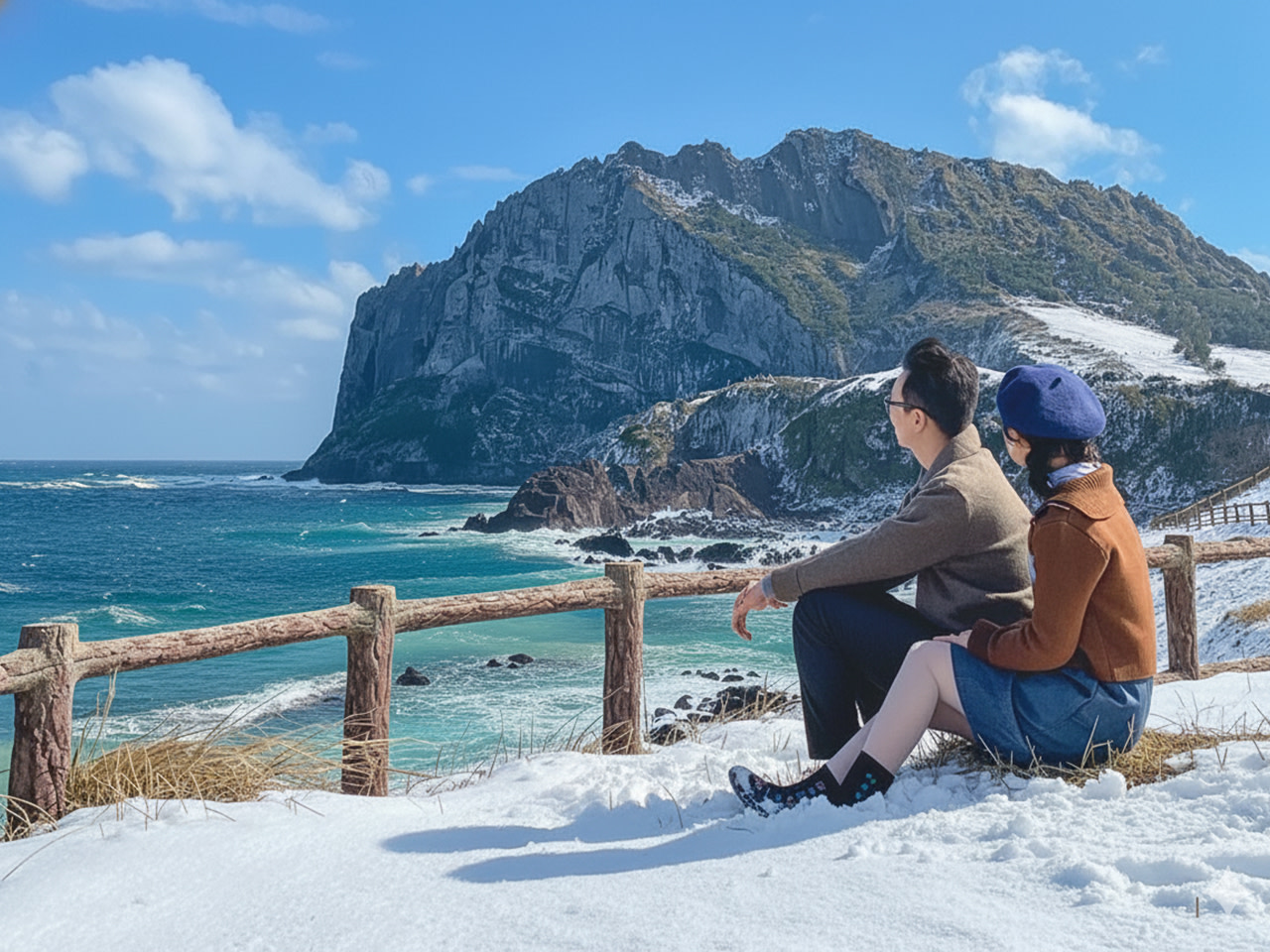
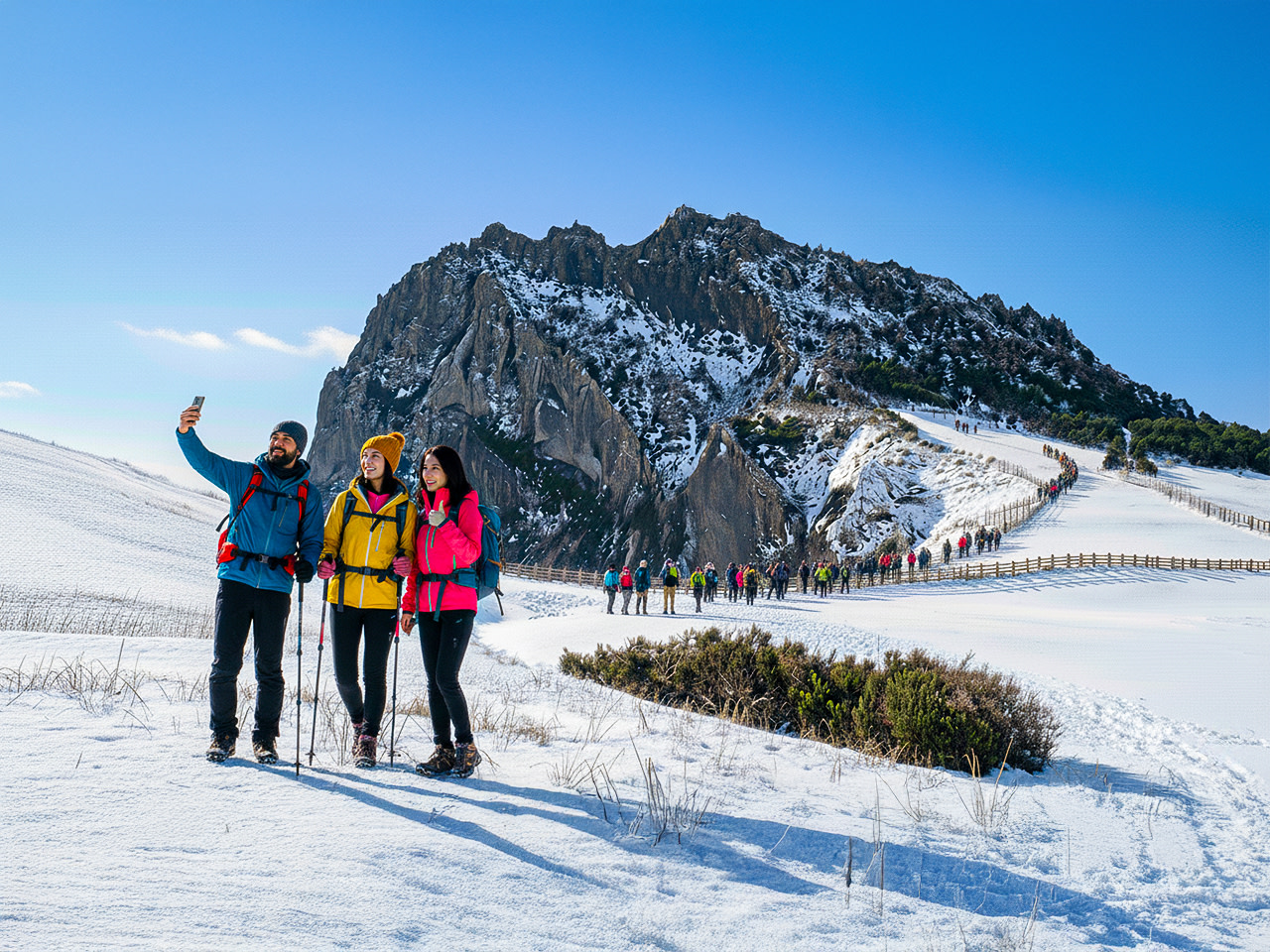
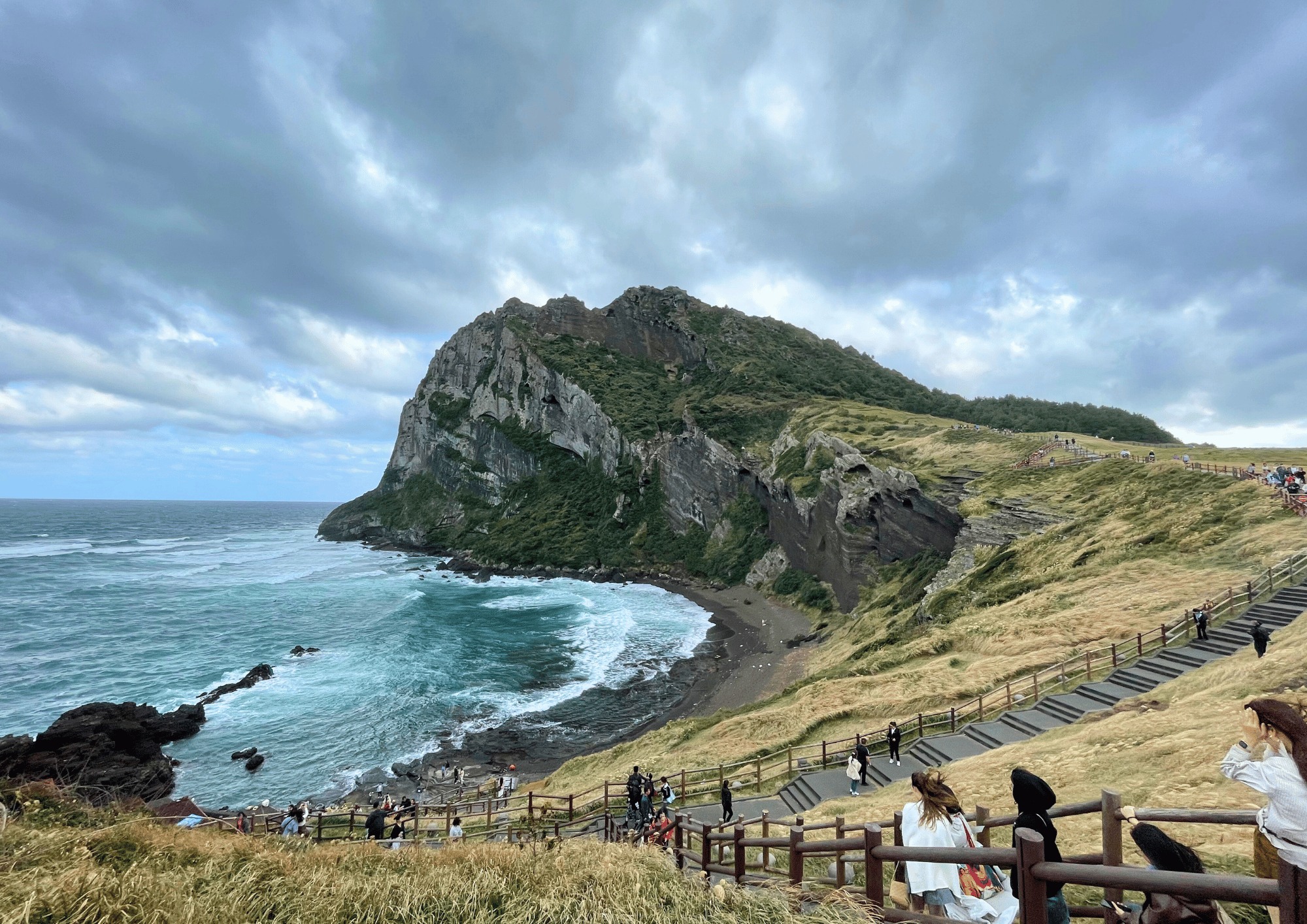
Seongsan Ilchulbong Peak is a World Natural Heritage Site and one of Jeju's top 10 scenic spots. The scenery is said to be the most beautiful in Jeju. It takes about an hour to go up and down. If climbing is difficult, you can also walk along the left shore. Its height is 182 m. Seongsan means a mountain that looks like a castle. 'Ilchulbong' means the peak where the sun rises.
Next up is a female diver performance. In case of bad weather, the show is suddenly canceled. Haenyeo performances are held a day at 2:00pm . Seongsan Ilchulbong Peak was formed when lava erupted from the seabed. The number of stone pillars on the outer shell of the fortress is 99, and it looks like a crown that has come down from the sky. It takes about 30 minutes to reach the top of the ticket office. After climbing to the top, when you come down, you will naturally see Haenyeo Performance Beach.
2
Seopjikoji film location sea side. The name Seopjikoji was given because the Jeju dialect of the cape, 'koji', faces the sea. Located just south of Seongsan Ilchulbong Peak, the cape is a popular tourist attraction. From the top of Seopjikoji, you can easily see the tuff along with the beautiful scenery of the open sea and rapeseed fields. At the top of the hill is a lighthouse fire station built of volcanic rock, measuring 4 meters high and 9 meters in diameter. Behind the Bonghwa Fire Station is Bulguoreum Oreum, which is filled with red soil. The white lighthouse above the cone stands out in contrast. Seopjikoji has been used as a filming location for many Korean movies and dramas.
Seopjikoji is also famous as the best recommended tourist destination by cnn. Continue walking along the beach road, past the lighthouse, and continue to the beach path. There is no need to return to the starting point, the vehicle will be waiting on the other side.
3
Seongeup Folk village information. It is a village where people have lived in traditional thatched houses since ancient times. In the past, Seongeup Village was the center of Jeju. In Seongeup Village, horses and cattle were sent to the king and the central government. in Seongeup Village. You can visit the traditional thatched houses for free. You can also see the appearance of a traditional toilet.
In Seongeup Folk Village, take a walk along the stone wall alley. You can see the lifestyle of Jeju. You can also experience Hanbok at Seongeup Village.
4
From the entrance to Baekyak Oreum, a long wooden fenced staircase leads up, creating an atmosphere reminiscent of a stairway to heaven.
After about 30 minutes of climbing, you reach the summit, where a hollowed-out crater reminiscent of an amphitheater appears before your eyes.
From the summit, you can follow the track-like summit to view the various surrounding craters. Baekyak Oreum, so-called because it has long been home to an abundance of medicinal herbs, is shaped like a round, flat crater (a crater).
5
Saryeoni Forest Trail is one of the 31 hidden and unexplored places in Jeju. It is a forest road with thick cedar trees that starts with Bijarim Road and passes through Mulchat Parasitic Cone and Saryeoni Parasitic Cone. It is called Saryeoni Forest Trail because it is a forest path that leads to Saryeoni Oreum.
‘Saryani’ means ‘sacred forest’ or ‘winding threads in a circle so that they do not scatter’, and you can feel as if you are surrounded by the refreshing scent of cedar trees while walking through the forest. In addition to the dense cedar, a variety of tree species such as Quercus oak, hornbeam, stingray, and cypress are inhabited. Because various species of trees live in it, it is also a nest for mammals including badgers and weasels, birds including eight-colored birds and goshawks, and reptiles including zebrafish. It is also the forest where the drama filming "Secret Garden" took place.
6
Stop 6
Jeongbang waterfall. This waterfall represents Jeju Island. It is the only waterfall in Asia that falls from land into the sea. A place where you can dip your feet in the water.
'Seobulgwacha' was written in Chinese characters on the rock wall of Jeongjeong Waterfall. There is a legend that an envoy from Qin Shi Huang came to Yeongju Mountain (now Mount Halla) in Jeju Island and went around looking for the herb of immortality, inscribed on a rock. Jeongbang Waterfall has a lot of rocks, so you have to walk very carefully under your feet, and the stairs are easy to come down, but very difficult to get around. As the only natural waterfall in Asia that falls into the sea, it creates a more beautiful scenery when there are many photos and rainbows. Jeongbang Falls is one of the top 10 unexplored places in Jeju Island and is a must-see tourist attraction.
7
Oedolgae Rock(Lonely rock)
There is a sad legend about love handed down in Oedolgae. Once upon a time, in a seaside village in Seogwipo-si, a couple lived with a child. One day father went fishing to the sea. His father met a storm and the boat overturned and died. He sank into the sea, but his father did not return, so She waited on the beach like every day for decades before turning to stone and dying. It is in the form of grandmother and is standing carrying a baby. When his father heard the news, he floated over the sea and washed up to the beach to meet grandmother and turned into a stone. grandfather's legs are submerged in the sea, so if you look into the sea behind grandmother, you can see grandfather's feet.
8
Seogwipo Maeil Olle Market is a traditional market located in the center of Seogwipo City, and a market that has become an indispensable course in Jeju travel. It is the largest and oldest permanent market in Seogwipo-si, and it is a place that plays a big role in revitalizing the economy by forming a city with Jeju residents and tourists 365 days a year.
Omegi rice cakes, tangerines, hallabongs, jade fish, silver cutlassfish, and black pork, which are specialties of Jeju, can be found.
9
Columnar joints are quadrangular-shaped pillars that look as if they were delicately carved with a sharp carving knife, and are vertical joints that appear in basaltic lava flows. It was formed as a result of the contraction of thick lava flowing from a crater and rapidly cooling. You can enjoy the mystery of nature as the hexagonal stone pillars standing on top of each other, like a stack of stairs, are surrounded like a folding screen. The waves crashing against the pillars are also a sight to behold, and in severe cases, a 'show' soaring more than 20m in height is unfolded, taking the viewer's breath away. The Jusangjeolli Cliff in the Jungmun-Daepo Coast boasts the largest scale in Korea with a height of 30 to 40m and a width of about 1km, and is designated as Jeju Island Natural Monument No. 443.
10
Sanbangsan Mountain
Sanbangsan Mountain is a mountain in Sagye-ri, Andeok-myeon, Seogwipo-si, Jeju-do, South Korea. Sanbang means a mountain with caves. The height is 395m above sea level, and there is a sea cave at about 150m above sea level to the south, so it is called Sanbangsan Mountain.
Sanbang means a mountain with caves, and since the Buddha is enshrined in a small cave under Sanbangsan Mountain, this place is called 'Sanbanggulsa'. Water falls here regardless of the day, and it is also called the tears of Sanbangdeok, the goddess of Sanbangsan Mountain.
11
Yongmeori Coast
Yongmeori Coast is located at the foot of Sanbangsan Mountain and extends all the way to the coast. Yongmeori Coast was given its name because it resembles the shape of a dragon going into the sea. Layers of sandstone over tens of millions of years have been carved by waves to form strange cliffs. The hollow inside, like the secret room hit by the waves, or the empty cave like the traces of the waves on the rock wall, makes you feel the grandeur of facing a long history. The spectacular scenery of winding cliffs with a length of 30 to 50 meters has been filmed as a background for commercials and movies.
12
The waters off the Noeul Coastal Road in Daejeong-eup are a key habitat for the Indo-Pacific right whale.
The waters off Sindo-ri in Daejeong-eup (2.36㎢) are a key habitat for the globally endangered Indo-Pacific right whale. Currently, around 120 Indo-Pacific right whales are known to inhabit the waters off Jeju Island. This beach has been designated as a protected area for their habitat.
It is estimated that approximately 100 to 120 Indo-Pacific right whales currently inhabit the Jeju coast.
The "Noeul Coastal Road" in Daejeong-eup, Seogwipo City, is a special coastal road where visitors can encounter dolphins in their natural habitat without having to board a boat.
13
Sanyang Gotjawal
Distributed widely across the eastern, western, and northern parts of Jeju Island, Gotjawal is a unique forest unique to the world, where northern and southern limit plants coexist thanks to its rich groundwater content and exceptional thermal insulation and moisturizing properties. Gotjawal
During volcanic eruptions, highly viscous lava fragments into large and small boulders, creating a rugged terrain. This creates a vibrant, natural rock forest, a mixture of rocks, soil, trees, and vines. People of all ages can enjoy a one-hour stroll through Gotjawal, truly experiencing the vibrant nature of the region.
14
If you are asked to pick a beach worth visiting in the west of Jeju Island, Hyeopjae Beach is definitely the first or second place to recommend. Located in Hallim-eup, Jeju-si, it is part of Jeju Olle Course 14. It is also a twin beach adjacent to Geumneung Beach. Just looking at the sea light, as if emerald paint was gradually released into the transparent water, is healing. At low tide, the silver sandy beach with lots of shells continues endlessly.
In front of the sea, there is ‘Biyangdo’ in the shape of a picture of an elephant swallowing a boa constrictor in The Little Prince. The sunset over Biyangdo Island and the sea is another spectacular sight that cannot be missed here. In summer, it is open at night, so you can enjoy the blue night of Jeju Island under the palm trees.
Hyeopjae Beach has shallow waters with a gentle slope and a pine forest, making it a good vacation spot for families with children.
15
Handam Coastal Trail, also called Gwakgeum Olle Trail, is a promenade along the coast from Aewol Port to Gwakji Gwamul Beach. It is beautiful in harmony with the surrounding landscape. The total length is 1.2 km, and you can walk along the coastal road with waves splashing right next to it. It is also one of the 31 'hidden unexplored places in Jeju City' announced by Jeju City in 2009 by selecting and announcing 31 representative places in Jeju City in addition to existing tourist attractions.
Rocks of various strange shapes formed as lava hardened attract attention, and the winding road along the coast made of black rocks adds to the fun of the walk. It is located in the west of Jeju Island, so you can enjoy the beautiful sunset well, which is another attractive point of this place.
Handam Walking Coastal Path is a beach road where divers go to get their supplies. It has a beautiful view and takes about 20 minutes. It is called the path of the divers.
16
It is time to go back to the accommodation after finishing the sightseeing taxi tour. We will drop you off at the location you left in the morning or around your accommodation.
What's not included
Gratuities
Food and Drinks
Personal Expenses
Available languages
Guide guide
EN
Written guide
EN
Important information
Wheelchair accessible
Infants and small children can ride in a pram or stroller
Service animals allowed
Public transportation options are available nearby
Infants are required to sit on an adult’s lap
Transportation options are wheelchair accessible
Not recommended for travelers with spinal injuries
Not recommended for pregnant travelers
Not recommended for travelers with poor cardiovascular health
Travelers should have a high level of physical fitness
If you take the sunrise tour, you can skip the haenyeo performance and go to the south and west course.
Notice: The Haenyeo Museum and Jeju Stone Culture Park are closed every Monday. If you want to watch the haenyeo performance play time at 2 o'clock, it would be a good idea to skip a few tourist attractions and take the tour. If you take the sunrise tour, you can skip the haenyeo performance and go to the south and west course.
On jeju taxi tours, a driver is always assigned to accompany the customer, walking with them and taking photos for them. (Excluding mountain hiking courses and sea side walking course : Wait for pick up on the other side )
If there are 13 or more tour guests, an English tour guide will accompany the tour.
The woman diver performance is held every day at 2pm at Seongsan Ilchulbong Beach. However, it is canceled if the weather suddenly becomes bad.
Important notes
If Manjanggul lava tube is closed day(on the firet Wednesday of every month) ' we recommend other tour place(Jeju stone park or Jeju Haenyeo Museum will be offered as an alternative tour)
If you wish to use additional time,
For each additional hour, it costs 30.000 KRW (Regular), 40.000 KRW (jumbo), 50.000 KRW (mini bus)
Closure Information (No entry)
1. Jeju Stone Park and Haenyeo Museum are closed on Every Mondays.
2. Manjanggul Cave is closed .
Manjanggul Cave is temporarily closed until July 2025 for safety inspection due to falling rocks within the cave.
3. Seongsan Ilchulbong Peak is closed on the first Monday of every month.
You can take a walk on the promenade on the left, free of charge, and the haenyeo performance will be held normally. The haenyeo performance is suddenly canceled in case of bad weather.
4 On Yongmeori Beach, if the sea level is high or the weather is bad, walking on the rocky beach is not allowed. Depending on the weather and wave height of the day, the beach promenade is open or controlled.
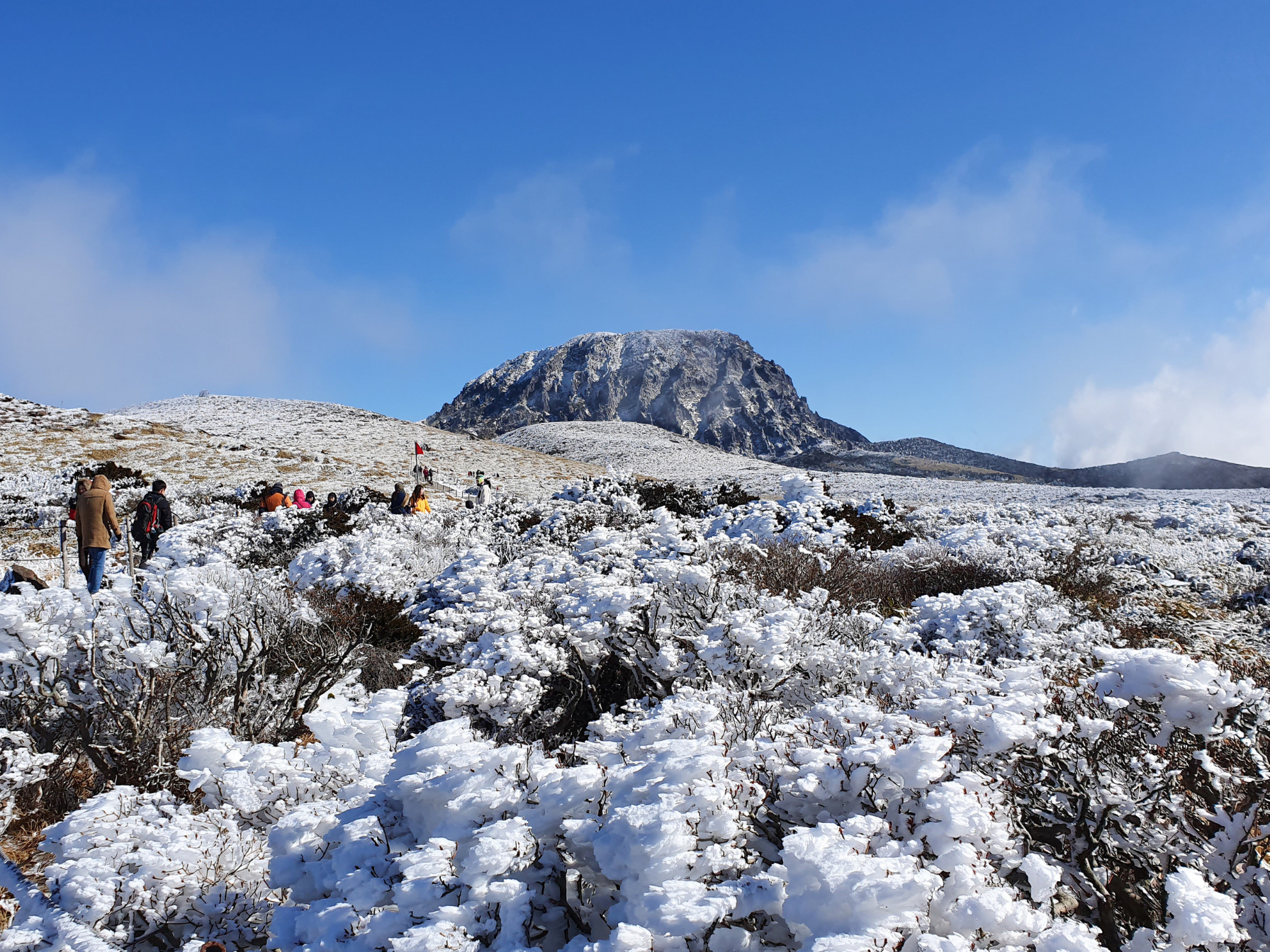
5. In case of heavy snowfall in Hallasan Mountain in winter, entry and climbing to Hallasan Mountain is restricted.
6. In the case of strong winds and typhoons, entry to many beach attractions may be restricted.
About Jeju
Jeju is a volcanic island located in the Korea Strait, known for its beautiful landscapes, unique volcanic formations, and rich cultural heritage. It's a popular destination for both domestic and international travelers seeking natural beauty and outdoor adventures.
Top Attractions
Hallasan Mountain
Hallasan is a dormant volcano and the highest mountain in South Korea, offering stunning landscapes and hiking trails.
Nature
Half to full day
Free
Jeju Loveland
An adult-themed sculpture park featuring erotic art and sculptures, offering a unique and provocative experience.
Entertainment
2-3 hours
₩14,000 (approx. $11)
Seongsan Ilchulbong (Sunrise Peak)
A tuff cone volcano known for its stunning sunrise views and crater rim walk.
Nature
1-2 hours
₩2,000 (approx. $1.60)
Manjanggul Cave
One of the longest lava tunnels in the world, offering a unique geological experience.
Historical
1 hour
₩2,000 (approx. $1.60)
Jeju Folk Village
An open-air museum showcasing traditional Korean houses and cultural performances.
Cultural
2-3 hours
₩10,000 (approx. $8)
Must-Try Local Dishes
Black Pork BBQ (Heukdwaeji Gui)
Jeju black pork is known for its tender and flavorful meat, often grilled and served with various side dishes.
Dinner
Contains pork, not suitable for vegetarians or vegans.
Halliang (Jeju Soup)
A hearty soup made with local ingredients like black pork, vegetables, and sometimes seafood.
Lunch/Dinner
Contains meat, can be made vegetarian upon request.
Haenyeo Sundae
A blood sausage made with pork blood and various ingredients, named after the female divers of Jeju.
Snack
Contains pork and blood, not suitable for vegetarians or vegans.
Hallabong
A sweet and juicy tangerine unique to Jeju, often enjoyed fresh or in various desserts.
Snack/Dessert
Vegan-friendly.
Popular Activities
Hiking
Scuba diving
Snorkeling
Paragliding
Horseback riding
Beach lounging
Spa and wellness
Hot springs
Best Time to Visit
April to June, September to November
Spring and autumn offer pleasant weather with mild temperatures and lower humidity. These seasons are ideal for outdoor activities and sightseeing.
15°C to 25°C
59°F to 77°F
Practical Information
Language
- Official: Korean
- Widely spoken: English (limited), Japanese (in tourist areas)
- English: Limited
Currency
South Korean Won (KRW)
Time Zone
GMT+9
Electricity
220VV, 60HzHz
Safety Information
Overall Safety Rating: Generally safe
Jeju is a safe destination with low crime rates. However, travelers should exercise normal precautions to protect themselves and their belongings.
Important Precautions:
- • Keep valuables secure and out of sight.
- • Use reputable tour operators and taxis.
- • Be cautious of strangers offering unsolicited help or services.
Getting there
By air
- Jeju International Airport • 12 km from Jeju City
By bus
Jeju Intercity Bus Terminal
Getting around
Public transport
Buses are the primary mode of public transport on Jeju, with a comprehensive network connecting major attractions and towns.
Taxis
Available • Apps: KakaoTaxi
Rentals
Car, Bike, Scooter
Neighborhoods
Jeju City
Seogwipo
Ara-dong
Day trips
Udo Island
15 km from Jeju City • Full day
A small island known for its beautiful beaches, lush landscapes, and unique volcanic formations.
Seopjikoji
20 km from Jeju City • Half day
A scenic coastal area known for its beautiful views, lighthouse, and nearby attractions.
Oedolgae Rock
10 km from Jeju City • Half day
A unique rock formation rising from the sea, offering beautiful views and a small temple.
Festivals
Jeju Fire Festival • February 28 - March 2
Jeju Haenyeo (Female Diver) Festival • June 2-3
Jeju Olle Culture Festival • October 1-7
Pro tips
- Rent a car for the ultimate flexibility and freedom to explore the island at your own pace.
- Try local street food and snacks for an authentic and delicious culinary experience.
- Visit popular attractions early in the morning or late in the afternoon to avoid crowds and enjoy the best light for photography.
- Pack layers, as Jeju's weather can be unpredictable and variable throughout the day.
- Learn a few basic Korean phrases to enhance your interactions with locals and show respect for their culture.
From $25
per person
Price varies by option
Secure booking
Free cancellation available
Instant confirmation