4-hour private tour of Lisbon
Active
4h
For a full refund, cancel at least 24 hours before the scheduled departure time.
Instant_then_manual confirmation
Mobile or paper ticket accepted
About this experience
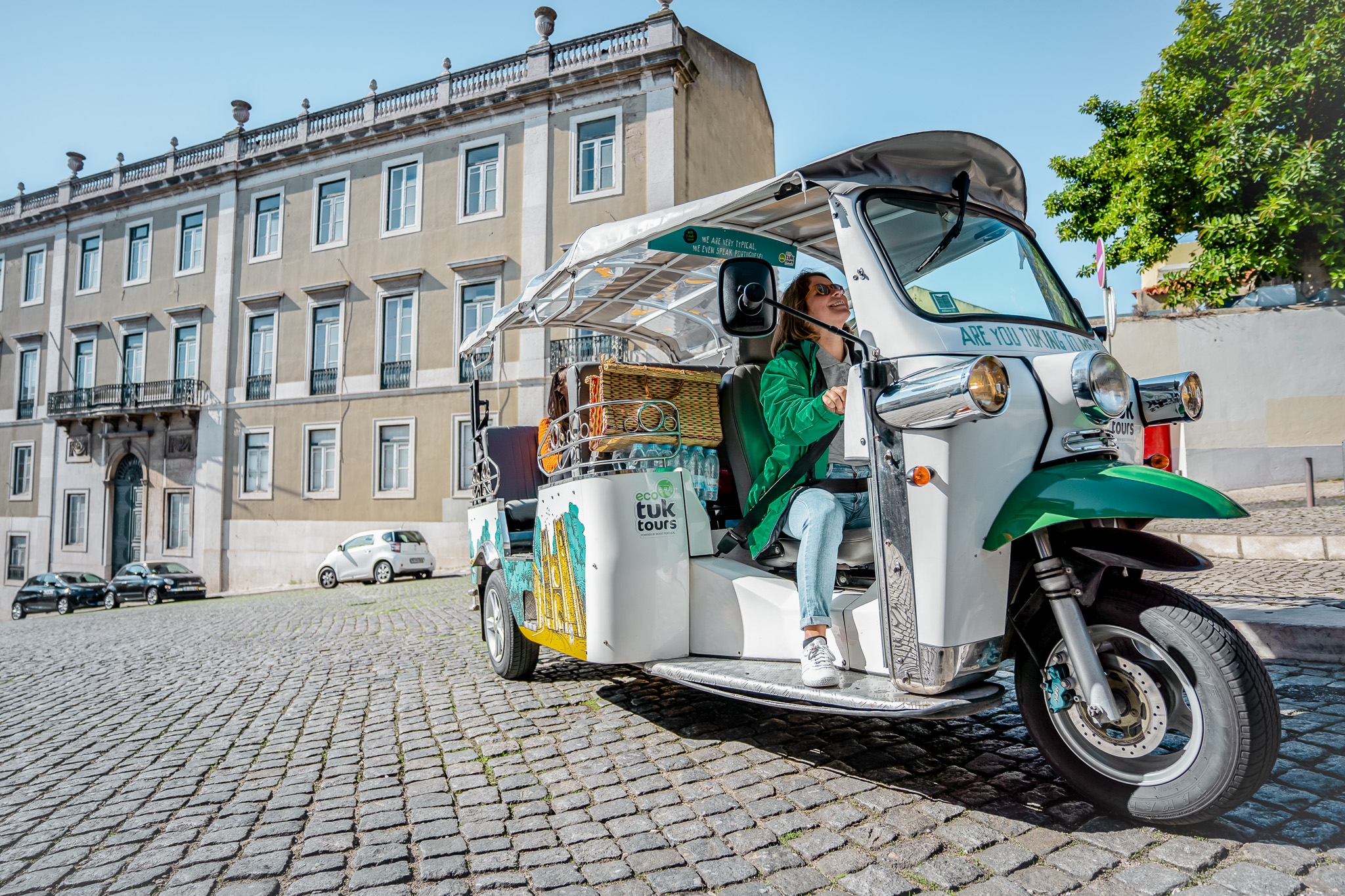
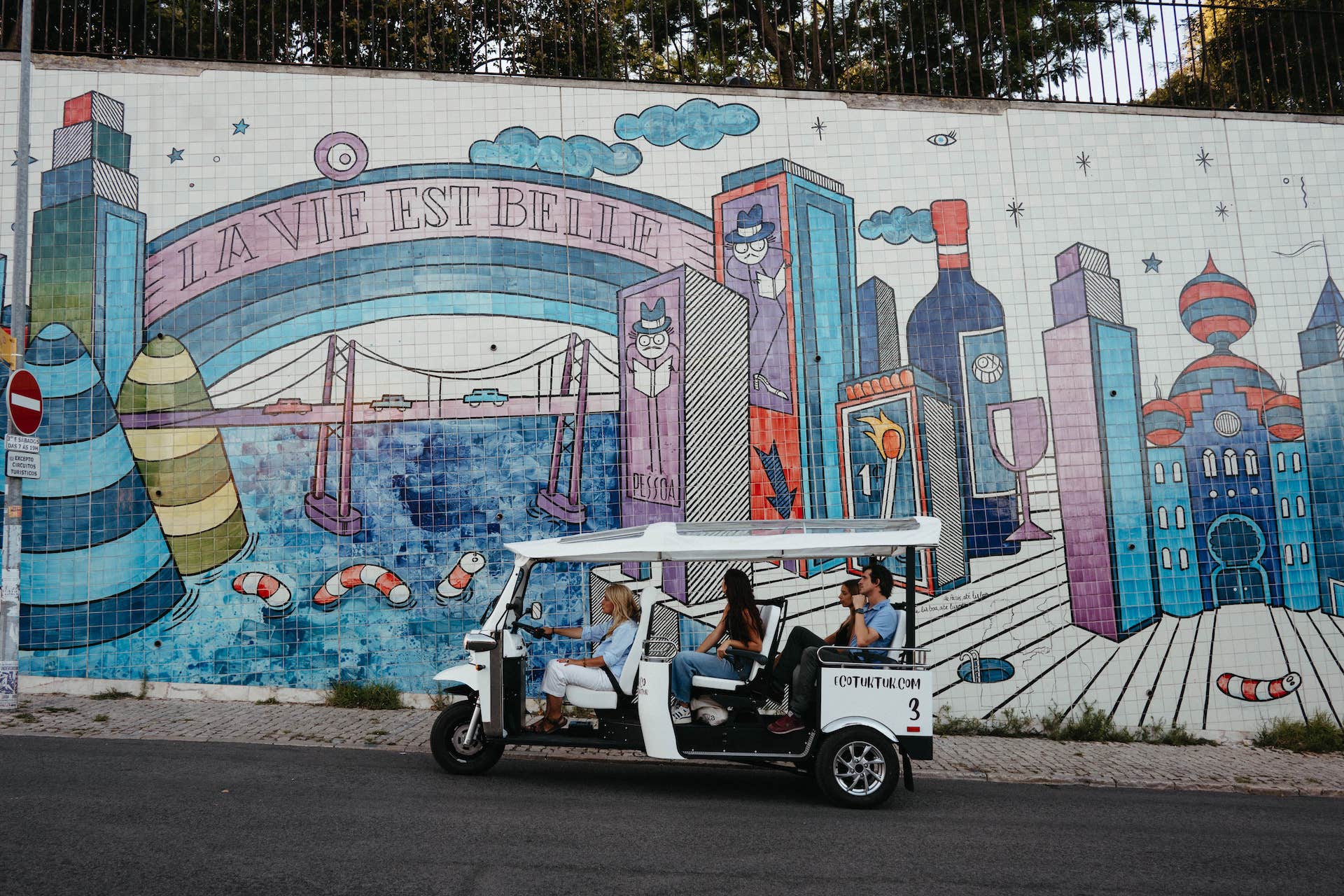
Tour carried out in modern and comfortable vehicles with air conditioning and water. Your driver will be helpful with all the information you need, even if it is an extra-tour.
Available options
Up to 7 Pax
Pickup included
What's included
Private transportation
Bottled water
Pick up and drop-off - to central Lisbon hotels
Detailed itinerary
1
Stop 1
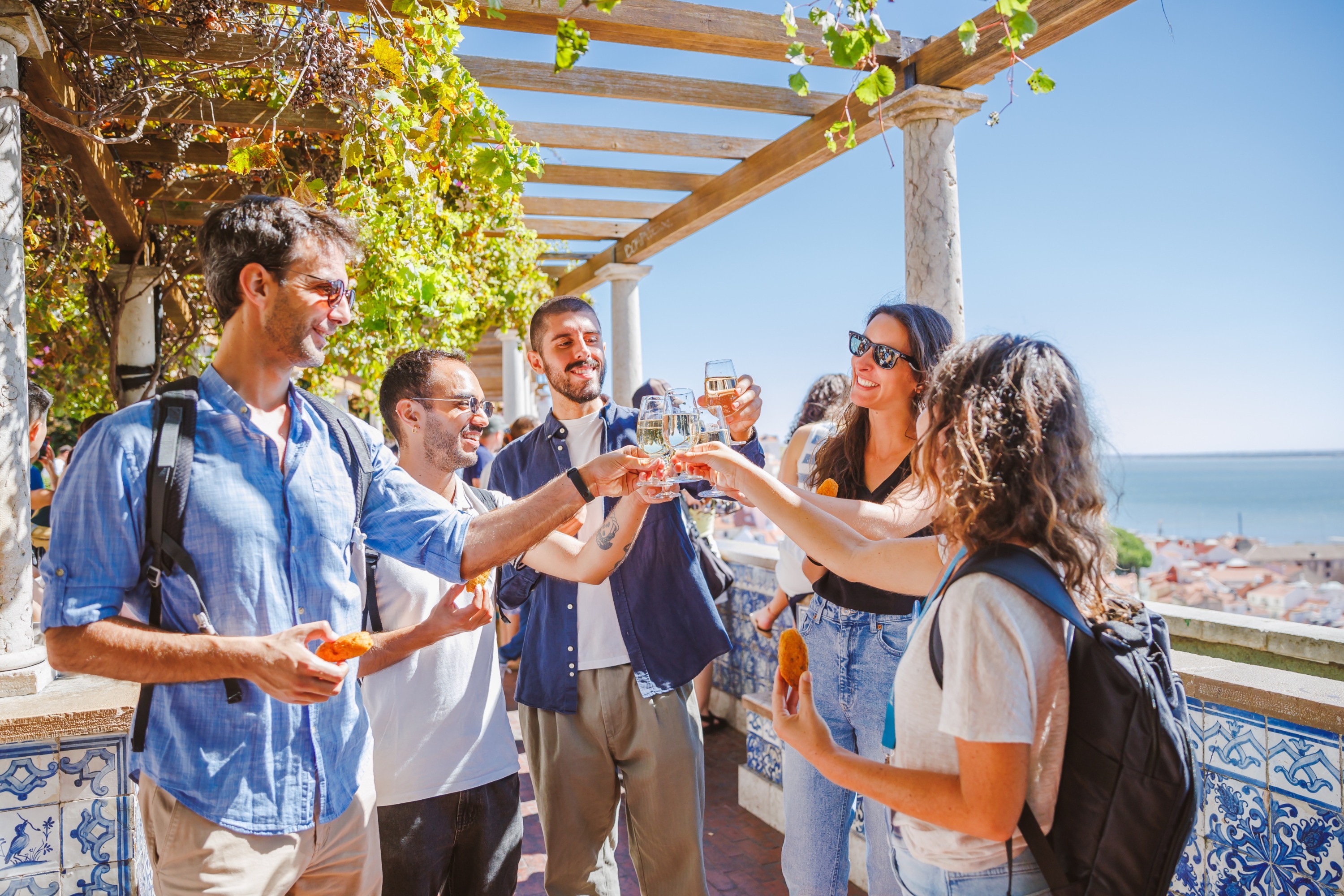
It is one of the most famous and visited viewpoints in Lisbon, Portugal. Located in the Graça neighborhood, on top of a hill, it offers stunning panoramic views over the city.
The name "Senhora do Monte" refers to a small chapel dedicated to Nossa Senhora do Monte, located at the viewpoint. The chapel is a place of religious devotion for many locals and visitors alike.
From the Miradouro da Senhora do Monte, you can enjoy a 360 degree view over Lisbon. It is possible to see the red roofs of the historic buildings, the hills and valleys, the Tagus River, the 25th of April Bridge and the Castle of São Jorge. It is an ideal place to take memorable photographs of the city.
In addition to the stunning views, the viewpoint itself is a lovely place to relax and enjoy the tranquility. There are benches and rest areas where visitors can sit and enjoy the scenery. It is especially popular at sunset, when many people gather to watch the spectacle of color on the horizon.
2
Stop 2
Lisbon Cathedral, also known as Sé de Lisboa or Santa Maria Maior de Lisboa, is the oldest church in the city and one of its most iconic landmarks. It is located in the Alfama district, close to the Tagus river. Construction of Lisbon Cathedral began in 1147, shortly after the city was reconquered from the Moors. The cathedral's exterior features robust walls, a rose window and two imposing bell towers. The main entrance, known as Porta do Perdão, is a fine example of Manueline architecture, characterized by intricate details and maritime motifs. Inside, Lisbon Cathedral has a wide nave with a wooden ceiling and several side chapels. One of the highlights is the Capela de São Vicente, which houses the relics of São Vicente de Zaragoza, the patron saint of Lisbon. The cathedral also has a treasury of valuable artifacts, including sacred vessels, vestments and religious art.
3
Stop 3
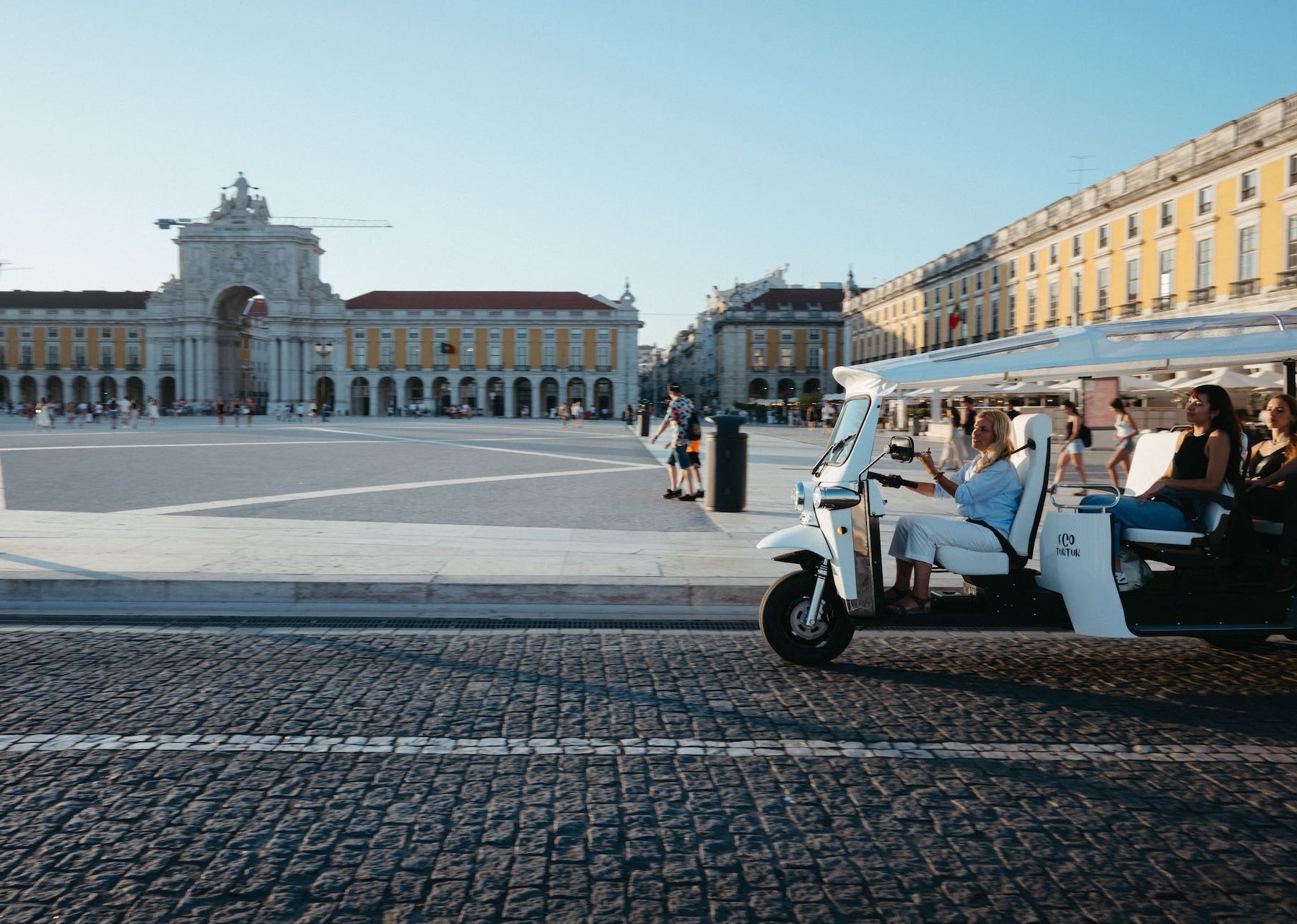
Also known as Terreiro do Paço, it is one of the most emblematic squares in Lisbon and one of the main tourist attractions in the city. In the riverside area, next to the Tagus River, the square is a historical and architectural landmark of great importance.
It was originally conceived as a symbol of Portugal's power and wealth during the period of the Discoveries.
It was built after the devastating earthquake of 1755, which destroyed much of the city, including the former Royal Palace.
The square was designed as a large and grand space, in neoclassical style, to serve as a commercial and administrative center.
It is bordered by a group of symmetrical yellow buildings, which house different government institutions. The highlight is the Arco da Rua Augusta, an imposing and triumphal arch that marks the entrance to Rua Augusta, one of the main pedestrian thoroughfares in Lisbon.
In the center is an equestrian statue of Dom José I, king of Portugal during the time the square was built.
4
Stop 4
The Miradouro de São Pedro de Alcântara is a popular viewpoint located in Lisbon, Portugal. Located in the Bica district, on the hill of São Roque, it offers breathtaking views over the city.
The viewpoint gets its name from the Convent of São Pedro de Alcântara, which is located nearby. The convent was founded in the 16th century and is known for its beautiful gardens.
From the Miradouro de São Pedro de Alcântara, you can enjoy a panoramic view of Lisbon. You can enjoy the colorful roofs of the city, the Castelo de São Jorge on the horizon,
5
Stop 5
The Jeronimos Monastery, also known as the Santa Maria de Belém Monastery, is one of the most iconic monuments in Lisbon and an important historical landmark in Portugal. Located in the Belém district, close to the bank of the Tagus River, the monastery is considered a masterpiece of the Manueline style, a form of late Gothic architecture with Renaissance influences.
The Jerónimos Monastery was built in the 16th century as a tribute to the Age of Discovery and the achievements of Portuguese navigators. It was commissioned by King D. Manuel I for the religious order of São Jerônimo, hence the name "Jeronimos". The monastery was built on the site where there used to be a small church founded by Infante Dom Henrique, the Navigator.
Entrance fee: 10€
6
Stop 6
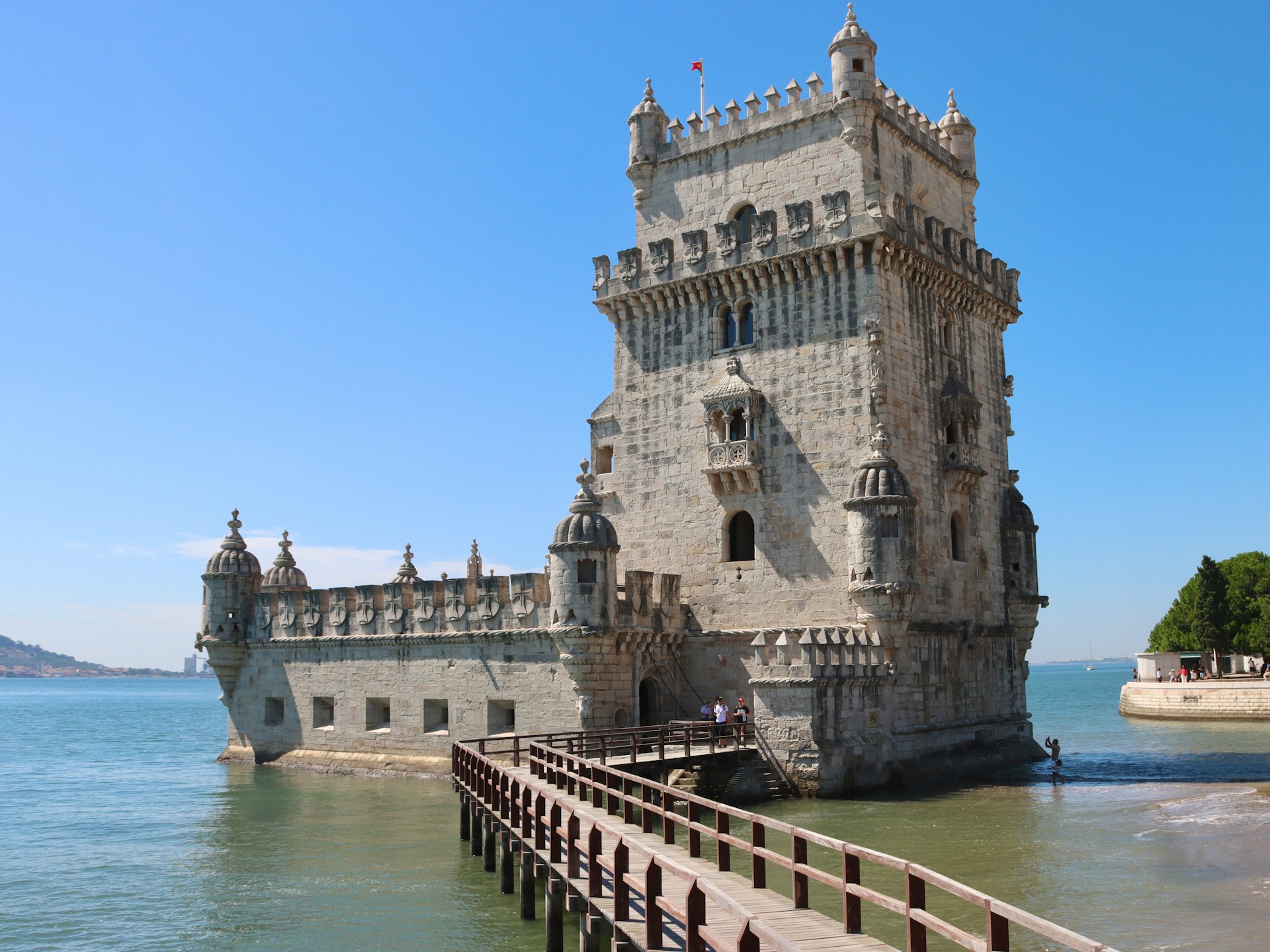
The Belém Tower is one of the most emblematic monuments in Lisbon and an important symbol of the Age of Discoveries in Portugal. Located in the Belém neighborhood, on the banks of the Tagus River, the tower is considered a UNESCO World Heritage Site.
The construction of the Belém Tower was completed in 1520, during the reign of King Manuel I.
It was originally designed as a fortress to protect the entrance to the port of Lisbon and serve as a symbol of Portuguese power and wealth.
Entrance fee: 6€
7
Stop 7
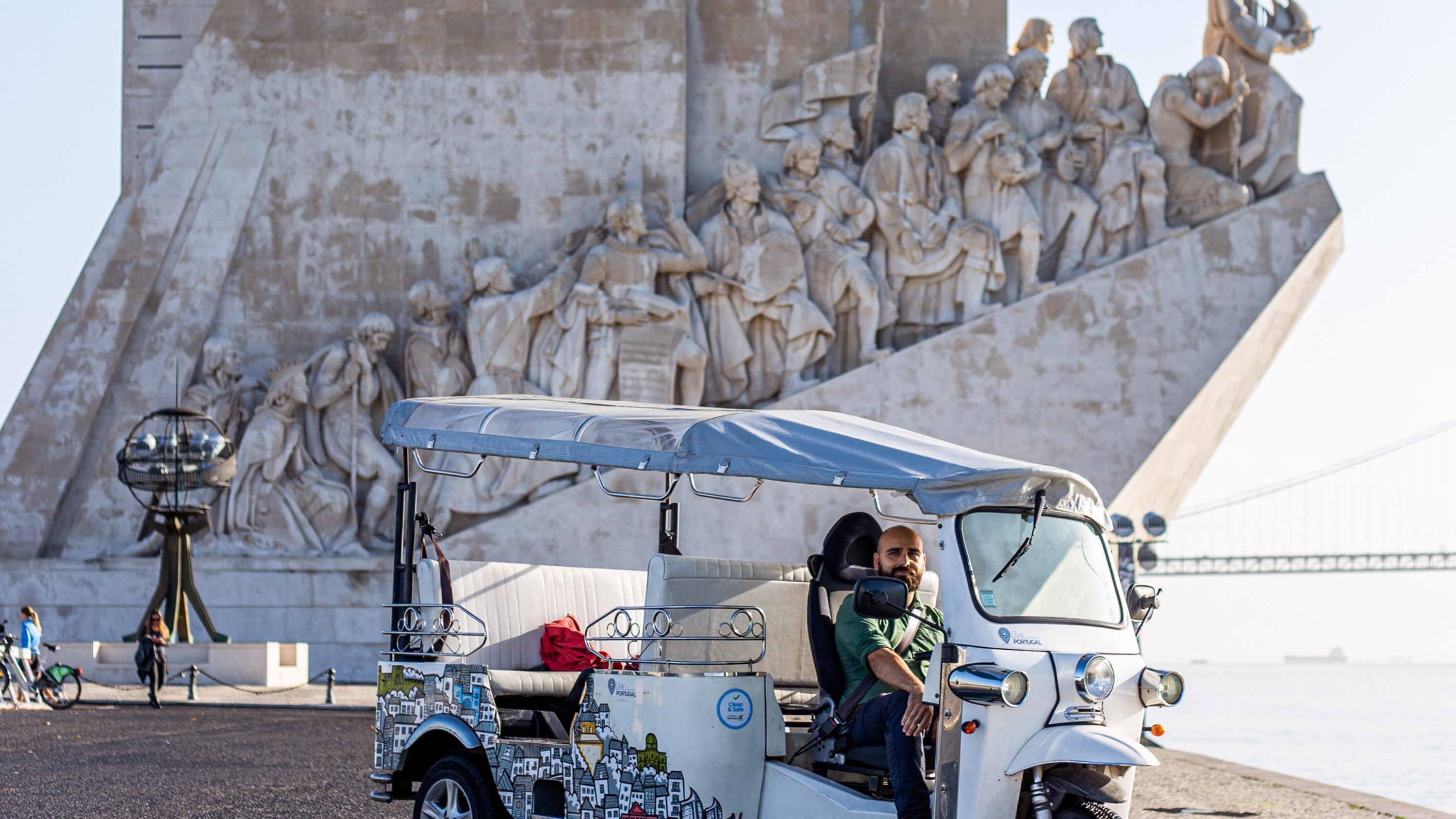
Padrão dos Descobrimentos is an impressive monument located in Lisbon, Portugal, on the banks of the Tagus River, in the Belém district. Also known as Monument to the Discoveries, it was built to honor Portuguese navigators and the period of great maritime discoveries.
The Padrão dos Descobrimentos was erected in 1960, on the occasion of the 500th anniversary of the death of Infante Dom Henrique, known as the Navigator. The current structure is a reconstruction, as the original monument, built for the Portuguese World Exhibition in 1940, was temporary.
The monument has a stylized ship's prow shape, with a cross-shaped carving on top. On the front facade, there is a ramp-shaped staircase that allows visitors to climb to the top, where they can enjoy panoramic views of the Tagus River and the surroundings.
Entry Value:
(26 to 64 years old) – €10.00
Young people (13 to 25 years old) – €5.00
Seniors (> 65 years old) – €8.50
Children < 12 years old - Free
8
Stop 8
The Docas de Alcântara is a reclassified port area in Lisbon, Portugal, which has become a popular entertainment and leisure space on the banks of the Tagus River. Located in Alcântara, west of the city center, the Alcântara Docks offer a variety of restaurants, bars, shops and cultural activities.
From the Alcantara Docks we will be able to see the 25 de Abril bridge as well as in the distance and on the other side of the river the Sanctuary of Cristo Rei
What's not included
Entrance Fees
On Mondays it is not possible to visit the interior of Jerónimos
Available languages
Guide guide
PT
EN
Written guide
PT
EN
Important information
Suitable for all physical fitness levels
About Lisbon
Lisbon, the capital of Portugal, is a vibrant city known for its rich history, stunning architecture, and warm climate. With its charming streets, historic trams, and breathtaking viewpoints, Lisbon offers a unique blend of old-world charm and modern energy.
Top Attractions
Belém Tower
A UNESCO World Heritage Site, this 16th-century tower is an iconic symbol of Lisbon's Age of Discoveries.
Historical
1-2 hours
€6
Alfama District
Lisbon's oldest district, known for its narrow, winding streets, Fado music, and historic charm.
Historical
Half day
Free to explore, attractions may have entry fees
Sintra
A UNESCO World Heritage Site, Sintra is a romantic town with stunning palaces and castles.
Historical
Full day
Varies by attraction, around €10-€15 per site
Must-Try Local Dishes
Bacalhau à Brás
Shredded codfish with eggs, potatoes, and onions
Main Dish
Contains fish and eggs
Pastel de Nata
Custard tart with a flaky pastry crust
Dessert
Contains dairy and eggs
Francesinha
A sandwich with meat, cheese, and a beer-based sauce
Main Dish
Contains meat, cheese, and gluten
Popular Activities
Hiking in Sintra
Surfing in Ericeira
Parasailing in Cascais
Beach lounging in Costa da Caparica
Spa day in a luxury hotel
Picnic in Jardim da Estrela
Visiting museums and galleries
Attending Fado performances
Best Time to Visit
March to May, September to October
These months offer pleasant weather and fewer crowds, making it ideal for sightseeing and outdoor activities.
15-25°C
59-77°F
Practical Information
Language
- Official: Portuguese
- Widely spoken: English, Spanish, French
- English: Moderately spoken
Currency
Euro (EUR)
Time Zone
GMT+1 (Western European Time, WET)
Electricity
230VV, 50HzHz
Safety Information
Overall Safety Rating: Generally safe
Lisbon is generally safe, but pickpocketing and petty theft can occur in crowded areas.
Important Precautions:
- • Be cautious of pickpockets in crowded areas
- • Use licensed taxis or ride-sharing apps
- • Avoid walking alone at night in less crowded areas
Getting there
By air
- Humberto Delgado Airport • 7 km from city center
By train
Santa Apolónia, Oriente
By bus
Sete Rios, Jardim do Campo Grande, Gare do Oriente
Getting around
Public transport
Efficient and clean, with four lines connecting major attractions.
Taxis
Available • Apps: Bolt, FreeNow
Rentals
Car, Bike, Scooter
Neighborhoods
Alfama
Baixa
Bairro Alto
Day trips
Sintra
25 km from Lisbon • Full day
A romantic town with stunning palaces, castles, and lush gardens.
Cascais
30 km from Lisbon • Half day to full day
A charming coastal town with beautiful beaches, historic sites, and a relaxed atmosphere.
Óbidos
80 km from Lisbon • Full day
A medieval town with a well-preserved castle, narrow streets, and charming shops.
Festivals
Santos Populares • June 13th
Festival dos Oceanos • June to September
Arraial do Alfoz • June to September
Pro tips
- Visit the Time Out Market for a variety of local and international cuisines
- Take a day trip to Sintra and Cascais for a mix of history and beach relaxation
- Explore the LX Factory for a unique shopping and dining experience
- Ride the historic Tram 28 for a scenic tour of the city
- Visit the MAAT museum for a blend of art, architecture, and technology
From $25
per person
Price varies by option
Secure booking
Free cancellation available