Full Day in Guanajuato departure from San Miguel de Allende
Active
7h
All sales are final. No refund is available for cancellations.
Instant confirmation
Mobile or paper ticket accepted
About this experience
Guanajuato, Gloriosa y Mágica, surrounded by frog-shaped hills, which in past times hosted the largest silver and gold deposits in our country and which is proud to have seen the first great battle for our Independent Mexico consummate. Immersed among the earth, making its way between it with wonderful tunnels and romantics alleys that lead us to find beautiful squares, churches, fountains, where they are narrated, more than a thousand legends. This is Guanajuato, unique in its kind, charming and mystical, colorful and sober, home to the great Cervantino International Festival.
Available options
Full Day in Guanajuato departure from San Miguel de Allende
Pickup included
What's included
All Fees and Taxes
Travel insurance
Air-conditioned vehicle
Detailed itinerary
1
A colossal monument dominating all of Guanajuato. Among stories and legends it is said that what Pípila did changed the history of Mexico. With a brand in hand and carrying a slab, the miner Juan José de los Reyes Martínez Amaro, who was called "Pípila", managed to reach the door of the Alhóndiga de Granaditas on September 28, 1810 and set it on fire. That decided the fight in favor of the insurgents and ignited the libertarian movement throughout New Spain. Guanajuato did not forget its hero. In 1939, this enormous sculpture in his honor was inaugurated at the top of the Cerro de San Miguel. Designed by the artist Juan Fernando Olaguíbel, also author of the famous Diana Cazadora and made in quarry by Agustín Gutiérrez.
2
Although few know it, Guanajuato is full of secret roads, tunnels, alleys and passageways. And it is that in this city every corner has a legend and a multitude of cobbled arteries full of forks and mysterious nooks that were made at another time in history. These inadvertent paths (which are almost always under our feet) make the city perfect to get lost and understand an essential part of what Mexico is.
3
The Juárez Theater is one of the most beautiful venues of its kind in the country. Its construction began in 1873 under the auspices of General Florencio Antillón on the land originally occupied by the old convent of San Diego de Alcalá, demolished in 1861 as a result of the Reform Laws that among other things promoted the confiscation ecclesiastical property.
4
Garden of the Guanajuato Union; its shape is polygonal and it is located in the center of the old Plazuela de San Diego, whose land belonged to the missing atrium of the current temple of San Diego. Around 1861, with the triumph of the Liberals, it was called the Union Garden. At the end of that century an equestrian sculpture and a kiosk were placed where music bands performed various pieces for passers-by.
In this garden the day of the Virgin of Dolores is commemorated, popularly called Day of the Flowers, which is celebrated with a popular festival, flower arrangements, traditional food and live music.
5
The Temple of San Diego had to be rebuilt as a result of the floods that the capital suffered in the 18th century. In 1784 its walls had to be raised 6 meters, leaving the original plant buried. Later, the convent was expropriated with the application of the Reform laws, which became the Hotel Emporio, which after being demolished, began the construction of the Juárez Theater that we currently admire. The only thing that currently conserves the Temple are three of the five chapels that made it up. Even so, there is much to see, including the underground museum where you can see part of the old convent.
Undoubtedly one of the most emblematic temples in Guanajuato and that contributes to its unique personality as a world heritage site, is San Diego, located next to the Juárez Theater and the Unión Garden.
6
Its construction began in 1671 and was completed 25 years later, sponsored by the miners of the area. Raised to the category of Basilica in 1957; the Collegiate Basilica Nuestra Señora de Guanajuato, in a baroque style, boasts an impressive dome that stands out from the rest of the work.
Inside it keeps a virgin who has become the patron and queen of the city.
This image was donated by King Carlos I and his son Felipe II to the town of Guanajuato in recognition of its mining prosperity on August 8, 1557. The image is a wooden sculpture of the Virgin and Child, with a pedestal embossed silver as a base.
The sanctuary has three entrances, a bell tower with three sections and another tower in the Churrigueresque style. Part of the church is dedicated to the patron saint of miners, San Nicolás Tolentino.
The Basilica of Our Lady of Guanajuato is a symbol of the splendor and boom of this rich mineral from Santa Fe de Guanajuato.
7
This site is also known as Plaza Mayor or main, its construction began in 1865, it was in 1897 when the Monument to Peace was raised, made by the Mexican sculptor Jesús Contreras with materials such as bronze and the base is made of quarry and marble and later It was inaugurated in 1903 by the then President of Mexico, Porfirio Díaz to commemorate the end of the War of Independence. The square is located right in the Historic Center of Guanajuato, in front of the Cathedral Basilica of Our Lady of Guanajuato and in addition to attracting attention for having been built on a sloping terrain in the shape of a triangle, it is also very famous for being surrounded by colonial buildings. and restaurants that previously served as residences for counts and people of high society.
8
This is the house where the artist Diego Rivera was born on December 8, 1886 along with his twin brother José Carlos María, who died a year and a half later. Diego's daughter, Guadalupe Rivera Marín, promoted the restoration of the building in 1971 with the support of the Federal Government, the University of Guanajuato, the State Institute of Culture of Guanajuato and the National Institute of Fine Arts. inaugurated as the Diego Rivera House Museum. The decoration of the house was recreated according to the customs of the time: bedroom of the parents, Diego's aunt, dining room and study. The collection that is exhibited by this great painter belongs to the Marte R. Gómez collection. The museum also has five temporary exhibition rooms, where different disciplines of the plastic are exhibited.
9
Main market of the city. It was designed, it is said that initially as a railway station, by the architects Ernesto Brunel and Antonio Rivas Mercado on the site that occupied the old Gavira bullring. The construction lasted from 1905 to September 16, 1910. It was inaugurated by President Porfirio Díaz as part of the celebrations for the centenary of independence. The building is 70 meters long by 35 deep and has three entrances. Most of the building is made of iron and its plant is shaped like the letter T. On the huge vault is the tower of a clock with four faces made by José López, and on its dome a weather vane with a lightning rod. It has 34 large windows.
10
In the town of La Valenciana, near the entrance to its silver mine, you will find one of Guanajuato's most impressive attractions, the Temple of San Cayetano de La Valenciana, which dates back to the 18th century. The temple is located on the top of a hill that overlooks the city of Guanajuato and stands as a monument to the immense wealth of the mine and the rich history of silver in the Bajío, heart of Mexico, during the colonial period.
The Temple of San Cayetano was built by Antonio de Obregón y Alcocer, the Count of Valenciana and the original owner of the mine. Construction began in 1765 and was completed in 1788. The temple was financed with the proceeds of a mine that was once one of the richest and most productive in the world. It was built with pink stone known as quarry. The façade is carved in the Mexican Baroque style and the side windows have neo-Mudejar style arches.
What's not included
Food
Beverages
Available languages
Guide guide
EN
ES
Reviews breakdown
Viator
4.8
6 reviews
5★
5
4★
1
3★
0
2★
0
1★
0
Important information
Infants are required to sit on an adult’s lap
Suitable for all physical fitness levels
About San Miguel de Allende
San Miguel de Allende is a charming colonial city known for its well-preserved architecture, vibrant arts scene, and rich cultural heritage. Designated as a UNESCO World Heritage site, it offers a blend of historic charm and modern sophistication, making it a popular destination for travelers seeking both cultural depth and relaxation.
Top Attractions
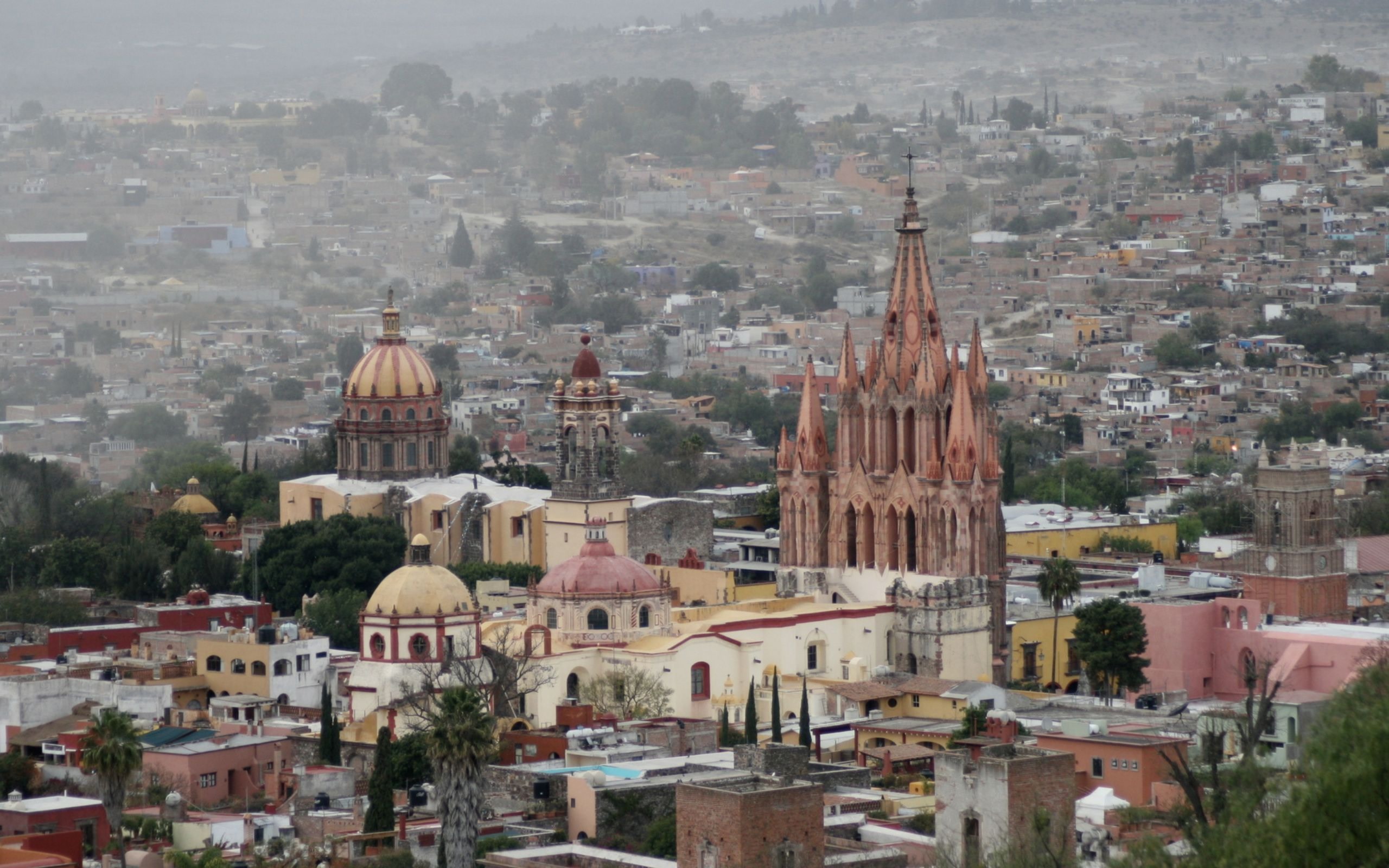
Parroquia de San Miguel Arcángel
This iconic pink neoclassical church is the symbol of San Miguel de Allende. Its distinctive pink facade and towering spire make it a must-visit landmark.
Historical/Architecture
1-2 hours
Free to enter, fee for tower access
El Jardín
The main square of San Miguel de Allende, El Jardín, is a vibrant hub of activity. It's surrounded by colorful buildings, cafes, and street performers.
Cultural
Varies, can spend hours people-watching
Free
Fabrica La Aurora
A former textile factory turned into an arts and design district. It houses numerous galleries, studios, and boutique shops.
Arts/Cultural
1-3 hours
Free entry, costs vary for shopping and dining
Must-Try Local Dishes
Enchiladas Mineras
A local specialty made with corn tortillas filled with chicken or cheese, covered in a red or green sauce, and topped with onions and cream.
Main Dish
Can be made with various fillings, including vegetarian options.
Churros con Chocolate
Fried dough pastries dusted with sugar, served with a rich chocolate dipping sauce.
Dessert
Vegetarian.
Carnitas
Slow-cooked pork that is crispy on the outside and tender on the inside, often served with tortillas and salsa.
Main Dish
Contains pork.
Popular Activities
Hiking in the nearby mountains
Hot air balloon rides
Spa treatments
Leisurely walks in the historic center
Visiting art galleries and museums
Attending local festivals and events
Swimming in nearby natural springs
Visiting during the Christmas season for festive decorations and events
Best Time to Visit
November to April
This is the dry season with pleasant weather, making it ideal for outdoor activities and sightseeing. The city is bustling with festivals and cultural events during this period.
15-28°C
59-82°F
Practical Information
Language
- Official: Spanish
- Widely spoken: English
- English: Moderately spoken in tourist areas
Currency
Mexican Peso (MXN)
Time Zone
CST (UTC -6)
Electricity
127VV, 60HzHz
Safety Information
Overall Safety Rating: Generally safe
San Miguel de Allende is generally safe for tourists, with low crime rates. However, petty theft and scams can occur, so it's important to stay vigilant.
Important Precautions:
- • Keep valuables secure and out of sight
- • Use licensed taxis or ride-sharing apps
- • Be cautious when using ATMs, especially at night
Getting there
By air
- Del Bajío International Airport • 90 km from San Miguel de Allende
By bus
Terminal de Autobuses de San Miguel de Allende
Getting around
Public transport
Local buses are affordable and convenient for getting around. They are frequent and cover most areas of the city.
Taxis
Available • Apps: Uber, Didi
Rentals
Car, Bike, Scooter
Neighborhoods
Historic Center
Rosa de Castilla
San Antonio
Day trips
Dolores Hidalgo
15 km • Half day
A small town known for its role in the Mexican War of Independence and its vibrant arts scene.
Atotonilco
12 km • Half day
A small town known for its beautiful Baroque-style church and its role in the Mexican War of Independence.
Guanajuato City
80 km • Full day
A UNESCO World Heritage site known for its colorful buildings, underground tunnels, and rich history.
Festivals
Festival de las Calaveras • Early October
Semana Santa • March or April (varies yearly)
Cervantino Festival • Mid-October
Pro tips
- Visit the Parroquia de San Miguel Arcángel early in the morning for the best photos and fewer crowds
- Explore the city's historic center on foot to fully appreciate its charm and architecture
- Try local specialties like enchiladas mineras and churros con chocolate for an authentic culinary experience
- Attend local festivals and events to immerse yourself in the city's vibrant culture
- Take a cooking class to learn traditional Mexican cuisine and bring the flavors home with you
From $25
per person
Price varies by option
Secure booking
Free cancellation available
Instant confirmation