Full Day Lisbon Tour Baixa Chiado with Alfama and Belem
Active
9h
For a full refund, cancel at least 24 hours before the scheduled departure time.
Manual confirmation
Mobile or paper ticket accepted
About this experience
This is probably Lisbon's most complete walking tour. We invite you to explore most of Lisbon's unmissable sites in a very comprehensive full-day tour. In the morning, our guide will uncover the history behind the Discovery Age when we visit the Belém district together. After lunch, it's time to explore the historical center of Lisbon and its most iconic monuments: Arch of Rua Augusta, Elevator of Santa Justa, Church of Carmo, São Pedro de Alcântara viewpoint and the Cathedral. Lisbon has plenty to offer: world heritage monuments, typical and picturesque small streets and also surprising atmospheres. We know this for sure: Lisbon the city of light will stay in your heart forever.
Available options
Full Day Lisbon Tour Baixa Chiado with Alfama and Belem
What's included
The Original Pastel de Belém.
Group excursion with a maximum of 20 adults.
Informative, friendly and professional guide
Entrance to iconic monuments.
Plenty of stories and local suggestions to enjoy Lisbon.
Detailed itinerary
1
Stop 1
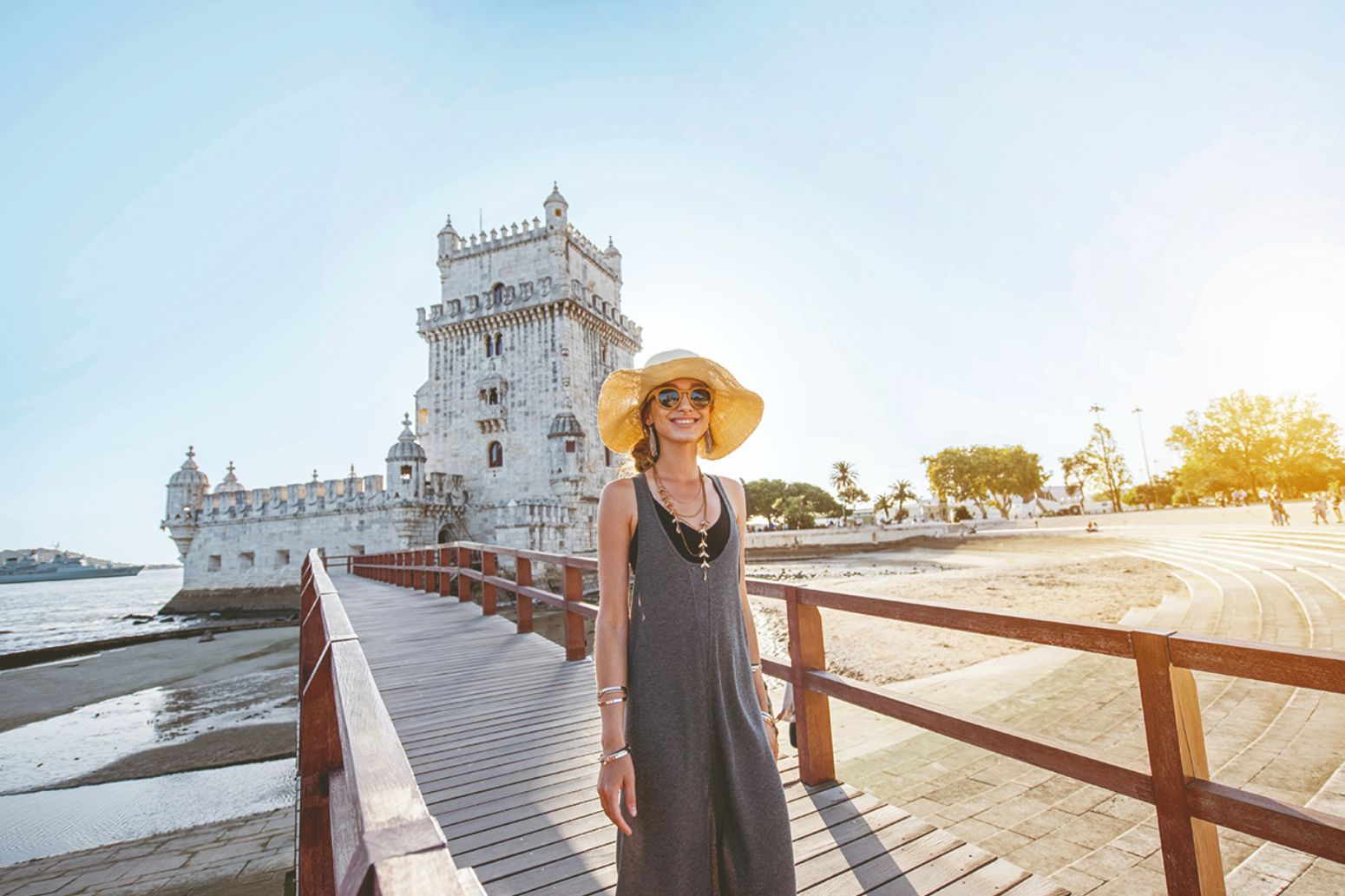
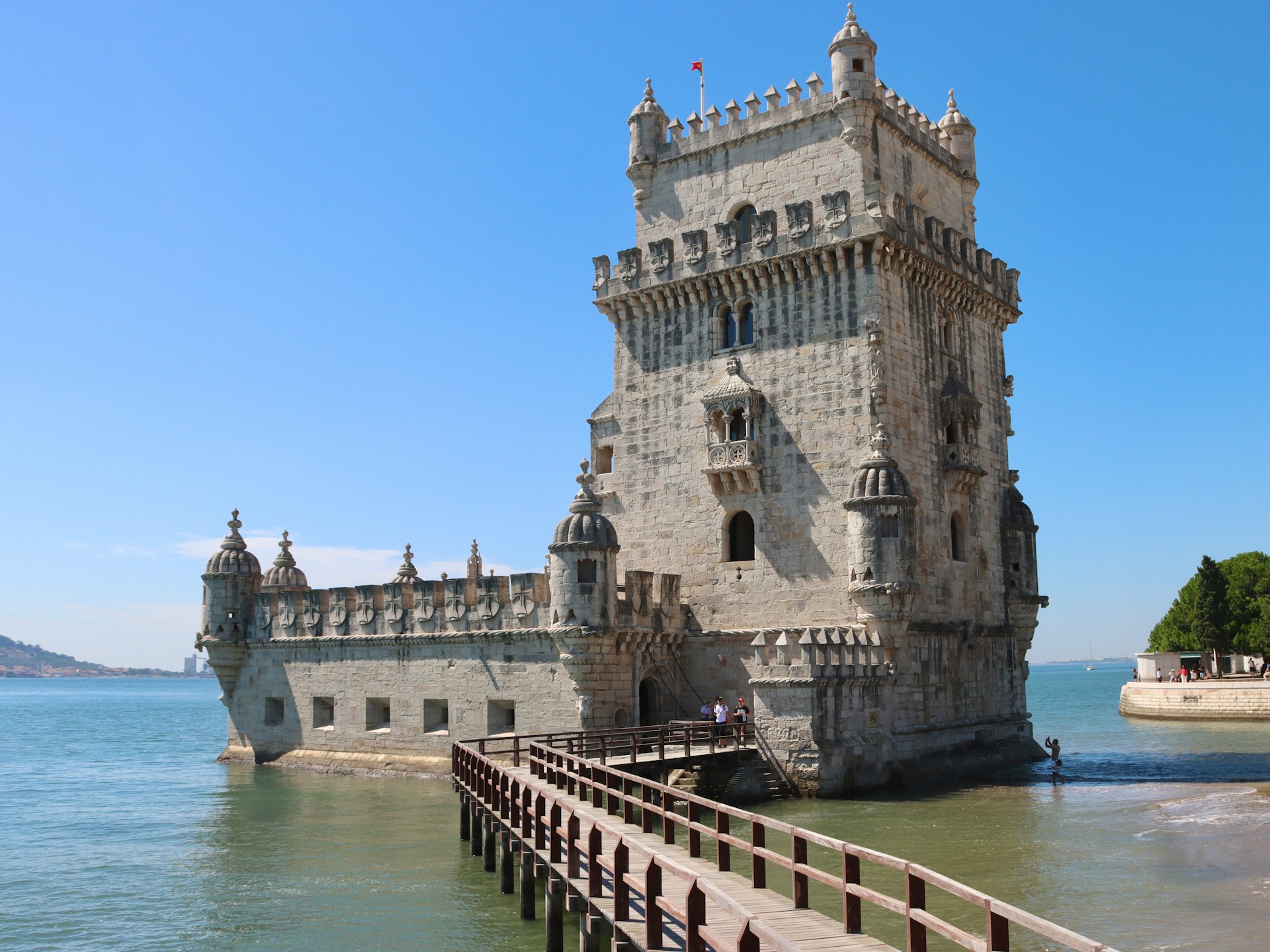
Visit the Torre de Belém one of Lisbon's most iconic monuments.
2
Stroll along the Tagus river and learn about the history of the Portuguese Discoveries
3
Stop 3
The monument to the Discoveries is an impressive giant caravele with Henry the navigator leading the Portuguese maritim expansion. We will not enter this monument in our visit.
4
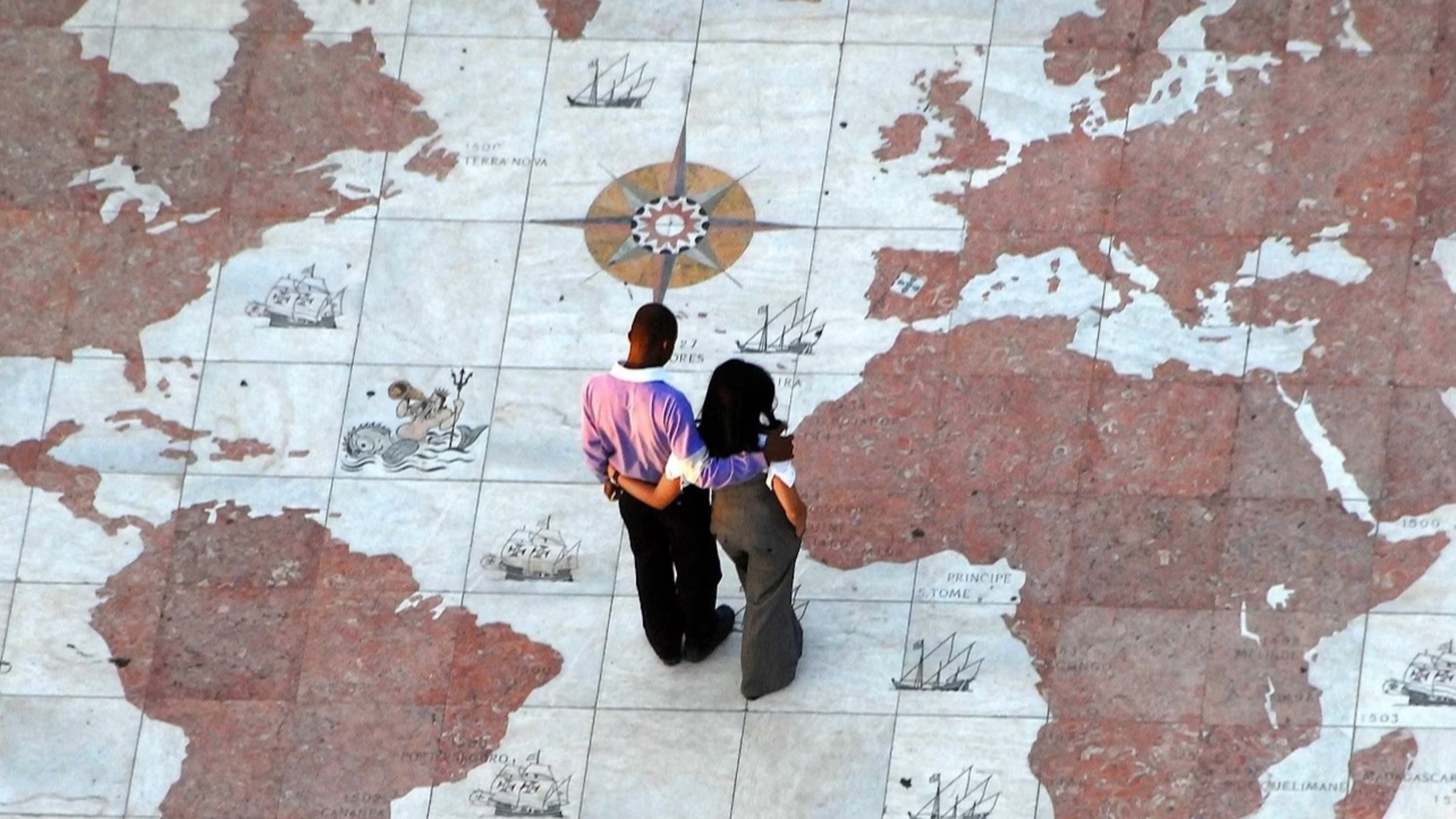
Another highlight attraction in Belém is the beautiful Wind Rose Square with its 14 meter wide map and a 50 meter wide compass rose.
5
Garden built at the time of the "Portuguese World Exhibition" (1940), an event commemorating the 800th anniversary of Portugal's Independence and the 300th anniversary of the Restoration of Independence, designed by the architect Cottineli Telmo. The Luminous Fountain in the centre of the garden also dates from this period. Its beauty comes from the harmony of the arrangements and architectural design, and it was planted taking into account the organisation of Greek and Roman gardens.
There is also a Sundial, all these elements are built in mosaic-culture.
The two lakes at the southern top of the garden, topped by two imposing sculptural groups, representing mythical figures of two horses with tails of marine animals.
6
Stop 6
It was 1496 when King Manuel I asked the Holy See for permission to build a large monastery on the banks of the Tagus. Designed by the architect Diogo de Boitaca, the construction of the Jerónimos Monastery began on 6th January 1501 and was finished at the end of the 16th century. The predominant style of the monastery is Manueline and it was built to celebrate the return of Vasco da Gama from the Indies. The site chosen, the Ermida do Restelo, was already a port of refuge for the sailors on their voyage. This sumptuous work was made possible thanks to the resources from the trade with Africa and the Orient and is considered the most emblematic example of the Manueline style, also called Portuguese Gothic. A visit to the Cloisters of the Convent is absolutely unforgettable.
7
Stop 7
At the beginning of the 19th century, in Belém, next to the Jerónimos Monastery, there was a sugar cane refinery associated with a small varied trade. As a result of the Liberal Revolution of 1820, all convents in Portugal were closed in 1834, expelling the clergy and workers. In an attempt to survive, someone from the Monastery put on sale in that shop some sweet pastries, quickly called "Pastéis de Belém". In 1837, the production of "Pastéis de Belém" began, in installations annexed to the refinery, according to the old "secret recipe", which originated in the convent. Passed down and exclusively known by the master confectioners who make them by hand, in the "Oficina do Segredo", this recipe remains the same to this day.
8
Stop 8
This is where we recommend our guest to have the lunch break. A former food market, known for its beautiful flowers and the quality of the fish, the renovated market has dozens of food options for every taste and age. Travellers will have a 90 minute lunch break (the value of the meal is not included in the ticket) and they have the freedom to enjoy it at the market or anywhere else.
9
Stop 9
This iconic square in Lisbon is one of the largest in Europe, with some 36,000 square metres and a total of 79 arches.
Before being destroyed by the 1755 earthquake, it was the royal palace and official residence of the Portuguese kings for about 250 years.
It was here that the Marquis of Pombal planned a new city, whose square would be its greatest exponent. Nowadays the buildings in Terreiro do Paço Square are occupied by ministries, government departments and mainly hotels and restaurants.
10
Stop 10
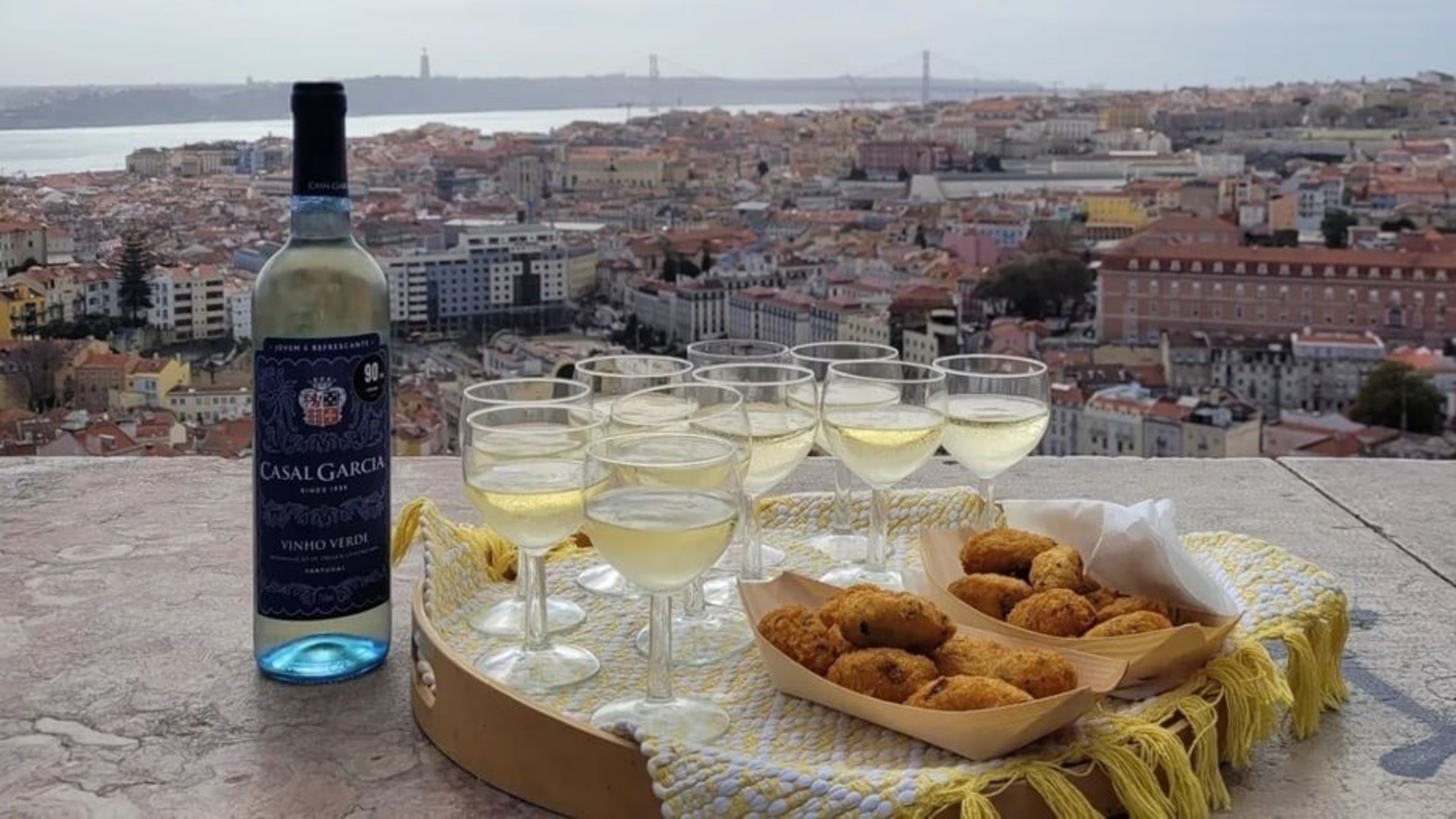
This is probably the most romantic viewpoint in all of Lisbon. A window with creepers that allows you to see the roofs of the labyrinthine Alfama, the churches of the oldest district of Lisbon, and the boats that cross the Tagus River daily.
The two tile panels from the Fábrica Viúva de Lamego attached to the side wall of the Igreja de São Brás and the Igreja de Santa Luzia, built over the Cerca Velha, are like postcards within this beautiful city postcard.
11
Stop 11
Lisbon's Cathedral, also known as Santa Maria Maior Basilica, is considered the oldest church in Lisbon, having been built in the early second half of the 12th century, after the city was recaptured from the Moors by King Afonso Henriques.
It was built under a Muslim mosque where before, according to archaeological excavations, it was a Christian temple of the Visigothic Germanic people.
The first architect was Master Roberto, a Frenchman who also worked on the Sé of Coimbra and the Monastery of Santa Cruz.
Dedicated to Our Lady, the Sé of Lisbon has undergone several alterations over the centuries, particularly after the earthquake of 1755.
The Sé presents an incredible mix of architectural styles where you can find Romanesque, Baroque and Neoclassical details. We will not enter this monument in our visit.
12
Stop 12
This church stands on the spot where St. Anthony was born, before he left for the world as a preacher, eventually dying in Padua. The current temple was built after the Lisbon earthquake of 1755 on the site where a chapel had existed since the 15th century. It offers as noteworthy elements the image of the patron saint, spared by the earthquake, the crypt with his birthplace and the canvas representing Saint Anthony with the most authentic features on record. It was visited by Pope Saint John Paul II in 1982.
13
The façade of the Church of Nossa Senhora da Conceição Velha is, together with the Jerónimos Monastery and the Belem Tower, one of the best surviving Manueline structures of the great earthquake. Angels, flowers and religious symbols intertwine in an unusual composition.
The building combines elements of different churches, resulting from the reconstruction carried out after the 1755 earthquake, when most of the buildings in the city were destroyed.
14
Stop 14
This typical neighbourhood was once one of the most cosmopolitan in Lisbon. Situated between the castle and the river, Alfama is a historic neighbourhood that takes us back to the time of the discoveries. Its typical houses withstood the 1755 earthquake and their façades are still intact. Witness the very special atmosphere of the neighbourhood, with its small shops and taverns, as you make your way through the steep web of streets and alleys.
15
Casa dos Bicos was built in 1523 on the orders of D. Brás de Albuquerque. The façade is clad in diamond-shaped stone, the "bicos", influenced by a trip of the owner to Bologna, where he saw the Diamond Palace. Initially, the main façade faced north, the current façade being the least important. In the 1755 earthquake, the last two floors disappeared, having only been restored in 1983. It is currently the headquarters of the José Saramago Foundation.
16
Stop 16
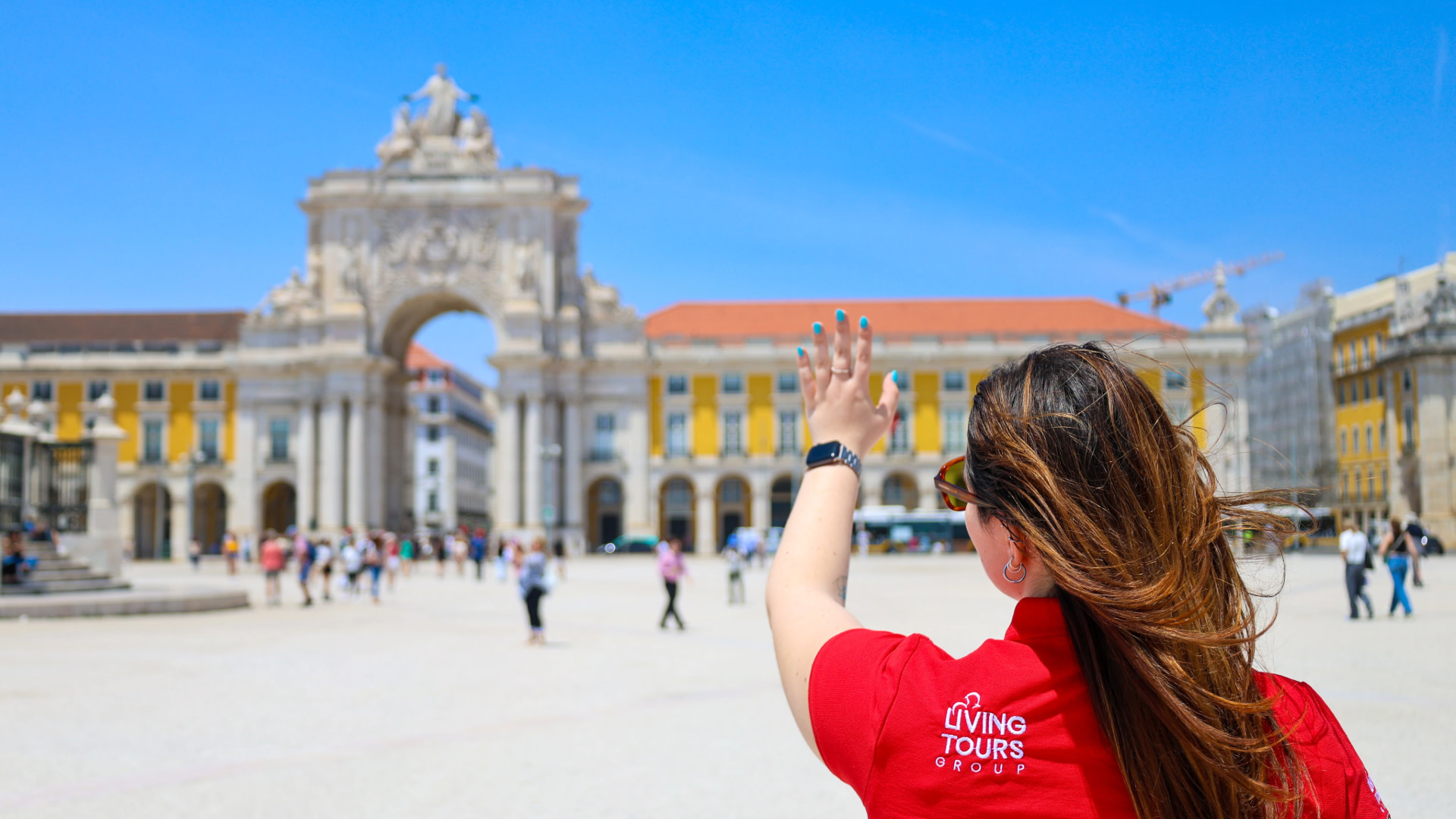
The great triumphal arch of the city is a kind of entrance portal to the "Baixa Pombalina", designed after the 1755 earthquake. Its construction was only completed in 1873.
At the top, an allegorical ensemble symbolises "Glory crowning Genius and Valor", the work of the French sculptor Anatole Calmels. Immediately below, from left to right, are the statues of Viriato, Vasco da Gama, Marquês de Pombal and Nuno Álvares Pereira (these by the Portuguese sculptor Vítor Bastos), flanked by representations of the Rivers Tejo and Douro. This arch is a tribute to the heroic ancestors who, also symbolically, are facing the Tagus from where the Portuguese set off to discover new worlds and civilisations, opening the way to a universal sense of the world.
17
Rua Augusta is the liveliest street in the centre of Lisbon. Starting at the famous Arc de Triomphe, it connects Praça do Comércio to Praça do Rossio and is paved with the Portuguese calçada.
It is characterised by a very concentrated commerce, as the whole street is flanked by several shops, many of them of big international brands. It has been closed to traffic since the late 1980s and is often occupied by street artists, craftsmen and street vendors.
18
Stop 18
Praça Dom Pedro IV, the so-called Rossio, in Lisbon was the heart of Lisbon during the Middle Ages. This is where the fairs, festivals and even popular bonfires took place. During World War II, this area was one of the biggest espionage centres on the planet and it was here that many refugees ended up while waiting for visas in the surrounding areas. To the North, the D. Maria National Theatre, in the centre the statue of D. Pedro IV, everywhere beautiful esplanades. Rossio is a place of history and incredible stories.
19
The Church of Carmo as payment for the promise Dom Nuno Álvares Pereira made to Our Lady of Carmo. Once the Spanish forces were defeated, construction began in 1389 on the city's largest Gothic monument. Very quickly, the Church of Carmo became important for the whole city and for the country's identity.
It was the entire ceiling of this temple that disappeared on 1st November 1755, when the city was flattened by the earthquake. The convent remained standing, but much of the artistic heritage was consumed by the great fire that occurred after the earthquake.
Queen D. Maria I took an interest in rebuilding the monument, but due to a lack of funding, the work was interrupted and the church would continue in the open air, reminding us of that terrible All Saints' Day holiday. We will not enter this monument in our visit.
20
Stop 20
The history of this temple dates back to 1506, when King Manuel I requested from Venice a relic of S. Roque, a saint known for his miracles against the plague. A few years later, a chapel was built outside the Fernandina wall, next to the cemetery of the victims of the disease.
The church we see today and which survived the earthquake almost intact, was completed by the Italian architect Filipo Terzi. The mannerist façade is of a great simplicity, which is surprising because nobody guesses that inside it is one of the most valuable chapels on the planet! In fact, each of the chapels of the Church of São Roque is a unique work of art, but one of them deserves hours of contemplation: the exuberant chapel of St John the Baptist, a masterpiece of Italian art. Even in Italy it has no parallel. It was commissioned by King João V, consecrated in Rome by Pope Benedict XIV, and is a national treasure, a masterpiece of Italian baroque, unique in the world.
21
Stop 21
Lisbon has several amazing viewpoints but this one will be a must see for anyone passing by that hill in Lisbon.
Nowadays, no one would guess that this space was for a couple of centuries a cursed place in the city. Only from the end of the 19th century did the miradouro start to become a public space sought after by the bourgeoisie of the time. Today it is undeniably one of the most beautiful places in the city. The tile panel by Fred Kradolfer helps us to identify some of the city's iconic landmarks such as the Graça Church, São Jorge Castle or the Cathedral.
What's not included
Private transportation
The travellers will have a 90 minute period to enjoy lunch.
In some monuments, the guide is not allowed to provide info inside.
Available languages
Guide guide
ES
Reviews breakdown
Tripadvisor
5.0
477 reviews
5★
464
4★
11
3★
1
2★
0
1★
1
Important information
Infants and small children can ride in a pram or stroller
Service animals allowed
Public transportation options are available nearby
Not recommended for travelers with spinal injuries
Travelers should have at least a moderate level of physical fitness
Meeting point
The guide will be next to small 3D model, just in front of the Torre de Belém main entrance.
About Lisbon
Lisbon, the capital of Portugal, is a vibrant city known for its rich history, stunning architecture, and warm climate. With its charming streets, historic trams, and breathtaking viewpoints, Lisbon offers a unique blend of old-world charm and modern energy.
Top Attractions
Belém Tower
A UNESCO World Heritage Site, this 16th-century tower is an iconic symbol of Lisbon's Age of Discoveries.
Historical
1-2 hours
€6
Alfama District
Lisbon's oldest district, known for its narrow, winding streets, Fado music, and historic charm.
Historical
Half day
Free to explore, attractions may have entry fees
Sintra
A UNESCO World Heritage Site, Sintra is a romantic town with stunning palaces and castles.
Historical
Full day
Varies by attraction, around €10-€15 per site
Must-Try Local Dishes
Bacalhau à Brás
Shredded codfish with eggs, potatoes, and onions
Main Dish
Contains fish and eggs
Pastel de Nata
Custard tart with a flaky pastry crust
Dessert
Contains dairy and eggs
Francesinha
A sandwich with meat, cheese, and a beer-based sauce
Main Dish
Contains meat, cheese, and gluten
Popular Activities
Hiking in Sintra
Surfing in Ericeira
Parasailing in Cascais
Beach lounging in Costa da Caparica
Spa day in a luxury hotel
Picnic in Jardim da Estrela
Visiting museums and galleries
Attending Fado performances
Best Time to Visit
March to May, September to October
These months offer pleasant weather and fewer crowds, making it ideal for sightseeing and outdoor activities.
15-25°C
59-77°F
Practical Information
Language
- Official: Portuguese
- Widely spoken: English, Spanish, French
- English: Moderately spoken
Currency
Euro (EUR)
Time Zone
GMT+1 (Western European Time, WET)
Electricity
230VV, 50HzHz
Safety Information
Overall Safety Rating: Generally safe
Lisbon is generally safe, but pickpocketing and petty theft can occur in crowded areas.
Important Precautions:
- • Be cautious of pickpockets in crowded areas
- • Use licensed taxis or ride-sharing apps
- • Avoid walking alone at night in less crowded areas
Getting there
By air
- Humberto Delgado Airport • 7 km from city center
By train
Santa Apolónia, Oriente
By bus
Sete Rios, Jardim do Campo Grande, Gare do Oriente
Getting around
Public transport
Efficient and clean, with four lines connecting major attractions.
Taxis
Available • Apps: Bolt, FreeNow
Rentals
Car, Bike, Scooter
Neighborhoods
Alfama
Baixa
Bairro Alto
Day trips
Sintra
25 km from Lisbon • Full day
A romantic town with stunning palaces, castles, and lush gardens.
Cascais
30 km from Lisbon • Half day to full day
A charming coastal town with beautiful beaches, historic sites, and a relaxed atmosphere.
Óbidos
80 km from Lisbon • Full day
A medieval town with a well-preserved castle, narrow streets, and charming shops.
Festivals
Santos Populares • June 13th
Festival dos Oceanos • June to September
Arraial do Alfoz • June to September
Pro tips
- Visit the Time Out Market for a variety of local and international cuisines
- Take a day trip to Sintra and Cascais for a mix of history and beach relaxation
- Explore the LX Factory for a unique shopping and dining experience
- Ride the historic Tram 28 for a scenic tour of the city
- Visit the MAAT museum for a blend of art, architecture, and technology
From $25
per person
Price varies by option
Secure booking
Free cancellation available