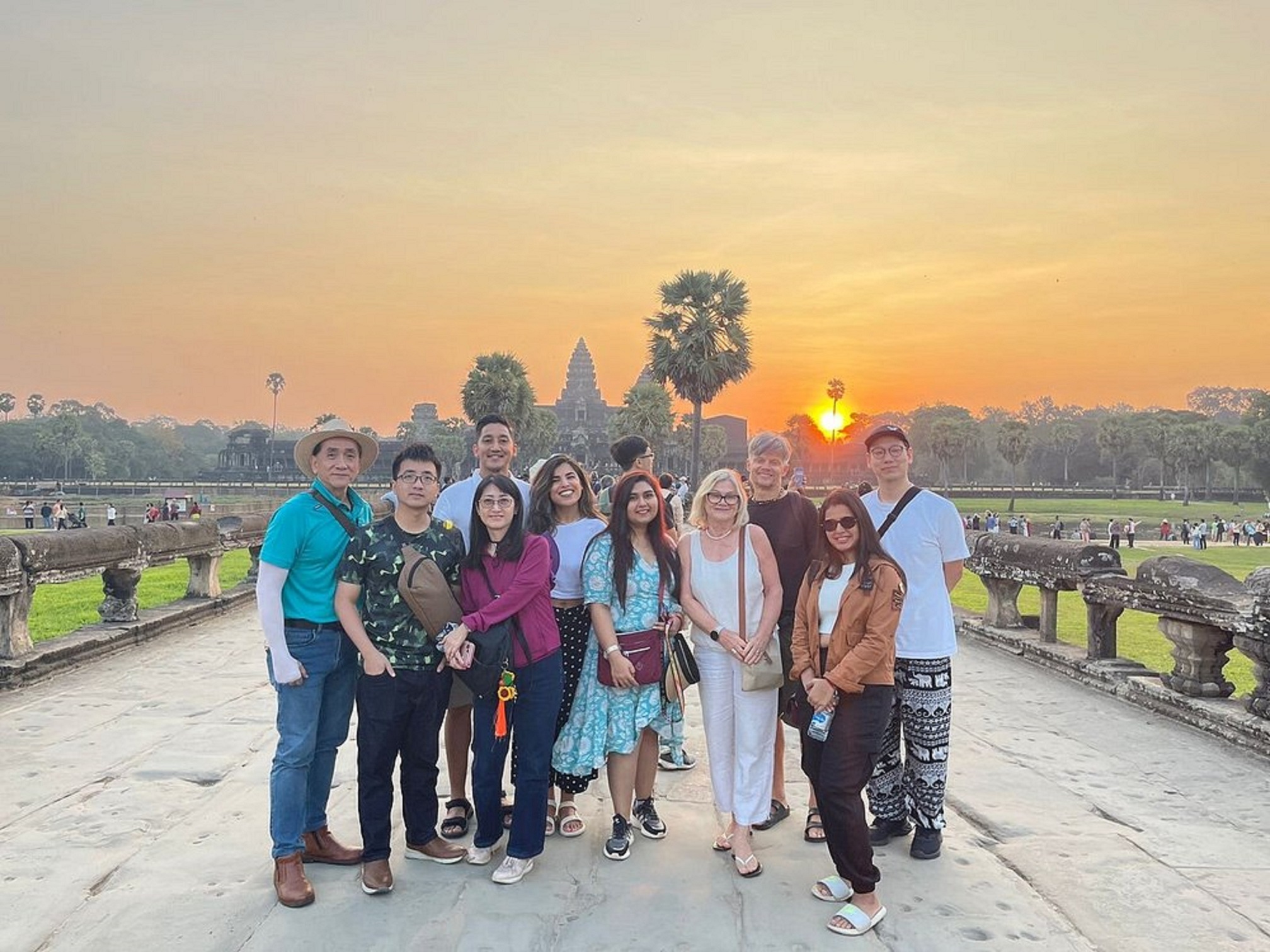
Sun Rise at Angkor Wat Small Group Day Tour from Siem Reap
Active
8h
For a full refund, cancel at least 24 hours before the scheduled departure time.
Instant confirmation
Mobile or paper ticket accepted
About this experience
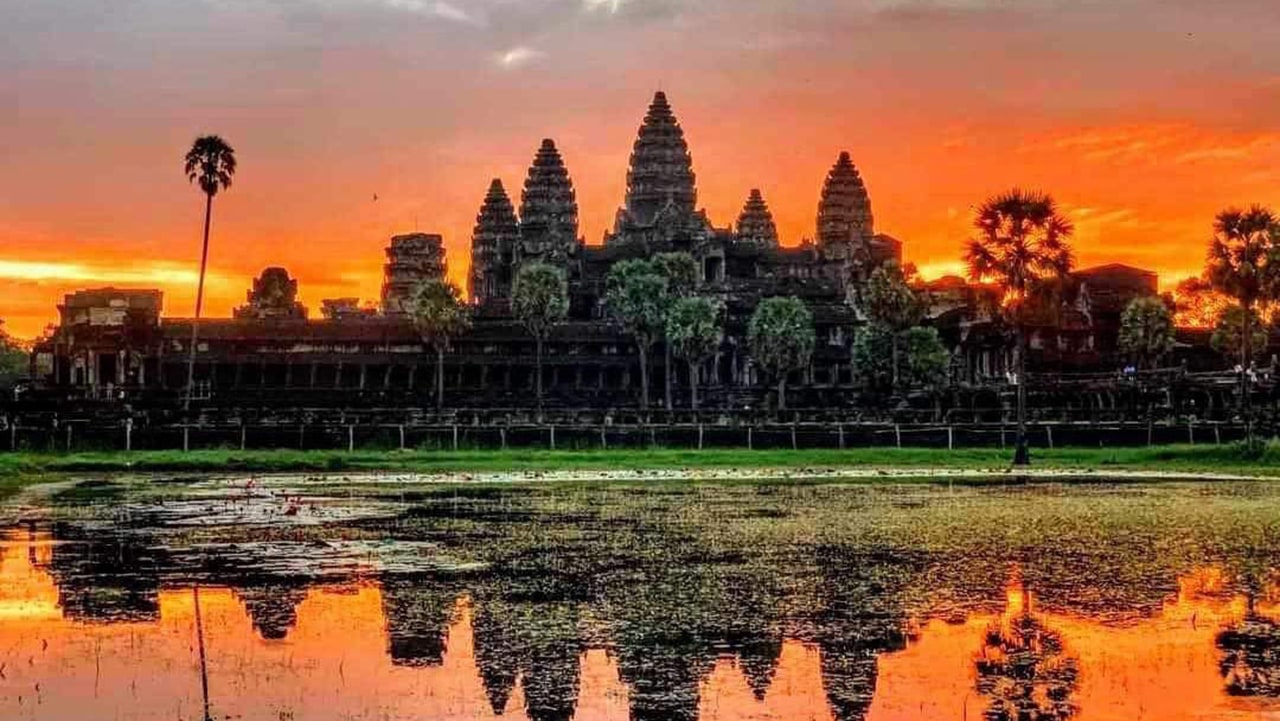
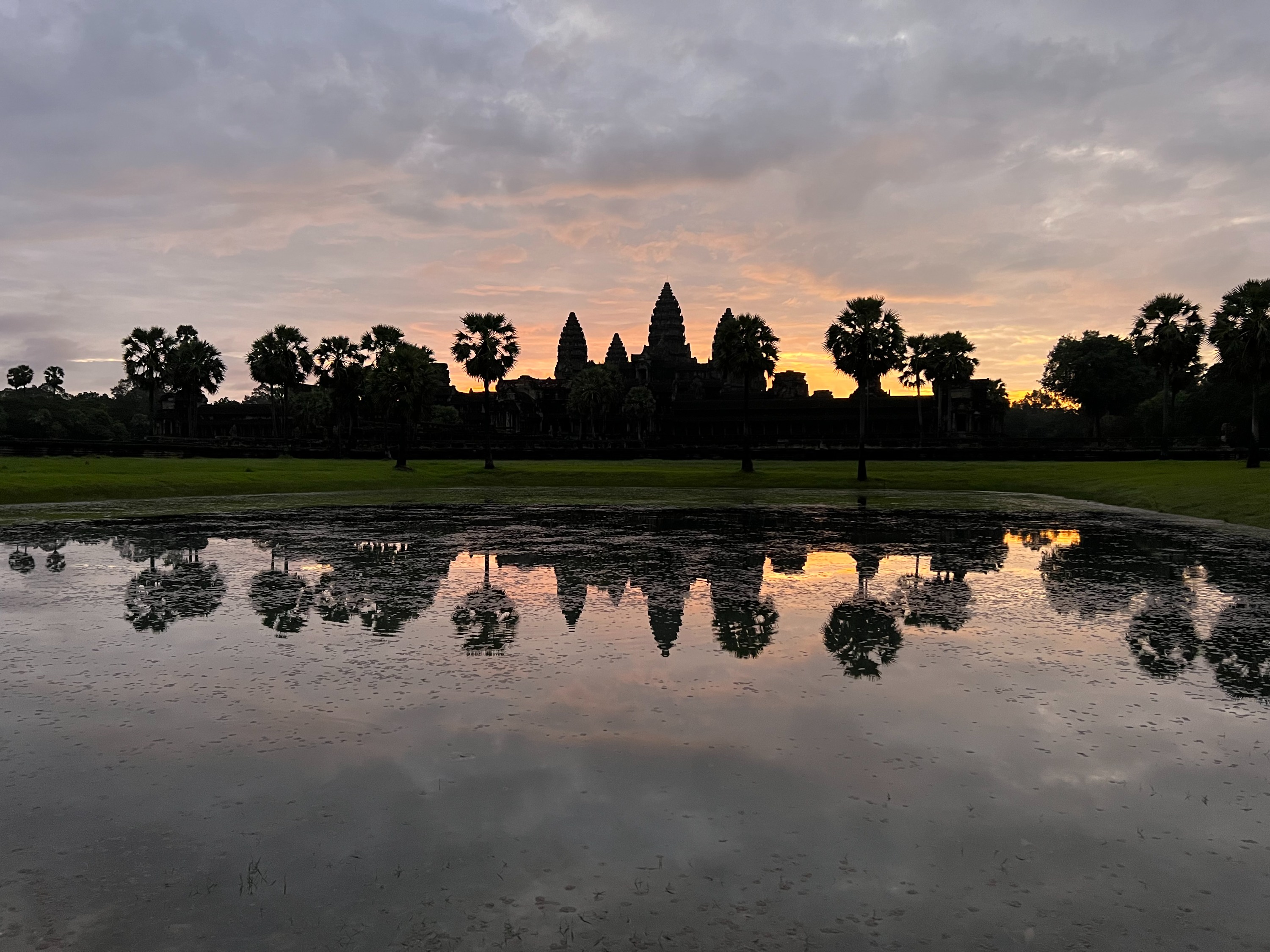
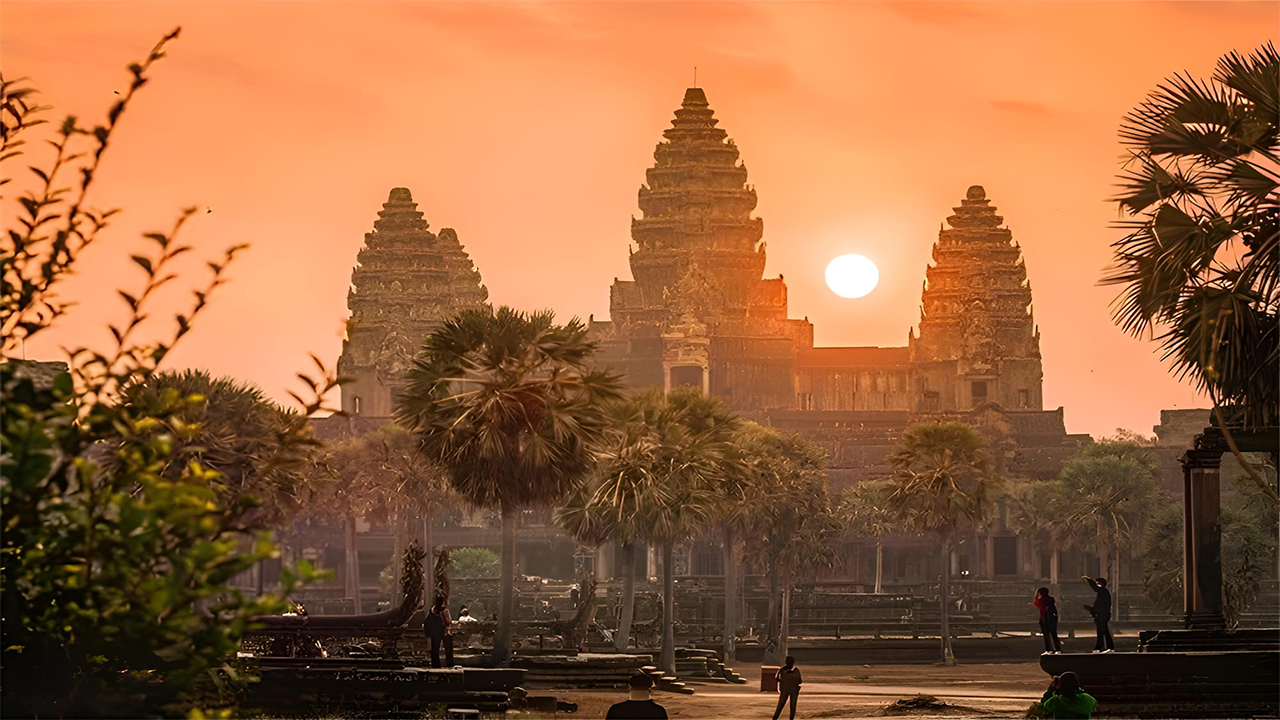
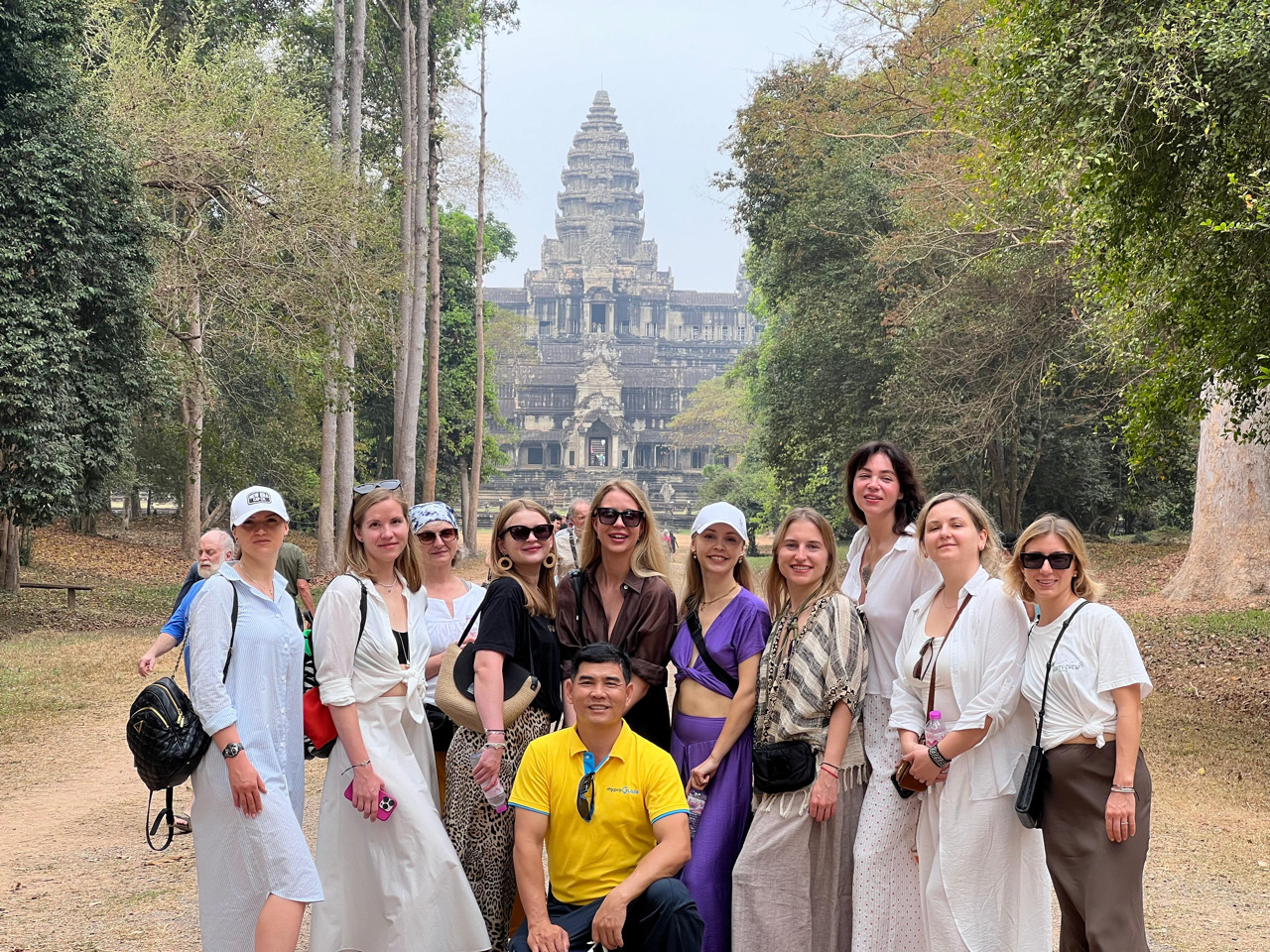
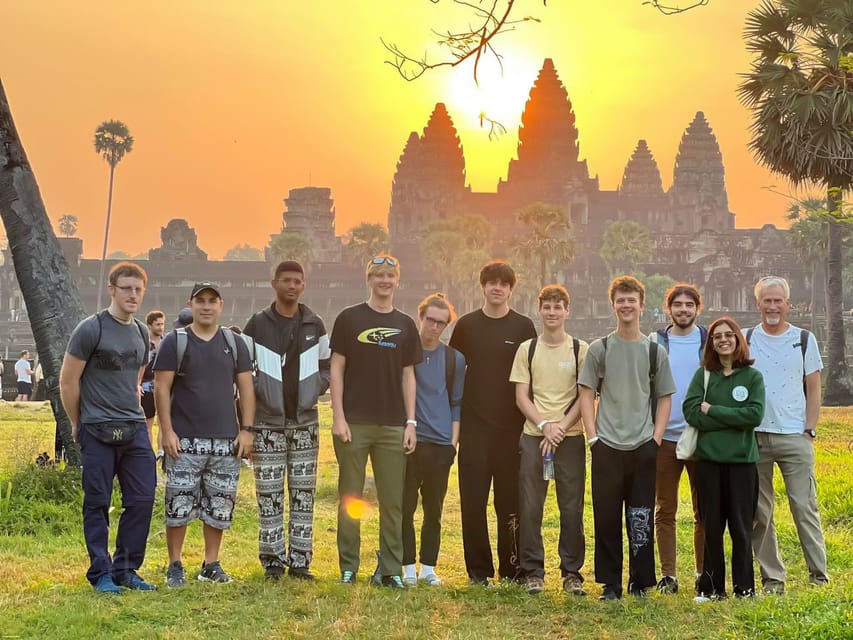
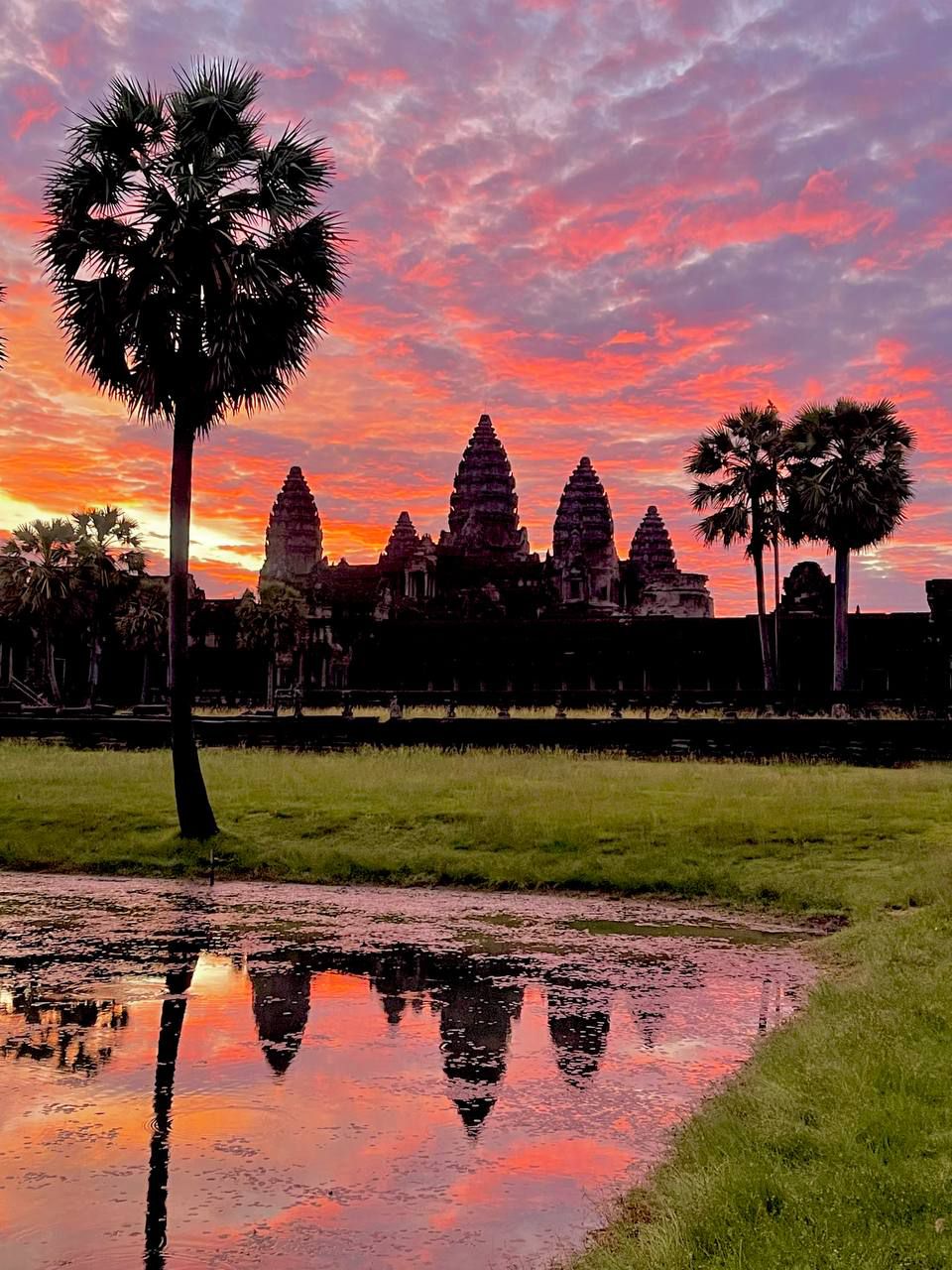
Starting before dawn, you’ll be picked up from your hotel and take a short ride to Angkor Wat. We will enter Angkor Wat in darkness from the little-visited eastern side and then creep through the Jungle Path to the ancient library pools and wait to watch Sun Rise. Angkor Wat is the world’s largest religious complex. After soaking up the atmosphere of dawn, you will wander past the longest stretch of bas-relief carvings in the world. Your guide will share with you all the history and culture. Then you will venture deep into the central chambers and up to the upper terraces of this truly great temple. After the breakfast break, you will visit the famous Jungle-enveloped Ta Prohm (Tomb Raider temple).
Next up, you move onto the southern gate of the walled city of Angkor Thom and marvel at the eerie stone heads and evocative bas-reliefs of the Bayon temple and the Terraces of the Elephants and Leper King.
• Enjoy photo opportunities
• Avoid the crowds and escape the heat
Available options
Join-Tour
Pickup included
What's included
Hotel pick up and drop off
Bottled water
Air-conditioned vehicle
English Speaking Tour Guide
Detailed itinerary
1
Stop 1
Angkor Wat is the largest religious monument in the world. It was built in the 12th century. As the best-preserved temple at the site, it’s the only one to have remained a significant religious centre since its foundation. We will enter the great temple in darkness from the little-visited eastern side. We continue our journey on foot and creep through a jungle path to the North ancient library pool where we will wait for the Sun Rise. Listen to the explanations of your expert guide, then spend time venturing into the central chambers of the temple, where your local guide will reveal the history, myths and stories depicted on the stone bas-reliefs (the longest stretch of bas-reliefs carvings in the world) then you will venture deep into the central chambers of this truly great temple. Your knowledgeable guide will ensure that your visit to Angkor Wat leaves you with a rich understanding of the history and purpose of the great temple, and also of the mighty Angkorian civilization.
2
The South Gate is one of the five gates of Angkor Thom (the Ancient Capital City of the Khmer Empire). The gate flanked by a row of 54 stone figures on each side was the entrance to the fortified city of Angkor Thom. At the height of its greatness, Angkor Thom had a population of more than one million people and was larger in size than the city of London. It is one of the most popular tourist spots in the Angkor Wat area.
3
Stop 3
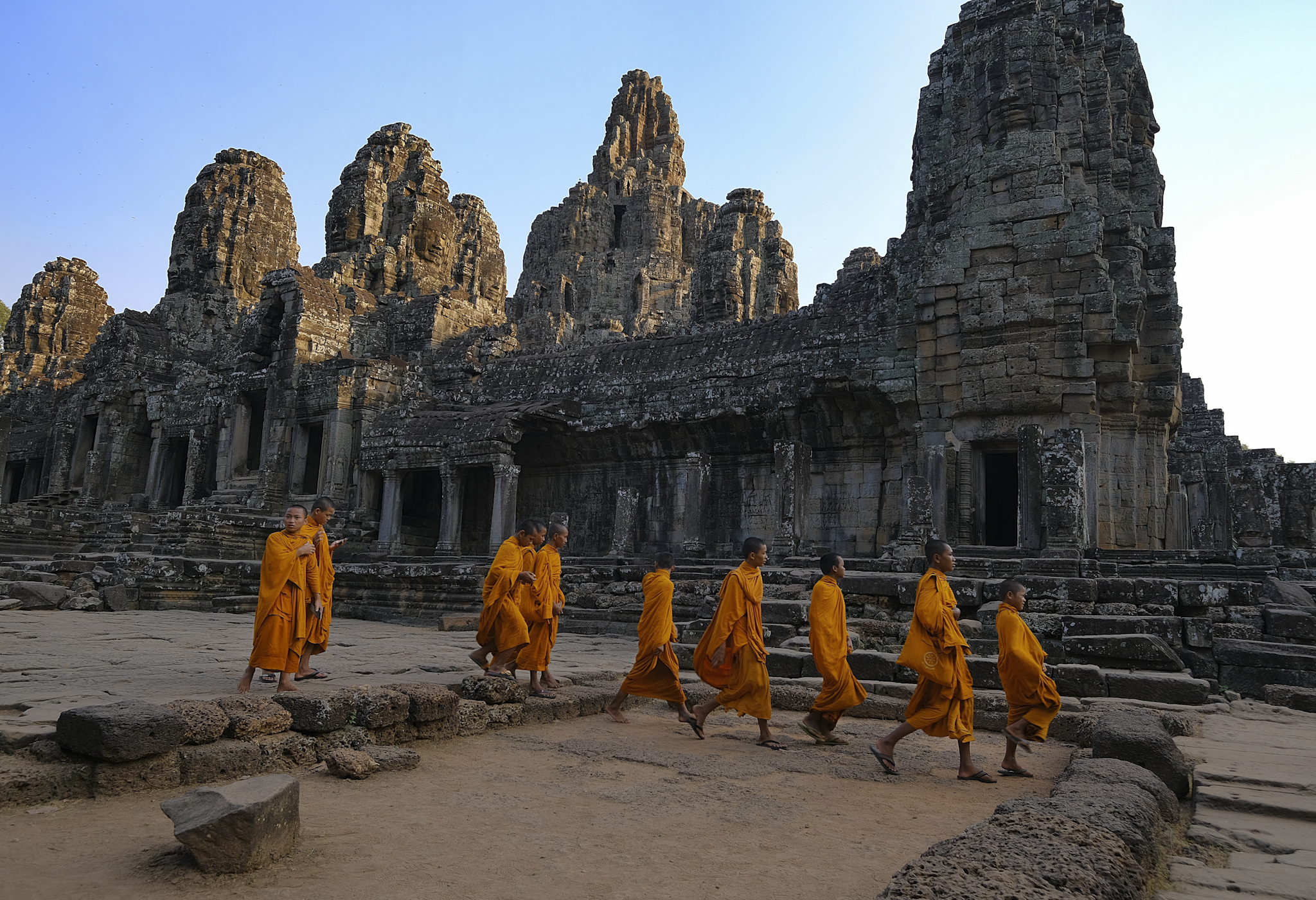
The Bayon is a richly decorated Khmer temple at Angkor in Cambodia. Built in the 13th century as the state temple of King Jayavarman VII, the Bayon stands at the centre of Jayavarman's capital. The Bayon's most distinctive feature is the multitude of serene and smiling stone faces on the many towers which jut out from the upper terrace and cluster around its central peak. You'll see its beautifully crafted central towers, covered in more than 200 enormous faces. The temple has two sets of bas-reliefs, which present a combination of mythological, historical and mundane scenes. The outer wall of the outer gallery features a series of bas-reliefs depicting historical events and scenes from the everyday life of the Angkorian Khmer. The inner gallery bas-reliefs depict mythological events.
4
Stop 4
Hidden Gem:
Your guide will take to you a place that most tourists have never seen it. Travel is the only thing you buy that makes you richer.
5
Stop 5
The famous Terrace of the Leper King. The U-shaped structure is thought by some to have been used as a royal cremation site. It was built in the 13th century under King Jayavarman VII, though its modern name derives from a 15th-century sculpture discovered at the site. The statue depicts the Hindu god Yama, the god of death.
6
Stop 6
The 350 m long Terrace of Elephants was used as a giant reviewing stand for public ceremonies and served as a base for the king's grand audience. Some local Khmer residents call it “the Ancient Khmer Stadium”. It was built in the 13th century under King Jayavarman VII.
7
Stop 7
Secret stop:
A majestic place that set the tone for the day’s adventure. Don’t listen to what they say, go to see. All journeys have secret destinations of which the travelers are unaware.
8
The jungle-enveloped Ta Prohm (Tomb raider temple)– one of the most atmospheric of all temples in Angkor. Ta Prohm was built in the 13th century. Unlike the most Angkorian temples, Ta Prohm is in much the same condition in which it was found, the photogenic and atmospheric combination of trees growing out of the ruins and the jungle surroundings have made it one of Angkor's most popular temples with visitors. UNESCO inscribed Ta Prohm on the World Heritage List in 1992. Today, it is one of the most visited complexes in Cambodia’s Angkor region. Ta Prohm was a religious temple located in the centre of the Ancient Khmer University during the 12th and 13th century.
What's not included
Admission fee - Angkor Wat
Available languages
Guide guide
EN
Reviews breakdown
Viator
5.0
3 reviews
5★
3
4★
0
3★
0
2★
0
1★
0
Tripadvisor
5.0
13 reviews
5★
13
4★
0
3★
0
2★
0
1★
0
Important information
Public transportation options are available nearby
Suitable for all physical fitness levels
Your Tour Guide will send you a Link to purchase the temple entrance e-ticket days in advance.
To enter some temples, you have to wear clothes that cover your knees and shoulders.
Please wear flat shoes that are comfortable for walking.
It's recommended that you take boxed breakfast from your hotel. So you have the opportunity to eat at a local cafe near Angkor Wat
Important notes
No need red sign ticket
About Siem Reap
Siem Reap is the vibrant gateway to the ancient Angkor temples, a UNESCO World Heritage site. This charming city offers a blend of rich history, vibrant markets, and lush landscapes, making it a must-visit destination in Cambodia.
Top Attractions
Angkor Wat
Angkor Wat is the largest religious monument in the world and a UNESCO World Heritage site. This iconic temple complex is a masterpiece of Khmer architecture and a symbol of Cambodia.
Historical
Half to full day
USD 37 for 3-day pass
Angkor Thom
Angkor Thom is a walled city and the last capital of the Khmer Empire. It features several impressive temples, including the Bayon Temple with its famous smiling faces.
Historical
Half to full day
USD 37 for 3-day pass
Ta Prohm
Ta Prohm is a temple complex overgrown by jungle, featuring a unique blend of nature and architecture. It was famously used as a filming location for the movie 'Tomb Raider'.
Historical
1-2 hours
USD 37 for 3-day pass
Pub Street
Pub Street is the heart of Siem Reap's nightlife, offering a vibrant mix of bars, restaurants, and street food vendors. It's a great place to experience the city's lively atmosphere.
Entertainment
Evening
Free to explore, budget for food and drinks
Siem Reap Night Market
The Siem Reap Night Market is a bustling market offering a variety of local crafts, souvenirs, and street food. It's a great place to shop for unique gifts and experience local culture.
Shopping
1-2 hours
Budget to moderate
Must-Try Local Dishes
Amok
A creamy, coconut-based curry with fish, chicken, or tofu, steamed in banana leaves. It's a traditional Khmer dish with a unique flavor.
Main dish
Vegetarian options available
Nom Banh Chok
A popular breakfast dish consisting of rice noodles topped with a fish-based green curry gravy and fresh vegetables.
Breakfast
Vegetarian options available
Bai Sach Chrouk
Grilled pork served with broken rice and pickled vegetables. It's a popular breakfast dish in Cambodia.
Breakfast
Contains meat
Lok Lak
A stir-fried beef dish with a tangy lime and pepper sauce, served with rice and fresh vegetables.
Main dish
Contains meat
Popular Activities
Hiking in the Angkor Archaeological Park
Exploring the bamboo train in Battambang
Visiting spas and wellness centers
Enjoying a traditional Khmer massage
Exploring temples and historical sites
Attending traditional dance performances
Boat tours on Tonlé Sap Lake
Swimming in waterfalls
Best Time to Visit
November to February
The best time to visit Siem Reap is during the dry season when the weather is pleasant and ideal for exploring the temples. The cooler temperatures make it comfortable for long days of sightseeing.
20-30°C
68-86°F
Practical Information
Language
- Official: Khmer
- Widely spoken: English
- English: Moderately spoken in tourist areas
Currency
Cambodian Riel (KHR)
Time Zone
Indochina Time (ICT), GMT+7
Electricity
230VV, 50HzHz
Safety Information
Overall Safety Rating: Generally safe
Siem Reap is generally safe for tourists, but petty crime and scams can occur. Exercise caution and be aware of your surroundings.
Important Precautions:
- • Be cautious of scams and overcharging.
- • Avoid walking alone at night in isolated areas.
- • Use reputable tour operators and transportation services.
Getting there
By air
- Siem Reap International Airport • 5 km from city center
By bus
Siem Reap Virak Buntham Express Terminal, Siem Reap Giant Ibis Bus Terminal
Getting around
Public transport
Tuk-tuks are the most popular and affordable mode of transport in Siem Reap. They are widely available and can be negotiated for short or long trips.
Taxis
Available • Apps: PassApp, Grab
Rentals
Car, Bike, Scooter
Neighborhoods
Wat Bo
Wat Damnak
Sivatha
Day trips
Battambang
150 km from Siem Reap • Full day
Battambang is a charming colonial town known for its well-preserved French architecture, bamboo train, and nearby temples. It's a great destination for a day trip from Siem Reap.
Kampong Phluk
16 km from Siem Reap • Half day
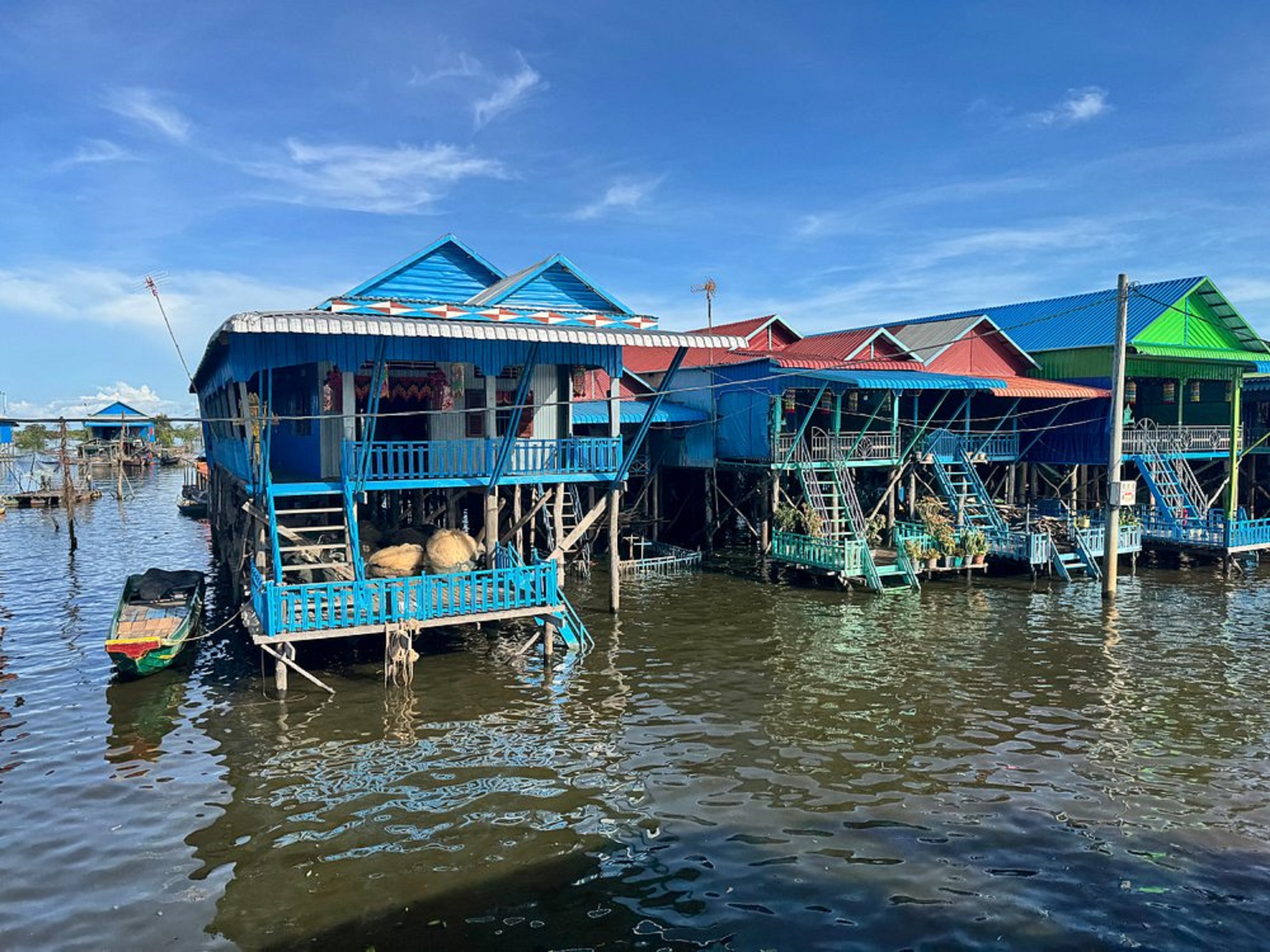
Kampong Phluk is a floating village on the edge of the Tonlé Sap Lake. It offers a unique glimpse into the lives of the local community and the stunning natural beauty of the area.
Kbal Spean
25 km from Siem Reap • Half day
Kbal Spean is a remote archaeological site featuring ancient carvings and a beautiful river setting. It's a great destination for those looking to explore off-the-beaten-path attractions.
Festivals
Khmer New Year (Choul Chnam Thmey) • April 13-15 (dates vary)
Bon Om Touk (Water Festival) • November (dates vary)
Angkor Photo Festival • December (dates vary)
Pro tips
- Hire a local guide for the Angkor Archaeological Park to gain a deeper understanding of the temples' history and significance.
- Visit the temples early in the morning or late in the afternoon to avoid crowds and the heat.
- Try local street food like nom banh chok and bai sach chrouk for an authentic culinary experience.
- Bargain for better prices at markets and street stalls, but do so respectfully and with a smile.
- Use a map app like Google Maps for navigation, as street signs can be limited and confusing.
From $25
per person
Price varies by option
Secure booking
Free cancellation available
Instant confirmation