Exclusive 2-Day Private Tour American Landing Beaches
Active
18h
All sales are final. No refund is available for cancellations.
Manual confirmation
Mobile or paper ticket accepted
About this experience
Treat yourselves to a thorough 2-day tour of the American Landing Beaches.
This tour is done over 2 consecutive days and will bring to life the achievements of the American troops in Normandy on June 6th, 1944.
It is possible to customize this tour if you desire, just let us know upon booking.
Available options
Exclusive 2-Day Private Tour American Landing Beaches
Pickup included
What's included
Private transportation
Bottled water
Customized itinerary
Air-conditioned vehicle
2 museums are included in this tour
private guide
Detailed itinerary
1
Stop 1
Start your tour in Sainte Mere Eglise. The town played a significant part in the World War II Normandy landings because of its position in the middle of route N13, which the Germans would have used to counterattack Allied landings on Utah and Omaha Beaches. In the early morning of 6 June 1944, mixed units of the U.S. 82nd Airborne and U.S. 101st Airborne Divisions occupied the town in Mission Boston, making it one of the first towns liberated in the invasion.
2
Fought largely by paratroopers and glidermen from the 82nd Airborne Division, the battle to secure the bridge at La Fière is described as “probably the bloodiest small unit struggle in the experience of American arms.” Victory at La Fière cost more than 250 American lives, and yet the fateful engagement’s story is largely untold.
3
Stop 3
Sainte-Mère-Eglise’s Airborne Museum is one of the oldest World War II museums of Lower-Normandy. It tackles June 6 1944’s D-Day, and focuses on the American paratroopers’ role in the Battle of Normandy, and in the overall conflict.
4
Utah Beach, the westernmost beach of the five landing areas of the Normandy Invasion of World War II. It was assaulted on June 6, 1944 (D-Day of the invasion), by elements of the U.S. 4th Infantry Division and was taken with relatively few casualties.
5
t is home to a church that was used by 2 US Army Medics as an aide station during the Battle of Normandy in World War II. Robert Wright and Ken Moore of the 101st Airborne treated a mix of 80 injured American and German wounded soldiers and a child. Blood stains are still visible on the pews. Two stained glass windows commemorate the 101st Airborne Division, the first one is dedicated to the two medics of the 2nd Battalion of the 501st Parachute Infantry Regiment (101st Airborne Division). The second one honoured the American parachutists.
6
Stop 6
La Cambe is a Second World War German military war grave cemetery, located close to the American landing beach of Omaha, and 25.5 km (15.8 mi) north west of Bayeux in Normandy, France. It is the largest German war cemetery in Normandy and contains the remains of over 21,200 German military personnel.
7
Stop 7
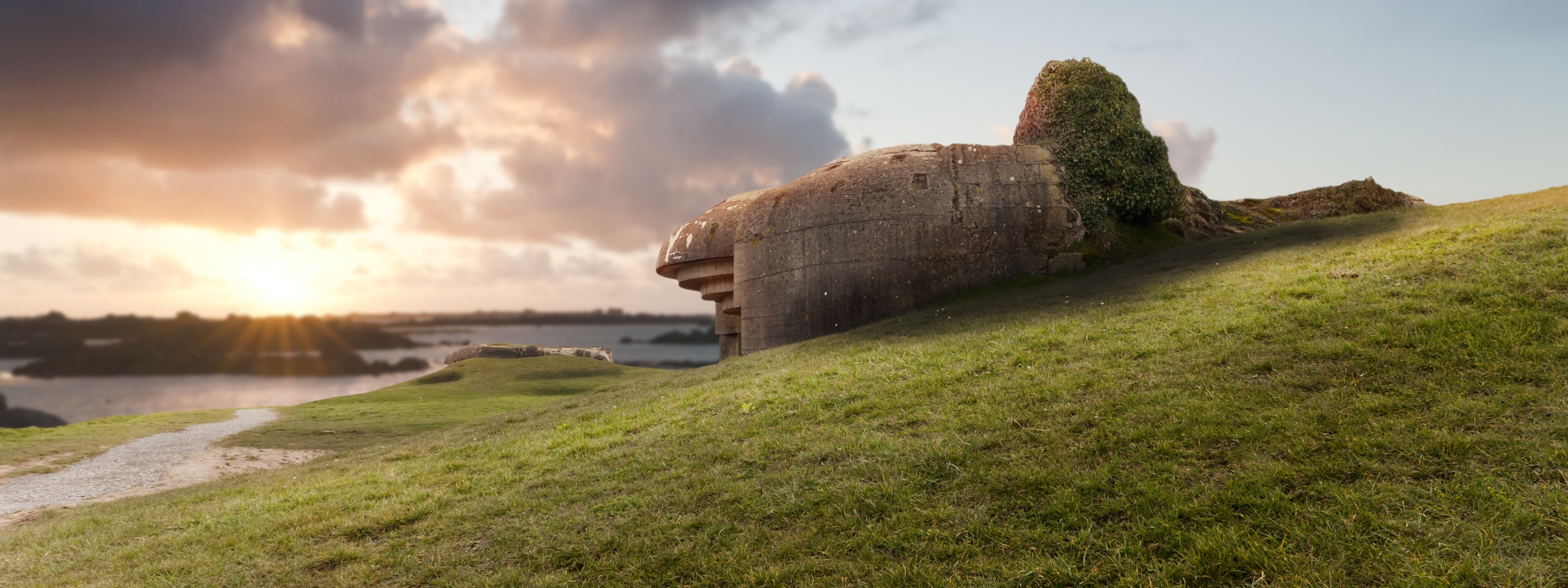
Pointe du Hoc, a prominent position along the coast of Normandy, was a focal point of the amphibious assault by U.S. forces during the early morning hours of D-Day, 6 June 1944. The cliff top (sometimes referred to as Pointe du Hoe) is located between Utah and Omaha Beaches and sits atop overhanging cliffs up to 100 feet in height. The careful and thorough planning of the Normandy invasion determined that several key missions would require painstakingly accurate execution in order for the invasion to go as planned, and one of those missions was the capture of Pointe du Hoc. As such, Allied planners named Pointe du Hoc one of the most dangerous German defensive positions on the Norman coast.
8
Stop 8
On June 6, 1944, the Allies invaded German-occupied France with the Normandy landings.[1] "Omaha" refers to an 8-kilometer (5 mi) section of the coast of Normandy, France, facing the English Channel, from east of Sainte-Honorine-des-Pertes to west of Vierville-sur-Mer on the right bank of the Douve river estuary. Landings here were necessary to link the British landings to the east at Gold with the American landing to the west at Utah, thus providing a continuous lodgement on the Normandy coast of the Baie de Seine (Bay of the Seine river).
9
Located 500 meters from the American Cemetery of Colleville-sur-Mer and the famous beach of Omaha Beach, OVERLORD MUSEUM makes you discover a unique collection of more than 10,000 pieces, which traces the history of the Battle of Normandy until the liberation of Paris. The 6 armies present are staged there thanks to life-size reconstructions, associating personal effects of soldiers and more than 40 vehicles, tanks and guns.
10
Stop 10
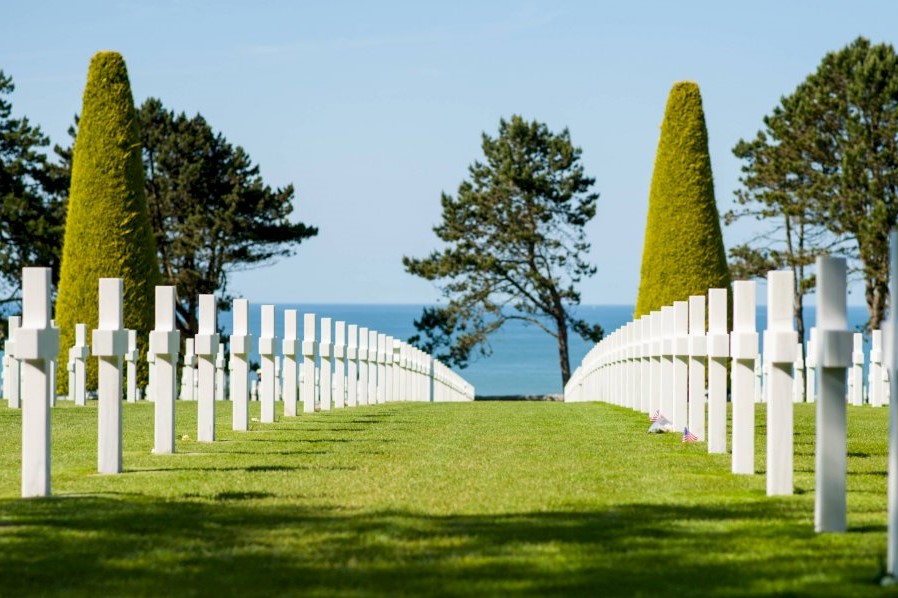
Located in the heart of the D-Day Landing beaches, the Normandy American Cemetery and Memorial in Colleville-sur-Mer overlooks Omaha Beach.
Not to be missed during your tour of the Normandy Landing beaches, the cemetery is home to the graves of 9,389 soldiers, fallen in combat, a chapel, a memorial and the Garden of the Missing. The visitor centre pays tribute to these soldiers and to their bravery during the successful completion of Operation Overlord which led to the liberation of Europe.
11
The Wn 62 is the centerpiece of the German defensive system in the Colleville-sur-Mer sector, and in itself symbolizes the fierce German resistance that almost jeopardized the American landings on Omaha.
Along with Pointe du Hoc, Omaha was the other D-Day sector to see the Germans outflank the Allied attackers at dawn on June 6. Opposite the Easy Red sector, framing a 750m-long slope, Wn 62 controlled access to the 43m-high plateau set back 200m from the beach.
What's not included
on own
Gratuities
Available languages
Guide guide
EN
Written guide
EN
Important information
Specialized infant seats are available
Travelers should have at least a moderate level of physical fitness
About Bayeux
Bayeux is a charming town in Normandy, France, famous for the Bayeux Tapestry, a medieval embroidery that tells the story of the Norman Conquest of England. The town's well-preserved architecture, rich history, and proximity to the D-Day landing beaches make it a compelling destination for history enthusiasts and cultural travelers.
Top Attractions
Bayeux Tapestry
A 70-meter-long embroidered cloth depicting the events leading up to the Norman Conquest of England in 1066.
Historical
1-2 hours
€12
Bayeux Cathedral
A stunning Gothic cathedral with beautiful stained glass windows and a rich history.
Religious
30-60 minutes
Free (donations welcome)
D-Day Landing Beaches
The site of the Allied landings on June 6, 1944, during World War II.
Historical
Half to full day
Free (museums may charge)
Bayeux War Cemetery
A Commonwealth war cemetery containing the graves of soldiers who died in the D-Day landings and the Battle of Normandy.
Historical
30-60 minutes
Free
Bayeux Museum of Battle of Normandy
A museum dedicated to the Battle of Normandy, with exhibits on the D-Day landings and the subsequent campaign.
Historical
1-2 hours
€8.50
Must-Try Local Dishes
Moules à la Crème Normande
Mussels cooked in a creamy sauce with Norman butter and cider.
Main
Contains seafood and dairy
Tarte Normande
A traditional apple tart with a caramelized top, often served with cream.
Dessert
Contains gluten and dairy
Camembert
A famous Norman cheese made from cow's milk, with a rich and creamy flavor.
Dairy
Contains dairy
Cidre
Norman cider, made from apples grown in the region, often served with meals.
Drink
Alcoholic beverage
Popular Activities
Hiking along the Normandy coastline
Cycling through the countryside
Kayaking on the River Aure
Strolling along the River Aure
Visiting local cider houses
Enjoying the peaceful town center
Visiting the Bayeux Tapestry
Exploring Bayeux Cathedral
Best Time to Visit
June to August
Summer is the peak tourist season with warm weather and numerous festivals. It's the best time for outdoor activities and visiting the D-Day beaches.
15°C to 25°C
59°F to 77°F
Practical Information
Language
- Official: French
- Widely spoken: English, Spanish, German
- English: Moderately spoken
Currency
Euro (EUR)
Time Zone
GMT+1 (CET), GMT+2 (CEST) during daylight saving time
Electricity
230VV, 50HzHz
Safety Information
Overall Safety Rating: Generally safe
Bayeux is generally safe, with low crime rates. However, as with any tourist destination, it's important to be aware of your surroundings and take basic precautions.
Important Precautions:
- • Keep valuables secure
- • Be cautious of pickpockets in crowded areas
- • Use licensed taxis
Getting there
By air
- Normandy-Caen Carpiquet Airport • 25 km from Bayeux
- Deauville-Normandy Airport • 80 km from Bayeux
By train
Bayeux Train Station
By bus
Bayeux Bus Station
Getting around
Public transport
The local bus system is affordable and covers most of the town and nearby areas.
Taxis
Available • Apps:
Rentals
Car, Bike
Neighborhoods
Town Center
Saint-Lô Street
Port de Bayeux
Day trips
Caen
30 km • Half day to full day
A historic city with a rich past, known for its castle, museums, and memorials.
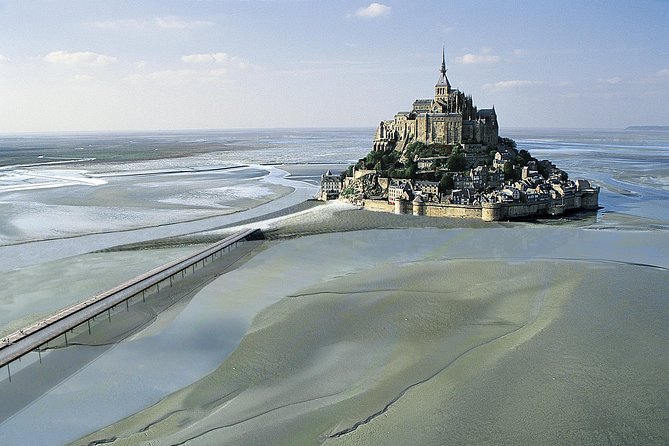
Mont Saint-Michel
100 km • Full day
A stunning island commune with a medieval abbey, known for its unique architecture and tidal surroundings.
Arromanches-les-Bains
15 km • Half day
A coastal town known for its role in the D-Day landings and its museum dedicated to the Normandy landings.
Festivals
D-Day Commemorations • June 6th
Bayeux International Arts Festival • July
Medieval Festival • August
Pro tips
- Visit the Bayeux Tapestry early in the morning to avoid crowds
- Rent a car for flexibility in visiting the D-Day beaches and other nearby attractions
- Try local specialties like Norman cider and Camembert cheese
- Explore the town's medieval streets and hidden courtyards
- Check for local festivals and events during your visit
From $25
per person
Price varies by option
Secure booking
Free cancellation available