Private Normandy Tour Canadian D-Day Juno Beach
Active
8h
All sales are final. No refund is available for cancellations.
Manual confirmation
Mobile or paper ticket accepted
About this experience
Specifically tailored to Canadian visitors in Normandy, this is a thorough tour of the landings of the Canadians at Juno Beach on DDay. We also visit a unique example of the Atlantik Wall and Port Winston "mulberry B" at Arromanches. A museum is included in this tour.
Transport in a luxury minivan Mercedes V-Class with knowledgeable driver-guide. We guarantee professionalism, patience, and a “people-first” attitude.
Available options
Private Normandy Tour Canadian D-Day Juno Beach
Pickup included
What's included
Tickets to Juno Beach Center Museum
Private transportation
Bottled water
Private guide
Air-conditioned vehicle
Detailed itinerary
1
A major constituent of the Atlantic Wall, the Longues-sur-Mer artillery battery includes a firing command post and four casemates, each housing a 150mm artillery piece. Located in the heart of the Allied assault zone, on the top of a cliff overlooking the English Channel, the battery played a strategic role during the Allied Landings on the 6th of June 1944.
2
Mulberry "B" (British) was the harbour assembled on Gold Beach at Arromanches for use by the British and Canadian invasion forces.
3
Juno or Juno Beach was one of five beaches of the Allied invasion of German-occupied France in the Normandy landings on 6 June 1944 during the Second World War. The beach spanned from Courseulles, a village just east of the British beach Gold, to Saint-Aubin-sur-Mer, and just west of the British beach Sword.
Courseulles is our first stop on Juno.
4
Stop 4
The Juno Beach Centre is the only Canadian Museum on the D-Day Beaches. Located on the very beach where Canadian troops landed on June 6, 1944, museum is an ideal location to discover Canada’s participation in the military operations of the Second World War as well as the efforts made on the home front. The Centre is also a window onto Canada today. The “Explore Juno as a Family” youth circuit makes visiting as a family more engaging and accessible.
5
This is our second stop on Juno Beach.
The Queen’s Own Rifles land at Bernières. Hidden German cannon and machine gun positions rake the beach. The QOR makes a 300 yard charge from the shore to the seawall under fire. Only a few men of the first company survive. Reinforcements from Le Regiment de la Chaudière finally overwhelm the German defences.
6
Stop 6
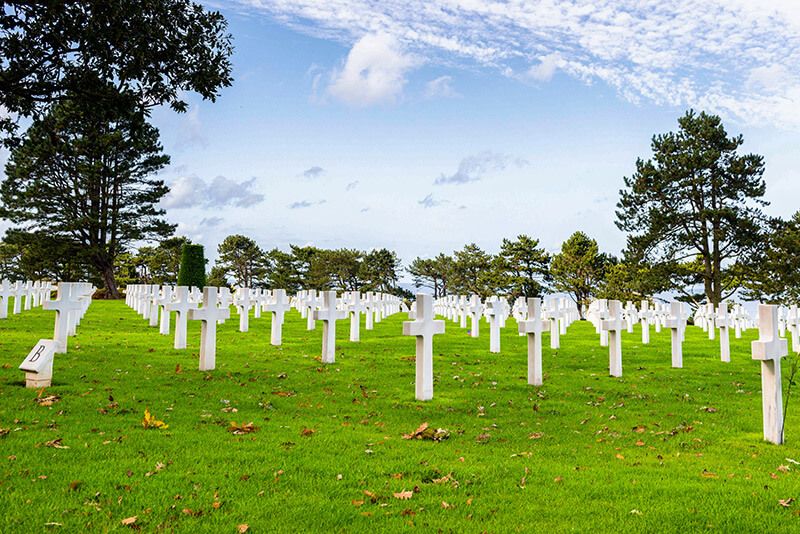
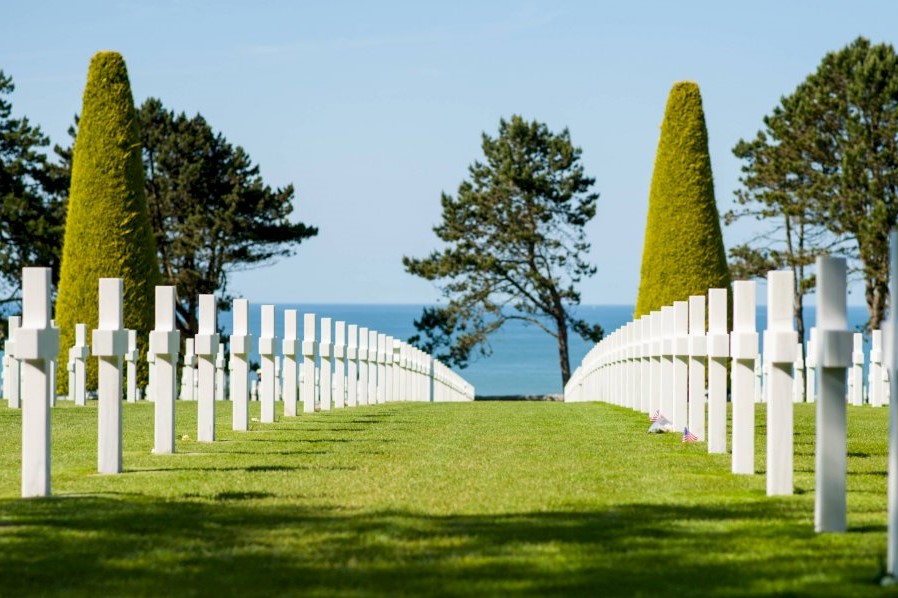
The cemetery at Bény-sur-Mer, located a few miles from Juno Beach, is one of two Canadian military cemeteries in Normandy. In total they harbour 4.800 graves of soldiers killed during the fighting in the summer of 1944. The tombstones demonstrate the importance of Canadian participation in the liberation of France and Northwestern Europe.
7
On the 7th of June, 1944, SS Panzergrenadierregiment headquarters, led by the SS SS and Kart Meyer belonging to the 12th SS Panzer-Division Hitlerjugend counterattack towards the beaches and settled in the abbey in order to take advantage of the point of view offered by constructions. Indeed, from this position, the Germans can observe a large part of the adverse movements in the sector and Kurt “Panzer” Meyer directs his counter-attack which pushes back the Canadians of the 9th brigade of the 3rd infantry division, supported by the Tanks of the 27th armored regiment Sherbrooke Fusilier, at the height of Buron.
S.S. soldiers, determined not to retreat hold this position for a full month. Several Canadian soldiers are taken prisoner during this period and are questioned in the abbey domain. The fighting, particularly violent in this sector, led the soldiers to carry out acts of extreme savagery: within a week of disembarkation, 27 Canadians were coldly executed near the abbey.
What's not included
Lunch
Gratuities
Available languages
Guide guide
EN
Reviews breakdown
Viator
5.0
1 reviews
5★
1
4★
0
3★
0
2★
0
1★
0
Tripadvisor
5.0
1 reviews
5★
1
4★
0
3★
0
2★
0
1★
0
Important information
Suitable for all physical fitness levels
About Bayeux
Bayeux is a charming town in Normandy, France, famous for the Bayeux Tapestry, a medieval embroidery that tells the story of the Norman Conquest of England. The town's well-preserved architecture, rich history, and proximity to the D-Day landing beaches make it a compelling destination for history enthusiasts and cultural travelers.
Top Attractions
Bayeux Tapestry
A 70-meter-long embroidered cloth depicting the events leading up to the Norman Conquest of England in 1066.
Historical
1-2 hours
€12
Bayeux Cathedral
A stunning Gothic cathedral with beautiful stained glass windows and a rich history.
Religious
30-60 minutes
Free (donations welcome)
D-Day Landing Beaches
The site of the Allied landings on June 6, 1944, during World War II.
Historical
Half to full day
Free (museums may charge)
Bayeux War Cemetery
A Commonwealth war cemetery containing the graves of soldiers who died in the D-Day landings and the Battle of Normandy.
Historical
30-60 minutes
Free
Bayeux Museum of Battle of Normandy
A museum dedicated to the Battle of Normandy, with exhibits on the D-Day landings and the subsequent campaign.
Historical
1-2 hours
€8.50
Must-Try Local Dishes
Moules à la Crème Normande
Mussels cooked in a creamy sauce with Norman butter and cider.
Main
Contains seafood and dairy
Tarte Normande
A traditional apple tart with a caramelized top, often served with cream.
Dessert
Contains gluten and dairy
Camembert
A famous Norman cheese made from cow's milk, with a rich and creamy flavor.
Dairy
Contains dairy
Cidre
Norman cider, made from apples grown in the region, often served with meals.
Drink
Alcoholic beverage
Popular Activities
Hiking along the Normandy coastline
Cycling through the countryside
Kayaking on the River Aure
Strolling along the River Aure
Visiting local cider houses
Enjoying the peaceful town center
Visiting the Bayeux Tapestry
Exploring Bayeux Cathedral
Best Time to Visit
June to August
Summer is the peak tourist season with warm weather and numerous festivals. It's the best time for outdoor activities and visiting the D-Day beaches.
15°C to 25°C
59°F to 77°F
Practical Information
Language
- Official: French
- Widely spoken: English, Spanish, German
- English: Moderately spoken
Currency
Euro (EUR)
Time Zone
GMT+1 (CET), GMT+2 (CEST) during daylight saving time
Electricity
230VV, 50HzHz
Safety Information
Overall Safety Rating: Generally safe
Bayeux is generally safe, with low crime rates. However, as with any tourist destination, it's important to be aware of your surroundings and take basic precautions.
Important Precautions:
- • Keep valuables secure
- • Be cautious of pickpockets in crowded areas
- • Use licensed taxis
Getting there
By air
- Normandy-Caen Carpiquet Airport • 25 km from Bayeux
- Deauville-Normandy Airport • 80 km from Bayeux
By train
Bayeux Train Station
By bus
Bayeux Bus Station
Getting around
Public transport
The local bus system is affordable and covers most of the town and nearby areas.
Taxis
Available • Apps:
Rentals
Car, Bike
Neighborhoods
Town Center
Saint-Lô Street
Port de Bayeux
Day trips
Caen
30 km • Half day to full day
A historic city with a rich past, known for its castle, museums, and memorials.
Mont Saint-Michel
100 km • Full day
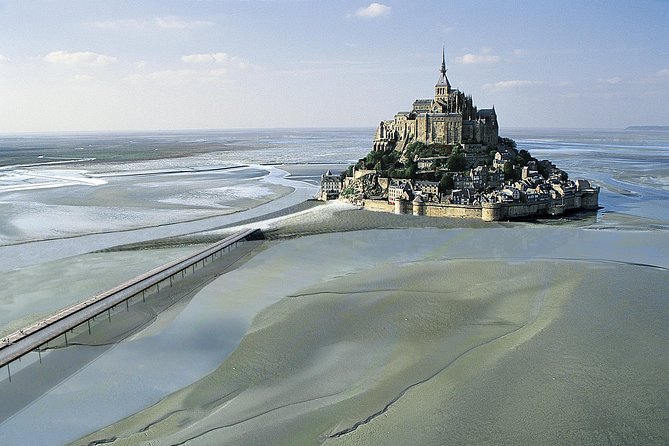
A stunning island commune with a medieval abbey, known for its unique architecture and tidal surroundings.
Arromanches-les-Bains
15 km • Half day
A coastal town known for its role in the D-Day landings and its museum dedicated to the Normandy landings.
Festivals
D-Day Commemorations • June 6th
Bayeux International Arts Festival • July
Medieval Festival • August
Pro tips
- Visit the Bayeux Tapestry early in the morning to avoid crowds
- Rent a car for flexibility in visiting the D-Day beaches and other nearby attractions
- Try local specialties like Norman cider and Camembert cheese
- Explore the town's medieval streets and hidden courtyards
- Check for local festivals and events during your visit
From $25
per person
Price varies by option
Secure booking
Free cancellation available