Anuradhapura ancient city tour with Travandgo tours
Active
4h - 6h
For a full refund, cancel at least 24 hours before the scheduled departure time.
Manual confirmation
Mobile or paper ticket accepted
About this experience
What makes us unique is we give our best service for our guests because we rely on on good recommendations and user friendly guiding method. we have done so many private tours and so many round tours in Sri Lanka so don't hesitate to book us because you are going to miss a lifetime opportunity.
Available options
Anuradhapura ancient city tour with Travandgo tours
Pickup included
What's included
Air-conditioned vehicle
Parking Fees
Detailed itinerary
1
The Meghagiri Vihara is now commonly known as Isurumuniya Vihara or Isurumuniya and lies near Tissa Wewa of Anuradhapura. But the original Isurumuni Vihara is located few hundred metres away is now called Vessagiri Vihara. When this viharaya was discovered it would have been thought it to be the Isurumuniya mentioned in ancient texts even though no inscription’s has been found. Later when archaeologists found the real Isurumuni Viharaya few hundred meters away (with inscriptions identifying its name), the name Isurumuniya was already taken and and the site was called Vessagiriya.
2
Vessagiriya is located few hundred meters left to the current Isurumuniya on the old Anuradhapura-a-Kurunegala road. This temple complex is located in and around 3 beautiful bolder formations spread across a large area in front of the Tissa Weva. On one these is a remains of a dagaba.
Remains of 23 caves with drip ledges which the monks used can be seen on two of the rock formations. Remains of many buildings had been found from around the site, among which there were remains of an image house (pilima geya), dagoba and refectory (monk’s dining room). Bricks recovered from the dagoba had Sinhalese characters belonging to the 10th and 11th centuries.
3
After bringing Buddhism to Sri Lanka by Mahinda Thero in 250 BC Emperor Asoka in India sent his daughter Theri Sanghamitta to the island with a branch of the Sacred Bodhi obtained from the main stem of the bodhi tree in Bodh Gaya under which Buddha attained enlightenment. King Tissa received the sapling and planted it at the present site in 249 BC. Taking this information to account today (in 2022) the Sri Maha Bodhi tree is exactly 2272 years old. Thus this tree is considered the oldest living tree in world in the recorded history.
4
Mirisawetiya Dagaba has been built by King Dutugamunu (161-137 BC) and this belongs to Mahavihara Complex. King Dutugamunu is the great king who defeated the Tamil invaders who ruled the country for 30 years and brought the country under one ruler.
On the seventh day of the re-establishment of Anuradhapura as the Capital of Lanka after defeating Elara, the Indian invader who ruled Anuradhapura for 55 years, the King proceeded to the Tissa Wewa followed by a state retinue to celebrate an aquatic festival maintaining a custom observed by his predecessors.Kings attire and his imperial sceptre (kunta) which had a scared relic of Buddha inside, was kept at a place close the Tissa Wewa. When he returned to his surprise the sceptre was it was stuck to the ground and no one could retrieve it. So the king seeing this miracle decided to erect a stupa on that spot to enshrine the sceptre itself.
5
Stop 5
The Ruwanweli Maha Seya, also known as the Mahathupa (the Great Thupa) is a stupa (a hemispherical structure containing relics) in Anuradhapura, Sri Lanka. Two quarts or one Dona of the Buddha's relics are enshrined in the stupa, making it the largest collection of his relics anywhere.[1] It was built by Sinhalese King Dutugemunu in c. 140 B.C., who became king of Sri Lanka after a war in which the Chola King Elāra (Ellalan) was defeated. It is also known as Swarnamali Seya, Svaṇṇamāli Mahaceti (in Pali) and Rathnamali Seya.
6
his is the first stupa to be built in the country after the introduction of Buddhism to Sri Lanka. Built in the time of king Devamnampiyatissa (250BC – 210BC) this was a stupa as well as an Aramic complex (monastery). “As Contemporary with Asoka ” (says Mr. Fergusson, in his History of Indian and Eastern Architecture ), “it belongs to the most interesting period of Buddhist history, and is older, or, at least, as old as anything now existing on the continent of India” (Smither and Wikramagamage, 1993).
7
Abhayagiri stupa belongs to the aramic complex of Abhayagiriya Viharaya which was constructed in the reign of King Vattagamini Abaya (commonly known as King Valagamba) in the 1st Century BC.
Today, the main attraction of this aramaic complex is the massive Abayagiri Stupa which stands at 74.98 meters to the tip of the damaged spire. It is the second largest stupa in the island today. According to the 5th century traveler Chinese monk Fa-Hsien’s descriptions, this stupa has been 400 feet (122 meters) in height and has been decorated with gold and silver and studded with all kinds of jewels. There also has been a 20 foot (6.1 meters) high Buddha statue made out of green jade.
8
Although no monument has been clearly discovered which belongs to the period before Arahath Mahinda’s visit to the island in 3rd century BC, the chronicles record that the earliest form of Buddhist Architecture in Sri Lanka was the Mahiyanganaya and Girihadu Seya. Accrding to chronicals they have been built well before the parinirvana of Buddha in 543 BC.
It is obvious that any elevated terrace requires a flight of steps to reach the surface level above. The steps of ancient buildings were individual stones cut in to shape. A pole or railing is required to hold and provide ease to the climb. Through the passage of time this rail would have developed into an abacus now known Korawakgala decorated with depictions of artistic stone carvings on it. This also provided the stability to the stone steps and stopped any erosion. However, it seems that this stony rail structure did not contain any structural support itself to avoid a sudden collapse or a slide towards its front. .
9
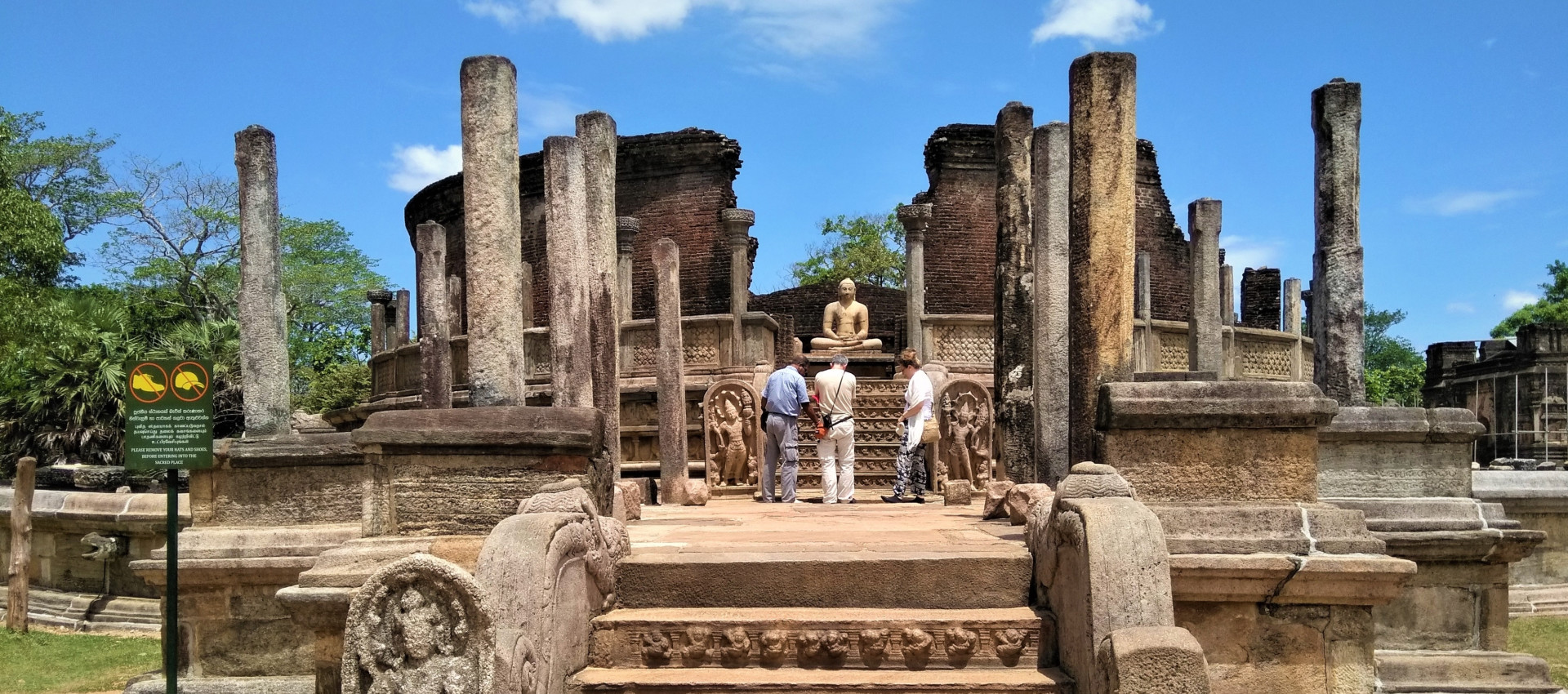
Lying between the gigantic Abhayagiriya Stupa and the Kuttam Pokuna (Twin Ponds) belonging to the ancient Abhayagiri Monastery, Samadhi Statue is considered one of the greatest works of sculptural art of the early period of Anuradhapura era. It is thought to be done during the 3rd or the 4th century. It is made out of dolomite marble and stands 7 feet 3 inches (2.21 meters) in height. This statue was found in the present location in 1886 fallen to the ground with damages to the nose. It was then erected and the nose was reconstructed unsuccessfully. In 1914, it was found damaged by treasure hunters and re constructed again which still was eye sore.
10
Kuttam Pokuna or the twin ponds are another hydrologic engineering marvels of the ancient Sri Lanka. These two ponds belong to the Abayagiri aramic complex and probably been used by the monks for bathing. The origins of these ponds are not known but it is thought to have been built during the reign of King Aggabodhi I (575-608).
11
During the reign of king Gothabhaya (253-266 AC) a disagreement took place between the monks of Maha Vihara Monastery and the Abhayagiri Monastery regarding a Vetulya doctrine. The king Gothabhaya took the side of the Maha Vihara and banished 60 monks who had turned in the Vetulya doctrine from Abhayagiri Monastery. One of the disciples of the banished monks called Sangamitta thero decided to avenge the bikkus of Maha Viharaya. He came back to Sri Lanka and gained the favour of king Gothabhaya (253-266 AC) and was entrusted to teach his two sons prince Mahasena and Prince Jetthatissa. After their father’s death, the elder son prince Jetthatissa who was a supporter of the Mahavihara monks became the king and reigned for 10 years (266-276 AC). In 276 Mahasena (276-303) succeeded to the throne and he persuaded the king that the Mahaviharians laxed discipline and the monks of Abhayagiri vihara preached the true doctrine of the Buddha.
What's not included
Lunch
Reviews breakdown
Viator
5.0
1 reviews
5★
1
4★
0
3★
0
2★
0
1★
0
Tripadvisor
5.0
6 reviews
5★
6
4★
0
3★
0
2★
0
1★
0
Important information
Wheelchair accessible
Infants and small children can ride in a pram or stroller
Public transportation options are available nearby
Specialized infant seats are available
Transportation options are wheelchair accessible
Travelers should have at least a moderate level of physical fitness
About Anuradhapura
Anuradhapura is a major city in Sri Lanka, famous for its well-preserved ruins of an ancient Sri Lankan civilization. It is one of the oldest continuously inhabited cities in the world and a UNESCO World Heritage Site. The city is a pilgrimage site for Buddhists and offers a rich cultural and historical experience.
Top Attractions
Sacred City of Anuradhapura
A UNESCO World Heritage Site, the Sacred City of Anuradhapura is home to ancient stupas, temples, and ruins that date back over 2,000 years.
Historical
Full day
Free
Ruwanwelisaya Dagoba
One of the tallest stupas in the world, this iconic structure is a significant pilgrimage site for Buddhists.
Religious
1-2 hours
Free
Sri Maha Bodhi
A sacred fig tree that is said to have been propagated from the original Bodhi tree under which Buddha attained enlightenment.
Religious
30 minutes to 1 hour
Free
Jethawanaramaya Dagoba
The tallest stupa in Anuradhapura, known for its impressive size and historical significance.
Historical
1 hour
Free
Isurumuniya Temple
A beautiful temple known for its rock carvings and serene atmosphere.
Religious
1-2 hours
Free
Must-Try Local Dishes
Kottu Roti
A popular Sri Lankan dish made with chopped roti, vegetables, and meat or seafood, cooked on a hot plate.
Dinner
Can be made vegetarian or vegan.
Hoppers
Bowl-shaped pancakes made from fermented rice flour and coconut milk, often served with eggs or sambal.
Breakfast
Vegetarian.
Rice and Curry
A staple Sri Lankan meal consisting of steamed rice served with a variety of curries.
Lunch/Dinner
Can be made vegetarian or vegan.
Lamprais
A Dutch-influenced dish consisting of rice, meat, and vegetables cooked in banana leaves.
Lunch/Dinner
Contains meat.
Popular Activities
Hiking in Mihintale
Exploring Ritigala Forest Monastery
Tea tasting
Visiting temples
Exploring ancient ruins
Attending religious ceremonies
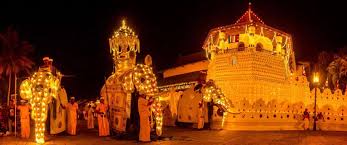
Witnessing the Esala Perahera festival
Best Time to Visit
January to March
This is the best time to visit Anuradhapura as the weather is pleasant and dry, making it ideal for exploring the ancient ruins and enjoying outdoor activities.
28-32°C
82-90°F
Practical Information
Language
- Official: Sinhala, Tamil
- Widely spoken: English
- English: Moderately spoken
Currency
Sri Lankan Rupee (LKR)
Time Zone
UTC+5:30
Electricity
230VV, 50HzHz
Safety Information
Overall Safety Rating: Generally safe
Anuradhapura is generally safe for travelers, but standard precautions should be taken to avoid petty theft and scams.
Important Precautions:
- • Keep valuables secure.
- • Use reputable tour operators.
- • Be cautious of strangers offering unsolicited help.
Getting there
By air
- Colombo Bandaranaike International Airport • 200 km
By train
Anuradhapura Railway Station
By bus
Anuradhapura Bus Stand
Getting around
Public transport
Buses are the most common form of public transport and cover most areas of the city.
Taxis
Available • Apps: PickMe, Uber
Rentals
Car, Bike, Scooter
Neighborhoods
Sacred City
New Town
Tuktukaraya
Day trips
Mihintale
12 km • Half day
A sacred mountain site where Buddhism was first introduced to Sri Lanka, featuring ancient ruins and temples.
Ritigala Forest Monastery
30 km • Full day
A UNESCO-listed forest monastery with ancient ruins and a rich biodiversity.
Avukana Buddha Statue
50 km • Full day
A colossal Buddha statue carved out of a single rock, standing 40 feet tall.
Festivals
Esala Perahera • July/August (full moon day)
Poson Festival • June (full moon day)
Vesak Festival • April/May (full moon day)
Pro tips
- Visit the Sacred City early in the morning to avoid the heat and crowds.
- Hire a local guide for a more in-depth understanding of the historical sites.
- Try local street food for an authentic culinary experience.
- Respect the religious customs and traditions when visiting temples.
- Carry a water bottle and sunscreen to stay hydrated and protected from the sun.
From $25
per person
Price varies by option
Secure booking
Free cancellation available


![Minneriya National Park Safari [Morning / Evening]](https://media-cdn.tripadvisor.com/media/attractions-splice-spp-674x446/15/1f/89/35.jpg)