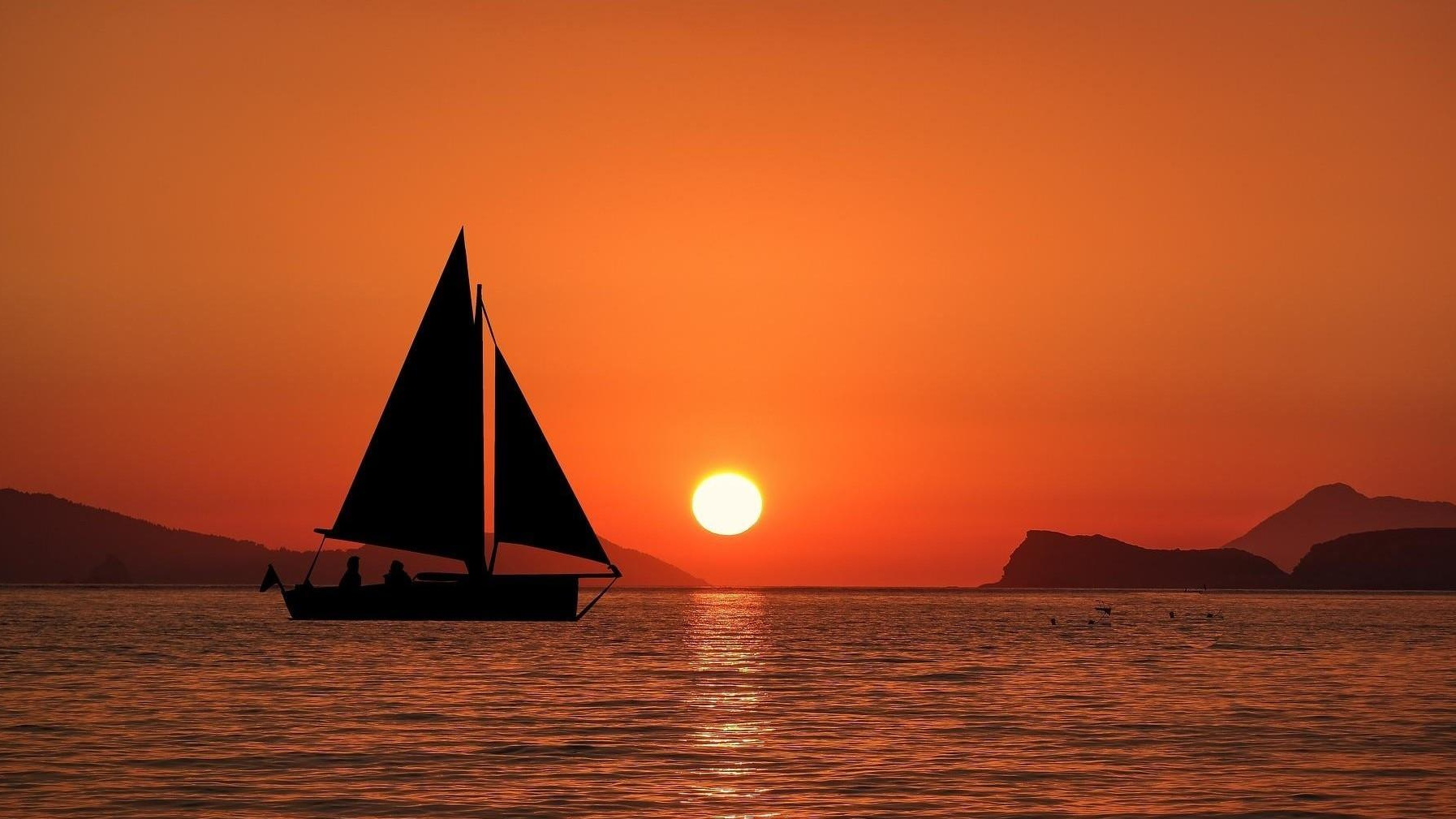
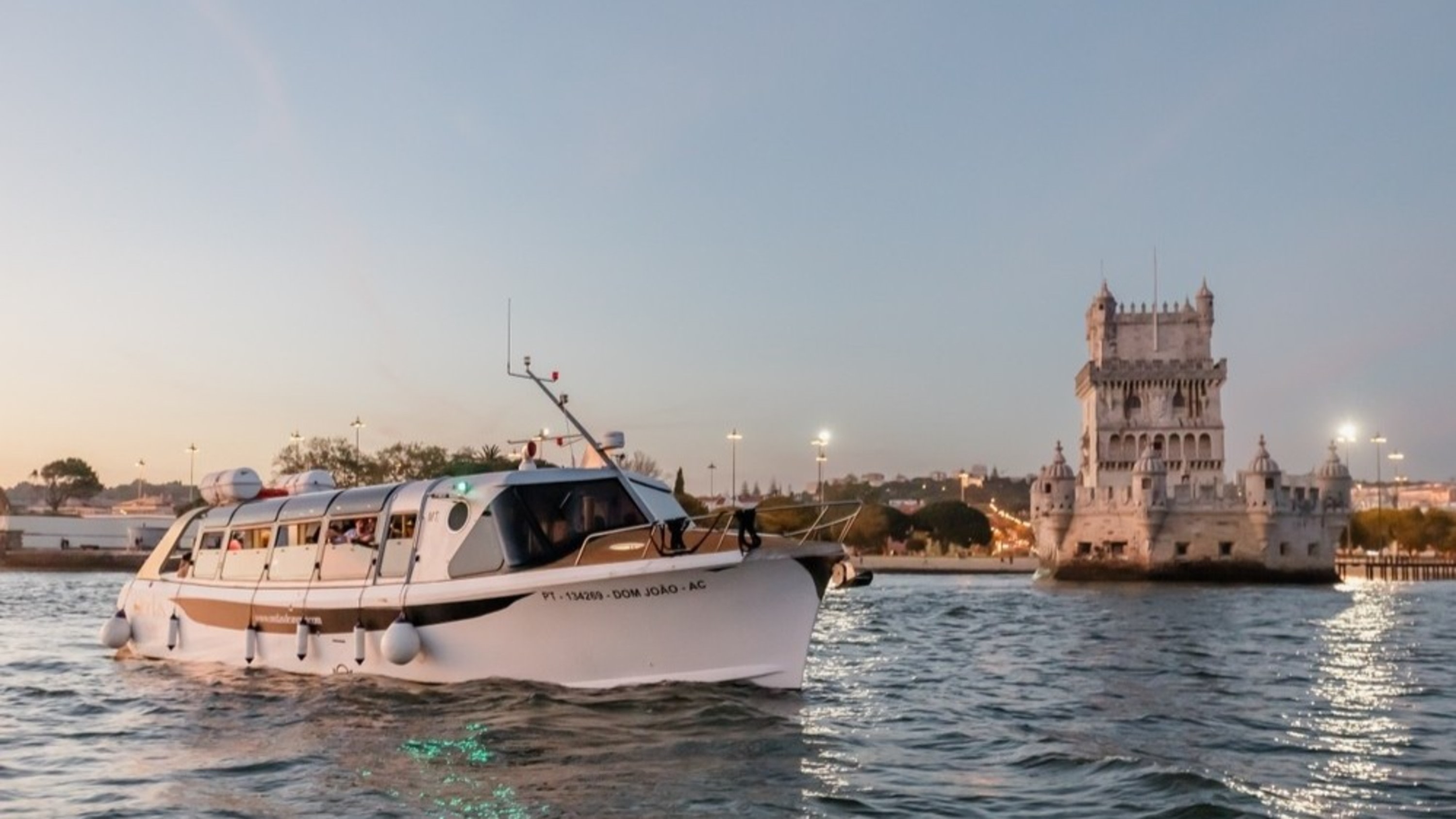
Lisbon Sunset Sailing Tour with White or Rosé Wine and Snacks
Active
2h
For a full refund, cancel at least 24 hours before the scheduled departure time.
Instant_then_manual confirmation
Mobile or paper ticket accepted
About this experience
***Disclaimer***
The provided starting time on the ticket is merely indicative! The sunset tour starts 2 hours before the sunset. You'll receive you correct starting time as soon as your booking is processed!
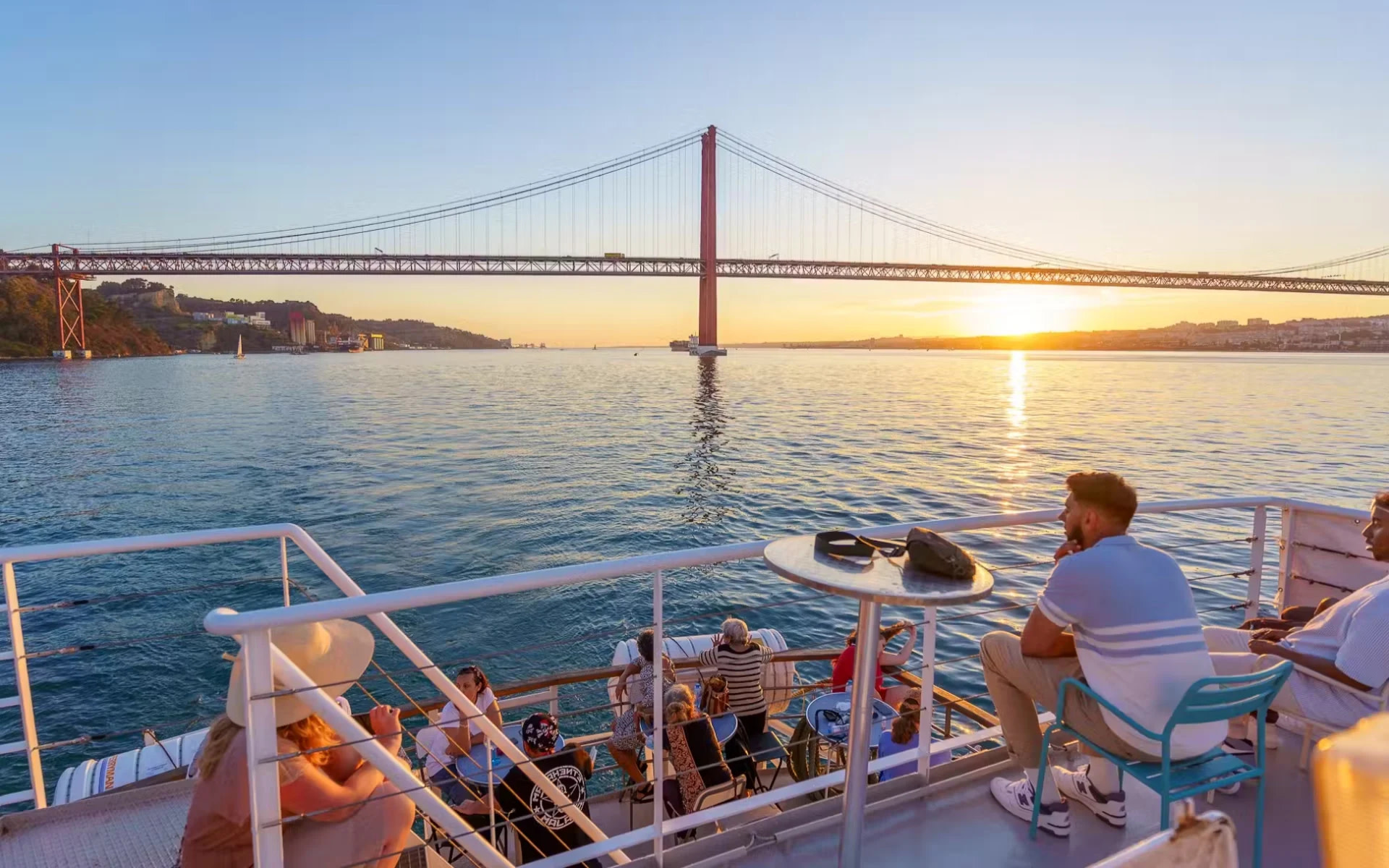
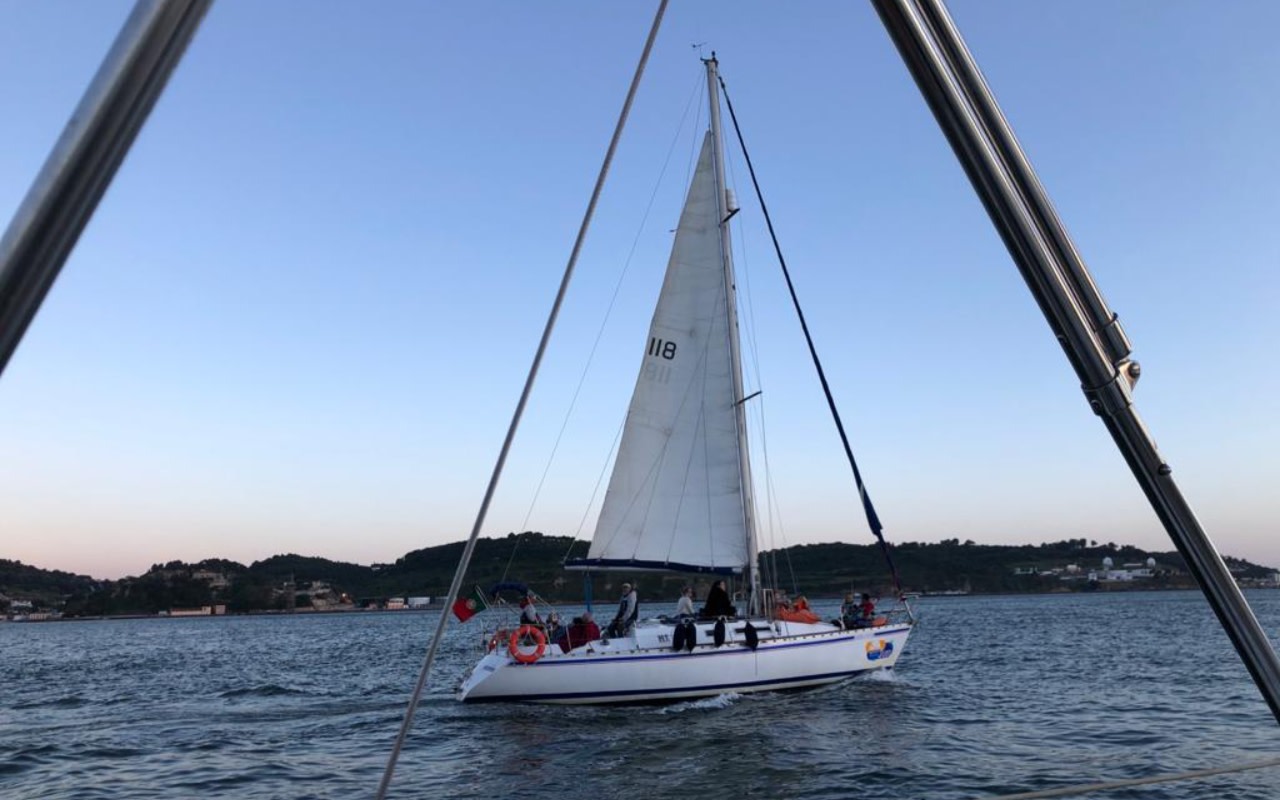
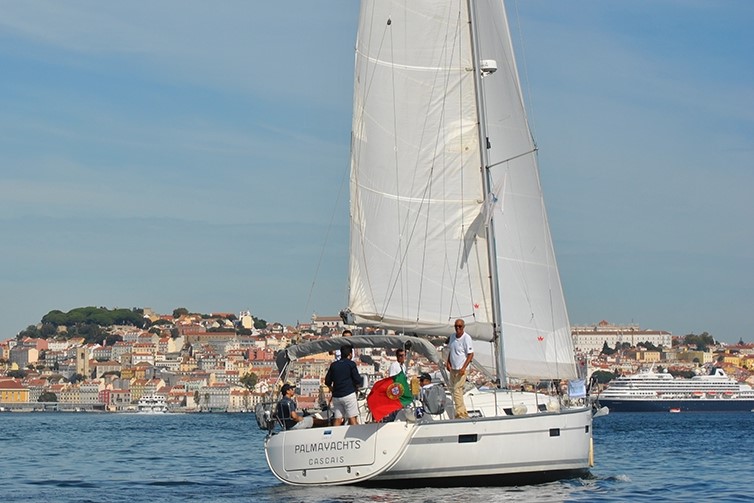
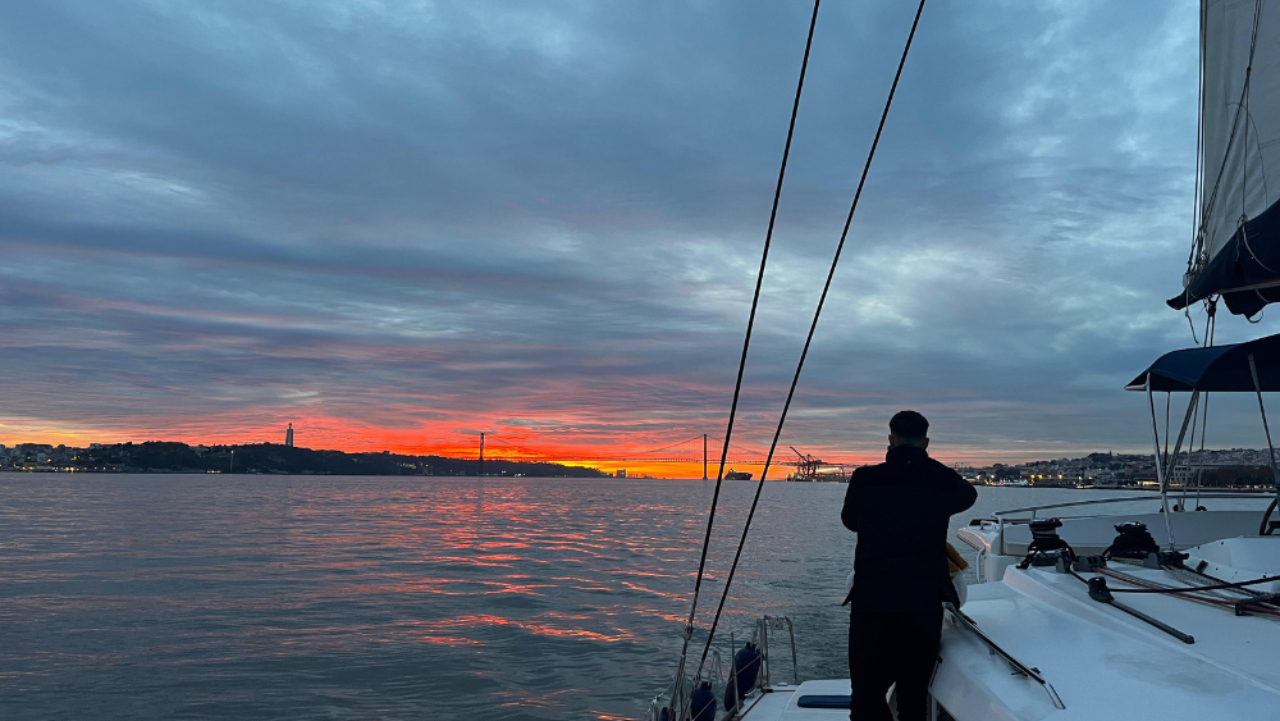
Experience a sunset you're not soon to forget on this sailing excursion from Lisbon. Your charter takes you and your group of up to 10 (maximum of 14 people on 1 boat) on an unforgettable cruise around Lisbon’s surrounding area, starting with Belém and the famous Monument of Discoveries. Watch the setting sun play on the Champalimaud Foundation and sail under the Ponte 25 de Abril bridge. Enjoy complimentary wine as finally head towards the sunset for an unforgettable moment.
We offer 1 bottle of wine each 3 people and snacks
Available options
Sailing Sunset Sensations Trip
What's included
Sightseeing river cruise
All taxes, fees and handling charges
Certified Crew
Beverages
Insurance
Detailed itinerary
1
Stop 1
Pass by
Ponte 25 de Abril ( 25th of April Bridge ) is a suspension bridge built to connect Lisbon city with the Almada district, that lies on the southern side of the river Tagus. Constructed in 1966 by the American Bridge Company, this bridge was formerly called as Ponte Salazar. However, in 1974, to commemorate the Carnation Revolution, this bridge was renamed as Ponte 25 de Abril.
2
Stop 2
Pass by
Cristo Rei (Christ the King) is a Catholic monument and shrine located in the city of Almada, across the River Tejo, overlooking Lisbon.
Inspired by Rio’s famous Christ the Redeemer statue, the 110 metre-tall Cristo Rei (about 360 feet and 11 inches) was erected in 1959.
3
Stop 3
Pass by
Standing on the waterfront at Belém, near the mouth of the River Tagus, the Torre de Belém is arguably the most iconic symbol of Lisbon. Originally conceived as a lighthouse, the tower was eventually built as a defensive fortress on the orders of King Manuel I.
4
Stop 4
Pass by
The monolithic Padrão dos Descobrimentos, looking like a caravel ship frozen in midswell, was inaugurated in 1960 on the 500th anniversary of Henry the Navigator’s death. The 56m-high limestone giant is chock-full of Portuguese bigwigs. At the prow is Henry, while behind him are explorers Vasco da Gama, Diogo Cão, Fernão de Magalhães (Ferdinand Magellan) and 29 other greats.
5
Stop 5
Pass by
MAAT is a cultural project for the city of Lisbon that is focused on three areas - Art, Architecture, and Technology. The museum sits on the River Tagus (Rio Tejo) to the west of the city centre and is "one of Europe's most lyrical new museums". It establishes a connection between the new building and the Tejo Power Station, one of Portugal's most prominent examples of industrial architecture from the first half of the 20th century, and one of the most visited museums in the country.
6
Stop 6
Pass by
This neo-classical palace was built in the first half of the 19C and was chosen as the residence for the Portuguese royal family when D. Luís I (1838-1889) became king and married an Italian princess, D. Maria Pia of Savoy (1847-1911).
It is a typical example of a 19C royal residence and has an important collection of decorative art (gold and silver ware, paintings, sculpture, furniture, tapestries, glassware, porcelain, etc.).
The palace was closed at the time of the proclamation of the Portuguese Republic in 1910 and reopened as a museum in 1938. Some of the most important presidential ceremonies now take place here.
7
Stop 7
Pass by
This museum is housed in a 17C palace and in a building that stands on the site of a 16C Carmelite convent, of which all that now remains is a Baroque chapel. It is one of the most important Portuguese museums and has a magnificent garden overlooking the River Tagus.
To illustrate the special relationship between the Portuguese and different peoples from overseas, this museum has a collection of valuable decorative pieces from Africa, India and China, including carved ivory, furniture, embroidery, silverware, porcelain, silks and a collection of Namban art, with Japanese screens and lacquerware.
What's not included
Food and drinks, unless specified
Transportation to/from attractions
Available languages
Guide guide
PT
EN
ES
Reviews breakdown
Viator
4.8
788 reviews
5★
680
4★
71
3★
22
2★
9
1★
6
Tripadvisor
4.8
188 reviews
5★
163
4★
14
3★
8
2★
1
1★
2
Important information
Specialized infant seats are available
Service animals allowed
Public transportation options are available nearby
Suitable for all physical fitness levels
Children must be accompanied by an adult
Meeting point
The starting on your ticket is merely indicative. (Sunset time chances depending on the time of the year)
The starting time (2 hours before sunset) will be communicated when your booking is processed.
We meet at gate 2 of Doca de Santo Amaro de Alcântara, in front of the restaurant IZANAGI.
Important notes
• Comfortable walking shoes are recommended
• Dress code is smart casual
About Lisbon
Lisbon, the capital of Portugal, is a vibrant city known for its rich history, stunning architecture, and warm climate. With its charming streets, historic trams, and breathtaking viewpoints, Lisbon offers a unique blend of old-world charm and modern energy.
Top Attractions
Belém Tower
A UNESCO World Heritage Site, this 16th-century tower is an iconic symbol of Lisbon's Age of Discoveries.
Historical
1-2 hours
€6
Alfama District
Lisbon's oldest district, known for its narrow, winding streets, Fado music, and historic charm.
Historical
Half day
Free to explore, attractions may have entry fees
Sintra
A UNESCO World Heritage Site, Sintra is a romantic town with stunning palaces and castles.
Historical
Full day
Varies by attraction, around €10-€15 per site
Must-Try Local Dishes
Bacalhau à Brás
Shredded codfish with eggs, potatoes, and onions
Main Dish
Contains fish and eggs
Pastel de Nata
Custard tart with a flaky pastry crust
Dessert
Contains dairy and eggs
Francesinha
A sandwich with meat, cheese, and a beer-based sauce
Main Dish
Contains meat, cheese, and gluten
Popular Activities
Hiking in Sintra
Surfing in Ericeira
Parasailing in Cascais
Beach lounging in Costa da Caparica
Spa day in a luxury hotel
Picnic in Jardim da Estrela
Visiting museums and galleries
Attending Fado performances
Best Time to Visit
March to May, September to October
These months offer pleasant weather and fewer crowds, making it ideal for sightseeing and outdoor activities.
15-25°C
59-77°F
Practical Information
Language
- Official: Portuguese
- Widely spoken: English, Spanish, French
- English: Moderately spoken
Currency
Euro (EUR)
Time Zone
GMT+1 (Western European Time, WET)
Electricity
230VV, 50HzHz
Safety Information
Overall Safety Rating: Generally safe
Lisbon is generally safe, but pickpocketing and petty theft can occur in crowded areas.
Important Precautions:
- • Be cautious of pickpockets in crowded areas
- • Use licensed taxis or ride-sharing apps
- • Avoid walking alone at night in less crowded areas
Getting there
By air
- Humberto Delgado Airport • 7 km from city center
By train
Santa Apolónia, Oriente
By bus
Sete Rios, Jardim do Campo Grande, Gare do Oriente
Getting around
Public transport
Efficient and clean, with four lines connecting major attractions.
Taxis
Available • Apps: Bolt, FreeNow
Rentals
Car, Bike, Scooter
Neighborhoods
Alfama
Baixa
Bairro Alto
Day trips
Sintra
25 km from Lisbon • Full day
A romantic town with stunning palaces, castles, and lush gardens.
Cascais
30 km from Lisbon • Half day to full day
A charming coastal town with beautiful beaches, historic sites, and a relaxed atmosphere.
Óbidos
80 km from Lisbon • Full day
A medieval town with a well-preserved castle, narrow streets, and charming shops.
Festivals
Santos Populares • June 13th
Festival dos Oceanos • June to September
Arraial do Alfoz • June to September
Pro tips
- Visit the Time Out Market for a variety of local and international cuisines
- Take a day trip to Sintra and Cascais for a mix of history and beach relaxation
- Explore the LX Factory for a unique shopping and dining experience
- Ride the historic Tram 28 for a scenic tour of the city
- Visit the MAAT museum for a blend of art, architecture, and technology
From $25
per person
Price varies by option
Secure booking
Free cancellation available