Private Arab Norman Tour from Palermo to Monreale and Cefalu
Active
10h
For a full refund, cancel at least 24 hours before the scheduled departure time.
Instant confirmation
Mobile or paper ticket accepted
About this experience
A tour to discover the ancient city of Palermo with the markets of Ballarò and Vucciria and with over 2000 years of history and dominations that have marked Sicily and the Sicilians followed by a visit to the cathedral of Monreale, also known as the cathedral of Santa Maria Nuova, built starting from 1172 at the behest of William II of Altavilla, king of Sicily from 1166 to 1189, it is famous for the rich Byzantine mosaics that decorate the interior and finally a visit to the town of Cefalù and the splendid cathedral included in the site Arab-Norman Palermo and the cathedrals of Cefalù and Monreale in 2015 was declared a World Heritage Site by UNESCO.
Available options
Private Arab Norman Tour from Palermo to Monreale and Cefalu
Pickup included
What's included
Private transportation
Expenses for; diesel, highway and parking
Bottled water
Air-conditioned vehicle
Cell phone charging
Child seat and seat
Detailed itinerary
1
Stop 1
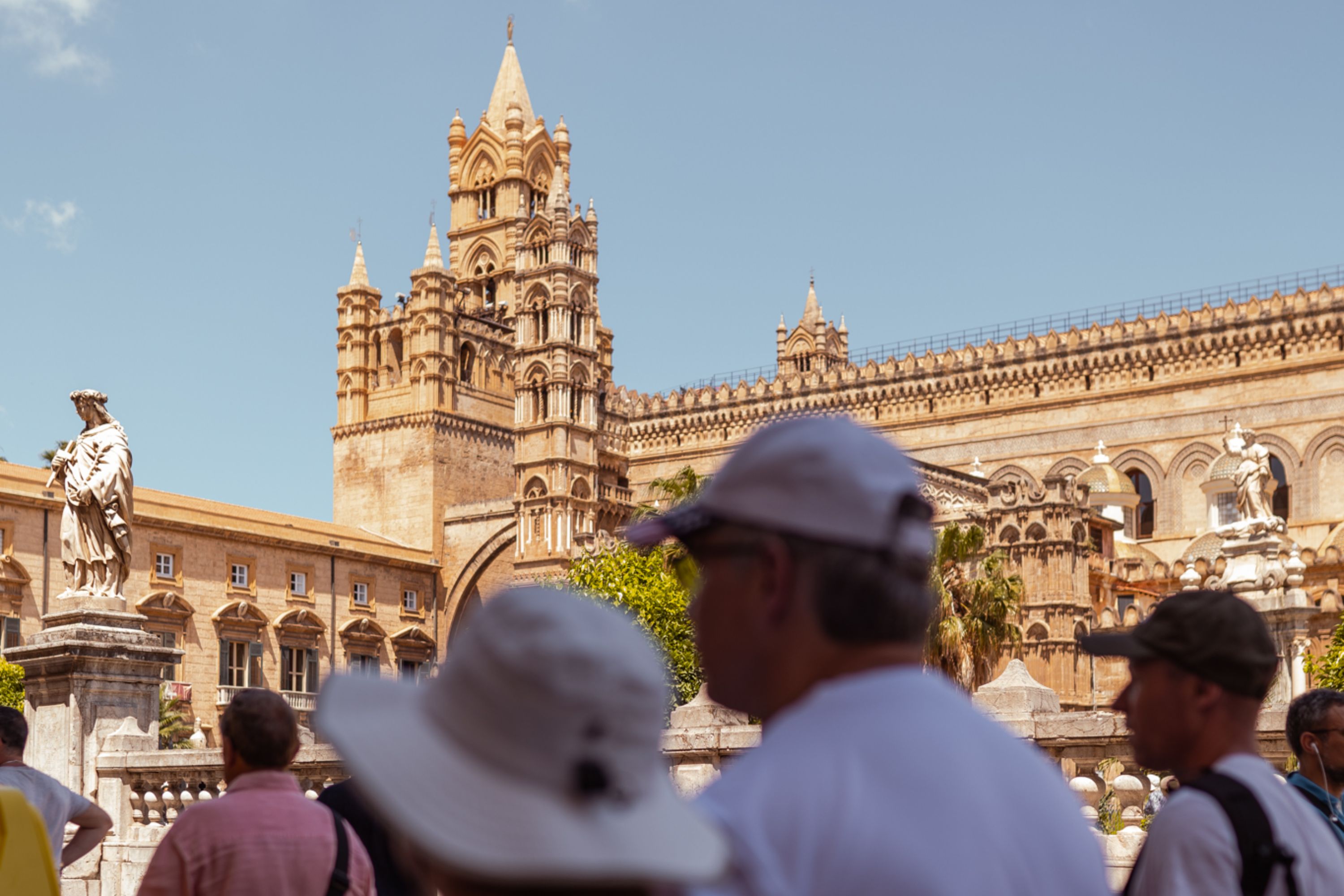
Around 1170, during the reign of William II, the English archbishop of Palermo Walter Off the Mill, traditionally remembered by the name of Gualtiero Offamilio, began the construction of a new cathedral. It was actually the reconstruction of a pre-existing ancient cathedral seriously damaged by the earthquake of 1169.
The Gualterian Cathedral chronologically constituted the third of the churches that followed one another on the site; in this place, in fact, already in the early Christian age (4th century), there was a basilica destroyed around the middle of the 5th century during the Vandal persecutions, on the ruins of which was built by the bishop Vittore and by the will of San Gregorio Magno in 590, the "Sanctae Mariae Basilica”, consecrated in the year 604.
2
Stop 2
Piazza Pretoria is located not far from the Quattro Canti, exactly in the center of gravity of the historic city of Palermo and is commonly called "Piazza della Vergogna" due to the nudity of the statues that make up the beautiful fountain. This is carved entirely in white Carrara marble by the sculptor Francesco Camilliani who created it in Florence in 1554 and subsequently purchased by the city of Palermo.
3
Stop 3
The so-called four Canti, located in piazza Villena, represent the center of Baroque Palermo. Its structure, perfectly octagonal, is formed by the alternation of streets (Via Vittorio Emanuele and via Maqueda) and architectural backdrops.
quattro canti PWThe facades that form the square, during the day, are always illuminated on at least one side, and this is why they are also known as the "Teatro del Sole". The statues in the square were placed by Mariano Smiriglio, engineer of the Palermitan Senate, starting from 1617 and represent the rivers of Palermo (Oreto, Kemonia, Pannaria and Papireto), the allegory of the seasons, the historical rulers of the city and the patron saints of Palermo.
4
Stop 4
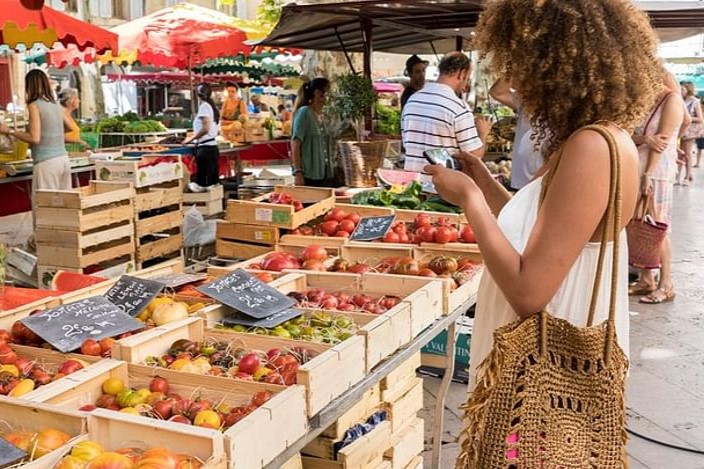
The permanent market extends from Piazza Casa Professa to the ramparts of Corso Tukory towards Porta Sant'Agata. The market is famous for the sale of the first fruits that come from the Palermo countryside. Ballarò is the oldest of the markets in the city, [1] attended daily by hundreds of people, enlivened by the so-called abbanniate, that is, by the boisterous calls of the vendors who, with their characteristic and colorful local accent, try to attract the interest of passers-by. It looks like a mass of crowded stalls and with the street invaded by wooden boxes containing the goods that are constantly shouted, hushed, chanted to advertise the good quality and good price of the products.
Ballarò is mainly a food market, mainly used for the sale of fruit, vegetables, spices, meat and fish, but there are also household items for cooking and cleaning the house, as in the Capo and Vucciria markets.
5
Stop 5
Someone called it the most beautiful temple in the world and undoubtedly the Cathedral of Monreale is one of the most beautiful examples of how art manages to enter into harmony with the human heart.
Tourists come from all over the world to admire it and many times we, who have it on our doorstep, pass by distractedly and perhaps enter it looking here and there fascinated by the whole but unable to grasp its details. To appreciate the beauty you need special eyes, an educated view or a state of total abandonment. All difficult things to own.
6
Stop 6
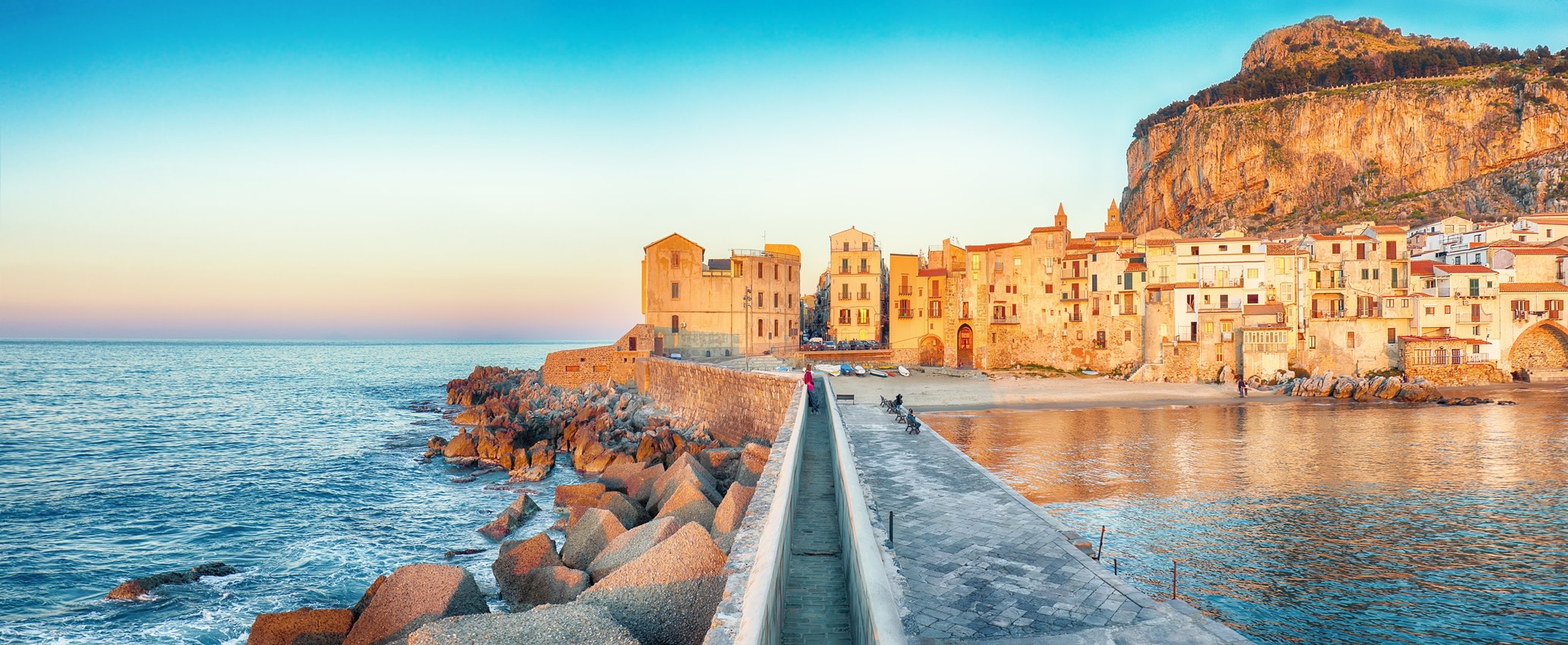
Symbol of the city and a must-see for anyone visiting Cefalù, the Basilica of the Transfiguration - better known as the Duomo or Cathedral of Cefalù - is a hymn to the beauty that resists time, wars and modernity, as it preserves traces of the Arab Norman on the island.
Declared a Unesco World Heritage Site since 2015, it stands in the heart of the historic centre, in the square of the same name, rising in all its grandeur against the Rocca di Cefalù which stands out behind it. Framed by two mighty towers, the work was commissioned by the first King of Sicily, Roger II, in 1131 and consecrated almost a century and a half later (1267).
7
It is located on the northern Sicilian coast, about 70 km from Palermo, at the foot of a rocky promontory. It is one of the major seaside resorts in the whole region: every year it attracts a significant flow of tourists and, in the summer period, the population triples, making the main squares and most important streets of the town crowded.
The town, which is part of the Madonie Park, is included in the club of the most beautiful villages in Italy, the association of small Italian towns that stand out for their great artistic, cultural and historical relevance, for the harmony of the fabric urban life, livability and services to citizens. Cefalù is also part of the network of solidarity municipalities.
What's not included
Archaeological Parks and Museums Entrance
Available languages
Written guide
EN
IT
Important information
Specialized infant seats are available
Service animals allowed
Public transportation options are available nearby
Infants and small children can ride in a pram or stroller
Suitable for all physical fitness levels
door-to-door service
meet and greet service
booking cost per vehicle/group (max 6 people)
The price indicated is the total cost per vehicle regardless of the number of passengers, obviously up to a maximum of 6 passengers.
About Palermo
Palermo, the vibrant capital of Sicily, is a city of rich history, stunning architecture, and a unique cultural blend. Known for its Norman-Arab-Byzantine influences, Palermo offers a mix of grand palaces, bustling markets, and delicious street food that will captivate any traveler.
Top Attractions
Palermo Cathedral
A stunning example of Norman-Arab-Byzantine architecture, Palermo Cathedral is a must-visit for its historical significance and beautiful interior.
Historical/Religious
1-2 hours
€7 for the cathedral and cloister
Palermo Cathedral
This grand palace was the seat of the Norman kings of Sicily. It houses the Palatine Chapel, known for its stunning mosaics and Arabic-Norman architecture.
Historical/Architectural
1.5-2 hours
€12 for the palace and chapel
Ballarò Market
One of Palermo's most famous street markets, Ballarò offers a vibrant atmosphere with fresh produce, street food, and local crafts.
Cultural/Shopping
1-2 hours
Free to explore
Monreale Cathedral
Located just outside Palermo, Monreale Cathedral is famous for its stunning Byzantine mosaics and is a UNESCO World Heritage Site.
Historical/Religious
2-3 hours including travel
€6 for the cathedral and cloister
Teatro Massimo
The largest opera house in Italy and one of the most famous in the world, Teatro Massimo is a masterpiece of neoclassical architecture.
Architectural/Entertainment
1 hour for a tour
€7 for a guided tour
Must-Try Local Dishes
Arancini
Fried rice balls stuffed with ragù, mozzarella, and peas.
Snack
Vegetarian options available
Panelle
Chickpea fritters, a popular street food in Palermo.
Snack
Vegan
Pasta alla Norma
Pasta with tomato sauce, fried eggplant, ricotta salata, and basil.
Main Course
Vegetarian
Cannoli
Crispy pastry tubes filled with sweet ricotta.
Dessert
Vegetarian
Popular Activities
Hiking in the nearby mountains
Swimming and snorkeling at Mondello Beach
Beach lounging at Mondello Beach
Enjoying a leisurely meal at a seaside restaurant
Visiting museums and historical sites
Attending local festivals and events
Boat tours to the nearby islands
Swimming and water sports at the beach
Best Time to Visit
April to June, September to October
These months offer pleasant weather and fewer crowds. It's ideal for sightseeing and outdoor activities.
15°C to 30°C
59°F to 86°F
Practical Information
Language
- Official: Italian
- Widely spoken: Sicilian, English (limited)
- English: Limited
Currency
Euro (EUR)
Time Zone
GMT+1 (Central European Time), GMT+2 during daylight saving time
Electricity
230VV, 50HzHz
Safety Information
Overall Safety Rating: Generally safe
Palermo is generally safe for tourists, but petty crime and pickpocketing can occur in crowded areas. Be aware of your surroundings and take precautions to protect your belongings.
Important Precautions:
- • Keep valuables secure
- • Use licensed taxis
- • Be cautious of strangers approaching you
Getting there
By air
- Palermo Falcone-Borsellino Airport • 32 km from city center
By train
Palermo Centrale
By bus
Palermo Centrale Bus Station
Getting around
Public transport
The bus system is the primary mode of public transport in Palermo. It's affordable but can be crowded during peak hours.
Taxis
Available • Apps: FreeNow, ItTaxi
Rentals
Car, Bike, Scooter
Neighborhoods
Kalsa
Vigàta
Mondello
Day trips
Monreale
7 km • Half day
Monreale is famous for its stunning Byzantine mosaics and the Benedictine Abbey.
Cefalù
70 km • Full day
A charming coastal town known for its beautiful beach and medieval cathedral.
Erice
120 km • Full day
A medieval hilltop town with stunning views and well-preserved architecture.
Festivals
Festa di Santa Rosalia • July 10-15
Sagra del Mandarino • January to February
Palermo Pride • June
Pro tips
- Visit the markets early in the morning for the best selection and freshest produce
- Learn a few basic Italian phrases to enhance your experience and interact with locals
- Take a food tour to discover the best street food and local specialties
- Explore the city on foot to discover hidden gems and charming streets
- Visit the cathedral and other religious sites early in the morning to avoid crowds
From $25
per person
Price varies by option
Secure booking
Free cancellation available
Instant confirmation