Explore highlights of Trieste on a private 3-hour walking tour
Active
3h
All sales are final. No refund is available for cancellations.
Instant confirmation
Mobile or paper ticket accepted
About this experience
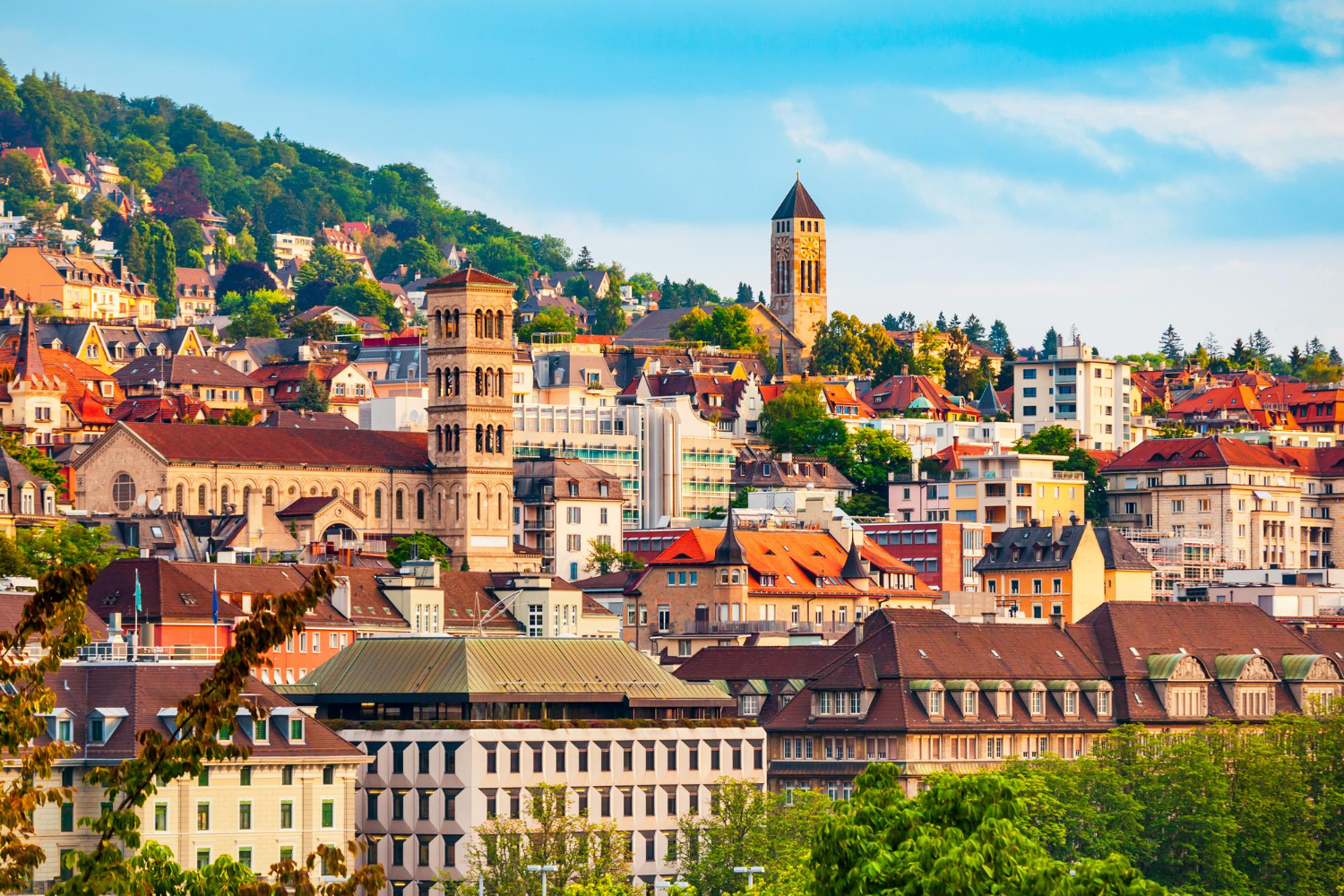
Trieste is a marvelous Italian town with reach historical and cultural background. Settled at the north end of the Adriatic sea and surrounded by the Karst tableland Trieste has always been in the middle of major trading routes. One of the best ways to discover this beautiful city is our private walking tour. Learn about its history, admire its architecture, and hear many fascinating legends related to this city.
Available options
Explore highlights of Trieste on a private 3-hour walking tour
Pickup included
What's included
All fees and tickets
Pick-up
Professional licensed guide
Detailed itinerary
1
Meet your guide at Cruise Ship Port or at your hotel in Trieste. Walk to the top of the hill of San Giusto to see the foundations of Trieste: the Roman ruins, the beloved cathedral and the castle. Take a walk along the castle’s walls to enjoy a charming view of the entire city.
When it comes to Trieste landmarks, the Castello di San Giusto is hard to miss. I mean, it’s literally on a hill visible throughout the city. Even though its history is frankly uneventful, who can pass the chance to visit a castle? Built by the Austrians to protect the city from the Venetians, it never saw any real action. But that’s good I guess because it means that this 15th-century castle has survived well intact. A few euros will let you inside, where you’ll find some museum exhibits, but more importantly city views. The castle walls are where the best views of Trieste are at.
2
Trieste Cathedral (Basilica cattedrale di San Giusto Martire), dedicated to Saint Justus, is a Roman Catholic cathedral and the main church of Trieste, in northern Italy. It is the seat of the Bishop of Trieste. The first religious edifice on the site was built in the 6th century on some Roman propylaea, using part of the existing structure. Perhaps the entrance to a monument, this was commonly known as the Capitoline Temple, as a pyramidal altar with the symbols of the Capitoline Triad (Jupiter, Juno and Minerva) had been found inside it. Of the hall there remains part of the mosaic floor, integrated into the present-day floor, which contains markings of the outer walls of the early Christian building. Soon after it was opened for worship, the church was destroyed in the Lombard invasion.
3
Probably dating from the 1st century AD, the Arch of Riccardo, in the heart of old Trieste, is a Roman gate in the ancient walls of Tergeste that were built by Augustus in 33 BC. Various origins have been attributed to the name Riccardo. Some recall legendary events like the passage of Charlemagne or Richard the Lionheart into this city, while other, perhaps more reliable, sources suggest a derivation of the term "Cardo", the Latin name of one of the two main axes around which Roman towns were built, the other being the Decumanus.
4
Walk down the hill to the Medieval Trieste that was previously surrounded by walls and towers, you and your guide will pass the Roman theatre.
Trieste has a long history and everywhere in the city, there are various pieces of bygone eras. One such relic is the Roman Amphitheatre that is located on the Via del Teatro Romano In the center of the historic old town and only a stone’s throw from the Piazza Unita Italia. This ancient structure is in a fantastic condition and the original seating and stage area is still visible together with various columns and walls. Original statues from the theatre are now on display at one of the local museums but some are still visible at the sight. When walking through the city of Trieste, this theatre is a must-see and is a fine example of Roman architecture.
5
Designed by architect Giuseppe Bruni, Trieste's City Hall was built between 1873 and 1875 on the site previously occupied by the Magistrate's Palace and the Loggia with a bell tower, for use by the city council with a gallery for the public. The eclectic style facade gives the building a monumental grandeur, forming a beautiful scenic backdrop of a stage, open to the sea. The clock tower rises from the central section with two bronze Moors (sculpted by Franco Asteo and replaced by copies in 1972) that locals call "Michez and Jachez striking the hours". The two wings, somewhat simpler, complete the building in a tight game of fornices and chiaroscuro.
6
The port and harbour of Trieste are truly impressive. Practically the entire coastline next to Trieste is occupied by either the public harbour or the commercial shipping operations – These two parts of the city offer some truly fantastic and interesting sights. Near the Piazza Venezia is the main harbour and this area is filled with beautiful yachts, sailing boats and fishing boats. Furthermore, the port area on the southwestern section of the coast offers a great insight into how a busy shipping operation works – You can see large cargo ships entering the docks and being offloaded.
7
Then move to the Borgo Teresiano strolling along the Grand Canal.
Realized between 1754 and 1766 by Matteo Pirona, the Canal Grande was a key element of the new urban plan that led to the construction of Borgo Teresiano. Located in the heart of the historic old town, not far from the Piazza Unita, the Grand Canal is a small waterway that has stood to allow boats direct access into the city to unload their cargo. Approximately 200m in length, the canal stretched from the Riva Tre Novembre to the Via S. Spiridione and ends at the Piazza Sant’Antonio Nuovo and the Chiesa di Sant’Antonio Taumaturgo. This pleasant waterway is crossed by three bridges and has numerous boats moored at each side.
8
On your way, you will see the Serbian and Greek Orthodox churches.
The Church was built between 1861 and 1869, on the basis of a project by Lombard architect Carlo Maciachini, on the site of a previous temple built in 1753 and demolished in 1861 because it had been declared unsafe. It can host 1600 believers. The building features a Greek-cross plan. It displays the same Byzantine style as Eastern churches and is characterized by a central dome, which is higher than the four bell towers. It also presents semi-spherical grey-blue caps and wide mosaic decorations on the façades drawn by Milanese artists Giuseppe and Pompeo Bertini. The structure is covered in stone from Karst and Istria quarries, as well as Carrara and Verona marbles.
Together with your guide, you can stop in some nice cafes and bars, where you can have a drink or a snack.
9
Take a stroll on the Molo Audace.
Molo Audace, formerly Molo San Carlo, is a place dear to the hearts of Trieste's inhabitants. This walkway extending about 200 metres out to sea is a magical place for a stroll and a breath of fresh air at any time of day and in any season, a place of enchanting autumnal sunsets, when the buildings on the shores are tinged with red. If you fancy a real challenge you can run to the wind-rose at its far end, and try to remain standing against the Bora winds of up to 100 km/h! The pier was built between 1743 and 1751 on the wreck of the San Carlo, a ship that sank in the harbour. Originally 95 metres long and connected to land by a small wooden bridge, the pier has been gradually lengthened and now measures 246 metres.
10
Located next to the Piazza Unita Italia, the Piazza dell Borsa is a great place to take in the local life and enjoy an excellent meal. During the 19th century, this square actually served as the city’s economic center and the chamber of commerce building is actually located at the far end and features a beautiful columned entrance with an ornate marble pediment. Triangular in shape, at the end closest to the Piazza Unita, there are several restaurants and shops, whilst in the middle is a decorative statue of the sea god Neptune. Markets and small fairs are sometimes held here and it is a great place for shopping and mingling.
11
Stop 11
And end the tour on Piazza Unità d’Italia, the best place to feel the city’s vibrant atmosphere.
This colossal square lies at the forefront of the historic old town and faces out towards the Adriatic Sea. Due to its immense size, the Piazza Unita Italia is known as the largest square situated next to the sea in Europe. Several prestigious and important buildings line the square including the Town Hall, the Palazzo del Lloyd Triestino, the Palazzo del Governo and the Palazzo Pitteri – Each of which features a stunning design and beautiful architecture. Aside from the buildings, there is also several impressive monuments and statues placed at various intervals in the square – In particular, the two iron sculptured columns that frame the entrance of the Piazza.
What's not included
Food and drinks
Transportation
Available languages
Guide guide
EN
IT
ES
Important information
Public transportation options are available nearby
Suitable for all physical fitness levels
About Trieste
Trieste is a fascinating coastal city in northeastern Italy, known for its rich history, stunning architecture, and vibrant cultural scene. Its unique position at the crossroads of Latin, Slavic, and Germanic cultures makes it a truly distinctive destination.
Top Attractions
Piazza Unità d'Italia
This is the largest square in Italy and one of the largest in the world. It offers stunning views of the Adriatic Sea and is surrounded by beautiful historic buildings.
Historical
1-2 hours
Free
Castle of Miramare
This stunning castle was built in the 19th century for Archduke Maximilian of Austria. It features beautiful gardens and offers panoramic views of the sea.
Historical
2-3 hours
€12
Roman Theatre
This ancient Roman theatre dates back to the 1st century AD and is still used for performances today. It offers a glimpse into Trieste's rich history.
Historical
1 hour
€5
Risiera di San Sabba
This former concentration camp is a poignant reminder of Trieste's dark history during World War II. It's a sobering but important place to visit.
Historical
1-2 hours
Free
Grotta Gigante
This massive cave is one of the largest in the world and features stunning stalactites and stalagmites. It's a fascinating natural wonder.
Nature
2 hours
€10
Must-Try Local Dishes
Jota
A traditional soup made with beans, sauerkraut, pork, and various spices. It's a hearty and flavorful dish.
Main Course
Contains pork
Prosciutto di San Daniele
A high-quality cured ham from the nearby town of San Daniele. It's known for its delicate flavor and tender texture.
Appetizer
Contains pork
Boreto alla Gradese
A traditional fish stew made with various types of fish, vegetables, and a unique blend of spices. It's a must-try for seafood lovers.
Main Course
Contains fish and shellfish
Gnocchi di Susine
A traditional dessert made with plum dumplings, served with a sweet sauce. It's a unique and delicious treat.
Dessert
Contains dairy and eggs
Popular Activities
Caving in Grotta Gigante
Hiking in the Karst region
Boat tours along the coast
Beach relaxation in Barcola
Coffee and people-watching in historic cafés
Gardens and park visits
Visiting historic sites and museums
Attending cultural events and festivals
Best Time to Visit
May to September
This is the best time to visit Trieste for warm weather and outdoor activities. The city is lively with festivals and events, and the beaches are perfect for swimming and sunbathing.
20°C to 30°C
68°F to 86°F
Practical Information
Language
- Official: Italian
- Widely spoken: Slovene, German, English
- English: Moderately spoken
Currency
Euro (EUR)
Time Zone
GMT+1 (Central European Time)
Electricity
230VV, 50HzHz
Safety Information
Overall Safety Rating: Generally safe
Trieste is generally a safe city for travelers, with low crime rates and a welcoming atmosphere. However, as with any destination, it's important to take basic precautions to ensure a safe and enjoyable trip.
Important Precautions:
- • Be aware of your surroundings, especially in crowded areas
- • Keep valuables secure and out of sight
- • Use licensed taxis or ride-sharing apps
Getting there
By air
- Trieste Airport • 30 km from city center
By train
Trieste Centrale
By bus
Trieste Bus Station
Getting around
Public transport
The bus system is efficient and covers most of the city. Buses are a convenient way to get around Trieste.
Taxis
Available • Apps: FreeNow, IT Taxi
Rentals
Car, Bike, Scooter
Neighborhoods
City Center
Gretti
San Giusto
Barcola
Day trips
Grotta Gigante
15 km from Trieste • Half day
This massive cave is one of the largest in the world and features stunning stalactites and stalagmites. It's a fascinating natural wonder.
Castello di Duino
20 km from Trieste • Half day
This stunning castle offers beautiful views of the Adriatic Sea and features lush gardens and historic interiors.
Grado
50 km from Trieste • Full day
This charming coastal town is known for its beautiful beaches, historic sites, and relaxed atmosphere. It's a perfect day trip for beach lovers and history enthusiasts.
Festivals
Trieste Film Festival • January
Barcolana Regatta • October
Pro tips
- Visit the historic cafés for a taste of Trieste's coffee culture and to people-watch
- Explore the city's unique blend of Italian, Slavic, and Austro-Hungarian influences through its architecture, cuisine, and cultural events
- Take a day trip to nearby attractions like Grotta Gigante, Castello di Duino, or Grado for a change of pace and scenic views
- Enjoy the city's relaxed pace and take time to appreciate its beauty and charm
- Try local specialties like Jota, Prosciutto di San Daniele, and Boreto alla Gradese for an authentic taste of Trieste
From $25
per person
Price varies by option
Secure booking
Free cancellation available
Instant confirmation



![MSC Bellissima/Spectrum of the Seas Caribbean Sea [Okinawa Port Day Trip] Boutique Small Group + Port Transfer/Chinese Tour Guide](https://res.klook.com/image/upload/activities/tiylcztq2iht7j3bhmij.jpg)
![[Zhuhai Chimelong Exclusive VIP Private Tour] Full-Day Guided Tour](https://res.klook.com/image/upload/activities/yigcfatt8vz9oel9pqz4.jpg)