Andalusian Horses Dance Show
Active
1h
For a full refund, cancel at least 24 hours before the scheduled departure time.
Manual confirmation
Mobile or paper ticket accepted
About this experience
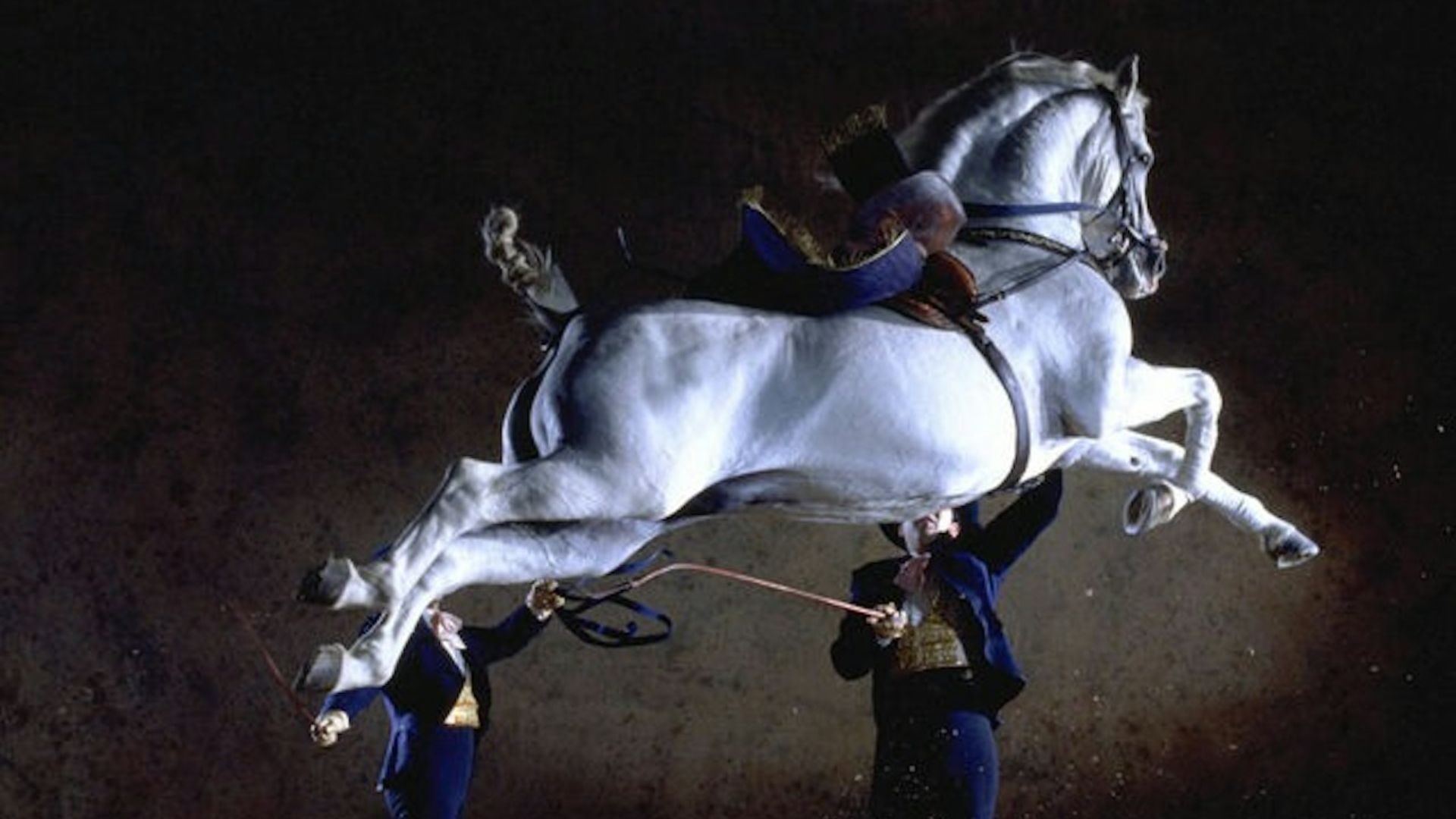
The unique show, "How the Andalusian Horses Dance", is an equestrian ballet accompanied by quintessential Spanish music and 18th century styled costumes, all put together and choreographed using movements based upon Classical Dressage, Doma Vaquera (country-style riding) and traditional equestrian chores.
Available options
General ( rows 4 to 7 )
General: Rows 4 to 7
Central ( rows 2-3 )
Central: Rows 2-3
Preference (row 1 )
Preference: Row 1
What's included
Entrance to the show "How the Andalusian Horse Dance"
Detailed itinerary
1
Each show consists of between six and eight different choreographies, with the same degree of difficulty and entertainment value and scheduled by the school according to the following repertoire;
Doma Vaquera; a demonstration of the skills of this Spanish riding discipline based on traditional cattle herding. The horseman rides his horse around the arena using only one hand, first trotting and later galloping: Changing the rhythm and then performing pirouettes and arreones (breaking into a gallop).
Classical dressage; 'The Colts', 'Airs on Horseback', 'Pas de Deux' "Passage and Piaffer", "Domino on Horseback", "Airs above the ground" and "Fantasy", are just a few of the coreographies which make up the repertoire of the performance. Horses carry out advanced equestrian exercises to pieces of classical music that accompany them while they perform in the arena
Carriage driving; horses also demonstrate their abilities by drawing carriages. These horse-drawn carriages were originally used for transport but are now relegated to sport and exhibitions, using classical harness and driven by coachmen, who dexterously demonstrate this exciting skill.
Work in hand; The horse also obeys its rider even when the horseman is not in the saddle by carrying out classical Haute École dressage exercises such as levades, caprioles, courbettes, piaffe (between pillars), the Spanish walk and long reins.
Carrousel; A group of horses and riders, in unison, perform advanced equestrian exercises in the arena to provide a most fitting end to the performance.
What's not included
Entrance to other facilities
Reviews breakdown
Viator
4.7
114 reviews
5★
92
4★
17
3★
3
2★
1
1★
1
Tripadvisor
4.4
366 reviews
5★
233
4★
81
3★
24
2★
11
1★
17
Important information
Wheelchair accessible
Infants and small children can ride in a pram or stroller
Public transportation options are available nearby
Infants are required to sit on an adult’s lap
Transportation options are wheelchair accessible
All areas and surfaces are wheelchair accessible
Suitable for all physical fitness levels
It is essential to present your printed receipt at the ticket office.
Proof of eligibility must be shown at the ticket office when collecting tickets purchased at discount prices. If no documentary proof is shown, the purchaser must pay the difference corresponding to the full standard ticket price when tickets are available.
The purchase of tickets for performances is exclusively by category (according to price),without any right to select either row or seat number. These are allocated according to order of purchase or booking.
Under no circumstances are you allowed to film, record or take any photographs unless you are an authorized professional, nor may you enter the grounds with any bottles, cans, animals or any other objects which the management considers unsuitable.
The management reserves the right to alter or change the program.
Important notes
• A current valid passport is required to collect the tickets
• Pick up the tickets before 11.30am
About Cádiz
Cádiz, one of the oldest continuously inhabited cities in Western Europe, is a vibrant coastal city in southern Spain. Known for its rich history, beautiful beaches, and lively festivals, Cádiz offers a unique blend of ancient charm and modern energy. Its strategic location on the Atlantic coast makes it a gateway to some of Spain's most stunning natural landscapes.
Top Attractions
Cádiz Cathedral
A stunning Baroque-Rococo cathedral that dominates the city's skyline. It is known for its golden domes and intricate details.
Historical/Architecture
1-2 hours
€9 (includes tower access)
Playa de la Caleta
A beautiful urban beach surrounded by historic buildings and offering stunning sunsets.
Beach
2-3 hours
Free
Torre Tavira
An 18th-century watchtower with a unique camera obscura that offers a panoramic view of the city.
Historical/Architecture
1 hour
€7
Must-Try Local Dishes
Tortillita de Camarones
A crispy fritter made with shrimp, flour, and water
Snack
Contains seafood
Pescaíto Frito
Fried small fish, a local delicacy
Main Course
Contains seafood
Popular Activities
Windsurfing
Kitesurfing
Beach relaxation
Sunset watching
Visiting museums
Attending festivals
Beach activities
Boat tours
Best Time to Visit
March to May, September to October
These months offer the best weather for exploring the city, with comfortable temperatures and fewer tourists compared to the summer peak. The city is vibrant with cultural events and festivals.
15°C to 25°C
59°F to 77°F
Practical Information
Language
- Official: Spanish
- Widely spoken: English (in tourist areas)
- English: Moderately spoken in tourist areas
Currency
Euro (EUR)
Time Zone
GMT+1 (CET), GMT+2 (CEST during daylight saving time)
Electricity
230VV, 50HzHz
Safety Information
Overall Safety Rating: Generally safe
Cádiz is generally safe for travelers, but petty crimes like pickpocketing can occur in crowded areas.
Important Precautions:
- • Keep valuables secure
- • Use official taxi stands
- • Be cautious of pickpockets in crowded areas
Getting there
By air
- Jerez Airport • 35 km (22 miles) from Cádiz
By train
Cádiz Railway Station
By bus
Cádiz Bus Station
Getting around
Public transport
The bus system is efficient and affordable, with frequent services throughout the day.
Taxis
Available • Apps: Cabify, Uber (limited availability)
Rentals
Car, Bike, Scooter
Neighborhoods
Old Town (Casco Antiguo)
La Viña
Day trips
Tarifa
100 km (62 miles) • Full day
A charming town known for its beautiful beaches and windsurfing opportunities.
Seville
120 km (75 miles) • Full day
A historic city with stunning architecture, vibrant culture, and rich history.
Festivals
Carnival of Cádiz • February
Feria de Cádiz • June
Pro tips
- Visit the city's rooftop bars for stunning views and sunset cocktails
- Explore the local markets for fresh produce and unique souvenirs
- Take a day trip to Tarifa for windsurfing and dolphin watching
- Attend the Carnival of Cádiz if visiting in February
- Try the local seafood dishes, especially the fried fish and shrimp fritters
From $25
per person
Price varies by option
Secure booking
Free cancellation available