Sightseeing Cruise of Bergen's Historic Landmarks
Active
1h
For a full refund, cancel at least 24 hours before the scheduled departure time.
Instant confirmation
Mobile or paper ticket accepted
About this experience
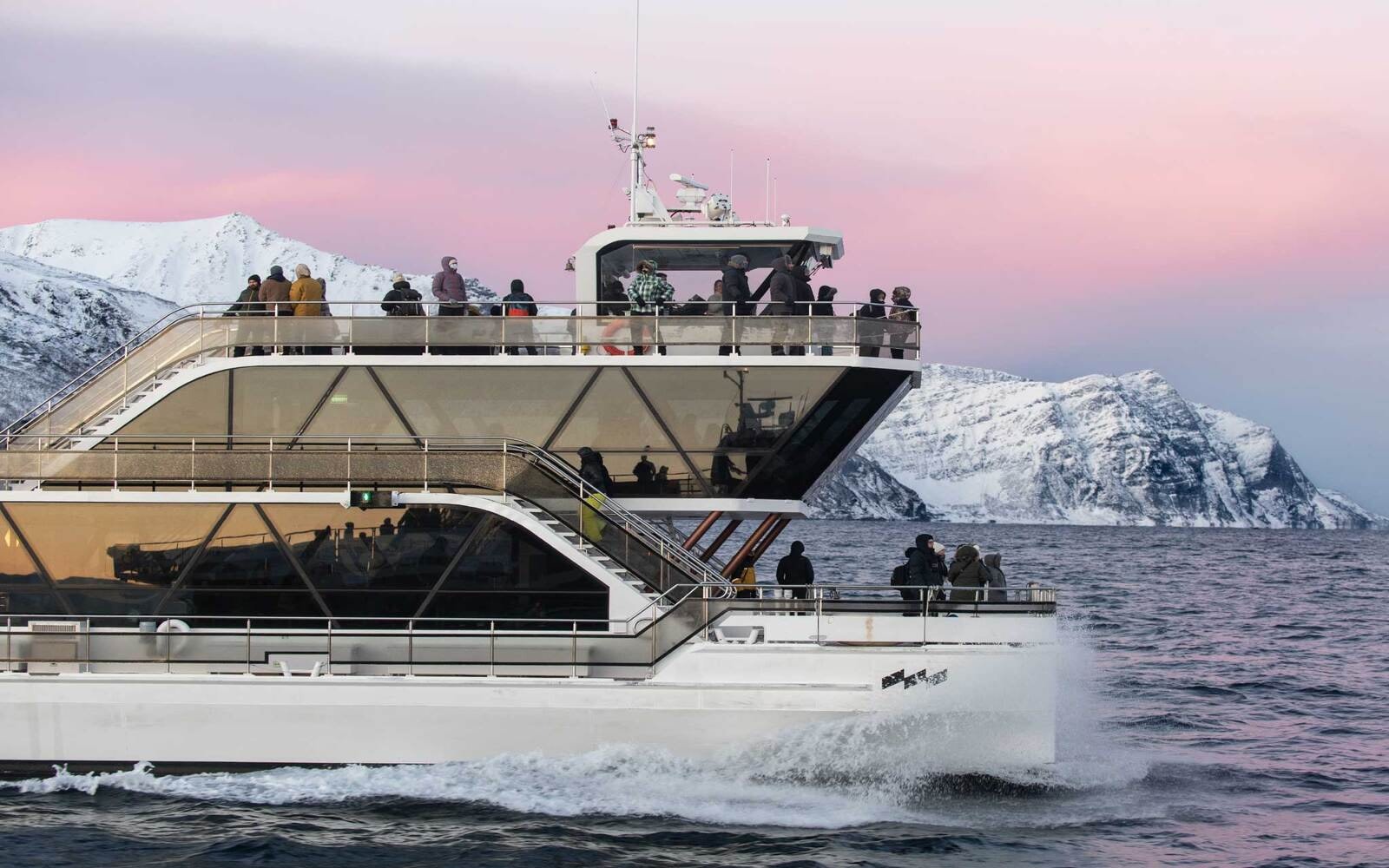
Experience Bergen from the sea on this 60-minute intimate sightseeing cruise in the citiy's harbor and fjord. See some of the oldest and most relevant historic sites in the city, including the medieval fortress that served as the seat of Norwegian power in the 13th century and the colorful emblematic Bryggen wharf that made the city thrive as a successful trading center.
Get glimpses of how the city looked like in the old days when you sail past the old wooden warehouses in Skuteviken and Sandviken, and marvel at the luxury residences blossoming on top of skerries at Måseskjæret or springing out from the mountainside at Verftet.
Hard to spot otherwise, you will sail past the WW2 concrete ruins of the U-Boot Bunker Bruno before waving at the locals bathing in the fjord at the historical Nordnes Sjøbad and returning back to Bryggen and the very heart of Bergen.
Available options
2026
What's included
City Sightseeing Cruise
Detailed itinerary
1
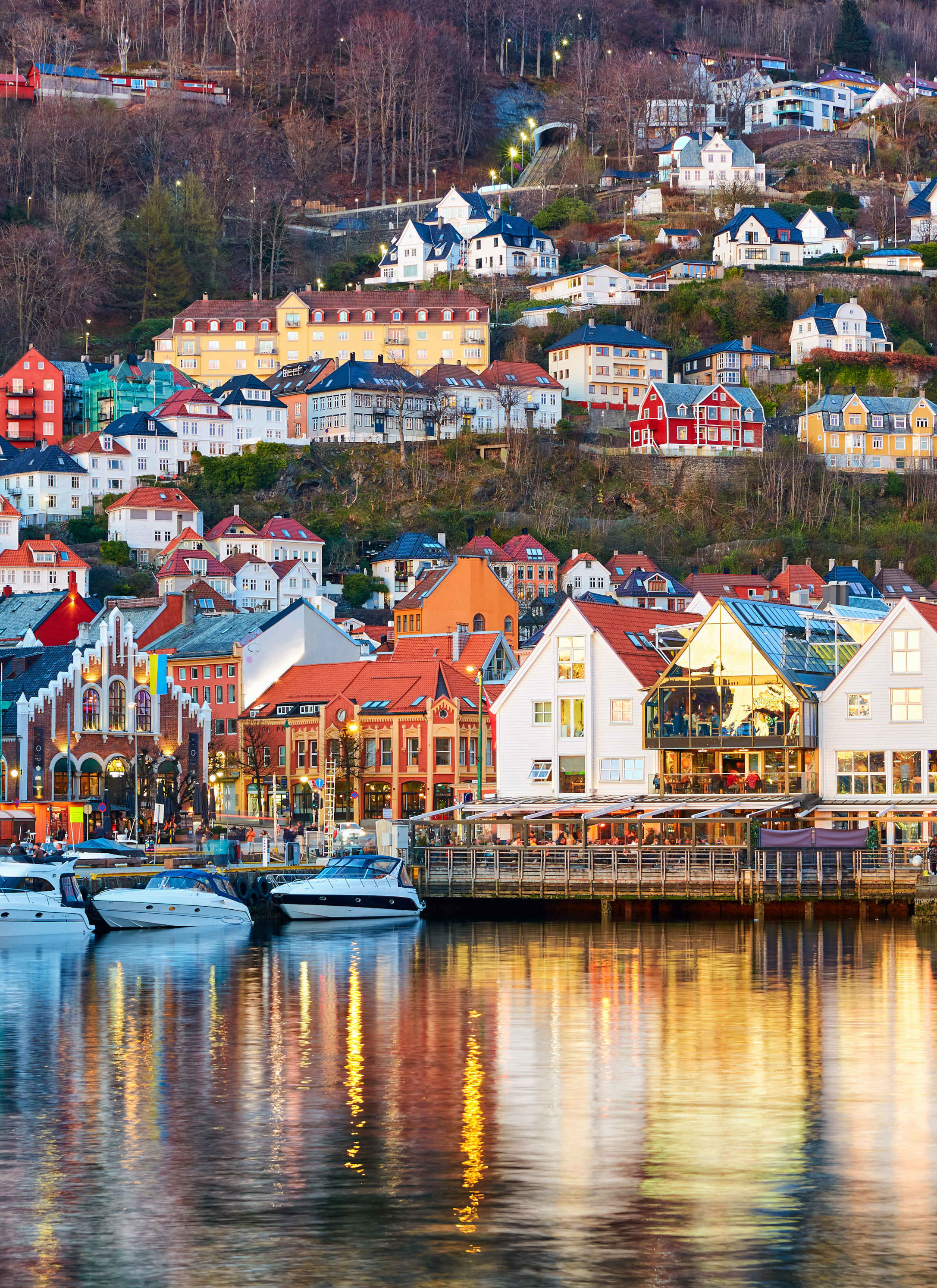
Colorful Bryggen is one of Bergen's and Norway's main attractions. The very first buildings in Bergen were situated at Bryggen, which has been a vibrant and important area of the city for many centuries. Bryggen is now part of our common heritage and has a place on UNESCO’s World Heritage List. The world heritage site consists of the old Hanseatic wharf and buildings, and is one of the best known urban areas from the Middle Ages in all of Norway.
2
The construction of St Mary"s Church was completed around 1180, making it the oldest remaining building in Bergen. Although having been built as a parish church for the Norwegian population, St Mary"s Church was taken over by the city"s large German population in 1408. By belonging to the wealthy Germans, it's richly adorned and escaped the fate of being turned into a ruin, unlike several of the other churches in the city. St Mary’s church is a basilica, i.e the body of the church is divided into a lofty nave and two lower side aisles with separate roofs. This is a feature borrowed from medieval cathedrals, and is relatively seldom found in an ordinary parish church.
3
Bergenhus Fortress and Royal Castle is one of the oldest and best preserved stone fortifications in Norway, and it contains buildings dating back as far as 1240. In medieval times the area was known as Holmen and contained the royal recidence, as well as a cathedral, several churches, the bishop's residence and a Dominican monastery. Excavations have revealed foundations of buildings believed to date back to before 1100. In the 13th century Bergen was the capital of Norway and Holmen was the main seat of Norway's rulers. Håkon's Hall was built in 1247 and It was the largest and most imposing building of the royal residency in the 13th century.
4
Stop 4
Pass by
Skuteviken developed as an isolated suburb of Bergen, under the protection of the Sverresborg fortress which was built in 1183. In Skuteviken, small wooden houses were built without any overall plan, and the growth took place until the end of the 18th century. The name Skuteviken (ship bay) probably comes from the fact that the merchants at Bryggen used the beach at Bradbenken and in Skuteviken as a mooring place when the ships were to be keeled. Although Skuteviken is an old place and located just outside Bergen, it was not until the 20th century that a road was built along the beach into the city.
5
Stop 5
Pass by
Måseskjæret is one of three islets in the bay of Sandviken. The first settlement on the islet came in 1804 and was a summer residence. Towards the end of the 19th century, the rest of the islet was developed. Today, it is the modern apartment building that characterizes Måseskjæret. Måseskjæret 1 is a summer resident that got its current name from the islet just outside. The house was built by Christopher Kahrs in 1795, and is a single-storey building with a high hipped roof and center sheet. Lyststedet Måseskjæret 1 was protected by the National Heritage Board from 1927.
6
Stop 6
Pass by
The 15-kilometre (9.3 mi) long fjord separates the island of Askøy from the mainland Bergen Peninsula, passing right north of the city of Bergen.
Among the major war events on The City Fjord are the naval battle in 1665 between an English and a Dutch fleet, during the Second Anglo-Dutch War. A fleet of sixty Dutch ships, including ten ships from the Dutch East India Company with very valuable cargo, sought refuge in Bergen's neutral port during the pursuit of English warships. The forces in the city joined the battle on the Dutch side. The battle was short and bloody and the English fled. A cannonball stuck in the wall of the Cathedral in Bergen has long been thought to come from this battle.
7
Stop 7
Pass by
The submarine bunker Bruno at Laksevåg, was built into the mountains by the German occupation forces from 1941. 18,000 tonnes of steel, 500,000 tonnes of sand, 120,000 tonnes of cement and 15 tonnes of dynamite were used to build the submarine bunker. The heavy work was carried out by Soviet prisoners of war. It was subjected to a allied air attack in October 1944. Only a few bombs hit the target, most hit the settlement and killed 193 civilians, including 61 children at Holen school. Two of the planes were shot down. Under the five-meter-thick concrete roof, three docks are hiding today. In 1952, the facility was taken into use by the Norwegian Navy and is still used today.
8
Stop 8
Pass by
The original shipyard was built in the 1780s by Georg Brunchorst and Georg Vedeler, and it was called Georgernes Shipyard. In 1853 Annanias Dekke started the yard's heyday. Dekke had learned shipbuilding, in Boston, and a series of magnificent sailing ships were built here. He gained a reputation as one of Norway's best ship designers and shipbuilders. In 1910 a sardine factory was established in parts of the shipyard area, and in the following years it became one of the largest sardine factories in Norway. Today, the factory lives a new life as "USF Verftet", a 12,000 m2 large art and culture arena with a total of 120 companies in all disciplines within art and culture.
9
Fredriksberg Fortress is located on the highest point of the Nordnes peninsula. On the west side there is a steep side down to the sea, and from the fortress there is a good view over Bergen city center and towards Laksevåg. In the 17th century, there were fortifications with cannon batteries around the entire Nordnes peninsula . Fredriksberg fort was a military area until 1904. From the 18th century, the fort also got a fire tower, and in the event of a fire, the military had to fire shots. The number of shots fired told where in the city it burned. In 1926, the fire service here was closed down, but the fire tower still stands on the fort today.
10
Nordnes Sea Water Pool was opened in 1910, and until 1965 the sea water pool consisted of floating wooden boxes in the sea that were attached to land with chains. In 1965, the modern seawater pool was ready and later the water was also heated. Today, Nordnes Sjøbad is a 25m long, heated, saltwater swimming pool. The main pool is kept lovely and warm at a temperature of 29°C (84°F) and you can also take a refreshing dip in the sea. The facilities include indoor changing rooms and a sauna.
11
Bergen Aquarium is a facility from 1960 that shows fish, aquatic animals and penguins. The aquarium also has a tropical section with snakes, crocodiles, spiders and other tropical animals. The aquarium has more than 300 species and over 60 large aquariums. In 2016, an ocean aquarium was opened that can be seen from the outside and inside. Penguins, sea lions, otters and large fish live in four outdoor ponds, and in the tropical section there are snakes, crocodiles, spiders, lizards and other exotic animals.
12
Stop 12
Pass by
In 1561, Bergen got its first customs house, which also became the city's largest wooden building. The jetties protruded more than 100 meters into the sea. Thus one came out on such deep water that even large ships could dock. The Tollbod extension served both as a shelter against the northwest storm and as a narrowing of Vågen, so that it became easier to prevent smuggling.
13
The large, white, stone, cruciform church was consecrated in 1622 as "Holy Trinity Church", but it's generally known as Nykirken (The new church). When the church was originally built in 1622, there were other churches in Bergen that were already several hundred years old, so this church was nicknamed "the new church", a name which has stuck for centuries. It is also an appropriate nickname, since the churches on this site have burned down several times and then been rebuilt, so it literally is usually the "newest" church in the central city.
14
Stop 14
Pass by
Murhvelvingen was built after the town fire in 1561 as a private house and representation for the sheriff of Bergenhus fortress. He had received the king's permission to collect soapstone from a monastery ruins, and this can be seen in corners and frames. The building was damaged by fires in 1625, 1640 and 1643. It was repaired by public funds in the years 1651, and after that used by guards. The lower floor has several smaller basements on each side of the vaulted passage, where there have been shops since the 17th century. Large slate slabs from Hardanger are just as nice today as when the house was built. In the basement, dynamite was also sold until the late 1960s, allegedly enough to blow up the whole city.
15
The Fish Market in Bergen is one of Norway's most visited outdoor markets, and it has a charming location in the heart of the city. The square has been a meeting place for townspeople, merchants, farmers and fishermen for centuries. You can find fresh fish, shellfish and local farm products such as fruits, berries, vegetables and flowers here. There are also several restaurants serving a large selection of seafood. The outdoor Fish Market is open from May to September, while the food hall with outlets and restaurants is open all year. In addition to the merchants on land, there were also historical sales from boats along the quay. Fishermen who lived outside the city rowed into the square to sell the catch of the day before rowing home the same day.
What's not included
Food and drinks
Available languages
Audio guide
EN
Reviews breakdown
Viator
4.1
28 reviews
5★
14
4★
8
3★
2
2★
3
1★
1
Tripadvisor
4.2
16 reviews
5★
7
4★
7
3★
1
2★
0
1★
1
Important information
Infants and small children can ride in a pram or stroller
Service animals allowed
Public transportation options are available nearby
Suitable for all physical fitness levels
Meeting point
Departure from Dreggekaien pier. The pier is lcated in front of Radisson Blu Hotel at Bryggen
Important notes
Ship name: Sogndal
Please meet 15 minutes before departure
About Bergen
Bergen is a picturesque city known for its stunning natural surroundings, vibrant cultural scene, and rich maritime heritage. Nestled between seven mountains and the North Sea, it offers a unique blend of outdoor adventures, historic charm, and modern Norwegian lifestyle.
Top Attractions
Bryggen
Bryggen is a historic wharf and UNESCO World Heritage site featuring colorful wooden houses dating back to the Hanseatic League era.
Historical
1-2 hours
Free to explore, museums may charge entry
Fløyen
Fløyen is one of Bergen's seven mountains, offering panoramic views of the city and surrounding fjords. Accessible by funicular or hiking.
Nature
2-3 hours
NOK 100 for funicular ride (free for hiking)
Bergen Aquarium
A family-friendly attraction showcasing marine life from the Norwegian coast and beyond, including penguins, seals, and a variety of fish.
Nature
2-3 hours
NOK 250-300
Fish Market (Fisketorget)
A bustling market offering fresh seafood, local produce, and traditional Norwegian delicacies. A must-visit for food lovers.
Cultural
1 hour
Free to explore, prices vary for food and souvenirs
Troldhaugen
The former home of the famous composer Edvard Grieg, now a museum offering insights into his life and work.
Historical
2-3 hours
NOK 120-150
Must-Try Local Dishes
Fårikål
A traditional Norwegian stew made with lamb, cabbage, and spices. It's the national dish of Norway and a must-try for its hearty flavor.
Dinner
Contains meat, not suitable for vegetarians or vegans.
Rakfisk
Fermented fish, typically trout or char, served with sour cream, onions, and flatbread. It's an acquired taste but a significant part of Norwegian culinary tradition.
Snack
Contains fish, not suitable for vegetarians or vegans.
Klippfisk
Dried and salted cod, often rehydrated and served in various dishes. It's a staple in Norwegian cuisine and has a unique texture and flavor.
Dinner
Contains fish, not suitable for vegetarians or vegans.
Brunost
A brown, caramel-like cheese made from a mixture of goat's milk and cow's milk whey. It's often served on waffles or with fruit.
Dessert
Contains dairy, not suitable for vegans.
Popular Activities
Hiking
Biking
Kayaking
Paragliding
White-water rafting
Coffee at a café
Strolling through Bryggen
Visiting the Fish Market
Best Time to Visit
June to August
Summer is the peak tourist season with long daylight hours, pleasant temperatures, and numerous outdoor activities. The city is lively with festivals and events.
12°C to 20°C
54°F to 68°F
Practical Information
Language
- Official: Norwegian
- Widely spoken: English, German, Swedish, Danish
- English: Widely spoken
Currency
Norwegian Krone (NOK)
Time Zone
GMT+1 (CET), GMT+2 (CEST during daylight saving time)
Electricity
230VV, 50HzHz
Safety Information
Overall Safety Rating: Very safe
Bergen is a very safe city with low crime rates. However, as with any destination, it's important to stay aware of your surroundings and take basic precautions.
Important Precautions:
- • Keep valuables secure
- • Be cautious of your surroundings
- • Use licensed taxis
Getting there
By air
- Bergen Airport, Flesland • 17 km from city center
By train
Bergen Station
By bus
Bergen Bus Station
Getting around
Public transport
Buses are the primary mode of public transport in Bergen. They are efficient, frequent, and cover most attractions.
Taxis
Available • Apps: Taxi Bergen, InDriver
Rentals
Car, Bike, Scooter
Neighborhoods
Bryggen
Nordnes
Strandkaiten
Fjellveien
Day trips
Hardangerfjord
100 km from Bergen • Full day
Hardangerfjord is Norway's second-longest fjord, offering stunning landscapes, fruit orchards, and waterfalls. It's a perfect day trip for nature lovers and photographers.
Voss
80 km from Bergen • Half day to full day
Voss is a popular destination for outdoor activities, offering hiking, biking, and water sports. It's a great day trip for adventure enthusiasts.
Flam and the Flamsbana Railway
160 km from Bergen • Full day
Flam is a picturesque village known for its stunning fjord views and the famous Flamsbana Railway, one of the world's most scenic train journeys.
Festivals
Bergen International Festival • May
Bergen Food Festival • August
Bergen Jazz Festival • October
Pro tips
- Visit the Fish Market early in the morning for the freshest seafood and a lively atmosphere
- Take the Fløyen funicular or hike up for stunning views of the city and fjords
- Explore the historic Bryggen wharf and its charming alleys and courtyards
- Try traditional Norwegian dishes like fårikål and rakfisk for an authentic culinary experience
- Use the Skyss app for public transport tickets and schedules to save time and money
From $25
per person
Price varies by option
Secure booking
Free cancellation available
Instant confirmation