Revisit WW2 Memorial, Museums, Battlefield & Japanese War Tunnel
Active
12h
All sales are final. No refund is available for cancellations.
Instant confirmation
Mobile or paper ticket accepted
About this experience
Discover the history and gain a personal perspective on World War II by visiting the battlefield sites, artillery museums, Japanese tunnels, hills, and memorials. Pay tribute to the fallen heroes of this global conflict, which spanned from 1939 to 1945. With 40 to 50 million casualties, World War II remains the deadliest and largest conflict in history.
Available options
Revisit WW2 Memorial, Museums, Battlefield & Japanese War Tunnel
Pickup included
What's included
All Fees and Taxes
Air-conditioned vehicle
Detailed itinerary
1
Clark Veterans Cemetery is located in Clark Freeport Zone, Angeles City, Philippines. The cemetery is the burial place for thousands of mainly American veterans and Filipino Scouts who served in the United States Army, and who died in conflicts other than World War II or on military bases in the Philippines.
2
Clark Museum features an expanded collection of artifacts, true-to-life replicas, scenic dioramas, old photographs, murals and interactive displays among others significant to the history of Clark, Pampanga.
The Museum tells of the Filipino spirit of bravery, industry and ingenuity of a nation’s sovereign will running through a narrative across 4 galleries. It briefly tells a story, a bigger world from which Clark grew and speaks of social and economic advances, and a continuing progress.
For a heightened museum experience, its newest attraction includes a 48-seater state-of-the-art 4D Theater featuring a 20-minute documentary film entitled “Risen from the Ashes” which highlights Clark’s rich history past forward to the present. The 4D Theater offers a one-of-a-kind experience which would allow visitors to view the eruption of Mt. Pinatubo in 1991 with spectacular in-theater effects including wind, bubbles and mist to add a breathtaking fourth dimension.
3
Fort Stotsenburg, during the World War II era, was the location of the Philippine Department's 26th Cavalry Regiment, 86th Field Artillery Battalion, and 88th Field Artillery Regiment; along with the Philippine Division's 23rd and 24th Field Artillery Regiments. Also based here were the 12th Ordnance Company and a platoon of the 12th Quartermaster Regiment.
4
Bamban Museum was opened to the public in 2005. It is owned and operated by Rhonie C. Dela Cruz with the assistance of volunteers from the Bamban Historical Society members. The Bamban Historical Society volunteers also conduct battlefield reconnaissance and investigation in the former battlefields of the Bamban and collect relics and artefacts.
These artefacts are on display at the Museum as pieces of the history of the Battle of Bamban Hills. Another particular interest in the Museum is the Aetas of WWII and the WWII Heroes Project exhibit. These activities are long-term research and study of the local veterans of Bamban by the Museum and dedicated to their memory.
Sangguniang Bayan of Bamban, Tarlac, has officially declared a network of World War II tunnels as a municipal historical site and heritage zone. The resolution aims to protect and conserve these tunnels, which played a significant role during the Japanese invasion and the liberation of the Philippines.
5
The Capas National Shrine was built by the Philippine government in honor of all the Filipino and American soldiers who endured the Bataan Death March. After their surrender in Bataan, the Filipino and American prisoners-of-war (POWs) were forced to march by the Japanese Imperial Army, with intent to kill, weaken, and demoralize them.
From Mariveles and Bagac in Bataan, some 60,000 to 80,000 Filipino and American POWs walked to San Fernando Train Station in Pampanga, where they were cramped into boxcars and transported to Capas Train Station in Tarlac. From there, they walked to Camp O’Donnell, which was turned into a Concentration Camp and the final stop of the brutal march by the Imperial Japanese Army. The site where the Filipino POWs were held is now the Capas National Shrine in Tarlac.
6
The CFEZ divided into two areas, the Clark Freeport Zone (CFZ) and the Clark Special Economic Zone (CSEZ). The New Clark City is part of the Clark Special Economic Zone. The CFZ covers the area of the former United States Air Force facility, Clark Air Base. Most of this air base was converted to Clark International Airport and some remained under the control of the Philippine Air Force. Clark Global City is also part of the Clark Freeport Zone.
Clark forms the hub for business, industry, aviation, education, and tourism in the Philippines as well as a leisure, fitness, entertainment and gaming center of Central Luzon.
7
Metropolitan Manila commonly shortened to Metro Manila and formally the National Capital Region. It is the capital region and largest metropolitan area of the Philippines. Located on the eastern shore of Manila Bay, the region lies between the Central Luzon and Calabarzon regions. Encompassing an area of 619.57 km2 (239.22 sq mi) and with a population of 13,484,462 as of 2020. it is composed of sixteen highly urbanized cities: the capital city, Manila, Caloocan, Las Piñas, Makati, Malabon, Mandaluyong, Marikina, Muntinlupa, Navotas, Parañaque, Pasay, Pasig, Quezon City, San Juan, Taguig, and Valenzuela, along with one independent municipality, Pateros. As the second most populous and the most densely populated region in the Philippines, it ranks as the 9th most populous metropolitan area in Asia and the 6th most populous urban area in the world.
What's not included
Lunch
Available languages
Guide guide
JA
EN
Important information
Suitable for all physical fitness levels
About Manila
Manila, the vibrant capital of the Philippines, is a dynamic blend of historic charm and modern urban life. Known for its rich cultural heritage, bustling markets, and diverse culinary scene, it offers a unique experience for every traveler.
Top Attractions
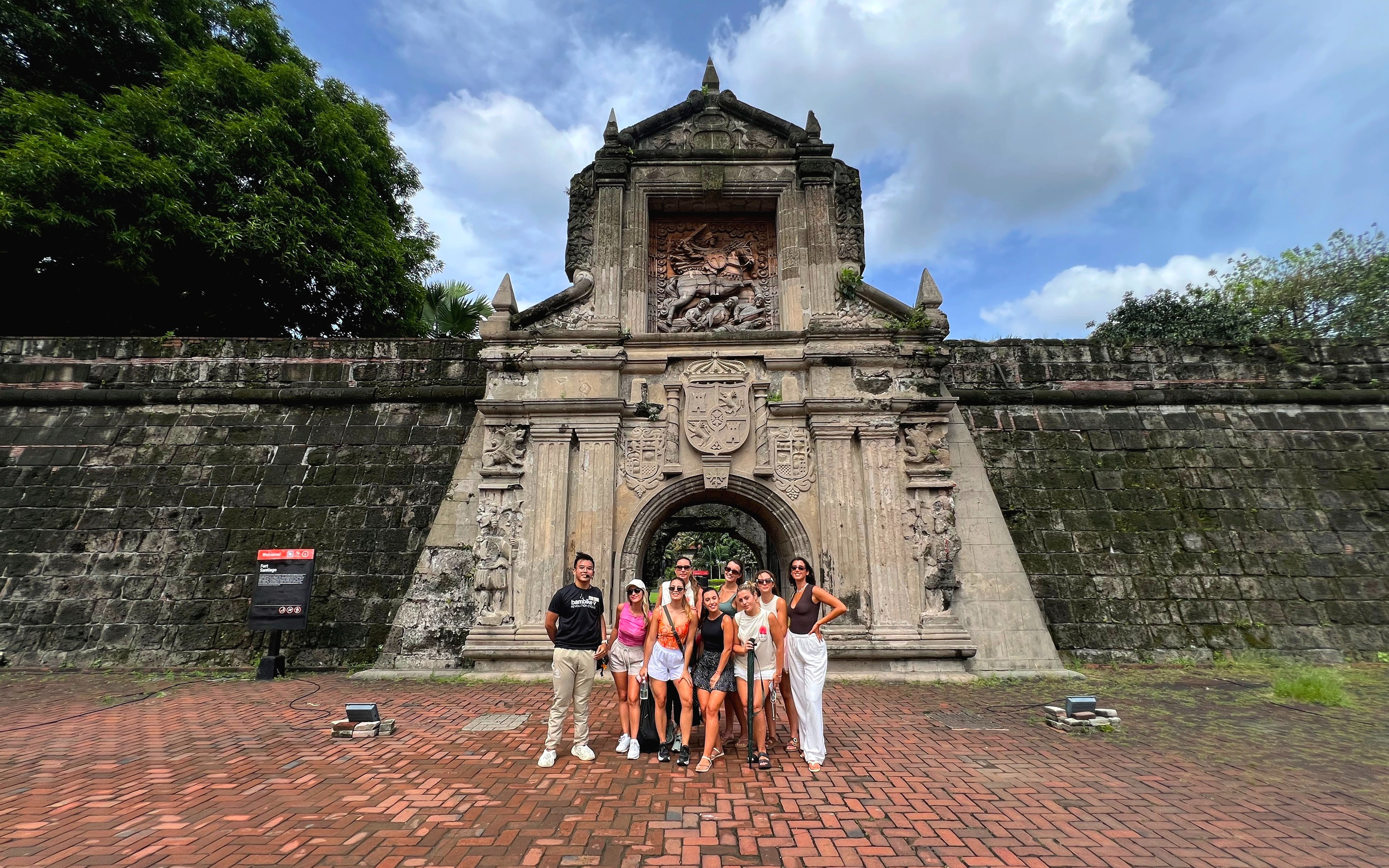
Intramuros
The historic walled city of Manila, Intramuros is a must-visit for its Spanish colonial architecture and rich history.
Historical
Half to full day
Free to PHP 500
Rizal Park (Luneta Park)
A historic urban park dedicated to the national hero Jose Rizal, offering a peaceful retreat in the heart of the city.
Historical
1-2 hours
Free to PHP 50
Manila Ocean Park
A marine-themed park offering a variety of attractions, including an underwater world, marine exhibits, and interactive experiences.
Entertainment
Half to full day
PHP 500-1,500
Binondo
The world's oldest Chinatown, Binondo is a vibrant district known for its Chinese-Filipino heritage, delicious food, and historic sites.
Cultural
Half to full day
Free to PHP 500
National Museum of Fine Arts
A museum showcasing the finest examples of Filipino art, from the colonial period to contemporary works.
Museum
1-2 hours
PHP 50
Must-Try Local Dishes
Adobo
A savory dish made with chicken or pork marinated in vinegar, soy sauce, garlic, and other spices, then braised until tender.
Main Dish
Can be made vegetarian or vegan by substituting meat with tofu or mushrooms.
Sisig
A sizzling dish made with chopped pork face, ears, and other parts, seasoned with calamansi, chili peppers, and onions.
Appetizer
Contains pork, not suitable for vegetarians or vegans.
Halo-Halo
A popular Filipino dessert made with shaved ice, sweet beans, jellies, fruits, and topped with leche flan, ube halaya, and ice cream.
Dessert
Can be made vegetarian or vegan by omitting dairy-based toppings.
Lechon
A whole roasted pig, crispy on the outside and tender on the inside, often served during special occasions and festivals.
Main Dish
Contains pork, not suitable for vegetarians or vegans.
Popular Activities
Canyoneering at Pagsanjan Falls
Ziplining at Subic Bay
Island hopping in Batangas
Picnicking in Tagaytay
Swimming at Laiya Beach
Dining at Greenbelt Chapel
Exploring Intramuros
Visiting Binondo Chinatown
Best Time to Visit
December to February
This is the coolest and driest time of the year, making it ideal for outdoor activities and sightseeing.
22°C to 32°C
72°F to 90°F
Practical Information
Language
- Official: Filipino (Tagalog), English
- Widely spoken: English, Chinese (Mandarin, Hokkien, Cantonese), Spanish
- English: Widely spoken
Currency
Philippine Peso (PHP)
Time Zone
GMT+8
Electricity
220VV, 60HzHz
Safety Information
Overall Safety Rating: Exercise caution
Manila is generally safe for tourists, but petty crime, such as pickpocketing and scams, can occur, especially in crowded areas and tourist hotspots. Exercise caution and be aware of your surroundings.
Important Precautions:
- • Be cautious of strangers approaching you, especially in crowded areas
- • Keep your valuables secure and out of sight
- • Use reputable tour operators and transportation services
Getting there
By air
- Ninoy Aquino International Airport • 7 km from city center
By train
PNR Manila Station
By bus
Taft Avenue Terminal, Cubao Terminal
Getting around
Public transport
Iconic and affordable, but can be crowded and slow.
Taxis
Available • Apps: Grab
Rentals
Car, Bike, Scooter
Neighborhoods
Intramuros
Binondo
Makati
Malate
Quezon City
Day trips
Corregidor Island
46 km from Manila • Full day
A historic island fortress that played a significant role in World War II, offering a glimpse into the Philippines' wartime past.
Pagsanjan Falls
100 km from Manila • Full day
A stunning waterfall located in the province of Laguna, offering a picturesque and refreshing escape from the city.
Tagaytay
55 km from Manila • Half to full day
A popular weekend destination known for its cool climate, stunning views of the Taal Volcano, and a variety of dining and accommodation options.
Festivals
Sinulog Festival • Third Sunday of January
Pistahan ng Pulilan • Last Sunday of April
Ligaya sa Kalinga Festival • June 20-25
Pro tips
- Learn a few basic phrases in Tagalog, such as 'kumusta' (hello) and 'salamat' (thank you), to show respect and appreciation for the local culture
- Carry small denominations of PHP for convenience, as some establishments may not have change for large bills
- Use app-based transportation services, such as Grab, for safer and more convenient travel, especially at night
- Be patient and understanding, as the pace of life in the Philippines can be slower than in some Western countries
- Try local delicacies and street food, but be cautious and choose vendors with high turnover and good hygiene practices
From $25
per person
Price varies by option
Secure booking
Free cancellation available
Instant confirmation