




Discovering Ancient Treasures: Sidon, Tyre &Magdouche from Beirut
Active
8h
For a full refund, cancel at least 24 hours before the scheduled departure time.
Instant confirmation
Mobile or paper ticket accepted
About this experience
Embark on an unforgettable journey through history and culture with our Private Full-Day Tour to Sidon, Tyre, and Maghdouche from Beirut. Immerse yourself in the rich tapestry of Lebanon's past as you explore ancient ruins, vibrant markets, and sacred sites nestled along the Mediterranean coast. Led by experienced guides, this exclusive excursion promises a personalized experience tailored to your interests, ensuring a day filled with discovery and wonder. Join us as we uncover the treasures of Sidon, Tyre, and Maghdouche, and create memories to last a lifetime.
Available options
Discovering Ancient Treasures: Sidon, Tyre &Magdouche from Beirut
Pickup included
What's included
Private transportation
Tour Leader
Hotel pick up & drop off
Air-conditioned vehicle
Local Guide in Tyre
Detailed itinerary
1
Sidon, one of the oldest Phoenician cities, was founded in the 3rd millennium BC and became prosperous in the 2nd. Sidon was famous for its purple dyes and glassware and Jesus visited it. During the Crusades, Sidon changed hands several times and was destroyed and rebuilt.
2
Stop 2
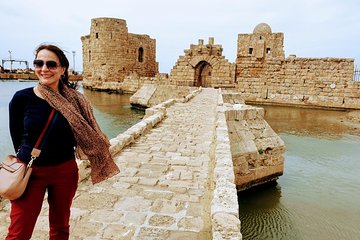
The Sidon Sea Castle was built by the crusaders in the thirteenth century on a small island, connected to the mainland by a causeway, as a fortress of the holy land. It is one of the most prominent historical sites in the port city of Sidon, Lebanon. The castle was largely destroyed by the Mamluks in 1291 and was later restored by Fakhr el-Dine Maan II in the early 17th century.
Old prints of the fortress show it to be one of great beauty, but little remains of the embellishments that once decorated its ramparts.
3
The souk of Sidon is the center of all the commercial activities of retail, as well as craft industry.
The souk is a maze of narrow alleyways with small kiosks, shops and cafes, street merchant, butchers, grocers, shoe-makers, tailors and jewelers.
4
Our Lady of Awaiting, also known as Our Lady of Mantara, is a Melkite Greek Catholic shrine in Maghdouché, Lebanon, discovered on 8 September 1721 by a young shepherd. The shrine consists of a tower crowned with the statue of the Virgin and Child, a cathedral, a cemetery and a sacred cave believed to be the one where the Virgin Mary rested while she waited for Jesus.
5
Tyre is an ancient Phoenician port city and It is the home of Elissar, the Phoenician princess who founded Carthage. It was once famous across the world for its purple dye made from murex sea snails. Two main archaeological sites – “Al-Bass” and “Al-Mina” – are testimony to its historical significance. It has a wonderful seaside location and It's a popular holiday destination with excellent and cleanest beaches
The town's foundations date back to approximately 2750 BC, after which it was ruled by the Egyptians and then the famous King Hiram, under whom it prospered. Later colonized variously by the Assyrians, Neo-Babylonians, Greeks, Seleucids, Romans, Byzantines, Arabs, Crusaders, Mamluks and Ottomans.
6
Al Bass Archaeological Site is the largest and the best-preserved example of a Roman Hippodrome. The sector of Tyre El Bass, constituting the principal entrance of the town in antique times, comprises the remains of the necropolis, on either side of a wide monumental causeway dominated by a Roman triumphal arch dating from the 2nd century AD. Among the other vestiges are an aqueduct and the hippodrome of the 2nd century, one of the largest of the Roman world. site contain a Necropolis with several hundred well-preserved sarcophagi, an intact Roman road, an aqueduct and a monumental arch.
What's not included
Lunch
Gratuities
Available languages
Guide guide
AR
EN
Important information
Specialized infant seats are available
Suitable for all physical fitness levels
About Beirut
Beirut is the capital and largest city of Lebanon, renowned for its rich history, vibrant culture, and stunning Mediterranean coastline. Known as the 'Paris of the Middle East,' it offers a unique blend of ancient ruins, modern luxury, and bustling street life.
Top Attractions
Beirut Central District
The heart of Beirut, this district is a blend of modern skyscrapers and ancient ruins, offering a glimpse into the city's rich history and vibrant present.
Historical/Architecture
Half day to full day
Free to moderate
National Museum of Beirut
One of the most important archaeological museums in the Middle East, showcasing artifacts from various periods of Lebanese history.
Museum
2-3 hours
Moderate (around $5-$10)
Raouche Rock
A stunning natural limestone rock formation rising from the Mediterranean Sea, offering breathtaking views and a popular spot for photos.
Nature/Scenic
1-2 hours
Free (unless dining at the restaurant)
Byblos
One of the oldest continuously inhabited cities in the world, Byblos offers ancient ruins, a charming old souk, and a picturesque harbor.
Historical/Cultural
Half day to full day
Moderate (entry fees for some sites)
Must-Try Local Dishes
Hummus
A creamy dip made from chickpeas, tahini, lemon juice, and garlic, often served with pita bread.
Appetizer
Vegetarian, Vegan
Tabbouleh
A refreshing salad made from parsley, bulgur wheat, tomatoes, and lemon juice.
Appetizer
Vegetarian, Vegan
Kibbeh
A dish made from ground meat (usually lamb or beef) mixed with bulgur and spices, often fried or baked.
Appetizer
Contains meat
Kafta
Ground meat (usually lamb or beef) mixed with spices and herbs, often grilled or fried.
Main Course
Contains meat
Popular Activities
Hiking in the nearby mountains
Scuba diving and snorkeling in the Mediterranean
Beach lounging at Raouche or Dbayeh
Spa and wellness treatments
Visiting museums and historical sites
Attending local festivals and events
Swimming and water sports
Boat tours along the coast
Best Time to Visit
March to May, September to November
Spring and autumn offer the best weather for sightseeing and outdoor activities. The temperatures are comfortable, and the city is in full bloom during these seasons.
15°C to 28°C
59°F to 82°F
Practical Information
Language
- Official: Arabic
- Widely spoken: French, English
- English: Moderately spoken
Currency
Lebanese Pound (LBP)
Time Zone
GMT+2 (EET)
Electricity
220VV, 50HzHz
Safety Information
Overall Safety Rating: Exercise caution
Beirut is generally safe for tourists, but it's important to be aware of your surroundings and take precautions to ensure a safe and enjoyable trip. Petty crime and scams can occur, especially in tourist areas.
Important Precautions:
- • Be aware of your surroundings and keep valuables secure
- • Use reputable taxi services or ride-hailing apps
- • Avoid walking alone at night in isolated areas
Getting there
By air
- Rafic Hariri International Airport • 9 km (5.6 miles) from city center
By bus
Charles Helou Bus Station, Dawra Bus Station
Getting around
Public transport
Buses are the most common form of public transport, but they can be crowded and may not have fixed schedules.
Taxis
Available • Apps: Bolt
Rentals
Car, Bike, Scooter
Neighborhoods
Gemmayzeh
Hamra
Achrafieh
Day trips
Byblos
40 km (25 miles) • Half day to full day
One of the oldest continuously inhabited cities in the world, Byblos offers ancient ruins, a charming old souk, and a picturesque harbor.
Jeita Grotto
20 km (12 miles) • Half day
A stunning natural limestone cave system with a breathtaking underground river and waterfalls, offering a unique and unforgettable experience.
Harissa
20 km (12 miles) • Half day
A picturesque hilltop town offering panoramic views of the Mediterranean Sea and the famous Our Lady of Lebanon shrine, a popular pilgrimage site.
Festivals
Beirut International Film Festival • October to November
Beirut Jazz Festival • July
Eid al-Fitr • Varies by lunar calendar (usually April to June)
Pro tips
- Learn a few basic phrases in Arabic to enhance your experience and interact with locals
- Visit the Beirut Central District early in the morning or late in the afternoon to avoid crowds and the heat
- Try local street food like falafel, shawarma, and manakish for an authentic and affordable dining experience
- Use ride-hailing apps like Bolt for a more convenient and reliable taxi experience
- Explore the city's vibrant nightlife in neighborhoods like Gemmayzeh and Hamra, where you'll find a mix of bars, clubs, and live music venues
From $25
per person
Price varies by option
Secure booking
Free cancellation available
Instant confirmation


