Palermo half day tour, (4 hour)
Active
3h - 4h
All sales are final. No refund is available for cancellations.
Manual confirmation
Mobile or paper ticket accepted
About this experience
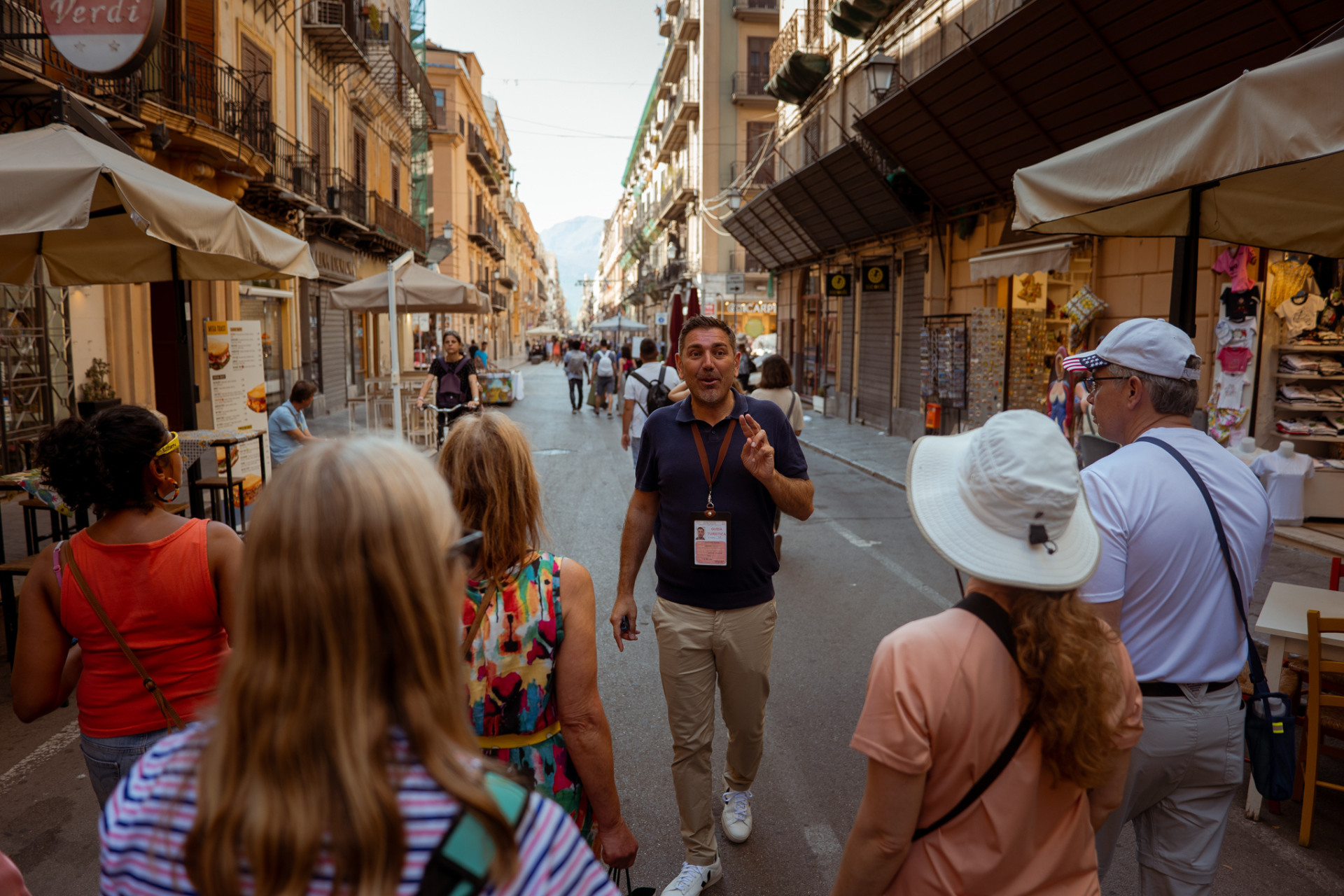
The tour will allow you to visit in detail the beautiful monuments of the city and give you the opportunity to try the specialties of Sicilian street food.
Available options
Palermo half day tour, (4 hour)
Pickup included
What's included
Air-conditioned vehicle
Italian and English speaking driver (no guide)
Detailed itinerary
1
More than 450 years after her death, the bones of Saint Rosalia, miraculously found inside the cave on Mount Pellegrino, freed Sicily from the plague in the Jubilee Year, under the Pontificate of Urban VIII.
The Sanctuary (445 m above sea level) is one with the cave
where, on July 15, 1624, the bones of Saint Rosalia were found.
Its structure, completed in 1629, is very particular:
in the first part there is the 17th century façade leaning against the rock;
entering we have a finely crafted vestibule;
immediately after, we have a dome "open" to the sky
and, finally, past a sumptuous iron gate, we enter the karst cave that we could define as the "heart" of the Sanctuary.
Since December 1946, the Sanctuary has been cared for by the Religious of the Opera Don Orione
(Small Work of Divine Providence)
2
Stop 2
Mondello water is known to be crystal clear and transparent with a shallow and sandy bottom, ideal for families. There you can find areas equipped with beaches and bathing establishments.
3
Stop 3
Teatro Massimo in Palermo is the largest opera house
of Italy and third in Europe.
It is a neoclassical structure, located in Piazza Verdi, which is also famous for its architectural elegance
4
Stop 4
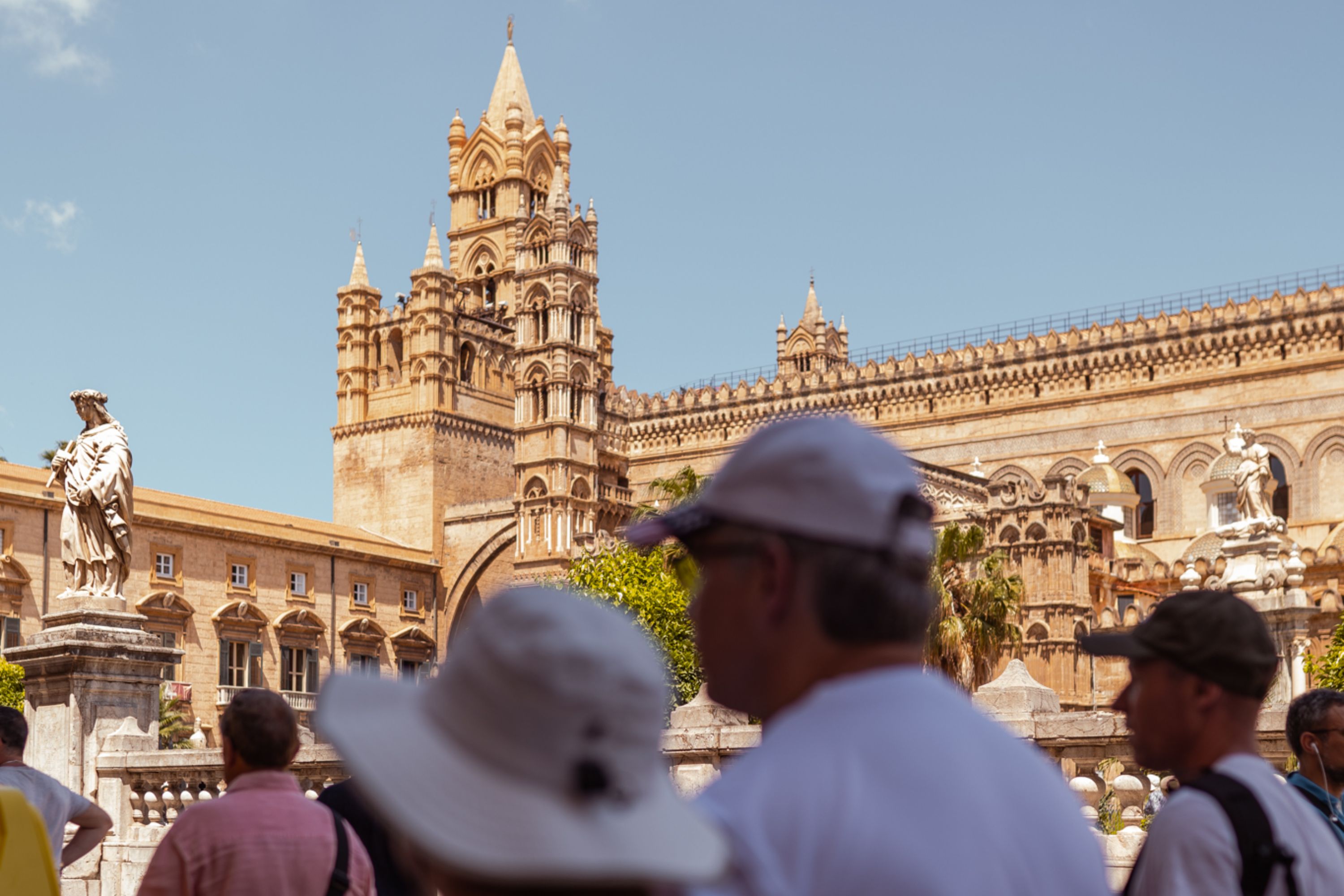
Visit to the Cathedral of Palermo, a Norman Arab route, Unesco Heritage
5
Stop 5
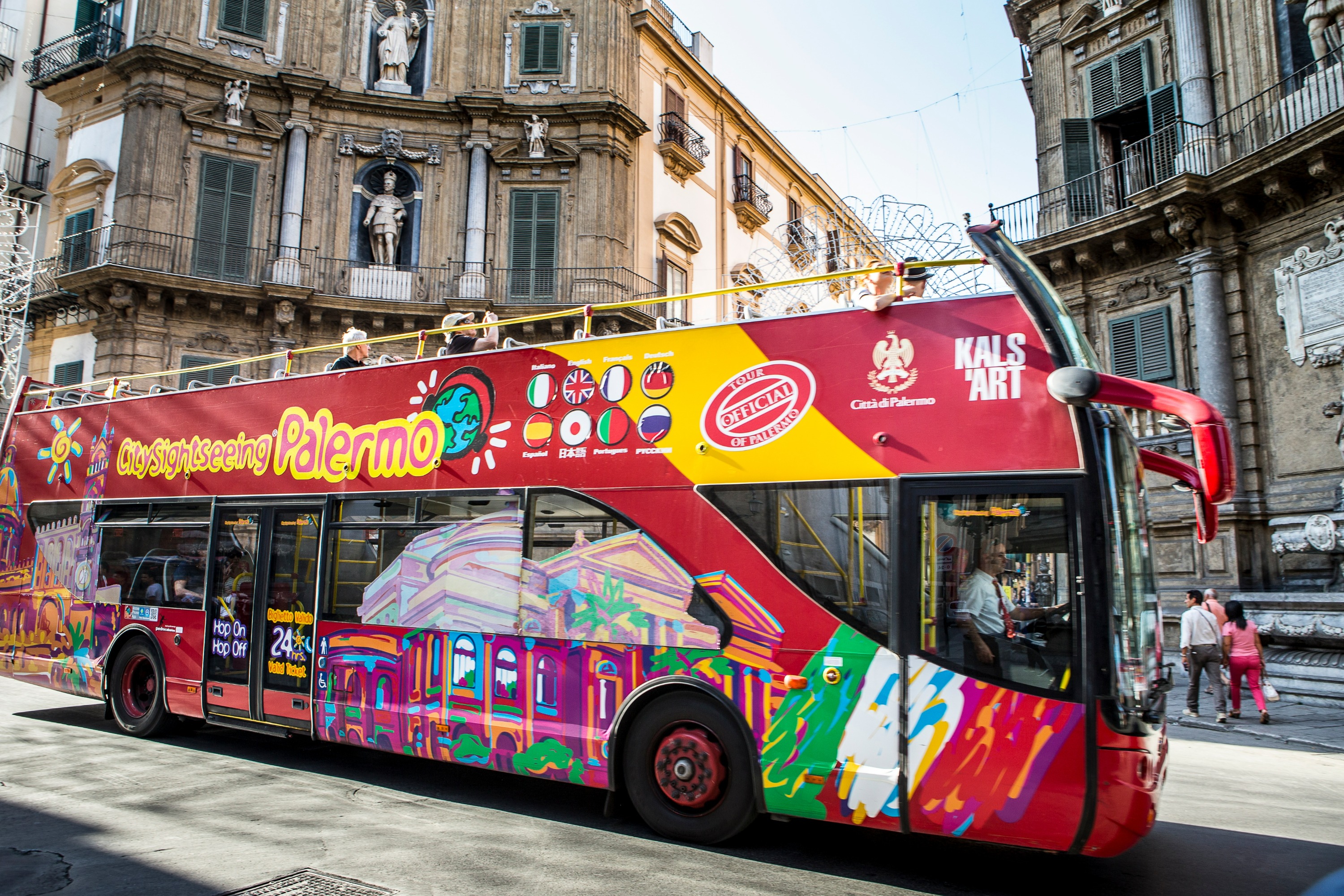
The so-called four songs, located in Piazza Villena, represent the center of Baroque Palermo
6
Stop 6
The Church of the Gesù, better known as Casa Professa, built in 1564 by the Jesuit fathers, certainly represents the most significant example of Baroque art in Palermo. Despite having incorporated part of the previous structures, the new church was sumptuous in shape and the dome was completed in 1683.
The decoration was worked on from 1658 until the end of the 18th century. From 1703 a new phase of decoration of the ceilings and vaults began; the stuccoes were made by Procopio Serpotta, while the frescoes were the work of Antonio Grano. The façade, designed in the late 16th century, is placed on a staircase; niches have been placed on the openings that house the statues of the Virgin of the Grotto with Jesus, St. Ignatius and St. Francis.
7
Stop 7
Piazza Pretoria, also called piazza della Vergogna, is located on the edge of the Kalsa district, near the corner of the Cassaro with via Maqueda, a few meters from the Quattro Canti, the exact center of the historic city of Palermo.
Piazza Pretoria, also called piazza della Vergogna, is located on the edge of the Kalsa district, near the corner of the Cassaro with via Maqueda, a few meters from the Quattro Canti, the exact center of the historic city of Palermo.
What's not included
museum ticket
Lunch
Reviews breakdown
Viator
4.3
12 reviews
5★
8
4★
2
3★
1
2★
0
1★
1
Tripadvisor
5.0
1 reviews
5★
1
4★
0
3★
0
2★
0
1★
0
Important information
Specialized infant seats are available
Infants and small children can ride in a pram or stroller
Suitable for all physical fitness levels
About Palermo
Palermo, the vibrant capital of Sicily, is a city of rich history, stunning architecture, and a unique cultural blend. Known for its Norman-Arab-Byzantine influences, Palermo offers a mix of grand palaces, bustling markets, and delicious street food that will captivate any traveler.
Top Attractions
Palermo Cathedral
A stunning example of Norman-Arab-Byzantine architecture, Palermo Cathedral is a must-visit for its historical significance and beautiful interior.
Historical/Religious
1-2 hours
€7 for the cathedral and cloister
Palermo Cathedral
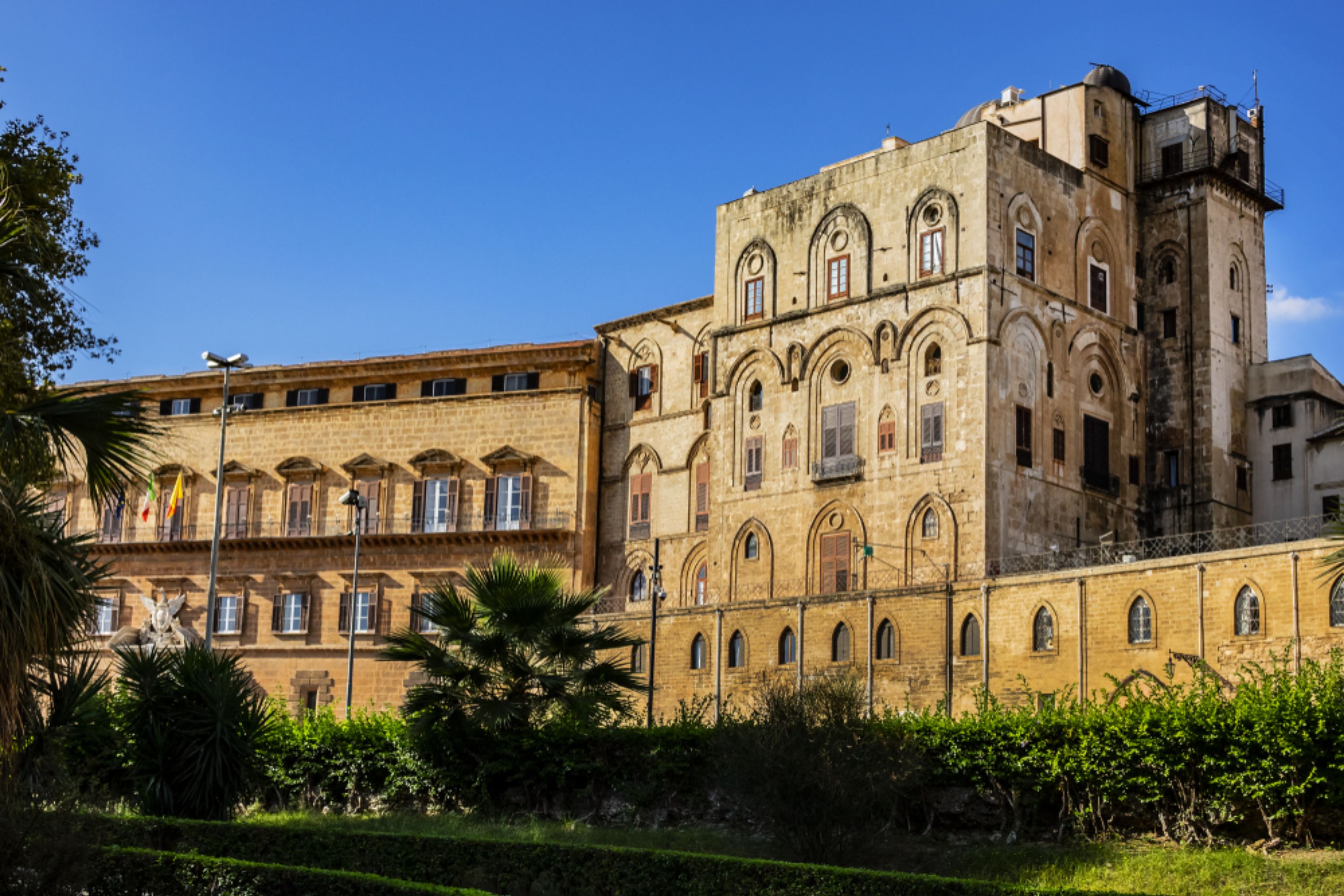
This grand palace was the seat of the Norman kings of Sicily. It houses the Palatine Chapel, known for its stunning mosaics and Arabic-Norman architecture.
Historical/Architectural
1.5-2 hours
€12 for the palace and chapel
Ballarò Market
One of Palermo's most famous street markets, Ballarò offers a vibrant atmosphere with fresh produce, street food, and local crafts.
Cultural/Shopping
1-2 hours
Free to explore
Monreale Cathedral
Located just outside Palermo, Monreale Cathedral is famous for its stunning Byzantine mosaics and is a UNESCO World Heritage Site.
Historical/Religious
2-3 hours including travel
€6 for the cathedral and cloister
Teatro Massimo
The largest opera house in Italy and one of the most famous in the world, Teatro Massimo is a masterpiece of neoclassical architecture.
Architectural/Entertainment
1 hour for a tour
€7 for a guided tour
Must-Try Local Dishes
Arancini
Fried rice balls stuffed with ragù, mozzarella, and peas.
Snack
Vegetarian options available
Panelle
Chickpea fritters, a popular street food in Palermo.
Snack
Vegan
Pasta alla Norma
Pasta with tomato sauce, fried eggplant, ricotta salata, and basil.
Main Course
Vegetarian
Cannoli
Crispy pastry tubes filled with sweet ricotta.
Dessert
Vegetarian
Popular Activities
Hiking in the nearby mountains
Swimming and snorkeling at Mondello Beach
Beach lounging at Mondello Beach
Enjoying a leisurely meal at a seaside restaurant
Visiting museums and historical sites
Attending local festivals and events
Boat tours to the nearby islands
Swimming and water sports at the beach
Best Time to Visit
April to June, September to October
These months offer pleasant weather and fewer crowds. It's ideal for sightseeing and outdoor activities.
15°C to 30°C
59°F to 86°F
Practical Information
Language
- Official: Italian
- Widely spoken: Sicilian, English (limited)
- English: Limited
Currency
Euro (EUR)
Time Zone
GMT+1 (Central European Time), GMT+2 during daylight saving time
Electricity
230VV, 50HzHz
Safety Information
Overall Safety Rating: Generally safe
Palermo is generally safe for tourists, but petty crime and pickpocketing can occur in crowded areas. Be aware of your surroundings and take precautions to protect your belongings.
Important Precautions:
- • Keep valuables secure
- • Use licensed taxis
- • Be cautious of strangers approaching you
Getting there
By air
- Palermo Falcone-Borsellino Airport • 32 km from city center
By train
Palermo Centrale
By bus
Palermo Centrale Bus Station
Getting around
Public transport
The bus system is the primary mode of public transport in Palermo. It's affordable but can be crowded during peak hours.
Taxis
Available • Apps: FreeNow, ItTaxi
Rentals
Car, Bike, Scooter
Neighborhoods
Kalsa
Vigàta
Mondello
Day trips
Monreale
7 km • Half day
Monreale is famous for its stunning Byzantine mosaics and the Benedictine Abbey.
Cefalù
70 km • Full day
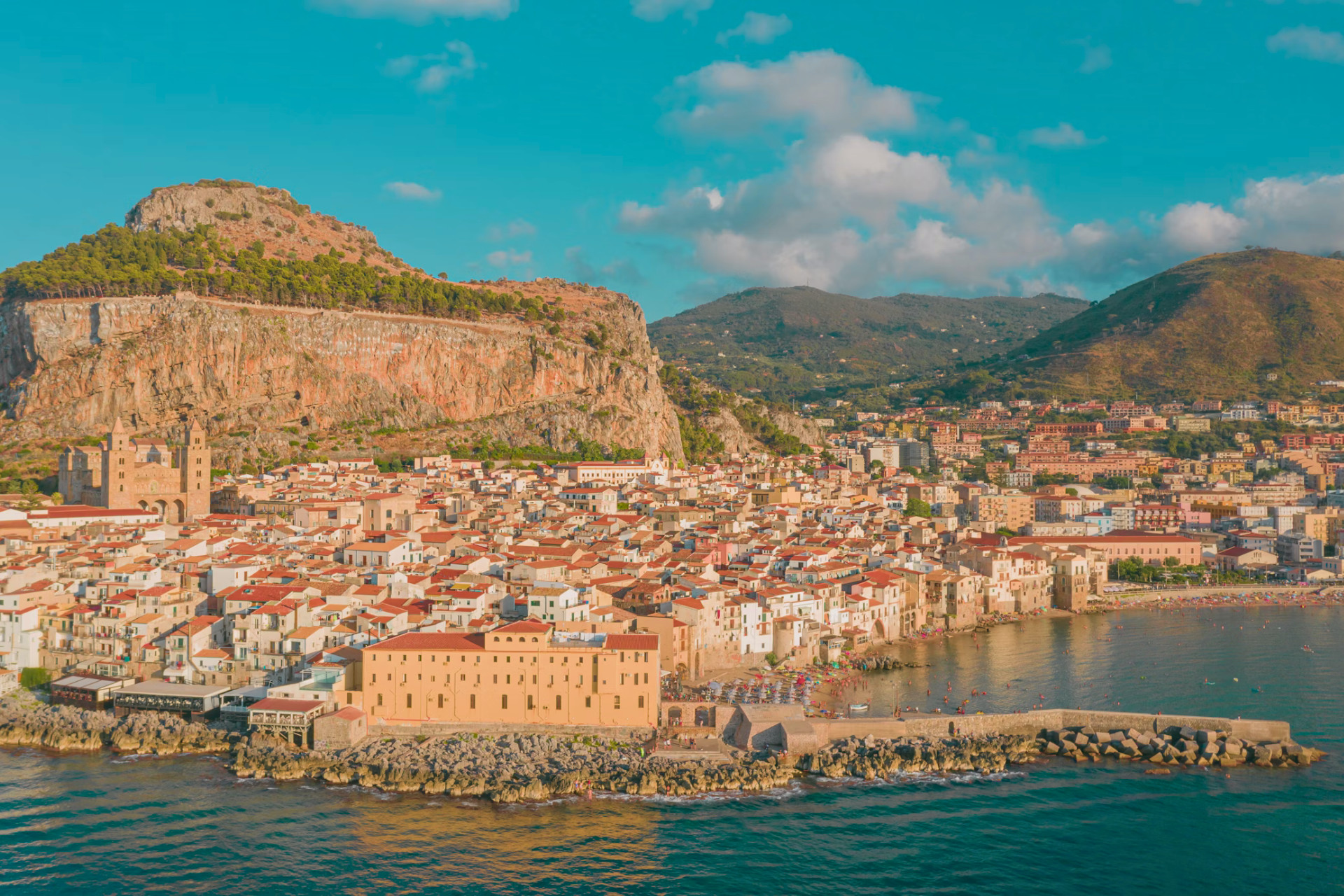
A charming coastal town known for its beautiful beach and medieval cathedral.
Erice
120 km • Full day
A medieval hilltop town with stunning views and well-preserved architecture.
Festivals
Festa di Santa Rosalia • July 10-15
Sagra del Mandarino • January to February
Palermo Pride • June
Pro tips
- Visit the markets early in the morning for the best selection and freshest produce
- Learn a few basic Italian phrases to enhance your experience and interact with locals
- Take a food tour to discover the best street food and local specialties
- Explore the city on foot to discover hidden gems and charming streets
- Visit the cathedral and other religious sites early in the morning to avoid crowds
From $25
per person
Price varies by option
Secure booking
Free cancellation available