Queluz & Belem Full Day Tour
Active
8h
For a full refund, cancel at least 24 hours before the scheduled departure time.
Instant confirmation
Mobile or paper ticket accepted
About this experience
In the city of Queluz, we highlight the extremely important monument, the beautiful Palace of Queluz often called “the Portuguese Versailles” of the eighteenth century. Upon arriving in Belém, there is time to appreciate the great monuments such as the Belem Tower, the Monastery dos Jerónimos, a UNESCO World Heritage Site, the Monument to the Discoveries, as well as the National Coach Coach Museum, which unites a unique collection of 16th-19th-century gala and touring cars in the world.
We’re specialized in services and unique travels experiences in Portugal. Our experience is your garantee that we understand, meet and exceed your expectations. We invite you to experience the authenticity of a full day tour through Queluz and Belém.
Where you will know the best of Portugal!
Available options
Private Tour
Executive Sedan: Private Tour in Executive Class vehicle (BMW 5 Series / Mercedes E Class)<br/>Pickup included
Queluz & Belem Full Day Tour
Pickup included
What's included
Private transportation
Bottled water
Air-conditioned vehicle
Free Wifi Internet
Detailed itinerary
1
Stop 1
The Palace of Queluz and its gardens, represents one of the finest examples of late 18th-century Portuguese architecture.
Built at the orders of Pedro III, the husband of D. Maria I (1734-1816), and used as a royal residence, this palace is one of the finest examples of Portuguese architecture in the late 18C.
It has been further enriched by an important museum of decorative art, whose collections mostly belonged to the royal family and are exhibited in an appropriate setting. Many of the rooms are decorated in the rocaille style, such as the superb Throne Room, its walls lined with mirrors and magnificent carved gilded woodwork.
The surrounding gardens are embellished with fountains and ornamental ponds, where sparkling water spouts forth from mythological figures. Particularly impressive is the group of sculptures around the Neptune Basin.
2
Stop 2
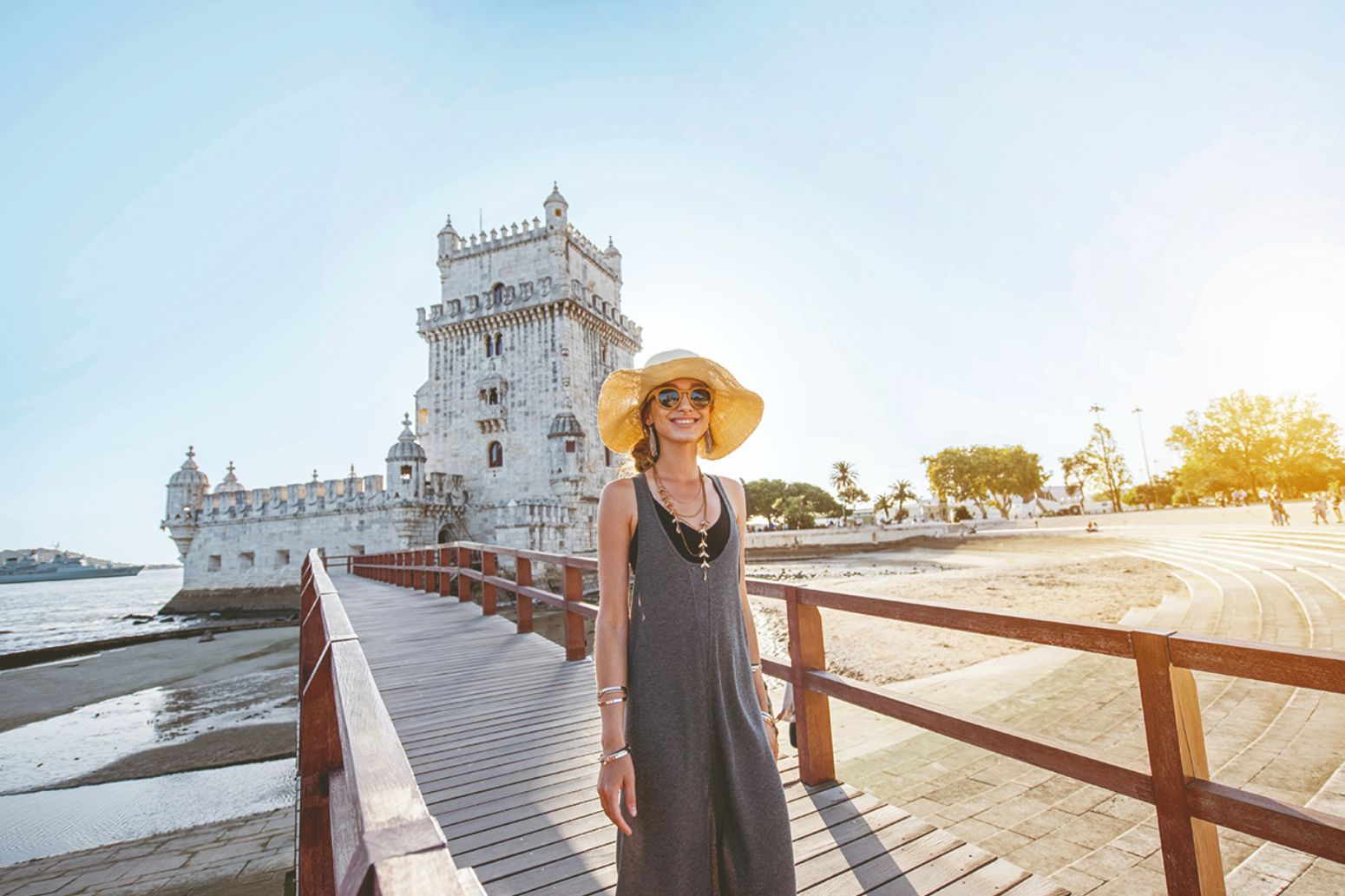
The harmony and delicate ornamentation of the Tower of Belém suggests a finely cut jewel to all laying eyes on her. However, its contemporaries took a rather different perspective: a formidable and imposing bastion defending the entrance to the Tagus and capable of combining firepower with the St Sebastian tower on the other bank of the river. Its construction was ordered by king Manuel I (1495-1521) and it was built by Francisco de Arruda between 1514 and 1521. The tower was built on a basalt island that was close to the right bank of the Tagus in front of Restelo beach. However, with the gradual change in the course of the river, the tower has ended practically swallowed up by the bank.
The tower takes on a quadrangular shape reminiscent of medieval castles and has a polygon bulwark, a defensive feature that meant it could withstand heavy bombardment from out at sea. The watch posts, complete with burgeoning cupolas and located on each corner, demonstrate the influence of Moroccan fortifications. Apart from such Moorish influences, the decoration otherwise takes on the Manueline style in the surrounding stone layouts, the heraldic designs and even the famous rhinoceros, the first stone statue of the animal in Europe.
The most highly decorated side of the Tower is south facing, with its narrow balcony. On the cloistral wall that rises above the bulwark, there is a sculptured image of the Virgin with Child dating back to the 18th century, forming the prow of the tower.
The interior is worth a visit simply to get up to the top floor with the effort paid back many times over by wonderful views over the river Tagus estuary and the western side of a city that is still able to evoke the Era of Discovery in Portuguese history.
3
Stop 3
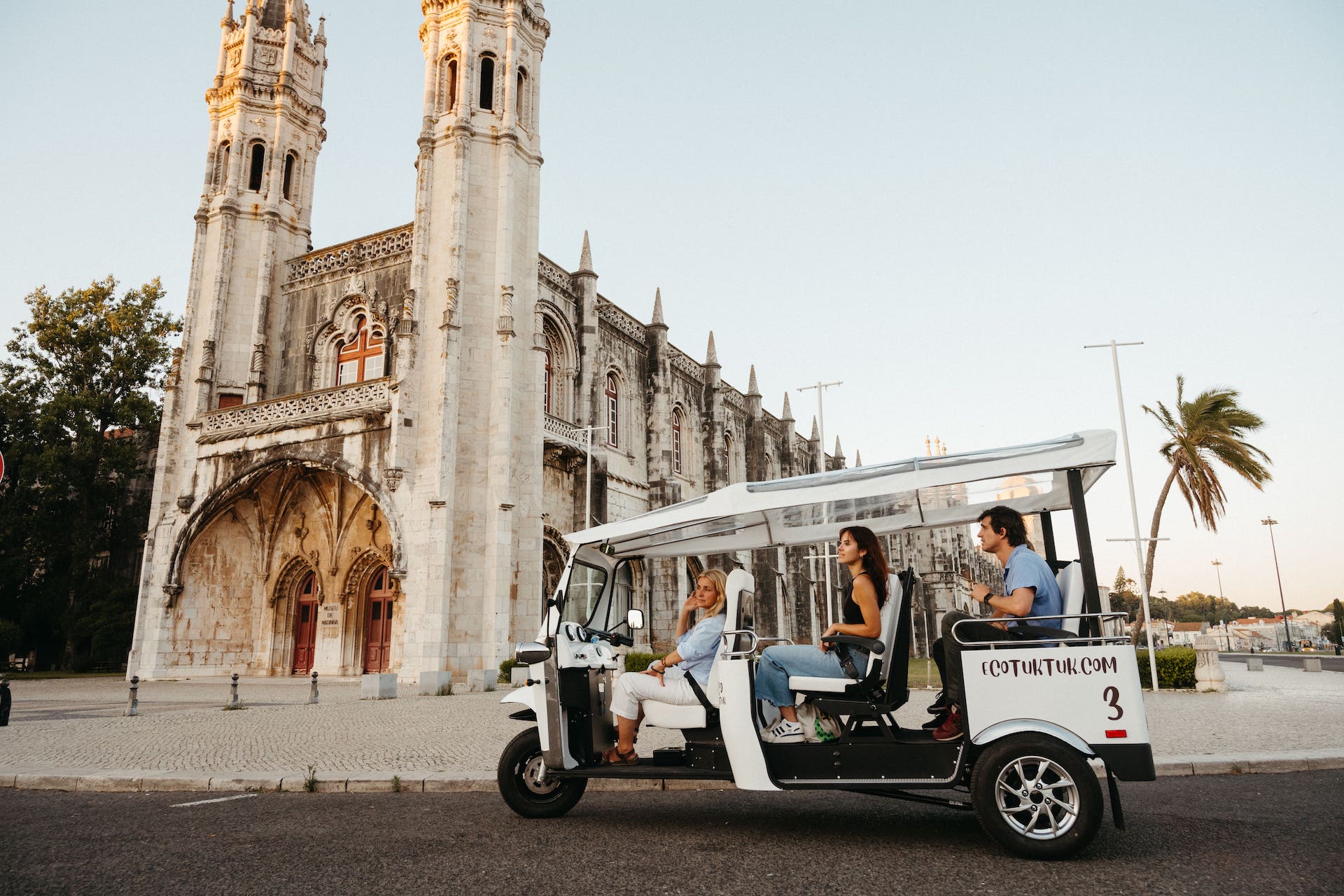
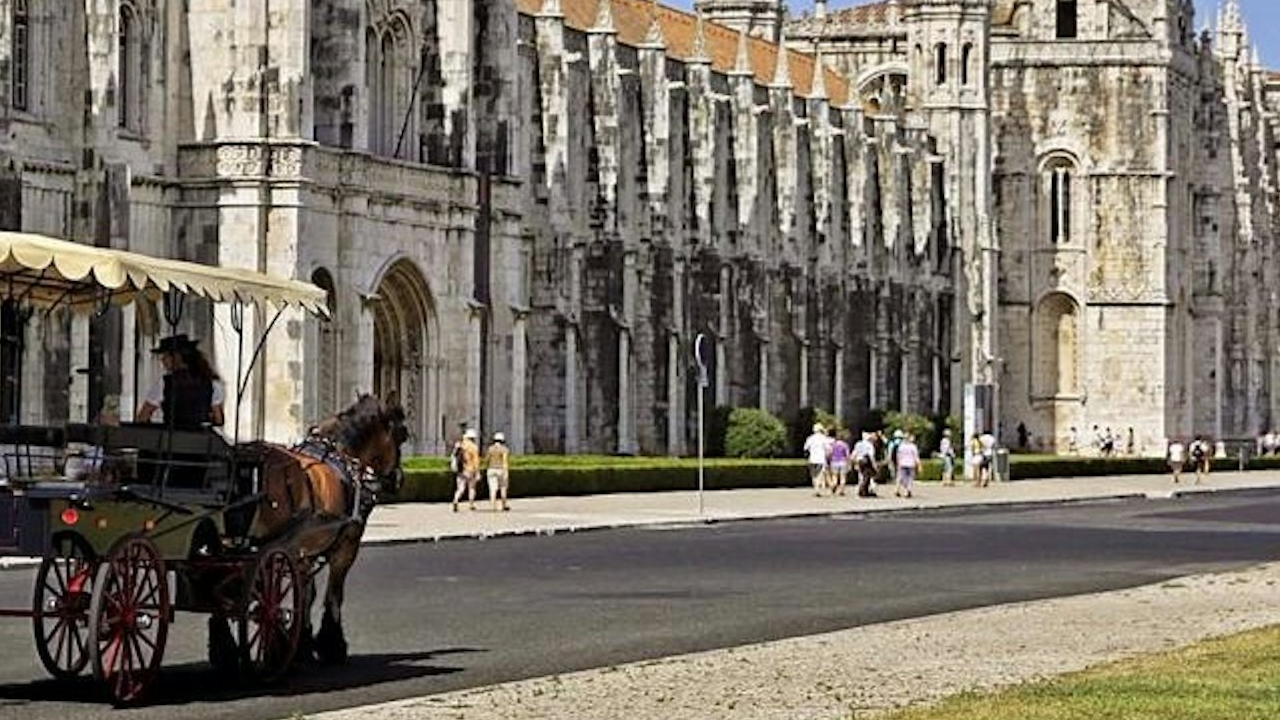
On the spot where the Jerónimos Monastery stands today, next to the old Belém beach, was originally a small hermitage dedicated to Santa Maria that had been built by the Infante D. Henrique, in 1452. At the start of the 16th century King Manuel I’s intention to have a large monastery erected there was acknowledged by the Holy See, and which was donated to the Order of the Friars of St. Jerome. The epitome of Manueline architecture and intrinsically linked to the Discoveries, this monastery is the most remarkable Portuguese monastic ensemble of its time and one of the main European churches.
Construction on it began in 1501, lasted for a hundred years and was spearheaded by a remarkable group of architects and master builders both national and foreign. With an initial design by Frenchman Boytac, the work was continued by other Masters, namely João de Castilho and, in the middle of the century, Diogo de Torralva. After the arrival of the Portuguese in India, the Portuguese crown was able to fund the venture with money coming from trade with the East. King D. Manuel I channelled much of the so-called “Vintena da Pimenta” (a ‘Spice Tax’, approximately 5% of revenues from trade with Africa and the East, equivalent to 70kg of gold per year) to finance construction work.
In this monument, classified by UNESCO as a World Heritage Site, it is worth noting the facades, the church and the cloisters. On the south facade, one can admire the portal painted by João de Castilho, where the figures are arranged according to a specific hierarchy: below, Infante D. Henrique guards the entrance, the Virgin of Bethlehem blesses the monument, and Archangel Saint Gabriel, the protector of Portugal, completes the arc. The western portal, through which one enters the sacred space, is the authorship of Nicolau Chanterenne. To the left, protected by St. Jerome, is the statue of King D. Manuel, which is said to be a realistic portrait, and to the right is that of Queen D. Maria, his wife, protected by St. John the Baptist.
Inside there is the church-hall, a Manueline masterpiece by João de Castilho. Note how, in a remarkable architectural achievement, the beautiful vault of the transept is not supported by any columns. At the entrance, after the lower-choir, are the cenotaphs of the poet Luís de Camões, author of the epic poem “Os Lusíadas”, and of Vasco da Gama, commander of the armada that in 1497 went to India. The kings, princes and descendants of D. Manuel I are buried in the side chapels. In the main chapel, later reconstructed by Jerónimo de Ruão, are the tombs of D. Manuel I, his son D. João III and their wives. Worthy of special mention is the solid silver tabernacle, a work of Portuguese silversmithy from the mid-17th century.
4
Stop 4
The imposing Monument to the Discoveries stamps its mark on the riverside at Belém. It was designed in 1940 to commemorate the “Exposition of the Portuguese World”, promoted by the Salazar government to celebrate the eighth and third centenaries of the founding and restoration of the Portuguese nation (1140 and 1640 respectively). However, it was only built in 1960 for commemorations marking 500 years since the death of Prince Henry the Navigator. Designed by architect Cottinelli Telmo, it features the work of sculptor Leopoldo de Almeida.
52 metres in height, the monument symbolises a caravel, headed by the figure of Prince Henry the Navigator followed by a cortege of 32 leading figures from the Era of the Discoveries including, for example, king Afonso V (1432-81), the driving force behind the first discoveries, Vasco da Gama (1460-1524) who discovered the maritime route to India, Pedro Álvares Cabral (1467-1520), who discovered Brazil and Fernando Magellan, who completed the circumnavigation of the globe in 1522, among others.
The façade facing down to the ground takes on the form of a cross decorated by the Sword of the Order of Aviz, the main financial sponsor of the voyages.
5
Stop 5
The Coach Museum was an initiative of Queen D. Amélia de Orléans e Bragança, wife of King D. Carlos I (1889-1908), who inaugurated it in 1905. It contains an exceptional and unique collection of richly adorned royal vehicles, from the 17th to 19th centuries (coaches, berlins, carriages, chaises, litters, sedan-chairs), used by the Portuguese other European courts, the Patriarchs of Lisbon and Portuguese noble houses up until the advent of the motor car.
The rare example of Philip II’s travelling coach (late 16th century) and the three monumental coaches that were part of the magnificent embassy sent by Portugal to Pope Clement XI in Rome (1716), with iconography in gilded woodwork glorifying the Discoveries, are some of the most notable pieces in this incomparable exhibition. The collection also includes an important store of harnesses, ceremonial and coach service liveries, a stock of 18th century armoury and accessories and the oil portraits of the monarchs of the Braganza Dynasty.
The Coach Museum (Museu dos Coches) is divided between the new building in Belém, the old Horse Riding Arena of the Royal Palace, both in Praça Afonso de Albuquerque, in Lisbon, and the Ducal Palace of Vila Viçosa.
The new National Coach Museum building, inaugurated in May 2015, houses the most representative part of the collection. Occupying a site in Belém where a former military workshop (Oficinas Gerais do Exército) once stood, it serves a two-fold purpose as a cultural facility and a public space. In the words of Pritzker prize-winning architect Paulo Mendes da Rocha, who designed it, “the museum has no doors and creates opportunities for interaction on every side.” However, the project is intended to be more than just a museum; it additionally functions as an urban infrastructure providing the city with a “public space”, responds to the museum’s need to expand its exhibition area and technical support infrastructure, and creates new aspects to be appreciated by visitors to this, Portugal’s most-visited museum. The structure comprises a main building with a suspended hall and an annex, which are connected by an overpass that allows people to move from one to the other. The layout of the buildings creates a kind of portico directed towards a freely-accessible inner square.
The new museum features spaces for permanent and temporary exhibitions, areas for reserve collections and a workshop for conservation and restoration, which will contribute to the development of conservation and restoration of this type of heritage. Additionally, it has new spaces for a library and archives, an auditorium seating 330 people, a restaurant/bar and cafeteria, and a gift shop.
The area of the Horse Riding Arena of the Royal Palace, initially adapted to become a museum by the architect Rosendo Carvalheiro and later by Raul Lino, is interesting to see, being representative of the XVIII Century. The paintings deserve special reference as the artists are José Malhoa and Conceição e Silva, two important Portuguese artists.
What's not included
Tickets / Meals / Gratuities
Any Private Expenses
Available languages
Guide guide
EN
Reviews breakdown
Tripadvisor
5.0
1 reviews
5★
1
4★
0
3★
0
2★
0
1★
0
Important information
Specialized infant seats are available
Public transportation options are available nearby
Infants and small children can ride in a pram or stroller
Suitable for all physical fitness levels
About Lisbon
Lisbon, the capital of Portugal, is a vibrant city known for its rich history, stunning architecture, and warm climate. With its charming streets, historic trams, and breathtaking viewpoints, Lisbon offers a unique blend of old-world charm and modern energy.
Top Attractions
Belém Tower
A UNESCO World Heritage Site, this 16th-century tower is an iconic symbol of Lisbon's Age of Discoveries.
Historical
1-2 hours
€6
Alfama District
Lisbon's oldest district, known for its narrow, winding streets, Fado music, and historic charm.
Historical
Half day
Free to explore, attractions may have entry fees
Sintra
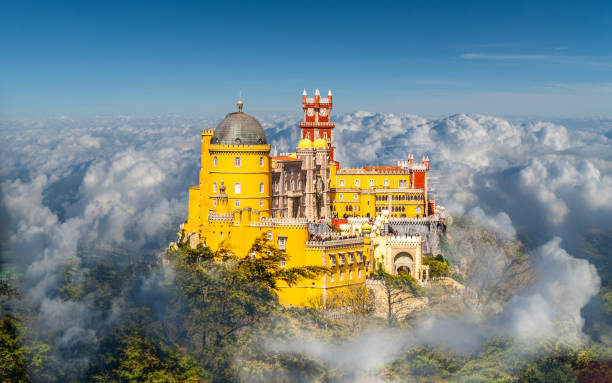
A UNESCO World Heritage Site, Sintra is a romantic town with stunning palaces and castles.
Historical
Full day
Varies by attraction, around €10-€15 per site
Must-Try Local Dishes
Bacalhau à Brás
Shredded codfish with eggs, potatoes, and onions
Main Dish
Contains fish and eggs
Pastel de Nata
Custard tart with a flaky pastry crust
Dessert
Contains dairy and eggs
Francesinha
A sandwich with meat, cheese, and a beer-based sauce
Main Dish
Contains meat, cheese, and gluten
Popular Activities
Hiking in Sintra
Surfing in Ericeira
Parasailing in Cascais
Beach lounging in Costa da Caparica
Spa day in a luxury hotel
Picnic in Jardim da Estrela
Visiting museums and galleries
Attending Fado performances
Best Time to Visit
March to May, September to October
These months offer pleasant weather and fewer crowds, making it ideal for sightseeing and outdoor activities.
15-25°C
59-77°F
Practical Information
Language
- Official: Portuguese
- Widely spoken: English, Spanish, French
- English: Moderately spoken
Currency
Euro (EUR)
Time Zone
GMT+1 (Western European Time, WET)
Electricity
230VV, 50HzHz
Safety Information
Overall Safety Rating: Generally safe
Lisbon is generally safe, but pickpocketing and petty theft can occur in crowded areas.
Important Precautions:
- • Be cautious of pickpockets in crowded areas
- • Use licensed taxis or ride-sharing apps
- • Avoid walking alone at night in less crowded areas
Getting there
By air
- Humberto Delgado Airport • 7 km from city center
By train
Santa Apolónia, Oriente
By bus
Sete Rios, Jardim do Campo Grande, Gare do Oriente
Getting around
Public transport
Efficient and clean, with four lines connecting major attractions.
Taxis
Available • Apps: Bolt, FreeNow
Rentals
Car, Bike, Scooter
Neighborhoods
Alfama
Baixa
Bairro Alto
Day trips
Sintra
25 km from Lisbon • Full day
A romantic town with stunning palaces, castles, and lush gardens.
Cascais
30 km from Lisbon • Half day to full day
A charming coastal town with beautiful beaches, historic sites, and a relaxed atmosphere.
Óbidos
80 km from Lisbon • Full day
A medieval town with a well-preserved castle, narrow streets, and charming shops.
Festivals
Santos Populares • June 13th
Festival dos Oceanos • June to September
Arraial do Alfoz • June to September
Pro tips
- Visit the Time Out Market for a variety of local and international cuisines
- Take a day trip to Sintra and Cascais for a mix of history and beach relaxation
- Explore the LX Factory for a unique shopping and dining experience
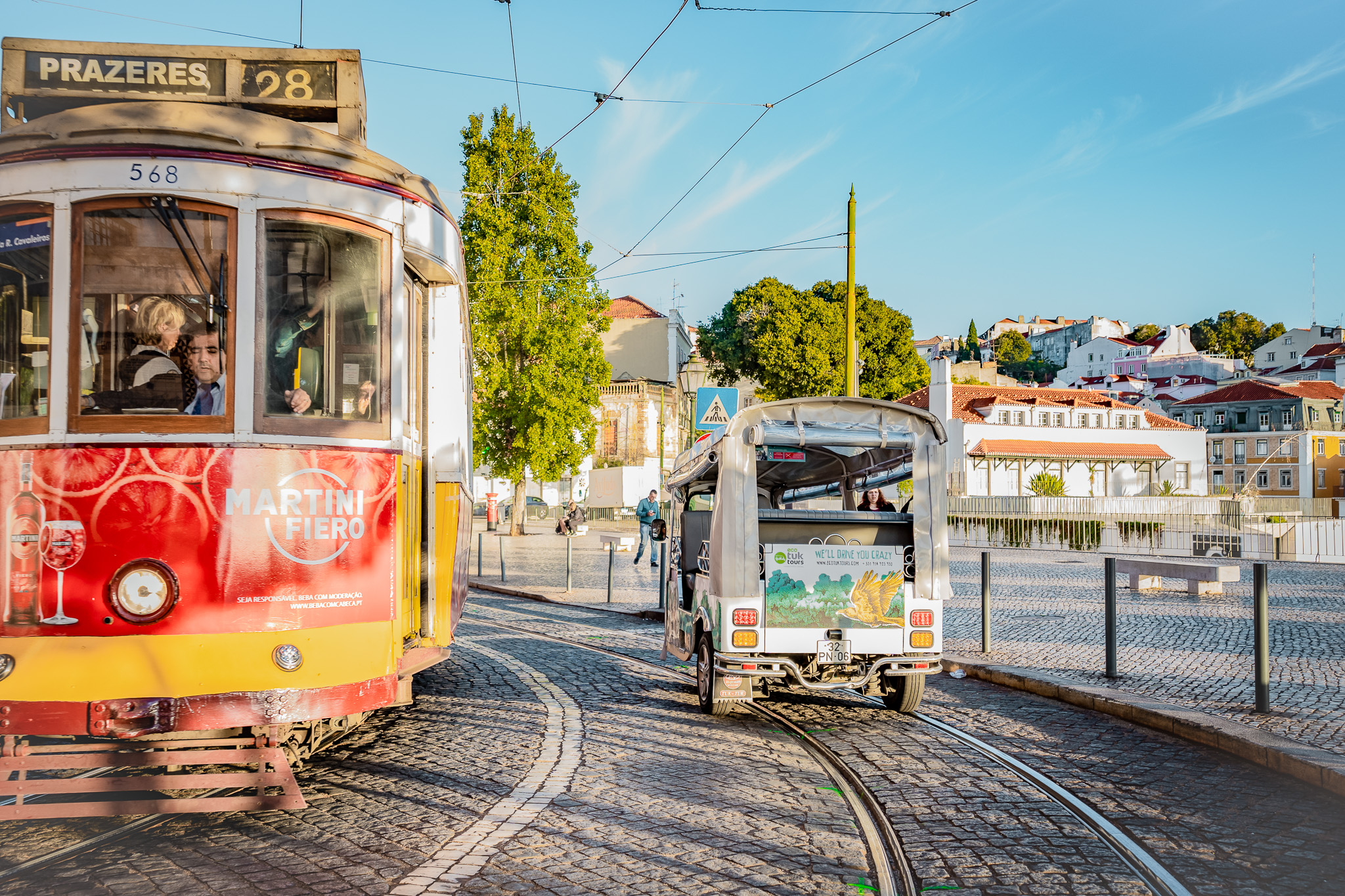
- Ride the historic Tram 28 for a scenic tour of the city
- Visit the MAAT museum for a blend of art, architecture, and technology
From $25
per person
Price varies by option
Secure booking
Free cancellation available
Instant confirmation